
Scattered across the desert east and south of Amman lies a fascinating collection of structures. Often referred to in English as the Jordan Desert Castles, these buildings served diverse purposes: some were caravan stops and meeting points, others centers for agriculture and water management, and some even served as palatial retreats where caliphs met with tribal leaders. This guide focuses on two main stops: Qasr Kharana and Qasr al-Mshatta. We'll then explore Qasr al-Hallabat and Hammam as-Sarah, which transformed from Roman outposts into Umayyad residences, and integrate Quseir Amra and Qasr al-Azraq into the route. We'll cover transportation, the best season to visit, a daily itinerary, dining options, and accommodation areas. Before you set off, always confirm your flight status and your country's official travel advisories.
Quick Facts
| Topic | Information |
|---|---|
| Scope | Umayyad-era desert structures east and south of Amman |
| Key Stops | Qasr Kharana, Qasr al-Mshatta, Qasr al-Hallabat, Hammam as-Sarah, Quseir Amra, Qasr al-Azraq |
| UNESCO Status | Quseir Amra has been on the World Heritage List since 1985 |
| Starting Point | Amman; Kharana is approximately 60 km east, Mshatta approximately 30 km south |
| Main Roads | Highway 40 between Amman and Azraq, Highway 30 via Zarqa |
| Recommended Duration | One full day; two days if staying overnight in Azraq |
| Best Time to Visit | Between March and May, and September and November |
| Ticketing | Most sites charge an entrance fee; confirm scope from official sources |
What Were the Desert Castles Actually Used For?
When you look at the structures along this route, defense might be the first thing that comes to mind, but their locations don't support this theory. The Jordan Tourism Board describes these buildings as caravan stations, agricultural and trade centers, leisure pavilions, and outposts. As you explore the route, the real challenge is discerning which structure served which purpose.
Why Retreat from Damascus to the Desert?
While the Umayyad Caliphate's capital was Damascus, their power base rested with the desert tribes. Members of the dynasty would venture into the desert to meet with tribal leaders, renew alliances, and establish control over trade routes directly. For this reason, these structures were built not near urban centers, but along caravan routes and close to water sources. Their courtyard layouts, independent room clusters, and spacious reception halls are all consistent with this function as meeting places.
Water Management and Agricultural Lands
The prerequisite for establishing any permanent structure in the desert was water. Around these buildings, you'll find cisterns, canals, and agricultural areas. At Quseir Amra, the preservation of its well, water reservoir, water-lifting mechanism, and drainage pipes is one of the reasons UNESCO considers the site an outstanding example of Umayyad desert settlements.
Qasr Kharana: A Fortress-Like Meeting Place
Rising approximately 60 kilometers east of Amman, on the road towards Azraq, Qasr Kharana is one of the best-preserved structures on the route. From a distance, it gives the impression of a formidable fortress; however, upon closer inspection, this impression proves to be misleading.
The 710 Inscription and the Building's Identity
In one of the upper-floor rooms, an Arabic inscription painted above a doorway bears the date 92 AH, corresponding to 710 CE. This inscription is considered proof that the building was standing by at least that date. The Jordan Tourism Board attributes the structure to the reign of Walid ibn Abd al-Malik. The absence of a permanent water source or a large settlement nearby suggests it wasn't built for border defense; researchers generally agree on its function as a caravanserai or a meeting place.
Square Plan, Round Towers, and Non-Functional Arrow Slits
Kharana is built on a square plan, approximately 35 meters per side, with three-quarter-round towers at each of its four corners. Inside, around a central courtyard, about sixty rooms are arranged over two floors; these rooms are covered with barrel vaults. The narrow slits in the walls might initially be mistaken for arrow slits, but their height and shape are unsuitable for archers; it's believed these openings provided light and ventilation. The rosettes and geometric decorations on the upper floor are early examples of Umayyad stone craftsmanship.
Practical tip: The interior is dark, and the stairs are steep; sturdy shoes and a small flashlight will make your visit easier. There is no cafe on site. Allow forty-five minutes to an hour for your visit.
Qasr al-Mshatta: The Unfinished Palace and the Facade in Berlin
Qasr al-Mshatta is located approximately 30 kilometers south of Amman, right next to Queen Alia International Airport. Its name is believed to mean 'winter camp' or 'winter palace' in Arabic. It boasts the largest plan among the structures on this route, and its story extends all the way to Berlin.
The 144-Meter Square and 25 Towers
The Jordan Tourism Board describes the palace as a square enclosure, 144 meters on each side, supported by 25 round towers. Its construction is attributed to the reign of Walid ibn Yazid, around 744 CE. Within the walls, a mosque, a reception hall, and residential units are symmetrically arranged. According to research from the Museum für Islamische Kunst in Berlin, the palace was left unfinished after Walid ibn Yazid's assassination and likely suffered severe damage in the earthquake of 749 CE. Today, visitors can discern the foundations, the line of the walls, and vaulted sections.
Why is the Facade in Berlin?
A significant portion of the stone-carved ornamentation from the palace's southern facade was gifted by Ottoman Sultan Abdülhamid II to German Emperor Wilhelm II and transported to Berlin in 1903. Contrary to common belief, this transfer occurred at the beginning of the 20th century, not the 19th. Today, the facade is part of the Museum für Islamische Kunst collection within the Pergamonmuseum. The museum is currently closed for extensive renovations and, according to the institution's statement, will reopen on June 4, 2027; the Mshatta facade will be re-exhibited at that time.
Practical tip: The site may not always have staff present, and the entrance gate might be closed. Plan your visit during daylight hours and consider combining it with your airport transfer. The ground is sandy and uneven. The structure underwent restoration between 2009 and 2013 through a joint effort by Jordanian and German institutions; as erosion continues, please refrain from touching the ruins.
Qasr al-Hallabat and Hammam as-Sarah: From Roman Frontier to Umayyad Residence
Located on the northern arm of the route, Qasr al-Hallabat is a complex of structures accessible via Zarqa, offering a layered historical narrative. The site initially served as a small outpost protecting Rome's Via Nova Traiana, part of the Limes Arabicus frontier system, and was expanded with four towers in the 4th century. During the Umayyad period, attributed to the reign of Hisham ibn Abd al-Malik, it was rebuilt and transformed into a palatial complex featuring a mosque, a large water reservoir, and agricultural land. The distinctive use of alternating black basalt and white limestone in its walls is a hallmark of the site.
Approximately two kilometers to its east, Hammam as-Sarah is a bathhouse complex connected to the same settlement, also attributed to the reign of Hisham ibn Abd al-Malik. Despite its small scale, traces of its frigidarium (cold room), tepidarium (warm room), caldarium (hot room), and heating system are preserved. For those who enjoy exploring sites where Roman and Islamic architecture overlap, and wish to find a similar theme in Turkey, you can start by exploring our culture tours in Turkey category.
Two More Stops on the Route: Quseir Amra and Qasr al-Azraq
Quseir Amra, a UNESCO World Heritage site since 1985, is the art historical highlight of the route. Dating to the early 8th century, its reception hall and bathhouse are adorned with figurative wall paintings reflecting the secular art of the period: hunting scenes, human portraits, and a map of the constellations on the dome, which UNESCO considers among the earliest known examples of a celestial map. The well, water reservoir, and water-lifting mechanism are also preserved. The paintings have been subject to conservation efforts since the 1970s; please observe warnings regarding flash photography and touching.
Qasr al-Azraq is situated approximately 100 kilometers east of Amman, adjacent to the Azraq oasis. Constructed from local black basalt, it acquired its current form through Ayyubid renovations in the 13th century. It features a square plan, approximately 80 meters per side, and a spacious inner courtyard. The word 'azraq' in its name means 'blue' in Arabic, and it is believed to refer not to the color of the castle itself, but to the nearby oasis. During the Arab Revolt, T.E. Lawrence used this castle as his winter headquarters in November 1917, specifically the room above the south entrance.
Transportation and Driving Plan from Amman
The backbone of this route consists of two main highways. Highway 40, stretching eastwards between Amman and Azraq, is where Kharana and Quseir Amra are located. Highway 30, which passes through Zarqa, connects to Azraq from the north, with Hallabat situated along this branch. Combining these two routes into a loop will prevent you from driving the same road twice and make for a more relaxed day.
A word of caution: The Desert Highway heading south from Amman goes towards Aqaba, not the eastern desert castles. For the eastern route, follow signs for Azraq and keep an offline map handy.
Which Stops on Which Branch
| Stop | Relative to Amman | Which Branch | Time Allotment |
|---|---|---|---|
| Qasr al-Mshatta | Approx. 30 km south, next to the airport | Airport Branch | 1 to 2 hours |
| Qasr al-Hallabat | Northeast, via Zarqa | Highway 30 | 1 hour |
| Hammam as-Sarah | Approx. 2 km east of Hallabat | Highway 30 | 20 to 30 minutes |
| Qasr al-Azraq | Approx. 100 km east, by the oasis | Junction of the two branches | 45 minutes |
| Quseir Amra | Between Azraq and Kharana | Highway 40 | 1 hour |
| Qasr Kharana | Approx. 60 km east | Highway 40 | 45 minutes to 1 hour |
Vehicle, Guided Tour, and Public Transport
Since the stops are far apart, public transport isn't a practical option; routes are infrequent, and return times can restrict your schedule. A rental car offers the most flexibility; the roads are paved and smooth, and a standard passenger car is sufficient. For those who prefer not to drive, day-trip services with a driver from Amman are widely available.
A One-Day Itinerary: Step-by-Step
The following sequence starts the loop route from the northern branch and returns via the southern branch, aiming to spend the cooler morning hours outdoors and the afternoon indoors.
- Depart from Amman around 07:30 and reach Qasr al-Hallabat via Highway 30.
- Proceed to Hammam as-Sarah, approximately two kilometers east, for a short break.
- Continue on the same road down to Azraq town, and visit Qasr al-Azraq towards midday.
- Have lunch in Azraq; there are no dining options in the interim areas.
- Turn west onto Highway 40 and stop at Quseir Amra; allow your eyes to adjust to the darkness inside.
- Continue to Qasr Kharana, approximately fifteen kilometers west, to see the exterior in the fading light.
- Return to Amman; those with afternoon flights the next day can visit Qasr al-Mshatta on the way to the airport.
For those wishing to extend the route to two days, Azraq is a natural breaking point. If you're interested in seeing how to plan a multi-stop road trip day-by-day with a broader example, you can check out our Balkans tour guide article.
Season, Dining, and Accommodation
In a desert climate, the daily temperature fluctuation is as significant as the seasonal difference; finding shade during midday hours can be challenging.
| Period | Conditions | Impact on Itinerary |
|---|---|---|
| March to May | Mild weather, green vegetation, and blooming flowers | Favorable period for a full-day route |
| June to August | High temperatures, strong sun | Shift visits to early morning and late afternoon |
| September to November | Temperatures drop, skies remain clear | Suitable for photography and long walks |
| December to February | Cool days, cold nights, occasional rain | Layered clothing and shortened itinerary |
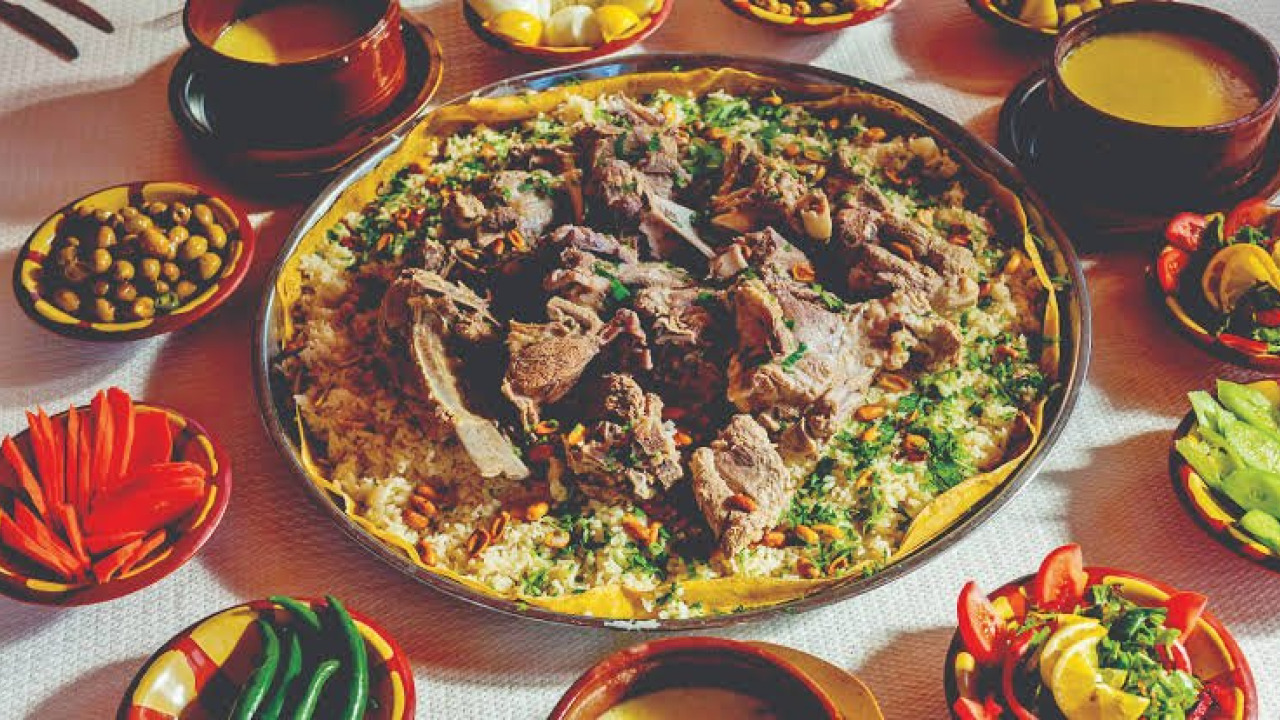
Dining options along the route are limited. Azraq town is the main spot where you can find hot meals during the day, offering well-known Jordanian dishes like mansaf, mezzes, and grilled meats. Most travelers arrange accommodation in Amman and do the route as a day trip. For those wishing to spend a night in the desert, small guesthouses and eco-camp style facilities around Azraq offer alternatives; early flyers might consider staying in the airport area.
Practical Information Before Your Visit
- Carry water, sunscreen, a hat, and sunglasses; shade and kiosks may not be available at the sites.
- Wear closed-toe, sturdy shoes; the ground can be sandy, and stairs are narrow and steep.
- Bring a small flashlight; the interiors of Kharana and Amra are dark.
- Carry cash; card payments may not be accepted in smaller settlements.
- Do not touch walls or frescoes, and observe flash photography warnings indoors.
- Refuel in Amman or Azraq; gas stations are sparse in between.
| Topic | Information |
|---|---|
| Currency | Jordanian Dinar |
| Language | Arabic; English is common in tourist areas |
| Time Zone | UTC+3 nationwide; no daylight saving time since 2022 |
| Electricity | 230 volts, 50 hertz; multiple plug types are used, a universal adapter is a practical solution |
| Emergency Call | 911 |
| Tickets and Pass | The Jordan Pass provides entry to over 40 sites; grants one entry right per site |
Visa requirements vary by nationality and are updated periodically; before traveling, confirm with the Jordan Tourism Board and the official Jordan Pass website. The Jordan Pass's visa fee exemption depends on purchasing the pass before arrival and a minimum stay duration in the country. The order of budget items is as follows: flights, car rental or driver service, fuel, entry pass, accommodation, and food. For those looking to plan a similar desert and ancient heritage route in another part of the region, our Egypt travel guide article can be helpful; and for those wishing to continue this interest in Turkey, our historical city tours in Turkey category is a great starting point.
Frequently Asked Questions 6
Can Jordan's Desert Castles be visited in one day from Amman?
Yes, they can. A loop route starting from Amman, visiting Hallabat and Hammam as-Sarah, then continuing to Azraq, Quseir Amra, and Kharana, takes approximately eight to nine hours. Departing around 07:30 AM allows you to spend the midday heat in indoor areas.
Is it possible to reach the Desert Castles by public transport?
It's practically difficult. The stops are far apart, routes are infrequent, and return times restrict your schedule. A rental car is the most flexible option, and the roads are suitable for a standard passenger vehicle. Those who prefer not to drive can consider driver services departing from Amman.
What is the best time to visit the Desert Castles?
The periods between March and May, and September and November are favorable; the weather is mild, and skies are clear. During summer months, as temperatures rise, it's advisable to shift visits to early morning and late afternoon. In winter, days are cool and nights are cold.
Why is Qasr al-Mshatta's facade in Berlin?
A significant portion of the stone-carved ornamentation from the palace's southern facade was gifted by Ottoman Sultan Abdülhamid II to German Emperor Wilhelm II and transported to Berlin in 1903. The facade is part of the Museum für Islamische Kunst collection within the Pergamonmuseum; the museum is closed for renovation and will reopen on June 4, 2027.
Are there entrance fees for the Desert Castles?
Most sites charge an entrance fee, though some locations may not have a regular ticket booth. Jordan's official Jordan Pass provides entry to over 40 sites, granting one entry right per site. Please confirm the scope and fees on the official website.
Is a visa required to enter Jordan?
Visa requirements vary by nationality and are updated periodically; before traveling, confirm with the Jordan Tourism Board and the official Jordan Pass website. The Jordan Pass's visa fee exemption depends on purchasing the pass before arrival and a minimum stay duration in the country.