
Dana Biosphere Reserve, officially known as Dana Biosphere Reserve, is a sprawling protected area of approximately 291.5 square kilometers, nestled on the eastern slopes of the Great Rift Valley in southwestern Jordan. Established in 1989 by the Royal Society for the Conservation of Nature (RSCN), it holds the distinction of being Jordan's first biosphere reserve. UNESCO recognized it as a biosphere reserve in 1998 and added it to the World Heritage Tentative List in 2007. The reserve offers a captivating trifecta: a diverse network of trails ranging from leisurely two-hour strolls to challenging nine-hour canyon treks, a charming stone village dating back to the Ottoman era, and ancient copper mines nestled in the valley floor. This guide will walk you through which trails suit different adventurers, how to access the reserve from its two distinct entry points, and the best times of year to plan your unforgettable journey.
Quick Facts
| Topic | Information |
|---|---|
| Official Name | Dana Biosphere Reserve |
| Location | Southwestern Jordan, Tafileh, Rift Valley slopes |
| Managed By | Royal Society for the Conservation of Nature (RSCN) |
| Established | 1989; UNESCO biosphere classification 1998 |
| Area | Approximately 291.5 square kilometers |
| Elevation | Descends from 1,500m plateau to Wadi Araba |
| UNESCO Status | On World Heritage Tentative List (2007) |
| Trail Network | 10 registered trails, 2 to 9 hours |
| Best Time to Visit | Spring & Autumn; Rummana camp open March 15 - Oct 31 |
| Accommodation | Dana Guesthouse, Rummana Camp, Feynan Ecolodge |
| Reservations | Accommodation & meal orders at least 24 hours in advance |
What to See and Do in Dana Biosphere Reserve
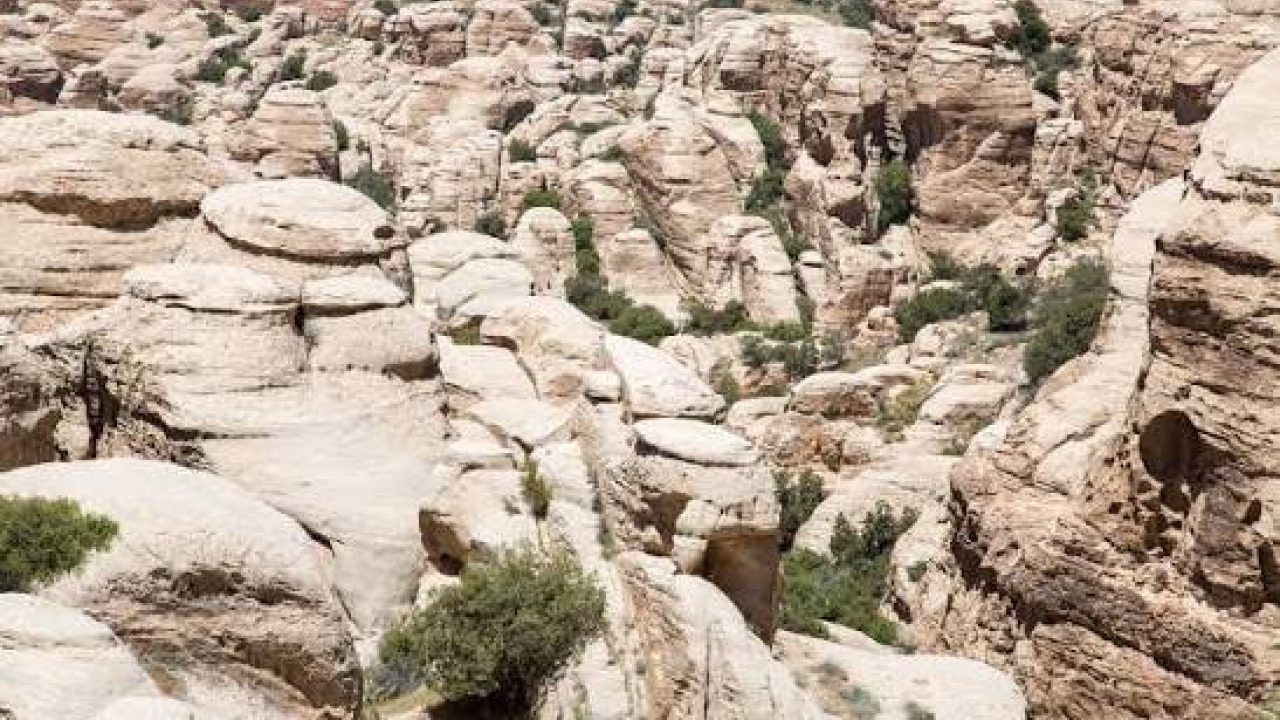
The reserve is defined by its dramatic elevation changes: a charming stone village perched high above, a sandstone-cliffed valley in the middle, and vast desert plains stretching below. Your journey through Dana will unfold along this descending landscape.
Dana Village: A Glimpse into Ottoman-Era Stone Architecture
Perched on the edge of a plateau overlooking the valley, Dana Village serves as the reserve's upper gateway. According to the Jordan Tourism Board, settlement traces in the region date back to the fourth millennium BC, while the Al Ata'ata tribe, who founded the current village, settled here during the Ottoman era, roughly four centuries ago. The same source notes that over seventy stone houses have been restored thanks to donations from the Amman-based Friends of Dana initiative. With most residents having moved to the neighboring village of Qadisiyah, the streets often feel serenely quiet.
What you'll find here isn't a grand monument, but rather the captivating essence of the village itself: homes built with dry-stone techniques, intimate courtyards, and breathtaking viewpoints opening onto the valley. The Dana Village Trail, included in your entrance fee, allows you to explore this unique fabric in under two hours. Early mornings and sunsets are particularly magical, painting the valley walls with a stunning array of colors.
Wadi Dana: The Valley Forming the Reserve's Backbone
Wadi Dana is the main valley that begins below the village and descends all the way to the desert floor. According to EcoHotels, which operates Feynan Ecolodge, the elevation drops from 1,200 meters around Dana Guesthouse to just 325 meters at Feynan. This 14-kilometer stretch makes for a full-day hike. UNESCO's documentation notes an elevation difference of over 1,600 meters within the reserve, explaining why you'll experience distinct climate zones as you trek.
The RSCN's English promotional materials describe the reserve as an area encompassing four of Jordan's biogeographical zones (Mediterranean, Irano-Turanian, Saharo-Arabian, and Sudanian). The UNESCO dossier, meanwhile, refers to three biogeographical regions and four vegetation belts. Both highlight the same remarkable phenomenon: a succession of diverse ecosystems packed into a relatively short distance.
Practical tip: The Wadi Dana trail is designed as a downhill trek, and transportation to the starting point is not included in the entrance fee. Be sure to arrange your return transport before you set off on your hike.
Wadi Feynan and its Ancient Copper Mines
Feynan, located at the lower end of the valley, is the archaeological heart of the reserve. The UNESCO Tentative List dossier indicates that nearly a hundred archaeological sites have been identified within Dana's boundaries, and the ancient copper mines in Wadi Feynan are considered the most extensive archaeological complex in southern Jordan outside of Petra. On-site, you can spot slag heaps, mine shafts, and traces of ancient settlements. However, as they aren't always easily distinguishable from natural rock formations, exploring with a guide is highly recommended for a truly insightful experience. For insights into planning an ancient heritage route in a desert climate, you might find our Egypt travel guide helpful.
Rummana Camp Area and Hillside Trails
Rummana is the reserve's mid-elevation campsite, with the Rummana Mountain, Rummana Campsite, and Caves trails all accessible from its vicinity. The RSCN lists these three routes as self-guided paths that can be completed in under two hours. The camp is open between March 15th and October 31st, though dates may vary depending on weather conditions. As there's no electricity, the RSCN advises bringing a flashlight; towels are not provided, and restrooms are communal. The camp has a capacity of 20 tents, accommodating up to 60 people per night.
Wildlife and Birdwatching
The RSCN's reserve page states that 891 plant species have been recorded in the area, representing approximately one-third of Jordan's entire flora. The same page also lists around 555 animal species, including 250 birds, 39 mammals, and 44 reptiles. Notably, three species discovered here have been named after Dana, marking their scientific contribution.
Feynan Ecolodge's promotional materials mention that Nubian ibex can often be spotted during valley hikes. The Jordan Tourism Board lists species such as the sand cat, Syrian wolf, and lesser kestrel among the reserve's inhabitants, noting that 25 of the recorded species are endangered. Your chances of spotting wildlife depend on the season and time of day, with early mornings and late afternoons being most favorable.
Stargazing and Night Skies
The lower sections of the reserve are blissfully free from city lights. Feynan Ecolodge offers guided stargazing programs with telescopes, and the lack of electricity at Rummana Camp provides a similarly spectacular night sky. Those planning a camping night might consider choosing a date outside of the full moon for the best viewing experience.
Hiking Trails: Duration, Guide Requirements, and Group Rules
The RSCN categorizes trails by duration and guide requirements: shorter paths are included in the entrance fee and can be hiked independently, while longer routes require a local guide and are typically undertaken in groups.
| Trail | Duration | Guide | Notes |
|---|---|---|---|
| Dana Village Trail | Up to 2 hours | Self-guided | Included in fee |
| Rummana Mountain Trail | Up to 2 hours | Self-guided | Seasonal |
| Rummana Campsite Trail | Up to 2 hours | Self-guided | Seasonal |
| Caves Trail | Up to 2 hours | Self-guided | Included in fee |
| Shaq El Reesh Trail | 2-3 hours | Guided | Transport extra |
| Nawatef Trail | 2-3 hours | Guided | Transport extra |
| White Dome Trail | 3-4 hours | Guided | Hillside route |
| Wadi Dana Trail | 6-7 hours | Guided | 14 km, downhill |
| Wadi Ghweir Trail | 8 hours | Guided | 18+ years, group 10+ |
| Wadi Al Dathneh Trail | 9 hours | Guided | 18+ years, group 10+ |
For guided trails, group sizes typically range from 6 to 20 people. The RSCN notes that a trail's availability depends on guide readiness and weather conditions; always confirm before making a specific route central to your itinerary.
For those considering long-distance trekking, Dana marks the beginning of a section of the renowned Jordan Trail. Official records state that the 72.4-kilometer stretch between Dana and Petra is typically divided into four days, involving an ascent of 2,825 meters and a descent of 3,027 meters. The same records advise hiring a local guide, as the route is unmarked and water sources are scarce.
Getting to the Reserve: Which Entrance to Choose
Dana can be accessed from two distinct sides. The connection between the village entrance and the lower Feynan side is primarily a hiking trail; traveling between them by road is a lengthy detour.
Dana Village Entrance
The village entrance is situated along the main corridor leading south from Amman. According to the Jordan Tourism Board, the journey between Amman and Petra is approximately 235 kilometers, with two main routes: the Desert Highway takes about three hours, while the scenic King's Highway, passing through Madaba, Karak, and Dana, takes roughly four to four and a half hours. Dana Village lies directly on the King's Highway, making the reserve a natural and rewarding stop if your itinerary takes you from Amman to Petra via this historic route. For public transport, you can use services to Tafileh or Qadisiyah, completing the final leg by taxi or pre-arranged transfer.
Feynan Entrance and the Final 8 Kilometers
The Feynan side connects to the Dead Sea Highway. According to the lodge's directions, from Amman's 7th Circle, you take Road 15, then Road 40, and finally Road 65 (the Dead Sea Highway). At the 187-kilometer mark from the 7th Circle, turn off for Feynan to reach the reception in Qurayqura village. The drive takes between 2.5 and 3 hours. Visitors coming from Petra should use the Wadi Namla route, which takes 1.5 to 2.5 hours. The journey from Aqaba is approximately 131 kilometers.
The final 8 kilometers from the reception to the lodge are on an unpaved, rough road. If you're not driving a high-clearance or 4x4 vehicle, a transfer is necessary, which is typically provided by local Bedouin drivers. Early morning bus services are available between Qurayqura and Amman and Aqaba, though there are no services on Fridays.
When to Visit: A Seasonal Guide
The season largely dictates which trails are accessible and enjoyable. The significant elevation difference between the valley floor and the plateau means you can experience two distinct weather conditions on the very same day.
| Period | Conditions on the Ground | Impact on Your Itinerary |
|---|---|---|
| March - May | Mild weather, vibrant flora | Camping season starts March 15 |
| June - August | Valley floor noticeably hot | Schedule hikes for early morning |
| September - October | Temperatures drop, migration begins | Good for birdwatching, camp closes Oct 31 |
| November - February | Colder in higher elevations | Rummana closed, Guesthouse open |
The Jordan Tourism Board also notes that some trails may close during Ramadan; be sure to check this calendar when planning your dates.
Dining and Accommodation Options
Accommodation primarily revolves around two facilities managed by the RSCN, along with an eco-lodge nestled on the valley floor.
| Option | Season | Highlights | Notes |
|---|---|---|---|
| Dana Guesthouse | Year-round | 23 rooms overlooking the valley | Shared bathroom in economy rooms |
| Rummana Camp | March 15 - Oct 31 | 20 tents, 60 people/night | No electricity, communal toilets |
| Feynan Ecolodge | Year-round | Off-grid eco-lodge | Last 8 km by transfer |
Dana Guesthouse and Rummana Camp
The Guesthouse is open year-round and features 23 rooms. Your stay includes breakfast and reserve entrance, though entry to Rummana Camp is subject to a separate fee. Check-in is at 3:00 PM, check-out at 12:00 PM. The RSCN requires all visitors to present a valid passport or ID; the area is operated as a smoke-free and pet-free zone, and alcohol consumption is discouraged for cultural reasons.
Feynan Ecolodge
This unique lodge was built by the RSCN in 2005 and has been managed by the Jordanian company EcoHotels since 2009. The 26-room property is entirely off-grid; electricity is generated by solar panels, and rooms are beautifully lit by candlelight. There are no power outlets in the rooms; devices can be charged at the reception, and limited Wi-Fi is available in the lobby. Mobile network coverage varies by operator. Dinner is a vegetarian open buffet. There's no air conditioning, but during summer, guests can opt to sleep on the cool rooftop terrace under the stars.
Village Cuisine and Local Products
Beyond standard meals, RSCN facilities offer traditional dishes like mansaf and zarb, which is cooked underground. These special meals are prepared for groups of ten or more and require advance ordering. Breakfast typically includes hummus, white cheese, labneh, olives, and seasonal fruits. Handmade products and herbal teas from the village women's cooperatives offer a wonderful way to support the local economy.
Start in the Village, End in the Valley: A Two-Day Itinerary
The following two-day itinerary is designed for those who wish to experience the reserve by descending from its upper reaches to the valley floor.
- On the morning of Day 1, arrive at Dana Village. Wander through its stone streets on the Dana Village Trail, and spend the midday hours relaxing in the shade.
- In the afternoon, embark on a half-day guided trail like White Dome or Nawatef. Spend the night at Dana Guesthouse or Rummana Camp.
- On Day 2, start early on the Wadi Dana trail. Follow the 14-kilometer descent, observing the gradual change in vegetation as you go.
- Upon reaching the valley floor, explore the ancient copper mine traces around Feynan with a guide.
- If you're staying the night at Feynan, join their evening stargazing program. If you plan to depart the same day, ensure your transport from the Qurayqura reception center is pre-arranged.
Essential Tips Before Your Dana Biosphere Reserve Visit
- Make sure to book your accommodation and meal orders at least 24 hours in advance; the RSCN considers this a mandatory reservation condition.
- Carry a valid passport or ID document on-site; reserve entry is registered with this identification.
- Since there's no electricity at Rummana Camp, bring a flashlight and spare batteries, and remember to pack your own towel.
- For longer trails, water, sun protection, and sturdy, grip-soled shoes are essential gear; the terrain can be rocky.
- The Wadi Ghweir and Wadi Al Dathneh routes have an age limit of 18 and a minimum group size of 10 people.
- Entrance fees vary based on residency status and include guiding fees, but do not cover transportation to the starting points. For current rates, check rscn.org.jo.
- Visa requirements vary by nationality and are updated periodically; always confirm with the official Jordan Tourism Board website before your trip.
- Adhere to the 'Leave No Trace' principles: pack out all your waste, do not pick plants, and avoid approaching wildlife.
Planning Your Itinerary: A Step-by-Step Approach
Here's the recommended flow: choose your dates based on the season, confirm trail availability, secure your accommodation at least 24 hours in advance, and pre-arrange return transport for downhill routes. If you're combining the reserve with Petra, the King's Highway conveniently links these two incredible destinations. For those curious about how to sequence multi-stop itineraries, our Balkans tour guide offers some great insights. If you're looking for similar themes within Turkey, our Turkey nature and adventure tours category lists canyon and highland programs, while the Turkey culture tours category is a great starting point for itineraries focused on stone architecture.
Frequently Asked Questions 6
How many days does it take to visit Dana Biosphere Reserve?
A visit limited to short trails can take half a day. Exploring the village, a half-day guided trail, and the Wadi Dana descent together typically requires two days. The section of the Jordan Trail between Dana and Petra spans 72.4 kilometers over four days.
Is a guide necessary for hiking in Dana?
The RSCN lists the Dana Village, Rummana Mountain, Rummana Campsite, and Caves routes as short, self-guided trails. Shaq El Reesh, Nawatef, White Dome, Wadi Dana, Wadi Ghweir, and Wadi Al Dathneh trails require a local guide; their availability depends on guide readiness and weather conditions.
What is the best season to visit Dana Biosphere Reserve?
Spring and autumn are ideal for both the plateau and valley floor. Rummana Camp and its surrounding hikes are open from March 15th to October 31st. The valley floor is hot in summer, so hikes should be scheduled for early morning; Dana Guesthouse remains open year-round.
How do I get to Dana from Amman?
The village entrance is on the King's Highway between Amman and Petra; the Jordan Tourism Board estimates this route at about four to four and a half hours, while the Desert Highway takes around three hours. The Feynan side is accessed via the Dead Sea Highway: turn off at the 187-kilometer mark from the 7th Circle, a drive of 2.5 to 3 hours. The final 8 kilometers require a 4x4 vehicle or transfer.
Does Feynan Ecolodge have electricity and internet?
The lodge is off-grid and generates its electricity from solar panels. There are no power outlets in the rooms; devices can be charged at reception. Limited Wi-Fi is available in the lobby, and mobile network coverage varies by operator. Rooms are lit by candlelight in the evenings.
What animals can be seen in Dana?
RSCN records list 250 bird, 39 mammal, and 44 reptile species. Feynan Ecolodge's promotions mention that Nubian ibex can be spotted during valley hikes; the Jordan Tourism Board lists sand cats, Syrian wolves, and lesser kestrels. Sighting probability depends on the season and time of day.