
Mukawir Castle, known in ancient texts as Machaerus, stands as the evocative ruin of a palace-fortress atop a conical hill in Jordan's Madaba Governorate, overlooking the Dead Sea basin. Visitors won't find a fully standing structure, but rather the excavated foundations of a Herodian palace, two re-erected columns, deep cisterns, and the lingering traces of a Roman siege at the base of the hill. What truly puts this site on the global map is the compelling narrative that John the Baptist was imprisoned and executed here, with the earliest written account coming from the first-century historian Flavius Josephus. A visit here is a half-day affair: expect a steep climb, a shadeless summit, and about two hours of exploration. This guide will walk you through what to see at the summit, how to get there, and the best times to make the ascent.
Quick Facts
| Topic | Information |
|---|---|
| Location | Jordan, Madaba Governorate; conical hill west of Mukawir village |
| Ancient Name | Machaerus; linked to the Greek word makhaira, meaning sword |
| What to See | Foundations of Herod's palace, re-erected Doric and Ionic columns, bathhouse, cisterns, Roman siege traces |
| Visiting Hours | No official schedule published; generally open during daylight hours, confirm closing times before you go |
| Ticket Information | The site is covered by the Jordan Pass; check jordanpass.jo for current conditions |
| Recommended Duration | 1.5 - 2 hours, including the climb |
| Distance from Amman | Approx. 70 km via Madaba, 1.5-hour drive |
| UNESCO Status | Not inscribed on the World Heritage List |
| Accessibility | Steep path with stairs; not suitable for wheelchair access |
| Best Time to Visit | Spring (March-May) and Autumn (September-early November) |
Visa requirements vary by nationality and are updated periodically; confirm with the official Jordan Tourism Board website before your trip.
What to See at the Summit?
The summit isn't a museum building, but rather an active open-air archaeological site. Since 2009, a team from the Hungarian Academy of Arts has been working here in collaboration with the Jordan Department of Antiquities, and the site's presentation has gradually evolved with these excavations. The following stops trace the likely path you'll take as you explore the summit.
Palace Courtyard and Re-erected Doric Column
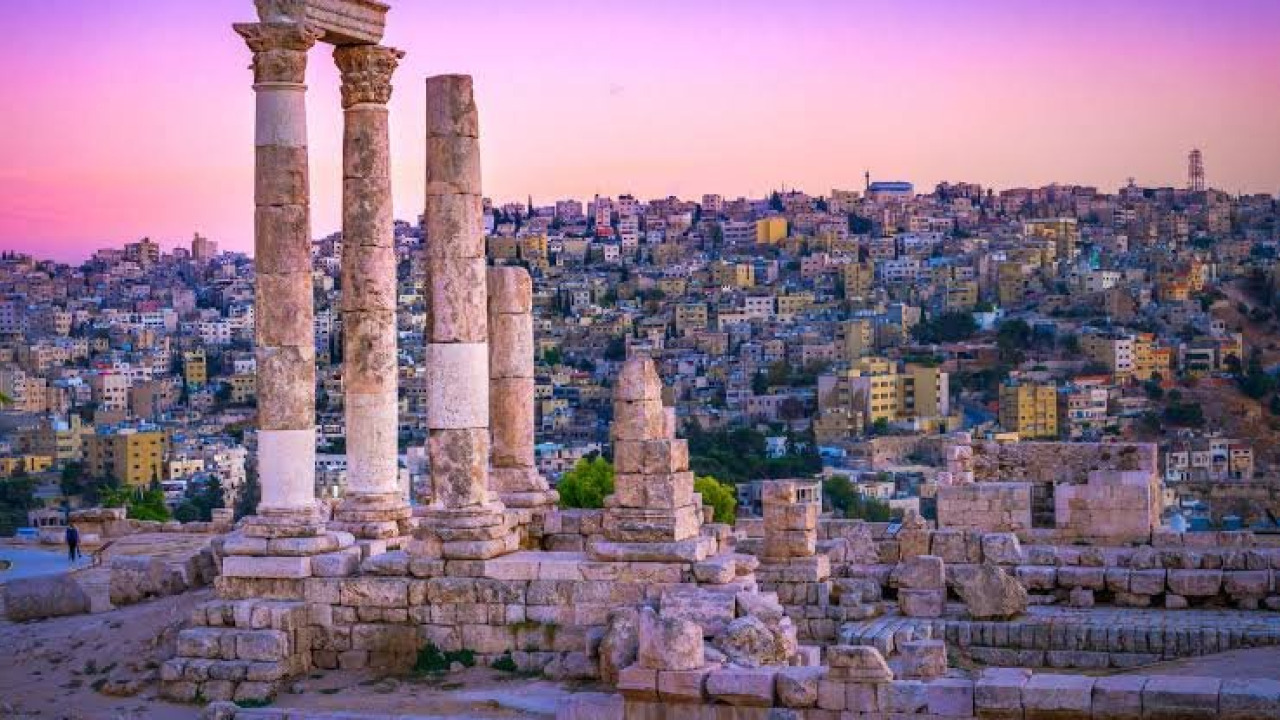
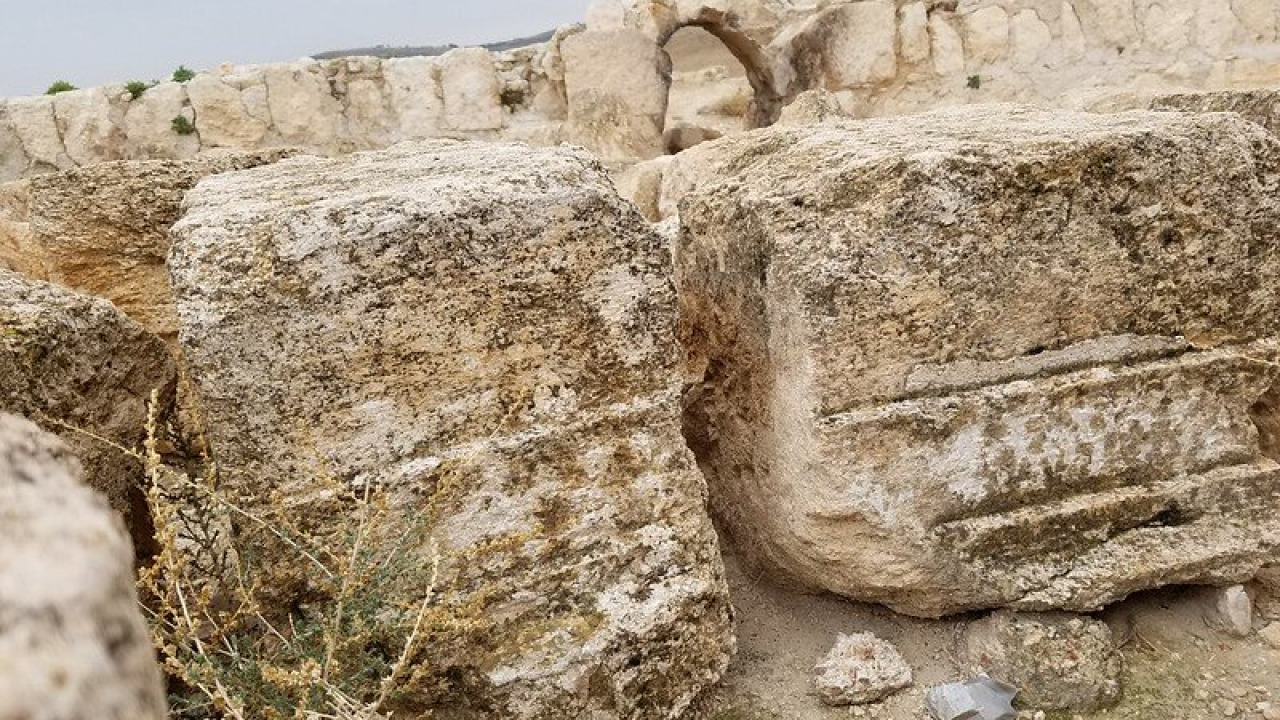
The largest open area at the summit is the palace's colonnaded courtyard. According to the excavation team, one of the 24 columns that once encircled the courtyard was re-erected in 2014 using the anastilosis method – meaning the original drums found on site were reassembled with stainless steel connections, without adding new pieces. This re-erected column serves as a visual anchor for your visit, helping you grasp the scale of the area amidst the scattered foundations. Stand at the base of the column and follow the remaining stone courses on the ground to discern the palace's various wings.
Royal Bathhouse and Ionic-Columned Changing Area
To the south of the courtyard lies the bathhouse structure, dating back to the Herodian period. The mosaic pavement discovered in the changing room (apodyterium) during Franciscan excavations in 1979 is celebrated as the earliest documented mosaic in Jordan; however, its fragments are displayed at the Madaba Archaeological Park, so you won't see them here on the hill. One of the Ionic columns surrounding this section is also the second re-erected column at the site. The presence of a Roman-style bathhouse in a desert fortress indicates that the structure was designed not merely as a defensive outpost, but as a comfortable residence.
Cisterns, Mikveh, and the Basis of the Dungeon Narrative
The sophisticated water system of the hill explains why the fortress could withstand prolonged sieges. Excavation reports document an underground cistern approximately 15.6 meters deep, and a ritual immersion pool (mikveh), believed to have been used by the royal family, has also been unearthed. The underground cavities that visitors often point to as "the dungeon" are, in fact, part of this water and storage system. While Josephus writes that the prisoner was held at Machaerus, he doesn't describe which specific space served as a cell. Therefore, these cavities should be understood not as archaeologically proven cells, but as a location established by tradition.
Traces of the Roman Siege on the Terrain
The castle's story doesn't end with the narrative of John the Baptist. Towards the end of the First Jewish-Roman War, in 72 AD, Lucilius Bassus, the Roman governor of Judaea, besieged the fortress. According to Josephus, the siege concluded with a negotiation for surrender in exchange for the life of a captured resistance leader. At the base of the hill, the traces of the circumvallation wall, encampments, and an unfinished siege ramp left by the Roman army are still discernible on the landscape.
Dead Sea Panorama from the Summit
Rising approximately 700 meters above sea level, the summit offers an uninterrupted vista to the west. According to the Jordan Tourism Board's website, on a clear night, the lights of Jerusalem and Jericho, located on the western shore of the lake, can be seen. During the day, the striking contrast between the deep blue of the Dead Sea and the white salt formations along its shores vividly illustrates why the fortress was established at this strategic point.
Who Built the Castle, Who Held It?
A common misconception is that Herod the Great directly founded the castle. The sequence, based on historical sources, is more layered and explains the superimposed walls found at the site.
From Hasmonean Fortress to Herodian Palace
The fortress was first established around 90 BC during the reign of the Hasmonean king Alexander Jannaeus; it was later destroyed by the Roman governor Gabinius in 57 BC. Around 30 BC, Herod the Great re-occupied the hill, establishing a settlement fortified with walls, towers, and cisterns, and building his own palace atop the Hasmonean remains at the summit. After Herod's death, the region, known as Perea, passed to his son Herod Antipas. Antipas's title was tetrarch, not king; his domain included Galilee and Perea.
How the Story of John the Baptist Appears in Sources
The narrative has two distinct sources, each providing different details. In the Gospel accounts (Mark 6 and Matthew 14), the arrest, the dancing girl's request for John's head at a birthday feast instigated by her mother, and the execution are recounted; however, no specific location is named, nor is the dancing girl identified. Flavius Josephus, in his work Jewish Antiquities, records that the execution took place at Machaerus and names Herodias's daughter as Salome. The phrase "the castle where John the Baptist was killed" is based on the combination of these two accounts; this traditional framework should not be interpreted as an archaeologically proven scene. For those interested in tracing the footsteps of the same era in a different geography, our Egypt travel guide article offers a broader context.
It's important to underscore one point: Mukawir is not inscribed on the UNESCO World Heritage List. Jordan's seven listed properties are Petra, Quseir Amra, Um er-Rasas, Wadi Rum, the Baptism Site, As-Salt, and Umm el-Jimal.
How to Get to Mukawir?
Transportation is a key aspect to plan for this trip, as there's no regular public transport route to the village suitable for tourists.
Driving via Amman and Madaba
The road heading southwest from Amman first reaches Madaba; the drive between the two cities is approximately 35 kilometers and takes about 40 minutes. From Madaba, you'll take Route 35, known as the King's Highway. After about 14 kilometers, turn west at the village of Libb, and the road descends through a winding plateau to Mukawir village. The distance between Madaba and the castle is approximately 35 kilometers and a 45-minute drive. In total, this makes for a journey of about 70 kilometers and 1.5 hours from Amman. The final section of the road is narrow and winding; plan your return before nightfall.
Public Transport, Taxi, and Chauffeur Service
Minibus services to the village operate according to local daily routines; return times are unreliable for visitors. Practically, three options remain: a rental car, a pre-arranged taxi from Madaba (including waiting time), or an hotel transfer. It's customary for the driver to wait for you at the hilltop.
| Starting Point | Distance | Time | Method |
|---|---|---|---|
| Amman | Approx. 70 km | Approx. 1.5 hours | Rental car or chauffeur transfer |
| Madaba | Approx. 35 km | Approx. 45 minutes | Rental car, pre-arranged taxi, hotel transfer |
| Dead Sea Hotel Zone | Winding plateau road | Confirm with your driver | Rental car or transfer |
| Mount Nebo | 10 km from Madaba, then continue | Can be combined on the same day | Rental car |
Which Season and Time of Day?
The Jordan Tourism Board identifies spring (March-May) and autumn (September-early November) as the most balanced periods nationwide; autumn's distinguishing feature is clearer skies and expansive long-distance views. Summer afternoons frequently exceed 35 degrees Celsius, and this hill, overlooking the Dead Sea basin, directly feels the intense heat of the depression.
The choice of time of day is even more crucial than the season. There's no shade at the summit; during summer months, climbing outside of early morning or late afternoon hours can be exhausting. Arriving at the summit two hours before sunset allows you to catch the period when the heat subsides and the landscape's colors begin to transform.
| Period | Weather Character | Summit Conditions | Recommendation |
|---|---|---|---|
| March-May | Mild, wildflowers | Comfortable climb, cool breeze | Ascend in the afternoon |
| June-August | Hot afternoons | Shadeless summit challenging | Early morning or late afternoon |
| September-early Nov | Mild, clear visibility | Expansive panorama opens up | Two hours before sunset |
| December-February | Cool, occasional rain | Wet stones can be slippery | Postpone climb after rain |
Village Cuisine and Weaving Tradition
There are no kiosks, cafes, or water vendors at the summit; you'll need to purchase your supplies in Madaba or from small grocery stores in the village. For meals, the practical arrangement is to return to Madaba either before or after your visit; the city is the region's hub for restaurant variety. In the village itself, meals are typically home-style offerings arranged in advance.
Mukawir's second noteworthy stop isn't archaeological, but rather craft-based. The Bani Hamida women's weaving initiative, started in 1985 and later joining the Jordan River Foundation in 1998, operates in the village. Here, wool rugs are produced on traditional ground looms, and visitors can try their hand at weaving if arranged beforehand. To visit the castle and leave without stopping in the village would be to miss out on the living, vibrant side of the area.
Where to Stay: Three Regions
There's no accommodation at the castle itself; your decision will depend on where you plan to go the following day.
Madaba: The Natural Hub of the Route
Madaba offers the closest urban infrastructure to Mukawir. Known for its mosaic heritage, this city makes it easy to reach both the castle and Mount Nebo on the same day; most travelers focusing on cultural programs choose to spend the night here.
Dead Sea Coast and Amman
The Dead Sea coast is for those who prioritize relaxation; it connects to the castle via a winding plateau road, so clarify the travel time with your driver before setting out. Amman, on the other hand, makes sense for those with flight connections, but it does extend your day. For those wishing to compare structures from the heart of the Roman world, our Italy travel guide article makes for excellent supplementary reading.
| Region | Distance to Castle | Suitable For | Note |
|---|---|---|---|
| Madaba | Approx. 35 km | Culture-focused travelers | Wide range of restaurants and transfer options |
| Dead Sea Coast | Connected via plateau road | Those adding relaxation to their itinerary | Requires early morning departure |
| Amman | Approx. 70 km | Travelers with flight connections | Extends day trip significantly |
| Mukawir Village | At the base of the hill | Those seeking a local experience | Very limited accommodation options |
One-Day Itinerary: Start with Mosaics, End at the Summit
The following itinerary is designed for a traveler with a car departing from Madaba, arranged according to the opening hours of the sites.
- At 8:00 AM, explore the Madaba Archaeological Park and the city's mosaic sites; the park is listed on the Jordan Pass schedule as 8:00 AM - 4:00 PM in winter, with later closing times in summer.
- Before noon, head to Mount Nebo; the peak is approximately 10 kilometers from Madaba. Mount Nebo is not covered by the Jordan Pass (marked with an asterisk on the official list), and admission is paid separately at the site.
- Return to Madaba for lunch and stock up on water and snacks for your visit to the summit.
- Head south via the King's Highway, turn west at the Libb junction, and reach Mukawir village.
- Stop by the weaving workshop in the village; notifying them in advance will help with arrangements.
- In the late afternoon, enter the path from the parking lot and ascend to the summit; explore the column, bathhouse, cisterns, and siege ramp line in sequence.
- Begin your descent before sunset and head back towards Madaba before dark.
If you extend your program by another day, you can head towards Hammamat Ma'in, known for its thermal springs, the following morning; according to the Jordan Tourism Board, the site is 30 kilometers from Madaba and 264 meters below sea level.
Practical Tips Before Heading to the Summit
Since the site lacks any service infrastructure, preparation directly impacts the comfort of your visit.
- Wear sturdy walking shoes; the path is stony, dusty, and includes stairs in places.
- Carry at least 1.5 liters of water per person, a hat, and sunscreen; there's no shade or kiosk at the summit.
- The wind can be strong at the summit; keep a light windbreaker in your bag during spring and autumn.
- Opt for clothing that covers your shoulders and knees, in line with local culture, especially if you plan to visit the village.
- Families with children should maintain constant supervision near cliff edges; railings are not present at all points.
- Do not climb on the ruins, take stones, or leave any litter behind.
The lasting impression from a visit is often the same: a solitary column standing amidst stone foundations, with the vast valley stretching behind it. For those interested in a similar layered historical experience in Anatolia, our Turkey cultural tours category compiles programs focused on ancient cities and museums; those who enjoy exploring city centers on foot can start with our Turkey historical city tours category.
Frequently Asked Questions 6
How do I get to Mukawir Castle from Amman?
The route proceeds via Madaba. The drive between Amman and Madaba is approximately 35 kilometers and takes 40 minutes, while Madaba to the castle is about 35 kilometers and 45 minutes; in total, it's roughly 70 kilometers and a 1.5-hour journey. Minibuses to the village do not offer reliable return options for visitors, so a rental car, a pre-arranged taxi (including waiting time), or an hotel transfer are recommended.
How long does a visit to Mukawir take, and is the climb difficult?
The ascent from the parking lot to the summit, exploration, and descent combined typically take between 1.5 and 2 hours. The path is stony, steep, and includes stairs in places; it is not suitable for wheelchair access or visitors with mobility limitations. As there is no shade at the summit, water, a hat, and sturdy walking shoes are essential.
Is Mukawir covered by the Jordan Pass, and what are the visiting hours?
Mukawir is included in the list of sites covered by the Jordan Pass; however, since the site does not appear on an official schedule, there are no published closing times. It operates as an open archaeological site during daylight hours, so confirm closing times before your visit. Note that Mount Nebo, which you might plan for the same day, is not covered by the Jordan Pass.
What is the basis for the belief that John the Baptist was killed at Mukawir?
Two sources converge. The Gospel texts (Mark 6, Matthew 14) recount the event but do not name the location or the dancing girl. The first-century historian Flavius Josephus, however, records that the execution took place at Machaerus and identifies Herodias's daughter as Salome. The underground cavities at the site being identified as a cell is a traditional acceptance, not archaeologically documented.
Which other sites can be combined with a visit to Mukawir on the same day?
Madaba's mosaic sites and Mount Nebo are natural companions; Mount Nebo is approximately 10 kilometers from Madaba and fits well into a morning schedule. Reserving the castle for the late afternoon allows you to avoid the heat and experience the view in optimal light. If you extend your trip by another day, the Hammamat Ma'in thermal springs can be added for the following morning.
Which season is best for visiting Mukawir?
The Jordan Tourism Board considers spring (March-May) and autumn (September-early November) to be the most balanced periods nationwide; visibility is clearer in autumn, offering expansive panoramas. Summer afternoons often exceed 35 degrees Celsius, making the shadeless summit challenging. In winter, the region is cooler, and stones can become slippery after rain.