
Milet Ancient City: The Philosophical Heart of Ionia
For those eager to explore the rich archaeological tapestry of the Aegean, Miletos stands out as a legendary center of philosophy, mathematics, and maritime trade. Our Milet ancient city visit guide is designed to help you navigate the history and monumental ruins of this intellectual powerhouse. Located within the borders of the Balat neighborhood in Didim, Aydın, Milet was the cradle of groundbreaking thinkers like Thales, Anaximander, and Hecataeus. Compared to other nearby ruins, Milet offers a unique historical experience through its pioneering grid-based urban planning, its imposing Roman theatre, and its massive bath complexes.
In antiquity, the city boasted four separate harbors. However, over centuries, silt deposits from the Büyük Menderes River pushed the shoreline away, transforming the coastal metropolis into an inland settlement. Today, the ruins sit about ten kilometers from the coast; when you look out from the top tiers of the theatre, the lush green plain you see was once the bustling harbor basin where ancient ships docked. A thorough exploration of the sprawling ruins and the adjacent museum typically takes between two to three hours. By joining Didim culture tours, you can experience the site with expert commentary, bringing the city's scientific legacy to life.
Milet's most enduring contribution to global civilization is the "Hippodamian Plan." Developed by the architect Hippodamus, this grid system, which defines most modern cities today, was first implemented here. This organized network of streets and avenues is regarded as the most advanced example of ancient urbanization and remains a cornerstone of urban planning history.
The first excavations began in 1873 with a French team working on the theatre. Systematic research took off in 1899 under German archaeologist Theodor Wiegand, continuing until World War I. Work resumed in 1955, eventually expanding to sites like Kalabaktepe and Zeytintepe to research Archaic settlements. Today, excavations are led by the University of Hamburg; keep in mind that certain sections of the site may be open or closed seasonally due to ongoing research.
Quick Facts for Visitors
| Category | Details | Transport & Location Notes |
|---|---|---|
| Location | Balat Neighborhood, Didim / Aydın | Approx. 22 km from Didim city center |
| Travel Time | Didim $\rightarrow$ Akköy $\rightarrow$ Balat route | ~25 mins by car from Didim, ~1h 15m from Kuşadası |
| Site Opening Hours | Open daily | 08:30 - 20:00 (Ticket office closes at 18:30) |
| Milet Museum Hours | Located at the site entrance | 09:00 - 19:00 (Same ticket covers both) |
| Entry System | MuseumPass is accepted | Free for TR citizens with card; Foreign visitors: approx. 6 Euro |
| Milet Theatre Capacity | Greco-Roman architecture | 5,300 in Hellenistic era $\rightarrow$ ~15,000 in Roman era |
| Milet Museum Building | Established in 1973 | Current building opened May 2011; ~600 m² indoor gallery |
| Recommended Visit Time | Site and Museum combined | 2 to 3 hours; morning visits are best in summer |
What to See in Milet Ancient City?
The first and most breathtaking structure to greet you is the Milet Theatre. Originally built during the Hellenistic period for 5,300 spectators, it was expanded under the Roman Empire to accommodate roughly 15,000 people. You can actually "read" this history in the stones, as the masonry style differs between the two construction phases. Walking through the vaults and feeling the acoustics, then gazing over the Menderes plain from the top row, is an unforgettable experience. Behind the stage building, the Imperial Box and intricate column decorations showcase the finesse of ancient stonework. Following the vaulted passages leads you to the Lion Harbor basin, which could once be closed off by a chain stretched between two lion statues. Pro Tip: Visit the theatre in the early morning; there is no shade on the steps, and climbing to the top under the midday sun can be exhausting.
Continuing through the site, you will find the Faustina Baths. Named after Empress Faustina and dating back to the 2nd century AD, this is a massive bath and gymnasium complex. The pools, sculpted fountains, and changing rooms reflect the peak of Roman engineering; you can still see the underfloor heating channels in the caldarium (hot room). Following this path leads to the South Agora, measuring 164 x 196 meters. The monumental entrance to this square, the Milet Market Gate, was moved piece by piece to Berlin in the early 20th century; today, only its foundations remain. Since the gate in Berlin is often closed for long-term restoration, it is best to visualize its grandeur using the floor plan on-site. Because these "missing" pieces are best understood through storytelling, Didim day trip culture tours provide guided insights into the surrounding ruins.
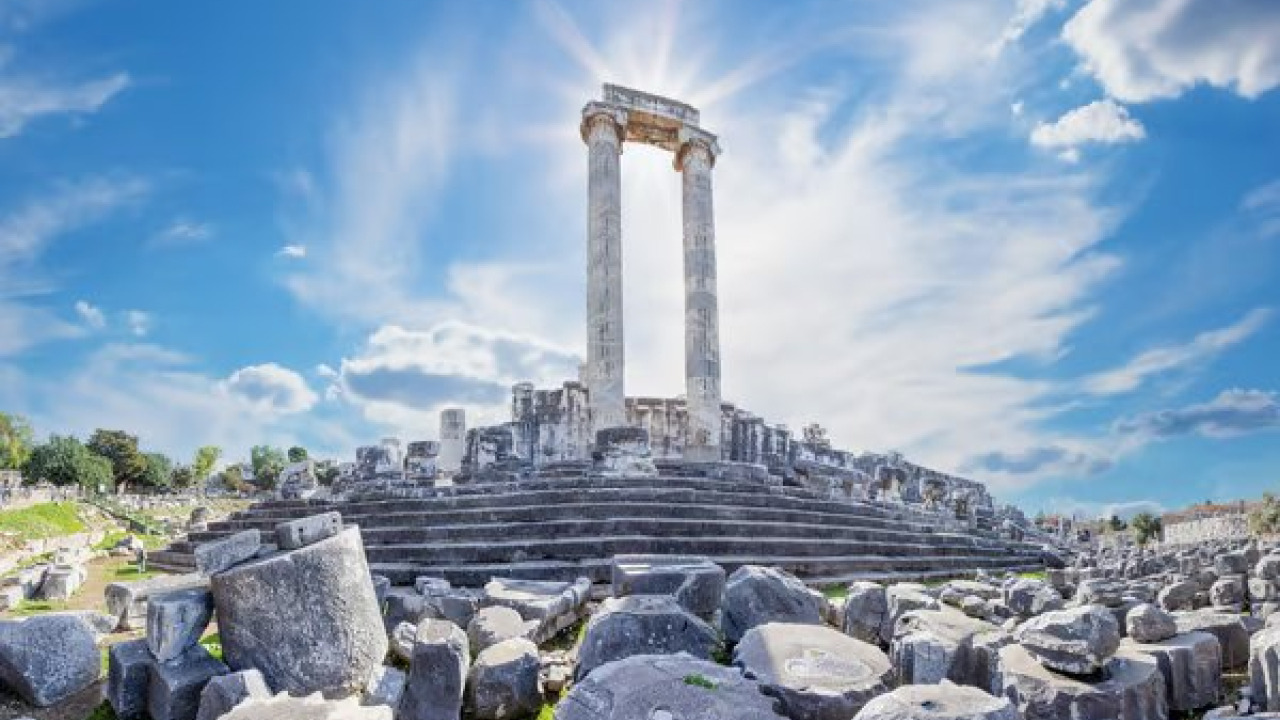
The city's primary religious hub, the Delphinion, was a sacred open-air sanctuary dedicated to Apollo Delphinios. This is where the Sacred Way to the Temple of Apollo in Didyma began. This ceremonial route, ranging from 5 to 7.5 meters in width, was originally adorned with statues of seated priests, reclining lions, and sphinxes. Standing in the Delphinion courtyard today and looking south, you'll notice that the modern road to Didim follows roughly the same line. This is why it makes historical sense to pair your visit here with the Temple of Apollo.
The Milet Museum Collection
Located right at the entrance, the Milet Museum houses thousands of artifacts from the excavations of Milet, Priene, and Didyma. While the original 1973 building faced structural issues, the current facility opened in May 2011, featuring a 1,200 square meter total area with 600 square meters of indoor exhibition space. Inside, you'll find marble sculptures, votive steles, gold and bronze jewelry, and ancient coins. A reconstruction of a Minoan kitchen and Archaic finds from the Zeytintepe sanctuary illustrate the city's role in the Aegean trade network. The open courtyard displays relief sarcophagi, inscriptions, column capitals, and the iconic lion statues of Miletos. Didim museum tours make it easy to match the artifacts in the glass cases with the ruins outside. Pro Tip: Since one ticket covers both, visit the museum first; it provides the context needed to identify the stone ruins outside.
İlyas Bey Complex: A Legacy of Turkish-Islamic Art
To the south of the ruins lies the İlyas Bey Complex, commissioned in May 1404 during the Menteşe Beylik period. The construction date is inscribed on the northern facade, and the patron was İlyas Bey, one of the last rulers of the beylik. The complex consists of a mosque and a madrasah (theological school) sharing a common courtyard, along with two baths and another structure of debated function. The mosque's dome, approximately 14 meters in diameter and resting on an octagonal drum, is a rare example of Turkish-Islamic art in the Aegean, featuring exquisite marble work and carved stone windows. The complex underwent extensive restoration between 2007 and 2012, earning a European cultural heritage award. Key highlights include the ornate mihrab, the three-part entrance iwan on the north facade, and the open courtyard of the madrasah. Pro Tip: Save the complex for the end of your tour to better appreciate the chronological transition from the ancient city to the Beylik era.
Planning Your Day: Nearby Stops to Add to Your Itinerary
| Stop | Visiting Hours | Ticket Office Closes | Distance from Milet |
|---|---|---|---|
| Milet Ancient City | 08:30 - 20:00 | 18:30 | Starting Point |
| Milet Museum | 09:00 - 19:00 | Same ticket as site | At the entrance |
| Priene Ancient City | 08:30 - 17:30 | 17:00 | Approx. 22 km by road |
Priene Ancient City and Ionian Architecture
Located in Güllübahçe (Söke district), about 22 km from Milet, Priene is perched on steep cliffs overlooking the Menderes plain. With its Temple of Athena and ancient theatre, Priene is the other great representative of Ionian civilization alongside Milet. The temple was designed by Pytheos, who used a modular system of measurement; as you walk between the columns, you can notice the rhythmic repetition of the base plates. The Priene theatre is unique in Western Anatolia because it preserved its Hellenistic tradition despite later Roman modifications, offering a purer look at ancient stage design. If you plan to visit both Milet and Priene, let the ticket office hours dictate your order; historical city tours in Didim organize these two sites into a seamless route. The Bouleuterion (council house) is one of the best-preserved examples of ancient governance, with seating for at least 500 people. Timing Note: Priene is open from 08:30 to 17:30, and the ticket office closes at 17:00. If you leave Milet in the afternoon, ensure you reach Güllübahçe before 5 PM, otherwise, visit Priene first. MuseumPass is also valid here. For more details, check our Priene Ancient City visit guide. Since the terrain is steep, do not attempt Priene without sturdy shoes and plenty of water.
Altınkum Beach: The Perfect Wind-Down
Since the drive from Balat back to Altınkum Beach takes less than half an hour, it is easy to end your day of history with a dip in the sea. The shallow, gently sloping sandy shore provides a relaxing break for travelers who have spent the day walking through ancient ruins. Sunbeds and umbrellas are available along the coast; prices vary by season, so it's best to confirm on-site.
When is the Best Time to Visit Milet?
| Season | Avg. High Temp | Crowd Level | Suitability |
|---|---|---|---|
| Spring (Mar - May) | 18°C - 28°C | Moderate | Ideal for seeing the plain in bloom; watch for midday heat in May |
| Summer (Jun - Aug) | 33°C - 36°C | High | Very hot; aim for the 08:30 opening to avoid the sun |
| Autumn (Sep - Nov) | 20°C - 32°C | Balanced | October and November are perfect for walking; great light for photos |
| Winter (Dec - Feb) | 13°C - 15°C | Low | Quiet and serene; check hours as they may change in winter |
One-Day Itinerary: Milet and Priene
Here is the recommended sequence for exploring Milet and its surroundings:
- 08:30 AM: Depart from Didim. Turn toward Balat at the Akköy junction. Arrive at the site and explore the Milet Theatre and the Lion Harbor basin while it's still cool.
- 10:00 AM - 11:30 AM: Explore the Faustina Baths, South Agora, and the Delphinion sanctuary, then visit the restored İlyas Bey Complex.
- Late Morning: Visit the Milet Museum to see the excavation finds; spend an extra 15 minutes admiring the lion statues and sarcophagi in the garden.
- Lunch & Afternoon: Have lunch at a local village eatery in Balat, then head to Priene Ancient City to admire the view from the Temple of Athena. Remember the 17:00 ticket office deadline.
- Evening: Return to Didim center for a sunset stroll along the Altınkum coastline to wind down your day.
Choosing the Right Milet Ancient City Tour
Organized culture tours covering the "Golden Triangle" of Milet, Priene, and Didyma offer the convenience of transfers and professional guidance. When choosing a tour, ensure the itinerary includes both Milet and Priene on the same day, follows a logical sequence based on ticket office hours, and clarifies whether museum entries are included.
Essential Tips for Your Visit
To ensure a smooth trip to Milet, keep these points in mind:
- Sun Protection: The site is an open plain with almost no shade. Visit early in the morning or late in the afternoon during summer.
- Footwear: The ground is stony and uneven. Wear comfortable sneakers or hiking shoes; avoid sandals.
- Tickets: Turkish citizens with a MuseumPass enter both the site and museum for free. The same ticket covers both areas.
- Timing: Plan to arrive at the site at least two hours before the ticket office closes (18:30) to avoid rushing.
- Verification: Visiting hours can change seasonally. Confirm current times and fees on the official museum website before departing.
- Photography: Use a wide-angle lens to capture the theatre vaults and the vast plain. The light becomes softer and more photogenic in the late afternoon.
- Supplies: In summer, always carry plenty of water, a hat, and sunscreen.
- Excavations: Because work is ongoing, some sections may be closed. Check the orientation board at the entrance to plan your route.
Final Thoughts on Your Milet Journey
The Milet Ancient City is more than just ruins; it is the birthplace of philosophy and one of the most significant heritage sites in world history. Taking a moment to sit on the theatre steps and imagine the ancient harbor adds a profound cultural layer to any vacation. Just remember: aim for the morning, use your ticket for the museum, and connect Milet with Priene and the Temple of Apollo to complete your Ionian odyssey.
Frequently Asked Questions 7
How do I get to Milet Ancient City from Didim center?
From Didim center, head toward Söke and follow the signs for Balat at the Akköy junction. The distance is approximately 22 km, and the drive takes about 25 minutes.
What are the visiting hours for Milet Ancient City?
The site is open daily. In the summer, it is open from 08:30 to 20:00, though the ticket office closes at 18:30. Please check the official museum website for seasonal changes.
Is the MuseumPass valid at Milet Ancient City?
Yes, the Republic of Turkey Ministry of Culture and Tourism MuseumPass is valid for both the Milet Ancient City ruins and the Milet Museum. One ticket covers both. Foreign visitors are charged according to the current tariff (approx. 6 Euro).
How long does it take to tour Milet Ancient City?
A comprehensive visit including the Milet Theatre, Faustina Baths, the agora area, and the Milet Museum typically takes between 2 and 3 hours.
What was the capacity of the Milet Theatre?
The theatre was originally built for about 5,300 people during the Hellenistic period and was later expanded during the Roman era to hold approximately 15,000 people.
Can Milet and Priene be visited on the same day?
Yes, the two sites are only about 22 km apart by road. Since Priene closes at 17:30 (ticket office at 17:00), it is recommended to visit Priene first or arrive there before 5 PM.
What is exhibited at the Milet Museum?
The museum features finds from Milet, Priene, and Didyma in its 600 square meter indoor gallery. The garden displays sarcophagi, inscriptions, and the city's symbolic lion statues.