
Priene Ancient City, an Ionian settlement, is nestled on the southern slopes of Mount Mykale (known today as Samsun Dağı), in Güllübahçe, a district of Söke in Aydın. Once a bustling port city opening to the sea before the Büyük Menderes River's alluvium filled the bay, it now stands majestically on terraces overlooking the plain. What makes Priene truly stand out on any travel itinerary isn't its sheer size, but the remarkably preserved grid plan of its streets, intersecting at right angles. For travelers planning a route that includes Söke, Milet, and Didim, Priene offers a perfect, relaxed starting point for the day.
Choosing the Best Season for Your Visit
Priene is an open archaeological site with limited shade, so the comfort of your visit largely depends on the season. The ascent to the city begins with a stone-paved path winding through olive groves, leading uphill all the way to the temple terrace. For this reason, April-May and September-October offer the most pleasant temperatures and light conditions. During the summer months, planning your visit for early morning or late afternoon will help minimize fatigue. In winter, the stone paths can become slippery after rain. The site is open daily; entry begins at 08:30, and the ticket office closes shortly before the site's closing time.
Quick Facts
| Topic | Information |
|---|---|
| Location | Güllübahçe, Söke district, Aydın province (approx. 15 km from Söke center) |
| Period | Ionian city, rebuilt with its current plan in the 4th century BCE |
| Key Structures | Temple of Athena Polias, ancient theatre, council house |
| City Plan | Grid (Hippodamian) layout, terraced settlement |
| Visit Duration | 1.5-2.5 hours, depending on walking pace |
| Admission | Archaeological site under the Ministry of Culture and Tourism; Müzekart valid |
| Best Time to Visit | Spring and Autumn |
| Nearby Attractions | Milet (22 km), Didim, Dilek Peninsula National Park |
Must-See Structures in Priene Ancient City
The city is built on terraces; your exploration will typically proceed from the lower entrance upwards towards the acropolis.
Temple of Athena Polias
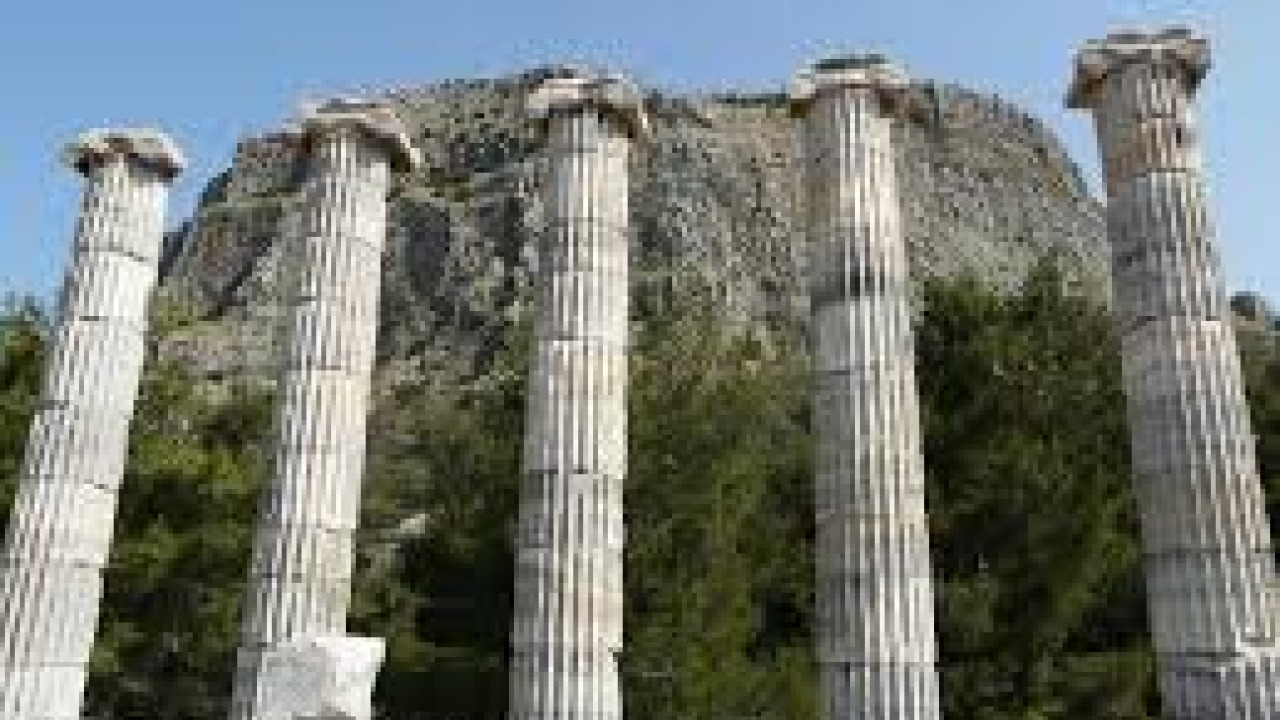
The city's iconic Ionian temple is associated with Pytheos, the architect of the Mausoleum at Halicarnassus, and dates back to the mid-4th century BCE. A votive inscription, now part of the British Museum's collection, indicates that Alexander the Great supported the construction after his victory at Granicus in 334 BCE. The reconstructed columns stand proudly at the edge of the terrace, offering panoramic views of the plain. Late afternoon light beautifully highlights the column capitals, making it an ideal time for photography.
Ancient Theatre
Carved into the hillside, the Hellenistic theatre is notable for its marble seats of honor (prohedria) in the front row and the altar at its center. From here, you can see the entire plain, making it an excellent spot to imagine the city's historical connection to the sea. Be careful when navigating the seating rows, as they rise unevenly.
Bouleuterion (Council House) and Prytaneion
The administrative heart of the city was the nearly square-planned council house (bouleuterion), surrounded on three sides by stepped seating. The altar in the center indicates that political meetings were conducted within a religious framework. Right next to it, the prytaneion housed the common hearth for city officials.
Agora and Sacred Stoa
The agora, the bustling center of commerce and daily life, is surrounded on three sides by colonnaded galleries. To its north, the sacred stoa connects the area where the council met with the agora. Inscribed blocks on the ground reveal how city decisions were publicly announced. The main street's stone paving here is wide and flat, making it a suitable spot for a break.
Residential Quarters and Demeter Sanctuary
One of the most valuable aspects of Priene for understanding urban history is its residential quarters. The courtyard house plans, street widths, and water channels vividly illustrate daily life in a Hellenistic city. The path leading to the sanctuary of Demeter and Kore on the upper terrace is short but challenging. If time permits, a hike up to the rocky acropolis offers a rewarding finale, combining stunning views of both the plain and the mountains.
Combining Priene with Milet and the Surrounding Area
Priene is typically a half-day stop on its own, which is why most travelers combine it with other ancient cities in the vicinity on the same day.
Miletus Ancient City
South of the plain, Milet, located in Balat near Didim, offers a different scale with its vast theatre, baths, and the İlyas Bey Complex. These two cities share a similar story of alluvial deposits, jointly illustrating how the delta's coastline transformed over time. Planning Priene for the morning and Milet for the afternoon allows for a balanced walking itinerary.
Temple of Apollo at Didim
At the southern end of the route, the Temple of Apollo, with its monumental columns, makes for a suitable final stop of the day. This oracle center creates a striking change in scale after the more modest layout of Priene.
Dilek Peninsula-Büyük Menderes Delta National Park
For those looking to balance their historical route with nature, the national park offers an easy alternative towards Güzelçamlı. Coves, forest hiking trails, and delta bird-watching areas are all within the same protected boundaries. During the summer season, entries are counted by a license plate recognition system, and vehicles are not admitted once capacity is reached; arriving early is a practical solution.
How to Get to Priene?
- Air travelers typically use İzmir Adnan Menderes Airport; Milas-Bodrum Airport is also a southern alternative at a similar distance.
- Those arriving by bus will alight at Söke bus terminal and can reach the archaeological site entrance via minibuses heading towards Güllübahçe.
- Visitors with private vehicles should follow the Söke-Milet highway and turn off at the Güllübahçe sign; parking is available just below the entrance.
- Those staying in Kuşadası or Didim can make a day trip; these two centers serve as excellent accommodation bases for the route.
| From | Approx. Distance | Note |
|---|---|---|
| Söke center | 15 km | Towards Güllübahçe, minibus service available |
| Milet (Balat) | 22 km | Second stop on the route |
| Kuşadası | 30-35 km | Accommodation base |
| İzmir Adnan Menderes Airport | 93 km | Highway connection, approx. 1.5 hours |
| Milas-Bodrum Airport | 96 km | Entry from the south |
Is Car Rental Necessary in the Region?
While Priene can be reached by public transport, the flexibility of a car makes a significant difference for those wishing to include Milet and Didim on the same day. As minibus schedules can be infrequent on rural routes, a private vehicle or a guided tour offers a smoother experience for plans combining all three stops.
Tour and Activity Options in the Region
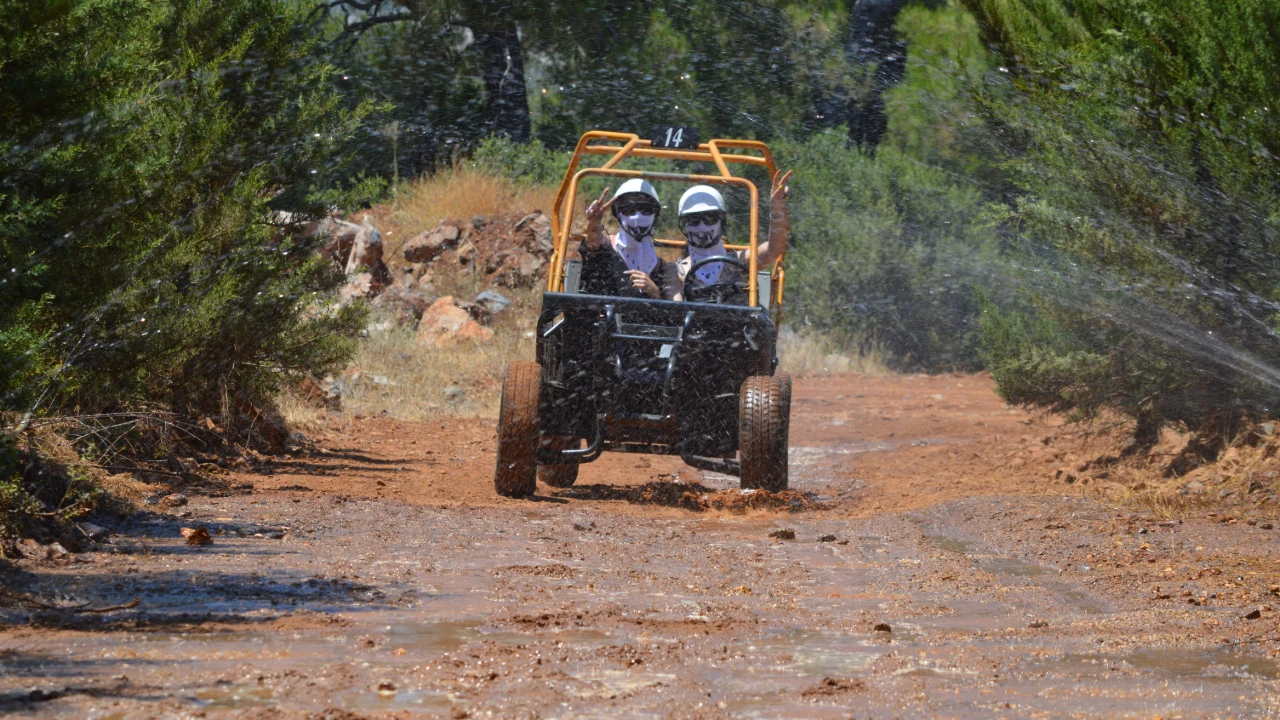
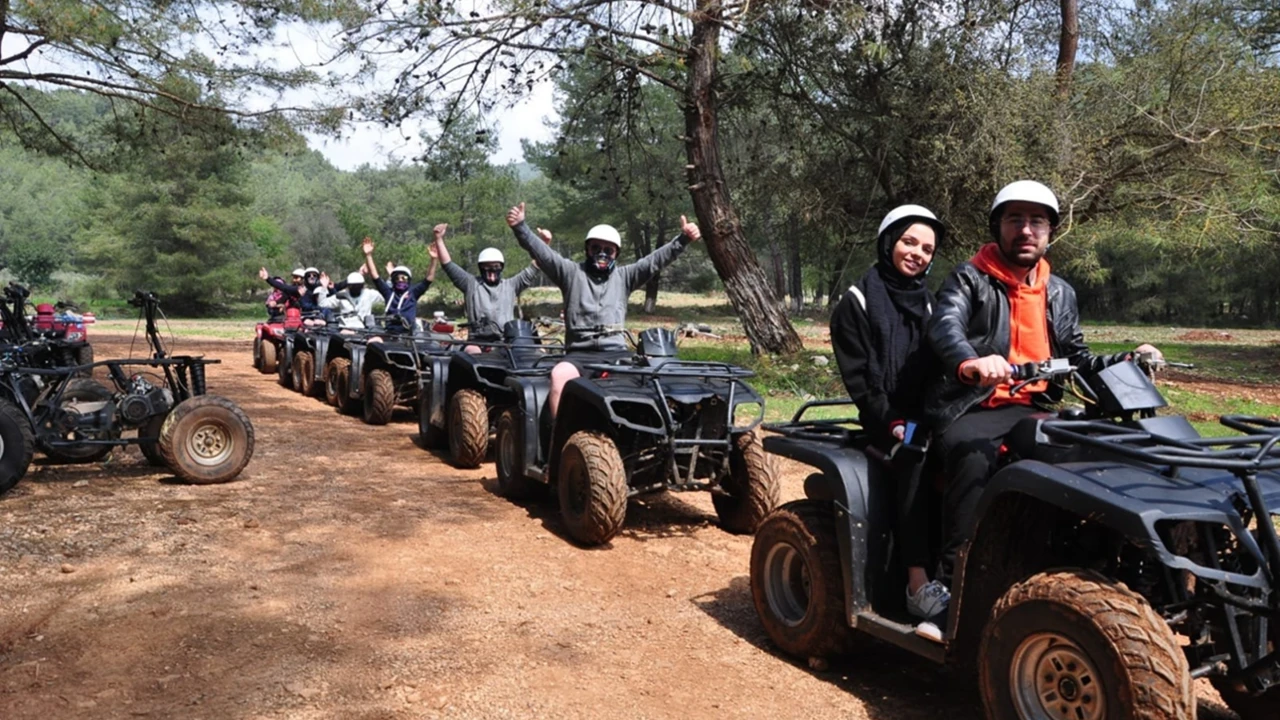
Travelers who prefer to explore with a pre-arranged itinerary can choose from Aydın cultural tours, eliminating the hassle of transportation and scheduling. For those seeking off-road adventures on dirt tracks, Aydın ATV quad safari tours offer a thrilling way to explore the plains and forest trails. Groups who enjoy moving together can consider Aydın buggy safari tours for exploring local tracks. Along the coastal stretch of the route, in Didim and Kuşadası, water sports options like jet skiing are also available.





Practical Tips Before You Go
- Wear non-slip walking shoes; the path leading up to the city is stony and uphill.
- As shade is limited at the site, bring a hat, sunglasses, and water.
- The Müzekart is valid at Priene Archaeological Site, which is under the Ministry of Culture and Tourism; this will speed up your entry.
- As closing times vary between summer and winter, check the current hours before you set off.
- Do not look for food and drink options within the site; plan your break in Güllübahçe or Söke center.
- Do not climb on ancient structures or lean on loose stone blocks; the site is protected.
Seasonal Visit Comparison
| Period | Advantage | Note |
|---|---|---|
| Spring (April-May) | Mild weather, blooming hillsides | Ideal for walking tours |
| Summer (June-August) | Long daylight hours, combine with coast | High midday heat, early visit recommended |
| Autumn (September-October) | Calm pace, soft light | Sea still warm; Didim can be added |
| Winter (November-March) | Fewer visitors, clear views | Ground can be slippery, shorter days |
How Many Days Should You Allocate for This Route?
The trio of Priene, Milet, and Didim, all located along the same southern route, can be visited in a single day with a tight schedule. However, for those who wish to explore the residential quarters and acropolis more thoroughly, two days offer a more relaxed pace. On a second day, you could head north to visit Zeus Cave and Dilek Peninsula National Park near Güzelçamlı, or if you prefer to go east, explore the Archaeology Museum in Aydın center, the Tralleis excavation site, and Nysa Ancient City in Sultanhisar. Avoid trying to cram both directions into one day. For a comprehensive overview of all the province's attractions, the Aydın places to visit guide is an excellent resource, while Aydın nature and adventure tours provide a ready-made framework for nature-focused itineraries.
Frequently Asked Questions 6
Which district is Priene Ancient City located in?
It is located in the Güllübahçe neighborhood of Söke district, Aydın, on the southern slopes of Samsun Dağı. It can be reached by a short drive from Söke center towards Güllübahçe.
What are the must-visit places in Aydın?
Priene, Milet, and the Temple of Apollo in Didim form the classic route. Additionally, you can visit Nysa Ancient City, the Tralleis excavation site, Aydın Archaeology Museum, Aphrodisias Archaeological Site, Zeus Cave, and Dilek Peninsula National Park.
What is Aydın most famous for?
The province is renowned for its fig and olive oil production. In terms of tourism, the Priene, Milet, and Didim triangle, along with Aphrodisias, are prominent attractions.
Which district in Aydın is most prominent for tourism?
This depends on your travel preferences: Söke and Didim are prominent for ancient city routes, Kuşadası for coastal stays and accommodation, and Karacasu for Aphrodisias.
What can you do in Aydın for a weekend?
For a two-day plan, the first day can cover Priene, Milet, and Didim along the southern route. The second day can be dedicated to Kuşadası and Dilek Peninsula National Park in the north. It's a common choice to balance a walking-heavy itinerary with a relaxing half-day by the coast.
Can Priene, Milet, and Didim be visited on the same day?
Yes, it's possible with an early start and a private vehicle. However, since all three require a fair amount of walking, spreading them over two days would be more comfortable.