Nestled along the azure coast of the Aegean, the Didim district of Aydın offers much more than just the fine-grained sands of Altınkum; it is a gateway to one of the ancient world's most profound archaeological treasures. At the heart of Didim stands the Apollo Temple, once a premier oracle center of antiquity, famous for its colossal marble columns and the iconic Medusa relief. Just a few kilometers to the north lies the ancient city of Miletus (Miletos), a cornerstone of human history where the foundations of philosophy, mathematics, and science were laid. In this guide, we bring together everything you need to know: from the prophetic traditions of the Apollo Temple to the grand theater of Miletus, including transport tips, the best time to visit, local dining, and a recommended itinerary.
At Travel Tour Shop, we prioritize quality above all else. We vet our tour and transfer providers rigorously, excluding approximately 83% of candidates to ensure only those with exceptional local expertise and proven guest satisfaction make our list. The following information is part of that quality filter: a curated collection of essential knowledge for first-time visitors to Didim and Miletus, ranging from historical highlights to practical travel tips.
Quick Facts
| Topic | Information |
|---|---|
| Location | Aydın, Didim district center (Apollo Temple) and near Balat (Miletus) |
| Highlights | Ancient oracle center and the birthplace of philosophy |
| Main Stops | Apollo Temple, Medusa relief, Miletus Theater, Faustina Baths |
| Duration | A full day is recommended for both sites |
| Entry | Paid archaeological sites; Museum Pass is valid |
| Best Time to Visit | Spring (April–June) and Autumn (September–October) |
| Transport | Minibuses from Didim center and Altınkum; Dolmuş via Söke |
Didyma and Miletos: Where is Aydın's Ancient Heritage?
The Didim district of Aydın is perfectly positioned on the Aegean coast, right in the middle of the popular tourism corridor between İzmir and Bodrum. While the area is often synonymous with the golden sands of Altınkum, its true historical soul lies in the ancient Sacred Area of Didyma. The Apollo Temple is located right at the entrance of Didim's town center; seeing these massive columns rise amidst modern cafes and shops creates a striking encounter between the ancient and the contemporary.
Miletus is situated approximately 20 kilometers north of the Apollo Temple, near the village of Balat between Söke and Didim, along the edge of the Büyük Menderes Plain. Once a thriving port city, Miletus is now located inland due to the alluvial deposits of the delta. These two sites are part of the same sacred and cultural landscape and, when visited together, offer a complete picture of the ancient Aegean.
The Oracle of Antiquity: Didim Apollo Temple
Known in ancient times as "Didyma," this sacred site was far more than just a city; it was a vast sanctuary dedicated to the god Apollo. Throughout the ancient world, kings, commanders, and merchants would travel to consult the oracles at Didyma before embarking on wars or making major commercial decisions. In this regard, the temple remains one of the most significant centers of ancient wisdom in the Mediterranean.
The Meaning of Didyma and the Tradition of Prophecy
The name "Didyma" translates to "twins" in Greek, which is widely interpreted as a reference to Apollo and his twin sister, the goddess Artemis. The sanctuary served as the religious hub for the city of Miletos, and the two settlements were connected by a ceremonial route known as the "Sacred Way." Prophetic rituals were conducted through a sacred spring within the temple and via the mediation of priests. Travel Tip: Understanding the temple's role as an oracle makes wandering through the stone ruins much more meaningful; reading a brief history before entering will greatly enrich your experience.
Colossal Columns and Architectural Grandeur
The Apollo Temple is a monumental structure built in the Ionic order; some sources even describe it as the third-largest temple of the ancient world. Although construction began in antiquity, its massive scale meant it took centuries to build and was never fully completed. The monumental marble columns surrounding the temple reach heights of approximately 19.70 meters—equivalent to a six-story building—with diameters of nearly 2 meters. The structure sits on a vast platform, reflecting the immense scale of the era with its double rows of columns. Today, several of these columns still stand, allowing visitors to truly feel the sheer magnitude of the site as they walk through the courtyard. Timing Tip: To best appreciate the texture and shadows of the columns, visit during the early morning or late afternoon; the midday sun offers little shade and can make the walk quite exhausting.
The Medusa Relief and Stone Craftsmanship
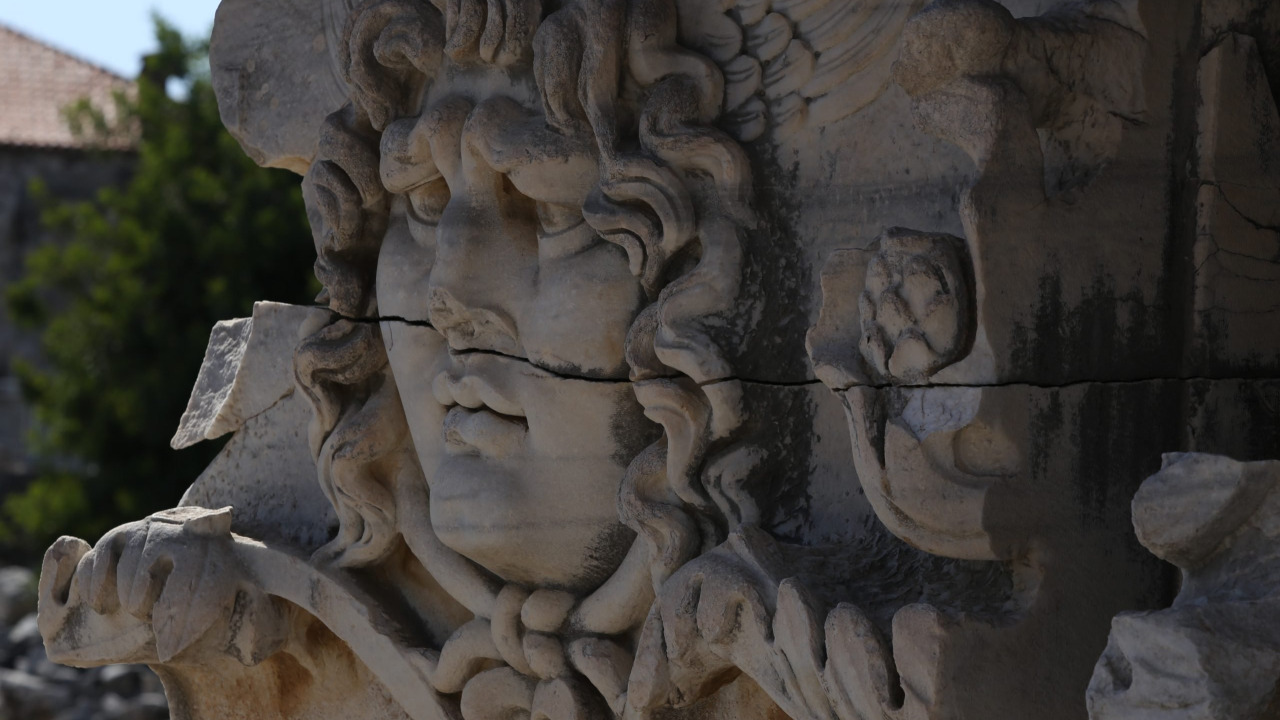
The most photographed element of the temple is the Medusa head relief, carved with exquisite detail into a marble block. In ancient belief, the Medusa figure served as a protective symbol to ward off evil from structures; the example in Didyma is a striking representation of this protective tradition. The relief is located in the open display area and is an ideal stop to witness the finesse of ancient stone masonry. What to look for: Beyond the Medusa head, keep an eye out for column bases, carved friezes, and the steps leading down into the temple courtyard, all of which showcase various examples of master craftsmanship.
The Sacred Way: The Link Between Didyma and Miletus
In antiquity, Didyma and Miletus were connected by a ceremonial path called the "Sacred Way." This route was used for processions during religious festivals, as crowds marched from the city to the sacred sanctuary to reach Apollo. Visiting these two sites with this connection in mind allows you to see them not as isolated ruins, but as parts of a single, unfolding story. Since the distance between them is relatively short, it is quite easy to visit both the temple and the ancient city on the same day. For those who prefer a seamless experience, guided programs can combine both locations without the hassle of transport and timing; if you are planning cultural excursions throughout Aydın, you can explore Aydın culture tours.


The Cradle of Philosophy and Science: Miletus (Miletos)
Traveling about 20 kilometers north from the Apollo Temple brings you to the Ancient City of Miletus, once one of the most important port and trade hubs of the ancient world. Miletus is celebrated as the "city where philosophy was born," marking the point where science and philosophy began to separate from theological dogma through rational thought. The city also features some of the earliest examples of organized urban planning using a grid system.
The Scientific Legacy of Miletus: Thales and the Birth of Philosophy
This city was home to the pioneers of positive science: the mathematician and philosopher Thales, Anaximander (an early figure in cartography), and Hippodamus, who is renowned for his grid-based city design. Keeping this intellectual heritage in mind adds a layer of depth to the stone ruins. Practical Tip: Because the city is spread over a wide area, planning your walking route starting from the theater and moving toward the harbor monument will make your visit more organized.
The 15,000-Seat Miletus Ancient Theater
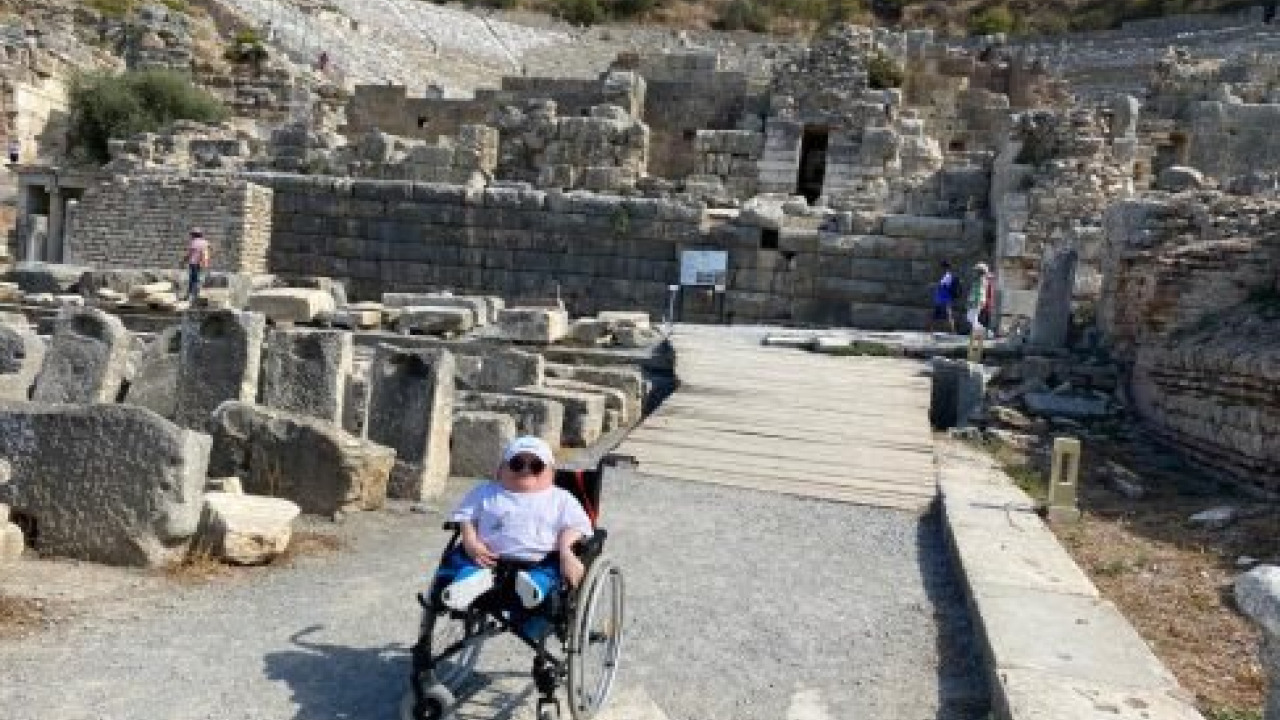
The first structure to greet you as you approach Miletus is the massive Miletus Ancient Theater, rising from the middle of the plain. Expanded during the Roman period, the theater is said to have held approximately 15,000 people and remains one of the best-preserved ancient structures in the region. Walking through its vaulted corridors and testing the acoustics offers a rich historical experience. What to look for: The remains of the stage building, the seating tiers, and the panoramic view of the plain from the top of the theater provide perfect angles for photography. Timing Tip: Since the climb to the upper tiers is somewhat steep, a morning visit is much more comfortable than visiting during the heat of the day.
Faustina Baths and the Ancient Harbor
Located within the city, the Faustina Baths were reportedly built in honor of Faustina, the wife of Roman Emperor Marcus Aurelius, and represent one of the grand bath complexes of the era. The reclining river god (Maiandros) statue by the pool and the lion figures are standout examples of stone artistry. Within the city, you can also see colonnaded streets and the remains of the ancient harbor monument, reminding visitors that Miletus was once a vibrant center of maritime trade. What to look for: The bath's water channels, arched ruins, and statue fragments offer tangible traces of daily Roman life.
Didim Coast and Altınkum: A Seaside Break After History
If you wish to conclude your ancient adventure with some coastal relaxation, the famous Altınkum beach in Didim is within walking distance. With its fine sand and shallow, crystal-clear waters, Altınkum is a favorite for families and travelers looking to cool off after a day of exploring.
Altınkum Beach and Seaside Relaxation
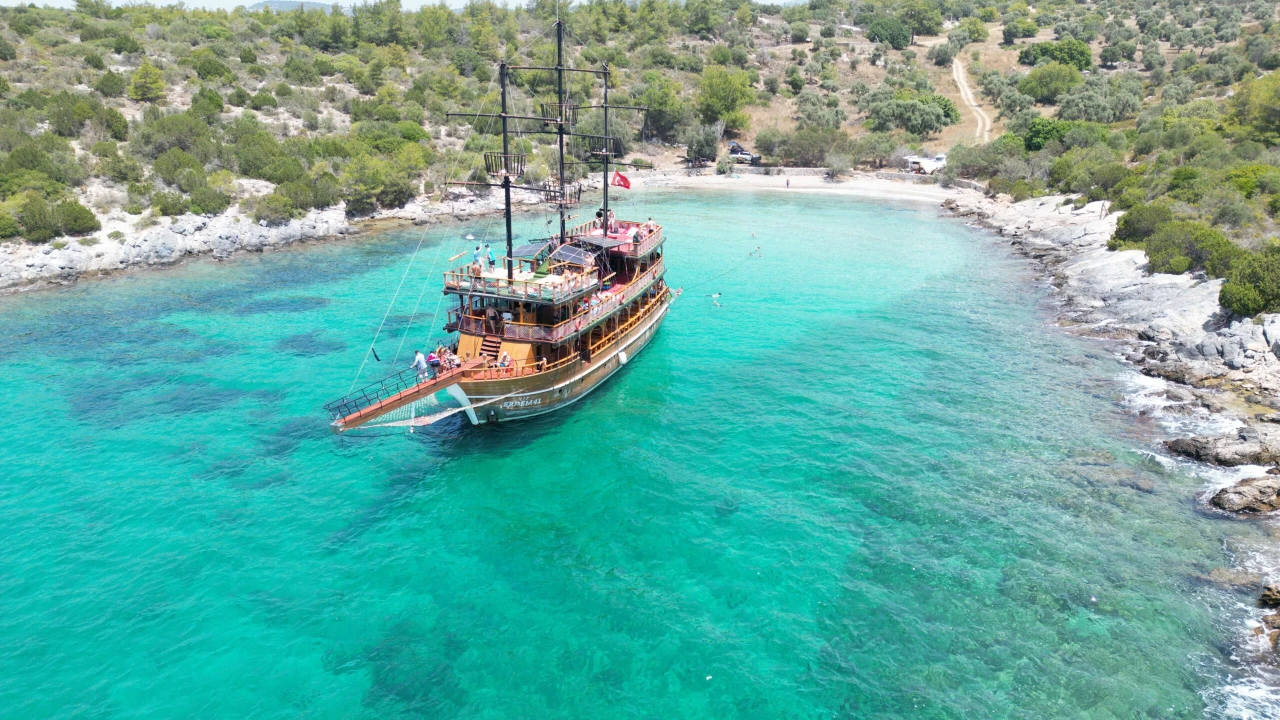
Taking a break at Altınkum after visiting the temples offers a relaxing change of pace after a morning of heavy history. The cafes and walkways stretching along the coast are perfect for a pleasant stroll in the late afternoon breeze. For those wanting to see the Didim coastline from the water, there are various routes through bays and diving spots; if you want to plan a maritime excursion in advance, check out the Didim boat tours options. Timing Tip: The beach gets crowded in the afternoons during summer, so scheduling your seaside break for the morning or sunset will ensure a much calmer experience.
How to Get to Didim and Miletus?
The region is very accessible, as it sits at the heart of the Aegean tourism route. The Apollo Temple is located at the entrance of the Didim district center and can be reached quickly via local minibuses from the Altınkum coast. Didim is approximately 100 kilometers from the center of Aydın and about 70 kilometers from Kuşadası. Regular bus and dolmuş services run to Didim from both Aydın bus station and via Söke.
Miletus is located on the road between Didim and Söke, making it a practical stop for those traveling by car. Those using public transport can use Söke as a connection hub. For those planning an ancient route with Kuşadası as a base, the area is ideal for day trips; if you are interested in cultural programs departing from Kuşadası, look into Kuşadası culture tours. For travelers who prefer door-to-door transport from an airport or hotel, Didim transfer services are a great option. For first-timers wanting to see both sites without the stress of logistics, a guided tour provides much-needed convenience and time management.
Best Season and Practical Tips for Your Visit
The most pleasant time to visit Didim and Miletus is during the spring and autumn months, when the weather is neither too hot nor too cool. Between April–June and September–October is ideal for walking through open-air archaeological sites and spending time in large areas with limited shade. Since the region can be quite hot and sunny in the summer, planning your visit for the early morning or late afternoon will ensure much greater comfort.
A few practical tips to make your trip easier: wear comfortable walking shoes as the ground in ancient sites is stony and uneven, carry water and a hat, and always use sun protection. If you plan to visit both sites on the same day, starting with the Apollo Temple in the morning and moving to Miletus in the afternoon creates a well-balanced itinerary. For photography enthusiasts, the light during the morning and sunset is preferred, as it highlights the textures of the stone and the shadows of the columns.
What to Eat in Didim? Aegean Flavors of Aydın
The cuisine of Didim and Aydın is characterized by fresh, delicious examples of Aegean olive oil-based dishes. During your trip, you can sample herbal Aegean plates such as şevketibostan (blessed thistle), sea fennel, and artichokes cooked in olive oil, as well as fresh fish from the Aegean Sea, such as sea bream and sea bass. The local olive oil culture is also reflected in breakfast tables, which are enriched with local cheeses, various olives, and herb-filled pastries (börek).
Aydın is also famous for its certified dried figs; picking up some dried figs and local olive oil on your way home makes for a delicious souvenir. The village markets around Miletus and Didim are excellent places to stop for seasonal fresh fruit, olives, and homemade products. Practical Tip: For the best seafood experience, the establishments around the Altınkum coast offer wonderful dining options with a sea view.
Where to Stay? Didim and Surrounding Areas
Accommodation in the region offers a variety of options to suit different budgets and expectations. Altınkum and its surroundings provide a practical base for those who want to combine beach time with ancient site visits, thanks to its many hotels and pensions near the shore. Staying in Didim center offers the advantage of being within walking distance of the Apollo Temple.
Kuşadası and Söke are also excellent alternative bases for exploring the region; Kuşadası, in particular, is well-suited for day trips due to its wide range of hotels and transport links. For those planning to visit the "trio" of Miletus, Priene, and Didyma together, the area around Söke is very convenient due to its proximity to the route. Choosing your accommodation based on your specific itinerary will help reduce travel time and allow you to start your days earlier.
Recommended Itinerary: Didim-Miletus Ancient Trip Plan
For those with limited time, the region can be comfortably explored in a single, full day. A suggested route might look like this: Start your day at the Apollo Temple in Didim center; examine the massive columns, the oracle area, and the Medusa relief in the morning light. Then, head north to the Ancient City of Miletus to explore the theater, the Faustina Baths, and the colonnaded streets. In the afternoon, if you wish, you can add neighboring ancient sites like Priene to your route toward Söke.
Those who prefer a more relaxed pace can spread this program over two days: Day one for the Apollo Temple and a seaside break at Altınkum, and day two for Miletus and the surrounding ancient settlements. This way, you can dedicate ample time to the historical depth of the sites while still enjoying the coastal charm of the region. To experience the route with a guide and a pre-planned transport schedule, consider cultural tour options to make your journey even smoother.
Frequently Asked Questions 6
Is there an entrance fee for the Didim Apollo Temple and Miletus Ruins, and is the Museum Pass valid?
Since both archaeological sites are managed by the Ministry of Culture and Tourism, there is an entrance fee. However, the Museum Pass is valid at both locations, allowing you to explore without purchasing separate tickets. We recommend checking current ticket prices and opening hours before your visit.
How can I get to the Didim Apollo Temple from Aydın center?
Because the site is located right at the entrance of the district center, it is easily accessible via local minibuses from the Altınkum coast. It is approximately 100 kilometers from Aydın center and 70 kilometers from Kuşadası; bus and dolmuş options are available from both directions. Söke serves as a practical transfer point for those using public transport, and Miletus is located along this route.
What is the story behind the Didim Apollo Temple?
Known in antiquity as Didyma, this site was a sacred oracle center dedicated to the god Apollo. Kings and merchants would consult the oracles here before making major decisions. The temple served as the religious heart of Miletos, and the two settlements were linked by the 'Sacred Way.' Due to its massive scale, the structure, built in the Ionic order, took centuries to construct and was never fully completed.
What is the significance of the Miletus Faustina Baths?
Rising within the ancient city, this structure is named after Faustina, the wife of Roman Emperor Marcus Aurelius, and is considered one of the grand bath complexes of its time. The reclining river god Maiandros statue by the pool and the lion-shaped water features are striking examples of stone craftsmanship. The site is highly worth visiting as it provides a tangible glimpse into daily Roman life.
What should I eat in Didim, and which local delicacies stand out?
The local cuisine is famous for fresh, olive oil-based Aegean dishes. Alongside herb-based dishes like şevketibostan, sea fennel, and artichoke, fresh sea bream and sea bass are must-try delicacies. On your way back, Aydın's certified dried figs and local olive oil make excellent souvenirs.
In which province is the Apollo Temple located and where exactly is it?
The Apollo Temple is located in the Didim district of Aydın province. It sits at the entrance of the district center, within the modern settlement, and is within walking distance of Altınkum beach. Ancient Miletus is located approximately 20 kilometers north of here, near Balat between Söke and Didim.