
Madaba, a charming town nestled in the central highlands of Jordan, southwest of Amman, earns its fame from the remarkably preserved Byzantine mosaics adorning its floors. The undisputed highlight of any visit is the 6th-century mosaic map embedded in the floor of the Greek Orthodox St. George's Church. Complementing this are the residential and church mosaics within the Madaba Archaeology Park, the Church of St. John the Baptist on the acropolis, and the active mosaic workshops scattered throughout the town. As the main attractions are within easy walking distance, you can explore the core of Madaba in half a day. If you add Mount Nebo to your itinerary, it becomes a full-day adventure. This guide will walk you through exactly what to see at each stop, the best times to visit, transportation options, and a suggested day plan.
Quick Facts
| Topic | Information |
|---|---|
| Location | Central highlands of Jordan, southwest of Amman; situated on the King's Highway route |
| Key Highlights | St. George's Church, Madaba Archaeology Park, Church of St. John the Baptist, mosaic workshops |
| Mosaic Map | Dates to the 6th century; discovered in 1884 |
| Map's Current Size | Approximately 10.5 meters by 5 meters, according to the Jordan Tourism Board |
| Number of Stones | Between 700,000 and 800,000 naturally colored tesserae, according to the Tourism Board |
| Distance from Amman | Approximately 35 kilometers, a 40-minute drive |
| Connection to Mount Nebo | About 8-10 kilometers northwest of the city, a 15-minute drive |
| Recommended Duration | Half a day for the city center; a full day if Mount Nebo is included |
| Best Time to Visit | March-May and September-November |
| UNESCO Status | The city is not inscribed on the World Heritage List |
Top Attractions in Madaba
Madaba's tourist attractions are conveniently concentrated within a small area, with most major sights just a fifteen-minute walk from each other. It's important to clarify one point upfront: Madaba itself is not inscribed on the UNESCO World Heritage List. Jordan's listed sites include Petra, Umm er-Rasas, and Es-Salt. Madaba's true value comes not from a formal designation, but from the sheer number of mosaic floors layered throughout the city, each telling a piece of its ancient story.
St. George's Church and the Madaba Map
The Greek Orthodox St. George's Church (locally known as the Church of the Map), as it stands today, is a 19th-century structure built upon the remnants of an older Byzantine church. What truly puts this building on the world stage isn't its architecture, but its floor: the mosaic map, unearthed during construction in 1884, is considered one of the earliest surviving geographical depictions of the Holy Land. The Jordan Tourism Board states that the map dates to the 6th century, with the surviving section measuring approximately 10.5 meters long and 5 meters wide, composed of between 700,000 and 800,000 naturally colored tesserae. The original mosaic was far more extensive than what we see today; the floor surface is a preserved fragment of a much larger whole.
Practical tip: Since the map is on the floor, your view can be obstructed during peak hours. Arriving close to opening time will allow you to see the mosaic comfortably. The church is an active place of worship; the map is closed to visitors during Sunday morning services, and visiting hours vary between winter and summer seasons. The entrance fee is determined by the church's own regulations; please confirm current hours and fees at the Madaba Visitor Center.
What the Map Reveals
Unlike modern maps, the Madaba Map is oriented eastward, meaning the direction you face on the floor aligns with the depiction. The Jordan River flows horizontally, emptying into the Dead Sea, with two boats depicted on the lake and fish figures within the river. The most detailed section of the depiction is Jerusalem: its oval plaza, a colonnaded main street, and porticoes topped with red roofs are all clearly discernible. Researchers date the mosaic to the mid-6th century, based on the absence of structures known to have been built after 570 AD. Thus, the Madaba Map is not merely a decoration, but a primary document reflecting the geographical knowledge of its era.
Madaba Archaeology Park: The Hippolytus Hall and Church of the Virgin Mary
Adjacent to the visitor center, the Archaeology Park, established in 1991 according to the Jordan Tourism Board, brings together mosaic floors unearthed from various parts of the city under protective stone shelters. Within the park, you can see a Roman road section, the Hippolytus Hall, and remains of the Church of the Virgin Mary and the Church of Prophet Elijah. The Hippolytus Hall features a 6th-century residential floor mosaic depicting the ancient Hippolytus narrative with figures; a section of the hall was uncovered in the early 20th century, with the remainder revealed in the 1980s. The Church of the Virgin Mary, also a 6th-century structure, has a central geometric floor mosaic dated to 767 AD by its Greek inscription. The park also exhibits artifacts from regional excavations, including fragments of an early mosaic found in Herod's bathhouse at Mukawir. For travelers keen to explore Byzantine floor mosaics with a similar historical context in Anatolia, our culture tours in Turkey category offers a comparable journey.
Since the halls are shaded, visiting the park during the midday heat in summer can be a smart move.
Church of St. John the Baptist and the Acropolis Layers
Perched atop the city's acropolis, this Catholic church was completed in the early 20th century, built over older layers uncovered during its construction. The staircase leading up to the bell tower is narrow and steep, with the final section featuring metal steps. From the top, you're rewarded with a panoramic view over Madaba's rooftops and the surrounding plateau. The acropolis exhibition, housed in the church's vaulted lower level, displays the remains beneath the structure and artifacts from the region. On the same level, you'll find a deep well, dated to the Moabite period in historical sources. Saving your climb to the tower for the late afternoon will allow you to see the city's silhouette more clearly, bathed in the soft, declining light.
Mosaic Workshops and Restoration Institute
In Madaba, mosaics aren't just a subject for museums; the craft thrives within the city. The Jordan Tourism Board notes that the Madaba Institute for Mosaic Art and Restoration offers a two-year diploma program, training restoration technicians and contributing to the preservation of mosaics throughout the region. In the workshops located in the city center, you can watch artisans cut stones and meticulously arrange them into mortar beds.
When shopping, here's how to distinguish: handmade panels will have irregular tessera edges and varying grout lines, while mass-produced items will have overly smooth surfaces and repetitive patterns. The price is determined by size, type of stone, and the time spent on craftsmanship; inquire about the cost directly at the workshop.
Mount Nebo: How to Add it to Your Madaba Itinerary
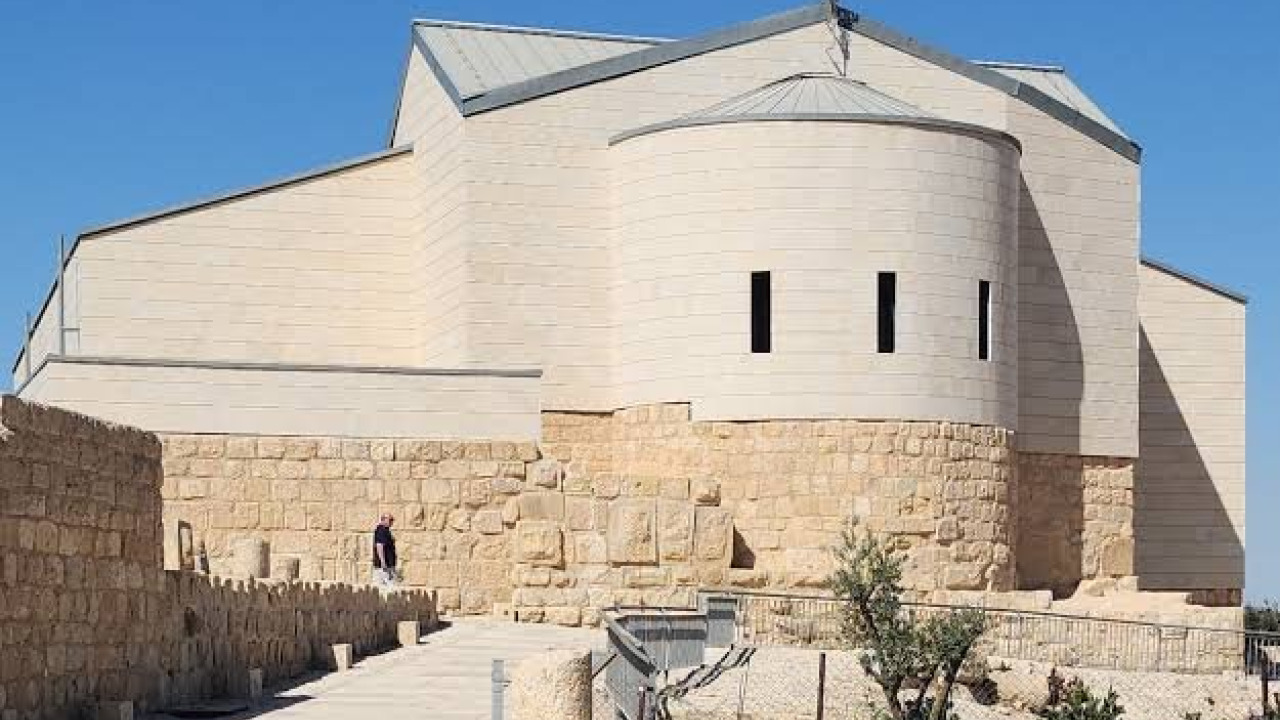
Mount Nebo lies approximately 8-10 kilometers northwest of Madaba, just a 15-minute drive from the city. This close proximity makes it a natural addition to a single-day itinerary. The Memorial Church of Moses on the summit is operated by the Custody of the Holy Land; extensive renovation work was completed in 2016. Inside the structure, the baptistery mosaic, dated to 531 AD thanks to its inscription, depicts hunting and pastoral scenes. The Custody announces visiting hours as 8:00 AM - 4:30 PM during winter and 8:00 AM - 6:00 PM during summer. From the summit, a vast panorama unfolds over the Jordan Valley and the Dead Sea basin on clear days; visibility to the distant horizon depends on weather conditions and can vary daily.
| Stop | What to See | Recommended Time | Timing Tip |
|---|---|---|---|
| St. George's Church | 6th-century mosaic map, floor panels | 30-45 minutes | Near opening time; closed during Sunday morning services |
| Madaba Archaeology Park | Hippolytus Hall, Church of the Virgin Mary, Roman road | 45-60 minutes | Midday in summer; shaded and indoors |
| Church of St. John the Baptist | Bell tower panorama, acropolis exhibition, ancient well | 30-45 minutes | Late afternoon, soft light |
| Mosaic Workshops | Cutting and arrangement techniques, shopping | 20-40 minutes | Afternoon |
| Mount Nebo | Memorial church, 531 AD baptistery mosaic, valley views | 60-90 minutes | At least one hour before closing time |
Getting to Madaba
By Road from Amman and the Airport
The journey between Amman and Madaba is approximately 35 kilometers, a 40-minute drive southwest across the plateau. Madaba is conveniently located on Route 35, known as the King's Highway, making it a natural first stop for longer routes heading south. Queen Alia International Airport is about 35 kilometers south of Amman and is actually closer to Madaba than Amman city center. Landing at the airport and heading directly to Madaba can help you bypass Amman's traffic on your first day.
For public transport, shared minibuses depart from Amman's southern terminal. These lines operate on a 'fill-and-go' basis, and frequency decreases in the evenings. Visitors who prefer not to leave their return time to chance often opt for a pre-arranged taxi with an agreed waiting period. Those arriving by rental car will find street parking available in the city center.
Getting Around the City on Foot
Madaba's city center is wonderfully compact. St. George's Church, the Archaeology Park, the visitor center, and the church on the acropolis are all within easy walking distance of each other. The only destinations requiring a vehicle are Mount Nebo and other surrounding sights. Be aware that the streets can be hilly and sidewalks uneven; make sure to wear comfortable shoes for your city tour.
| Starting Point | Distance & Time | Recommended Transport |
|---|---|---|
| Amman city center | Approx. 35 km, 40 minutes | Rental car, taxi, shared minibus from southern terminal |
| Queen Alia Airport | Shorter than from Amman city center; 30-40 minute drive | Transfer, taxi, rental car |
| Mount Nebo | Approx. 8-10 km northwest, 15 minutes | Rental car, taxi with waiting time |
| Within city attractions | A few hundred meters | Walking |
Best Time to Visit Madaba
Madaba is situated on a plateau, so it doesn't experience the extreme heat of the Dead Sea basin. Nevertheless, summer afternoons in open areas can still be tiring. Your itinerary should be planned with the season and time of day in mind.
| Period | City Conditions | Visiting Tip |
|---|---|---|
| March-May | Mild for walking, soft light | Open-air and city center tours flow smoothly all day |
| June-August | Dry heat, midday hours can be challenging | Schedule indoor attractions for midday, the acropolis for late afternoon |
| September-November | Heat subsides, crowds lessen | Increased chance of clear days for Mount Nebo views |
| December-February | Rainy and cool, short days | Closing times are earlier; churches operate according to service schedules |
The religious calendar also impacts your schedule: during Christmas and Easter, churches observe intensive service schedules, narrowing visiting windows. Planning your city center tour for early mornings on these dates will make your visit smoother.
Madaba's Culinary Delights and Accommodation Zones
Dining in Madaba
Compared to its surrounding attractions, Madaba offers a wider variety of restaurants, making it a common lunch stop for travelers heading towards Mukawir, Ma'in, or Mount Nebo. The most renowned dish of Jordanian cuisine is Mansaf, served with lamb over rice and a fermented yogurt sauce; UNESCO recognized this tradition on its Intangible Cultural Heritage list in 2022. Mansaf is a communal meal, and as its preparation takes time, groups often inform restaurants in advance. For a lighter meal, visitors can opt for mezze platters; fragrant cardamom-infused coffee is a popular brew in the small cafes around the center.
Where to Stay
Your accommodation choice in Madaba will be guided more by location than by brand. The city center and acropolis area are home to charming small guesthouses converted from old stone houses, offering walking access to all major attractions. The city's outskirts provide larger hotels and easier parking, which is practical for those arriving by car. The zone near the airport suits travelers with early flights or those starting their itinerary in Madaba. If you're also planning to visit the Dead Sea, many choose to spend the night on the plateau and make a day trip down to the basin; the plateau nights are refreshingly cool.
A Day in Madaba: Starting with the Map, Ending on the Acropolis
The following itinerary is designed for travelers staying in Madaba or arriving by car from Amman in the morning, with stops sequenced according to opening and closing times.
- Start your day at St. George's Church; arriving close to opening time ensures you can see the map without the crowds.
- After leaving the church, head to the Archaeology Park and dedicate about an hour to the Hippolytus Hall and the Church of the Virgin Mary mosaics.
- Check current hours at the visitor center, then observe mosaic making at one of the workshops in the center.
- Enjoy lunch in the city center; if ordering Mansaf, inquire about preparation time.
- In the afternoon, proceed to Mount Nebo and ensure you arrive at least an hour before closing time; allow more than an hour for the memorial church and valley views.
- Return to Madaba and climb to the Church of St. John the Baptist on the acropolis; witness the bell tower panorama bathed in the soft, declining light.
- Conclude your day with dinner in the city center; if you plan to head south the next day, map out your King's Highway route in the evening.
Essential Tips Before You Visit
- Visa requirements vary by nationality and are updated periodically; confirm with the official source of the Jordan Tourism Board before your trip.
- Churches are active places of worship; opt for clothing that covers your shoulders and knees, and be aware that visits may be restricted during service hours.
- Entrance fees are determined individually by each site; verify current amounts from the respective institution's official source, and carry cash for convenience.
- When photographing mosaic floors, a steady hand works better than a flash.
- Park and acropolis grounds can be uneven; choose shoes with good grip instead of slippery soles.
- During summer months, carry a hat and water; as the plateau evenings can be cool, a light outer layer will come in handy.
- If combining Mount Nebo with your city center tour on the same day, prioritize the closing times rather than just driving duration; if the mountain visit is left too late, your experience might be cut short.
Integrating Madaba into Your Travel Plans
The key to properly positioning Madaba in your itinerary is to view it not merely as a stopover, but as a concise and rich cultural destination. The sequence is straightforward: schedule your city center tour for the morning, align indoor attractions with the midday heat, fit Mount Nebo according to its closing time, and save the acropolis as the day's grand finale. Since the city is located on the King's Highway, it's also ideal for spending your first night on routes heading south. For those who love exploring Byzantine layers on a city scale, our historical city tours in Turkey continue this theme in Anatolia. Travelers looking to delve into another layer of the ancient world can benefit from our Egypt travel guide, while those interested in comparing early Christian architecture on a basilica scale can consult our Italy travel guide article.
Frequently Asked Questions 5
Where is Madaba and how do I get there from Amman?
Madaba is located in the central highlands of Jordan, southwest of Amman, and is situated on the King's Highway route. The two cities are approximately 35 kilometers apart, a 40-minute drive. You can use a rental car, taxi, or shared minibuses departing from Amman's southern terminal. To avoid leaving your return time to chance, arranging a taxi with an agreed waiting period is a common solution.
Which church houses the Madaba Map, and how large is it?
The map is located on the floor of the Greek Orthodox St. George's Church in the city center. It dates to the 6th century and was discovered in 1884. The Jordan Tourism Board states that the surviving section measures approximately 10.5 meters by 5 meters and contains between 700,000 and 800,000 naturally colored tesserae.
How much time should I allocate to visit Madaba?
Half a day is sufficient as the main attractions in the city center are within walking distance. If you add Mount Nebo, the itinerary extends to a full day. If you also include directions to nearby Mukawir or Ma'in, basing yourself in Madaba for two nights will allow for a more relaxed pace.
What is the best time to visit Madaba?
The period between March and May, and September and November, is the most balanced for city walks. During summer months, the plateau experiences dry heat; it's advisable to schedule indoor attractions for midday and the acropolis for late afternoon. In winter, days are shorter, and closing times are earlier.
Can Madaba and Mount Nebo be visited on the same day?
Yes, they can. Mount Nebo is approximately 8-10 kilometers northwest of the city and can be reached by car in about 15 minutes. Since the Custody announces visiting hours as 8:00 AM - 4:30 PM in winter and 8:00 AM - 6:00 PM in summer, a workable itinerary involves visiting the city center in the morning and Mount Nebo in the afternoon.