
When you return from Jordan, what often finds its way into your suitcase isn't just a simple trinket, but a piece of enduring craftsmanship. A sand bottle captures the desert's vibrant layers in glass; a Madaba mosaic continues an artisan tradition stretching back to the sixth century; and Dead Sea salt carries the mineral essence of the lowest point on Earth. This guide transforms your Jordan souvenir shopping from a random browse into a well-planned expedition. We'll cover where each product is made, what to look for when buying, how much fits in your luggage, the art of bargaining, and the ins and outs of tax refunds and customs regulations.
Who This Guide Is For (and Who It Isn't)
Shopping in Jordan often aligns perfectly with your travel itinerary, as products are typically found where they're made: mosaics in Madaba, sand bottles at the desert's edge, and salt and mud along the Dead Sea coast. This guide, therefore, integrates shopping as a seamless part of your journey, rather than a separate day trip. Keep in mind that Amman's Souq Jara is a seasonal highlight, open only on Fridays during the summer months.
- Travelers exploring the Amman, Madaba, Petra, Wadi Rum, and Aqaba route who want to spread their souvenir shopping across various stops.
- Passengers traveling with checked luggage who are comfortable carrying fragile artisanal items.
- Buyers who value knowing the product's origin and seek out cooperative or workshop-produced goods.
This guide is not for readers with these expectations: travelers relying solely on carry-on luggage who can't transport heavy items (we've highlighted lighter options separately), those seeking a shopping mall experience, or buyers looking to purchase antiques. The last point isn't a preference but a legal restriction.
Quick Facts
| Topic | Information |
|---|---|
| Scope | Sand bottles, mosaics, Dead Sea cosmetics, spices, silver jewelry, olive oil soap |
| Main Stops | Amman (Rainbow Street, Balad, Souq Jara: Fridays in summer), Madaba workshops, Petra and Wadi Rum, Aqaba |
| Madaba's Status | UNESCO Creative City of Crafts and Folk Art since 2017 |
| Bargaining | Common in traditional souks; not applicable in fixed-price stores |
| Tax Refund | Registered Tax Free shops, customs stamp upon departure, TAG Tax Free counter |
| Carry-on Limit | 100 ml for liquids, gels, and creams; larger containers in checked luggage |
| Antiquities Rule | Do not purchase stones or coins presented as antiques |
| Timing | Buying fragile items at the end of your trip reduces carrying burden |
Which Souvenir Suits Which Traveler
Your souvenir choice will depend on weight, fragility, and luggage type; this table provides a quick overview.
| Product | Weight & Fragility | Luggage Type | Where to Find | Best For |
|---|---|---|---|---|
| Sand Bottle | Light, fragile | Checked, wrapped | Wadi Rum and Petra | Those seeking a visual keepsake |
| Mosaic Panel | Heavy, fragile | Checked, foam-supported | Madaba workshops | Those looking for a wall art piece |
| Mud and Salt | Medium weight, may leak | Checked, bagged | Dead Sea coast, Amman, Aqaba | Gifting skincare products |
| Za'atar and Spices | Light, durable | Carry-on or checked | Amman souks | Travelers with limited luggage space |
| Silver Jewelry | Light, durable | Carry-on | Cooperatives and Nature Shops | Those seeking a personal gift |
| Olive Oil Soap | Light, durable | Carry-on or checked | Nature Shops, souks | Buying gifts in bulk |
Sand Bottles: The Desert's Hues Captured in Glass
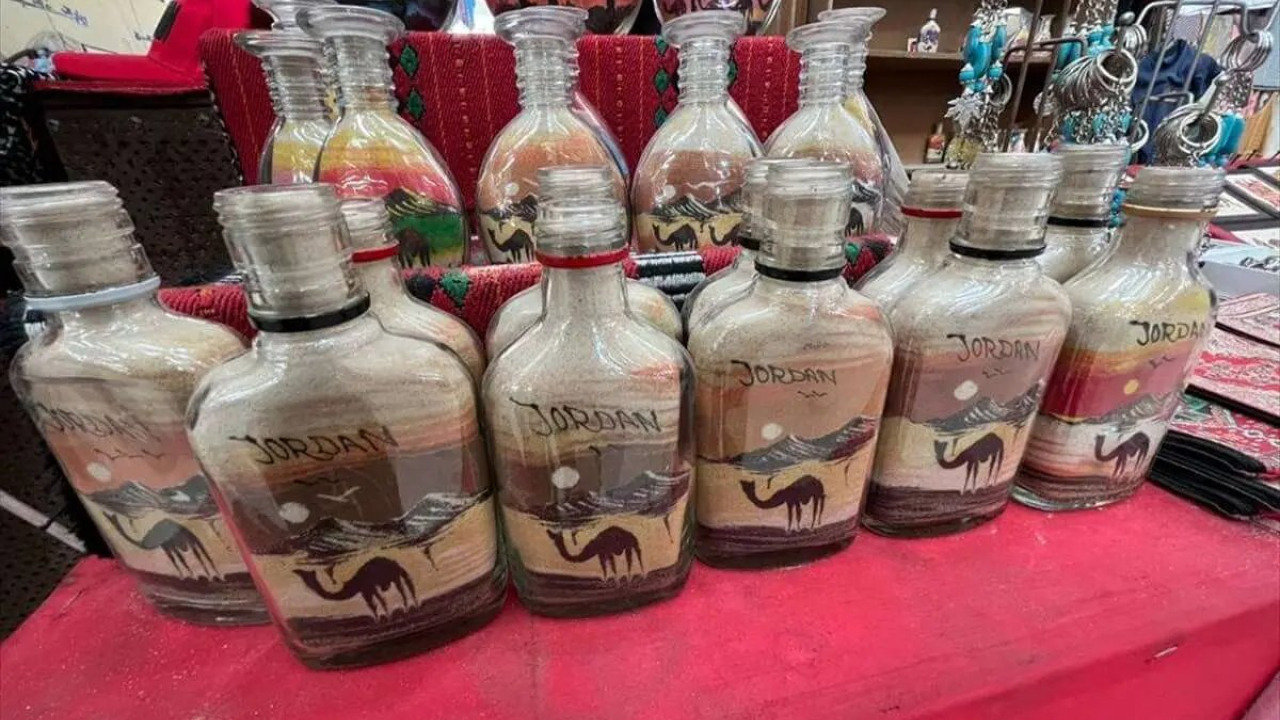
The sand bottle is an iconic Jordanian souvenir, carrying the visual signature of the country. Its materials are the natural sand tones of the southern desert, a landscape far from ordinary: the Wadi Rum Protected Area was inscribed on the UNESCO World Heritage List in 2011 for its mixed natural and cultural values. This 74,000-hectare site is home to thousands of rock carvings and inscriptions.
What's Inside the Bottle
Artisans meticulously layer different shades of sand using a funnel and a thin metal rod. Through careful compression of these layers, intricate designs like camel caravans, desert dune silhouettes, or calligraphic figures emerge. The colors are entirely natural, derived from the sand itself. At the Wadi Rum visitor center, you can watch the creation process and even have your own custom bottle designed.
Three Checks to Make Before You Buy
- Gently tilt the bottle and observe if the layers shift: in a tightly packed bottle, the design should remain intact.
- Examine the color transitions; handmade pieces will have crisp, clear lines, while mass-produced items often appear blurry.
- Ask how the bottle's opening is sealed: this is crucial to prevent the design from scattering during transit.
Have the bottle securely wrapped where you purchase it, then place it carefully in the center of your suitcase.
Madaba Mosaics: Shopping in the City of Crafts
Madaba is a city where mosaics are not just a historical legacy but a living craft. The famous Madaba Map, located on the floor of the Greek Orthodox Church of St. George, dates back to the sixth century and was discovered during the church's construction in the 19th century. Today's mosaic production in the city is a direct continuation of this rich heritage.
The Story Behind the Mosaic City
In 2017, Madaba was designated a UNESCO Creative City of Crafts and Folk Art. UNESCO's city profile highlights mosaic production as one of the main pillars of the local economy, citing approximately 150 workshops and around 800 jobs. The city also hosts a specialized institution, the Madaba Institute for Mosaic Art and Restoration, which trains artisans in mosaic conservation and production techniques.
What to Look for When Buying from a Workshop
Mosaic quality is determined by the stones themselves and the density of their placement. Natural stones will have deep, matte colors, with narrow and consistent gaps between them. Check the back of the panel: a piece securely mounted on a solid base with neatly finished edges will withstand travel better. Small, framed pieces can be carried in cabin luggage; however, wall-panel-sized mosaics require checked luggage and foam support. Travelers combining crafts with ancient city exploration who might seek similar themes in Turkey can explore the cultural tours in Turkey category.
Dead Sea Mud and Salt: What You're Buying
The Jordanian side of the Dead Sea is where you can buy cosmetic souvenirs directly from their source. According to the Jordan Tourism Board, the water here is approximately ten times saltier than ocean water, rich in chloride salts, particularly magnesium, sodium, potassium, and bromine. Mud and salt products are essentially this mineral-rich composition, packaged for you.
The Difference Between Mud, Salt, and Soap
These three products serve different purposes: packaged mud masks are for therapeutic treatments, bath salts are dissolved in water, and soap is for daily use. They also differ in how they should be packed: soap is light and leak-proof, mud is heavy and requires bagging, and salt, being hygroscopic, should be transported in a sealed container.
What to Look for on the Label
- Is the manufacturer's name and full address clearly printed?
- Are the ingredients list and expiration date legible?
- Is the packaging securely sealed? Do mud products have a lid seal?
Limits of Health Claims
While official tourism sources mention the soothing effects of Dead Sea water and mud for skin and joint complaints, these are not claims of medical treatment. Individuals with skin conditions, those who are pregnant, or those on regular medication should consult their doctor before using these products.
For Your Table, Kitchen, and Jewelry Box
For travelers who prefer not to carry fragile items, there's a selection of light and durable souvenirs.
Za'atar and Spices
Za'atar (also spelled Zatar) is a fragrant blend of a herb from the thyme family, sesame seeds, and sumac. It's traditionally eaten with bread dipped in olive oil or sprinkled over pastries. In Amman's souks, you can choose freshly ground blends by their aroma. If packing in checked luggage, double-bag it to prevent the scent from permeating other items.
Cardamom Coffee and Dallah Pots
Cardamom-infused Arabic coffee is central to the tradition of hospitality in Jordan. The long-spouted pot it's served from is known as a dallah, typically crafted from brass or copper. Buying coffee beans whole preserves their aroma longer. A dallah is a heavy item, so plan your luggage accordingly. Readers who prioritize culinary culture in their itinerary can find similar experiences in the gastronomy tours in Turkey category.
Olive Oil and Soap
Northern Jordan is a region known for its olive production. While cold-pressed olive oil is available, it's often sold in glass bottles, making it cumbersome to transport. Olive oil soap, however, is light, unbreakable, and ideal for bulk gifting.
Silver and Bedouin Jewelry
Silver craftsmanship is a well-established field, often linked to workshops near protected areas. The Royal Society for the Conservation of Nature (RSCN), Jordan's nature conservation organization, operates handicraft workshops with communities surrounding these protected areas. Their products are sold at Nature Shops within the reserves and at their store in Jabal Amman. Since proceeds support conservation programs and rural communities, this offers a verifiable source for buyers who care about the production chain.
Where to Buy: A City-by-City Shopping Guide
Amman: Rainbow Street, Balad, and Souq Jara
The capital offers three distinct shopping experiences. Rainbow Street in Jabal Amman is known for its boutiques and souvenir shops, the historic downtown area of Balad features traditional souk layouts, and Souq Jara operates as a vibrant street market on Fridays during the summer months. If your visit falls outside of summer, you can skip Souq Jara as it's seasonal. Bargaining is common in Balad, while Rainbow Street boutiques generally have fixed prices.
Petra and Wadi Rum: Shopping at the Sites
The market at the exit of Petra and the Wadi Rum visitor center offer direct contact with producers for sand bottles and silver jewelry. At the Disi Women's Cooperative ceramic workshop in the region, visitors can design and paint their own pieces. For this stop, which combines a souvenir with an experience, confirm operating hours with your camp.
Madaba and Aqaba: Workshops and Special Economic Zone
Madaba is the primary destination for mosaics, with workshops concentrated in the city center. Aqaba operates under a different system: due to its status as a special economic zone managed by ASEZA, its customs and sales tax regime differs from the rest of the country. What this means for prices on the shelf varies by product; compare items carefully and keep your receipts.
How Bargaining, Payment, and Tax Refunds Work
In Jordan, bargaining is a customary form of interaction in traditional souks; a polite tone and patience will facilitate the process. It's not applicable in fixed-price stores, chain supermarkets, or museum shops. Before naming a price, seeing the same item in two different places will help you establish your own benchmark.
Regarding payment, card acceptance is widespread in city centers but limited at small workshops and market stalls. Jordan offers a sales tax refund upon departure for visitors residing outside the country; the condition for eligibility is having spent more than 183 days outside Jordan in the last twelve months. The process is as follows:
- Make your purchase at a store registered with the Tax Free network; request an original, stamped invoice in your name.
- Have the refund form filled out at the store, and keep the products in their original packaging until departure.
- At the airport, before checking your luggage, present the products and invoices to the customs officer to get an exit stamp on your form.
- Apply at the TAG Tax Free counter with your stamped form, original invoice, boarding pass, and a copy of your passport.
- A minimum tax amount threshold and an upper limit for immediate payment apply; confirm the current threshold and list of registered stores with the store's Tax Free attendant before making your purchase.
Itemize your budget: product cost, packaging expenses, shipping costs for heavy items, and the refundable tax amount are all separate line items.
Packing Your Souvenirs & Customs Regulations
Getting your purchases home safely is as much a planned effort as choosing them. According to Queen Alia International Airport regulations, liquids, gels, and creams in carry-on luggage are subject to a 100-milliliter limit. Cosmetics and skincare products fall under this definition, so mud masks and oil-based items should be placed in your checked luggage. Prescription medications are exempt but must be declared separately at security, and a copy of your prescription may be requested.
- Wrap fragile items (mosaics, glass bottles, ceramics) in bubble wrap and place them in the center of your suitcase.
- Transport salt and spices in double-layered, sealed bags to prevent moisture and odor transfer.
- Do not purchase stones or coins presented as antiques: these fall under the Antiquities Law.
- For heavy panels, inquire about the workshop's shipping options and request written confirmation of shipping responsibility.
- Keep all receipts and invoices together in one envelope; both refunds and customs will require the same documentation.
Visa requirements vary by nationality and are updated periodically; confirm them on the official website of the Jordan Tourism Board before your trip. For those looking to plan another classic route in the region with a similar approach, our Egypt travel guide offers a point of comparison.
Timing Your Purchases: Where to Fit Shopping into Your Itinerary
The logic is simple: buy light and durable items early in your trip, and heavy or fragile ones towards the end. This sequence is structured according to the geographical order of a classic Amman-entry itinerary: Madaba, Dead Sea, Petra, Wadi Rum, Aqaba.
| Itinerary Stage | Recommended Purchase | Rationale |
|---|---|---|
| Amman (first days) | Spices, coffee, soap | Light, won't cause luggage issues |
| Madaba (transit) | Small mosaic pieces | Wide selection of workshops |
| Dead Sea (Jordanian side) | Mud and salt products | Greater variety at the source; heavy containers also available in Amman and Aqaba |
| Petra and Wadi Rum | Sand bottles, silver jewelry | Direct contact with producers |
| Aqaba | Cosmetic top-ups | Separate tax regime |
| Amman (return day) | Fragile and heavy items | Shorter transport time |
Seasonality also influences your choices. Souq Jara, for instance, operates on Fridays during the summer, so it won't be an option for winter itineraries. During mid-summer, high daytime temperatures mean souk visits are best scheduled for mornings and late afternoons. Readers interested in integrating craft shopping into a city itinerary for another destination can benefit from the regional breakdown in our Italy travel guide article.
Frequently Asked Questions 6
What are the best souvenirs to buy from Jordan?
Top souvenirs include sand bottles, Madaba mosaics, Dead Sea mud and salt products, spices (especially za'atar), cardamom coffee with a dallah pot, silver and Bedouin jewelry, and olive oil soap. Your choice will depend on luggage capacity and fragility: opt for light and durable items early in your trip, and fragile pieces closer to your departure day.
Is bargaining appropriate in Jordan?
Bargaining is a common form of communication in traditional souks and should be conducted with a polite tone. It is not practiced in fixed-price stores, chain supermarkets, or museum shops. Seeing the same item in two different places will help you establish your own benchmark for comparison.
How should I transport Dead Sea products on a plane?
Mud, oil, and cream products are classified as liquids and gels. According to Queen Alia International Airport regulations, these items are subject to a 100-milliliter limit in carry-on luggage, so larger containers must be placed in checked baggage. Prescription medications are exempt but should be declared separately at security.
How do I get a tax refund in Jordan?
The refund is available for visitors residing outside the country, provided they have spent more than 183 days outside Jordan in the last twelve months. Purchases must be made at a store registered with the Tax Free network, with an original, stamped invoice in your name. An exit stamp from customs is required upon departure, and the application is made at the TAG Tax Free counter. Confirm the minimum purchase threshold with the store's Tax Free attendant before shopping.
Can I buy antiques or historical artifacts from Jordan?
No, you should not. Stones, coins, and similar objects presented as antiques fall under the Antiquities Law; their trade and export from the country can lead to legal issues. Instead of items with uncertain origins, opt for artisan-crafted products from reputable workshops.
Which city should I visit to buy mosaics?
Madaba is the central hub for mosaic production. The city was designated a UNESCO Creative City of Crafts and Folk Art in 2017, and numerous workshops operate in its center. Visiting the sixth-century map at St. George's Church and then exploring the workshops makes it easier to understand the craft within its historical context.