
Iraq al-Amir is an archaeological site and village nestled in the Wadi as-Seer valley, approximately 20 kilometers west of Amman city center. The name, meaning "caves of the prince" in Arabic, refers to the site's rock-cut dwellings and is not related to the country of Iraq, nor should it be pronounced as such. The focal point of the area is Qasr al-Abd, a Hellenistic palace dating to the first quarter of the 2nd century BCE. Along the cliffs on the valley's northern slope, a series of two-story rock-cut caves are carved. A visit typically requires half a day, and the site is covered by the Jordan Pass, with visiting hours listed as 08:00-17:00 on the pass website. This guide will walk you through who built the palace and under what circumstances, what the caves reveal, how to get there from Amman, the best time to visit, and how to structure your day. Visa requirements vary by nationality and are subject to change; always confirm the latest information on the official Visit Jordan website before your trip.
Quick Facts
| Aspect | Information |
|---|---|
| Location | Iraq al-Amir village, Wadi as-Seer valley, Amman Governorate, Jordan |
| Distance from Amman City Center | Approx. 20 km west; 30-45 minute drive depending on traffic |
| Main Structure | Qasr al-Abd, a Hellenistic palace dating to the first quarter of the 2nd century BCE |
| Secondary Focus | Two-story rock-cut cave complex and Aramaic "Tobiah" inscriptions |
| Visiting Hours | 08:00-17:00 as per Jordan Pass website; may vary by season or ongoing site work |
| Admission | Included with Jordan Pass; fee for entry without pass is updated periodically |
| Recommended Duration | 3-4 hours for the palace, caves, and village; full day if adding a valley hike |
| UNESCO Status | Not listed on Jordan's UNESCO World Heritage List |
| Best Time to Visit | March-May and September-November |
Qasr al-Abd: A Hellenistic Palace in the Heart of the Valley
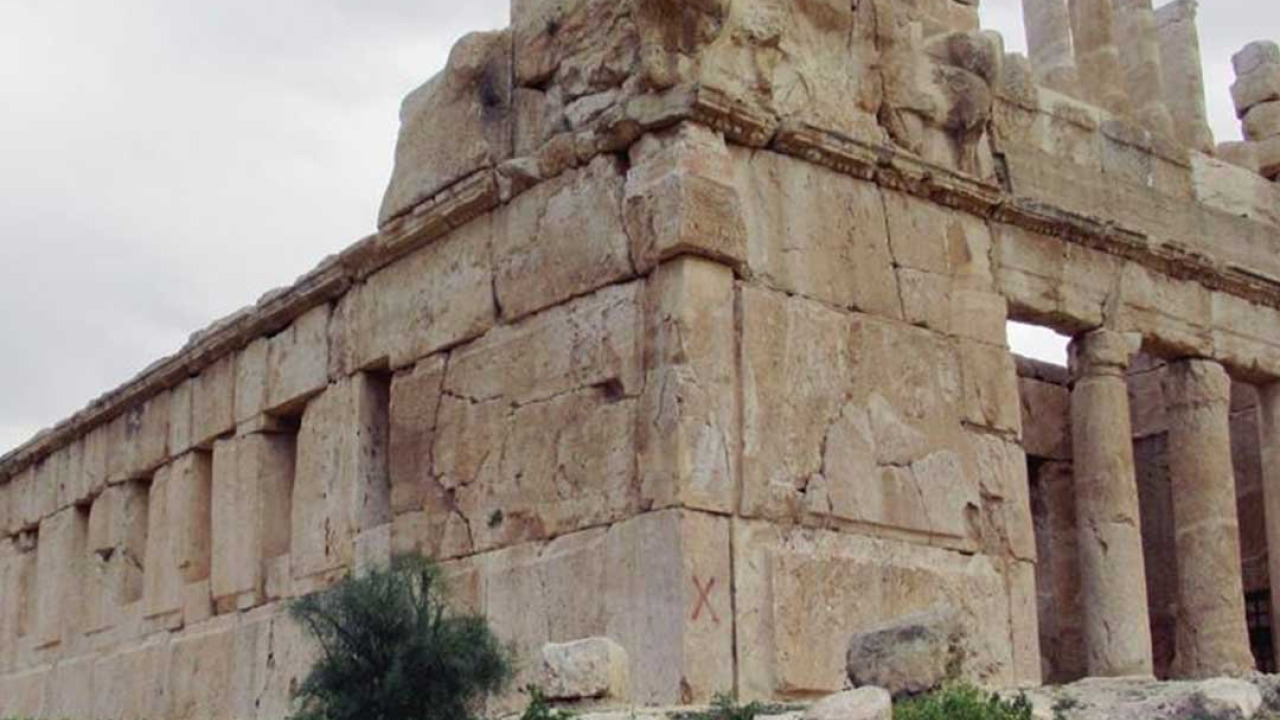
Well-preserved examples of pre-Roman architecture are rare in Jordan, and Qasr al-Abd stands at the top of this short list. Situated on the valley floor, appearing to sit on a low platform when viewed from the surrounding hills, the structure bears the local traditional name, "Palace of the Servant." What you see today isn't just a pile of ruins, but a partially reconstructed façade and ground floor, allowing you to appreciate its scale without relying solely on imagination.
Who Built the Palace and When?
The structure is associated with Hyrcanus of the powerful Tobiad family, based in Jerusalem. This family held close ties with the Ptolemaic court in Egypt and enjoyed the privilege of tax collection. The ancient historian Flavius Josephus refers to the settlement in this region as "Tyros" and recounts that Hyrcanus, after internal family disputes, retreated to the lands east of the Jordan River and established his own domain here. Sources place its construction between 182-175 BCE; it's generally believed the building remained unfinished upon Hyrcanus's death in 175 BCE. While debates continue regarding its exact dating and ownership, this information represents the widely accepted interpretation.
During these same centuries, the Hellenistic world of the Eastern Mediterranean, stretching from Egypt to Anatolia, developed a shared architectural language. For readers interested in tracing the influence of Ptolemaic Egypt with a similar travel mindset, our Egypt travel guide clarifies the region's ancient city lineup.
Stone, Lions, and Water: Three Design Choices
Three key decisions define the palace's character. First is the scale of the stone: the walls are built with unusually large limestone slabs for regional structures of the period, some measuring several meters.
Second are the reliefs. The façade and side walls feature nearly life-sized feline figures: lion reliefs extending along the façade, a scene of a lioness suckling her cub, and leopard figures on the side walls designed to spout water. These figures suggest it was more a lavish summer residence than a defensive fortress.
Third is water. According to sources, the structure was designed to sit on a raised platform in the middle of an artificial pool, fed by the valley's springs. The pool no longer exists, but traces of surrounding water channels allow for an understanding of the layout. Constructing a water-surrounded edifice in a valley bordering a desert climate signified both coolness and status.
For travelers seeking programs focused on ancient cities and museums within Turkey, our cultural tours in Turkey category gathers similar themes.
After the Earthquake: Reconstruction Efforts
The earthquake of 363 CE significantly shaped the palace's current appearance. The tremors toppled the walls, leaving the carved blocks buried under rubble for centuries. Between the mid-1970s and mid-1980s, a joint effort by a French archaeological team and the Jordanian Department of Antiquities undertook a project to return some of the fallen blocks to their original positions. This method is known as anastylosis, the reassembly of scattered fragments in situ. The work halted before completion due to insufficient resources; much of the upper floor remains unreconstructed.
For visitors, this means the ground floor, twin entrances, and some façade figures are discernible, while the upper story largely remains to the imagination. To distinguish between original and re-placed blocks on site, looking at the varying degrees of wear on the stone surfaces can help.
The Prince's Caves: A Two-Story Rock-Cut Settlement
On the steep cliff north of the palace, running parallel to the road, the caves form the site's second layer and are the namesake of the village. Stone steps lead up to the caves; the distance between them and the palace is a few hundred meters, making it easy to combine both in a single visit.
The Tobiah Inscription and Dating the Caves
On two rock-cut façades, inscriptions bearing the name "Tobiah" in Aramaic script are found. This name aligns with the family believed to have built the palace and is considered direct evidence linking the site to the Tobiad family. The dating of the inscriptions is debated: some researchers point to the 4th century BCE or earlier, while others suggest a date closer to the palace's construction period. The Jordan Tourism Board, however, states that the cliffside settlement dates back to much older periods, extending to the Copper Age. Sources also differ on the number of caves, with figures ranging from eleven to fifteen. Being aware of these discrepancies can help you contextualize the information you encounter on site signage.
What to See and How to Explore the Caves
The caves are arranged on two levels. The lower tier is interpreted as residential, while the upper tier likely served for storage and animal shelter; some sections of the upper level are connected by a long gallery. Inside, you can observe rock-cut niches, water collection troughs, and traces of partitions.
The walk is short but uneven; steps are worn in places and can become slippery after rain. From the upper level of the cliff, looking down into the valley provides a better understanding of how the palace was positioned within its artificial pool. The Jordanian Department of Antiquities, in partnership with the Greater Amman Municipality, is conducting an excavation and conservation program for the caves and church remains in the area; therefore, be aware that some caves might be temporarily cordoned off.
Iraq al-Amir Village and the Women's Cooperative
The area is not just a site of ruins; a vibrant village is spread among the olive groves on the valley floor. The Iraq Al-Amir Women's Cooperative here was established in 1993 with the support of the Noor Al-Hussein Foundation and the Wadi as-Seer regional development initiative. Its Handicrafts Village section opened in 2001, aiming to preserve the region's environment and architectural heritage. According to the Jordan Tourism Board, the cooperative has trained over 150 women from Wadi as-Seer villages in handicrafts, and the enterprise is run by women.
Workshops focus on four areas: ceramics, papermaking, soap production, and weaving. Visitors can observe the production process, participate in short workshop programs, and purchase products directly from the artisans. Meal service and workshop participation often require advance notice; contacting them a few days before your visit will help avoid disappointment.
How to Get to the Valley from Amman
Air travel into Jordan typically involves landing at Queen Alia International Airport, located approximately 35 kilometers south of Amman. As there's no direct connection to Iraq al-Amir, your route will always pass through Amman.
By Road via Wadi as-Seer
The driving route passes through the Wadi as-Seer district in western Amman, descending into the valley. The journey offers scenic views as it clearly transitions from urban sprawl to olive groves. Depending on traffic, the drive takes 30-45 minutes. A rental car or pre-arranged taxi is the most flexible option for this route; if taking a taxi, it's essential to negotiate waiting time and the return trip beforehand, as finding a ride back from the site can be challenging.
Is Public Transport an Option?
It is possible, but requires careful planning. From the minibus stops in Amman's Muhajireen area, you can reach Wadi as-Seer in about half an hour. Minibuses from there to the village run infrequently, and their departure times are not fixed. Those relying on public transport should depart early in the morning and avoid waiting until late afternoon for their return.
| Transport Option | Departure Point | Approx. Duration | Note |
|---|---|---|---|
| Rental Car | Amman City Center | 30-45 minutes | Limited parking in the valley |
| Pre-arranged Taxi | Amman City Center | 30-45 minutes | Negotiate waiting time and return upfront |
| Minibus Connection | Muhajireen stops | Approx. 30 mins to Wadi as-Seer | Infrequent transfers to the village |
| Airport Connection | Queen Alia Airport | Approx. 35 km to Amman city center | No direct route to the valley |
When is the Best Time to Visit?
The Jordan Tourism Board generally recommends spring and autumn as the most favorable seasons for visiting the country; this advice holds particularly true for Iraq al-Amir, as the valley floor is lower than Amman's high plateau and becomes noticeably hotter in summer. In spring, the hillsides turn green, and walks through the olive groves are particularly pleasant. In autumn, the light is clear, and the contrast is ideal for photography.
| Period | Valley Conditions | Impact on Your Visit |
|---|---|---|
| March-May | Mild, green hillsides, wildflowers bloom | Ideal for hiking and photography |
| June-August | Hot and dry; midday can be challenging | Plan your visit for early morning, seek shade |
| September-November | Mild, clear weather, fewer crowds | Easily combine palace and caves in one day |
| December-February | Cool and rainy; valley turns green | Steps can be slippery, rain gear recommended |
Dining and Accommodation in and Around the Valley
You won't find restaurant chains or clusters of cafes around the archaeological site. Dining options are twofold: either a pre-arranged home-cooked meal at the cooperative or small local eateries in the Wadi as-Seer district center. Olive oil-based vegetable dishes, fresh bread, and seasonal salads are staples of these meals.
As for accommodation, there are no hotels directly in the valley, so overnight stays are typically in Amman. Neighborhoods in West Amman close to Wadi as-Seer can shorten your morning commute and reduce the chance of getting stuck in traffic; areas closer to the city center offer more vibrant evening walks and bazaar exploration. For those seeking a rural experience, local tourism offices can provide information on small guesthouses and camping options around the valley.
Fitting the Palace, Caves, and Village into One Day
The key to an efficient visit is to plan your sequence based on light and temperature. The following itinerary aims for a half-day visit, expanding to a full day if you include a hike.
- Depart from Amman early in the morning and arrive at the site close to opening hours; this is the most practical way to avoid the midday heat on the hillside.
- Make Qasr al-Abd your first stop. Begin by circling the entire façade; observe the lion reliefs and twin entrances during this tour.
- Follow the traces of the water channel around the structure to visualize its position within the artificial pool; this part of the visit takes about forty minutes.
- Next, walk to the northern cliffside and ascend from the lower to the upper tier of caves. Take your time at the inscribed façades and enjoy the valley views from the upper level.
- Descend to the village around noon, visit the cooperative workshops, and enjoy a meal here if you've arranged it in advance.
- Before heading back, take a short walk among the olive groves on the valley floor; in spring and autumn, this is the most relaxing part of the day.
- Plan your return to Amman before evening traffic; entering the city late in the afternoon can take longer.
Essential Tips Before You Go
The site may appear small, but the terrain is uneven, and shade is scarce. The following tips will help ensure a comfortable visit.
- Wear sturdy walking shoes; steps are worn, and paths are stony.
- Carry a hat, sunglasses, and ample water; there may not be a kiosk on site.
- If you plan to participate in a workshop or have a meal, contact the cooperative a few days in advance.
- Confirm visiting hours before you go; some sections may be temporarily closed due to excavation and conservation work.
- For photography, prefer morning and late afternoon light; midday sun tends to flatten the details of the stone reliefs.
- Trash bins are limited on site; please carry your waste out with you.
| Practical Aspect | On-site Information |
|---|---|
| Visiting Hours | 08:00-17:00 as listed on the Jordan Pass website |
| Admission Policy | Included with Jordan Pass; fee for entry without pass is updated periodically |
| Tour Duration | 2-3 hours for palace and caves, 3-4 hours with the village |
| Terrain Conditions | Stony paths and worn steps; limited wheelchair access |
| Shade and Water | Limited; carry water and a hat |
| Guided Tours | Regular guides may not be available on site, arrange in advance |
For those looking to expand their ancient city itinerary on the opposite shore of the Mediterranean, our Italy travel guide outlines Roman and Hellenistic structures. Travelers wishing to continue this theme in Turkey can start with our historical city tours in Turkey category.
Frequently Asked Questions 6
Where is Iraq al-Amir and what does its name mean?
Iraq al-Amir is an archaeological site and village located in Jordan, approximately 20 kilometers west of Amman city center, in the Wadi as-Seer valley. The name means 'caves of the prince' in Arabic, referring to the rock-cut cave complex; it is not related to the country of Iraq.
How do I get to Iraq al-Amir from Amman?
The route passes through Wadi as-Seer, west of Amman, taking 30-45 minutes depending on traffic. A rental car or pre-arranged taxi is the most flexible option. For public transport, minibuses from Amman's Muhajireen area reach Wadi as-Seer in about half an hour, but transfers to the village from there are infrequent.
Who built Qasr al-Abd and why is it called the 'Palace of the Servant'?
The structure is associated with Hyrcanus of the Tobiad family and is dated in sources to between 182-175 BCE. It's believed the building remained unfinished upon Hyrcanus's death in 175 BCE. The name 'Palace of the Servant' comes from local tradition; it is not its official ancient name, and various accounts exist regarding its origin.
How long does a visit take and how does admission work?
Allow 2-3 hours for the palace and caves, or 3-4 hours if including the village and cooperative. Admission is covered by the Jordan Pass; visiting hours are listed as 08:00-17:00 on the pass website. For those without a pass, the fee is updated periodically, so confirm the current amount from an official source.
Which season is best for a visit?
March-May and September-November are favorable. The valley floor is lower than Amman's plateau, making it noticeably hotter in summer; during this period, it's best to visit early in the morning. Winters are cool and rainy, and steps can become slippery.
Is Iraq al-Amir a UNESCO World Heritage site?
The site is not listed on Jordan's UNESCO World Heritage List. Excavation and conservation efforts are ongoing in the area, a joint initiative by the Jordanian Department of Antiquities and the Greater Amman Municipality, so site arrangements may change over time.