
One crucial question often arises when planning a visit: which side of the Jordan River is the baptism site on? The answer is unequivocal. The Al-Maghtas Baptism Site is located on the east bank of the Jordan River, firmly within Jordanian territory. In 2015, the site was officially inscribed on the UNESCO World Heritage List as "Baptism Site Bethany Beyond the Jordan (Al-Maghtas)," distinct from Qasr al-Yahud on the river's west bank. These two locations are not interchangeable; they feature separate entrances, distinct administrations, and different visitor routes. Accessing the Jordanian side is typically by road from Amman or the Dead Sea coastline. Your journey begins at the visitor center, from which you'll explore the site via a shuttle bus accompanied by an official guide. This guide will clarify the entry process, transportation, key stops within the site, seasonal considerations, and outline a recommended half-day itinerary.
Quick Facts
| Topic | Information |
|---|---|
| Location | East bank of the Jordan River, Jordan; approximately 9 kilometers north of the Dead Sea |
| UNESCO status | Inscribed on the World Heritage List in 2015 |
| Two sections of the site | Tell al-Kharrar (Jabal Mar Elias) and the St. John the Baptist churches area by the river |
| Period of remains | Roman and Byzantine layers; traces of worship dated between the 4th and 15th centuries |
| Drive from Amman | Approximately 45 minutes to one hour, according to official tourism sources |
| On-site arrangements | Specific route with an official guide and shuttle bus |
| Visit duration | Approximately 1.5 to 2 hours |
| Dress code | Clothing covering shoulders and legs |
Al-Maghtas vs. Qasr al-Yahud: Distinguishing the Two Banks
What often confuses visitors is the presence of two separate pilgrimage sites on opposite banks of the same stretch of river. If you're planning a Jordanian itinerary, your destination is Al-Maghtas on the east bank. Qasr al-Yahud, on the opposite bank, is accessed from a different entry point. While the two sites are close enough to be visible to each other, there's no direct crossing between them; ticketing and visitor rules are managed independently.
| Comparison | Al-Maghtas (East Bank) | Qasr al-Yahud (West Bank) |
|---|---|---|
| Location | Jordanian side of the Jordan River | West bank of the Jordan River (outside Jordan) |
| UNESCO inscription | 2015 World Heritage listing covers this site | Not covered by this inscription |
| Entry | Visitor center on the Jordanian side | Separate entry point, separate administration |
| Visiting arrangement | Accompanied by official guide and shuttle bus | Subject to their own regulations |
| Itinerary connection | Amman, Dead Sea, Madaba, and Mount Nebo route | Not part of a Jordanian itinerary |
Can You Visit Without a Guide? Entry and Rules
Al-Maghtas does not operate like an open archaeological site where you can wander freely. Your visit begins at the visitor center, from where you'll be transported to the site by shuttle bus. The tour itself is conducted with an official guide, in small groups, following a pre-determined route. The site management explicitly states that the shuttle service and local guide are included in the entrance fee, meaning there are no additional transportation or guiding costs once inside. The entrance fee varies based on nationality; always verify the current rates on the official site, baptismsite.com, before your trip. The standard Jordan Pass package does not cover this site, but it can be added as an extra option when purchasing the pass.
Visiting hours are seasonal. During the winter schedule announced by site management, the site opens at 8:00 AM, with the last entry at 4:00 PM; summer hours shift accordingly. Due to its status as a holy site, a dress code is enforced. The area is largely unshaded and located at the bottom of the river valley, making a hat and sunglasses practical necessities during summer months. Photography is generally permitted, but visitors should observe signs in areas of active worship.
| Visiting Arrangement | On-site Practice |
|---|---|
| Entry point | Visitor center |
| On-site transport | Shuttle bus, included in entrance fee |
| Guidance | With official guide, along a designated route |
| Summer essentials | Hat, sunglasses, water |
| Ticket | Tariff based on nationality; current rate on official website |
Getting There from Amman and the Dead Sea
Despite its proximity to Jordan's capital, the site is not served by regular public transport. Most visitors arrive by private car, taxi, or as part of a guided tour. Visa requirements vary by nationality and are updated periodically; always confirm these details on the official Jordan Tourism Board website before your trip.
From Amman
Access is via a highway that descends west from the city and connects towards the Dead Sea. Official tourism sources estimate the drive time at approximately 45 minutes to an hour, depending on your departure point and traffic conditions. Along the way, the altitude drops rapidly, as the Jordan Valley is a depression line well below sea level. For those arriving by rental car, parking is available at the visitor center. Taxis are a practical solution for those without their own vehicle, but it's advisable to have your driver wait for you, as finding a return ride in the area can be challenging.
Connecting from the Dead Sea Coast, Madaba, and Mount Nebo
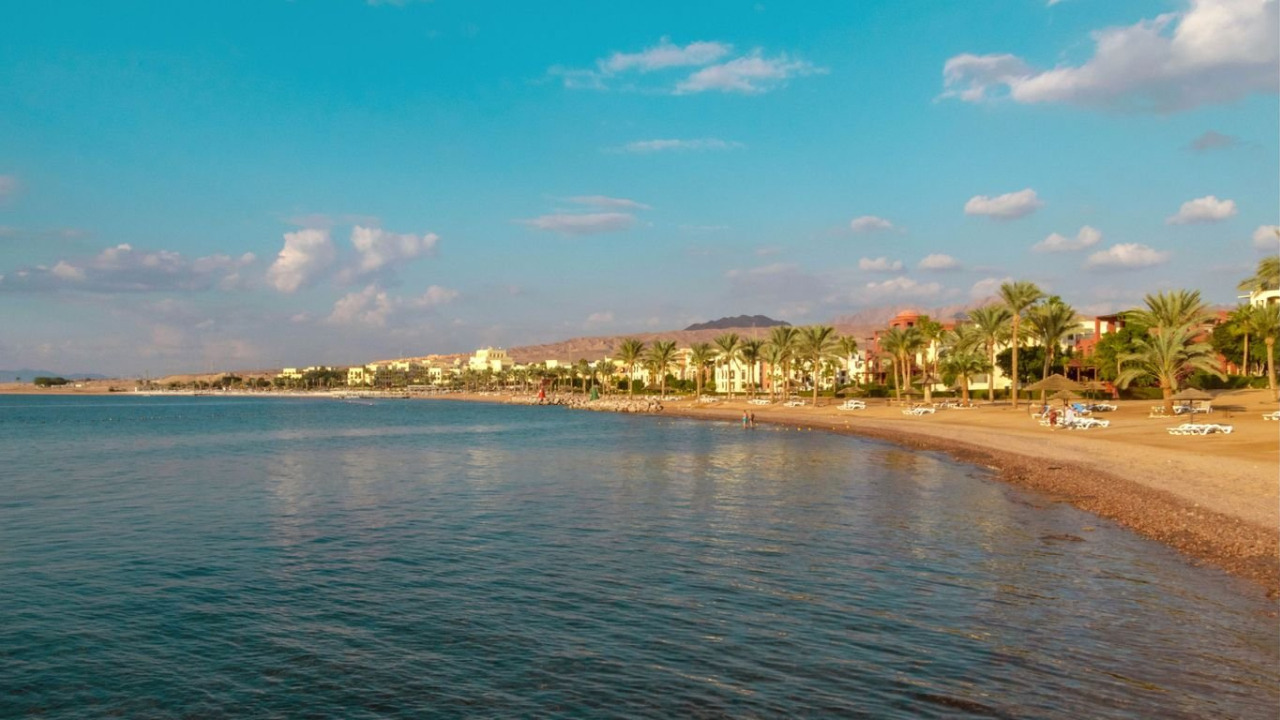
The site is located approximately 9 kilometers north of the Dead Sea, making it an easy morning drive for travelers staying at resorts along the coastline; the turn-off to the site is clearly signposted from the Dead Sea road. It's a common itinerary to combine a visit here with an ascent to the plateau to explore Madaba and Mount Nebo on the same day. Mount Nebo is about 10 kilometers from Madaba, offering expansive panoramic views across the Jordan Valley and the Dead Sea. This trio of sites isn't a random pairing: during the early Christian period, a pilgrimage route connecting Jerusalem, the Jordan River, and Mount Nebo linked this very geography.
What to See at the Site: From the Hilltop to the Riverbank
The UNESCO inscription divides the site into two main areas: the Tell al-Kharrar mound, located slightly inland from the river, and the St. John the Baptist churches area right by the riverbank. The guided itinerary typically connects these two sections sequentially.
Tell al-Kharrar (Jabal Mar Elias): Elijah's Hill
The low mound in the inner part of the site is locally known as Jabal Mar Elias, or Elijah's Hill. Christian tradition associates this hill with the prophet Elijah. From an archaeological perspective, the prominent features here are the monastic ruins: according to sources, a monastery was established on the hill during the Byzantine period, most likely in the 5th century. Today, floor plans, water cisterns, and mosaic traces can be observed along the walking path. The hill offers a commanding view of the valley, making it an ideal starting point to grasp the site's geographical layout. The texture of the floor mosaics appears more legible in the early morning hours.
Baptism Pools and Byzantine Churches Area
As you descend towards the river, you'll encounter the remains of churches, chapels, and pools used for baptism. UNESCO identifies the Roman and Byzantine remains at the site as churches, chapels, a monastery, caves used by hermits, and baptismal pools; traces of worship and devotion are dated between the 4th and 15th centuries. According to the pilgrim Theodosius, writing in the early 6th century, the first church commemorating the baptism on the east bank of the river was built in the late 5th century during the reign of Emperor Anastasius. The stepped pool structures are tangible remnants demonstrating how the baptism ritual was performed in early Christianity. The ground is traversed in places by protected wooden platforms, so comfortable, sturdy footwear will make your walk more enjoyable.
Hermits' Caves and Traces of Pilgrim Accommodation
The hollows carved into the valley slopes served as shelters for hermits and reclusive clergy for centuries. Christian tradition associates some of these caves with the narrative of John the Baptist; archaeological records, however, indicate their use for habitation and worship over an extended period. Nearby structural remains suggest simple accommodations for pilgrims. This section is typically kept brief on the guided route.
The Jordan Riverbank and Wooden Platforms
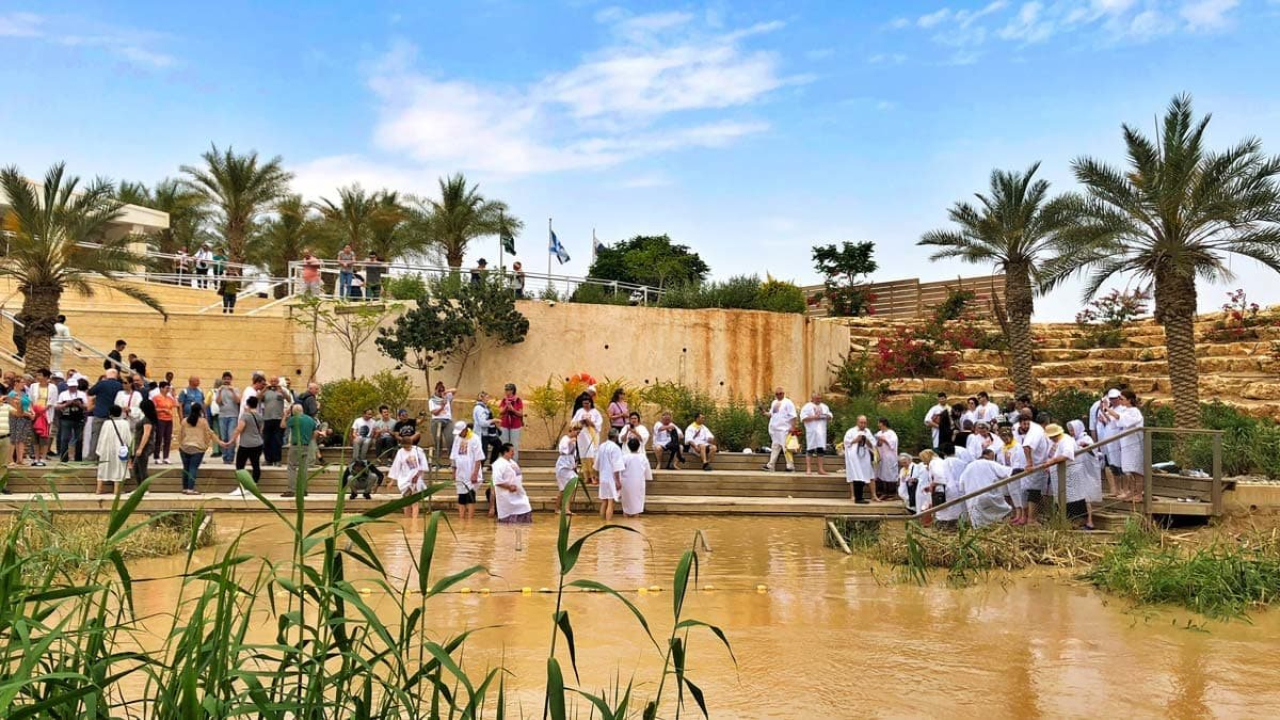
At the end of the route, you'll reach the riverbank. Here, wooden platforms descend into the water, providing a designated area for visitors to partake in symbolic ceremonies. The river is narrow at this point, and the Qasr al-Yahud site on the opposite bank is clearly visible to the naked eye. A low noise level is maintained along the bank, as groups may be conducting religious rites simultaneously. Congregational groups wishing to organize a baptism ceremony typically arrange this through their respective churches and with prior planning; individual visitors should inquire with their on-site guide about conditions for entering the water.
The Church of the Baptism of the Lord and Modern Places of Worship
Alongside the Byzantine ruins, you'll find churches built by various denominations in more recent times. The newest of these, as announced by the Latin Patriarchate, is the Church of the Baptism of the Lord, consecrated on January 10, 2025. The ceremony was attended by Cardinal Pietro Parolin, Vatican Secretary of State, and Cardinal Pierbattista Pizzaballa, Latin Patriarch of Jerusalem. The structure is built with yellowish Tafuhi stone from the Hebron region of Palestine, and its stained-glass windows were produced in Lebanon. With an area of approximately 2,200 square meters and a capacity for a thousand people, it hosts the annual pilgrimage ceremony in January. The site has also been visited by three popes: John Paul II in 2000, Benedict XVI in 2009, and Francis in 2014.
Visitor Center and Site Entrance
The visitor center serves as the main entry point to the site: ticket processing, group marshalling, and shuttle bus departures all take place here. During peak times, it might take a few minutes for groups to form, so arriving closer to opening hours can shorten your wait. Your return journey will also conclude at this same point, where you can leave your vehicle.
Morning on the Hill, Towards Noon by the River: Recommended Visit Order
The most efficient way to explore the site is to avoid the hottest hours by the riverbank. The following sequence outlines a half-day itinerary, leaving the rest of your day free for nearby attractions.
- Arrive at the visitor center close to opening hours, purchase your ticket, and confirm the shuttle bus departure time.
- Start by exploring the Tell al-Kharrar section; the monastic ruins and valley views will help you orient yourself within the site.
- Descend to the lower section and sequentially visit the baptismal pools and Byzantine church ruins, following the layers of history explained by your guide through the floor plans.
- Take a short break at the hermits' caves section, allowing time for photos without straying from your group.
- Proceed to the wooden platforms by the riverbank; maintain a respectful distance if groups are conducting ceremonies.
- On your return, see the modern churches and the Church of the Baptism of the Lord, then take the shuttle bus back to the visitor center.
- Dedicate your afternoon to the Dead Sea coast or ascend to the plateau to visit Madaba and Mount Nebo.
When to Visit and Pilgrimage Dates
The site is situated at the bottom of the Jordan Valley, below sea level, which means temperatures in summer are significantly higher than in the country's highland regions. Spring and autumn are ideal for maintaining a comfortable walking pace. January stands out for a different reason: the annual pilgrimage ceremonies take place this month. Following a tradition that began in 2000, Catholic churches hold their ceremony on the second Friday of January; Orthodox churches choose a separate day within January according to their own calendar, so confirm the date before you go. In January 2026, the 26th annual ceremony was held; preliminary data from the Jordan Ministry of Tourism indicates that over 25,000 visitors toured the site during the January-February period.
| Period | Site Conditions | Note |
|---|---|---|
| March - May | Mild weather, green valley landscape | Comfortable pace for walking; group density increases |
| June - August | High temperatures on the valley floor | Arrive close to opening hours, carry water and a hat |
| September - November | Temperatures drop, light softens | Favorable for photography; itinerary can be more flexible |
| December - February | Cool and occasionally rainy | Pilgrimage ceremonies on January Fridays; plan for crowds |
Where to Stay, Where to Eat
There are no accommodation options directly around the site, so decisions are made among three nearby regions. The Dead Sea coastline is the closest option, making an early morning start easy; a dip in the Dead Sea and mud treatments can be added to your itinerary. Amman serves as a base for multi-stop itineraries due to its extensive flight connections. Madaba, with its mosaic churches and proximity to Mount Nebo, is suitable for those wishing to focus on a strong faith-based route.
On-site dining options are limited; for a comprehensive meal, consider resorts along the Dead Sea coast, roadside restaurants en route, or Madaba town center. During the midday heat, a light snack rather than a heavy meal will help you preserve energy for your afternoon plans. For travelers interested in exploring similar Byzantine and early Christian layers, our culture tours in Turkey category continues this theme across the Anatolian landscape.
Things to Note Before Your Visit
- Confirm visiting hours on the official site before you go; times change seasonally, and arrangements may differ on ceremony days.
- Prepare clothing that covers your arms and legs; thin, light-colored fabrics are more comfortable in summer heat.
- Bring water, a hat, and sunglasses. Much of the route is in open areas with little shade.
- Carry cash; there might be small vendors in the area that do not accept cards.
- If you encounter groups conducting ceremonies within the site, maintain a respectful distance and ask your guide before taking photos.
- If you plan to combine your visit with Madaba, Mount Nebo, and the Dead Sea, calculate driving times at the start of the day; ascending from the valley to the plateau can take longer due to the altitude difference.
- For those interested in comparing regional faith routes, our Egypt travel guide article, which covers the monastery and ancient settlement trail around the Nile, can serve as a starting point.
How to Plan Your Visit
Al-Maghtas can be explored in a half-day visit, but its context is truly completed by incorporating nearby attractions. The sequence is simple: clarify which side of the river you're on, choose a time close to opening hours, explore the site sequentially from the hill to the riverbank, and dedicate the rest of your day to the Dead Sea coast or the Madaba and Mount Nebo route. For those who enjoy exploring Roman and early Christian layers on a city scale, our historical city tours in Turkey offer a similar experience; travelers interested in comparing church and basilica architecture can benefit from the regional breakdown in our Italy travel guide article.
Frequently Asked Questions 6
Where is the Al-Maghtas Baptism Site, and on which bank?
The site is located on the east bank of the Jordan River, within Jordanian territory, approximately 9 kilometers north of the Dead Sea. Qasr al-Yahud on the west bank is a separate visitor area; there is no crossing between the two sites.
How do you get to Al-Maghtas from Amman, and how long does it take?
Access is by road; official tourism sources estimate the drive time at approximately 45 minutes to an hour. As there is no regular public transport, visitors use private cars, taxis, or guided tours. The turn-off to the site is signposted from the Dead Sea road.
Is it possible to visit the site without a guide?
The tour is conducted with an official guide along a designated route. Visitors are transported from the visitor center to the site by shuttle bus; site management states that the shuttle service and local guide are included in the entrance fee.
How long does the visit take, and what should I wear?
The route, starting from the visitor center and descending to the riverbank, takes approximately 1.5 to 2 hours. Due to its status as a holy site, clothing that covers arms and legs is expected; as you'll be walking in an open area, a hat, sunglasses, and water are practical necessities.
What is the best time to visit Al-Maghtas?
As the valley floor is hot in summer, spring and autumn offer a more comfortable pace. January is the period for pilgrimage ceremonies: Catholic churches hold their ceremony on the second Friday of the month, while Orthodox churches choose a separate day within January according to their own calendar; expect increased crowds on these days.
Does the Jordan Pass cover entry to Al-Maghtas?
The standard Jordan Pass package does not include this site; it can be added as an extra option when purchasing the pass. Confirm the current conditions and fees on the official site and the Jordan Pass page before your trip.