
The Amman Citadel and the Roman Theater in the city center are often the first two stops for many travelers to Jordan before they embark on their journey to Petra and Wadi Rum. While they're close enough to fit into the same half-day, this dynamic duo isn't a perfect fit for every itinerary. The Citadel is an archaeological site that needs to be "read" layer by layer: a cross-section spanning from a Roman temple to a Byzantine church, an Umayyad palace to an Ayyubid tower. Without context, it might just look like a scattered field of stones. The theater, on the other hand, is impressive at first glance, but the time spent inside is relatively brief. This guide will show you how to plan for both, including the best times to visit each.
Who Should Visit This Duo, and Who Might Skip It?
For travelers spending just one layover night in Amman before heading south the next morning, the Citadel and Theater combo is an excellent choice. The short taxi ride between them means they can easily fit into a schedule, even before an early flight. This duo also serves as a natural starting point for those keen on exploring Jordan's ancient Roman heritage, especially the Decapolis cities, as the Roman city known as Philadelphia was part of this very network.
However, this pairing isn't for everyone. Those solely seeking desert and natural landscapes might not enjoy spending two hours on a shadeless hilltop during a hot summer afternoon. For families with small children, the Citadel area can be tiring; its sloping paths, unguarded edges, and open excavation pits require constant supervision. Wheelchair users will find the Citadel's terrain challenging, though the theater can be viewed from the lower level without needing to ascend the steps. If archaeology isn't your primary interest, choosing just one site might be more rewarding than rushing through both.
Quick Facts
| Topic | Information |
|---|---|
| Location | Citadel on Jabal al-Qal'a (Citadel Hill); theater at the southeastern foot of the hill, within Downtown |
| Visiting Hours | Varies by season; check the official Jordan Pass website for current timings |
| Suggested Duration | 1.5-2 hours for the Citadel, 45-60 minutes for the theater and its museums |
| Ticket System | Both sites are covered by the Jordan Pass; individual tickets are also sold |
| Key Structures | Temple of Hercules, Umayyad Palace, Byzantine church, Roman Theater, Odeon, Nymphaeum |
| Airport Connection | Queen Alia International Airport is approximately 35 kilometers south of the city |
| UNESCO Status | The Citadel and theater are not on the World Heritage List |
| Best Time to Visit | Spring (March-May) and Autumn (September-November) |
Citadel vs. Theater: How Do These Two Sites Differ?
Despite being two iconic landmarks of the same city, the visitor experiences at the Citadel and the Roman Theater are quite distinct. The Citadel functions more like an open archaeological park; there's a significant amount of walking involved, and the structures are spread out. The theater, on the other hand, is a complete architectural marvel, easy to grasp, and typically requires a shorter visit.
| Criterion | Amman Citadel | Roman Theater |
|---|---|---|
| Site Scale | Expansive excavation area spread across the hilltop | Compact structure with two adjacent museums |
| Walking Effort | Sloping terrain, limited shade | Steep steps, short distance |
| Time Allotment | 1.5-2 hours | 45-60 minutes |
| Dominant Layer | Roman, Byzantine, Umayyad | Roman |
| View | Panoramic city views | The structure's own cross-section and stage area |
| Optimal Time | Early morning or near sunset | Afternoon, when it's more shaded |
What to See Layer by Layer at Amman Citadel
The Citadel, as described by Visit Jordan, stands on the city's highest point. Within its grounds, remnants from the Roman, Byzantine, and early Islamic periods can be observed side by side. The natural progression after entering is from south to north: the temple terrace, church ruins, palace complex, and museum.
The Temple of Hercules and the Colossal Marble Hand
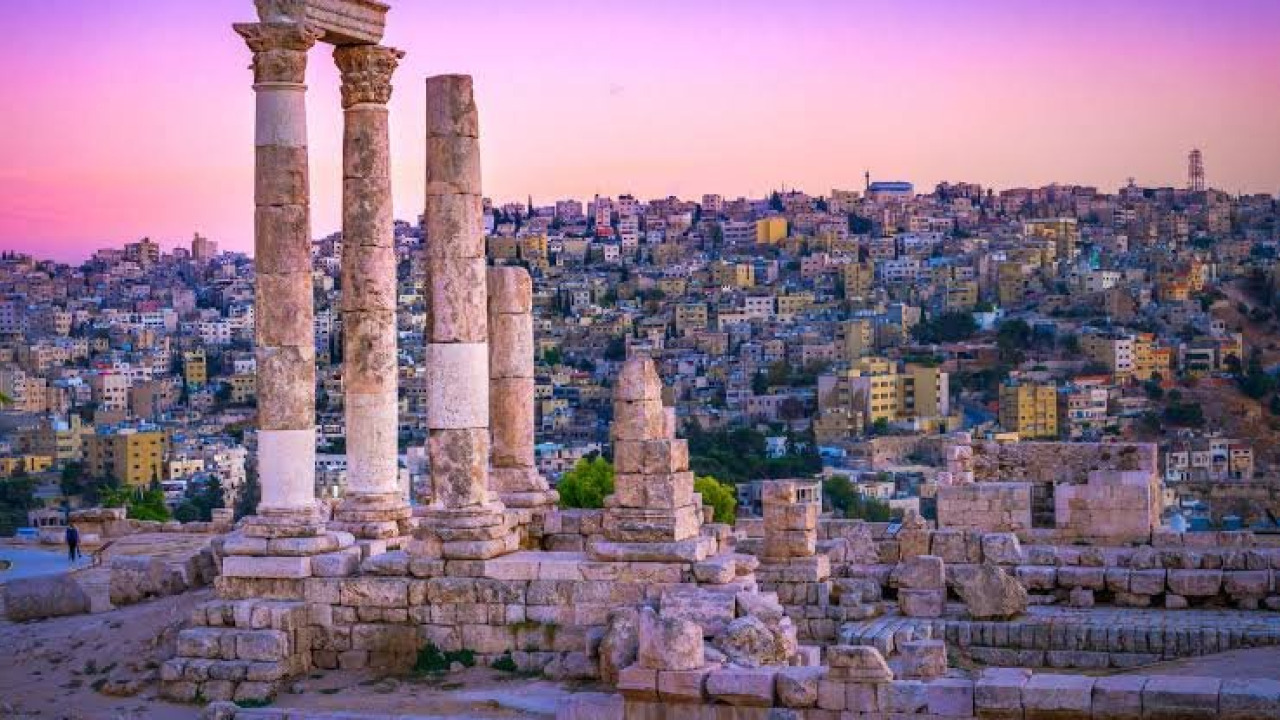
The Temple of Hercules is the iconic structure of the site. According to records from the American research center ACOR, the temple was built between 161-166 AD during the tenure of Geminius Marcianus, governor of Provincia Arabia, and dedicated to co-emperors Marcus Aurelius and Lucius Verus. The podium measures approximately 43 by 27 meters; the re-erected columns stand 13.5 meters high, with column drums weighing over ten tons. The column array visible today is the result of excavation and restoration work from the early 1990s.
The detail most visitors seek is the colossal marble hand on the temple terrace. Based on the hand and elbow fragments found, researchers estimate the statue would have reached a height of around 13 meters. Practical tip: The terrace is completely exposed to the sun, making it challenging to linger here for long during midday without a hat and water.
The Umayyad Palace and the Mystery of its Original Dome
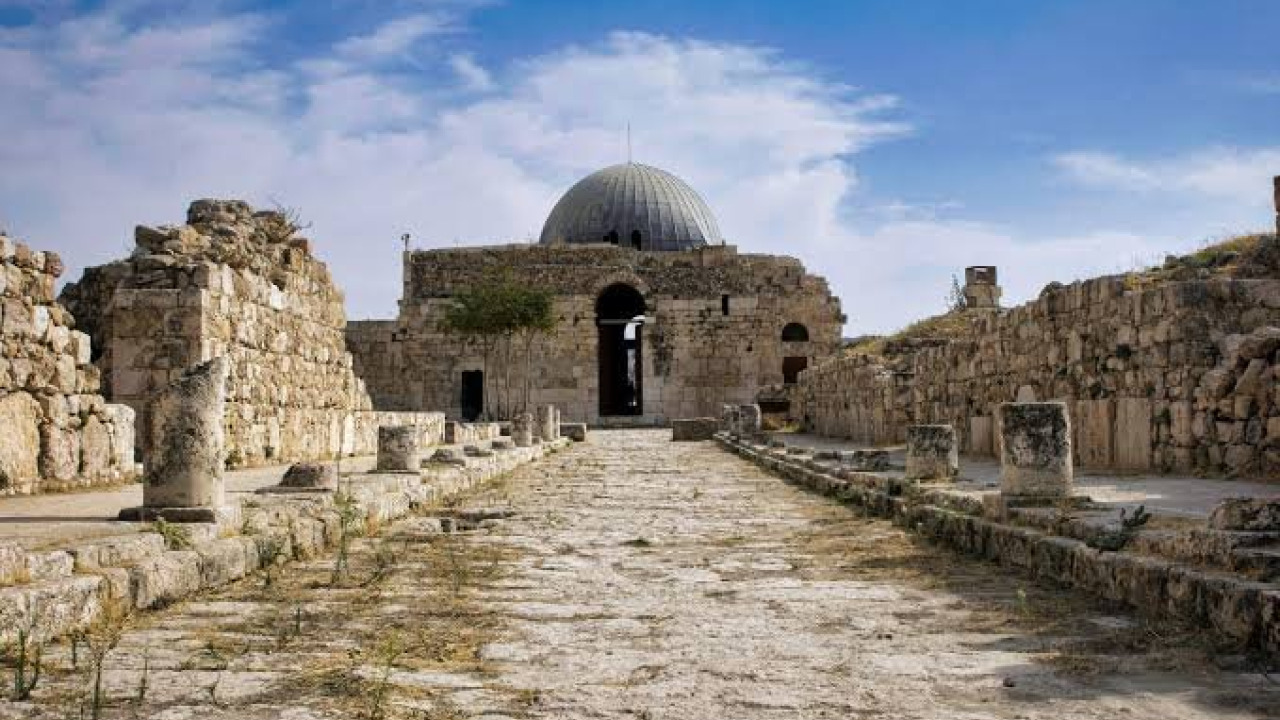
The Umayyad Palace complex, located in the northern section of the Citadel, dates back to the 8th century. According to historical sources, it was established as a regional administrative center during the reign of Caliph Hisham. The complex comprises a monumental entrance structure, a domed audience hall, vaulted rooms, a colonnaded pathway, a mosque, a bathhouse, and a large water cistern. The geometric stonework of the cruciform entrance hall is directly comparable to the Roman stonework found on the same hill.
Here's a common misconception: the dome you see overhead is not the original Umayyad covering. The original dome was lost, and the space remained open to the elements for a long time. The current dome was constructed in the late 1990s using reversible modern materials, a collaborative effort between the Spanish archaeological mission and the Jordanian Department of Antiquities.
The Byzantine Church, Ayyubid Tower, and Water Cistern
In the area between the temple and the palace stand the column rows of a Byzantine church, dating back to the 5th and 6th centuries. Some of the church's stones and columns were repurposed from the Temple of Hercules, illustrating how materials on the hill were reused over centuries. The Ayyubid tower in the northeast corner dates to the late 12th and early 13th centuries, showcasing the site's post-Roman military use.
The large circular cistern next to the palace reveals how the water problem on the hilltop was solved: continuous settlement on a hill without a natural water source was only possible by collecting rainwater. The cistern and church are spots you might quickly pass during the harsh midday sun but become excellent photographic opportunities in the softer light of morning and late afternoon.
The Jordan Archaeological Museum and the Ain Ghazal Distinction
The Jordan Archaeological Museum, established in 1951, is located on the hilltop and exhibits findings from excavations across Jordan. Despite its small scale, this museum provides essential context for your Citadel visit; 30-40 minutes is usually sufficient.
It's important to correct a common misconception here: the main collection of Ain Ghazal Neolithic statues is no longer housed in this museum on the Citadel. Instead, it's at The Jordan Museum (Ras el-Ayn), which opened in 2014. While you might find pieces from the same period at the Citadel museum, if seeing these statues is a priority, add Ras el-Ayn as a separate stop on your itinerary. For travelers who enjoy combining ancient cities and museums, and those looking for similar themes in Turkey, you might also want to explore our cultural tours in Turkey category.
The Roman Theater and Surrounding Roman Structures
Descending from the hilltop, the Roman Theater emerges amidst the bustling Downtown. During the Roman era, the city was known as Philadelphia, a name that, according to sources, comes from the Egyptian ruler Ptolemy II Philadelphus, who refounded the city in the 3rd century BC. The city later became part of the Decapolis league.
The Theater's North-Facing Design
According to Visit Jordan, the theater was built in the 2nd century AD, boasting a capacity of approximately 6,000 spectators, and is carved into three sides of the hillside. The seating rows face north; this orientation prevents the sun from shining directly into the audience's eyes throughout the day, keeping the stage illuminated. This is also why the upper rows remain cooler in the early hours, even in mid-summer. Most sources attribute the structure to the reign of Emperor Antoninus Pius (138-161 AD).
For those climbing to the upper rows, the steps are steep and narrow, with no handrails. From above, the axis connecting the structure to the Citadel becomes visible. As the theater still hosts festivals and concerts today, stage setups might temporarily close off certain sections on your visiting day.
The Odeon and Nymphaeum
To the northeast of the theater, the Odeon is a smaller-scale structure sharing the same plaza. In its renovated state, it's used for concerts accommodating up to 500 people. These structures, believed to have been covered by a closed or semi-closed roof, were typically dedicated to music-focused performances, a distinction highlighted by their smaller scale.
A few streets west of the plaza lies the Nymphaeum, a monumental fountain structure built in 191 AD. This two-story complex features pools, mosaics, and carved stone decorations. Access arrangements can change periodically, so it's advisable to confirm before your visit.
The Two Museums Flanking the Theater
Flanking the theater's stage wings are two small museums. The Museum of Popular Traditions, located on the eastern wing, was established in 1971 and is known for its collection of traditional clothing, jewelry, and mosaics. The Jordan Folklore Museum, on the western wing, opened in 1975 and displays objects related to the region's traditional way of life. Both can be explored together in about half an hour, adding a rich cultural context to your theater visit.
How to Get to the Citadel and the Theater
The transportation plan involves two stages: first, getting to the city, then navigating between the two sites. The following sequence allows a traveler arriving at the airport to see both on the same day.
- Travel from Queen Alia International Airport to the city. According to Visit Jordan, the airport is approximately 35 kilometers south of Amman, and a taxi ride to the city center takes 30-45 minutes. Airport buses operate to the city's southern terminal.
- Head down to Downtown from your accommodation. Taxis and ride-hailing apps are practical within the city; public bus routes are primarily designed for local commuters.
- Choose the Roman Theater as your first stop. It's at plaza level, and the two adjacent museums can be visited during the same trip.
- From there, ascend to the Citadel. The path involves a steep slope and stairs; on hot days, it's more comfortable to take a taxi up and walk down.
- Complete your Citadel tour following the sequence of the temple, church, palace, and museum, then allow a few minutes for the sunset view on your way out.
From the Airport to the City Center
The airport bus is a budget-friendly option, but its destination is the southern terminal, requiring a second transfer to Downtown. With luggage or on night arrivals, a taxi saves more time; inquire whether the fare is fixed or metered before getting in.
Connecting the Citadel and the Theater
There is no regular shuttle service between the two sites. The walking route passes through the bustling souq streets of Downtown and connects to the hilltop via a steep incline; it takes 20-30 minutes at an average pace. Taxis use the winding main road and arrive in a similar timeframe, depending on traffic. Those walking will enjoy seeing the spice and nut stalls in the souq streets along the way.
Visiting Hours and Best Season to Go
The official Jordan Pass timetable does not provide a fixed range for the Citadel, museum, theater, and Odeon; instead, it lists separate hours for winter, summer, spring, and Ramadan. Confirming the current timings from the official list before your visit day will save you time.
| Period | Conditions | Impact on Itinerary |
|---|---|---|
| Spring (March-May) | Mild weather, green surroundings | Citadel visit comfortable even midday |
| Summer (June-August) | Hot and dry, limited shade | Visit the Citadel at opening hours or late afternoon |
| Autumn (September-November) | Mild weather, balanced light | Hours near sunset are excellent for photography |
| Winter (December-February) | Cool, rain and occasional snow | Stone surfaces can be slippery, museums become a priority |
Dining and Accommodation Areas Nearby
The Downtown streets surrounding the theater are the city's traditional dining hub. Falafel, hummus, mutabbal (made with roasted eggplant), and freshly baked bread form the staples of the small local eateries here; on the sweet side, cheesy kunafa stands out. Scheduling your lunch break between visiting the theater and the Citadel allows you to spend the hottest hours indoors.
Your choice of accommodation area will dictate the pace of your itinerary; the table below compares neighborhoods based on their proximity to the two sites.
| Area | Character | Best for |
|---|---|---|
| Downtown (el-Beled) | Bustling souqs and restaurants, walking distance to both sites | Those on a short stay who want to minimize travel time |
| Jabal Amman and Rainbow Street | Cafes, galleries, and boutique establishments | Travelers looking for evening entertainment |
| Jabal al-Weibdeh | Quiet streets, art spaces | Those who enjoy exploring on foot |
| West Amman (Abdali, Shmeisani) | Modern business and shopping district | Visitors with airport or business connections |
Essential Tips Before You Go
- Visa requirements vary by nationality and are updated periodically; confirm with the official e-visa channel of the Jordanian Ministry of Interior before your trip.
- The Citadel area offers little shade: a hat, sunscreen, water, and sturdy, comfortable shoes are essential.
- The entrance fee depends on the package type and number of days; check the official Jordan Pass website for current rates.
- On Fridays and religious holidays, some souq vendors may be closed, and visiting hours might be shorter.
- During Ramadan, the number of restaurants open during the day decreases; plan your lunch break accordingly.
- When entering the mosque ruins within the palace complex, opt for clothing that covers your shoulders and knees.
- Do not enter excavation areas cordoned off with tape; the ground is unstable in many places.
How to Divide Your Half-Day
The most efficient arrangement is this: head up to the Citadel first thing in the morning to complete the temple, church, palace, and museum sequence, then take a lunch break in Downtown, and in the afternoon, visit the Roman Theater (which will be more shaded) and its two adjacent museums. This order avoids a second climb. If your schedule allows, the Nymphaeum and The Jordan Museum in Ras el-Ayn can be added to the same day.
For those looking to include the Nile region in their itinerary within the same geographical context, our Egypt travel guide offers regional itineraries. If you're interested in a comparative study of Roman-era structures, our Italy travel guide showcases the central counterparts of the same architectural language. Travelers wishing to create a similar city-center itinerary in Turkey can start by exploring our historical city tours in Turkey category.
Frequently Asked Questions 6
How long does it take to visit Amman Citadel?
Since the area is extensive, a visit covering the temple, church, palace complex, and archaeological museum typically takes 1.5 to 2 hours. With photo stops and additional time spent in the museum, this can extend to 2.5 hours. For the theater side, an additional 45-60 minutes is usually sufficient.
Are Amman Citadel and the Roman Theater covered by the Jordan Pass?
Yes. The official Jordan Pass list includes Amman Citadel, the Jordan Archaeological Museum, the Roman Theater, the Odeon, and the folklore museum next to the theater. If you don't have a pass, individual entrance tickets are sold; check the official website for current coverage.
Is Amman Citadel on the UNESCO World Heritage List?
No. Jordan's sites on the UNESCO World Heritage List are Petra, Wadi Rum, Quseir Amra, Umm ar-Rasas, Bethany Beyond the Jordan, As-Salt, and Umm el-Jimal. Amman Citadel and the Roman Theater are not on this list; both are national sites under the protection of the Jordanian Department of Antiquities.
How do you get between the Citadel and the Roman Theater?
Since the two sites are in the same area, they are connected by a 20-30 minute walk; the route passes through the Downtown souq streets and ascends a steep hill. On hot days, it's more comfortable to take a taxi up and walk down.
What is the best season to visit Amman?
Spring (March-May) and autumn (September-November) offer the most balanced weather conditions. During summer months, it's advisable to schedule your visits for opening hours in the morning or late afternoon; in winter, the weather is cool, and stone surfaces can become slippery on rainy days.
Are events held at the Roman Theater?
Yes. The restored theater continues to host performances and concerts today, while the renovated Odeon next to it is used for concerts accommodating up to 500 people. On event days, certain sections might be closed to visitors due to stage setups.