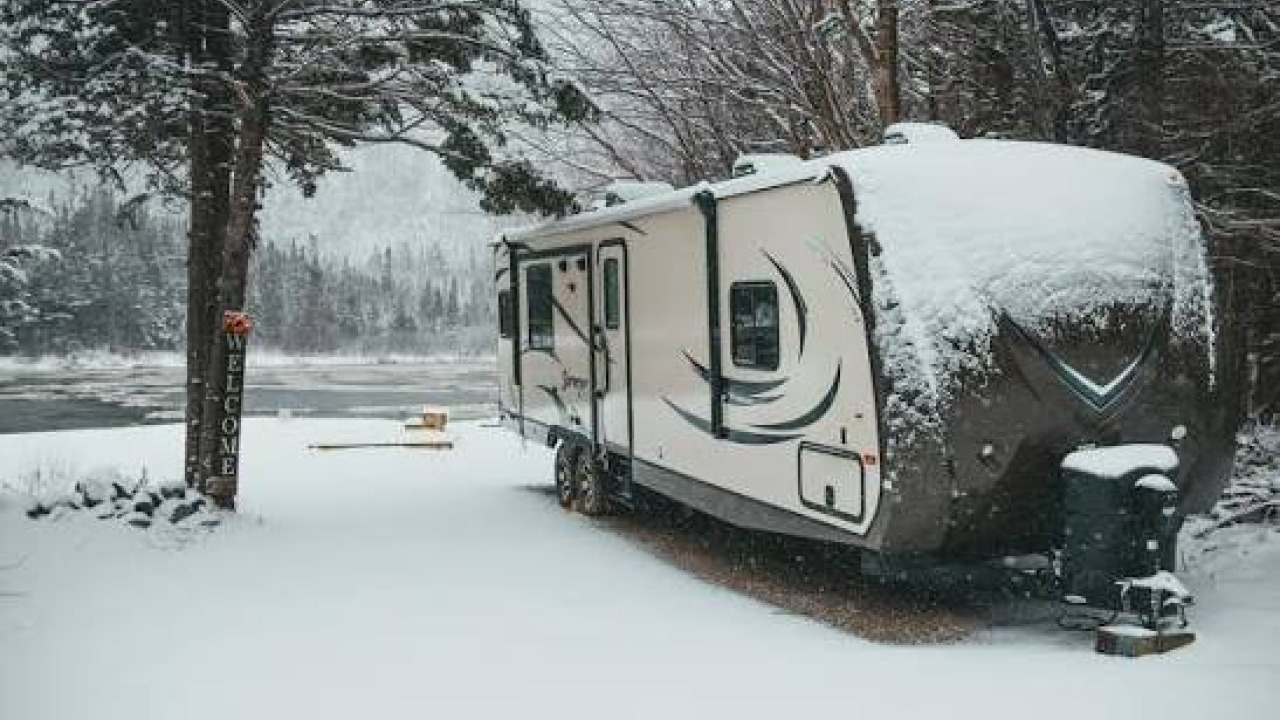

Winter caravan tourism is all about embracing the colder months, allowing motorhome and caravan owners to extend their season beyond summer. It's about hitting snow-covered mountain roads and quiet coastal towns, long after the summer crowds have dispersed. The bustling campsites of summer quiet down between December and March, reservation pressures ease, and the landscape transforms into a serene winter wonderland. However, venturing out in winter requires a different approach to your vehicle's heating, insulation, and energy infrastructure compared to a summer setup. In this comprehensive guide, we'll delve into the essential technical equipment for winter caravan tourism, explore the best regions in Turkey for winter caravanning, discuss route planning, and clarify the regulations surrounding caravan accommodation. Our aim is to turn snowfall from a potential obstacle into a planned, enjoyable part of your adventure.
When Does the Winter Caravan Season Begin?
In the caravan calendar, winter often begins not with a specific date, but with altitude. In the highlands of Northern and Central Anatolia, night temperatures can drop below freezing from late November, while the Mediterranean coast might still enjoy mild weather during the same period. Therefore, winter caravan tourism isn't a single season, but rather two parallel experiences: high-altitude routes for those seeking snow, and coastal routes for those escaping the crowds and preferring milder shores.
What both have in common is shorter daylight hours. In December and January, sun exposure decreases, skies are often overcast, and solar panels won't yield their summer efficiency. Building your energy plan around this reality is a crucial, yet often overlooked, aspect of winter preparation.
Quick Facts
| Topic | Information |
|---|---|
| Season Range | Late November to Late March |
| Snow-Focused Regions | Uludağ, Erciyes, Ilgaz Dağı, Abant, and Yedigöller area |
| Mild Alternatives | Mediterranean and Aegean coasts, Dalyan Iztuzu area |
| Critical Equipment | Diesel air heater, body insulation, DC-DC charger |
| Legal Framework | Highway Traffic Law No. 2918 and 2024 registration regulation |
| Challenging Aspects | Freezing water lines, shorter daylight, closed facilities |
Can You Stay in a Caravan in Winter? Essential Winter-Ready Equipment
In winter caravan tourism, comfort isn't determined by the route, but by your vehicle's capacity for self-sufficiency. The table below outlines the key systems for a winter setup and why they are indispensable.
| System | Winter Requirement | Rationale |
|---|---|---|
| Energy | 200-400 W monocrystalline panel, 200 Ah LiFePO4 leisure battery | Shorter daylight hours, reduced panel efficiency |
| Charging | DC-DC charger powered by vehicle alternator | Compensates for solar panel deficit during overcast weather while driving |
| Heating | 2-5 kW diesel air heater and roof fan | Maintains interior temperature, reduces humidity and condensation |
| Insulation | Elastomeric insulation with rubber foam or rock wool | Limits heat loss and condensation |
| Water | 100-150 L fresh, 80-100 L grey, 20-30 L black water capacity | Fewer open supply and disposal points in winter |
| Driving | Winter tires, chains, brake and suspension check | Traction and braking distance change on snowy inclines |
Energy and Charging Management
For your refrigerator, lighting, water pump, and charging devices, a system comprising a monocrystalline panel, a lithium iron phosphate leisure battery, and a pure sine wave inverter is essential. In winter, the weakest link in this chain is the solar panel: overcast skies and shorter days drastically reduce output. A practical way to bridge this gap is a DC-DC charger that powers your battery from the vehicle's alternator while driving, effectively turning the journey between two stops into a charging opportunity.
Heating and Body Insulation
Diesel air heaters draw fuel directly from your vehicle's tank and are favored in winter due to their low electricity consumption. However, just as crucial as the heater itself is keeping the warmth inside: body insulation made with rubber foam or rock wool retains heat in winter while keeping the summer heat out. While a roof ventilation fan might seem counterintuitive for winter, it's essential; in a heated, enclosed space, moisture from breathing and cooking accumulates, leading to condensation on windows and potential mold on upholstery.
Water System and Freezing Prevention
A common winter malfunction is the freezing of water lines. If your fresh water tank, pump, and pipework are uninsulated, the lines can freeze when night temperatures drop below zero, and in a worst-case scenario, pipes can burst. Keeping the tank within the vehicle's heated volume, insulating the lines, and draining the water before prolonged parking are common practices. The rule for grey and black water management remains unchanged: wastewater should be disposed of at official emptying stations, not into nature.
Mechanical Maintenance, Tires, and Traction
Before a long journey, ensure your engine maintenance, brake pads, tire tread depth, and suspension are checked. Winter tires and chains are a practical necessity on mountain routes with snowy inclines. If you're using a towable caravan, re-check the stabilizer legs, coupling lock, and safety cable after every stop. On icy surfaces, the trailer's tendency to sway increases, so maintain a wider speed and following distance than you would in summer.
Best Places for a Winter Caravan Holiday
Uludağ and Bursa Area
Uludağ, with its ski resort and surrounding forests, is a prime destination for winter caravan routes. It's worth noting its status: approximately two thousand hectares, including hotels and ski slopes, were removed from national park boundaries in 2021 and transferred to the Uludağ Area Presidency's management, while the forested areas retained national park status. This means the same "national park rules" don't apply across the entire mountain; the governing authority and accommodation rules vary depending on where you stop. The road from Bursa city center to the summit is steep and winding; tire chains may be required on heavy snow days. Instead of driving your caravan all the way up, many travelers opt for the practical solution of staying at a facility near the city and ascending to the plateau by cable car or shuttle. Weekdays are when vehicle traffic in the hotel area is less dense.
Erciyes and the Cappadocia Connection
Erciyes, thanks to its proximity to Kayseri city center, largely eliminates winter supply issues: access to markets, services, and fuel is just a short distance away. The ski resort on the slopes of this volcanic massif allows for combining the same route with Cappadocia. The snow-covered fairy chimney region takes on a completely different appearance in winter; this dual route offers a balanced itinerary for those wishing to experience both nature and history within the same week.
Abant and Yedigöller: The Bolu Line
The area around Abant Lake is an accessible winter stop for caravans coming from Istanbul and Ankara. The area, a nature park since 1988, was declared Abant Lake National Park by an Official Gazette decision on June 9, 2022, becoming Turkey's 48th national park; therefore, entry, parking, and accommodation rules are determined by the national park administration and may vary by season. The lake is approximately 34 kilometers from Bolu city center, 18 kilometers from Mudurnu district, and sits at an altitude of 1,328 meters; this elevation means night temperatures in winter drop significantly compared to the city center. Yedigöller National Park, on the same route, is known for its autumn colors but offers a tranquil forest atmosphere in winter. Since some of the roads leading to the park are unpaved, passage conditions can change rapidly after snowfall. For those who prefer to explore this route with a guided program rather than by vehicle, our nature and adventure tours category offers an alternative gateway.
Ilgaz Dağı and Kastamonu
Ilgaz Dağı, rising between the provincial borders of Kastamonu and Çankırı, comes alive in winter with its national park-status forested areas and ski facilities. The ski resort is established at an altitude of 1,850 meters, with the upper station reaching 1,995 meters, and facilities generally operate between December and mid-April; its distance from Kastamonu city center is approximately 40 kilometers, meaning supply and service access is within a short distance. This route, opening to the inner parts of the Black Sea region, adds a cultural layer to your itinerary when combined with Kastamonu's wooden mansion architecture and culinary culture; you can use our Kastamonu attractions guide when planning your stops in the city center. Although the main road is well-maintained, fog and icing are common in the higher sections; it's safer to plan your passage during daylight hours.
Short Escapes Near Istanbul: Polonezköy and Hacıllı Village
For those without time for a long route, nearby city options remain viable in winter. Polonezköy, located in Beykoz, was founded in 1842 by Polish exiles led by Prince Adam Czartoryski and was known as Adampol in its early years; the nature park area is suitable for forest walks and weekend stays. Hacıllı Village, in Şile, is known for its hiking trails stretching along the stream bed. Both are short distances away, offering a low-risk trial opportunity for those testing their winter equipment for the first time: the heater, battery, and water lines can be tested in real cold for one night, and if a malfunction occurs, returning home is just an hour's matter.
İğneada Floodplain Forests
İğneada, in the Demirköy district of Kırklareli, was declared a national park in 2007 due to its 'longoz' (floodplain forest) structure, covering an area of approximately 3,155 hectares. The settlement is 27 kilometers from Demirköy district center, 97 kilometers from Kırklareli city center, and 237 kilometers from Istanbul; thus, it's within accessible limits for a weekend route starting from Istanbul. The area is located on the North European bird migration route, with 219 bird species recorded, making winter a fruitful time for birdwatching. However, due to its wetland forest structure, humidity and the sensation of cold are pronounced; waterproof boots and spare socks directly impact comfort during walks. This Black Sea coastal route offers a peaceful final stop for those returning via Thrace.
For Those Seeking Mild Winters: Iztuzu and the Mediterranean Coast
For those who prefer mild weather over snow, winter is when coastal regions become tranquil. Iztuzu Beach, a 4.5-kilometer stretch near Dalyan in Muğla's Ortaca district, is one of the Mediterranean's most important nesting grounds for loggerhead sea turtles (caretta caretta); for this reason, it is closed to visitors between 8:00 PM and 8:00 AM from May 1st to October 31st. The practical advantage of winter trips is precisely this: you're outside the nesting season's night-time restrictions, and the beach is almost deserted for long walks. On the Eastern Mediterranean side, the Eshab-ı Kehf (Seven Sleepers) Cave in Tarsus district of Mersin, located in Dedeler village approximately 12 kilometers from Tarsus center, is a significant pilgrimage site in both Christian and Muslim traditions and can be added to a Çukurova itinerary. As winters in the region can be rainy, campsites with firm ground and good drainage are preferred.
Eastern Route: Van Lake and Akdamar Church
For experienced caravan travelers, the area around Van Lake offers one of the most challenging yet visually rewarding winter routes. The Church of the Holy Cross on Akdamar Island was built between 915-921, at the beginning of the 10th century, by architect Manuel, and is renowned for its stone reliefs on the exterior. Access to the island is by boat, so winter schedules depend on weather and wave conditions; it's crucial not to plan your route around this stop without confirming from the pier whether the ferry will depart that day. Before embarking on this route, road conditions, closed passes, and the availability of fuel stations should also be checked. For other stops in the region, you can consult our Van attractions guide, and those wishing to see stone structures and monastic architecture collectively within a program can look at cultural tours options.
How to Plan Your Winter Route
In winter, route planning isn't built around a list of stops, as it is in summer, but around a list of open facilities and supply points. The following sequence provides a planning framework that works for most winter trips.
- Choose your target region by altitude: decide upfront whether it's a snow-focused high-altitude route or a mild coastal route; the equipment list for each differs.
- Call the campsites along your route to confirm if they are open during winter and if they provide electricity and water hookups.
- Mark waste disposal stations and fuel stops on your map; ensure the distance between two points doesn't exceed your tank's capacity.
- Shorten your daily driving distance compared to your summer plans; daylight ends early in winter, and continuing on snowy roads in the dark increases fatigue.
- Re-check road conditions, closed passes, and tire chain requirements on the morning of your departure; information from the previous day might become outdated quickly in winter conditions.
- Identify an alternative low-altitude route: if the weather turns bad, being able to abandon the high-altitude section and stay at a lower stop in the same region can save your plan.
When choosing route names, pay attention to similarly named areas. For instance, the name "Karagöl" applies to at least two different protected areas: one is Karagöl Nature Park in Menemen, İzmir, at an altitude of 850 meters on Yamanlar Mountain, and the other is Karagöl-Sahara National Park, 25 kilometers from Şavşat district in Artvin, declared a national park in 1994. Simply typing "Karagöl" into your navigation could lead you on a detour of over a thousand kilometers between the Aegean and Eastern Black Sea regions. The same applies to most common nature names like Gölcük, Karagöl, Yedigöller; saving your destination with the provincial and district names helps prevent unnecessary mileage in winter.
Month-by-Month Winter Caravan Calendar
| Period | Advantage | Point to Note |
|---|---|---|
| Late November and Early December | Facilities largely still open, crowds diminished | Night temperatures drop rapidly, heating trial is essential |
| December and January | Snow cover settles, ski regions come alive | Short daylight, low panel efficiency, icy roads |
| February | High snow quality, facilities quiet on weekdays | Risk of blizzards and closed passes increases during this period |
| March | Weather softens, coastal routes reopen | Risk of getting stuck in muddy ground due to melting snow |
How to Choose a Winter Caravan Campsite
Winter accommodation options are more limited than in summer, and the selection criteria also change: while shade and proximity to the sea are key in summer, in winter, electrical hookups, ground drainage, and whether the road is part of a snow-plowing program take precedence. The table below compares the most common types of areas encountered by caravan travelers from a winter perspective.
| Area Type | Winter Strength | Winter Weakness |
|---|---|---|
| Certified Campsite | Electricity, hot water, waste disposal, and security all in one | Many are closed in winter, pricing varies by season |
| Municipal Caravan Park | Close to city center, easy resupply and service | Limited capacity, long stays may not be permitted |
| Beachfront Coastal Facility | Low altitude advantage on mild winter routes | Wind and salt erosion during winter storms, muddy ground |
| Free-to-use Areas | No cost, fewer crowds | No electricity or water, prohibition status varies by province and season |
| Permanent Caravan Site | Seasonal use without moving the vehicle, infrastructure ready | No route flexibility, high dependence on site management |
Online caravan camping maps for free areas can serve as a starting point, but they are not sufficient on their own in winter: most entries on these maps are based on user submissions, and prohibitions, seasonal closures, or road conditions may not be updated. A practical approach is to identify three potential spots from the map, confirm each one with a local source (facility phone, headman's office, forest management chief), and have at least one backup location. Since facilities with accommodation fees operate on a separate winter tariff from their summer rates, getting the price in writing at the time of reservation prevents surprises like unexpected electricity or shower charges later on.
Can You Stay Anywhere with a Caravan? The Difference Between Parking and Camping
In Turkey, caravan use is governed by Highway Traffic Law No. 2918 and the Highway Traffic Regulation. A frequently confused topic on winter routes is that leaving your vehicle somewhere is not the same as setting up camp there.
| Situation | Scope | Outcome |
|---|---|---|
| Parking | Leaving the vehicle in a legal parking area, sitting or sleeping inside | Parking rules apply |
| Camping | Opening an awning, setting out tables and chairs, lighting a barbecue, hanging laundry | Administrative fine may be imposed in areas where camping is prohibited |
Caravan Classes and Documentation
For towable caravans, the 750-kilogram limit determines class distinction: those below this weight are classified as O1, and those above as O2. For many years, O1 caravans were known to be exempt from registration and inspection; however, this exception was abolished with a regulation amendment published in the Official Gazette on December 4, 2024. According to the new regulation, O1 class towable caravans must also be registered with an independent license plate and are subject to annual inspection starting from one year of age. The transition schedule depends on the manufacturing date: the registration period is set as July 1, 2025, for those manufactured after January 1, 2025, and January 1, 2035, for caravans produced before this date. If you are buying a used towable caravan, getting written confirmation of its registration status from the seller will help you foresee any future obligations.
Most motorhomes appear as M1 class in their registration and can be driven with a B class driver's license. For converted vehicles registered not as M1 but as truck or bus class, a C1 or C class license may be required depending on the loaded weight; therefore, checking the class field in the registration is important when buying second-hand. During your journey, the vehicle registration, inspection certificate, mandatory traffic insurance, and driver's license are expected to be present in the vehicle.
Can Municipalities Issue Fines to Caravans?
Adhering strictly to parking rules at urban rest stops and reserving camping activities for official campsites is a practical way to avoid issues. Areas where camping is prohibited vary; reading signs and, if in doubt, asking local law enforcement can prevent fines later on. In natural areas, fires should only be lit at designated spots, using a raised barbecue that doesn't touch the ground.
Pre-Trip Checklist
- Test your heater at home or in the garden before departure; it's easier to detect a malfunction near a service center than on a snowy road.
- Replace the batteries in your carbon monoxide and gas detectors; these devices become critical as the time spent in enclosed living spaces increases in winter.
- Insulate your water lines, drain the pipes before prolonged parking, and carry a few spare jerry cans of drinking water.
- Keep winter tires, chains, an ice scraper, jumper cables, and a tow rope ready in your vehicle.
- Choose your sleeping system for low temperatures; a warm sleeping bag and wool layers act as a safety net in case of heater malfunction.
- Opt for reusable kitchenware instead of disposable plastic; waste disposal points are scarcer in winter.
- Download offline maps to your phone; network outages are common in mountainous areas.
How Many Days to Allocate and Where to Start?
For your first winter trip, a short two or three-day itinerary is sufficient; the goal isn't to cover long distances, but to test your heating, insulation, and energy setup under real conditions. Once your system is established, you can plan five to seven-day routes: Abant and Yedigöller on the Bolu line, followed by Ilgaz Dağı via Kastamonu, creates a balanced northern tour; those heading south can combine the Erciyes area with Cappadocia, while those seeking a mild route can opt for the coastal stretch from Dalyan to Çukurova.
Filling the gaps in your caravan journey is particularly useful when you want to leave your vehicle at one spot and take a day trip. For days spent in city centers, historic city tours programs, and for stops focused on local cuisine, gastronomy tours options offer alternatives that complement your route.
Frequently Asked Questions 8
Can you stay anywhere with a caravan?
No. A vehicle can be parked anywhere compliant with parking rules, but setting up camp there is a different matter. Protected areas, regions where municipalities have declared camping prohibitions, and private properties are excluded. For long stays, official campsites and caravan parks are preferred.
Can you stay in a caravan in winter?
Yes, you can. The determining factor isn't the weather, but the caravan's winter equipment. A caravan with body insulation, a diesel air heater, insulated water lines, and an energy plan set for shorter daylight hours will ensure a comfortable winter stay. Not closing ventilation prevents humidity and condensation issues.
Is staying overnight in a caravan prohibited?
There is no general prohibition. Prohibitions are area-specific: opening an awning, setting up a table, or lighting a fire in areas where camping is not allowed will result in administrative action. Reading signs and confirming local regulations is a safe approach.
Can municipalities issue fines to caravans?
Administrative fines can be imposed in areas under their jurisdiction where camping is prohibited. Sitting inside the vehicle is considered parking, while setting up outside the vehicle is considered camping, and the reason for the fine is usually this distinction.
How do I prevent water from freezing in my caravan in winter?
Keeping the fresh water tank within the vehicle's heated volume, insulating the pipework, and keeping the cabin warm overnight are fundamental methods. If you won't be using the vehicle for several days, draining the lines and tank eliminates the risk of bursting.
Which heating system is preferred for winter caravan tourism?
The common choice is diesel air heaters that draw fuel from the vehicle's tank; their low electricity consumption ensures battery independence. When this system is installed with a roof ventilation fan and body insulation, both temperature and humidity are controlled.
Can free caravan campsites be used in winter?
Yes, they can, but with two conditions: the area must not be under a camping prohibition, and you must be able to meet your own electricity, water, and waste disposal needs. Entries on user-submitted caravan camping maps may not be up-to-date; confirming the spot with a local source and having a backup alternative is safer in winter.
Do light towable caravans (under 750 kilograms) need to be registered?
Yes. With the regulation amendment dated December 4, 2024, O1 class towable caravans are now also subject to registration with an independent license plate and annual inspection starting from one year of age. The transition period depends on the manufacturing date: July 1, 2025, for those manufactured after January 1, 2025, and January 1, 2035, for those produced before this date.