
A visit to Sultanahmet Mosque, often known as the Blue Mosque, can cater to two very different expectations, and not everyone will take away the same experience. Some visitors might simply walk in, snap a few photos, and leave. Others, however, seek to truly understand its grandeur – the proportions of its courtyard, the sheer scale of its supporting pillars, and the intricate sequence of its tile panels. This guide is crafted for the latter: it will show you how to 'read' the mosque's architecture, which details deserve your attention, and how prayer times might influence your visit. As the mosque remains an active place of worship, your schedule must align with the daily prayer times, not the other way around. Those who plan ahead won't find themselves waiting at closed doors, while those who don't might lose a precious half-hour in the middle of their day.
Quick Facts
| Topic | Information |
|---|---|
| Location | Fatih, At Meydanı No. 7; adjacent to Sultanahmet Square |
| Patron and Architect | Sultan Ahmed I; chief architect Sedefkar Mehmed Ağa |
| Construction Years | 1609-1620 (Culture Portal record) |
| Main Dome | 23.5 meters diameter, 43 meters height |
| Minarets | 6; 4 at the corners of the prayer hall, 2 at the courtyard corners |
| Tiles | 21,043 pieces, over fifty compositions; Iznik and Kütahya production |
| Prayer Hall Dimensions | 64 x 72 meters |
| Külliye (Complex) Units | Hünkâr Kasrı (Sultan's Pavilion), madrasah, primary school, arasta (market street), hammam (bathhouse), darüşşifa (hospital), imaret (soup kitchen), türbe (tomb) |
| Transportation | T1 Kabataş-Bağcılar tram line, Sultanahmet stop; operating hours 06:00-00:00 |
| Current Status | Mosque open for worship and visits; according to the Ministry's February 2026 statement, restoration of the Hünkâr Kasrı (Sultan's Pavilion) and landscaping are ongoing |
| Status | UNESCO World Heritage Site "Historic Areas of Istanbul" (1985), Archaeological Park region |
Who This Visit Suits Best (and Who Might Find it Challenging)
As the mosque is free to enter and centrally located, it often finds its way into almost every itinerary. However, a one-hour visit yields vastly different experiences for various types of travelers. The breakdown below will help clarify expectations before you plan your day.
| Visitor Profile | What they gain from this visit | Where they might face challenges |
|---|---|---|
| Architecture and Ornamentation Enthusiast | Dome transitions, structural layout, tile compositions | Limited space to pause and observe during peak hours |
| First-time visitor with half a day | Main features of the courtyard and prayer hall seen quickly | Waiting time extends if it coincides with prayer times |
| Family with small children | Spacious courtyard and carpeted floor are comfortable for children | Shoe removal and maintaining quiet can take time |
| Photography Enthusiast | Courtyard arcades and under the dome offer rich photo opportunities | Privacy of worshippers limits framing options |
| Worshipper | Participation in daily prayers | Tourist flow can be distracting during peak hours |
Visitors keen to 'read' the mosque in architectural terms and seeking guided insights might consider Istanbul City Center cultural tours that connect the surrounding historical sites into a single day. For those planning a self-guided visit, three essentials are a must: appropriate modest clothing, socks, and a check of the day's prayer times.
Who Commissioned Sultanahmet Mosque, and When Was it Built?
Sultan Ahmed I commissioned the mosque, with construction taking place between 1609 and 1620, according to the Culture Portal records. The chief architect was Sedefkar Mehmed Ağa, one of the master apprentices of the legendary Mimar Sinan. This timeframe is crucial for understanding the mosque: what stands before you is the early 17th-century application of the classical Ottoman dome scheme, perfected throughout the 16th century. Earlier experiments with this scheme can be seen in the Şehzadebaşı Mosque, and its mature form in the Süleymaniye Mosque. Here, however, the scheme was reinterpreted to create a brighter and more ornate interior. The Culture Portal lists the mosque as part of a külliye (complex) including a madrasah, primary school, arasta (market street), hammam (bathhouse), darüşşifa (hospital), imaret (soup kitchen), and türbe (tomb), though these units are now generally considered separately.
From Mother-of-Pearl Inlay to Stone Architecture
The architect's title, 'Sedefkar' (master of mother-of-pearl inlay), offers a clue as to where to direct your gaze during your visit. Mother-of-pearl inlay is a delicate, small-scale craft, typically applied to wooden surfaces like door panels, window shutters, and pulpits. Therefore, beyond the mosque's monumental mass, pay close attention to the intricate wooden craftsmanship: the inlay patterns and geometric divisions on the doors and windows are a testament to the same disciplined hand, now applied to a grander scale of stone.
The Impact of Six Minarets on the Massing
According to the Culture Portal records, four of the minarets are positioned at the corners of the prayer hall, with the remaining two at the corners of the courtyard. This arrangement frames the mosque's mass not just from one direction, but from all four. When viewed from the square, the pyramidal ascent from the semi-domes to the main dome is complemented by the vertical emphasis of the minarets. This is precisely why those wishing to photograph the mosque from a distance often step back a few paces into the square: up close, this magnificent tiered composition falls out of frame.
Architectural Journey: From Courtyard to Dome, What to See in Sequence
The mosque is composed of a series of thresholds that progressively narrow from the exterior to the interior, and following this sequence makes 'reading' its architecture much easier. The Culture Portal records the prayer hall as 64 x 72 meters; the arcaded courtyard is designed as an extension of this mass, so passing through the courtyard and entering the prayer hall truly emphasizes the shift in scale.
| Architectural Unit | What to See | Observation Note |
|---|---|---|
| Outer Courtyard and Gates | Ashlar stone walls, monumental gate openings | Observe the mass from a distance in the square |
| Arcaded Inner Courtyard and Ablution Fountain | Row of marble columns, small domes above the arcades | Intricate craftsmanship on column capitals visible up close here |
| Main Dome and Semi-Domes | 23.5 meters diameter, 43 meters height | Observe how the load is distributed to the semi-domes |
| Elephant's Feet Pillars | Four massive fluted supporting pillars | Pillar thickness defines the interior space |
| Tile Panels | 21,043 pieces, over fifty compositions | Patterns differ between the lower and gallery levels |
| Calligraphy Program | Monumental Thuluth script in the dome belt | Letter proportions designed for the curved surface |
| Mihrab and Minbar | Marble carved surfaces and muqarnas | Qibla wall receives soft light late in the day |
The Outer Courtyard and the Chained Gate
Upon entering through the gate facing the square, your eye will likely be drawn to the iron chain hanging above. It's a popular anecdote that this chain was placed there to make even the Sultan, entering on horseback, bow his head in humility; however, this explanation is not officially verified. Nevertheless, this detail marks the first threshold of your visit: beyond this gate, the bustling noise of the square fades, and the scale subtly shifts.
The Inner Courtyard with Ablution Fountain
The arcaded courtyard serves as a preparatory space before entering the main prayer hall. The central ablution fountain (şadırvan) today acts more as a focal point for the courtyard's design than for its original function. Taking a stroll around the courtyard and gazing at the grand portal of the prayer hall from beneath the arcade arches offers a comfortable way to appreciate the entire facade within a single frame.
The Elephant's Feet Pillars and Dome Sequence
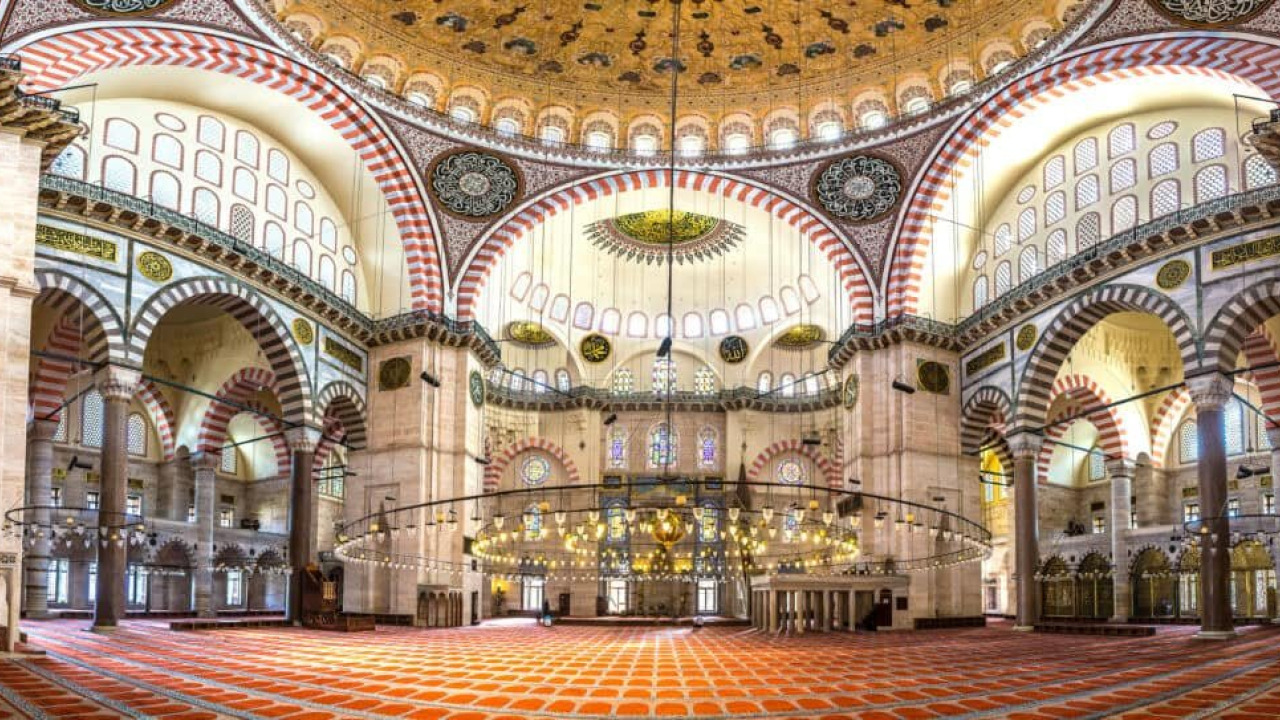
Upon entering the prayer hall, your gaze will naturally be drawn upwards to the magnificent dome. Yet, the true engineering marvel lies in the four massive supporting pillars on the ground. With their fluted shafts, these 'elephant's feet' pillars bear the immense weight of the 23.5-meter-diameter main dome, distributing the load through the semi-domes down to the foundation. Thanks to this ingenious distribution, the dome's impressive 43-meter height is perceived without any sense of oppressive weight.
The Tile Program: A Symphony of 21,043 Pieces
According to the Culture Portal records, the mosque boasts 21,043 tiles, arranged into over fifty compositions, predominantly featuring naturalistic patterns. These exquisite tiles were produced in Iznik and Kütahya using the underglaze technique. A useful distinction for your visit is this: on the lower-level panels, floral motifs like tulips, carnations, and cypress trees are more distinctly visible, while towards the gallery level, the blue tones deepen. It is this dominant blue interior that earned the mosque its internationally recognized name, the Blue Mosque.
The Calligraphy Band, Stained Glass, and Light
The monumental Thuluth (celî sülüs) script encircling the dome belt is attributed to Seyyid Kasım Gubari, a calligrapher of that era. Even if you can't read the script, you'll notice how the letters are proportioned to the curved surface: their size increases upwards to ensure a balanced composition when viewed from below. The light filtering through the colorful stained-glass windows shifts throughout the day, meaning the same tile panel will appear differently during a morning visit compared to an afternoon one.
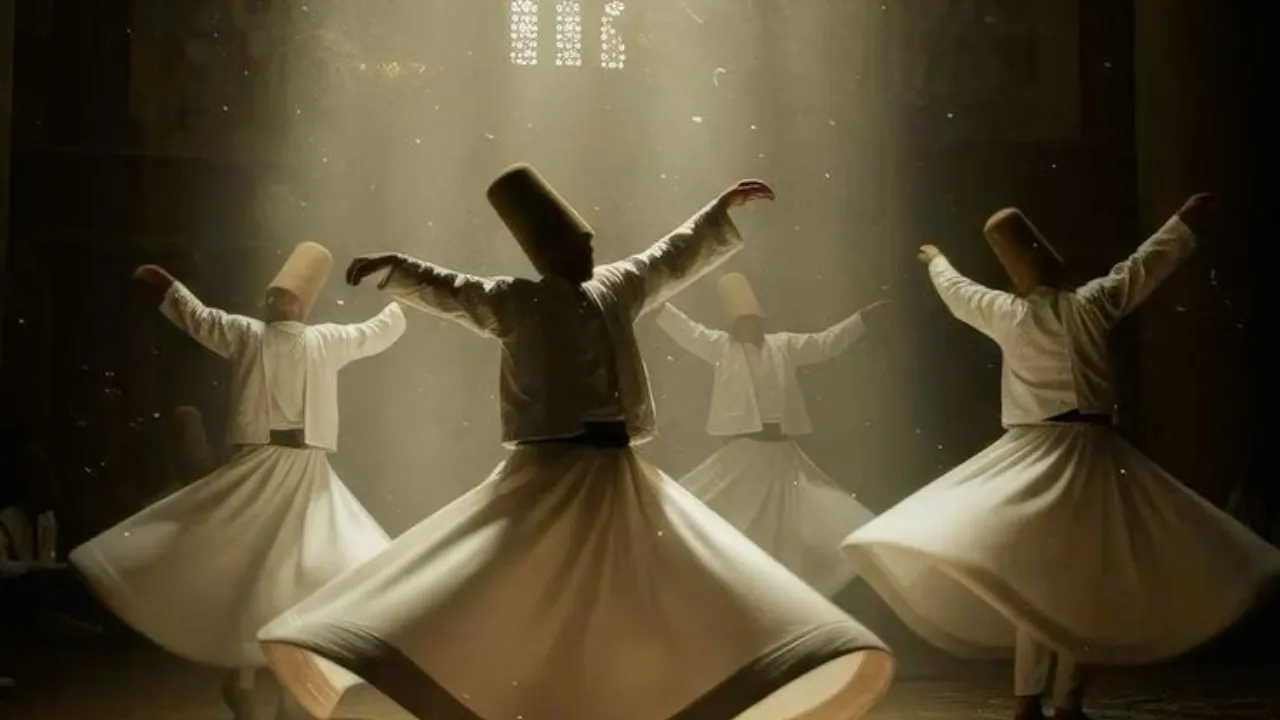
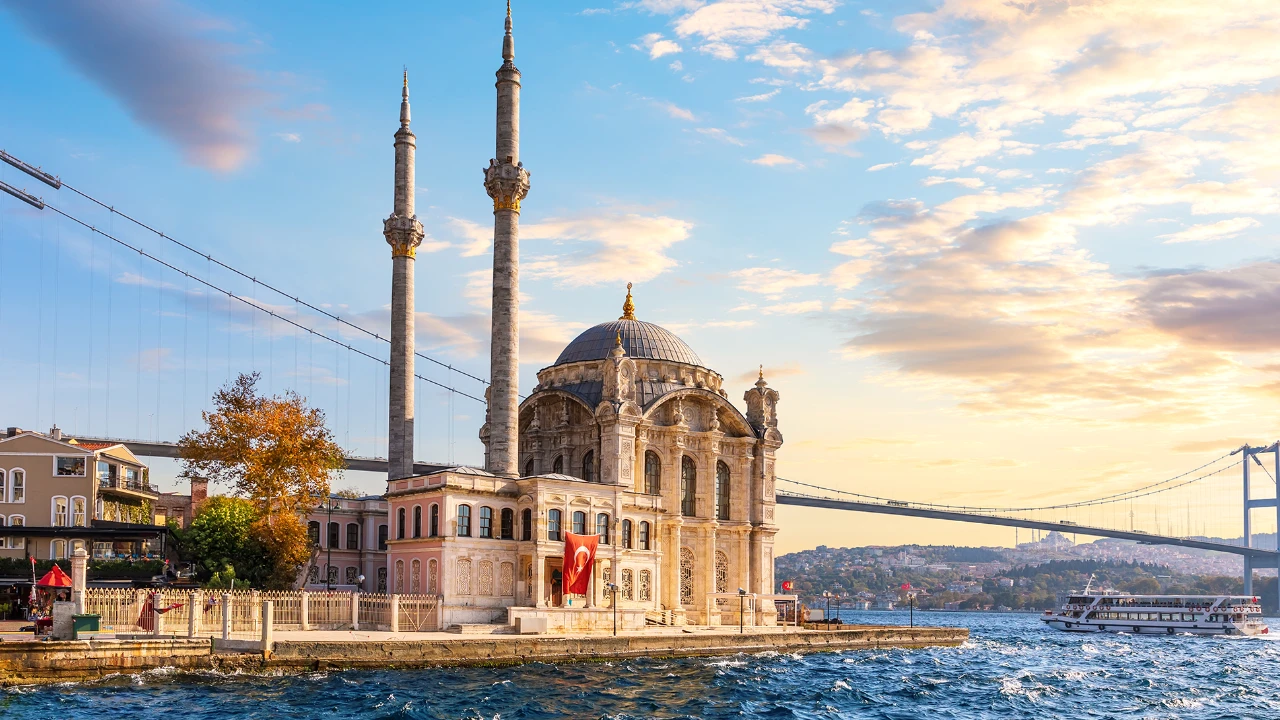
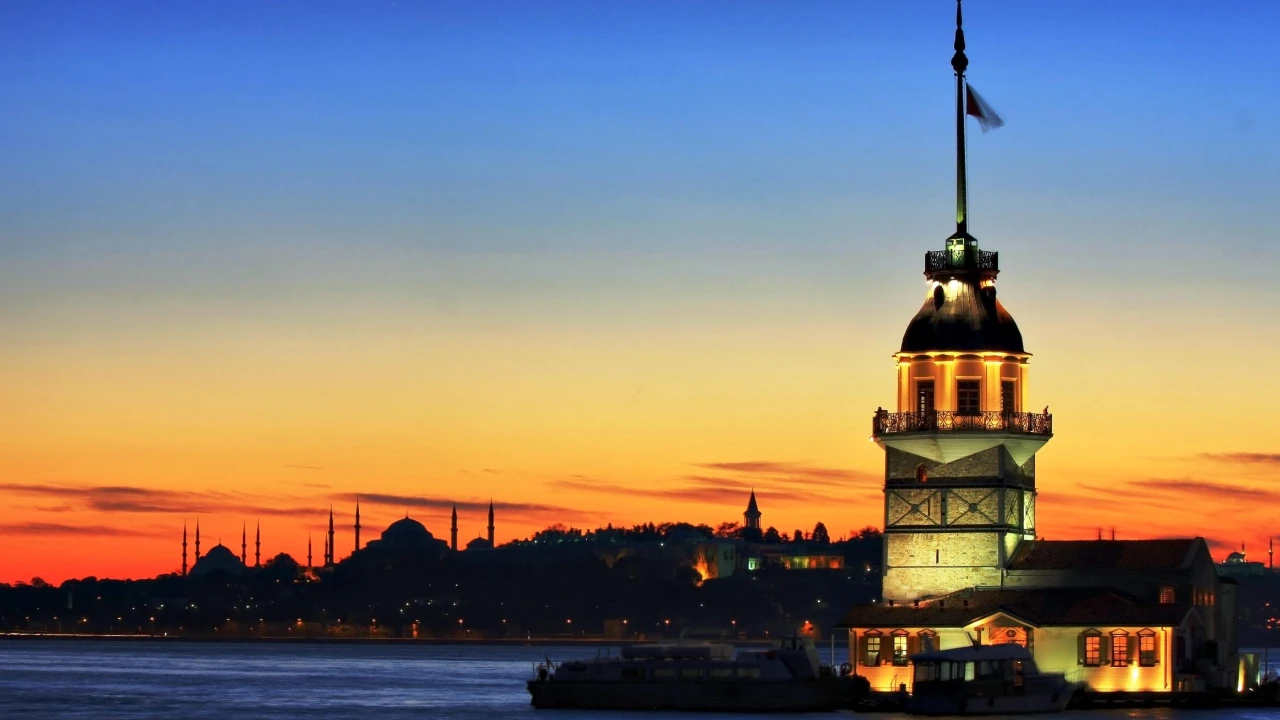
Your Step-by-Step Visit: From Entrance to Exit
The following sequence is designed to help you complete your visit smoothly, even during crowded hours, ensuring you don't miss a beat. Each step naturally flows from the last.
- View from the Square: Before heading towards the prayer hall, observe the mosque's mass from a distance; the tiered domes and six minarets are best appreciated together from this vantage point.
- Enter the Outer Courtyard: Pass through the Chained Gate and step into the area enclosed by stone walls, scanning the facade from left to right.
- Pause in the Inner Courtyard: Look from beneath the arcades towards the ablution fountain and the grand portal; calibrate your sense of scale here before entering the prayer hall.
- Head to the Visitor Entrance: The entrance for worshippers is separate from the visitor entrance; follow the signs and place your shoes in the provided bag.
- Maintain Sequence in the Prayer Hall: First, observe the supporting pillars and the dome, then the wall panels, and finally, the mihrab and minbar on the qibla wall.
- Return to the Courtyard: Upon exiting, pass to the garden side to see the exterior of the hazire (graveyard) and türbe (tomb) facade, then proceed to the square.
When Can Tourists Enter?
Tourist entry is permitted during intervals outside of prayer times. Once the call to prayer (ezan) is heard, visits pause, and the doors reopen a short while after the congregation disperses. As prayer times shift daily and seasonally, providing a fixed schedule would be misleading. A practical approach is to check the Diyanet (Presidency of Religious Affairs) prayer times page for Istanbul on your chosen day and plan your visit between two prayer windows. On Fridays, the period around noon is reserved for congregational prayers, so it's best to schedule your visit for the afternoon on that day.
The Diyanet (Presidency of Religious Affairs) general directive on religious services states that foreign language-speaking mosque guides may be assigned to frequently visited historical mosques, and that materials like headscarves and skirts provided at the entrance for visitors should be kept clean and readily available. The same directive stipulates that any adjustments to mosque opening hours for visitors are subject to the approval of local authorities; thus, the visitor window may change based on local decisions.
What to prepare before heading to the entrance:
- Choose clothing that covers your shoulders and knees; female visitors are expected to cover their hair, so carrying a lightweight scarf in your bag will help you avoid waiting in line at the entrance.
- Since the entire floor is carpeted, come prepared with clean socks; shoes are removed at the entrance and carried in a provided bag.
- Turn off your flash, avoid including worshippers in your photos, and follow any instructions from mosque officials.
- There is no entrance fee for the mosque; do not trust anyone in the courtyard asking for payment, a queue ticket, or unauthorized guiding services.
- Plan your visit between two prayer times and allow an extra half-hour for your exit.
Seeing the Mosque from the Water: The Six Minarets in the Skyline
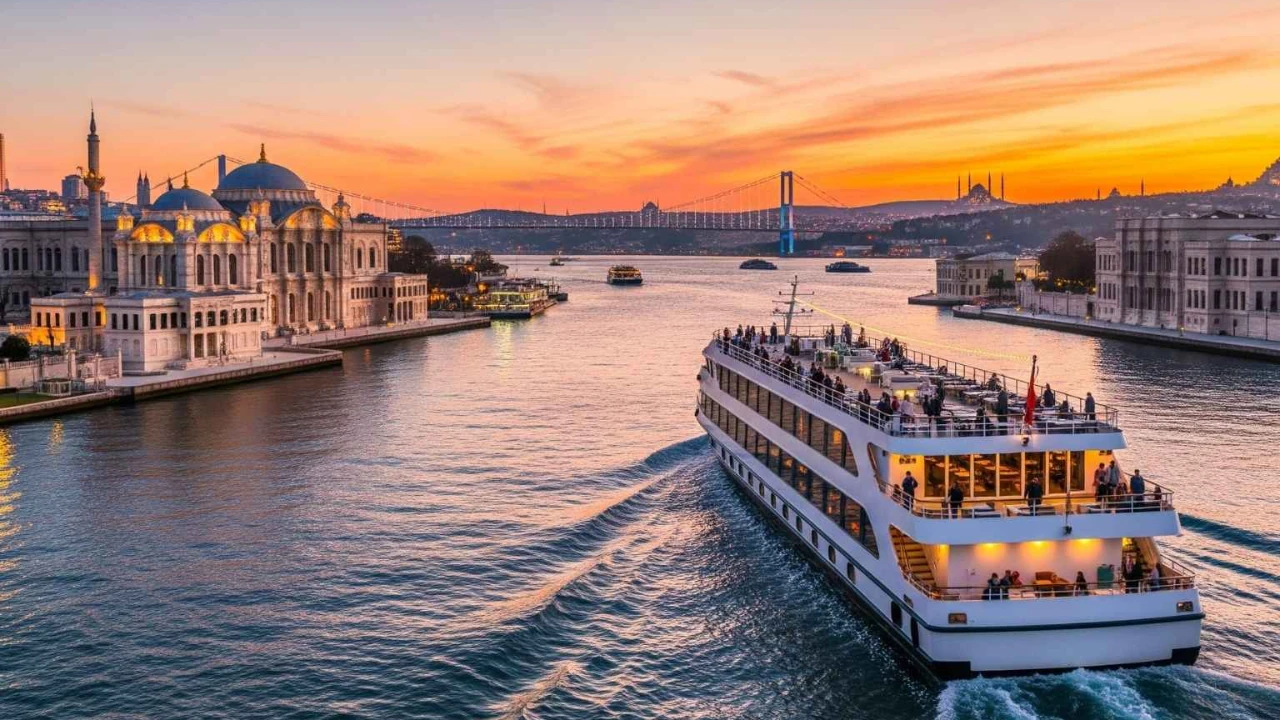
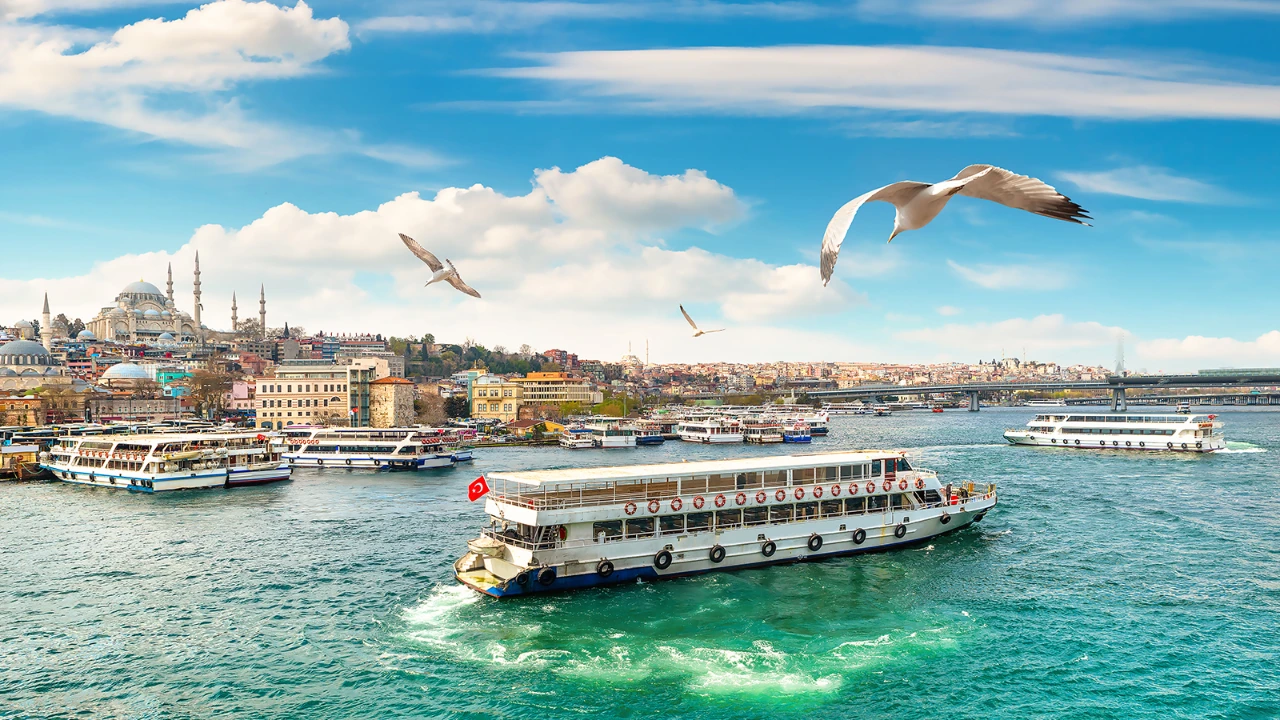
The mosque's impressive massing is designed to be appreciated not only from the square but also from the mouth of the Marmara Sea and the entrance to the Golden Horn. In UNESCO's 1985 listing for the Historic Areas of Istanbul, the city's skyline is described through landmarks like Hagia Sophia, Süleymaniye Mosque, and the 17th-century Blue Mosque. This means the six-minaret structure is one of the key reference points along the historical peninsula's sea-facing facade. When viewed from the sea, the minarets appear more widely spaced, the dome tiers stack elegantly, and the structure takes on a more horizontal appearance than it does from the square. For visitors who wish to complement their land-based exploration with a sea view, the coastal line and pier arrangements are a topic for another article. Here's a useful detail: the silhouette is most clearly visible on clear mornings.
Best Season and Time: Light, Crowds, and Queues
While the mosque's interior remains consistent throughout the year, what changes are the angle of the light and the density of crowds at the entrance. The square-facing side offers little shade, making waiting times in summer a direct matter of comfort.
| Period | What changes inside | Visiting Tip |
|---|---|---|
| April-June | Light from windows illuminates panels evenly | Queues lengthen on weekend afternoons |
| July-August | Midday light is harsh, high contrast under the dome | Prefer the first visiting window in the morning |
| September-October | Light softens, tile colors appear richer | Group tour intensity begins to decrease |
| November-March | Interior is dimmer, artificial lighting becomes more prominent | Waiting in the courtyard becomes difficult on rainy days |
If you're planning a second indoor attraction on the same day, pay close attention to ticketing arrangements. At the Hagia Sophia across the square, visitor entry is separate from worshipper entry, and a paid gallery system is in place for foreign visitors. According to the Ministry of Culture and Tourism's February 2026 statement, restoration continues at this site, with extensive scaffolding on its facades and minarets. Those curious about its layered history and entrance procedures can continue reading our article on Hagia Sophia. Trying to squeeze a visit to Topkapı Palace, which often involves ticket queues and risks of closure, into the same half-day as the Blue Mosque will likely result in a superficial experience of one or both. For those considering a guided approach, compare Istanbul cultural tour options.
Summing Up Your Visit
When followed in sequence, a visit to Sultanahmet Mosque (Blue Mosque) transforms into a fascinating hour-long architectural 'reading': from the square, appreciate its mass; from the courtyard, its scale; and within the prayer hall, its structural layout and intricate tile program. With the comprehensive restoration that began in 2018 now complete for the main mosque section, you won't find the prayer hall closed. However, as per the same Ministry statement, restoration of the Hünkâr Kasrı (Sultan's Pavilion) and landscaping are still ongoing, so don't include these units in your immediate plans. The key variables determining your visit will be the day's prayer times and the crowd levels in the square.
Frequently Asked Questions 5
Is there an entrance fee for Sultanahmet Mosque?
The mosque is an active place of worship, and no tickets are sold for entry. The shoe bags and covering materials provided at the entrance are also free of charge. Do not trust anyone in the courtyard asking for payment, a queue ticket, or unauthorized guiding services. The situation is different for the Hagia Sophia across the square: there, visitor entry is separate, and a paid gallery system is in place for foreign visitors; check their official page for current fees.
Can Sultanahmet Mosque be visited on a Friday?
Yes, it can, but the timing changes. On Fridays, the period around noon is reserved for congregational prayers, and tourist entry pauses during this time. If you plan to visit on a Friday, schedule your program for the afternoon. Beforehand, check the Diyanet (Presidency of Religious Affairs) prayer times page for Istanbul to see the noon prayer time. On other days, visits also briefly pause during each of the daily prayer times.
How do I get to Sultanahmet Mosque?
According to the Culture Portal records, transportation information for the mosque specifies the Sultanahmet stop on the T1 Kabataş-Bağcılar tram line. According to Metro Istanbul's line page, services on this line run between 06:00 and 00:00 and the line has 31 stations. After getting off at the stop, you'll reach the outer courtyard gate by walking through the square; the square is open to pedestrian traffic.
Is Sultanahmet Mosque currently under restoration?
Not the main mosque section. The comprehensive restoration carried out by the General Directorate of Foundations began in 2018, and the structure was reopened for worship on April 21, 2023. The Ministry of Culture and Tourism's February 2026 statement noted that the repair of the six minarets and the maintenance of the lead roofing and tiles have been completed. According to the same statement, restoration of the Hünkâr Kasrı (Sultan's Pavilion) and landscaping are ongoing; the neighboring Hagia Sophia is the multi-layered restoration project that is still continuing.
Why is Sultanahmet Mosque called the Blue Mosque?
The name "Blue Mosque," used in foreign sources, comes from the dominant blue and turquoise tones in its interior. According to the Culture Portal records, the mosque's 21,043 tiles are divided into over fifty compositions; when these blue-heavy patterns combine with the hand-painted decorations, the interior takes on a bluish luminosity. The exterior facade, however, is made of gray ashlar stone, so the name is only meaningful for the interior.