Planning a visit to the Süleymaniye Mosque often starts with the same questions: How long does it take? And how much of it can I actually explore? Here's the short answer: About an hour is enough for the main prayer hall (harim) and the arcaded courtyard. If you add the madrasah streets, the northern terrace, and the cemetery (hazire), your visit will stretch to two or two and a half hours. The mosque is an active place of worship; it doesn't have a weekly closing day or a ticket office. The only thing that limits visitor access is prayer times. This guide approaches Süleymaniye not just as a building, but as a sprawling complex: detailing what each section was originally used for, which parts are open today, and the best order to explore them.
Quick Facts
| Topic | Information |
|---|---|
| Location | Fatih, Süleymaniye; on the third hill of the historical peninsula |
| Patron and Architect | Sultan Süleyman the Magnificent, Mimar Sinan |
| Construction Period | Mosque: 1551-1558; Entire complex: 1548-1557 |
| Main Dome | 53 meters high, 27.25 meters in diameter, 32 windows on the drum |
| Arcaded Courtyard | 28 domed arcades supported by 24 columns, with a central ablution fountain (şadırvan) |
| Minarets | 4 minarets, a total of 10 balconies (two with three, two with two) |
| Visitor Status | Active place of worship; no ticket office for the mosque, courtyard, or cemetery |
| Protection Status | Süleymaniye Conservation Area, UNESCO World Heritage Site since 1985 |
| Rail Transport | T1 Beyazıt-Kapalıçarşı tram stop, M2 Vezneciler-İstanbul Ü. metro station |
| Recommended Duration | Approx. 1 hour for the mosque and courtyard, 2-2.5 hours for the entire complex |
How long does a visit to Süleymaniye take?
A visit limited to the main prayer hall (harim) and the courtyard typically lasts about an hour. However, if you explore the entire complex, that time extends to two or two and a half hours. The difference isn't about distance, but the intricate layout of the site. Süleymaniye isn't just a mosque; it's a sprawling complex comprising dozens of units arranged around the central mosque. Madrasahs, a hospital (darüşşifa), a public kitchen (imaret), guesthouses (tabhane), a bathhouse (hamam), and tombs (türbeler) are all set on terraces at varying elevations. The Istanbul Metropolitan Municipality's cultural heritage records also note that the complex is built on terraced levels. So, what truly extends your visit isn't the number of steps, but navigating the undulating streets and moving from one unit to another.
It's also wise to factor in a little extra time. If your visit coincides with prayer times, tourist entry to the main prayer hall will be temporarily paused. Instead of waiting at the door, you can use this interval to explore the courtyard, the cemetery (hazire), or the northern terrace, ensuring no time is wasted. During peak afternoon hours, when crowds are larger, remember to account for time spent removing your shoes and potentially waiting in line to enter the prayer hall.
Is Süleymaniye Mosque open to visitors, and what are the visiting hours?
Today, the mosque is open for both worship and visits, with no weekly closing day. According to records from the Fatih District Governorship, the structure was reopened for worship in 2010 following extensive restoration work carried out by the General Directorate of Foundations between 2007 and 2010. Rest assured, there are no closures that will hinder your visit today. What limits your visit isn't a ticket, but time: visitor entry to the main prayer hall is paused during the five daily prayer times, especially around Friday noon prayers.
Therefore, it's best to plan your Süleymaniye visit around prayer times rather than fixed hours. Checking the Diyanet (Presidency of Religious Affairs) website for the specific noon (öğle) and afternoon (ikindi) prayer times on your chosen day will save you from waiting at the entrance. There is no ticket office for the mosque, the arcaded courtyard, or the tombs in the cemetery (hazire). Just keep in mind: if you're combining your day with a ticketed museum on the peninsula, those museums often have different admission fees for local and foreign visitors. It's always best to check the current prices on the official website of the respective institution.
Which parts of the Complex can be visited today?
Not all units of the complex are open for entry; some are used as institutional buildings, while others can only be admired from their street-facing facades. The Istanbul Metropolitan Municipality's cultural heritage records list the complex as comprising the mosque, five madrasahs, a hadith school (darülhadis), a soup kitchen (darüzziyafe), guesthouses (tabhane), a hospital (bimarhane), a bathhouse (hamam), three tombs, and a tomb keeper's room. The list below details what visitors can expect at each unit. Since their usage can change periodically, it's always a good idea to check any information signs at the entrance.
| Unit | Original Function | What Visitors See Today |
|---|---|---|
| Main Prayer Hall (Harim) | Communal worship | Open for visits outside of prayer times; shoes must be removed at the entrance |
| Arcaded Courtyard & Ablution Fountain | Preparation and gathering area | Open all day, can be visited independently of the main prayer hall |
| Northern Outer Courtyard Terrace | The complex's urban facade | Freely accessible, offers views towards the Golden Horn and Galata |
| Madrasahs & Hadith School | Education in religious and legal sciences | Now manuscript libraries and research institutions; courtyards and facades viewed from the street |
| Medical Madrasah & Hospital (Darüşşifa) | Medical education and hospital | Interior use varies periodically; stone facade and street texture observed from outside |
| Soup Kitchen (Darüzziyafe) & Guesthouses (Tabhane) | Public kitchen and guesthouse | Domed structures viewed in conjunction with the courtyard layout |
| Bathhouse (Hamam) | Complex and neighborhood bathhouse | Separate structure at street level, marking the outer edge of the complex |
| Cemetery (Hazire) & Tombs | Dynastic burial ground | Tombs of Süleyman the Magnificent and Hürrem Sultan open during specific daytime hours |
If you prefer to explore the complex with guided insights rather than on your own, you'll find options among Istanbul city center cultural tours that cover the peninsula and include stops at the madrasahs and tombs.
What to See in the Complex: From the Prayer Hall to the Cemetery
At Süleymaniye, the true marvel isn't just the ornamentation, but the masterful order and design. Mimar Sinan didn't merely create an interior space here; he designed an entire urban quarter perched atop a hill. The richness of your visit will come from appreciating each unit through this lens.
Süleyman the Magnificent's Commission and Sinan's Masterpiece
The structure was built by Mimar Sinan, commissioned by Sultan Süleyman the Magnificent. Records from the Culture Portal and Fatih District Governorship date the mosque's construction between 1551 and 1558. The Istanbul Metropolitan Municipality's cultural heritage records, however, place the entire complex's construction between 1548 and 1557, noting its opening in October 1557. The Culture Portal also states that Sinan himself referred to this work as his 'masterpiece.' This designation shouldn't be misinterpreted as a flaw; rather, it signifies a grand leap in scale to an imperial level, following his 'apprenticeship' work at the Şehzadebaşı Mosque.
The Main Prayer Hall (Harim) and Central Dome
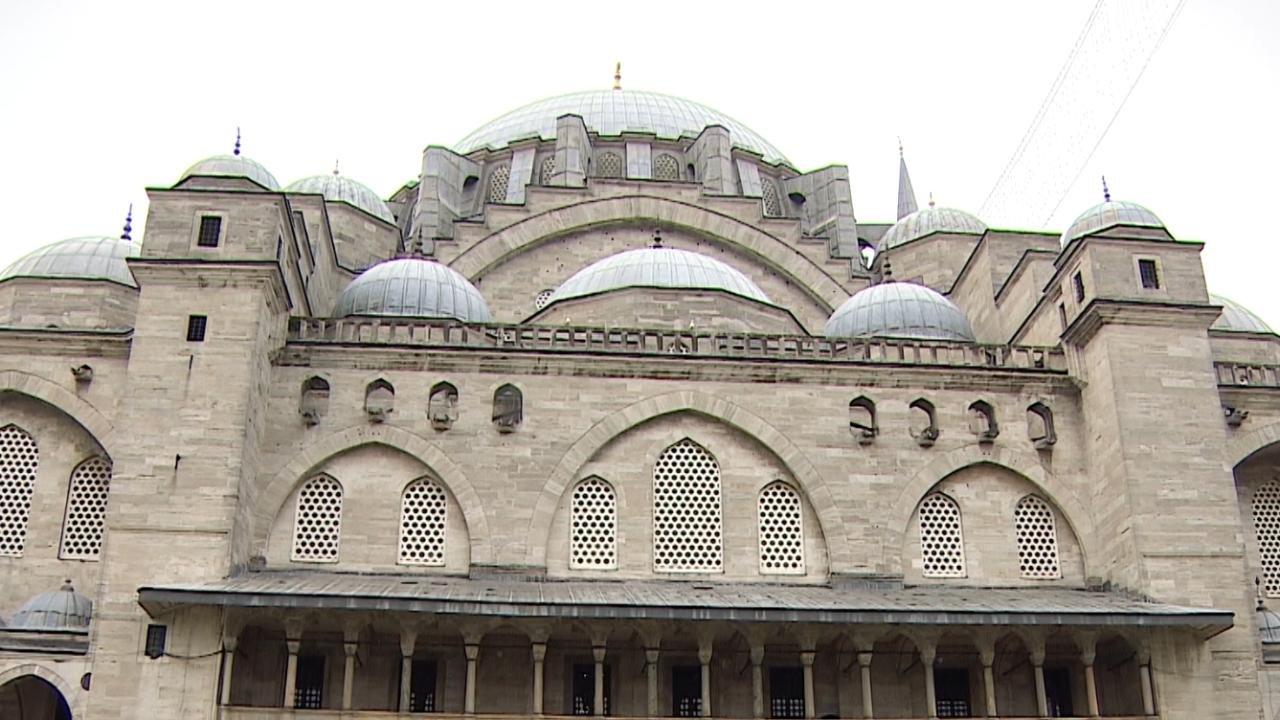
According to Culture Portal records, the main dome stands 53 meters high and spans 27.25 meters in diameter. The Fatih District Governorship adds that the dome's drum features 32 windows. Inside, let your attention be drawn not to the ornamentation, but to the light: the windows on the drum and the lower rows cause the illuminated patch on the floor to shift throughout the day. This architectural scheme, featuring a central dome flanked by two semi-domes, is often compared to the roofing structure of the 6th-century Hagia Sophia. For those wishing to appreciate both structures on the same trip, The History and Architecture of Hagia Sophia offers a separate starting point.
The Soot Chamber Above the Entrance
The small, windowed section above the entrance door is known in historical sources as the 'soot chamber.' It's said that the soot produced by oil lamps and candles was channeled into this room by air currents within the main prayer hall. The accumulated soot on the walls was then scraped off and used in ink production. The terracotta pots placed within the dome and walls, with their openings facing the prayer hall, are referred to in acoustic literature as 'hollow resonators.' We won't give a specific number for these pots, as sources vary. Both features are part of the same ingenious idea: the building's architecture was designed to mitigate the byproducts of the life lived within its walls.
The Arcaded Courtyard, Minarets, and Balconies
According to records from the Fatih District Governorship, the inner courtyard is surrounded by 28 domed arcades supported by 24 columns, with a marble ablution fountain (şadırvan) at its center. The four minarets collectively boast ten balconies (şerefe): two minarets have three balconies each, and two have two. A widely circulated interpretation connects the number of minarets to Süleyman the Magnificent being the fourth sultan after the conquest of Istanbul, and the number of balconies to him being the tenth Ottoman ruler. However, this is an interpretation, not a documented design rationale. As you enter the courtyard, observe the variations in color and texture of the columns; this difference indicates that the stones were sourced from various locations.
The Northern Terrace and its Golden Horn Views
The expansive outer courtyard terrace to the north of the mosque serves as the complex's urban face, offering panoramic views. From here, the Golden Horn, the Galata ridge, and the mouth of the Bosphorus all converge within a single frame. It's a good idea to place your visit to this terrace in the middle of your tour, rather than at the end. Taking a short break here after leaving the main prayer hall, instead of heading directly to the cemetery, allows you to catch your breath before navigating the sloping streets.
The Tombs of Süleyman the Magnificent and Hürrem Sultan
In the cemetery (hazire) on the qibla side of the mosque, the octagonal tomb of Süleyman the Magnificent stands side-by-side with the tomb of Hürrem Sultan. Istanbul Metropolitan Municipality records list the tombs within the complex as belonging to Süleyman I, Hürrem Sultan, and Mimar Sinan; the tomb keeper's room is listed as a separate unit in the same record. The tombs are open for visits during specific daytime hours. Since these hours can change seasonally and vary across sources, please confirm them on the sign at the entrance. As you enter the hazire, please lower your voice; this is a burial ground as much as it is a visiting area.
Mimar Sinan's Open Tomb
Sinan's tomb is not within the imperial cemetery (hazire), but rather at the northeastern edge of the complex: situated in the triangular area opposite the mosque's Eski Ağalar gate, at the intersection of Fetva Yokuşu and Mimar Sinan Caddesi. According to records from the Fatih District Governorship, it is an open tomb covered by a dome supported by six columns connected by pointed arches. Constructed from küfeki stone and marble, it features a thuluth inscription by calligrapher Sai in front of the sarcophagus. The same record notes that, in addition to Sinan's grave, there are three other graves within the tomb. This modest structure, standing at the edge of the complex he himself designed, makes for a meaningful final stop on your tour.
Reading Süleymaniye from the Water: The Silhouette of the Third Hill
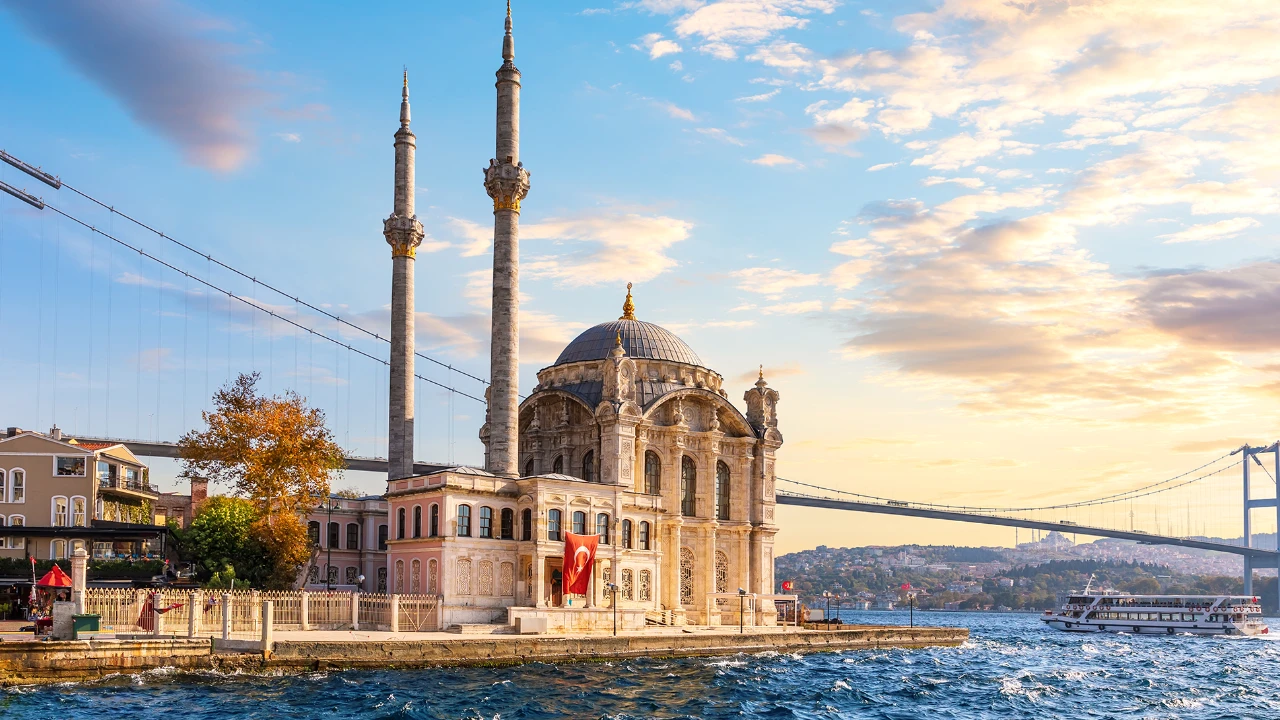
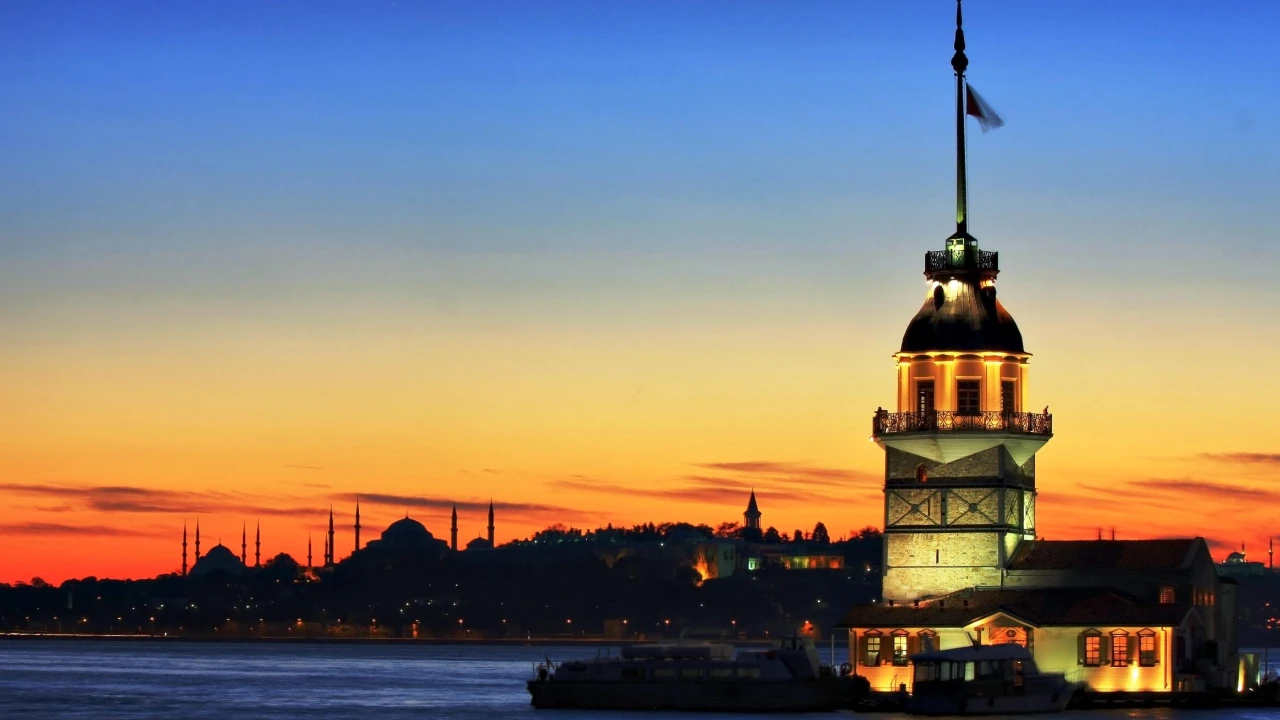
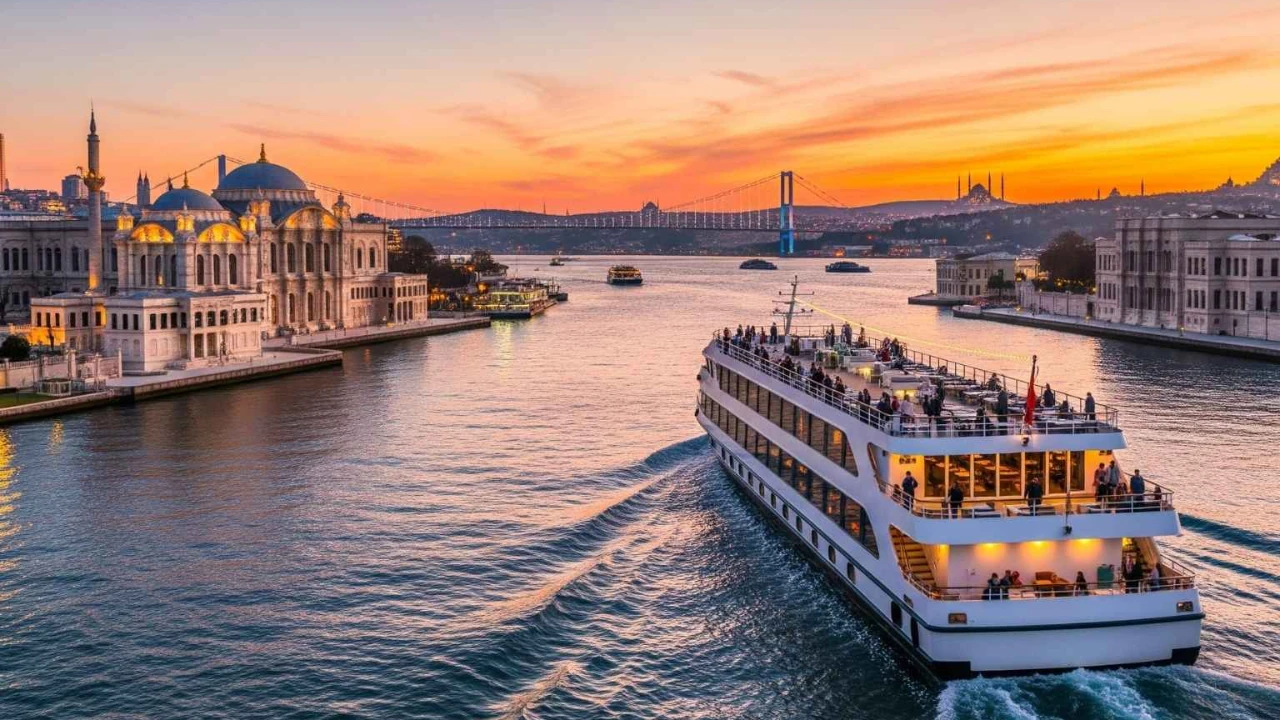
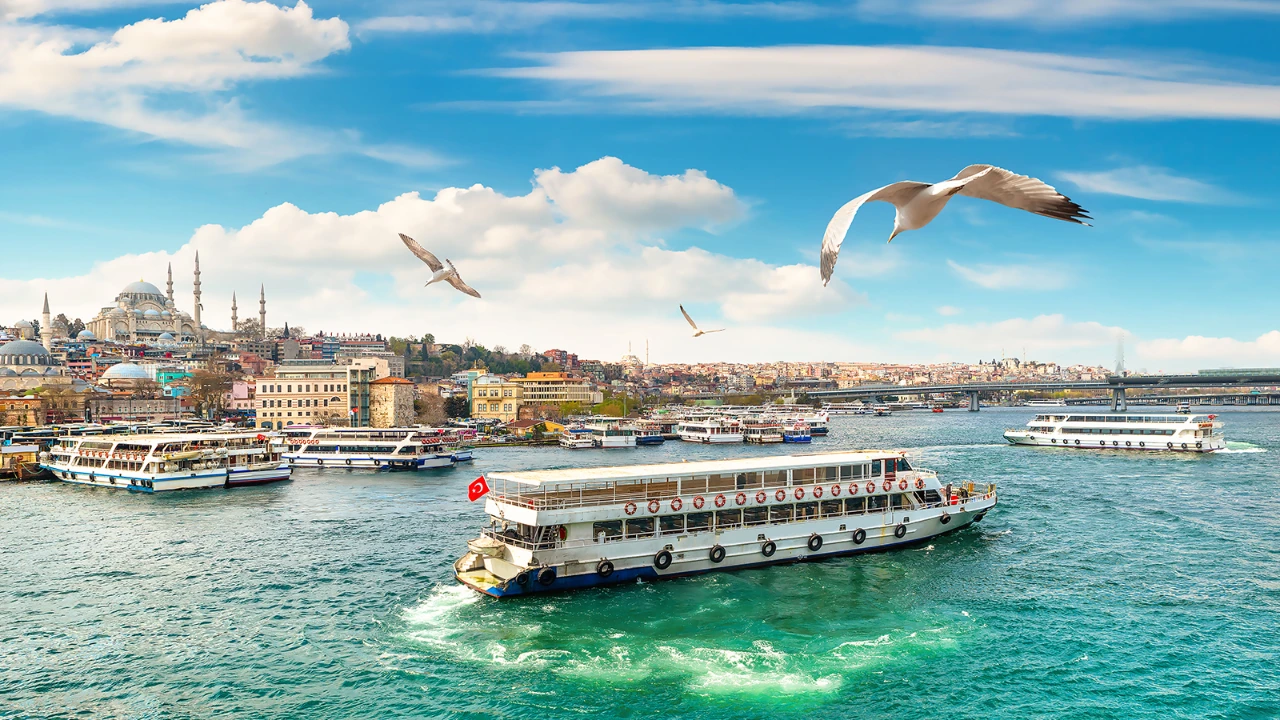
Another way to truly grasp the Süleymaniye Complex is to view it from a distance. This sprawling site, which gives its name to the Süleymaniye neighborhood in Fatih district, is one of the protected areas within Istanbul's Historic Areas, designated a UNESCO World Heritage Site in 1985. The structure is built on the third hill of the peninsula, with its various units spreading out in terraces down the slope. This unique placement allows the complex to be 'read' more effectively from the water than from land. When viewed from a boat cruising the Golden Horn or from the mouth of the Bosphorus, you first see the madrasah roofs, then the courtyard wall, and finally, at the very top, the majestic dome and minarets. While Süleyman the Magnificent's Topkapı Palace stands on the first hill, the decision to build the Süleymaniye Complex on the third hill is interpreted as a strategic placement, establishing the imperial silhouette from two distinct vantage points.
If you wish to complete your visit with this breathtaking perspective, you'll want to witness how the complex appears from the sea. Boat tours that cover the peninsula's coastline offer a unique opportunity to see the hill you've explored on foot transform into an iconic silhouette.
Step-by-Step Guide to Exploring the Complex
The following sequence is designed to prevent you from climbing the same slope twice; you'll arrive at a lower elevation and depart from a higher one.
- Exit the rail system: The T1 tram's Beyazıt-Kapalıçarşı stop or the M2 metro's Vezneciler-İstanbul Ü. station are both about a 10-minute uphill walk from the complex. Metro Istanbul records indicate that Vezneciler-İstanbul Ü. station is a walkable transfer point to the T1 line.
- Approach via the madrasah streets: Instead of walking directly to the mosque entrance, weave through the stone facades of the surrounding madrasahs. It's only from these streets that you truly see how the complex integrates with the neighborhood's fabric.
- Ascend to the northern terrace: Before entering the main prayer hall, head up to the outer courtyard's level overlooking the Golden Horn. Spending a few minutes here before the crowds arrive will help you orient yourself and appreciate the complex's place within the city.
- Proceed to the arcaded courtyard: In the inner courtyard with its ablution fountain, observe the texture of the columns, the arrangement of the arcade domes, and the proportion of the minarets as seen through the courtyard arches.
- Enter the main prayer hall (harim): Remove your shoes at the entrance, notice the soot chamber above the door, and observe where the light from the dome's drum windows falls on the floor.
- Conclude with the cemetery (hazire) and Sinan's tomb: After visiting the hazire on the qibla side, walk to the northeastern corner to see Mimar Sinan's open tomb; your route concludes here.
When to Visit: Best Times and Seasons
At Süleymaniye, your seasonal decision isn't dictated by the sea or the road, but by where the shade falls. The complex's expansive open areas are exposed in summer and windy in winter.
| Period | What changes in the complex | Visiting note |
|---|---|---|
| April-June | Courtyard and terrace comfortable all day, soft light | Walking through the madrasah streets is pleasant during this period |
| July-August | Little shade in the courtyard, marble floor heats up | Choose early morning or late afternoon, carry water |
| September-October | Western light falls towards the Golden Horn | Visiting the terrace in the late afternoon enhances the view |
| November-March | Northern terrace is windy, daylight hours are shorter | Windproof clothing is recommended, visit the cemetery earlier in the day |
Regarding the best time of day, two simple rules apply. Early morning hours are ideal for finding the main prayer hall (harim) less crowded, while late afternoon offers the best light for the terrace views. Spending midday in the courtyard or madrasah streets can prevent wasted waiting time if the harim is closed for prayers.
Practical Tips Before You Go
The following points will help you sort out details beforehand that might be difficult to resolve at the entrance:
- Dress code: As a place of worship, modest attire is expected: clothing that covers your arms and legs. Female visitors are also required to cover their hair with a headscarf. While coverings may be available at the entrance, carrying your own shawl will allow you to enter without delay.
- Check prayer times: Consult the Diyanet (Presidency of Religious Affairs) website for the noon (öğle) and afternoon (ikindi) prayer times on your visit day; plan your visit between these two periods.
- Footwear: The terrain is sloped and paved with stone; non-slip shoes are far more comfortable for navigating the complex's streets than heels or thin-soled options.
- Respectful photography: Be mindful of the privacy of those praying in the main prayer hall (harim) and avoid using flash. When taking photos in the cemetery (hazire), do not intrude upon other visitors.
- Local dining: The row of historic 'kuru fasulyeci' (dried bean stew restaurants) across from the complex wall is within walking distance for a post-tour break; expect queues to be long during lunchtime.
- Combine with other sights: If you're considering combining your visit with other stops on the peninsula, Istanbul cultural tours offer a ready-made way to structure your day, especially for those seeking a guided experience.
If you arrive from and plan to return towards Beyazıt, the bazaar street at the bottom of the slope is a natural continuation of your tour. For its own rich history, The Grand Bazaar: Istanbul's Historic and Commercial Heart is the subject of a separate article.
Frequently Asked Questions 5
Who built the Süleymaniye Mosque, and when was it completed?
It was built by Mimar Sinan, commissioned by Sultan Süleyman the Magnificent. Records from the Culture Portal and Fatih District Governorship date the mosque's construction between 1551 and 1558. The Istanbul Metropolitan Municipality's cultural heritage records, however, place the entire complex's construction between 1548 and 1557, noting its opening in October 1557.
Is there an entrance fee for Süleymaniye Mosque?
There is no ticket office for the mosque, the arcaded courtyard, or the tombs in the cemetery (hazire). If you're combining your day with ticketed museums on the peninsula, keep in mind that those institutions often apply different fees for local and foreign visitors, so it's best to check the current prices on their official websites.
How long does a visit to Süleymaniye take?
A visit limited to the main prayer hall (harim) and the arcaded courtyard typically lasts about an hour. When you include the madrasah streets, the northern terrace, the cemetery (hazire), and Mimar Sinan's Tomb, exploring the entire complex will take two to two and a half hours.
How do I get to Süleymaniye Mosque by public transport?
Alight at the T1 tram line's Beyazıt-Kapalıçarşı stop or the M2 metro line's Vezneciler-İstanbul Ü. station. From both points, it's approximately a 10-minute uphill walk to the complex. Metro Istanbul records indicate that Vezneciler-İstanbul Ü. station is a walkable transfer point to the T1 line.
Which tombs are located within the Süleymaniye Complex?
According to the Istanbul Metropolitan Municipality's cultural heritage records, there are three tombs within the complex: Süleyman I, Hürrem Sultan, and Mimar Sinan. The tomb keeper's room is listed as a separate unit in the same record. The tombs of Süleyman the Magnificent and Hürrem Sultan are located in the cemetery (hazire) on the qibla side of the mosque, while Sinan's open tomb is at the northeastern corner of the complex, at the intersection of Fetva Yokuşu and Mimar Sinan Caddesi.