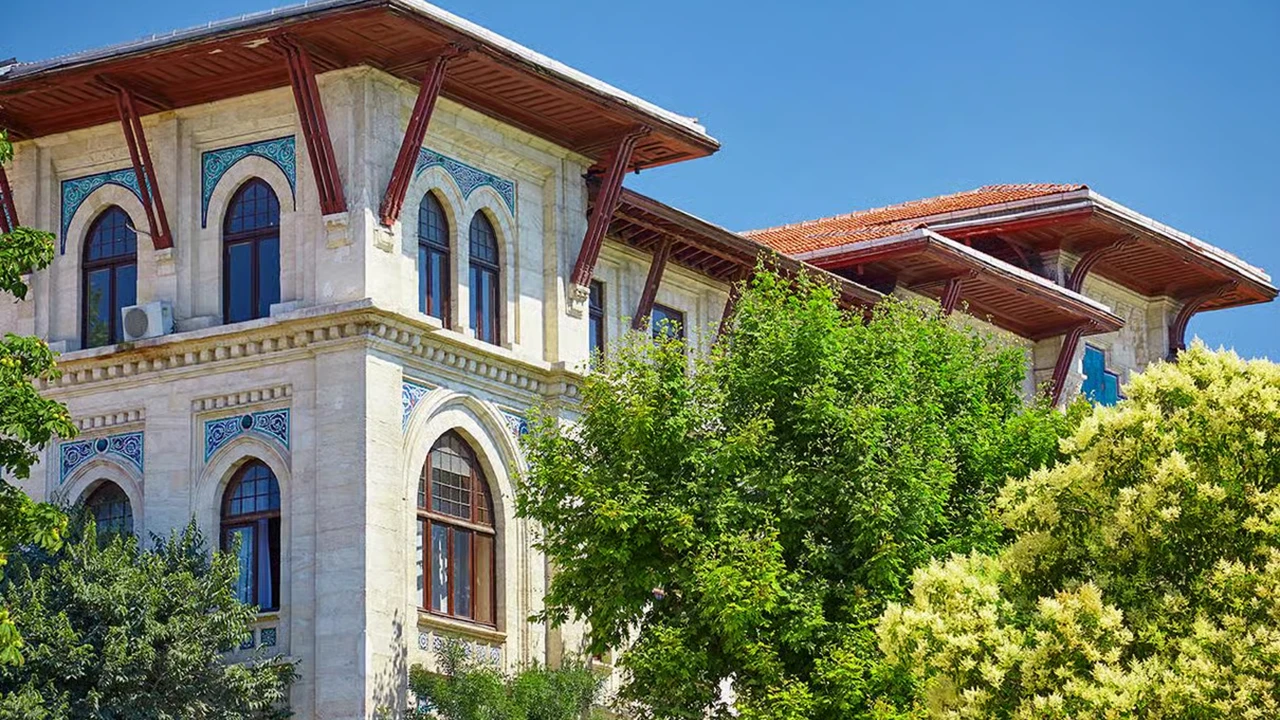
Nestled on the northern shore of Istanbul's historic peninsula, a striking brick edifice gazes out over the shimmering waters of the Golden Horn. This isn't just a building; it's a living testament to Turkey's journey through industrialization and profound social change. The Cibali Tobacco Factory, originally constructed in 1884 for the Ottoman Régie Administration, was once a bustling production hub. Today, it has been beautifully repurposed as the main campus for Kadir Has University and home to the fascinating Rezan Has Museum. Within these very walls, thousands of women began their working lives, etching a legacy of labor that stretches from the twilight of the Ottoman Empire to the dawn of the Turkish Republic.
In this comprehensive guide, we'll take you on a journey through the Cibali Tobacco Factory's captivating past – from its inception to its closure, the inspiring history of its women workers' strikes, its meticulous restoration, and what you can expect when you visit today. For those eager to explore this landmark alongside Istanbul's rich historical tapestry, Travel Tour Shop offers a variety of Istanbul cultural tours to suit every interest.
Quick Facts
| Information | Detail |
|---|---|
| Location | Istanbul, Fatih district, Cibali Neighborhood (Golden Horn shore) |
| Construction Year | 1884, for the Régie Administration |
| Architect | Alexandre Vallaury |
| Régie Era | 1883-1925 (French administration) |
| Nationalization | March 1, 1925 |
| End of Production | 1994 |
| Current Use | Kadir Has University Cibali Campus and Rezan Has Museum |
| Restoration Award | Europa Nostra 2003 Diploma Award |
| Nearest Stop | T5 tram line, Cibali stop |
| Museum Visiting Hours | 09:00-18:00, every day of the week |
Where is the Cibali Tobacco Factory Located?
The Cibali Tobacco Factory is strategically located in the Cibali Neighborhood, within Istanbul's historic Fatih district, gracing the southern banks of the Golden Horn. You'll find it along Kadir Has Street, nestled on the scenic coastline between Unkapanı and Fener. This area, historically within the ancient Byzantine walls, shares its western borders with the charming neighborhoods of Fener and Balat, while Kasımpaşa stretches out across the water on the opposite bank.
This prime location wasn't accidental; it was the very reason for the factory's existence. For centuries, the Golden Horn served as Istanbul's vital artery for trade and logistics. A coastal site, allowing tobacco to be directly processed and shipped after arriving by sea, was an ideal choice for the industrial mindset of the late 19th century. If you're looking to combine your visit to Cibali with nearby historical gems like Fener, Balat, and Süleymaniye, Travel Tour Shop offers curated Fatih cultural tours that explore the district's rich heritage.
Where Does the Name Cibali Come From?
The neighborhood's name, Cibali, traces its origins back to the Ottoman commander Cebe Ali Bey. In 1453, during the conquest of Istanbul, he entered the city through a gate on the Golden Horn shore. This "Cebe Ali gate" eventually evolved into "Cibali kapısı" (Cibali gate) in common parlance, and the district proudly adopted the name. Cebe Ali Bey is believed to have been the first commander of the Cebeciler corps, responsible for military logistics. While a popular tale of "Cibali Baba" (Father Cibali) circulates, historical sources don't offer strong evidence to support it.
The Factory's Architecture and Vallaury's Signature
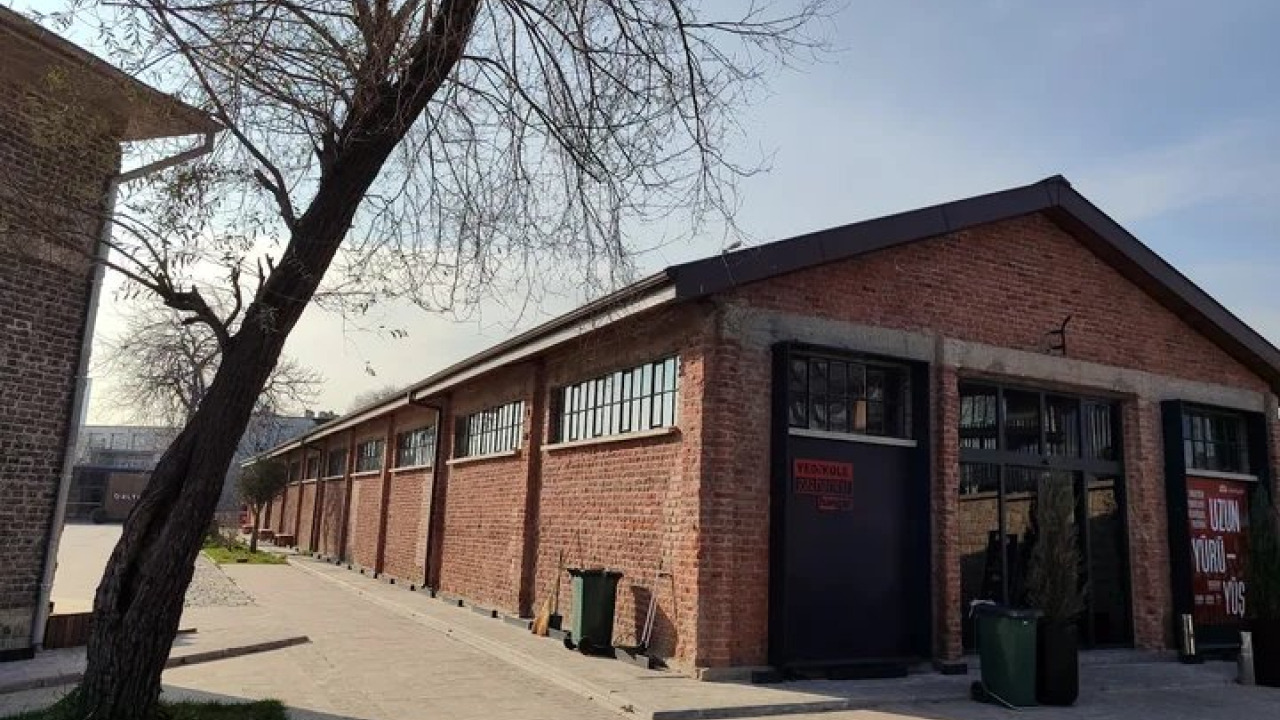
Archival records confirm that the building was commissioned in 1884 by Sultan Abdülhamid II and designed by the era's renowned architect, Alexandre Vallaury, on behalf of the Régie Administration. Its distinctive features – soaring ceilings, expansive rows of windows, and intricate brick facades – beautifully brought the industrial aesthetic of contemporary European factories to the shores of the Golden Horn.
What truly set this structure apart wasn't merely its size, but its remarkable self-sufficiency. The factory was a microcosm of a community, housing its own security unit, workshops, social amenities, a health clinic, a childcare facility, a fire department, union offices, and canteens. Essentially, it was conceived less as a mere production plant and more as a self-sustaining mini-settlement, bustling with life and activity.
How to Get to the Cibali Tobacco Factory
The most convenient way to reach the campus is by taking the T5 tram line, which gracefully glides along the Golden Horn coast, passing through Eminönü. Here's your step-by-step route:
- First, make your way to Eminönü. You can easily reach this bustling hub via the T1 Kabataş-Bağcılar tram line, Marmaray's Sirkeci station, or numerous bus routes that run along the Golden Horn.
- From Eminönü, board the T5 Eminönü-Alibeyköy tram line. This scenic route travels north, hugging the Golden Horn coastline.
- Alight at the Cibali stop, which is among the first few stops. The tram stop is conveniently located directly opposite the main entrance of the campus.
- Once you pass through the main entrance, simply follow the signs for the Rezan Has Museum. You'll find the museum situated on the lower level of the campus.
Public Transportation Options
| Mode of Transport | Line and Stop | Note |
|---|---|---|
| Tram | T5 Eminönü-Alibeyköy, Cibali stop | Opposite campus main entrance |
| Tram (transfer) | T1 Kabataş-Bağcılar, Eminönü stop | Transfer to T5 line at Eminönü |
| Metro | M2 Yenikapı-Hacıosman, Haliç station | Approx. 1 km walk along the coast |
| Bus | Abdülezel Paşa Street coastal lines | Towards Eminönü and Eyüpsultan |
| Walking | Fener and Balat coastal route | Approx. 1.5 km along the coast |
If you're keen to continue your exploration from Cibali towards Fener and Balat, and perhaps conclude your day with a picturesque stroll along the Golden Horn, Travel Tour Shop offers fantastic Fatih day cultural tours that provide excellent alternatives for a memorable experience.
From Régie Administration to Republic: The Factory's History
By the mid-19th century, the Ottoman Empire found itself in a severe financial crisis. Foreign borrowing, initially undertaken to fund the Crimean War, had plunged the treasury into a relentless cycle of debt. To manage these mounting debts, the Ottoman Public Debt Administration (Düyun-ı Umumiye İdaresi) was established. When this administration also laid claim to salt and tobacco revenues, the lucrative tobacco monopoly was handed over to the Régie Administration. It was at this point that Cibali emerged as the very heart of this powerful monopoly in Istanbul.
Tobacco Merchant Mehmet Halis Efendi and 95 Thousand Gold Coins
The factory's narrative actually predates its corporate investment, beginning with the remarkable story of an immigrant merchant. Mehmet Halis Efendi, originally from Kemah, arrived in Istanbul after fleeing the 1877-1878 Ottoman-Russian War. He started modestly with a small tobacco shop in Küçükpazar. As his business flourished, he established a tobacco warehouse and factory in Cibali. He became known as "serduhani," or chief tobacco merchant, a title earned by supplying the army's tobacco needs.
However, with the establishment of the Régie administration and its monopoly over tobacco trade, Mehmet Efendi was compelled to sell his thriving factory to the Régie for a substantial sum of 95,000 gold coins. Legend has it that with this fortune, he acquired vast lands near Erenköy, playing a pivotal role in the founding of what is known today as the Göztepe neighborhood.
Nationalization and Monopoly Years
After nearly four decades under French capital management, the factory was nationalized and began operations under the Republic of Turkey on March 1, 1925. Initially, the facility struggled to keep up with demand, but through strategic additions and improvements, it eventually boasted an impressive processing capacity of 30,000 kilograms of tobacco per day. During this period, working conditions for employees were significantly improved, and the building itself underwent several key renovations.
The factory's production diversity was also remarkable. In 1900, it transitioned to cigarette manufacturing with the introduction of a "Durant" brand machine imported from France. By 1937, popular brands such as Sipahi Ocağı and Köylü were being produced here. When World War II disrupted trade routes and made importing cigar wrappers impossible, the factory innovated, experimenting with local tobaccos. This led to the successful launch of the "Istanbul Cigar" in 1948.
| Period | Year Range | Key Development |
|---|---|---|
| Régie Era | 1883-1925 | French administration; transition to machine-made cigarette production in 1900 |
| Nationalization | 1925-1940 | State-owned operation; 30,000 kg tobacco processing capacity per day |
| Tekel Years (State Monopoly) | 1940-1970 | Main center for nationwide cigarette production; Istanbul Cigar launched in 1948 |
| Decline | 1970-1994 | Istanbul Cigarette Factory commissioned; end of production in 1994 |
| Repurposing | 1998-2003 | Restoration process and transformation into university campus |
End of Production and Abandoned Years
Under Tekel's management, the Cibali Tobacco Factory continued production until the 1990s, finally closing its doors in 1994. Shifting urbanization policies, the imperative to move industrial facilities out of the city center, and the broader transformation of the Golden Horn coastline all contributed to the factory losing its original purpose. Interestingly, a section of the building had been converted into a museum on March 22, 1985. However, this museum was later vacated when it was discovered that the property still belonged to the Ministry of Finance. Following its closure, the grand structure lay dormant for a period, leaving a poignant emptiness in the iconic Golden Horn skyline.
Cibali's Women Workers and the Labor Movement
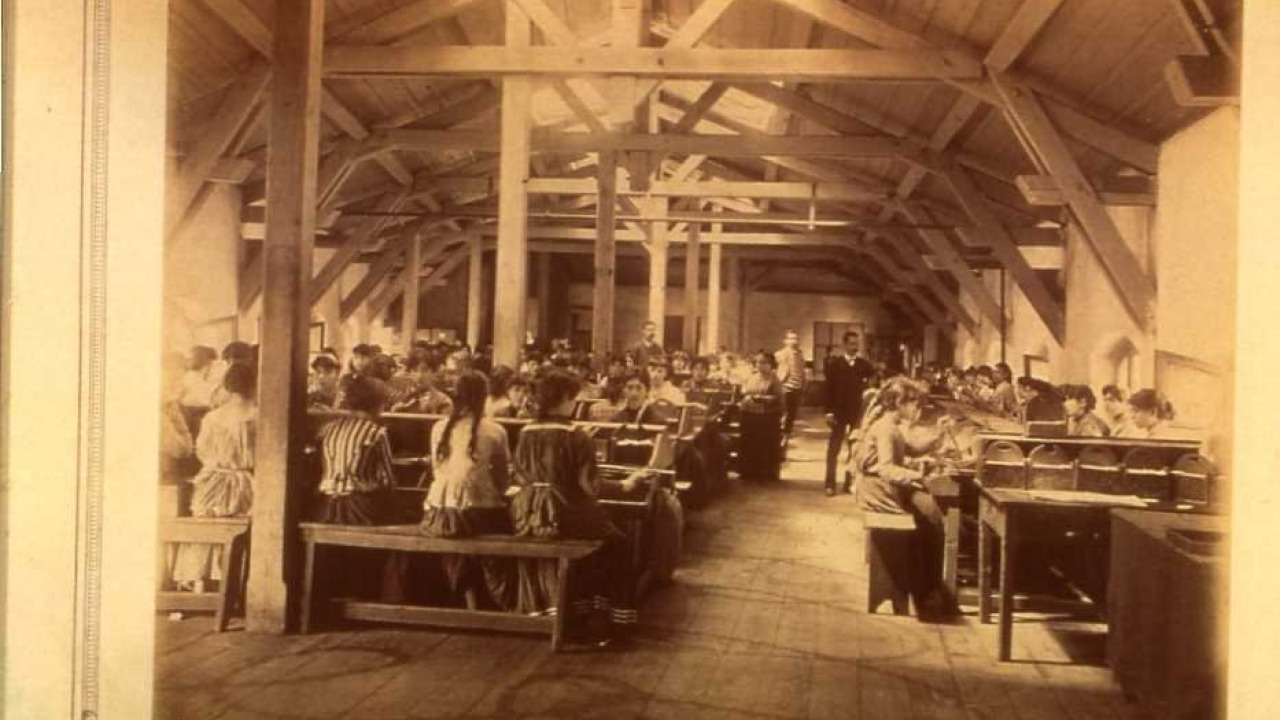
When one thinks of Cibali, the first social phenomenon that often comes to mind is the remarkable women who worked at the factory. In an era when it was uncommon, even frowned upon, for women to engage in paid work outside the home, the Cibali Tobacco Factory became a trailblazer. It provided an unprecedented entry point into the workforce for women residing in Cibali, Fener, Balat, and the wider Fatih area. In its early years, a substantial number of these employees hailed from the non-Muslim communities living in the neighborhood, with the region's economic hardship further boosting the labor supply.
The factory was far more than just a place to earn a wage. Within its walls, these women forged a shared work culture, a powerful network of solidarity, and, eventually, a burgeoning union consciousness. The factory's original Mutual Aid Fund (Taavvün Sandığı) was later succeeded by the Social Security Institution in the 1950s, highlighting how this pioneering initiative laid one of the foundational stones for Turkey's modern social security system.
The 1908 Strike and the Birth of Union Consciousness
Cibali played a pivotal role in the Ottoman labor movement, witnessing several turning points. Academic studies have meticulously documented no fewer than seven strikes at the factory between 1883 and 1925, throughout the Régie era. Notably, in the 1904 strike, 50 of the approximately 250 participating workers were women, and three of the twelve leading workers who were subsequently dismissed were also women, underscoring their early activism.
However, the most impactful movement took place in the summer of 1908. This strike, commencing in late July and continuing until August 14th, is historically significant as the very first strike of the Second Constitutional Era. It ignited a wave of labor activism that rippled across the entire country. In this regard, Cibali stands as a crucial site where the earliest foundations of trade union organization in Turkey were laid.
From Factory to University: The Restoration Story
The building's remarkable second life began with an ambitious restoration project initiated in the late 1990s. Under the expert guidance of architect Mehmet Alper, the work commenced in 1998, meticulously adhering to the highest scientific restoration principles. By 2001, the building was allocated for the use of Kadir Has University, and in 2003, it proudly opened its doors as the university's main campus.
This exemplary restoration project earned a prestigious Diploma Award in the Architectural Heritage category at the European Union Cultural Heritage Europa Nostra 2003 Awards. The judges lauded not only the meticulousness of the restoration itself but also the building's significant contribution to the revitalization and development of its historic surroundings.
This transformation was far more than a mere renovation; it was a profound act of urban memory repair. Today, the children and grandchildren of those tobacco workers can witness new generations pursuing their education within these very same historic walls. In a country where industrial heritage often faces demolition to make way for new developments, the Cibali example stands as a powerful testament to the success of repurposing, setting a shining precedent for other industrial structures along the Golden Horn.
Rezan Has Museum and the Space of Labor Collection
Within the campus, the Rezan Has Museum serves as the primary custodian, bringing the factory's rich memory to life. The museum proudly displays a collection of tobacco and cigarette machines, along with production lines that have endured from the factory's operational days. These artifacts underwent a meticulous two-year conservation and research process, beginning in 2009, before being unveiled to the public.
The impressive Cibali Tobacco Factory Collection, comprising approximately 3,000 artifacts, offers a comprehensive look into its past. It spans from vintage tobacco and cigarette machines to firefighting equipment used on-site, from executive office furnishings to evocative photo albums capturing the lives of employees and daily factory operations. The collection also features tobacco samples from diverse regions across Turkey, alongside hundreds of unique cigarette packs produced for various institutions, political parties, special events, and local festivals.
The journey of acquiring these artifacts for the collection is a story in itself. Correspondence initiated in 2005 finally bore fruit in 2008, with the artifacts being inventoried and then transferred to the museum. From this rich collection, the "Fire Fans Tulumbacılar" exhibition debuted in 2011, followed by "Cibali Tobacco Factory: The Space of Labor" exhibition, which opened its doors to visitors in May 2017.
The museum welcomes visitors every day of the week from 09:00 to 18:00, with exceptions for the first day of religious holidays and January 1st, when it is closed. As of 2026, general admission is 300 TL, with a discounted rate of 150 TL. Students enjoy free entry on Thursdays. Please note that ticket prices and opening hours are subject to change, so it's always a good idea to check the latest announcements before your visit.
Where are Turkey's Cigarette Factories Located?
Cibali was just one vital node in a much larger, nationwide network. The state-owned Tekel organization extended its reach across numerous Anatolian provinces, encompassing cigarette factories, leaf tobacco processing workshops, warehouses, and social facilities. However, the majority of these factories either changed ownership or closed down following the extensive privatization efforts in 2008.
| Factory | Province | Status |
|---|---|---|
| Cibali Tobacco Factory | Istanbul | Closed in 1994; university campus and museum |
| Istanbul (Maltepe) Cigarette Factory | Istanbul | Main production center from the 1970s; closed in 2008 |
| Adana Cigarette Factory | Adana | Established in 1895; closed in 2008 |
| Samsun Ballıca Cigarette Factory | Samsun | Commissioned in 1997; privatized in 2008 |
| Malatya Cigarette Factory | Malatya | Tobacco workshop in 1925, cigarette factory in 1939; closed in 2008 |
| Bitlis Cigarette Factory | Bitlis | Joined Tekel in 1997; closed in 2008 |
| Tokat Cigarette Factory | Tokat | Started production in 1985; closed in 2008 |
Historically, the provinces with concentrated tobacco production were primarily located along a line stretching from Samsun and Tokat to Adıyaman, Malatya, Manisa, and İzmir. Today, the majority of cigarette production in Turkey is carried out by private sector facilities.
When Did Tobacco Arrive in Anatolia?
Tobacco first made its way into Ottoman territories in the early 17th century. Historical sources offer varying accounts regarding the location of its initial cultivation: some suggest the Macedonia region in Rumelia (around Yenice and Kırcaali), while others point to Ayasuluk in Western Anatolia, near modern-day Selçuk. There are even studies that suggest an earlier commercial production in the Milas district on the Aegean coast. After a ban, which began in 1609 and lasted for approximately forty years, was finally lifted, tobacco rapidly transformed into one of the empire's most significant sources of revenue. The very establishment of the Cibali Tobacco Factory was a direct consequence of this growing economic importance.
Exploring Cibali: Visiting Tips and Nearby Attractions
As the factory building now serves as an active university campus, visits are conducted according to the institution's guidelines. When planning your trip, keep these tips in mind:
- For a more serene museum experience, weekday mornings are generally quieter. During academic terms, the campus tends to get bustling around lunchtime.
- If you're keen on photography within the campus, the facade overlooking the Golden Horn truly shines with the best light in the afternoon.
- From the Cibali tram stop, you can enjoy a delightful stroll along the coast towards Fener and Balat, seamlessly combining vibrant houses, historic churches, and the authentic neighborhood atmosphere into one memorable route.
- Even on clear days, a refreshing breeze can be felt along the Golden Horn. For spring and autumn visits, a light outer layer or jacket will serve you well.
- When planning your visit, a realistic timeframe would be approximately 1 hour for the museum itself, and an additional 1.5 to 2 hours for exploring the campus and enjoying a leisurely walk around the surrounding area.
For those looking to integrate Cibali into a full day exploring Istanbul's historic peninsula, you can easily combine it with a route heading towards Unkapanı, Süleymaniye, and Eminönü, or venture north to Fener, Balat, and Ayvansaray. If you prefer a hassle-free experience without planning your own logistics and timing, Travel Tour Shop offers expertly guided Istanbul day cultural tour programs that provide a seamless and enriching itinerary.
Frequently Asked Questions 7
Where is the Cibali Tobacco Factory located?
The Cibali Tobacco Factory is located in the Cibali Neighborhood, part of Istanbul's Fatih district, on the southern shore of the Golden Horn. It is situated on Kadir Has Street, along the coastline between Unkapanı and Fener.
When was the Cibali Tobacco Factory established and when did it close?
The building was constructed in 1884 for the Régie Administration by architect Alexandre Vallaury. The Régie period spanned from 1883-1925. The factory was nationalized on March 1, 1925, and production ceased in 1994.
What is the Cibali Tobacco Factory used for today?
Following extensive restoration, the building opened in 2003 as the main campus of Kadir Has University. The campus also houses the Rezan Has Museum.
Can the Cibali Tobacco Factory be visited?
Yes. The Rezan Has Museum, located within the campus, is open daily from 09:00-18:00, except for the first day of religious holidays and January 1st. As of 2026, a full ticket is 300 TL, and a discounted ticket is 150 TL, with free entry for students on Thursdays.
How can I get to the Cibali Tobacco Factory?
The most practical way to reach the campus is via the T5 Eminönü-Alibeyköy tram line; the Cibali stop is directly opposite the main entrance. Eminönü can be reached by the T1 tram line, Marmaray's Sirkeci station, and bus lines along the Golden Horn coast. It is also accessible by a walk of approximately 1 kilometer along the coast from the M2 metro line's Haliç station.
In which provinces were cigarette factories located in Turkey?
Cigarette factories under Tekel operated in the provinces of Istanbul (Cibali and Maltepe), Adana, Samsun, Malatya, Bitlis, and Tokat. Most of these facilities changed ownership or closed down with the 2008 privatization.
Where does the name Cibali come from?
The neighborhood's name is attributed to the Ottoman commander Cebe Ali Bey, who entered the city through the city gate on the Golden Horn shore during the conquest of Istanbul in 1453. The name "Cebe Ali gate" gradually transformed into "Cibali kapısı" (Cibali gate) in popular speech, and the neighborhood adopted this name.