
Shaumari Reserve, nestled in Jordan's eastern desert, is the stage for a half-century-long species recovery program, offering a unique experience that isn't for every traveler. This isn't a vast African savanna teeming with herds of large mammals; rather, it's a contained breeding and reintroduction area, smaller in scale and slower in pace. It's a deeply rewarding stop for travelers interested in wildlife observation, conservation biology, and desert ecology. Conversely, for those with a tight Jordan itinerary focused on ancient cities and sweeping desert landscapes, expecting quick wildlife sightings, Shaumari might not be a top priority. This guide will walk you through the criteria to consider and how the reserve operates, helping you decide if it's the right fit for your adventure.
Quick Facts
| Criterion | Detail |
|---|---|
| Official Name | Shaumari Wildlife Reserve; sometimes spelled Shawmari in tourism publications |
| Operating Body | Royal Society for the Conservation of Nature (RSCN) |
| Location | Eastern desert, Zarqa Governorate; approximately 12 kilometers southwest of Azraq town |
| Distance from Amman | Approximately 100 kilometers by road; about a one-and-a-half-hour drive without stops |
| Established | 1975, Jordan's first wildlife reserve |
| Area | 20.91 square kilometers in international conservation databases; 22 square kilometers in tourism publications |
| Key Species | Arabian oryx, ostrich, gazelle, Persian onager |
| Main Activity | Guided oryx safari; short route up to one hour, long route up to two hours |
| Booking Rule | Activities must be booked at least 24 hours in advance and are subject to availability |
| Recommended Duration | Half-day; a full day if combined with Azraq Wetland |
Shaumari vs. Azraq Wetland: Which Reserve Suits Whom?
The eastern desert hosts two nearby RSCN reserves, each representing vastly different ecosystems. If you have a half-day window, your choice will depend on your interests; with a full day, both can be explored back-to-back. Shaumari tells the story of terrestrial mammal reintroduction, while Azraq is an oasis on the migratory path between Asia and Africa.
| Criterion | Shaumari Wildlife Reserve | Azraq Wetland Reserve |
|---|---|---|
| Ecosystem | Semi-desert wadis and flint-covered hamada plains | Oasis, reed beds, and seasonal water surfaces |
| Main Focus of Observation | Oryx, gazelle, onager, ostrich | Migratory and resident bird species |
| Visit Style | Guided safari vehicle, cycling trails, hiking | Wooden boardwalks and bird hides |
| Year Established | 1975 | 1978 (Ramsar designation 1977) |
| Area | 21 to 22 square kilometers | Approximately 74 square kilometers |
| Timing Sensitivity | Early morning and late afternoon | Spring and autumn migration, winter waterbirds |
| Recorded Species Richness | Over 193 plant species | Approximately 329 bird species |
The Reserve's Story: Fifty Years from Fences to Freedom
1975: Jordan's First Wildlife Reserve
In 1975, the RSCN began fencing the area around Shaumari, establishing the country's first wildlife protection zone. The chosen land was no accident: roughly 60% consists of desert wadis, 35% of flint-covered hamada plains, and the Wadi Al-Shaumari, which runs through its center, lends its name to the reserve. This composition provided a controllable "laboratory" for a breeding program to be carried out under arid climatic conditions.
1978 & 1983: The Return of the Arabian Oryx
The Arabian oryx was declared extinct in the wild in 1972. In 1978, the RSCN introduced special breeding enclosures within the reserve, bringing in individuals from a zoo in the United States and animals donated by Qatar. The program yielded its first tangible results in 1983: 31 Arabian oryx were released from the enclosures into their natural habitats within the reserve. The species' global recovery was officially recognized by the International Union for Conservation of Nature (IUCN) in 2011, when its status was upgraded to "Vulnerable" – a historic first for a species previously considered extinct in the wild, moving up three categories.
Today: A Conservation Area Open to Visitors
The reserve's visitor center opened in 2018, and the area now operates with guided activities open to the public. The entrance and activity fees you pay contribute directly to the conservation budget; accommodation rates also include a separate conservation contribution.
What Species Live in the Reserve?
The Arabian Oryx
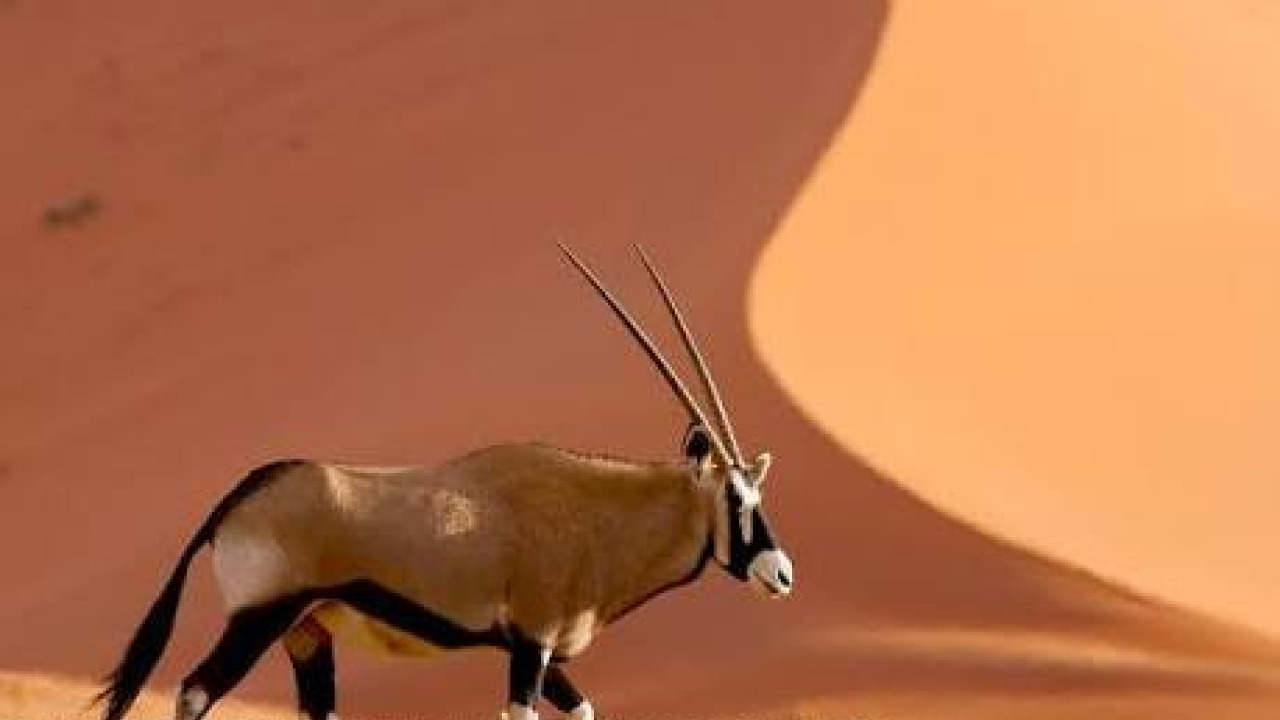
With its white body, dark facial markings, and long, straight horns, the Arabian oryx is the emblem of the reserve. As an antelope adapted to desert conditions, it seeks shade during midday and grazes during cooler hours; the herd roams freely in open areas. The likelihood of sightings depends on the season and time of day; guides are aware of the herd's recent movements, so routes are planned accordingly.
Ostriches, Gazelles, and Persian Onagers
The reserve is also home to ostriches, gazelles, and Persian onagers, which are mostly observed in the enclosure areas. The region's native ostrich subspecies became extinct in the mid-20th century, so a closely related subspecies was used in the program – an honest detail in its conservation story. The Persian onager, an Asian wild ass species, is also part of the ongoing breeding programs at the reserve.
Predators, Birds, and Flora
According to RSCN records, six species of predatory mammals inhabit the reserve: red fox, jackal, wolf, striped hyena, caracal, and wildcat. As these species are primarily nocturnal, sightings during daytime tours are uncommon. On the avian front, observations of eagles, hawks, and vultures have been recorded. The flora boasts over 193 documented species, with wormwood and various daisy species being dominant. A brief spring bloom creates a noticeable change in color across the landscape.
Activities Available at the Reserve
The program is built around three main activities and a day-use entry option; the table below summarizes the duration, distance, and capacity information published by the RSCN.
| Activity | Duration or Distance | Group Capacity | Includes |
|---|---|---|---|
| Oryx Safari, Short Route | Up to one hour | 2 to 32 people | Guided tour & reserve entry |
| Oryx Safari, Long Route | Up to two hours | 2 to 32 people | Guided tour, reserve entry & tea break |
| Cycling Trail, Short | 7 kilometers | 2 to 15 people | Guided tour, bike rental, entry, water |
| Cycling Trail, Long | 14 kilometers | 2 to 15 people | Guided tour, bike rental, entry, water |
| Wadi Al-Shaumari Hiking Trail | 1 to 2 hours | 2 to 15 people | Guided tour & reserve entry |
| Day-Use Entry | Flexible | No limit specified | Visitor center, picnic area, children's play area |
How Does the Oryx Safari Work?
The safari is conducted in an open-top off-road vehicle with a guide. The short route lasts up to an hour and covers the main observation areas of the reserve; the long route extends up to two hours and includes a tea break in its itinerary. Group capacity is defined for up to 32 people; a small family or a large group will join the same program. The guide determines the approach distance, and visitors are not permitted to exit the vehicle to avoid disturbing animal behavior.
Cycling Through the Reserve
For those who prefer to explore without engine noise, the cycling trail is offered in two lengths: a 7-kilometer short route and a 14-kilometer long route. Bike rental, guiding, and water are included in the fee. The terrain is relatively flat, but the surface is gravelly, and there is no shade; therefore, this activity is best suited for morning or late afternoon hours rather than midday.
Wadi Al-Shaumari Hiking Trail
A guided hiking trail, lasting one to two hours, is available in the wadi that gives the reserve its name. The hike reveals details quickly passed by on a safari: flora, animal tracks, and the texture of the flint. The availability of the trail depends on guide availability and weather conditions; confirm the program before you set out.
Visitor Regulations & Booking Rules
The reserve does not operate like a public park where you can simply enter and roam freely; most activities are guided and require reservations.
- First, decide which activity you wish to participate in: safari, cycling trail, or hiking. A day-use entry is sufficient only for the visitor center, picnic area, and children's play area.
- Complete your reservation at least 24 hours before your visit. The institution's published conditions state that all reservations are subject to this timeframe and availability.
- Activities require a minimum of two participants; therefore, if you are traveling alone, inquire if another group has been added to the same time slot.
- Carry a valid passport or identification document; this is a required condition within the reserve area.
- Clarify during booking whether the fee covers reserve entry and guiding services. The amount is determined by the chosen route, number of participants, and visitor category; for current rates, confirm via rscn.org.jo.
- Smoking is not permitted within the area, and pets are not allowed; the institution requests that alcohol consumption be avoided for cultural reasons.
- If planning a hiking trail, confirm weather conditions and guide availability before your visit day.
Visa requirements vary by nationality and are updated periodically; confirm through official Jordan Tourism Board sources before your trip.
When to Visit: Best Seasons
In the eastern desert, choosing the right season determines observation efficiency more than comfort: during hot periods, animals become inactive at midday, while in cooler periods, grazing hours extend throughout the day.
| Period | Conditions | Best For |
|---|---|---|
| March to May | Mild days, short blooming season | Photography, cycling trails, long safari |
| June to August | Desert temperatures rise significantly during the day | Early morning safari, short route |
| September to November | Temperatures drop, weather is generally clear | Hiking trails and full-day programs |
| December to February | Cool, occasionally windy; high waterbird density at the wetland | Combining Shaumari with Azraq |
Daytime timing is even more crucial than the season: early morning hours and close to sunset are productive for both animal activity and lighting. Herds retreat to shade during midday.
Dining and Accommodation Options
On-Site Facilities at the Reserve
The reserve offers its own catering services; the menu ranges from packed lunches to full meals: breakfast, lunch or dinner, barbecue setups, traditional chicken or meat dishes prepared on a 'sac' (griddle), and local mansaf. Coffee breaks are a separate item. Additionally, there is a meeting room available for up to 25 people, which corporate groups can integrate into their programs. The picnic area and children's play area, connected to the visitor center entrance, are sections that extend the day for families.
Where to Stay?
Within the reserve area, a camp setup consisting of standard tents is operated; the nightly rate includes reserve entry, breakfast, and a conservation contribution, with setups ranging from single to quadruple occupancy. This is a practical option for those who wish to spend the night in the desert and embark on an early morning safari. A second option is the small-scale accommodations in Azraq town; this region serves as a base for those extending their eastern desert program to two days. The third option is Amman city center: it offers the widest variety of accommodation, and the reserve can be visited as a day trip from there. For travelers seeking a similar theme in Turkey, the nature and adventure tours in Turkey category on Travel Tour Shop offers a comparable balance of observation and hiking.
Field Tips and Itinerary Integration
The reserve yields the best experience when you arrive prepared and combine it with the rest of the eastern desert route.
Observation & Photography Tips
- Bring a long-focus lens. Since the guide determines the approach distance, a focal length in the 200-300mm range will be helpful; binoculars are also useful for observations outside the enclosures.
- Opt for light-colored, breathable clothing and closed-toe shoes. A wide-brimmed hat, sunglasses, and sunscreen are essential gear for desert conditions.
- Carry water. Water is included in the cycling trail fee, but having your own water for safaris and hikes will make your day more comfortable.
- Keep your voice low inside the vehicle and avoid sudden movements. Oryx will move away if they sense human presence; silence extends observation time.
- Set realistic expectations: what species you'll see and from what distance depends on the season, time of day, and the herd's movements on that particular day.
Practical tip: If you're taking photos, adjust your equipment during stops rather than while the vehicle is moving; vibrations are high on gravelly terrain.
Integrating the Reserve into Your East Desert Itinerary
Shaumari is on the eastern desert's visitor route and doesn't necessarily demand a full day on its own. The Azraq Wetland Reserve is approximately 12 kilometers from Shaumari, which translates to a 15-20 minute drive under normal conditions. Along the same route, you'll find Umayyad-era desert castles, with Quseir Amra listed as a UNESCO World Heritage Site in 1985. Shaumari itself is not a UNESCO site; its status is defined as a national conservation area, and the entry regulations for nature reserves operate separately from archaeological sites managed by the Ministry of Tourism.
Practical tip: When planning your day, allocate the morning to the safari and the afternoon to the wetland; birdwatching is productive in the afternoon, while mammal observation is more dependent on early hours. If you're planning a route that includes ancient cities, our Egypt travel guide offers a starting point for planning logic, demonstrating how we balance desert and ancient settlements in the Middle East. Those seeking guided ancient city programs in Turkey can look at the cultural tours in Turkey category.
Frequently Asked Questions 6
How long does it take to visit Shaumari Reserve?
The short safari route takes up to an hour, while the long route extends to two hours. The hiking trail is 1-2 hours, and cycling routes are 7 and 14 kilometers. A half-day program, including the visitor center and picnic area, is sufficient for most travelers; adding the Azraq Wetland completes a full day.
What is the likelihood of seeing an Arabian oryx?
The oryx herd roams freely within the reserve, so sightings cannot be guaranteed. The likelihood depends on the season, time of day, and the herd's recent movements. Early mornings and late afternoons are when animals are most active; guides plan routes based on recent observations.
Can I visit the reserve without a reservation?
The visitor center, picnic area, and children's play area can be accessed with a day pass. However, safaris, cycling, and hiking trails are guided activities and, according to the institution's policy, must be booked at least 24 hours in advance. Activities require a minimum of two participants and are subject to availability.
Is the reserve suitable for visiting with children?
The reserve includes a children's play area and picnic area accessible with entry, and safaris are conducted by vehicle, making it suitable for families. Since the long route can last up to two hours, families with young children might prefer the shorter route for a more relaxed pace. Smoking is not permitted, and pets are not allowed in the area.
Can Shaumari and Azraq Wetland be visited on the same day?
Yes, they can. The approximately 12-kilometer distance between the two reserves translates to a 15-20 minute drive. An efficient itinerary would allocate the morning to Shaumari for mammal spotting and the afternoon to Azraq for birdwatching. Entry and activity arrangements for both reserves operate separately, so plan both in advance.
Which season is best for a visit?
Spring and autumn offer balanced daytime conditions and optimal observation opportunities. Mid-summer programs are best scheduled for early mornings. Winter months are cool and align with high waterbird concentrations at Azraq, making it ideal for combining visits to both reserves; hiking trail availability depends on weather and guide availability.