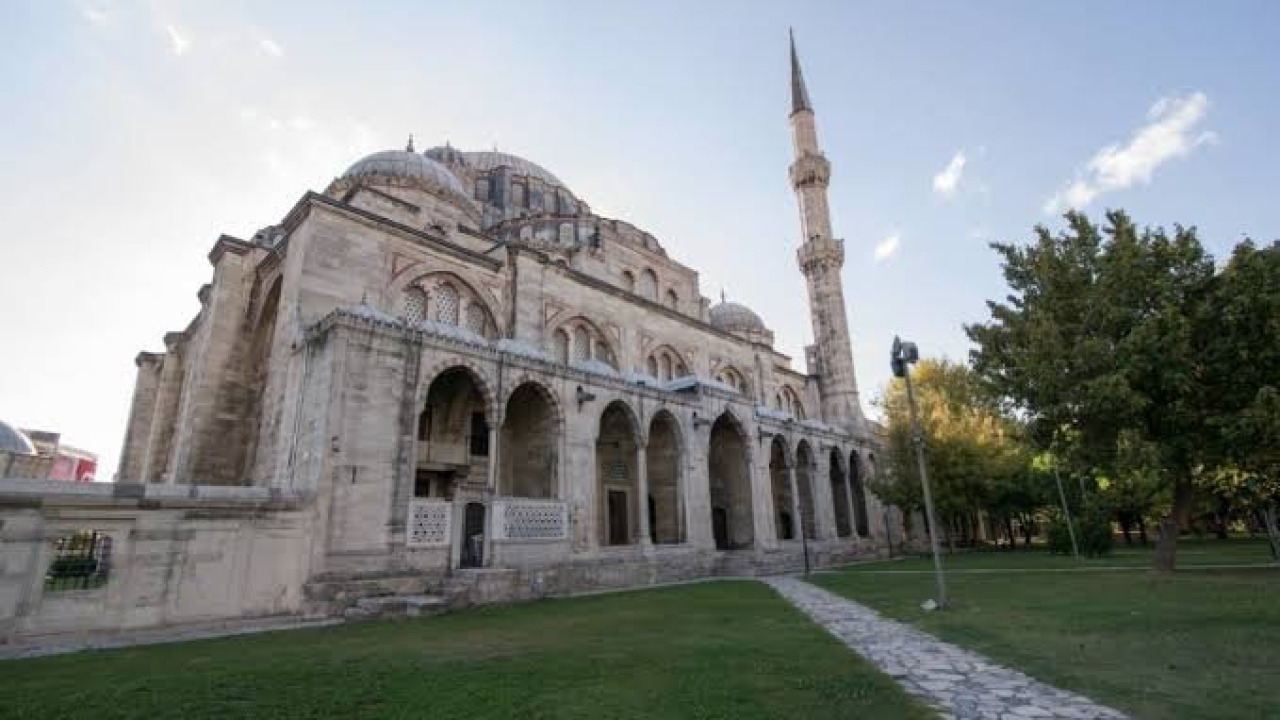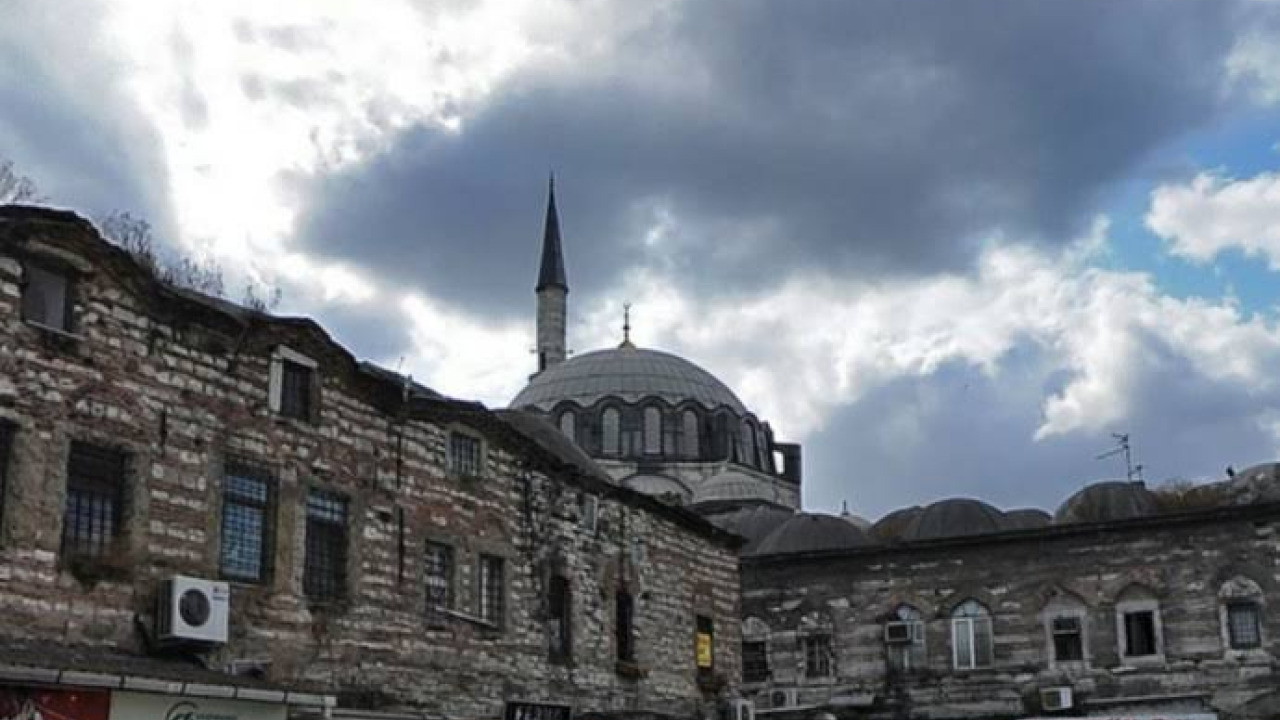

Planning a visit to Rüstem Paşa Mosque often boils down to two key questions: where are those magnificent tile panels, and why is the structure built above street level? Nestled in Tahtakale, perched atop a row of shops on Hasırcılar Caddesi, the mosque doesn't present a typical facade from the street. Its entrance is a narrow stone staircase tucked between the shops. Ascending reveals a porticoed terrace, and inside, a prayer hall (harim) whose walls are adorned with Iznik tiles reaching up to the upper levels. This guide focuses on deciphering the tile program: identifying each panel's location, where the tiled surfaces conclude, how the lower-level shops shaped the building's current form, and how to find the staircase leading to the terrace from the street.
Quick Facts for Your Visit
| Topic | Information |
|---|---|
| Location | Fatih district, Rüstempaşa neighborhood, Tahtakale; Hasırcılar Caddesi No 62 |
| Founder | Grand Vizier Rüstem Paşa; completed after his death by his wife Mihrimah Sultan |
| Architect | Mimar Sinan |
| Construction Record | IBB Cultural Heritage record states 1561; TDV Islam Encyclopedia places the process between 1555-1561 |
| Building Type | Elevated (Fevkani): vaulted warehouses and eight shops on the lower level, prayer hall above |
| Complex Components | Mosque, fountain, cemetery (hazire), shops, vaulted warehouses, and two caravanserais |
| Tiled Surfaces | Walls, piers, buttresses, and pendentives are covered with Iznik tiles |
| Last Restoration | Reopened for worship on November 20, 2020, following restoration that began in 2016 |
| Transportation | T1 tram Eminönü station, Şehir Hatları Eminönü Pier, Marmaray Sirkeci station |
| Admission | No ticket required; active place of worship, visit outside of prayer times |
| Recommended Visit Time | 30 minutes to an hour to examine the panels individually |
Where the Tile Program Begins and Ends
In this structure, tiles are not merely an interior decoration; the program begins in the portico on the terrace level and extends to the surfaces of the load-bearing elements within the prayer hall. Knowing this sequence makes your visit easier: if you know what to look for outside, you'll pause and admire it before even stepping through the main door.
The Outer Portico: The Program Starts Outside
On the terrace reached by the stairs, there is a five-domed portico supported by six columns. The large tile panels on either side of the main entrance door are the focal point of this section; the Culture Portal record describes the panel on the left, with its dark blue background and nature-themed stylized designs, as a prime example of classical-era tile art. The use of panels on this scale on exterior surfaces is not common in Ottoman architecture, so spending a few minutes here before entering the prayer hall covers half of the program.
Octagonal Base and Pier Surfaces in the Prayer Hall
Inside the prayer hall, the main dome rests on eight piers. According to the TDV Islam Encyclopedia, four of these piers are rectangular in plan, attached to the wall in the qibla and entrance directions, while the other four are independent and octagonal. They are connected by arches, forming the octagonal space upon which the dome sits. The IBB Cultural Heritage record describes this dome as Sinan's largest dome built for a Grand Vizier in the capital. The tiles don't stop there: in addition to the walls, the surfaces of the piers, buttresses, and pendentives are also covered, meaning your eyes will follow patterns even on the structural system.
Where the Tiles End: The Hand-Painted Frieze
Finding the boundary of the tile program is more instructive than merely understanding its density. According to the Culture Portal record, the semi-domes and vaults are not covered with tiles but with plaster, adorned with hand-painted (kalem işi) decorations. Looking upwards, you'll see where the glazed surface ends at a certain level, giving way to painted ornamentation; this transition reveals which surfaces were equipped with expensive production and which with more economical techniques.
Color Palette and Coral Red
Cobalt blue, turquoise, emerald green, and coral red are used together in the panels. The application of coral red and saz-style patterns in Iznik production dates to this period; the red does not lie flat on the surface but leaves a slightly raised, palpable texture. Recurring motifs include tulips, cypress trees, carnations, and pomegranate blossoms. A master's thesis prepared in 2014 at Fatih Sultan Mehmet Vakıf University's Institute of Fine Arts identifies sixty-six different tulip motifs within twenty-seven distinct compositions in the mosque's tiles. The fact that the designs were created in the palace workshops (nakkaşhane) and production was outsourced to Iznik and Kütahya workshops means that the design organization of Topkapı Palace is directly reflected on these walls.
A word of caution is necessary: the structure was affected by the 1660 fire and the 1766 earthquake, which damaged the dome and minaret. The most recent restoration, following campaigns in 1960-1961, 1964-1969, and 1992-1995, determined its current surface. Therefore, some parts of the panels are original, while others are products of later interventions; it's useful to observe differences in pattern quality before attributing a panel solely to the 16th century.
| Location | What to See | Where to Look |
|---|---|---|
| Portico wall and entrance side | Large panel series | The nature-themed panel with a dark blue background to the left of the door |
| Prayer hall walls | Continuous tile frieze | How the tiles are sized relative to the window arches |
| Piers, buttresses, and pendentives | Program extending to load-bearing surfaces | The change in color palette when transitioning from flat wall to pier |
| Semi-domes and vaults | Plastered surface, hand-painted decoration | The level where the tiles end and the transition to painted ornamentation |
Visitors who prefer to interpret the panels with expert commentary can link this stop to a guided program; Istanbul city center cultural tours include options covering the Historical Peninsula core.
How Does Its Tile Density Compare to Nearby Mosques?
The distinction lies not in the beauty of the motifs, but in the proportion of covered surface: here, tiles extend from the walls to the piers and pendentives, whereas in nearby examples, they are concentrated along specific axes. The table below compares this ratio; as visiting conditions for structures can change periodically, always check the relevant building's own announcements before you go.
| Structure | Location of tile usage | Difference from Rüstem Paşa |
|---|---|---|
| Süleymaniye Camii | Limited to around the qibla wall | Monumental stone language takes precedence over surface ornamentation |
| Sokollu Mehmet Paşa Camii | Primarily along the mihrab axis | Density does not spread throughout the entire prayer hall |
| Sultanahmet Camii | Extensive program on the upper level | Scale is much larger, palette is predominantly blue |
| Yeni Cami | On the scale of a waterfront complex | Located at square level, not above a row of shops |
The older tradition of using the wall as a surface for ornamentation in this city is not glazed ceramics but mosaics. For readers who wish to compare the two techniques on the same trip, our Hagia Sophia guide is a suitable starting point.
Why Was the Mosque Built Above the Shops?
Because the structure was designed to separate the place of worship from street level while also generating its own income from the same plot. The elevated (fevkani) arrangement was not an aesthetic choice but a dual-purpose solution providing both tranquility and funding in a dense commercial area like Tahtakale.
Shops and Vaulted Warehouses on the Lower Level
At street level, there are vaulted warehouses and eight shops. The rent from these units covered the foundation's maintenance costs for centuries, making the structure a self-sustaining enterprise. According to the General Directorate of Foundations' restoration announcement, the shops on the lower floor were emptied, non-original partition walls were removed, and the transitions in Sinan's original design were reopened; the arched sequence you see today when heading to the stairs is a result of this intervention.
Other Components of the Complex: Fountain, Cemetery, and Two Caravanserais
The complex is not limited to the mosque itself. The IBB Cultural Heritage record lists the components as the mosque, fountain, cemetery (hazire), shops, vaulted warehouses, and two caravanserais; the caravanserais are known as Büyük and Küçük Çukur Han and are located towards the Golden Horn. After seeing this arrangement, those who wish to observe how endowment income shaped architecture on a much larger scale can look at the commercial fabric around the Grand Bazaar. The surrounding bazaar line itself is the subject of a separate article.
How to Get to Rüstem Paşa Mosque and Where is the Entrance?
The mosque is located at Hasırcılar Caddesi No 62, and its entrance consists of narrow stone stairs hidden among the shops at street level; this is why first-time visitors often lose time not in transit, but in the final hundred meters. Small directional signs are present at the top of the stairs, but as vendor stalls can sometimes obscure them, following the arched openings is a more reliable method.
By Land: Tram and Marmaray Connections
The closest rail system stop is the T1 line's Eminönü station; Metro İstanbul states that transfers to the T5 Eminönü-Alibeyköy line and sea routes can be made at the same station. Those arriving by Marmaray should disembark at Sirkeci station and walk west along the coastline. The walking distance from Eminönü Square to Hasırcılar Caddesi is approximately 400 meters; starting your walk from the western gate of the Mısır Çarşısı (Spice Bazaar) is a practical way to avoid getting lost.
| Line or Pier | Disembark at | Access to Mosque |
|---|---|---|
| T1 Kabataş-Bağcılar tram (19.3 km, 31 stations; services 06:00-24:00) | Eminönü station | Approx. 400-meter walk from the square |
| T5 Eminönü-Alibeyköy tram | Eminönü station | Transfer at the same square, then the same walk |
| Marmaray | Sirkeci station | Walk west along the coastline |
| Şehir Hatları ferry | Eminönü Pier | From the pier square to Hasırcılar Caddesi |
By Sea: Eminönü Pier and Waterfront Level
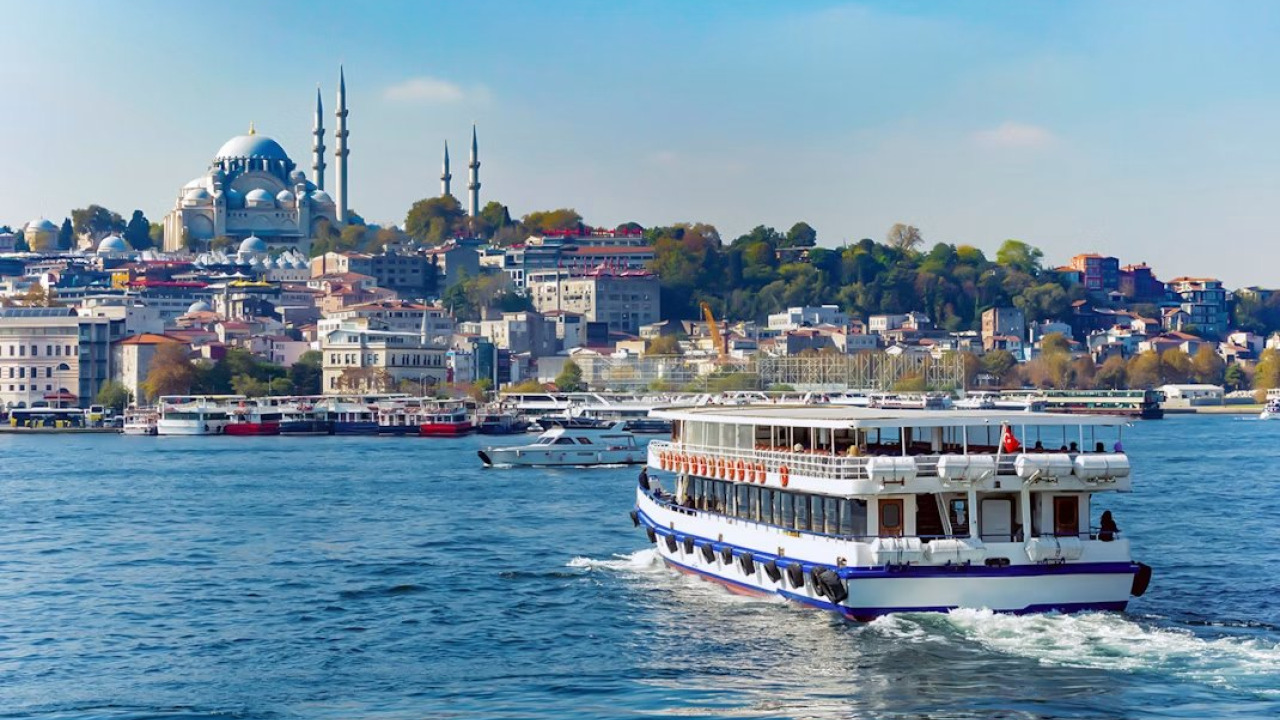
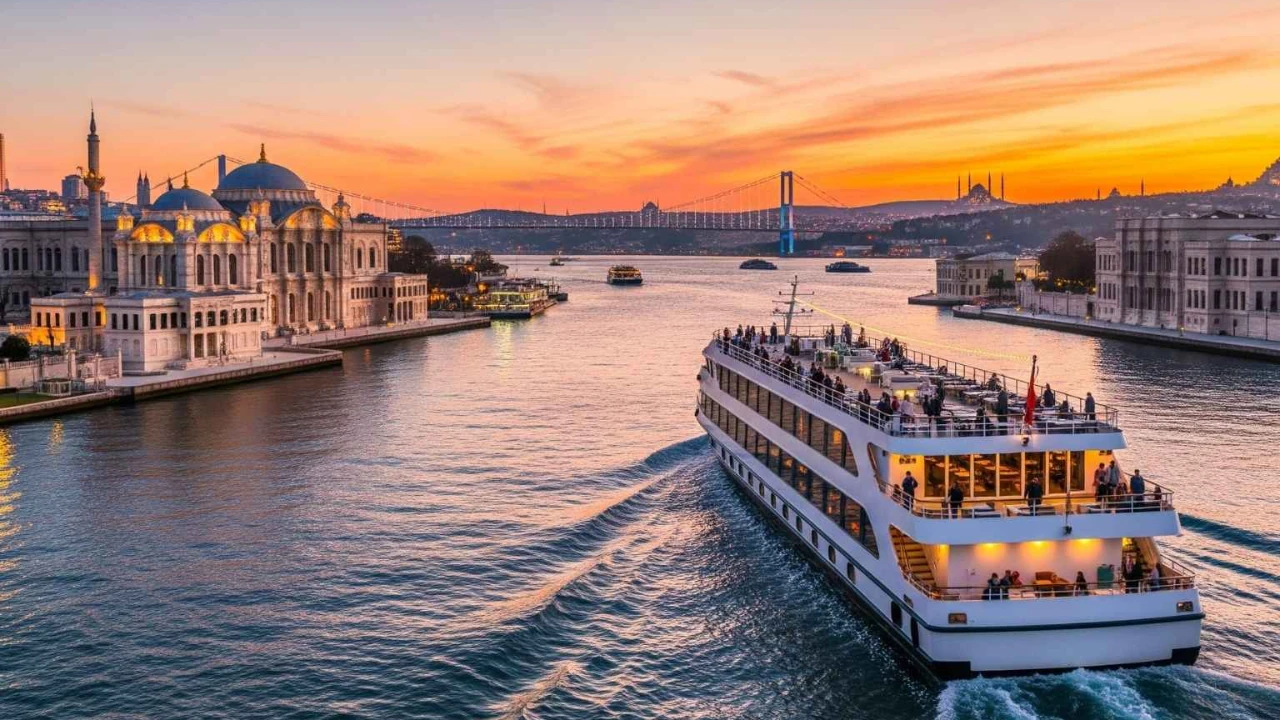
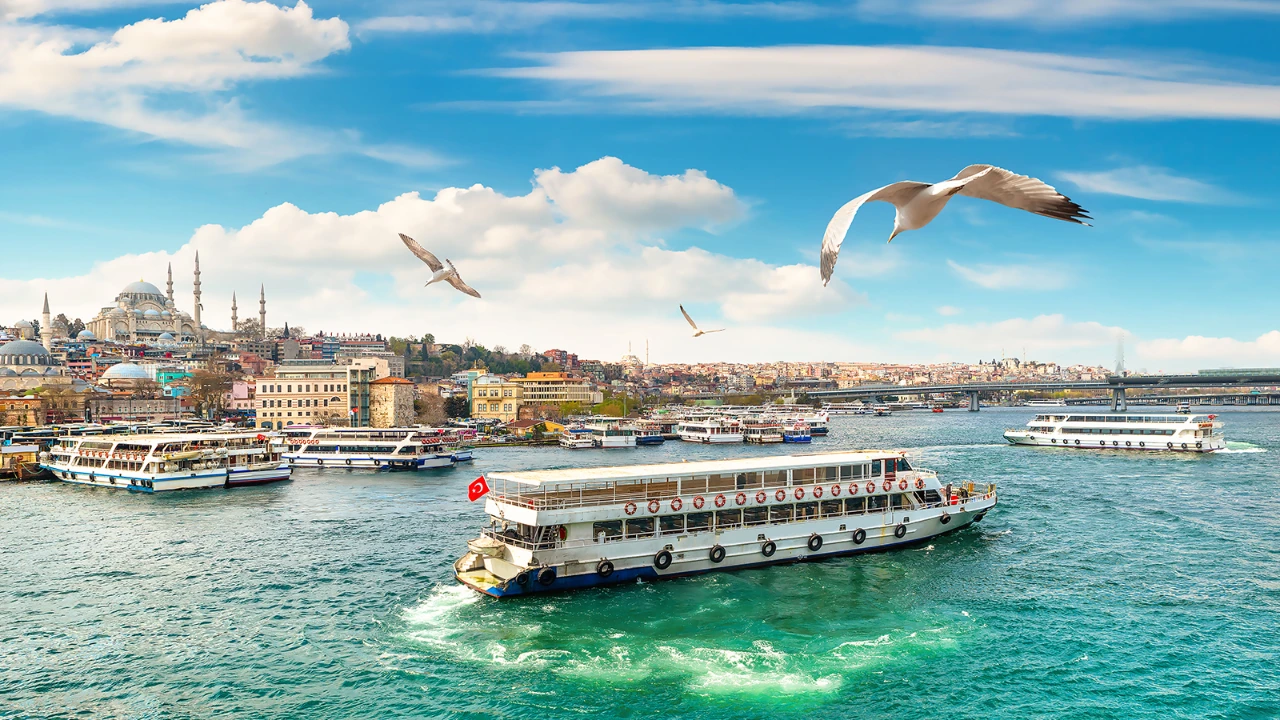
Şehir Hatları uses multiple pier buildings in Eminönü, including Evliya Çelebi, Hezarfen Ahmet Çelebi, and Galata (Eminönü 4); confirming which building your line departs from on the panel at the pier entrance will prevent confusion during crowded hours. The General Directorate of Foundations refers to the structure as one of the three mosques Sinan built by the sea; however, when viewed from the water, the mosque remains behind the bazaar fabric, requiring you to look for the minaret to distinguish it. Those considering adding a sea leg to their day can explore program options departing from the coast.
Best Day and Time to Visit
This is an active place of worship and a mosque used daily by bazaar merchants; therefore, the choice of time depends more on prayer schedules than on crowds.
Prayer Times and Friday Schedule
The prayer hall fills with congregants during noon (öğle) and afternoon (ikindi) prayers, and the density increases even further around noon on Fridays. For visitors interested in art and architecture, the ideal window is the calm half-hour immediately after a prayer time. Early mornings also work well: the light will have already entered through the windows before the congregation disperses. On Sundays, most bazaar merchants close their shutters, making the streets quieter, and the mosque is suitable for visits.
Light and Season
The prayer hall is illuminated by natural light entering through two rows of windows, so the color of the panels changes significantly with the time of day. At midday, the glazed surface shines, and the pattern appears flatter; between morning and afternoon, however, its raised red texture is more pronounced.
| Period | Situation in Prayer Hall | Impact on Visit |
|---|---|---|
| April-June | Window light strong, days long | Morning slot sufficient for panels |
| July-August | Bazaar busy, prayer hall stays cool | Post-noon quiet interval is more comfortable |
| September-October | Light softens, contrast decreases | Suitable period for details and close-ups |
| November-March | Days short, streets quiet | Needs to schedule visit immediately after noon prayer |
Step-by-Step Visit Order
The following sequence allows you to see both the exterior and interior programs without retracing your steps.
- Walk from Eminönü Square to the western gate of the Mısır Çarşısı (Spice Bazaar) and enter Hasırcılar Caddesi; the street where the scent of spices and coffee intensifies is the correct one.
- Follow the arched openings in the row of shops to find the stone staircase and ascend to the upper terrace; as the stairs are winding, the courtyard above is not visible until the last step.
- On the terrace, first examine the panels on the portico wall, then the large panels on either side of the entrance door.
- Remove your shoes and enter the prayer hall; in order, observe the octagonal base, the pier surfaces, and the tile arrangement around the window arches.
- Before leaving, look up to see where the tiles end and the hand-painted ornamentation begins, then descend to street level via the staircase in the opposite corner.
To Summarize Your Visit
In summary, this stop offers a brief but intense program: a half-hour visit is enough to see the portico panels and prayer hall walls, while an hour also covers the pier surfaces and the transition to hand-painted friezes. What truly sets this structure apart is not just the richness of its motifs, but how the tiles extend to the structural system, and the fact that all of this is built atop a row of shops.
Key points to clarify before you set out:
- Since the visit involves standing and looking upwards, decide on your attire at home: arms and legs should be covered, female visitors are expected to cover their hair, and shoes are removed at the prayer hall entrance.
- Do not use flash photography; flash creates glare on the glazed surface and distorts the shot. Also, be mindful not to pass in front of worshippers.
- There is no ticket required for mosque entry; if you add a museum or ferry trip to the same day, note that tariffs vary by visitor type and check the current prices on the respective institution's website.
- Check prayer times throughout the day and schedule your visit immediately after a prayer.
- Those wishing to integrate this stop into a broader day program can explore the Historical Peninsula options within Istanbul cultural tours.
Frequently Asked Questions 5
Where is Rüstem Paşa Mosque and how do I find its entrance?
The mosque is located in the Rüstempaşa neighborhood of Fatih district, at Hasırcılar Caddesi No 62 in Tahtakale. Since the structure rises above shops, a mosque facade is not visible from the street; the entrance consists of narrow stone stairs hidden among the arched openings in the row of shops. The walking distance from Eminönü Square to Hasırcılar Caddesi is approximately 400 meters.
Who built Rüstem Paşa Mosque and when?
The structure was built by Mimar Sinan on behalf of Rüstem Paşa, the Grand Vizier and son-in-law of Sultan Süleyman the Magnificent. The IBB Cultural Heritage record states the construction year as 1561; the TDV Islam Encyclopedia places the construction process between 1555-1561. After Rüstem Paşa's death in 1561, the complex was completed by his wife, Mihrimah Sultan.
Is Rüstem Paşa Mosque currently open to visitors?
Yes. The restoration initiated by the General Directorate of Foundations in 2016 has been completed, and the structure was reopened for worship with Friday prayers on November 20, 2020. The mosque is an active place of worship; visits should be made outside of prayer times, and no ticket is required for entry.
How long does a visit to Rüstem Paşa Mosque take?
Seeing the portico panels and the prayer hall walls takes approximately half an hour. If you wish to also examine the pier surfaces, the tile arrangement around the window arches, and the hand-painted frieze where the tiles end, you should allocate closer to an hour.
Can I take photos inside Rüstem Paşa Mosque?
Personal photography is permitted, but flash photography is discouraged: flash creates glare on the glazed surface and spoils the shot. It is important not to walk in front of worshippers and to avoid taking photos during prayer times; natural window light, especially between morning and afternoon, better showcases the raised red texture of the tiles.