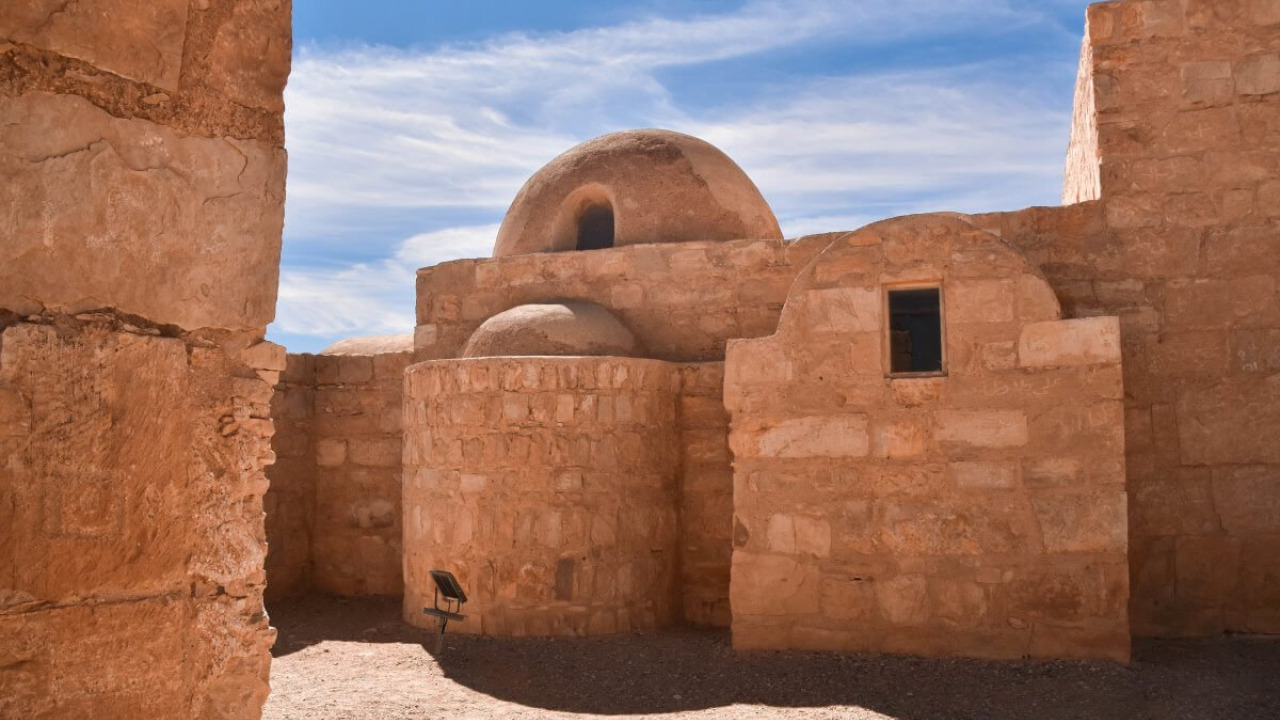

Nestled in the eastern desert of Jordan, approximately 85 kilometers east of Amman on Highway 40 towards Azraq, lies Quseir Amra – a compact yet captivating Umayyad structure. Travelers often ponder: is this unassuming stone building worth a journey into the desert? The answer isn't in its size, but in the stories etched onto its walls. Inscribed on the UNESCO World Heritage List in 1985, Quseir Amra boasts some of the finest examples of figurative wall paintings from the Umayyad period, with almost every surface, from the reception hall to the bathhouse dome, adorned with vibrant frescoes. A visit typically lasts about an hour, but the scenes you witness will transport you back to the 8th century, revealing insights into hunting culture, bathing rituals, and ancient celestial knowledge, all within a single space. This guide will help you navigate transportation, identify the best visiting times, and highlight what to look for inside.
Quick Facts
| Topic | Information |
|---|---|
| Location | Eastern desert of Jordan, alongside Wadi al-Butum, on Highway 40 |
| Distance from Amman | Approximately 85 kilometers east; drive takes about 1 to 1.5 hours |
| UNESCO Status | World Heritage List since 1985, inscribed under cultural criteria |
| Construction Period | Early 8th century, Umayyad era |
| Structure Sections | Reception hall, bath complex, well, and water-lifting mechanism |
| Key Highlights | Figurative wall paintings, Six Kings panel, celestial map on the dome |
| Opening Hours | Opens at 08:00 AM; closing time varies by season |
| Recommended Visit Duration | Approximately one hour for the interior and surroundings |
| Nearest Neighboring Site | Qasr Kharana, approximately 15 kilometers to the west |
What Earned Quseir Amra Its UNESCO Status?
Among the scattered Umayyad structures across eastern Jordan, Quseir Amra stands out as the one inscribed on the World Heritage List. Its designation in 1985 wasn't primarily for its architecture, but for its remarkable paintings. UNESCO's assessment highlights the site's outstanding universal value, primarily based on its exquisite wall and ceiling frescoes.
The Basis of Inscription: A Tradition of Secular Art
Figurative art is not common in early Islamic architecture, making Quseir Amra's walls a remarkable exception. The scenes depicted here belong not to a religious space, but to a recreational and reception palace. Hunting parties, bathing scenes, musicians, artisans, and portraits directly illustrate the daily life of the caliphate's court. In this regard, the structure serves as a visual testament, corroborating the life described in contemporary written texts.
Why the Patronage of Quseir Amra Remains Unclear
The answer to this question varies across sources and is often misrepresented in guidebooks. UNESCO's description attributes the structure to the early 8th century and the Umayyad caliphs, without naming a specific individual. The Jordan Tourism Board dates the building to the reign of the Umayyad Caliph Yazid ibn Abd al-Malik. However, academic literature often suggests it was commissioned by Walid ibn Yazid, while still an heir apparent, between the 720s and 740s. The most accurate statement is this: the structure is an Umayyad work from the early 8th century, with multiple views regarding its patron.
How to Get to Quseir Amra from Amman
The site is located along the eastern corridor between Amman and Azraq. Once you understand this corridor, transportation becomes straightforward: Highway 40 stretches eastward, with Qasr Kharana situated further west along the road, and Qasr al-Azraq further east. Quseir Amra lies between these two, accessible by a short walk of a few minutes from the roadside parking area.
By Car via Highway 40
Simply head east from Amman and follow the signs for Azraq. The distance is approximately 85 kilometers, and the drive takes about one to one and a half hours, depending on traffic. The road is paved and mostly flat, making for an easy drive. However, gas stations are scarce along this corridor, so filling up your tank before leaving Amman will make your return journey stress-free. Note that the road heading south from Amman towards Aqaba is not part of this route; double-check the signs when entering the eastern corridor.
By Tour, Chauffeur-Driven Car, and Public Transport
Amman-based agencies often offer day trips covering the eastern corridor, typically including Quseir Amra along with Qasr Kharana and Qasr al-Azraq. Hiring a chauffeur-driven car is also a popular solution, allowing you to set your own pace at each stop. As for public transportation, there isn't a regular bus route that stops directly in front of the structure. While minibuses heading towards Azraq use Highway 40, you would need to wait for one to pass again for your return journey, and there's no shade along the corridor. Therefore, private transport or a guided tour is highly recommended for convenience and comfort.
Neighboring Sites Along the Corridor
Quseir Amra is centrally located within the eastern corridor and is best visited in conjunction with its neighboring sites. Qasr Kharana, about 15 kilometers to the west, is a castle-like structure, though not built for defense, but rather as a caravanserai or meeting place. Qasr al-Azraq, approximately 100 kilometers east of Amman, is a fortress constructed from black basalt. Qasr al-Mushatta, located about 30 kilometers south of Amman near the airport, is another Umayyad palace; however, access isn't always guaranteed as staff may not always be present at the gate, so it's wise to confirm its accessibility beforehand to avoid wasted time.
How Long Does a Visit Take, and What About Entry?
Quseir Amra is a compact site, comprising a ticket booth, a small visitor reception area, and the structure itself. The site doesn't warrant a full day's visit on its own; it's typically combined with other stops along the corridor.
Opening Hours and the Best Time of Day to Visit
The site generally opens around 08:00 AM. Closing times vary seasonally; it stays open until late afternoon in summer but closes earlier in winter. For the most current hours, check the official Jordan Tourism Board website. The most rewarding time to visit is during the early morning hours: the desert heat hasn't yet peaked, and the low, horizontal light entering the interior illuminates the frescoes, making their intricate details much clearer.
Admission Ticket and the Jordan Pass
Admission to the site requires a fee, and tickets can be purchased at the gate. Quseir Amra is included among the archaeological sites covered by the Jordan Pass. For details on coverage, package conditions, and current prices, please visit jordanpass.jo. The ticket price depends on the pass type and the number of sites you plan to visit. Visa requirements vary by nationality and are updated periodically; confirm these conditions via visitjordan.com before your trip.
Photography, Flash, and the "No Touch" Rule
Flash photography is restricted inside, as intense light can damage the delicate paint layers; this also applies to pointing your phone's flashlight at the walls. A camera capable of shooting in low light conditions will suffice. Not touching the walls is a fundamental rule of the site: moisture and oils from hands leave permanent marks on the pigment surfaces. Please read the warning signs at the start of your visit, as rules may be updated based on ongoing conservation efforts.
What to See Inside the Structure
Quseir Amra combines three functions under one roof: a reception hall, a bathhouse, and a water system. To fully appreciate your visit, it's best to explore these three sections individually.
The Reception Hall and Figurative Wall Paintings
The main volume of the structure is a reception hall with three aisles and barrel vaults. The walls are painted from floor to ceiling, featuring hunting scenes, musicians, artisans, and portraits side by side. This hall was where the caliph's court entertained guests and hosted performances. Before looking up at the ceiling, follow the lower frieze: the scale and arrangement of the figures often indicate the intended sequence for viewing the scenes.
The "Six Kings" Panel
On the western wall of the reception hall, you'll find the most debated scene at the site: the "Six Kings" panel. This fresco depicts six rulers standing side by side, with their names inscribed in both Arabic and Greek above their figures. Four of these inscriptions have been deciphered: "Kaysar" for the Byzantine emperor, "Kisra" for the Sasanian ruler, "Najashi" for the ruler of Abyssinia, and "Roderic" for the Visigothic king. The remaining two figures are historically inferred to be the ruler of China and the Turkic Khagan. This panel serves as a visual declaration, showcasing how the Umayyad caliphate positioned itself within the world order of its time.
The Bathhouse Section: Frigidarium, Tepidarium, Caldarium
Adjacent to the reception hall, the bathhouse is an adaptation of the Roman bath system into Umayyad architecture, following the sequence of a changing room (apodyterium), a warm room (tepidarium), and a hot room (caldarium). The hot room was heated from beneath the floor, and traces of this heating system (hypocaust) are still visible at the site. These sections are smaller and lower-ceilinged than the reception hall, so you might need to wait during peak hours. Entering in groups of two can make both photography and observation more comfortable.
The Celestial Map on the Dome
The hemispherical dome of the hot room is adorned with a map depicting the night sky. The dome features the zodiac band and numerous identifiable constellations. This depiction is considered among the earliest known examples of the sky transferred onto a non-flat surface. A striking aspect of the design is its accuracy: the radial lines emanate not from the dome's geometric center, but from the North Celestial Pole, and the inclination of the zodiac band is rendered true to life. To admire it without a crick in your neck, stand beneath the dome for a few minutes and allow your eyes to adjust to the dim light.
The Well and Water-Lifting Mechanism
Operating a bathhouse in the middle of the desert necessitates a constant supply of water. At the site, the remains of a well, a water reservoir, and a mechanism for lifting water are preserved; a section of the drainage system is also visible. This infrastructure demonstrates that the structure was not merely a showpiece but a fully functional facility. Save the area around the well for the end of your visit: viewing the entire structure from here will clarify your perception of its scale.
| Section | What to See | What it Reveals | Visitor Tip |
|---|---|---|---|
| Reception Hall | Hunting scenes, musicians, portraits | Daily life of the caliph's court | Start from the lower frieze and read upwards |
| Six Kings Panel | Six inscribed ruler figures | Umayyad perception of the world order | Look for inscriptions in both Arabic and Greek |
| Bathhouse Rooms | Frigidarium, tepidarium, caldarium sequence | Adaptation of Roman bath system | Narrow spaces, enter in small groups |
| Dome | Zodiac band and constellations | Astronomical knowledge of the era | Wait for your eyes to adjust to the dark |
| Well and Water System | Traces of well, reservoir, lifting mechanism | Water management in the desert | Save for the end of your visit |
Enter in the Cool Morning, Spend Midday in the Shade of the Walls
Since the site itself is a relatively short visit, planning your day hour by hour is a practical way to make the desert heat work in your favor.
- Depart from Amman between 07:00 and 07:30 AM; have breakfast beforehand, as options are non-existent along the corridor.
- Top up your fuel and water supplies before leaving the city, and download an offline map.
- Aim to arrive at the site around 08:30 AM; enter through the ticket booth and first explore the exterior and water structures.
- Head inside, wait in the reception hall until your eyes adjust to the dim light, then proceed from the lower frieze upwards to the ceiling.
- Save the bathhouse section and the dome for the second half of your visit; these narrower spaces tend to be less crowded at this time.
- Towards midday, either turn back towards Qasr Kharana or continue east towards Azraq; plan your lunch break in Azraq.
- If you're not planning to wait for sunset for your return, check your headlights and tire pressure before heading back.
When to Visit?
In the eastern desert, the determining factors are temperature and light, rather than rainfall.
| Period | Weather and Light | Visit Notes |
|---|---|---|
| March - May | Mild days, long and soft light | The most comfortable window for exploring the corridor; a morning departure is sufficient |
| June - August | High temperatures, harsh overhead light | Aim for the 08:00 AM opening, avoid being outdoors in the afternoon |
| September - November | Temperatures drop, sky usually clear | Second favorable window; confirm closing times as days shorten |
| December - February | Cool days, cold mornings, early closing | Dress in layers; plan your visit duration according to daylight hours |
Water, Dining, and Accommodation in the Desert
Service points are few and far between along the corridor, and this is often the most underestimated aspect of a day trip. Do not expect cafes or restaurants around the structure itself; amenities at the site are limited to the ticket booth and a small visitor reception area. The nearest option for a hot meal is the town of Azraq to the east. Plan your meal times based on the town's location, rather than your itinerary.
Two main areas stand out for accommodation. Amman is the natural base for those planning a day trip along the corridor, offering flexibility to head in a different direction the next day. For those wishing to spend a night in the desert, small guesthouses and eco-camp style facilities around Azraq offer an alternative.
Essentials to make your trip easier:
- At least two liters of water per person; thirst often sets in late in the desert due to low humidity.
- A wide-brimmed hat, sunglasses, and sunscreen; shaded areas are limited along the corridor.
- Sturdy, closed-toe shoes; the site is dusty and uneven in places.
- Modest and comfortable clothing; appropriate for local sensitivities and protective against the sun.
- Cash; card payments may not be accepted at smaller establishments.
- An offline map and a portable power bank; mobile coverage can be weak along the corridor.
Practical tip: Attach your camera lens before exiting your vehicle. Fine dust, which rushes in as soon as the door opens, can settle on your sensor and lens surface.
Current State of Conservation and the Visitor's Role
The wall paintings of Quseir Amra have been the subject of conservation efforts for decades. The site was listed on the World Monuments Watch in 2008. Subsequently, in 2010, the World Monuments Fund, Italy's Istituto Superiore per la Conservazione ed il Restauro, and the Jordanian Department of Antiquities collaborated on a joint program. This program involved analyzing mortar and pigment samples, cleaning concrete and tempera layers from previous interventions, and adding protective windows and roof coverings to the structure. As some of these conservation works are ongoing, you might encounter scaffolding or restricted access in certain areas.
The visitor's role is simple yet crucial: do not touch the walls, avoid using flash photography, and stay within the designated walking paths marked by staff. If you're planning your first desert route focused on ancient heritage, our Egypt travel guide offers a comparative point to understand how a similar logic is applied in a comparable geography. For travelers seeking a similar theme in Turkey, our cultural tours in Turkey category, focusing on ancient cities and museums, or our historical city tours in Turkey category for those who prefer exploring city centers on foot, serve as excellent starting points.
Frequently Asked Questions 6
Where is Quseir Amra and how do I get there from Amman?
Quseir Amra is located approximately 85 kilometers east of Amman, on Highway 40 towards Azraq. Driving your own car takes about one to one and a half hours. Day trips from Amman and hiring a chauffeur-driven car are also common options.
How long does a visit to Quseir Amra take?
Approximately one hour is sufficient to explore the interior and the surrounding water structures. If you're planning an itinerary that includes other Umayyad sites along the corridor, allocate a total of about eight hours for the day.
Who built Quseir Amra?
Sources provide different names. UNESCO's description attributes the structure to the early 8th century and the Umayyad caliphs. The Jordan Tourism Board points to the reign of Yazid ibn Abd al-Malik, while academic literature suggests it was built by Walid ibn Yazid during his time as heir apparent.
Can I take photos at Quseir Amra?
Photography for personal use is permitted, but flash photography is restricted inside, and pointing your phone's light at the walls is also prohibited. Touching the walls is forbidden. Please read the updated warning signs at the site entrance, as rules may change due to ongoing conservation efforts.
What is the best time to visit Quseir Amra?
The most comfortable periods are between March and May, and September and November. During summer months, aiming for the 08:00 AM opening is a practical way to avoid the midday heat. In winter, days are cool, and the site closes earlier.
Can I get to Quseir Amra by public transport?
There isn't a regular bus route that stops directly in front of the structure. While minibuses heading towards Azraq use Highway 40, you would need to wait for one for your return journey, and there's no shade along the corridor. Renting a car, hiring a chauffeur-driven vehicle, or joining an organized tour are safer options.