
As you journey east from Amman, the landscape gradually transforms. Farmlands recede, the horizon flattens, and the road cuts through a vast plain flanked by dark, volcanic stones. In the heart of this stony sea, on the edge of an oasis, walls emerge – darker than anything around them. This is the very essence of Qasr al-Azraq: its color born from the region's geology, its existence owed to the life-giving water in the midst of the desert. The Arabic word 'azraq,' meaning 'blue,' refers not to the castle itself, but to the oasis that sustains it. From Roman soldiers to Umayyad rulers, Ottoman garrisons to the strategists of the Great Arab Revolt, everyone who passed through stopped for the same reason: water.
Quick Facts
| Topic | Information |
|---|---|
| Location | Eastern desert of Jordan, Zarqa Governorate, Azraq Oasis |
| Distance from Amman | Approximately 100 km east of Amman, according to the Jordan Tourism Board |
| Visiting Hours | 08:00 - 17:00, as listed by the Ministry of Tourism and Antiquities |
| Structure Size | Quadrangular plan, with sides varying between approximately 72 and 80 meters |
| Material | Local volcanic basalt |
| Floor Plan | Originally three stories; two are visible today |
| Historical Layers | Roman outpost, Umayyad modifications, 13th-century restoration, World War I |
| Recommended Visit Time | About one hour for the castle, half a day including the oasis |
| Admission | Included in the Ministry's Jordan Pass coverage list; check jordanpass.jo for current conditions |
| Nearby Attraction | Azraq Wetland Reserve (managed by RSCN) |
| UNESCO Status | Azraq was added to UNESCO's tentative list as a mixed site in 2007 |
What Sets This Castle Apart from Other Desert Forts?
The structures in eastern Jordan are collectively known as "desert castles," but Qasr al-Azraq stands out from the rest in two key ways: its stone and its water.
Permanent Water in Hundreds of Kilometers of Arid Land
The Azraq Oasis is one of the few places in the vast surrounding desert belt that retains water year-round. On a caravan route, this translates directly into significant military and commercial control. The answer to why the castle stands here lies not in its architecture, but in its hydrology. UNESCO's tentative list file describes the area, with its pools, seasonal marshy meadows, and extensive mudflats, as a "wetland in the heart of the arid Jordanian desert."
The Region's Own Stone: Basalt
The black basalt used in the construction was quarried from the surrounding volcanic landscape. This choice yields two significant results. First, visually: unlike its neighbors built from sandy-colored limestone, the castle stands as a dark, imposing mass against the landscape. Second, structurally: basalt blocks are heavy, so the walls were built thick and openings kept narrow. This is also why the interior rooms remain shaded and cool compared to the courtyard. For photography, the late afternoon light works particularly well on these surfaces; while the midday sun flattens the stone, the texture truly emerges after noon.
When is the Best Time to Visit Throughout the Year?
In a desert climate, daytime temperature fluctuations are high, and shaded areas are limited. The matrix below will help you choose the best time for your visit.
| Period | Weather Conditions | Birdwatching | Visit Notes |
|---|---|---|---|
| March - May | Mild, windy | Jordan Tourism Board identifies spring as migration season | Ideal for combining the castle and reserve on the same day |
| June - August | High temperatures, dry | Low activity | Plan your visit close to opening hours, avoid midday |
| September - November | Mild, clear | Tourism Board considers autumn the second migration season | Daylight hours shorten, plan an earlier return |
| December - February | Cool, possibility of rain | Wintering species | Windproof layer needed, stone surfaces can be slippery when wet |
The Castle's Layers and What to Look for in the Courtyard
It would be misleading to consider Qasr al-Azraq a product of a single era. The structure is like a historical record, with successive uses layered upon the same foundations.
| Period | Used by | Contribution to Structure | What to See Today |
|---|---|---|---|
| Roman Period | Garrison on the desert frontier | Core of the quadrangular plan and outer wall line | Lower courses of the wall masonry, fragments of Latin and Greek inscriptions |
| Umayyad Period | Umayyad administration governing the region | Courtyard layout, mosque, well, and service units | Small mosque and water well in the center of the courtyard |
| 13th Century | Ayyubid or Mamluk administration, according to sources | Extensive renovation, current silhouette | Arabic inscription on the South Gate |
| Ottoman Period | Regional garrison | Continued military use | Sections of rooms adapted for garrison layout |
| 1917 - 1918 | Forces of the Great Arab Revolt | Headquarters function | Room above the gate |
The Roman Core and Desert Frontier
The core of the structure is attributed to the Roman period; Latin and Greek inscriptions found in the area date back to the 3rd and 4th centuries CE. The Jordan Tourism Board traces the earliest settlement at the site to an older Nabataean past, attributing its current dimensions to the Greco-Roman era. UNESCO's tentative list file for Azraq also identifies the Roman wall, dated around 300 CE, as the primary archaeological element within the wetland. This layer isn't ostentatious; it's discernible in the lower courses of the wall masonry, the sizing of the blocks, and the design of the gate openings.
Umayyad Modifications: Courtyard, Mosque, and Well
The castle's interior layout resembles a small, walled settlement more than a military barracks. The Tourism Board notes that the structure contains multiple towers, several entrances, a mosque, rooms, two stone gates, and a water well. The small mosque in the center of the courtyard, oriented towards the Qibla, along with the well, is generally attributed to the Umayyad period's modifications. This well encapsulates the castle's enduring logic: to survive even under siege.
13th-Century Restoration and the South Gate Inscription
The primary intervention that gave the structure its current form occurred in the 13th century. An Arabic inscription above the South Gate dates an extensive renovation to the Hijri year 634 (1237 CE). Sources diverge on who commissioned this work: while the Jordan Tourism Board attributes the 13th-century use to the Mamluks, museum and architectural archives record the renovation under the name of the Ayyubid governor Izz al-Din Aybak. The common thread is the date. As you approach the gate, look for the projecting bay above and the inscription panel below; this inscription is the castle's most tangible document.
The gate leaves, carved from solid basalt blocks, are also part of this design; they pivot on stone sockets.
The Winter of the Great Arab Revolt and Lawrence's Room
The period that brought the castle worldwide recognition was the final years of World War I. In the winter of 1917, Thomas Edward Lawrence and Sharif Hussein's forces used it as their winter headquarters; the preparations conducted here led to the campaign that culminated in the capture of Damascus in October 1918. Lawrence used the room above the entrance as his study and recounted this winter in his book, Seven Pillars of Wisdom. Today, visitors can ascend to the same room. The weight of the narrative lies not in the room itself, but in the view from its window: the same plain, the same emptiness.
When you enter the courtyard, look for these five points in order:
- The inscription panel on the South Gate and the projecting bay above it
- The gate leaves carved from basalt blocks and their stone sockets
- The mosque and water well in the center of the courtyard
- The room above the entrance and its window overlooking the desert
- Variations in stone sizes within the wall masonry, indicating different periods
The Wet Heart of the Oasis: Azraq Wetland Reserve
To consider the castle apart from the oasis would be to miss a crucial part of the story. The Azraq Wetland Reserve is managed by the Royal Society for the Conservation of Nature (RSCN) in Jordan. According to the RSCN's own data, the reserve is approximately 115 kilometers from Amman, was established in 1977, and covers an area of about 74 square kilometers. The slight difference in distance (100 km for the castle, 115 km for the reserve) is not a contradiction; the two points are simply located at different ends of the same oasis.
The reserve is registered under the Ramsar Convention as the first wetland protected area in the Arab world and the thirteenth globally. From the 1980s onwards, excessive groundwater extraction largely dried up the area; in 1994, the RSCN launched an internationally supported restoration program, and a portion of the area was re-watered. Today, the reserve records approximately 329 migratory and resident bird species, over 216 plant species, more than 163 invertebrates, and 15 dragonfly species. The Azraq killifish (Aphaniops sirhani), an endemic vertebrate unique to Jordan, also lives here. The area was added to the IUCN Green List in 2018. Wooden walking platforms and birdwatching hides have been established for visitors.
Practical tip: Birdwatching in the reserve is most rewarding in the early morning, and the experience is significantly diminished without binoculars. For current visiting hours and admission details, check the RSCN's official website.
Morning at the Castle, Afternoon in the Wetlands
It's entirely possible to combine a visit to the castle and the oasis on the same day. The following itinerary is designed to optimize for heat and light.
- Depart from Amman early in the morning; the approximately 100-kilometer drive on the eastern desert highway takes about an hour and a half, depending on conditions.
- Arrive at the castle close to opening hours. The morning light illuminates the courtyard, and temperatures haven't yet peaked.
- Start at the entrance with the gate inscription and gate leaves, then explore the courtyard clockwise; the mosque and well are at its center.
- Ascend to the room above the entrance and take in the desert plain from its window. At this point, the castle tour typically takes about an hour.
- Spend lunchtime in the town; shade and services around the castle are limited.
- In the afternoon, proceed to the Azraq Wetland Reserve; walking on the wooden platforms and using the birdwatching hides are ideal for this part of the day.
- Head back before sunset; night driving on desert roads significantly reduces visibility and increases the risk of encountering roadside animals.
For those wishing to extend their itinerary, Quseir Amra and Qasr al-Kharrana, also on the Ministry's list of covered sites, are located along the same route. These three structures form the backbone of the classic "desert castles" tour and can be combined within the same day.
Getting to Azraq from Amman
Public transportation in the region is infrequent, and its timings don't typically align with a tourist itinerary. Practically, three options work best.
| Option | Flexibility | Suitability | Points to Note |
|---|---|---|---|
| Rental Car | High | For those who prefer their own pace | Fill up your tank completely in Amman; gas stations are scarce in the desert |
| Car with Driver or Guided Tour | Medium | For those who prefer not to drive | Confirm the itinerary stop-by-stop in writing before departure |
| Public Transportation | Low | For flexible travelers with ample time | Service frequency is limited, arrange your return time in advance |
By Rental Car
The highway extending east from Amman is flat and well-maintained; it's not a challenging route for driving. Settlements are sparse along the way, so ensure you have water, fuel, and charging solutions before you set off. Supplementing navigation with an offline map can be useful in areas with weak coverage.
Car with Driver and Guided Tour
The desert castles route is one of the classic day trip options from Amman. The critical point with this option is the scope: clarify in advance which stops will be made, how long will be spent at each, and who is responsible for admission fees.
Public Transportation Note
Minibus services are available from Amman towards Azraq; service frequency and the last return time vary by season. You may find the castle is within walking distance from the town center.
Practical Notes Before Your Visit
Visa requirements vary by nationality and are updated periodically; confirm them via the official website of the Jordan Tourism Board before your trip.
It's not advisable to provide a fixed admission fee, as pricing structures are site-specific and updated seasonally. Qasr al-Azraq is included in the Ministry of Tourism and Antiquities' list of sites covered by the Jordan Pass, which also states visiting hours as 08:00 - 17:00. For current fees and coverage conditions, please refer to jordanpass.jo. Admission to the reserve is priced separately and determined by the RSCN.
Food and Drink
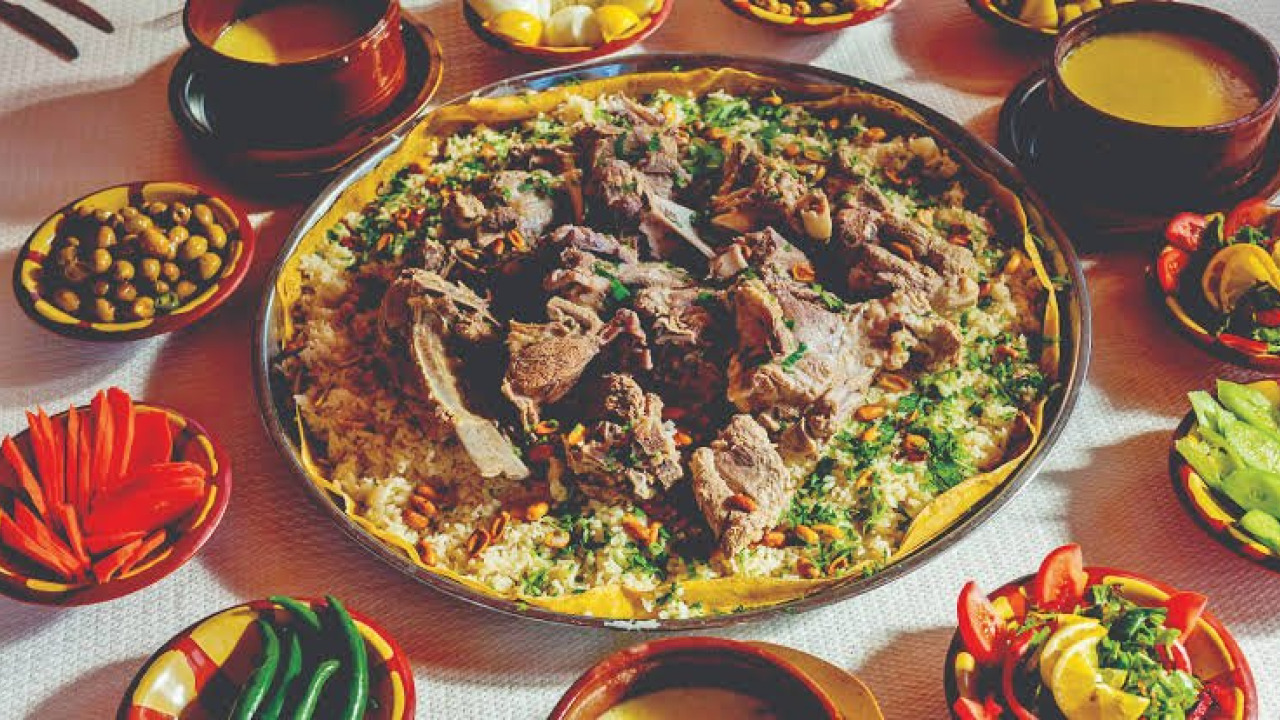
Don't expect a wide array of restaurant options around the castle. Azraq town primarily offers local eateries and small buffets, featuring a simple cuisine centered around grilled dishes, lentil soup, and mezze. The reserve's operator may offer dining services at their facility; it's advisable to inquire in advance.
Accommodation Options
Three main accommodation scenarios work well. First, basing yourself in Amman for a day trip; the city offers a wide variety of lodging, and the castle is within day-trip distance. Second, staying at small-scale local establishments in Azraq town, which is advantageous for early morning birdwatching. Third, booking the reserve operator's own facility in the area; its limited capacity requires early planning.
What to Bring
- Wide-brimmed hat, sunglasses, and high-SPF sunscreen
- At least two liters of water per person, preferably in an insulated bottle
- Closed-toe, thick-soled shoes; the courtyard ground is stony and uneven in places
- A windproof outer layer for evenings and winter months
- Binoculars and a long-focus lens for birdwatching
In summary, here's the sequence: choose your visit period according to the migration calendar, allocate the morning for the castle and the afternoon for the wetland, secure your transportation in advance, and verify current hours and fees from official sources. Those planning a trip combining desert landscapes with ancient structures may find the itinerary logic in our Egypt travel guide helpful. For travelers seeking a similar theme in Turkey, our categories for cultural tours in Turkey, focusing on ancient cities and museums, and historical city tours in Turkey, centered on exploring city centers on foot, offer excellent starting points.
Frequently Asked Questions 6
Where is Qasr al-Azraq and how do I get there from Amman?
The castle is located in the Azraq Oasis, in the Zarqa Governorate, within Jordan's eastern desert. The Jordan Tourism Board states the distance as approximately 100 kilometers east of Amman. Transportation is practically arranged via rental car, a car with a driver, or an Amman-based guided desert castles tour; public transport services exist but are limited in frequency.
Is Qasr al-Azraq open to visitors, and what are its hours?
The castle is open to visitors. The Jordan Pass coverage list, managed by the Ministry of Tourism and Antiquities, specifies visiting hours as 08:00 - 17:00. As public holidays and seasonal adjustments may alter these hours, please check for current information before your trip.
How long does it take to visit Qasr al-Azraq?
Allocating approximately one hour is usually sufficient for the gate, courtyard, mosque, well, and the room above the entrance. For those taking photos or examining the variations in wall masonry from different periods, this time might extend to an hour and a half. Including the Azraq Wetland Reserve, the plan approaches half a day.
What is the most comfortable period to visit the castle?
The weather is mild during spring and autumn; the Jordan Tourism Board identifies these two periods as prime bird migration seasons. In summer, it's advisable to plan your visit close to opening hours and avoid midday. In winter, the weather cools, rain may occur, and a windproof layer will be beneficial.
Can I visit the castle with the Jordan Pass?
Qasr al-Azraq is included in the Ministry of Tourism and Antiquities' list of sites covered by the Jordan Pass. As coverage conditions, validity, and current fees are updated periodically, please confirm them on jordanpass.jo before purchasing.
What else can be seen near the castle?
Adjacent to the castle, the Azraq Wetland Reserve, according to RSCN data, hosts approximately 329 bird species and can be explored via wooden walking platforms. Quseir Amra and Qasr al-Kharrana, also on the Ministry's list, are located along the same route; these three structures are often combined within the same day.