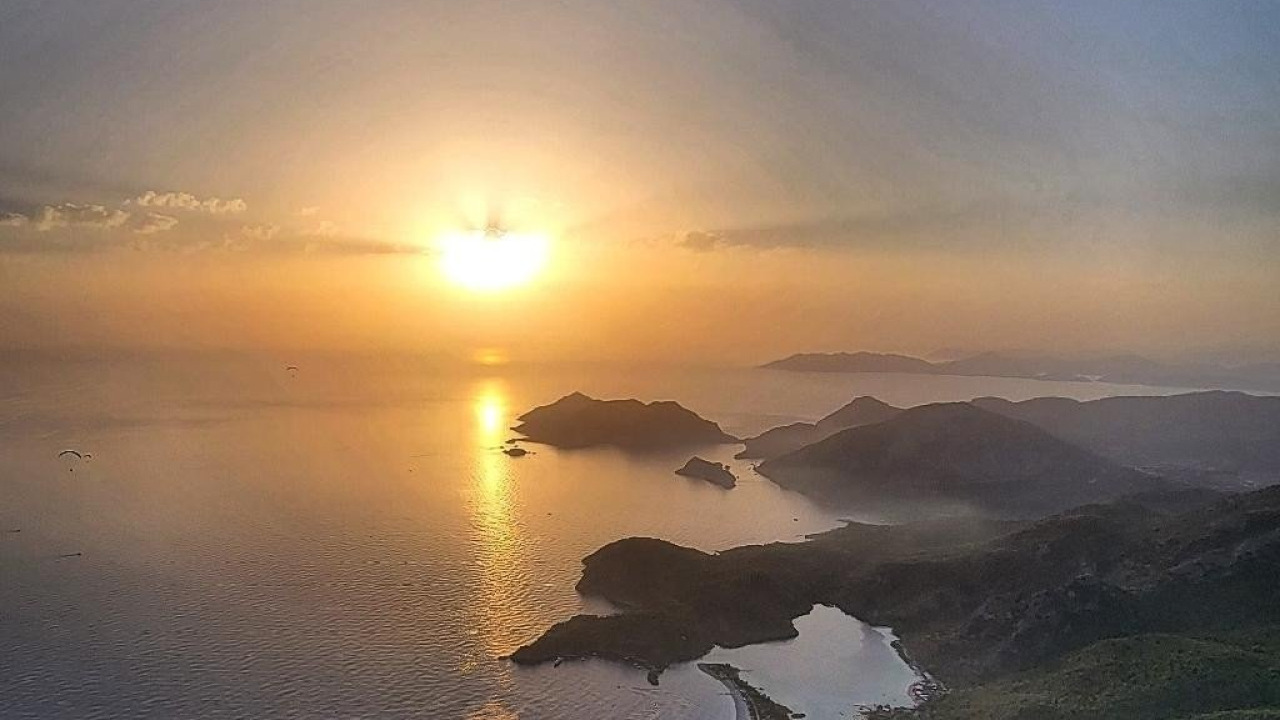
Ölüdeniz evenings transform from the bustling lagoon activity of the day into a completely different rhythm. As the sun dips into the open sea from the western edge of the beach, umbrellas are packed away, and the colorful wings of tandem paragliders land one after another on Belcekız Beach, filling the promenade with strolling families. Behind it, the towering Babadağ mountain glows copper in the last light, facing the setting sun. After dark, the activity doesn't stop; it merely shifts direction: the beachfront bazaar and bar strip pick up a pace that extends past midnight, while Hisarönü on the hillside establishes its own lively street scene. To the south, Faralya and Kabak retreat into a quieter realm, free from light pollution. This guide, from Travel Tour Shop, details where to go, what's best at specific times, how to get around, where to stay, and what budget items to consider for your afternoon to midnight adventure in Ölüdeniz, Fethiye, Muğla.
The Difference Between Day and Night in Ölüdeniz
By day, Ölüdeniz operates like a lagoon-focused beach destination: queues at the Nature Park entrance, a hunt for sun loungers on the beach, and the constant traffic of boat tours departing and returning. In the late afternoon, however, the action shifts from the central beach towards the hillsides. After 5:00 PM, day-trippers begin to leave the area, the car park empties, and the western end of the beach becomes noticeably calmer, perfect for photography.
Weather conditions also change around the same time. The harsh midday sun gives way to warm air on the beach; in contrast, temperatures at the higher altitudes accessible by the Babadağ cable car are noticeably cooler than at sea level, and this difference grows as the day progresses. The wind also tends to drop after the afternoon, which is why paragliding operators often prefer the late afternoon window for flights.
The main distinction lies in access. The lagoon, being a protected nature park, operates with an entrance gate and closing times; the idea of watching the sunset from inside the park might be hindered by its closing hours. Belcekız Beach and the beachfront promenade, however, can be explored without time restrictions. For this reason, evening plans are often divided into two layers: ticketed attractions like Kıdrak, the Nature Park, and Kayaköy are best visited before sunset, while free areas and hillside settlements come alive after dark.
Quick Facts
| Topic | Information |
|---|---|
| Location | Fethiye, Muğla province; approx. 14 km from Fethiye center |
| Highlights | Ölüdeniz Beach & Lagoon, Kumburnu sand spit, Belcekız promenade, Babadağ viewing terraces, Kelebekler Vadisi, Mavi Mağara, Gemiler Adası, Kıdrak, Kayaköy |
| Sunset Times (Local) | July 1st 8:25 PM · July 31st 8:10 PM · Aug 31st 7:35 PM · Sep 30th 6:50 PM · Oct 31st 6:10 PM (may shift by a minute or two annually) |
| Sunset Direction | West-northwest, over the open sea; Babadağ is to the south-southeast, the sun does not set behind the mountain |
| Usable Light | Approx. half an hour of twilight after sunset |
| Nature Park Access | Paid entry; separate fees for pedestrians and vehicles, Müzekart invalid, closing time varies with daylight |
| Free Area | Belcekız Beach and beachfront promenade; sun lounger and umbrella rentals are extra |
| Nightlife Activity | Beach bazaar open until around 11:00 PM on summer evenings, bar strip extends past midnight |
| Evening Transport | Ölüdeniz-Hisarönü-Ovacık-Fethiye dolmuş (shared taxi) route; operates until late at night in summer, taxis available all day |
| Best Season | May-October; Ölüdeniz Air Games Festival, mostly held in October for air sports |
| What to Bring | Windbreaker, flashlight, mosquito repellent, closed-toe shoes, water shoes for pebbles |
Top Spots for Evening and Night
The following locations serve different functions during the evening window: ticketed protected areas close before sunset, coves accessible by boat belong to the daytime itinerary, while the beachfront strip and hillside settlements remain lively until midnight.
Ölüdeniz Beach, Lagoon, and Kumburnu Sand Spit
The lagoon, along with its surrounding sand spit, lies within the borders of the Ölüdeniz-Kıdrak Nature Park, managed by the Ministry of Agriculture and Forestry. Its protected status has limited construction along the coastline, preserving the lagoon's surroundings with sand, pebbles, and red pine forests instead of rows of hotels. This has kept the iconic coastal landscape, used for many years in Turkey's tourism promotions, unspoiled.
Kumburnu is the name given to the narrow strip of sand separating the sea from the lagoon, and this geographical feature is why the water remains calm even on windy days. The late afternoon light transforms its turquoise hues into a deeper green; at sunset, as the sun dips into the open sea beyond the lagoon's mouth, an unobstructed horizon remains over the sand spit.
The area is ticketed; fees differ for pedestrian and vehicle entry. Müzekart is not valid at the nature park entrance as it's designated for museums and archaeological sites under the Ministry of Culture and Tourism. Since closing times can be brought forward based on daylight, noting the last exit time upon entry can save your evening plans from being cut short. There's another practical detail regarding timing: visitors arriving before 10:00 AM find calmer waters and have a better chance of choosing a shaded spot, while midday is the busiest time of the year. For those arriving close to closing, the public beach right next to the lagoon offers a more flexible alternative.
Belcekız Beach and Beachfront Promenade
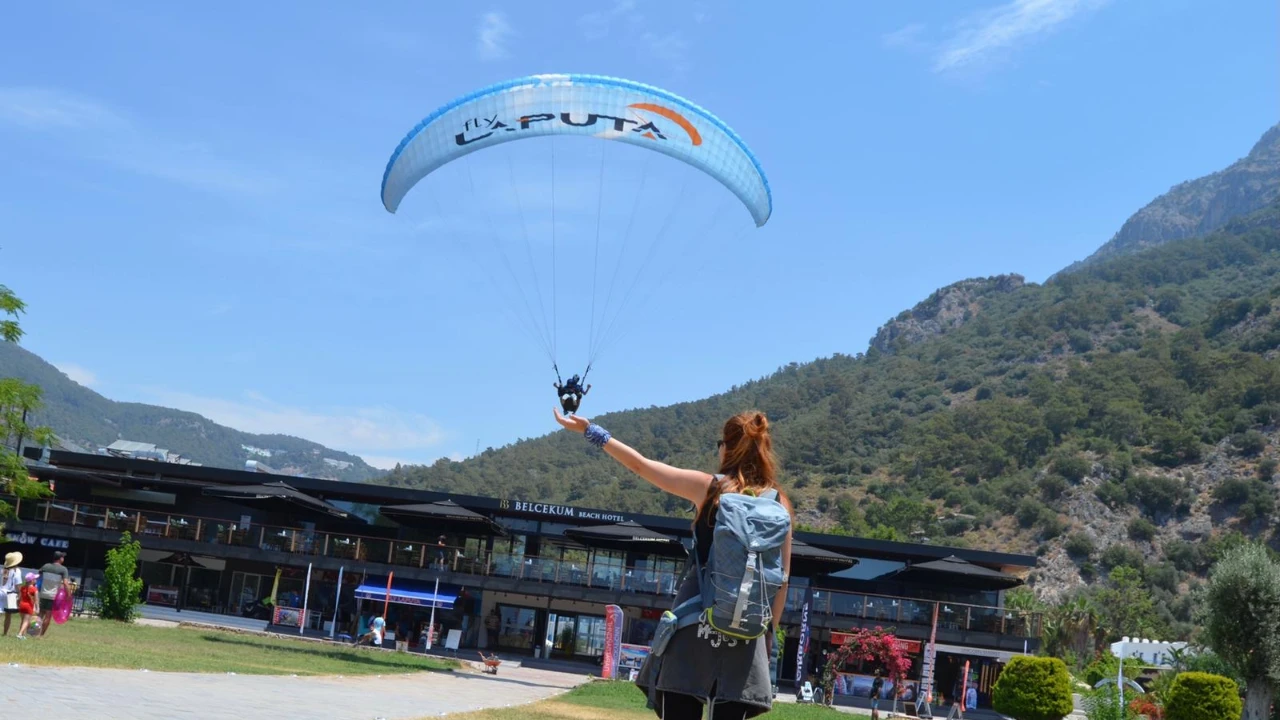
Belcekız Beach is the public stretch of sand extending east of the lagoon, named after Belceğiz, its former settlement name. As it's also the landing area for tandem paragliding pilots, the beach transforms into the region's operational hub in the evenings: wings landing minutes apart, equipment being packed up, and minibuses waiting for new take-offs all share the same strip.
Along the promenade, you'll find a line of cafes and restaurants, with shops on Ölüdeniz Street behind them. As you walk towards the western end of the beach, the silhouette of Babadağ comes into view; since the mountain is to the south and catches the light of the setting sun head-on, its slopes change color while the sea side remains bright. The ideal window for photography opens approximately forty-five minutes before sunset and continues through the twilight after the sun dips below the horizon.
In the afternoon, the wind on the beach picks up, so anchoring your umbrella deeply helps; as paragliding landings also become more frequent at this time, the section facing the landing strip is lively. If you plan to swim, remember that lifeguard services are generally limited to daylight hours, and it's wise to avoid deep areas. Sitting on the sand with a towel is free; after the light fades, the illuminated section of the promenade is safer for walking than the beach itself.
Kelebekler Vadisi (Butterfly Valley) and Faralya Ridges
Kelebekler Vadisi is reached by a boat trip of no more than half an hour from the Ölüdeniz pier. It gets its name from the population of tiger moths (Euplagia quadripunctaria) found in the valley, with peak sightings during the summer months. Walking inland from the valley floor leads to a waterfall at the end of the canyon; with a campsite and simple bungalow accommodation available at the base, your plan splits into either 'returning on the last boat' or 'staying in the valley'.
The ridge village above the valley, Faralya, is officially named Uzunyurt and is one of the overnight stops on the Fethiye leg of the Lycian Way, marked in 1999. The route starting from Ovacık passes through Faralya and descends to Kabak. The main draw in Faralya is the viewpoints overlooking the valley from above: you'll see the valley's mouth opening to the sea, its beach, and the opposite slope all in one frame. These points, looking out to sea from the ridge, offer an unobstructed horizon at sunset, as there are no elevations in front of the valley mouth; conversely, the valley floor falls into shadow much earlier than the village on the ridge.
The time of the last return boat varies by season and typically falls in the late afternoon; it's essential to confirm this with the operator at the pier before heading to the valley. Descending into the valley via the path from the Faralya side is also possible, but the route is steep and includes sections requiring rope assistance; this descent is not advisable after dark. For those choosing to stay overnight in the valley, the low light pollution makes it a standout spot for stargazing. Visitors wishing to explore the region's trekking and canyon routes with a professional guide can choose a suitable program from nature adventure tours; details on the valley's transport and accommodation are compiled in our Kelebekler Vadisi guide article.
Babadağ Cable Car and Sunset Flights
Rising like a wall to the south-southeast of the beach, the 1,969-meter-high Babadağ is an extension of the Western Taurus Mountains facing the coast and has been the region's renowned paragliding take-off point for decades. The Ölüdeniz Air Games Festival, mostly held in October, also features launches from this mountain.
The cable car, departing from the lower station between Ölüdeniz and Ovacık, reaches stations at 1,700 and 1,800 meters on the mountain; viewing terraces and food and beverage outlets are available at the top. The cabin journey takes only a few minutes, meaning the longer part of the plan is reaching the lower station. In the summer schedule, services extend beyond evening hours, and the sunset session experiences particular demand; buying tickets during the day shortens the queue at the top. Since services can be halted during the day due to wind and visibility conditions, it's essential to confirm the first and last service times from the operator's official announcement. The 1,969-meter point, referred to as the summit, is not at the end of the cable car line; the terraces above are stations on the mountain's shoulder, and it's wise to plan your clothing accordingly for these altitudes. Given the noticeable coolness on the terrace compared to the beach, a light jacket or windbreaker will directly impact your comfort.
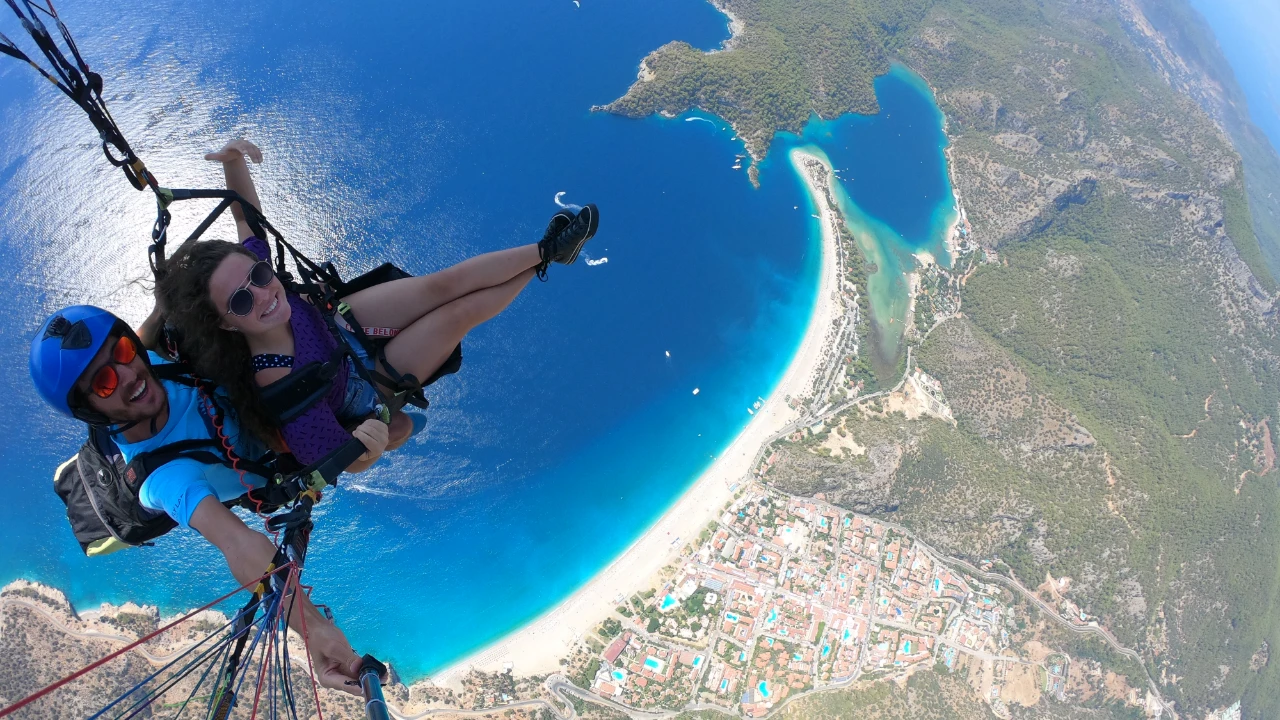
Altitude also changes sunset timing: at 1,800 meters, the horizon drops lower, so the sun disappears approximately five to ten minutes later than at the beach. This delay coincides with the longest queues for the return cable car. This presents two distinct plans. Visitors wishing to watch the sunset from above must factor in the return queue and plan a late dinner on the beach; those who prefer to avoid queues can descend just before sunset and catch the last light on the promenade. The two cannot be combined on the same evening; the decision needs to be made during the booking stage. Tandem flights are conducted during the morning and late afternoon wind windows, with landings on Belcekız beach. The decision to fly depends on weather conditions; operators may postpone sessions if the wind picks up, so it's wise not to tightly link your evening plans immediately after a flight. Items to inquire about during reservation include take-off altitude, whether a video package is included, and the policy for cancellations due to weather.
Mavi Mağara (Blue Cave) and Soğuk Su Cove (Cold Water Cove)
There are two neighboring stops on the western leg of the boat route departing from Ölüdeniz pier. Mavi Mağara is a sea cave whose inner walls are painted blue by the reflection of sunlight from underwater; boats typically slow down in front of the cape and briefly enter. Soğuk Su Koyu, nearby, gets its name from the freshwater springs emerging from its base. The temperature difference where seawater and spring water mix is noticeably sharp; seeking out this difference while swimming is one of the enjoyable parts of the tours, and those sensitive to cold should enter the water slowly.
These two stops hold a special place in an evening guide because neither is suitable for an evening program. The blue hue of the cave is most clearly visible when the sun is high; as the light lowers, the color fades, and visibility inside decreases. For the same reason, day-trip boats exploring this route depart in the morning and return in the late afternoon. So, for visitors planning an evening, the correct approach is to dedicate a separate day to the boat tour and build the evening around land-based attractions. It's also worth noting the similarity in names: the same name is used for another sea cave off the coast of Kaş and Kalkan, and that cave has no land access, only by sea. Asking about the departure pier during reservation prevents confusing the two routes.
Gemiler Adası (Aya Nikola Island) and the Light of the West Side
Gemiler Adası is located off the Kapıdağ Peninsula, between Ölüdeniz and Göcek; it's also known as Gemile Island in some sources and Aya Nikola in local lore. Byzantine-era church and cistern ruins scattered across the hillside, a stone path leading from the shore to the hilltop, and traces of walls descending to the sea distinguish the island from a mere swimming stop. Therefore, it functions more as a hiking and photography stop than a swimming destination.
The primary access to the island is by boats departing from Ölüdeniz and Fethiye; programs from Ölüdeniz pier reach Kelebekler Vadisi and Gemiler direction quickly. Since shade is limited in the ruin area, a hat, water, and closed-toe shoes are necessary; non-slip soles make walking easier as the stone path is worn. The island's location on the west side also determines the light for the return leg: as day-trip boats return to Ölüdeniz in the late afternoon, the sun descends in this direction, offering a chance to see the softened light of the day from the deck on the final stretch of the route. Spending the evening on the island itself is not an option, as the ruin area is unlit, and programs are tied to return times.


Kıdrak Cove and Pine Forest Coastline
Kıdrak Cove, approximately 3 km from Ölüdeniz, is part of the same protected area as the lagoon. The reason for its protection is the red pine forest that extends right down to the shore; the almost complete absence of structures between the forest and the sea gives the cove a different character from the lagoon. The ground is predominantly fine pebbles rather than sand, the water deepens quickly, and the pine trees behind provide shade; therefore, water shoes are useful here.
Entry is paid and has closing hours, meaning it's suitable for an early evening program's opening stop, not a night program. Regarding timing, it's important to know that the wind and waves pick up in the afternoon; morning hours are when the water is calmest, and the sea becomes rougher towards late afternoon. Therefore, when adding the cove to an evening program, it's more realistic to plan for a coastal walk in the pine shade and a break before returning, rather than swimming. Parking, a minibus stop, and sun lounger services are available within the area, so those arriving by car have fewer parking issues than in the center; as the road to the cove is narrow and winding, those with less driving experience might prefer the dolmuş or facility shuttle. Leaving Kıdrak and returning to the Ölüdeniz promenade sets the rest of the evening in a natural sequence.
Late Afternoon and Valley Dining in Kayaköy
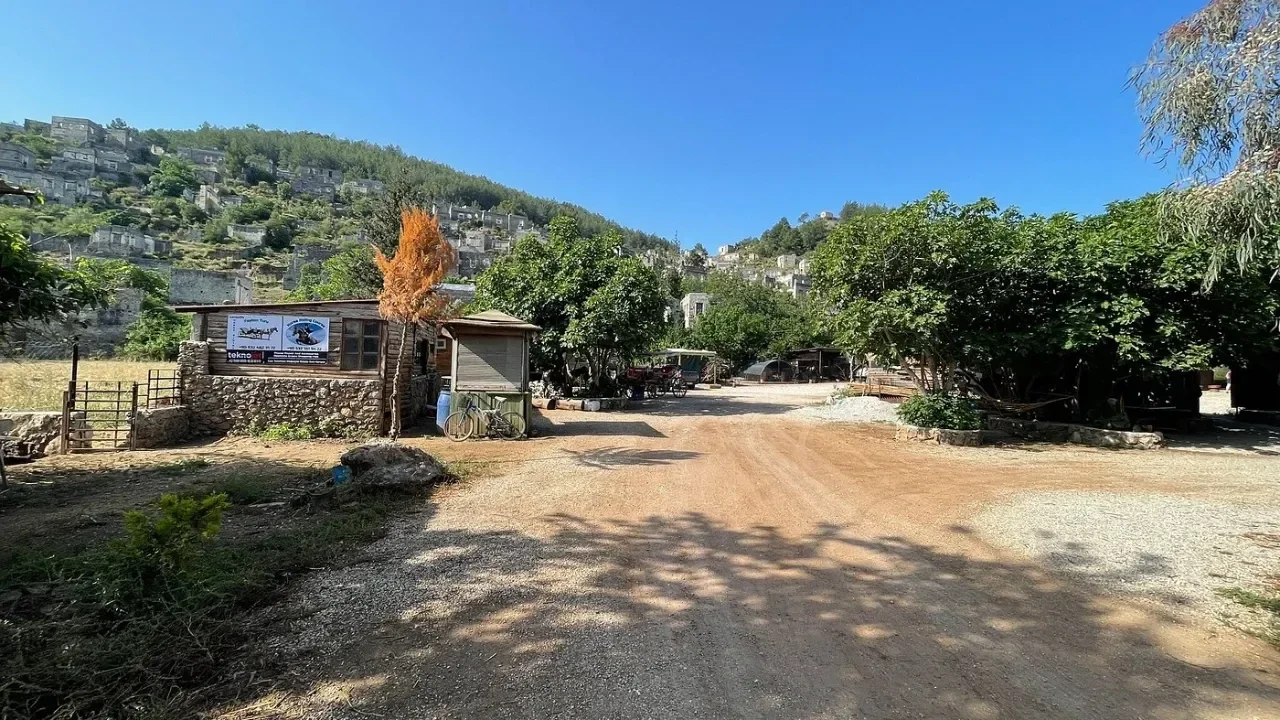
Kayaköy, reached by road from Hisarönü in about 8-9 kilometers, is a settlement known for its stone houses abandoned after the 1923 population exchange. The village, whose Greek name was Levissi, features hundreds of house ruins scattered across the hillside and two large church structures, creating a distinct texture for photography in the evening light. The core of the visit includes the Upper Church on the upper part of the hillside, the Lower Church at the village's lower end, and the narrow stone streets between them; since most houses lack roofs, the visit takes place entirely outdoors.
The area is a ticketed archaeological site under the Ministry of Culture and Tourism and has closing hours; unlike the nature park, Müzekart is valid here. Since the paths among the ruins are unlit, the visit must be completed before closing. A practical guideline is this: aiming to arrive at the village before 5:00 PM, as the ticket office closes in the late afternoon, leaves enough time to comfortably explore the ruins and catch the light. Stone surfaces get very hot at midday, and shade is scarce, so the late afternoon light is the ideal time of day for both walking and photography. The old path connecting the village to Ölüdeniz is suitable for hiking, but this route is best for daytime hours.
The effective plan for an evening here is as follows: explore the ruins before closing time, then descend to the valley-floor restaurants in the dark. The valley is rich with garden restaurants featuring stone courtyards; some offer a 'choose your own meat and have it cooked on the grill' system, which is a well-established tradition for dinner in the region. The cooler air among the stone walls provides an advantage for summer evenings. A word of caution for the return journey: as dolmuş services towards Kayaköy become infrequent in the evening, it's essential to arrange your return transport before heading to the village. The village's history and detailed travel information are also covered in our Kayaköy travel guide article.
Quiet Nights in Kabak Cove
Kabak Cove, approximately 17-20 km from Ölüdeniz, is reached in 40-45 minutes via the Ovacık turn-off. Accessed after passing Faralya, the cove is one of the overnight stops on this section of the Lycian Way and has been known for its bungalow and camping accommodation since the 2000s. The road is narrow and winding, and the descent to the cove is via a steep path or the establishments' shuttle vehicles. Its evening character is the opposite of Ölüdeniz: instead of music and crowds, you'll find tables under trees, fireside chats, and starry skies.
The return journey is challenging for inexperienced drivers due to the unlit and winding route; using engine braking on the long descent prevents overheating from continuous brake application. Dolmuş services in this direction are less frequent than on the Ölüdeniz route, so it's essential to ask about the last service time when boarding. If you're planning dinner in Kabak, it's safer to include accommodation in the same area; bungalow kitchens in the valley often operate with fixed menus, and dinner is usually included with the stay. Carrying a flashlight on the path down to the cove is a small but useful habit that makes the return easier.
Ovacık: Gateway to the Lycian Way and Hillside Accommodation
Ovacık, approximately 5-6 km from Ölüdeniz bay, plays two roles in your plan: the western end of the Lycian Way, extending towards Antalya, begins here, and the lower station of the Babadağ cable car is also on this side. The settlement is predominantly characterized by villas and apartment complexes spread across the hillside; basic necessities like markets and bakeries are found along the road, and the line of restaurants along the main street is more subdued than in Hisarönü, with calmer nightlife.
A defining feature of the settlement is its elevation difference: due to the slope, some accommodations are hundreds of meters above the main road, and the return journey involves an uphill walk. For those planning an evening program, this detail directly impacts comfort, as walking uphill at night is more tiring than during the day. Hisarönü begins within walking distance, about 1-2 km away. The road descending to Ölüdeniz loses significant elevation over a short distance, requiring slow driving at night; walking down is not recommended due to sections with sparse lighting.
Hisarönü: Compact Street and Nightlife
Hisarönü, approximately 4-5 km from Ölüdeniz bay, is a compact settlement clustered around its main street; restaurants, ice cream parlors, and live music venues are lined up within walking distance. The road to Kayaköy also branches off from here, so the settlement also functions as a junction.
Nightlife activity is concentrated around Bar Street, and on July and August nights, music can be heard late into the night in rooms facing the street; for those sensitive to noise, booking accommodation one street back makes a practical difference. In May and October, the same street remains lively during the day but quiets down at night. The dolmuş route operates until late at night during the summer season, so those staying on the beach can head up for dinner and return on the same line.
Hour-by-Hour Evening Itinerary
This itinerary is structured for July and August daylight hours. In September, you'll need to shift the steps forward by approximately one hour, and in October, by about two hours. The base of the route is the Ölüdeniz beachfront strip; alternative steps are also provided for those dining in Fethiye center.
- 4:00 PM-4:45 PM: A short break in the pine shade at Kıdrak Cove, departing before closing time. Don't cut your departure time too close, as exiting the car park can take a few minutes.
- 5:30 PM: Ascend via cable car from the lower station on the Ovacık side, enjoying the cool air and panorama from the viewing terraces.
- 6:30 PM: Descend by cable car. If you chose to watch the sunset from above, skip this step and plan your return according to the post-sunset queue; if a tandem flight was preferred, the landing will be on Belcekız beach.
- 7:15 PM: Stroll along the Belcekız promenade, heading to the middle section of the beach to watch the paragliders land.
- 40-45 minutes before sunset (around 7:40 PM in early July, 7:25 PM in late July, 6:50 PM in late August): Head to the western end of the beach or towards the lagoon mouth; if you're inside the park, be mindful of closing times.
- Half an hour after sunset: Enjoy a promenade walk in the twilight glow.
- 8:30 PM-9:00 PM: Dinner. Those staying on the beachfront can choose Ölüdeniz Street, those seeking a quiet meal can opt for Kayaköy valley, and those looking for local cuisine should head to Fethiye Fish Market. For Kayaköy and Fethiye options, arrange your return transport before sitting down to eat.
- 10:30 PM: Ice cream and coffee break in Ölüdeniz or Hisarönü bazaar; for those dining in Fethiye center, the equivalent is a promenade walk towards Karagözler.
- After 11:30 PM: As the beach bazaar closes, the bar strip continues. If you plan to stay out past midnight, arrange a taxi for your return instead of relying on the dolmuş.
What to Do at Night in Ölüdeniz?
When the sun sets, the program doesn't end; it simply changes character. As the light fades on the beach, activity shifts from the promenade to the bazaar: shops within the settlement remain open until around 11:00 PM on summer evenings, while the bar strip extending inland from the beach operates at a pace that goes past midnight during the summer months. Those seeking a more energetic night can head up to Hisarönü and Ovacık on the hillside; a dolmuş or short taxi transfer works for this, but night taxi fares are noticeably higher than dolmuş prices.
A second option is to stay at a higher elevation. The summer schedule of the Babadağ cable car extends beyond evening, covering sunset and night services; thus, looking down at the beach lights from above in the dark is an option that can be included in your program. Since wind and visibility conditions can halt services, it's essential to confirm the last service time from the operator's announcement.
The third direction leads south, to the Faralya and Kabak line. The night here is built not on music but on the sky: light pollution is low due to the sparse settlement, making open-air stargazing possible. For those planning observations, the moon phase is crucial, as a full moon night brightens the sky, making fainter stars invisible.
Two activities are generally excluded from night programs. Night swimming is not advisable: lifeguard services are usually limited to daylight hours, and the ends of the beach are unlit. Protected areas are also not open at night; the lagoon, Kıdrak, and Kayaköy close to visitors after dark, and there is no lighting in the ruin areas.
| Night Option | Where | Vibe | Things to Note |
|---|---|---|---|
| Bazaar and Promenade Stroll | Ölüdeniz beachfront strip | Calm, family-oriented | Shops open until around 11:00 PM on summer evenings |
| Bar Strip and Live Music | Ölüdeniz inner strip, Hisarönü Bar Street | High energy, extends past midnight | If sensitive to noise, book accommodation one street back |
| Night Cable Car Session | Babadağ, lower station on Ovacık side | Moderate | Summer schedule applies; services may stop due to wind |
| Stargazing | Faralya, Kabak Cove | Very calm | Moon phase is crucial; flashlight needed on unlit roads |
| Promenade and Bazaar Night | Fethiye center, Paspatur and Karagözler | Moderate | Plan a night taxi for return to Ölüdeniz |
How to Arrange Evening Transport to Ölüdeniz, When is the Last Dolmuş?
The most fragile part of an evening program is the return journey. The time of the last dolmuş is not a fixed number; in fact, it varies by season and day, so knowing what determines it is more useful than trying to guess the exact time. Four things are decisive: which route you're on (the Fethiye-Ölüdeniz main route operates latest into the night), the calendar (services extend late into the night during the summer season, but become noticeably less frequent in winter months), direction (the Kabak and Faralya routes are less frequent than the main line, and evening services towards Kayaköy are further reduced), and time of day (frequency decreases as the night progresses). The written schedule is usually displayed on the stop board; the most practical method is to note the last service time for your route when buying your outbound ticket and save a taxi number to your phone.
Taxis are priced differently based on time, distance, and luggage; finding a night taxi in hillside settlements might take longer than on the beachfront. Pre-arranging airport transfers for night arrivals prevents unnecessary waiting on the winding hillside roads.
| Route | Option | Approx. Duration | Evening Note |
|---|---|---|---|
| Fethiye center - Ölüdeniz | Dolmuş (shared taxi) | 30-40 min | Main route of the region; operates until late at night in summer season |
| Ölüdeniz - Ovacık / Hisarönü | Dolmuş or taxi | 10-15 min | Hillside road is winding, slow driving required at night |
| Ölüdeniz - Kayaköy | Taxi or private car | 20-25 min | Archaeological site closes in late afternoon; evening dolmuş infrequent, arrange return in advance |
| Ölüdeniz - Faralya / Kabak Cove | Private car, infrequent dolmuş | 40-45 min | Narrow and unlit road; consider staying in the area instead of night return |
| Ölüdeniz - Çalış Plajı | Taxi or private car | 30-35 min | Depart early for sunset, sea taxis primarily operate during the day |
| Dalaman Airport - Ölüdeniz | Transfer or car rental | 1-1.5 hours (approx. 60-65 km) | Need to pre-book transfer for night arrivals |
Ölüdeniz, Ovacık, Hisarönü, and Fethiye Center: An Evening Comparison
These four settlements differ in their evening and nightlife character and ease of transport; the Faralya and Kabak line falls into its own separate category.
| Area | Evening Vibe | Ease of Transport | Best For |
|---|---|---|---|
| Ölüdeniz (Belcekız area) | Beach promenade, family-oriented, bazaar and bar strip combined | Frequent dolmuş and taxi | Those seeking beachfront accommodation |
| Ovacık | Variety of restaurants, moderate music, hillside views | On the dolmuş route | Dinner-focused plans and villa accommodation |
| Hisarönü | Concentrated entertainment and shopping around Bar Street | Frequent dolmuş, compact walking distance | Young groups, those seeking lively nightlife |
| Fethiye center | Paspatur bazaar, Fish Market, marina, and promenade walk | Widest transport options, night taxis available | Those wanting local cuisine and city nightlife |
| Faralya - Kabak | Silence, stargazing, nature accommodation | Poor transport, difficult night travel | Those wanting to escape the crowds |
Where to Stay Based on Your Evening Plans?
Your evening program is most dependent on your accommodation choice, as every plan involving a night return becomes easier or harder based on this decision. Those staying on the beachfront can walk to the promenade; those on the hillside will depend on dolmuş or vehicle schedules. The difference between areas is evident not just in the type of accommodation but also in walkability without a car. When booking on the hillside, asking for the walking time in minutes to the dolmuş stop and bazaar is a more reliable measure than the listing's 'close to bazaar' description.
| Area | Dominant Accommodation Type | Walkability without a car | Booking Timing |
|---|---|---|---|
| Ölüdeniz (Belcekız strip) | Hotel and apartment, walking distance to the beach | High: dining and promenade walkable | Early for July-August; those watching sunset on the beach choose this strip |
| Ovacık | Villa and apartment, hillside views | Moderate: on dolmuş route, requires vehicle to descend to beach | Group and family demand for villas closes early |
| Hisarönü | Hotel and apartment, concentrated around the main street | High: dining and entertainment walkable, dolmuş to beach | Early in high season; rooms behind the main street are better for noise |
| Fethiye center | City hotel, around marina and bazaar | High: bazaar and market walkable, Ölüdeniz 30-40 min | Relatively flexible, largest bed capacity here |
| Faralya - Kabak | Bungalow, camping, nature accommodation | Low: requires shuttle service or car | Early for summer; limited bed count |
The price relationship between these strips is not fixed, but the general trend is as follows: the beachfront strip within walking distance to the sand is at the top, while hillside settlements and the city center are generally lower, and bungalow accommodation can swing to either end depending on the facility and season. Differences also widen within the same settlement; properties at main road level are priced higher than their equivalents on the upper slopes, as walking time to the stop and bazaar is shorter. During the Air Games week in October, demand pushes prices up, so both room and flight availability close early during that period. Between November and April, a portion of the bed capacity is closed, so the first thing to confirm in the low season is whether the establishment is open.
What Time is Sunset in Ölüdeniz? Monthly Evening Conditions
Sunset time varies by approximately three hours throughout the year: reaching around 8:25 PM in mid-summer and dropping to about 5:45 PM in early December. The table below provides the time at the beginning and end of each period, meaning daylight hours gradually change between the two values in the column.
| Period | Sunset Time (start → end of period) | Evening Weather | Note |
|---|---|---|---|
| May - June | 7:50 PM → 8:25 PM | Mild, days lengthen | Businesses open, crowds not yet at peak |
| July - August | 8:25 PM → 7:35 PM | Hot, late sunset | Most challenging period for reservations and parking |
| September | 7:30 PM → 6:50 PM | Mild, sea warm | Crowds decrease, plans become more relaxed |
| October | 6:45 PM → 6:10 PM | Cooling nights | Air Games period, accommodation demand increases |
| November - April | 6:05 PM → 7:50 PM | Cool and potentially rainy | Earliest sunset of the year in early December, around 5:45 PM; many businesses closed, dolmuş infrequent |
Evening and Sunset Tour Options from the Region
Ölüdeniz's own departure programs largely operate in conjunction with Fethiye organizations. Categories that fall into the evening window include boat, flight, and cultural programs; daytime cove tours belong to a separate day.
Sunset Boat Tours
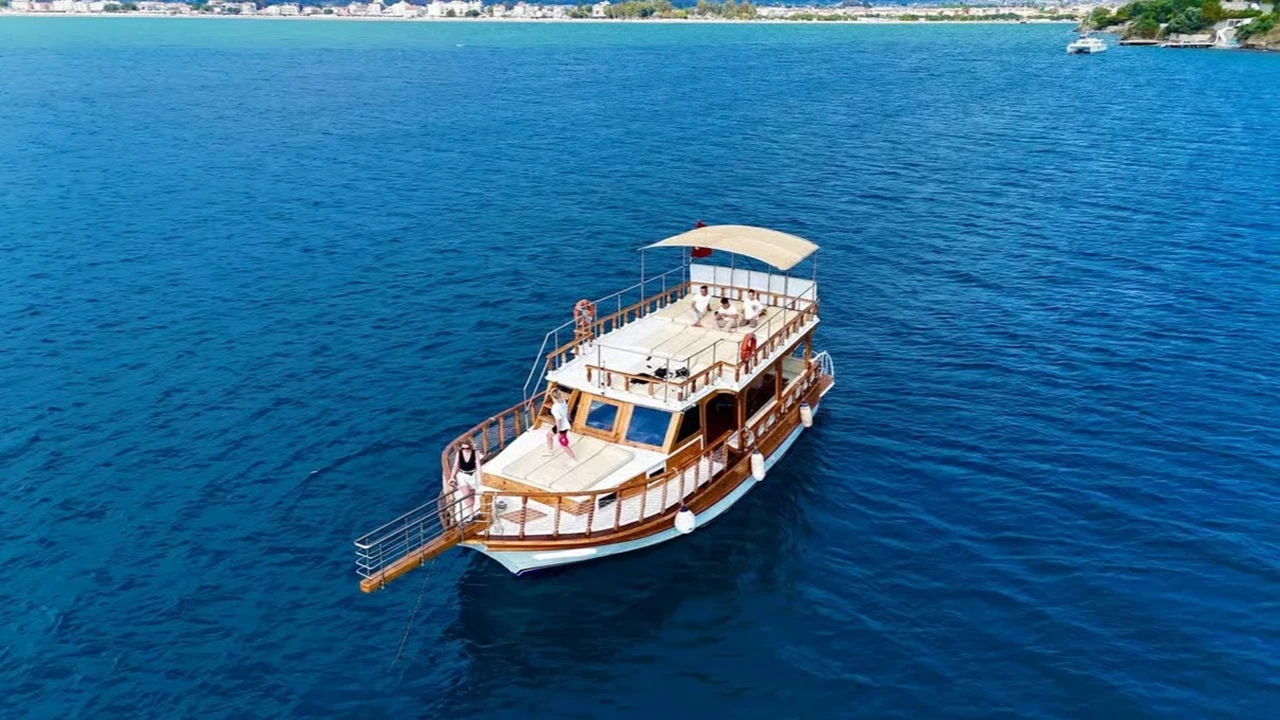
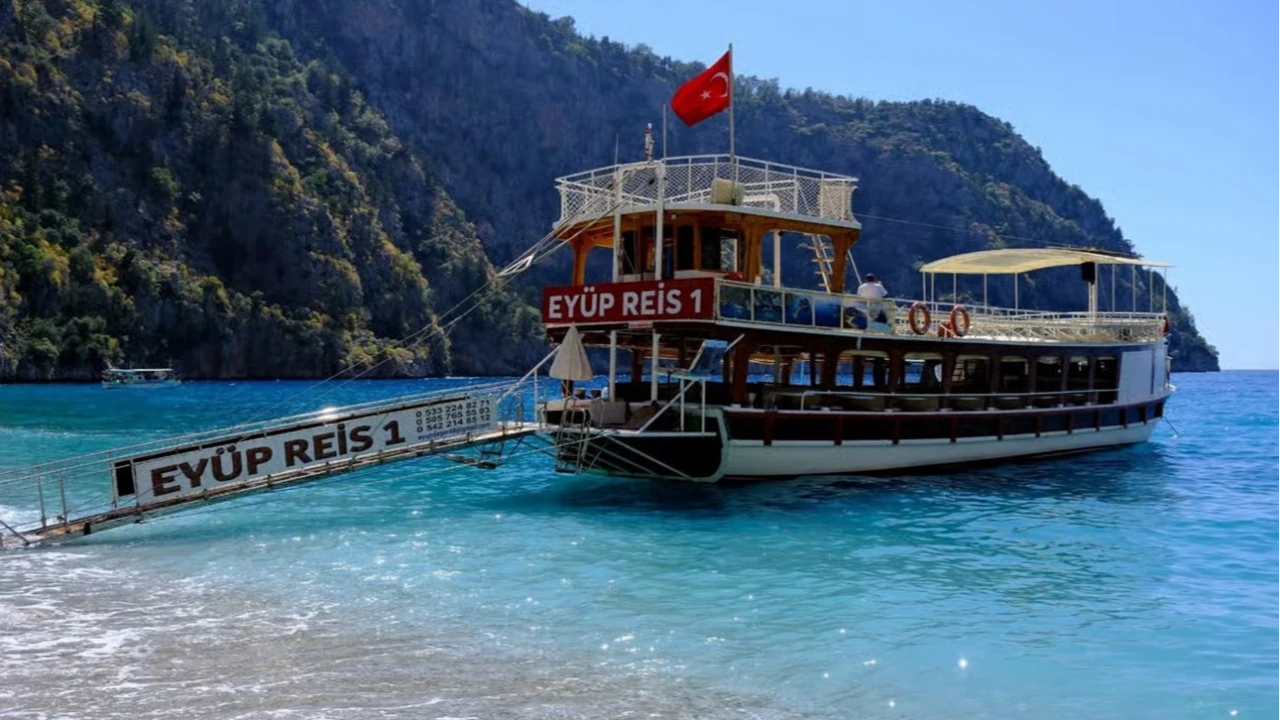
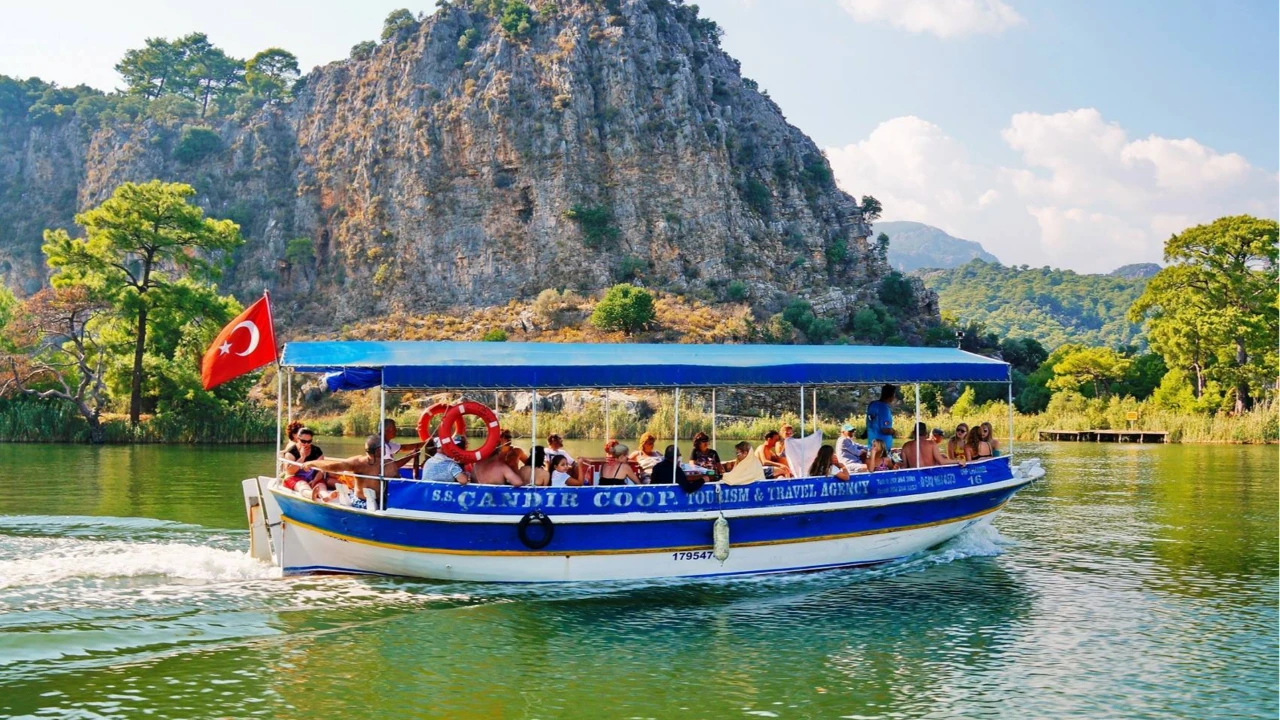
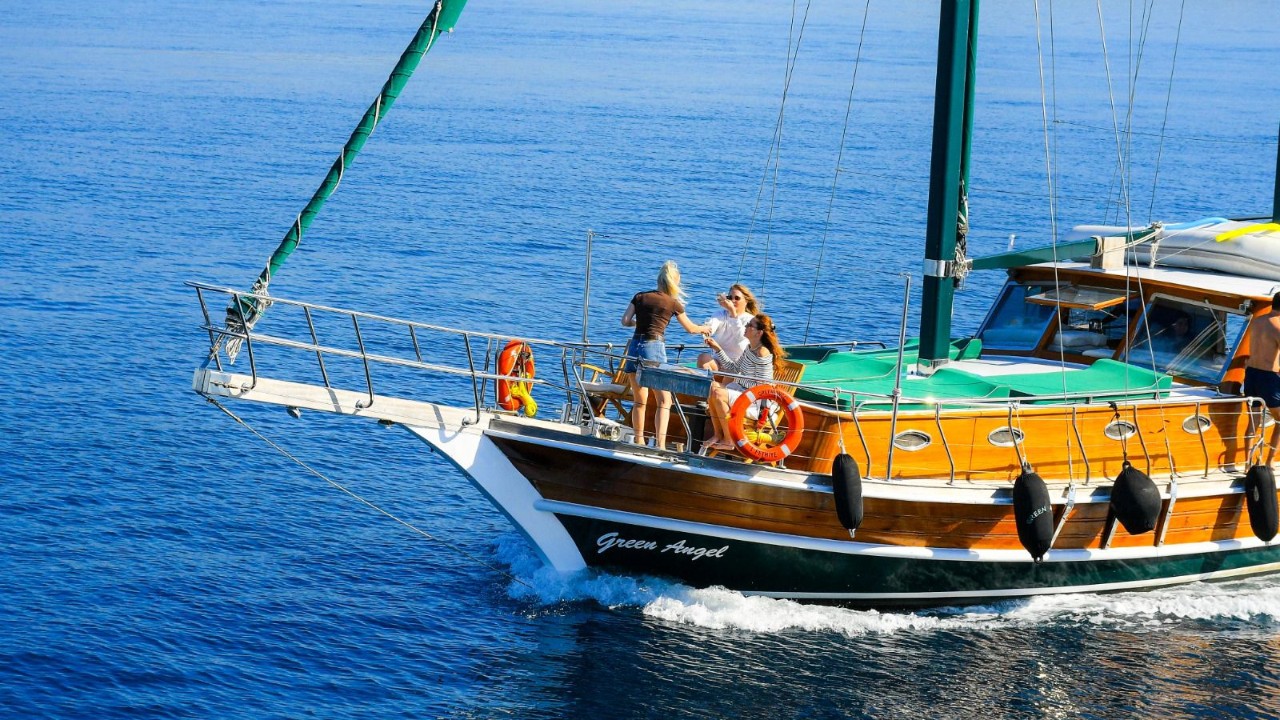
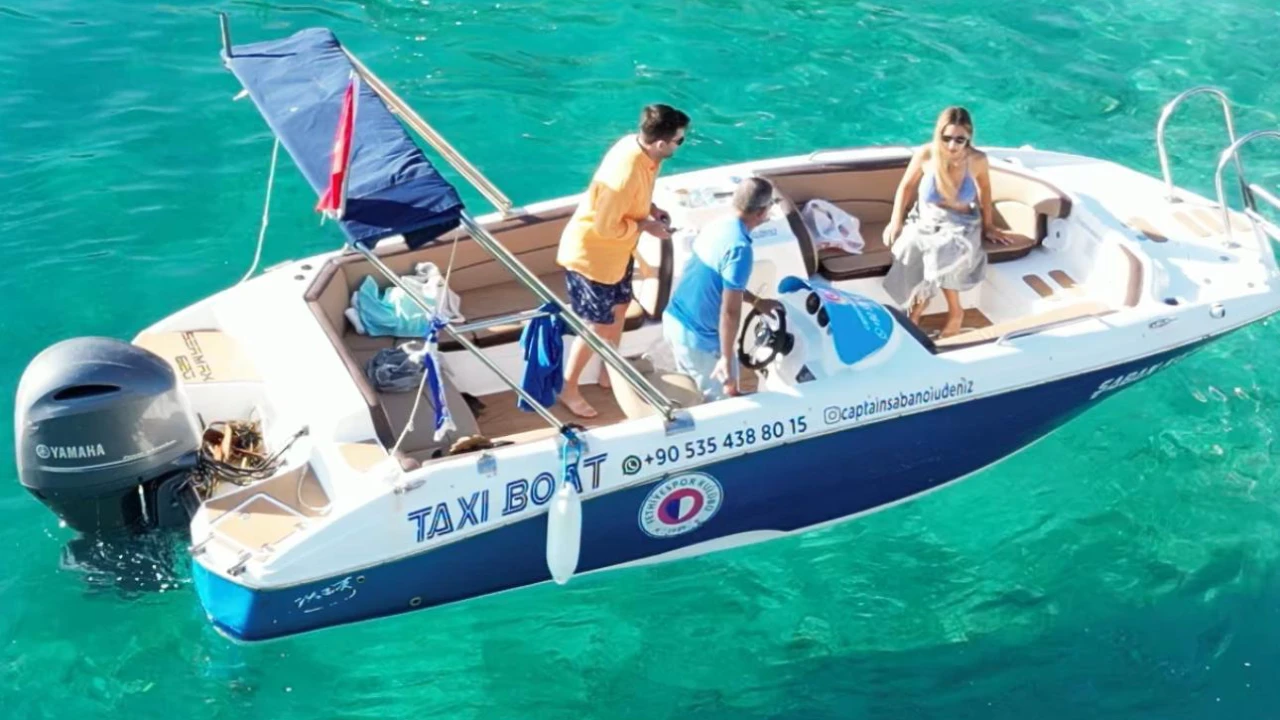
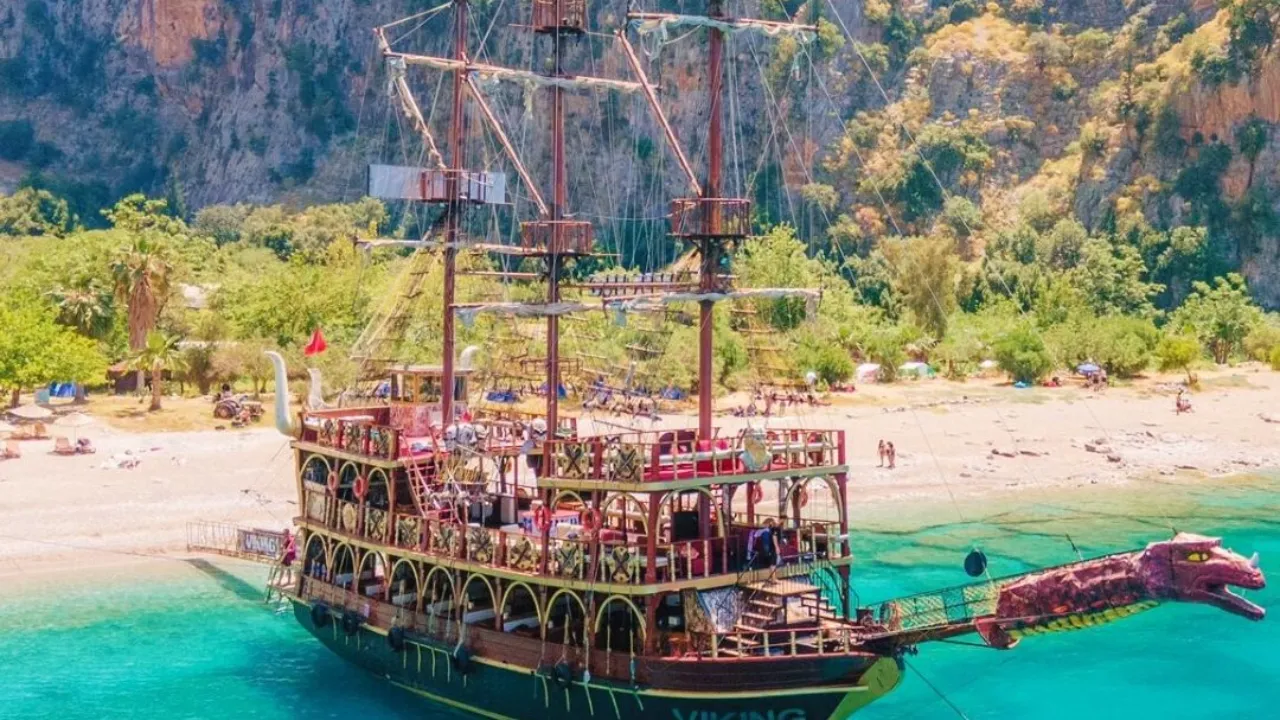
Some boat programs departing from Ölüdeniz and Fethiye bay are organized for late afternoon departures. The route typically involves a short tour around the cove, anchoring for a swimming break, and then watching the sunset on the return journey. Since the sun dips over the open sea, the horizon from the deck remains unobstructed, and as the wind also tends to drop compared to midday, the sea is generally calmer. It's important not to confuse these with full-day programs: day-trip boats that tour Kelebekler Vadisi, Mavi Mağara, Soğuk Su Koyu, Akvaryum Koyu, and Gemiler Adası depart in the morning and return in the late afternoon, meaning they are not evening tours. The 12 Islands program departing from Fethiye harbor is also a separate product and cannot be combined with the Ölüdeniz-departing Kelebekler-Gemiler route on the same day. Factors determining the price include the type of boat (daily excursion boat or gulet), departure pier, group size, duration, and whether food and drinks are included.
Late Afternoon Paragliding Flights
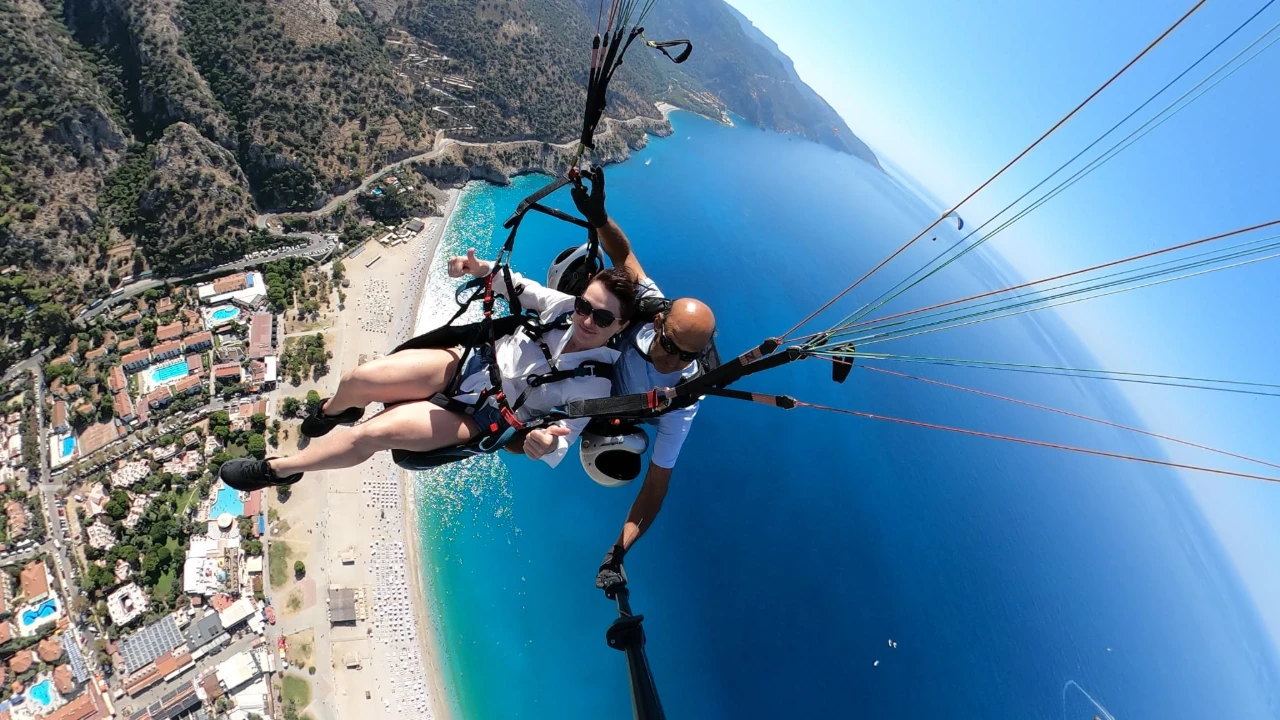
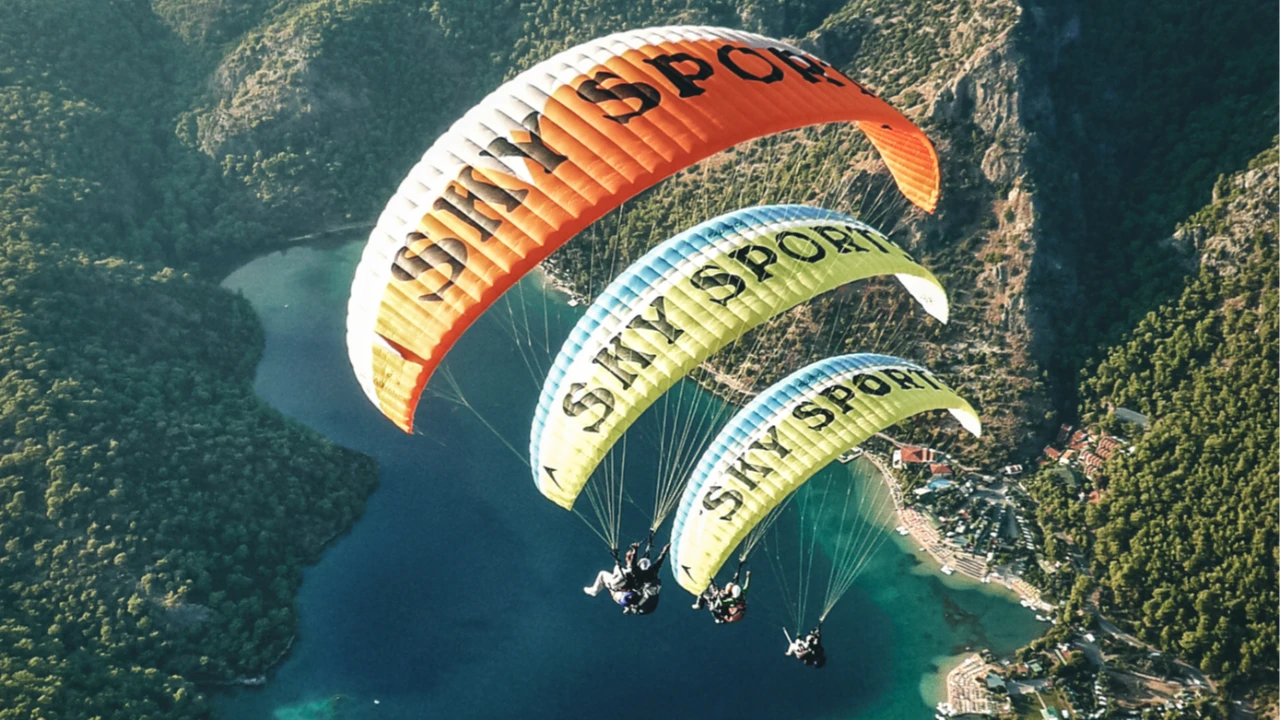
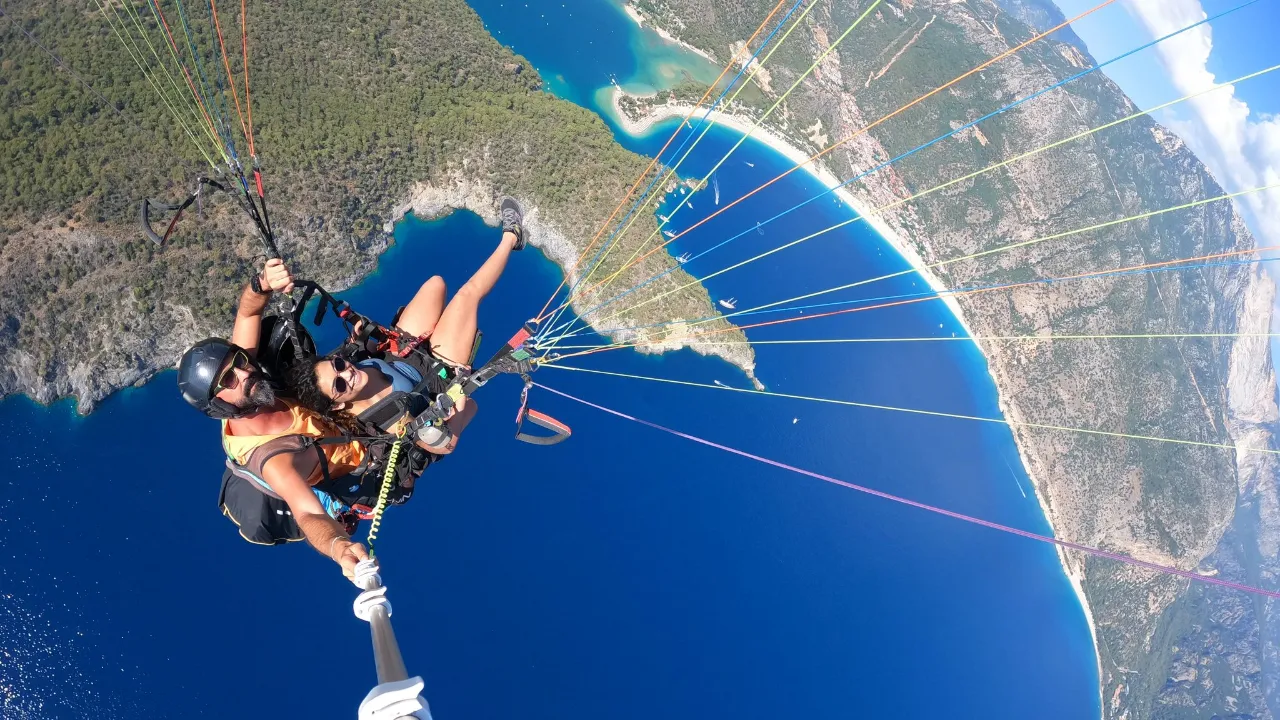
Tandem flights departing from Babadağ are preferred for photography due to the softened light in the late afternoon. Flight duration varies by take-off altitude, and landings are made on Belcekız beach. Planning your flight time at least an hour and a half before your dinner reservation will prevent disrupting your program in case of possible delays. The sunset session is a separately priced option; take-off altitude, video package, and seasonal demand also push the price up or down.
Cultural Programs for Kayaköy and Ancient Traces
Late afternoon cultural programs combine the ruins of Kayaköy with Lycian-era traces within Fethiye. The Amintas Rock Tombs in Fethiye center, with their monumental facade carved into the rock, are a well-known historical site of the city and offer a powerful view in the late afternoon due to their hillside location. It's essential to remember that archaeological sites operate with closing times and to complete the program before sunset. Those wishing to hear the cultural background of Kayaköy with a guide's narration can look at Fethiye-departing programs among cultural tours.
Programs that connect Lycian traces within the city by walking are a separate category and are more comfortably explored in the cool of the late afternoon; for those seeking this format, historical city tour options make comparison easier.
Where and What to Eat for Dinner?
In Fethiye center, the Fish Market model makes budgeting transparent: you choose and weigh your fish from the central stalls in the covered courtyard within Paspatur Bazaar, then hand it over to one of the surrounding restaurants to be prepared. Payment is split into two separate items: the cost of the fish is paid by weight at the stall, while cooking and meze service are calculated per person at the restaurant. Salad, meze, bread, and drinks are added to the restaurant's bill, so clarifying what the cooking fee covers before sitting down makes things easier. A practical detail for evening hours: the courtyard gets crowded after 7:00 PM; early arrivals will find a wider selection at the stalls and won't have trouble finding a table. Seasonal choices determine the plate; sea bream and sea bass are consistently available year-round, while species like red mullet and grouper seasonally stand out at the stalls.
In the narrow streets of the adjacent Paspatur bazaar, taverns and meze-focused establishments are concentrated, while along the Karagözler coastal road by the marina, you'll find restaurants focused on views. Local dishes include Fethiye tava (pan-fried dish), sıkma (a type of wrap in phyllo), and spring specialties like arapsaçı kavurması (sautéed fennel) and kabak çiçeği dolması (stuffed zucchini flowers). Herb dishes are seasonal, so their presence on menus diminishes in mid-summer, but fruits like fresh figs and watermelon make for easy summer evening desserts.
Establishments on Ölüdeniz Street and along the hillside Hisarönü and Ovacık strip primarily offer international menus; for local cuisine, it's more appropriate to head towards Kayaköy valley or Fethiye bazaar. Those wishing to make dinner part of a program, combining local dining with production or tasting stops, can explore options under gastronomy organization tours.
Budget Items for Your Evening Plan
Since tariffs are updated annually and seasonally, this section provides the relative weight between items and what determines each item's price, rather than specific figures. The ranking generally remains consistent over the years, but figures become outdated annually. For protected areas, the relevant ministry sets the annual tariff, and some areas apply separate fees for local and foreign visitors; current amounts are visible at the entrance gate, on stop boards, or through the operator's official channels. The current prices for tours and activity programs departing from the region are live on the tour lists linked above, so those pages are the correct source for boat, flight, cultural, and gastronomy program prices.
| Item | Weight in Budget | Price Determinant |
|---|---|---|
| Nature Park Entry | Small item, per person; may be similar to dolmuş ticket price | Pedestrian or vehicle entry, annual tariff, local-foreign distinction, defined exemptions |
| Sun Lounger and Umbrella Set | Multiples of entry fee; two-person set significantly above entry | Location, time slot, set contents |
| Dolmuş Ticket | Smallest budget item; direction of travel, per person | Route length, current tariff |
| Taxi | Significantly higher than dolmuş for same route; night tariff is also higher | Distance, time, waiting, luggage |
| Babadağ Cable Car Ticket | Medium item; multiples of entry fee, significantly below flight | Session (sunset and night priced separately), age group, defined discounts |
| Tandem Paragliding | Highest item; can exceed total of other daily items | Take-off altitude, video package, seasonal demand |
| Sunset Boat Tour | Medium-high item; usually in the same range as or above cable car | Boat type, departure pier, duration, group size, food included |
| Dinner | Most variable item; cooking at fish market paid separately per person | Restaurant area, fish type and season, number of mezes |
| Accommodation | Heaviest item in daily budget | Beachfront or hillside, elevation and walking time, number of nights, calendar |
What You Need to Know Before Dark
Common issues in evening programs include closing ticket offices, unlit paths, and night returns.
- Last entry and last exit are not the same time: visitors inside the area are escorted out after the ticket office closes, so ask for that day's last exit time upon entry.
- Keep a flashlight or your phone's torch ready: the path down to Kabak, the roads among the Kayaköy ruins, and the ends of the beach contain unlit sections.
- Arrange your return transport on the way there: note the last service time for your route when buying your ticket, and save a taxi number to your phone if necessary.
- Measure light by twilight, not just sunset time: after the sun disappears, there's still about half an hour of sufficient light for walking and photography.
- Factor in elevation differences: on Babadağ terraces, the sun sets five to ten minutes later than on the beach, while in coves with elevations behind them, shadows fall before the official sunset time.
- Opt for closed-toe shoes: flip-flops make walking difficult on stone-paved streets and forest paths; water shoes provide extra comfort on Kıdrak's pebbly ground.
- Make reservations: booking in advance for dining and cable car sessions during high season shortens waiting times.
- Monitor weather conditions: flights, boat trips, and cable car services can be postponed due to wind, so keep your subsequent plans flexible.
- Don't include night swimming in your plans: lifeguard services are generally limited to daylight hours, and the outer sections of the coast cannot be assessed in the dark.
Brief Summary and Recommendation
An evening plan in Ölüdeniz sits on three layers: protected areas before sunset (Kıdrak, Nature Park, Kayaköy), elevated spots or the beach during sunset (Babadağ terraces or the western end of Belcekız), and settlements after sunset (Ölüdeniz Street, Ovacık, Hisarönü, or Fethiye bazaar). The transition time between layers is short, making it possible to experience all three in a single day.
For first-time visitors to the region, a smooth sequence would be: Kıdrak or the lagoon in the late afternoon, followed by a cable car ride up, the promenade at sunset, and Kayaköy valley for dinner. Those who have visited before might prefer a quiet night in Faralya or Kabak, or head up to Hisarönü for the bar strip. The boat circuit covering Mavi Mağara, Soğuk Su Koyu, and Gemiler Adası, however, belongs to a separate day, not the evening; trying to squeeze that circuit into an evening program will spoil the rest of the day. Integrating the departure times of boat, flight, and cultural programs from the region into the backbone of your plan will naturally organize the remaining steps.
Frequently Asked Questions 7
What is there to do in Ölüdeniz in the evening?
Prominent options include strolling along the Belcekız promenade, enjoying elevated views from the Babadağ cable car, watching tandem paragliders land, and dining in Ovacık, Hisarönü, or Fethiye bazaar after sunset. The evening essentially boils down to two decisions: will you experience sunset from an elevated spot or on the beach, and where will you spend the night? For those without a car, reversing the order can be helpful; for an evening relying on the dolmuş route, visiting a hillside stop *after* dinner rather than before makes it easier to complete your return before the last service. Trying to add a boat tour to the same evening will leave both programs incomplete, as day-trip boats return in the late afternoon.
What is Ölüdeniz famous for?
The calm waters of its lagoon, paragliding flights departing from Babadağ, and the Ölüdeniz Air Games Festival, mostly held in October, are the highlights that make the region well-known. According to popular belief, the name "Ölüdeniz" (Dead Sea) comes from the lagoon's calm waters even when there are waves in the open sea. There's another reason why the water remains waveless throughout the day: due to conservation regulations, the lagoon is closed to motorized marine vehicles, so there's no boat traffic within its waters.
How much is the entrance fee for Ölüdeniz?
Access to the beach and promenade is free; the fee applies to the protected Ölüdeniz Nature Park entrance, and a separate fee is charged for Kıdrak Cove. Since the Ministry of Agriculture and Forestry sets the tariffs annually, we are not providing specific figures here. The variables determining the amount include whether you enter on foot or by vehicle, the current year's tariff, the distinction between local and foreign visitors applied in some areas, and defined exemptions. Müzekart is not valid at this gate, as the card is designated for museums and archaeological sites under the Ministry of Culture and Tourism; however, it is valid at archaeological sites like Kayaköy. The current amount is displayed at the ticket office. Tour and activity prices operate differently: the current prices for boat, flight, cultural, and gastronomy programs departing from the region are live on the tour list pages linked in this article.
Are there free beaches in Ölüdeniz?
Belcekız Beach is open to the public, and there is no charge for sitting on the sand with a towel; sun lounger and umbrella rentals are extra. The lagoon area and Kıdrak Cove, however, are part of the nature park status, so their entrances are subject to a fee. When choosing Belcekız, it's useful to know the ground difference: the middle section of the beach is pebbly, and this is where paragliding landing strips and motorized water sports are concentrated, so visitors seeking a calm evening should walk towards the ends of the beach.
Who gets free entry to nature parks?
The Ministry of Agriculture and Forestry sets the annual entrance tariffs for nature parks; common practice defines exemptions for relatives of martyrs, veterans, and disabled visitors, while age-based discounts vary by year. Since this ministry sets the tariff, the Ministry of Culture and Tourism's Müzekart is not valid at nature park gates; however, it is valid at archaeological sites like Kayaköy. Ölüdeniz and Kıdrak are part of the same protected unit, the approximately 25-hectare Ölüdeniz-Kıdrak Nature Park, so the same tariff logic applies at both entrances.
What are the top 10 places to visit in Fethiye?
Ten frequently visited stops can be listed as follows: Ölüdeniz Nature Park, Belcekız Beach, Babadağ, Kelebekler Vadisi, Kıdrak Cove, Kabak Cove, Kayaköy, Amintas Rock Tombs, Çalış Plajı, and the classic stop for Fethiye-departing programs, Saklıkent Canyon (administratively within Seydikemer). Within the city, the list is completed by Fethiye Museum, the ancient theater, the Fish Market, and Paspatur bazaar; all four are within walking distance in the center and easily fit into a late afternoon visit.
Where to visit in Fethiye Ölüdeniz?
Within Ölüdeniz's boundaries, you'll find the lagoon and Kumburnu sand spit, Belcekız Beach, Kıdrak Cove, and Kelebekler Vadisi (accessible by boat); on the hillside, Ovacık, Hisarönü, and Babadağ, and on the western side, Kayaköy are continuations of the same trip. Mavi Mağara, Soğuk Su Koyu, Akvaryum Koyu, and Gemiler Adası, visited by boat, belong to a daytime program, as day-trip boats depart in the morning and return in the late afternoon. This circuit does not fit into an evening plan; furthermore, the 12 Islands program departing from Fethiye harbor is a separate product and should not be combined with the Ölüdeniz-departing Kelebekler-Gemiler route on the same day.