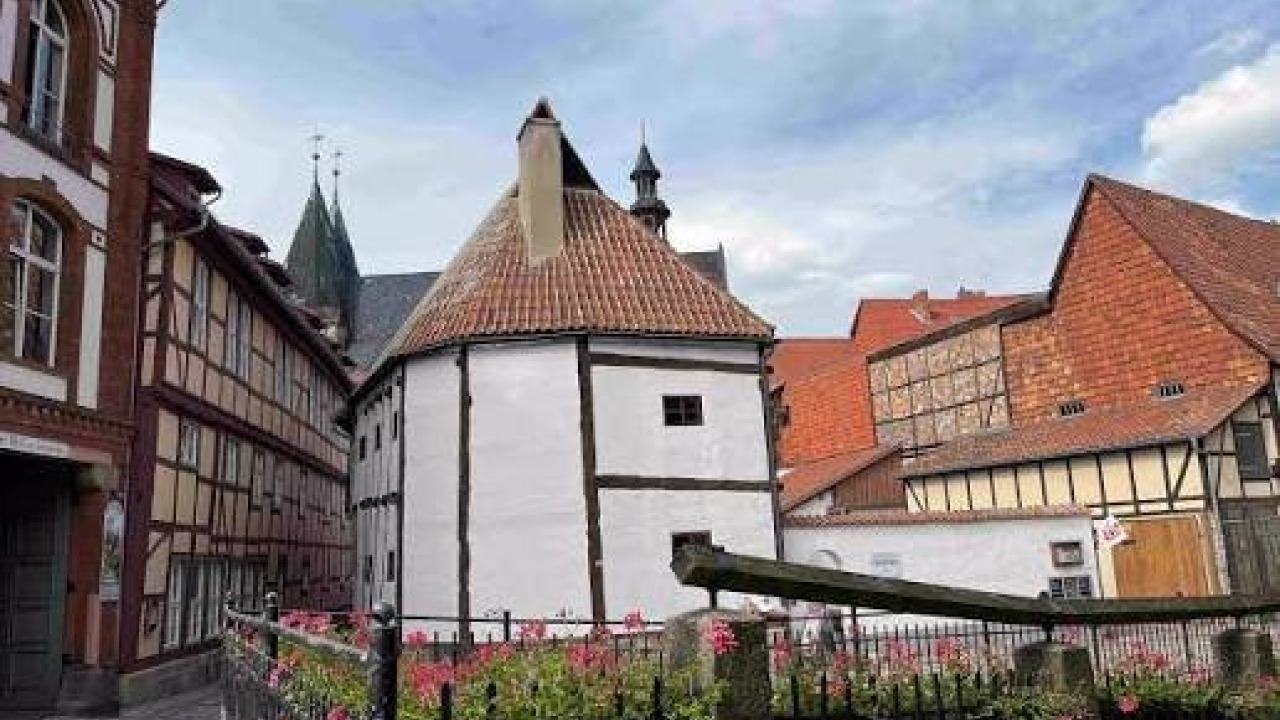

Arriving early in the morning in Quedlinburg, nestled at the northeastern foothills of the Harz Mountains in Saxony-Anhalt, you won't need a map to grasp the town's unique charm. As you ascend the slope from the market square towards the castle hill, the half-timbered facades lean into each other, forming an architectural catalogue spanning eight centuries: some with thick, sturdy posts dating back to the 14th century, others adorned with the intricate carvings of the 19th. This density is no accident. The town rose to prominence in the 10th century as a political hub for the Ottonian dynasty, remained under the protective wing of a women's abbey for nine centuries, and largely escaped the urban development waves of the 20th century. This guide will lay out the town's identity, its open and closed attractions (note: the Schlossmuseum on the castle hill is closed until October 3, 2026), transportation options, and seasonal variations.
Quick Facts
| Topic | Information |
|---|---|
| Location | Germany, Saxony-Anhalt state, northeastern foothills of the Harz Mountains |
| UNESCO status | World Heritage Site since 1994 ("Collegiate Church, Castle, and Old Town") |
| Historic fabric | Over 2,000 half-timbered (Fachwerk) houses within an 80-hectare heritage area |
| Key attractions | Stiftskirche St. Servatii and Domschatz, Marktplatz and Roland, Fachwerkmuseum im Ständerbau, Münzenberg |
| Recommended duration | 2 full days; 3 days if including nearby towns |
| Best time to visit | May-June and September; Advent weekends have a special program |
| Transport | Hourly regional train via Magdeburg or Halle; Harz-Berlin-Express from Berlin on weekends |
| Within town | Historic center explored on foot; cobblestone, hilly streets |
What Sets Quedlinburg Apart from Other Half-Timbered Towns?
Germany boasts many towns renowned for their half-timbered architecture. What truly distinguishes Quedlinburg isn't just the sheer number of these structures, but their remarkable age distribution and the complete preservation of its medieval urban plan.
An Architectural Archive Spanning Eight Centuries
According to the town's official tourism information, over 2,000 half-timbered houses stand within its 80-hectare heritage area, with these structures spanning an impressive eight centuries. In practical terms, this means you can see the thick-posted construction technique of the 14th century alongside the finely latticed facades of the 18th century, all on the same street. Here, Fachwerk isn't just a style; it's a narrative of building techniques evolving across centuries. UNESCO's 1994 designation was based on this architectural diversity and the legible medieval urban plan, encompassing the collegiate church, the castle hill, and the old town as a whole. For those who enjoy exploring medieval architecture as part of a structured itinerary, you can find similar themes in Turkey by exploring our cultural tours in Turkey category.
The Legacy of a Nine-Century Women's Abbey
The town's political significance began with the legend of Henry being offered the royal crown at Finkenherd in 919. Henry was buried here in 936, and that same year, his wife Mathilde founded a women's abbey on the castle hill, an institution that thrived until 1802. The abbey's long life directly shaped the town's fabric: administration remained on the hill, while commerce flourished below, a distinction still visible in today's street layout. The collegiate church was consecrated in 1129, and the town joined the Hanseatic League in 1426.
Quedlinburg by Season
The town is open for visitors year-round, but museum schedules vary significantly with the seasons.
| Period | Highlights | Things to note |
|---|---|---|
| Spring (April-May) | Museums switch to summer hours, moderate crowds | Weather can be variable, a raincoat is useful |
| Summer (June-August) | Long daylight hours, outdoor events | Weekend crowds increase |
| Autumn (September-October) | Clear light, ideal hours for photography | Museum hours shorten by late October |
| Winter (November-March) | Advent program and historic courtyards | Some museums close |
Advent Weekends and Courtyards
In December, the town's most distinctive event is "Advent in den Höfen" (Advent in the Courtyards): historic courtyards, usually closed to the public, open their doors for the first three Advent weekends, with around 20 courtyards participating according to the municipality's announcements. The Christmas market in the historic center, on the other hand, runs for a longer period, from late November until late December. These two programs are not the same; since the courtyards are only open on weekends, plan your visit accordingly. As dates shift annually, always check the municipality's event calendar.
What's Open and Closed on Stiftsberg (Castle Hill)?
The castle hill (Stiftsberg) is both a scenic viewpoint and the historical heart of the town. However, the structures on the hill don't currently operate on the same schedule; knowing which sections are open before you ascend can save your day.
Stiftskirche St. Servatii and the Crypt
The Romanesque crypt of the collegiate church houses the tombs of Henry and his wife Mathilde; this space is one of the town's oldest surviving architectural layers, with the stone craftsmanship on the column capitals directly showcasing Ottonian era aesthetics. According to the management's announcement, the church is open daily except Mondays from 10:00 to 16:00; with a new permanent exhibition opening on March 28, 2026, the church, crypt, and treasury rooms became accessible together. Visiting before noon helps avoid crowds, as the crypt is small and group tours tend to become more frequent in the afternoon.
Domschatz: Medieval Treasury Chambers
The collection known as Domschatz comprises examples of medieval goldsmithing, intricate ivory carving, and crystal work of Eastern origin; its source is the inventory of the abbey that performed centuries of rites over the royal tombs. The collection is included in the church's visiting route and can be seen during the same hours. Ticketing arrangements are determined by the management; for current conditions, please check the official Stiftsberg Quedlinburg website. The treasury rooms are small, so queues can form during peak hours.
Schlossmuseum: Closed Until October 3, 2026
The castle museum on the hill has been closed since 2020 for extensive structural renovation, accessibility improvements, and exhibition renewal. According to the schedule announced by the management, the new Schlossmuseum will reopen to visitors on October 3, 2026; meaning travelers ascending the hill before this date will not be able to visit the museum. However, the terraced garden remains open throughout the renovation (April-October 06:00-22:00, November-March 06:00-20:00), offering views of the town's tiled-roof silhouette.
Half-Timbered Highlights in the Lower Town
Marktplatz, Town Hall, and Roland Statue
The market square is the commercial heart of the town. The core of the Town Hall dates back to the early Gothic period and is a substantial stone structure for its medieval scale; this size is considered an indicator of the rising town's economic power. The pointed arch windows were replaced with Renaissance forms in the 17th century, and during the renovation between 1616-1619, the entrance was moved to the square side, adding a Renaissance portal crowned with the figure of Abundantia, the goddess of abundance. The 2.75-meter-tall Roland statue in front of the building is believed to have been erected after the town joined the Hanseatic League in 1426; the statue was toppled during the town-abbey conflict in 1477 and reinstated in 1869. Visiting the square early in the morning allows you to admire the facades in their entirety before the cafe tables are set up.
Fachwerkmuseum im Ständerbau (Half-Timbered Museum in the Ständerbau)
The building at Wordgasse 3 is a Hochständerbau dating back to the first half of the 14th century; it was constructed using an early technique where supporting posts extend continuously from the ground to the roof. As this technique was replaced by a stacked system in later centuries, the building represents the starting point of architectural development in the town. Today, it's organized as a museum, showcasing how the technique evolved over six centuries through various examples; it's officially promoted as a unique Fachwerk museum in Germany, with no other example of its kind. The visiting schedule is seasonal: open daily except Thursdays from 10:00-17:00 between April and October, and only on the first three Advent weekends between November and March. Tickets are categorized as adult and reduced, with free entry for those under 18; for current prices, check the municipality's museum page.
Münzenberg and the Remains of Marienkloster
On Münzenberg hill, west of the town, a Benedictine women's abbey was founded in 986 by Abbess Mathilde of the Ottonian dynasty. The abbey functioned until 1536, after which it was used for secular purposes, and residences were built upon its remains; today, the abbey's fabric and the residential structures are intertwined, with parts of a wall serving as a kitchen wall, and others as a church nave. Opened in 2015, the museum allows visitors to see the western and eastern crypts, sections of the central and side naves, and the nuns' gallery. It's open daily from 10:00-17:00 between April and October, and from Friday to Monday from 10:00-16:00 between November and March. The path up the hill is narrow and features stairs; it offers a peaceful break from the lower town's crowds.
Start Your Morning on the Hill, End Your Evening in the Backstreets
Two full days are sufficient to thoroughly explore both the upper (hilltop) and lower town layers of Quedlinburg. This itinerary considers museum hours and optimal lighting.
- On your first morning, head up to the castle hill; since the church opens at 10:00 daily except Mondays, spending the first hour here will help you avoid the busiest times.
- After visiting the church and treasury rooms, move to the terraced garden for an elevated view of the town's distinctive roofline. As the castle museum is closed until early October, you can shorten the time allocated for the hill.
- In the afternoon, walk to Münzenberg; this hill, where ruins and residential structures are intertwined, adds a different dimension to your itinerary.
- In the late afternoon, descend to the market square to admire the Renaissance portal and the Roland statue in the soft, golden light.
- On your second morning, head towards Wordgasse and visit the Fachwerkmuseum im Ständerbau; remember it's closed on Thursdays, so plan your day accordingly.
- After the museum, wander aimlessly through the side streets; the greatest variety of architecture is found not on the main thoroughfares, but in the narrow alleys.
- Conclude your day with a leisurely stroll on the flat terrain of Brühl park, south of the castle hill; from here, you can see the rock mass from below.
How to Get to Quedlinburg?
Getting There by Train and the Harz-Berlin-Express
According to the tourism office, regional trains to Quedlinburg operate hourly from Magdeburg or Halle. Direct connections from Berlin are provided by the Harz-Berlin-Express, which runs on weekends and public holidays; those traveling on weekdays will need to transfer at Magdeburg or Halberstadt. This distinction directly impacts your travel day, so check before purchasing tickets. Visitors coming from Wernigerode can connect via a regional bus line. Direct bus services departing from Berlin's central bus station take approximately three hours.
Airports and Road Access
According to distances provided by the tourism office, the closest airports to the town are Leipzig-Halle (112 km), Hannover (124 km), and Berlin Brandenburg (206 km); for all three, onward travel by train or rental car should be planned after landing. Those arriving by road can use the A36 North Harz motorway from the west (Braunschweig direction), or the A14 connection from the north (Magdeburg) and south (Halle-Leipzig). Regional parking restrictions apply in the historic center; visitors arriving by car should park in one of the designated car parks and enter on foot.
Getting Around Town and the Selketalbahn
The historic center is compact enough to explore on foot; the streets are cobblestone and hilly. For those planning to use buses within the region, the HATIX system, run by the Harz tourism association, is in effect: a card issued to guests paying the accommodation tax covers bus routes in participating municipalities. As coverage and exceptions vary, confirm the conditions with your accommodation provider. Quedlinburg is also the terminus for the Selketalbahn line, operated by Harzer Schmalspurbahnen (Harz Narrow Gauge Railways). This narrow-gauge line, dating back to 1887, extends via Gernrode towards Harzgerode and Hasselfelde, with steam locomotives operating on some sections; a half-day train trip can easily be added to your itinerary.
Dining and Accommodation Areas
Harz cuisine is built upon regional products. Harzer Käse, a sour milk cheese known for its pungent aroma, is a famous local product; it's often served with onions, caraway, and bread on local menus. Local beer varieties, forest berry cakes, and freshly baked pretzels from local bakeries are popular options for a daily break. Those considering extending their European itinerary might find our Italy travel guide helpful for regional suggestions.
Where to Stay?
As the town is small, the differences between areas lie in their character, not their distance.
| Area | Character | Best for |
|---|---|---|
| Around Marktplatz | Small-scale accommodation in restored Fachwerk buildings | Those exploring the town on foot |
| Foothills of the castle hill and Brühl area | Quiet streets, close to parkland | Early morning castle hill visitors |
| Neustadt side | Wider streets, close to parking | Those arriving by car |
| Around the train station | Practical location for connecting transport | Short-stay visitors |
Staying in a restored half-timbered building is a direct way to experience the town's architecture from within; the supporting posts are often exposed in most establishments. For those seeking an itinerary that explores city centers through their historic structures, our historic city tours in Turkey category offers a similar approach.
Practical Notes Before Your Visit
What often disrupts plans isn't distance, but the calendar.
| Attraction | Visiting hours | Note |
|---|---|---|
| Stiftskirche St. Servatii and Domschatz | Daily except Mondays, 10:00-16:00 | New exhibition opened March 28, 2026 |
| Schlossmuseum | Closed | Reopening October 3, 2026 |
| Terraced garden (Stiftsberg) | April-October 06:00-22:00, November-March 06:00-20:00 | Open during renovation |
| Fachwerkmuseum im Ständerbau | April-October daily except Thursdays, 10:00-17:00 | November-March: first three Advent weekends only |
| Münzenbergmuseum | April-October daily 10:00-17:00 | November-March: Friday-Monday 10:00-16:00 |
Before you set off, consider the following:
- Bring comfortable walking shoes with good grip for the cobblestone streets and hilly inclines; thin soles will tire you out by the second day.
- Staircases in historic buildings can be narrow, so a backpack instead of a large suitcase will make checking into accommodation easier.
- Museum winter hours are significantly shorter than summer hours; between November and March, plan your day around the open attractions.
- Visa requirements vary by nationality and are updated periodically; confirm conditions via Germany's official consular information page before traveling.
- Accommodation demand rises during Advent weekends; book your stay well in advance.
- Early morning hours are ideal for photography: the streets are quieter, and the sidelight accentuates the facade carvings.
- As there are vehicle restrictions in the center, identify your parking spot beforehand and factor in the walking distance.
For those curious about how travelers who explore Germany on this scale view Turkey, our article on German tourist profiles offers insights into the reciprocal travel culture.
Frequently Asked Questions 6
How many days should I allocate for a Quedlinburg trip?
Two full days are enough to thoroughly explore the historic center: one day for the castle hill and Münzenberg, and one day for the lower town and museums. If you add nearby towns like Wernigerode to your itinerary, a three-day plan works more comfortably.
Which museums are open and closed in Quedlinburg?
The Stiftskirche St. Servatii and Domschatz can be visited daily except Mondays from 10:00-16:00. The Schlossmuseum on the castle hill has been closed for renovation since 2020 and will reopen on October 3, 2026. The Fachwerkmuseum im Ständerbau and Münzenbergmuseum operate on seasonal schedules.
How do I get to Quedlinburg from Berlin?
On weekends and public holidays, the Harz-Berlin-Express provides a direct connection. On other days, transfers are made to hourly regional trains via Magdeburg or Halle. Direct bus services departing from Berlin's central bus station take approximately three hours.
How many half-timbered houses are there in Quedlinburg?
According to the town's official tourism information, there are over 2,000 half-timbered houses within the 80-hectare UNESCO heritage area, with these structures spanning an eight-century period. The town has been on the World Heritage List since 1994.
When is the Quedlinburg Christmas market set up?
The Christmas market in the historic center opens in late November and closes towards the end of December. The courtyard program, known as "Advent in den Höfen", takes place on the first three Advent weekends, involving approximately 20 historic courtyards. As dates vary from year to year, confirm them on the municipality's event calendar.
Is Quedlinburg suitable for families with children?
Yes, it is suitable. Vehicle traffic is restricted in the historic center, distances are short, and a steam train ride on the Selketalbahn line adds excitement to the program. However, due to cobblestone streets and narrow staircases, a baby carrier is more convenient than a stroller.