Perched at an altitude of approximately 2,150 meters in Adıyaman, Mount Nemrut is one of the most mysterious open-air sanctuaries of the ancient world. With its colossal stone statues, the enduring legacy of the Commagene Kingdom from the 1st century BC, and breathtaking sunrise vistas, this UNESCO World Heritage site draws travelers from every corner of the globe. More than just a mountain, it is a sanctuary of memory where history, faith, and nature converge. Standing among these statues as they turn golden in the first light of dawn is a transcendental experience that stays with travelers for a lifetime. In this guide, we cover everything you need to know about the history of Mount Nemrut, its terraces, the sunrise experience, the best time to visit, and how to get there via Adıyaman.
At Travel Tour Shop, we are committed to quality. We have filtered out approximately 83% of the tour and transfer providers we work with, listing only those who have proven their local expertise and earned stellar reviews from our guests. The information and recommendations provided here are part of that quality filter; our goal is to connect you with guides who truly know the region and reliable transfer solutions.
Quick Facts
| Topic | Details |
|---|---|
| Location | Adıyaman, Southeastern Anatolia (via Kahta district) |
| Elevation | Approx. 2,150 meters |
| Period | 1st Century BC, Commagene Kingdom (Antiochos I) |
| Status | UNESCO World Heritage Site |
| Highlights | Colossal stone statues, East & West Terraces, sunrise |
| Best Time to Visit | April, May, June, September, October |
| Ideal For | History buffs, photographers, cultural explorers, families |
Where is Mount Nemrut and How to Get There?
Mount Nemrut is located in the Southeastern Anatolia Region of Turkey, within the borders of Adıyaman. The summit, which rises as an extension of the Taurus Mountains, is primarily accessed through the district of Kahta. For those planning their trip, the approximate distances are: 85 km from Adıyaman city center, 43 km from Kahta, 130 km from Malatya, 160 km from Şanlıurfa, and 200 km from Gaziantep.
The most practical way to reach the area is by air. The nearest airports are Adıyaman Airport and Malatya Airport. From there, you can reach the summit via transfer vehicles, private cars, or organized cultural tours. Because the final stretch of the road to the peak is steep and winding, hiring a driver or guide familiar with the terrain is highly recommended for both comfort and safety. If you are planning a comprehensive itinerary around Adıyaman, you can explore Adıyaman tour options to combine Mount Nemrut with other nearby historical landmarks.
The Commagene Kingdom and the History of Nemrut
To truly appreciate Mount Nemrut, one must first understand the Commagene Kingdom. In the 1st century BC, this region was ruled by the Commagene Kingdom, which served as a strategic bridge between Anatolia and Mesopotamia. This crossroads of East and West, where Persian and Hellenistic cultures collided, gave the kingdom a rich and unique cultural identity.
The kingdom's most famous ruler, Antiochos I, claimed descent from both Persian and Macedonian royal lineages. To immortalize this dual heritage, he commissioned a magnificent tumulus (burial mound) and a sacred ceremonial area at the summit of Mount Nemrut. Antiochos created a unique belief system for his time, uniting gods from different cultures into a single pantheon. The giant statues we see today are the physical manifestation of this synthesis. The blend of Persian crowns with Hellenistic facial features is one of the most striking details that sets Nemrut apart from any other site in the world.
Mount Nemrut as a UNESCO World Heritage Site
Due to its exceptional universal value, Mount Nemrut is inscribed on the UNESCO World Heritage List. This status officially recognizes that the site is significant not only for Turkey but for all of humanity. Being part of this list ensures ongoing conservation efforts, support for archaeological research, and international recognition.
Thanks to this status, projects to preserve the statues and reliefs continue, and the site is better understood through scientific excavations, which in turn strengthens cultural tourism in the region. The UNESCO designation also reminds visitors that they are witnessing a rare and fragile piece of global heritage. Therefore, staying on marked paths, avoiding touching the statues, and keeping the area clean are the most fundamental ways to ensure this legacy is passed down to future generations.
The Colossal Statues of Mount Nemrut
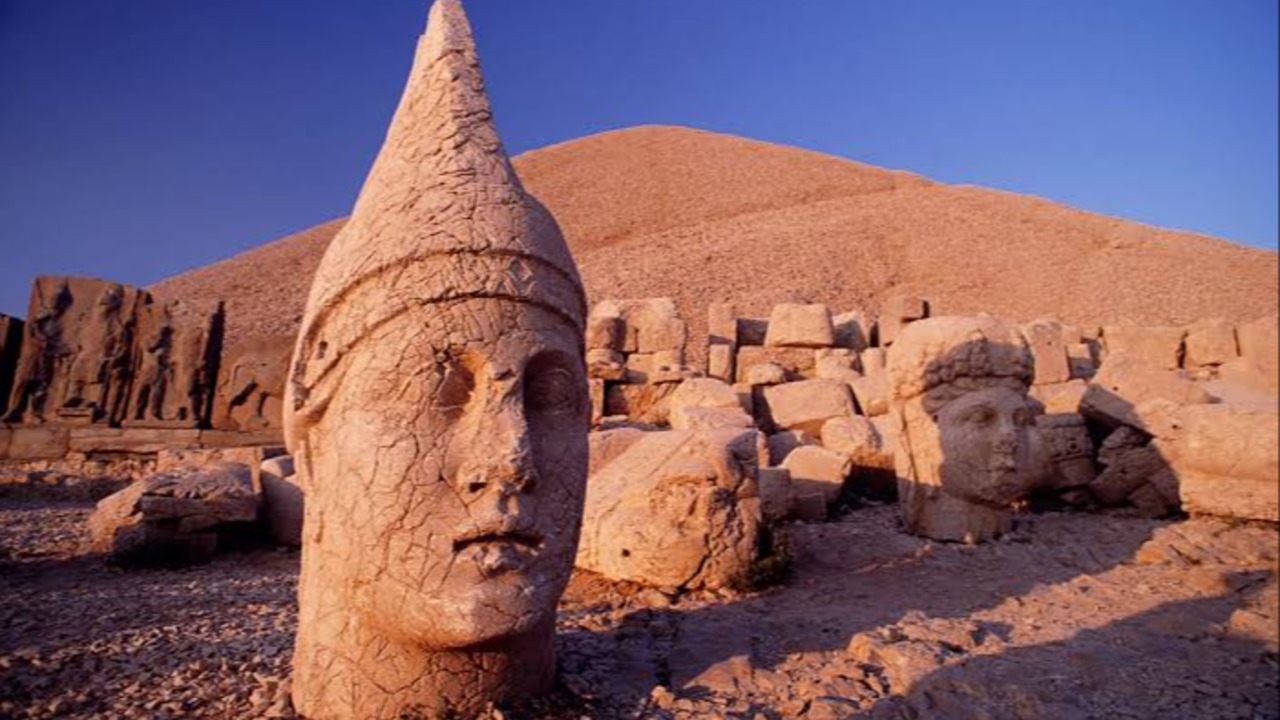
The most breathtaking feature of Mount Nemrut is undoubtedly the giant stone statues at the summit. Standing between 8 and 10 meters tall, these figures are among the largest stone monuments of the ancient world. The group includes Zeus, Apollo, Heracles, the gods of Commagene, and King Antiochos himself. The intricate craftsmanship of their facial expressions and the detail in their hair and beards remain awe-inspiring even after two millennia.
What adds to the mystery is that the heads have separated from the bodies. Today, these massive stone heads rest on the ground in front of or near the torsos, creating the most iconic and photographed images of Nemrut. Researchers believe this was not caused by a single event but by a combination of factors over centuries: severe earthquakes, natural erosion, and harsh climatic conditions. This separation lends the site a poignant and powerful atmosphere.
East Terrace and West Terrace
The summit of Nemrut is divided into two main ceremonial areas flanking the tumulus: the East Terrace and the West Terrace. Both host groups of statues, stone reliefs, and sacred spaces, but they differ significantly in terms of lighting and the best time to visit.
The East Terrace is the preferred spot for those wishing to witness the sunrise. As the first rays of light emerge from the east, the faces of the statues are slowly illuminated, appearing to come back to life. The West Terrace is the ideal location for sunset; as the sun dips toward the horizon, the statues are bathed in deep crimson and orange hues. Visiting both terraces is essential to grasp the full scale of the site and experience the shifting play of light. Those with more time can welcome the dawn at the East Terrace and explore the West Terrace later in the day.
The Mount Nemrut Sunrise Experience
The element that has made Mount Nemrut world-famous is its sunrise. The experience typically begins with a journey after midnight or in the very early hours of the morning, reaching the summit before daybreak. The sky transitions from deep navy to indigo, and then to vibrant orange and gold. As the sun rises above the horizon, the light hitting the giant statues creates a silent yet powerful atmosphere.
To make the most of this experience, a few practical tips are essential. Even in summer, the summit can be chilly, windy, and cold in the early morning, so bringing warm layers and a windbreaker is crucial. For photography enthusiasts, a tripod and spare batteries are almost mandatory; a sturdy tripod is the only way to get sharp, blur-free shots in low light. Comfortable, non-slip shoes are necessary for walking on the rocky terrain. Finally, bringing a thermos of a hot drink adds a small but delightful touch while waiting for the sun to rise.
Places to Visit Around Mount Nemrut
A trip to Nemrut is not limited to the summit; the surrounding historical sites complete the story of the region. These landmarks are typically included in the same tour program and enrich the overall experience.
- Karakuş Tumulus: A monument surrounded by columns, believed to be a memorial for the women of the Commagene royal family. It takes its name from the eagle relief found on site.
- Cendere Bridge: A single-arch stone bridge from the Roman era that has survived for nearly two thousand years. Its durability and elegant curve make it one of the most photographed structures in the region.
- Arsameia Ancient City: Once the summer capital of the Commagene Kingdom. It is notable for its relief showing the handshake between the god Mithradates and Heracles, as well as its long Greek inscriptions.
- Kahta (New) Castle: One of the region's historical defensive structures, offering panoramic views due to its commanding position.
For those who want to visit these spots efficiently in a single day, we recommend reviewing the options under Adıyaman cultural tours to plan your route.
When to Visit Mount Nemrut?
The best time to visit Mount Nemrut is from late spring through early autumn. Specifically, April, May, June, September, and October are the prime months, as temperatures are mild, visibility is high, and sunrise conditions are most favorable. During these months, access to the summit is easier and the vistas are generally crystal clear.
In winter, the summit is frequently covered in snow. Heavy snowfall and icing can make transportation difficult, and roads may occasionally close. Those considering a winter visit should confirm road conditions and current tour schedules in advance. Even in summer, mornings and evenings at the summit are cool, so the best approach—regardless of the season—is to dress in layers.
Tips for Visiting Mount Nemrut
A few practical details can make your trip to Nemrut more comfortable and meaningful. There is a rocky and sometimes steep path between the parking area and the terraces where the statues are located; comfortable walking shoes are a must. Carrying water and a light snack is important, especially for those heading up for the sunrise, as options at the summit are limited.
Whether it's sunrise or sunset, the sun can be taxing on the eyes; sunglasses and a hat are useful for daytime exploration. To ensure both your safety and the preservation of the heritage, please stay within the marked areas when taking photos. For a quieter, more serene experience, visiting on weekdays is generally better. Finally, because the geography and history of the site are so layered, exploring with an experienced guide makes the experience far more profound.
Experience Nemrut with Travel Tour Shop
You can compare and plan your visit to Mount Nemrut and its surrounding historical stops as a complete package—including transportation and transfers—via Travel Tour Shop. Before booking, you can clearly see the tour scope, included services, and choose between sunrise or sunset options. Given the challenging final stretch of the road to the peak, traveling with a team that knows the region ensures both comfort and safety.
Because our listed options have passed our rigorous filter of local experience and guest reviews, you can plan your cultural journey with peace of mind. To see tour and guiding alternatives specifically for Nemrut, visit our Nemrut cultural tours page. If you wish to expand your trip into a wider history and culture-focused route across Turkey, explore our Turkey cultural tours options. For those looking to discover other remarkable sites, we also recommend our Sümela Monastery guide and our House of the Virgin Mary guide for faith-based tourism.
Frequently Asked Questions 5
Where is Mount Nemrut?
Mount Nemrut is located in the Southeastern Anatolia Region within the borders of Adıyaman. Access to the summit, which is approximately 2,150 meters high, is generally provided via the Kahta district. The nearest airports are Adıyaman and Malatya.
When is the best time to visit Mount Nemrut?
The most suitable period is April, May, June, September, and October; during these months, the weather is favorable and visibility is high. In winter, transportation can be difficult due to heavy snowfall, so it is important to check road conditions in advance.
Why are the statues of Mount Nemrut headless?
The heads of the statues have separated from their bodies and now rest on the ground. Researchers believe this is the result of a combined effect over centuries of severe earthquakes, natural erosion, and harsh weather conditions.
Should I watch the sunrise or sunset at Nemrut?
Both are possible. The East Terrace is preferred for sunrise, while the West Terrace is ideal for sunset. Visitors with enough time can experience both moments.
Is Mount Nemrut on the UNESCO list?
Yes, Mount Nemrut is included in the UNESCO World Heritage List due to its unique universal value. This status ensures that regular conservation work and archaeological research continue at the site.