When you think of Mardin, the first images that come to mind are the majestic mansions carved from golden limestone, a historic skyline overlooking the vast Mesopotamian plains, and a cultural mosaic where different faiths have coexisted for centuries. This ancient city in Southeastern Anatolia is a masterclass in history, spirituality, and gastronomy—from the winding alleys of Old Mardin and the scholarly halls of Kasımiye and Zinciriye Madrasas to the sacred silence of Deyrulzafaran Monastery, the intricate silverwork of Midyat, and the haunting ruins of Dara Ancient City. In this guide, we’ve curated the must-visit spots, recommended trip durations, and practical travel tips to help you plan your adventure.
At Travel Tour Shop, we operate on the ground in Mardin and its surroundings, designing our routes to maximize your experience. The following sections are organized to help you explore the city center and neighboring districts at a comfortable pace; we start with a quick overview, followed by detailed regional insights.
Quick Facts
| Detail | Information |
|---|---|
| Province | Mardin (Southeastern Anatolia) |
| Best Time to Visit | Spring (April-June) and Autumn (September-November) |
| Recommended Duration | 2-3 days |
| Top Highlights | Old Mardin, Deyrulzafaran Monastery, Kasımiye Madrasa, Midyat, Dara Ancient City |
| Transportation | Mardin Airport (MQM), by road, walking tours within the city |
Top Places to Visit in Mardin
Mardin possesses a dual identity: the protected heritage site of the Old City and the surrounding districts. To truly capture the essence of the city, a comprehensive itinerary should cover both. The table below summarizes the key stops in and around the city center.
| Stop | Region | Key Highlight |
|---|---|---|
| Old Mardin & Abbaras | Center | Stone mansions, narrow alleys, historic vaulted passages |
| Kasımiye Madrasa | Center | Artuqid-Akkoyunlu architecture, the philosophy of the water pool |
| Zinciriye Madrasa | Center | Panoramic plains view, intricately carved stone portals |
| Mardin Grand Mosque | Center | 12th-century Artuqid minaret |
| Deyrulzafaran Monastery | Outskirts | Center of the Syriac Patriarchate, Ancient Sun Temple |
| Mor Gabriel Monastery | Near Midyat | One of the world's oldest active Syriac Orthodox monasteries |
| Dara Ancient City | Oğuz Village | Ancient Mesopotamian water systems and rock-cut tombs |
| Midyat | District | Telkari (filigree) bazaar, historic stone mansions |
For those looking to explore the city through curated themes, you can browse our Mardin tours for various route combinations.
The Streets of Old Mardin and the "Abbaras"
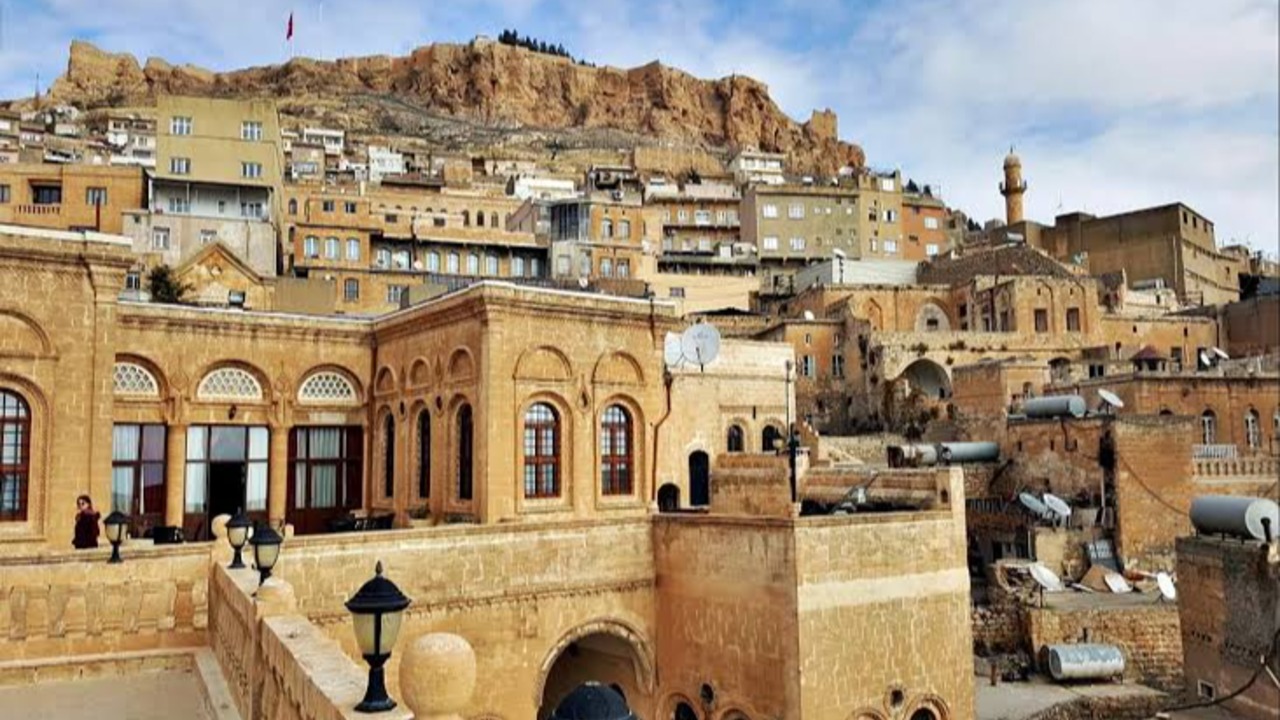
The heart of any Mardin journey is the Old City, a protected site closed to motorized traffic. Here, golden limestone houses are built atop steep cliffs in a tiered fashion, ensuring that no house blocks the view of another—creating one of the most unique silhouettes in the world. Most of your exploration here will be on foot.
As you wander, you will frequently encounter tunnel-like passages running beneath the houses. Known locally as abbaras, these architectural features provide essential shade and coolness on steep slopes while expanding the living space of the homes above. Getting lost in these narrow lanes, admiring the stone carvings on ancient doorways, and pausing on terraces to gaze across the Mesopotamian Plain are the most memorable parts of the trip. The city reveals two different faces: one bathed in the soft light of dawn and another glowing under the golden hues of a Mesopotamian sunset.
The Madrasas and Mosques of Mardin
The stone fabric of Old Mardin is adorned with madrasas (theological schools) and mosques dating back to the Artuqid and Akkoyunlu periods. These structures are the architectural and cultural heartbeat of the city.
Kasımiye Madrasa
Started during the Artuqid era and completed under the Akkoyunlus, this massive stone complex is a blend of architectural brilliance and philosophy. The water system in the courtyard symbolizes the four stages of human life: water flows from a small fountain (birth), passes through a narrow channel (youth), gathers in a wide pool (maturity/old age), and finally drains through a narrow outlet into the earth (the end of life). Hearing this narrative from a local guide makes the visit profoundly moving.
Zinciriye Madrasa
Perched on the slopes of Old Mardin, the Zinciriye (Sultan İsa) Madrasa is one of the city's most photographed spots, thanks to its ornate stone portals and a courtyard that offers a breathtaking vista of the plains below. Its elevation provides a perfect vantage point to see the city skyline and the horizon in one frame.
Mardin Grand Mosque (Ulu Camii)
A magnificent example of 12th-century Artuqid architecture, the Grand Mosque completes the skyline of Old Mardin with its imposing minaret decorated with drop motifs. Its courtyard, facing the plains, is a favorite spot for travelers to rest and take photos. The nearby Latifiye Mosque and Şehidiye Madrasa are also within easy walking distance.
If you prefer to explore these historical gems with an expert, our Mardin cultural tours offer itineraries that seamlessly connect the city's most important madrasas and mosques.
Syriac Monasteries: Deyrulzafaran and Mor Gabriel
Mardin is one of the most important global centers of the Syriac Orthodox faith. The monasteries rising from the surrounding hills remain active places of worship and are essential stops for those interested in faith-based tourism.
Deyrulzafaran (Saffron) Monastery
Built in the 5th century AD and serving as the seat of the Syriac Orthodox Patriarchate for centuries, this monastery derives its name from the saffron flowers that grow wild around it. Beneath the monastery lies an ancient Sun Temple, constructed with massive interlocking stones without mortar, bearing witness to the pre-Christian era. Its proximity to the city center makes it an easy addition to any city tour.
Mor Gabriel (Deyrulumur) Monastery
Located on an oak-covered hill near the Midyat district, Mor Gabriel was founded in 397 AD and is regarded as one of the oldest functioning Syriac Orthodox monasteries in the world. With its imposing architecture, handcrafted stone domes, and ancient burial chambers, it is a cornerstone of the region's spiritual and architectural heritage.
Mardin Castle, Museums, and Bazaars
History in the city center extends beyond religious sites. The castle, museums, and traditional bazaars are natural extensions of the route.
The Mardin Castle, often referred to as the "Eagle's Nest," sits at the highest point of the city, offering a commanding view of the entire Mesopotamian plain. To dive deeper into the local narrative, the Sakıp Sabancı Mardin City Museum and the Mardin Archaeology and Ethnography Museum provide a comprehensive look at the city's layered history and traditional way of life.
For shopping and craftsmanship, the Coppersmiths' Bazaar (Bakırcılar Çarşısı) and the Heralds' Bazaar (Tellallar Çarşısı) are must-visits. In the Coppersmiths' Bazaar, you can watch masters hand-hammer copper into art. Additionally, the Forty Churches (Kırklar Kilisesi) and the Virgin Mary Church are cultural landmarks within walking distance of the center.
Midyat and Dara Ancient City: Beyond the City Center
For travelers who want to venture beyond the city center, the surrounding districts offer enriching experiences.
Located about an hour's drive from Mardin, Midyat is a historic district famous for its exquisite stonework, feeling almost like a movie set. The three-story Midyat Sıla Mansion (State Guest House), a filming location for many popular series, is renowned for its panoramic terrace views. Midyat is also world-famous for telkari (filigree)—the art of weaving microscopic silver wires into intricate jewelry. You can observe this meticulous craft in the historic shops of the bazaar.
To the southeast, in the village of Oğuz, lies Dara Ancient City. An open-air museum of Mesopotamian civilization, Dara is famous for its sophisticated ancient water systems, rock-cut tombs, and massive ruins. For those seeking a nature break, the lush springs of Beyazsu (White Water) are a refreshing addition to any itinerary.
Mardin Cuisine: What to Eat?
Mardin's gastronomy is a unique fusion of Syriac, Arabic, and Kurdish culinary traditions, defined by centuries-old spices and slow-cooking techniques. No trip is complete without tasting these local delicacies:
- İçli Köfte (Irok and Oruk): Unlike standard kibbeh, these are prepared either boiled (oruk) or deep-fried (irok), packed with seasoned meat, coriander, and allspice.
- Sembusek: Often called "Mardin Pizza," this is a savory pastry filled with minced meat, onions, and spices, folded into a half-moon shape and baked in a stone oven.
- Kaburga Dolması (Stuffed Lamb Ribs): A feast-worthy main course where lamb ribs are stuffed with a fragrant rice pilaf containing almonds and currants, then slow-steamed for hours until the meat falls off the bone.
- Mırra: A potent, bitter traditional Arabic coffee served in tiny handleless cups. Local wines produced by the Syriac community using traditional methods are also a key part of the city's gastronomic identity.
How Many Days Should You Spend in Mardin?
Technically, the city center can be seen in one day. However, to truly absorb the atmosphere, a slower pace is recommended. You can cover the streets of Old Mardin, the madrasas, the mosques, and the castle in a single day. But if you wish to include Deyrulzafaran Monastery, the filigree shops of Midyat, and the ruins of Dara, a 2-3 day itinerary is far more rewarding. The contrast between the morning light and the evening views over the plains makes staying at least one night an absolute must.
When and How to Visit Mardin
Due to its geography, Mardin features steep slopes, stepped streets, and a harsh continental climate. A few tips will make your journey more comfortable.
Best Time to Visit: Summer (July-August) can be oppressive due to the desert heat blowing across Mesopotamia, while winters can be harsh and snowy. The ideal windows are Spring (April-June) and the "Golden Autumn" (September-November), when the weather is mild. We recommend booking your hotels and transfers in advance during these peak seasons.
Transportation: Access is easy via the Mardin Prof. Dr. Aziz Sancar Airport (MQM), with frequent flights from Istanbul, Ankara, and Izmir. While you can reach the city by road, the Old City is pedestrian-only. Therefore, bring comfortable, non-slip walking shoes. Since the Mesopotamian breeze can be chilly in the evenings, a light jacket is always a good idea.
If you'd like to combine your Mardin trip with other similar destinations, explore our cultural tours category to expand your travel plans.
Frequently Asked Questions 6
What are the top places to visit in Mardin?
The must-visit spots in the center include the streets and abbaras of Old Mardin, Kasımiye and Zinciriye Madrasas, the Mardin Grand Mosque, Deyrulzafaran Monastery, Mardin Castle, and the Sakıp Sabancı City Museum. In the surrounding area, Midyat and Dara Ancient City are highly recommended.
How many days are enough for Mardin?
Can it be done in one day? The city center can be explored in one day. However, for those wanting to visit Midyat, Deyrulzafaran, and Dara, a 2-3 day program is much more relaxed. The city's beauty changes significantly between the morning light and the evening Mesopotamian views.
How do I get to Mardin?
The most convenient way is via Mardin Prof. Dr. Aziz Sancar Airport (MQM), with flights from major cities like Istanbul, Ankara, and Izmir. The city is also accessible by road. Note that the Old City area is pedestrian-only.
What is the best season to visit Mardin?
Spring (April-June) and the "Golden Autumn" (September-November) are the best times due to the mild weather. Summers can be scorching, and winters can be very cold and snowy.
Where are the Deyrulzafaran and Mor Gabriel monasteries located?
Deyrulzafaran Monastery is located near the city center and was the historical seat of the Syriac Patriarchate. Mor Gabriel Monastery is located near the district of Midyat and is one of the oldest active Syriac Orthodox monasteries in the world.
How far is Midyat from Mardin and what is it famous for?
Midyat is approximately a 1-hour drive from Mardin center. It is famous for its stunning stonework, historic mansions, and the art of telkari (silver filigree). It has also served as a backdrop for many popular TV series and films.