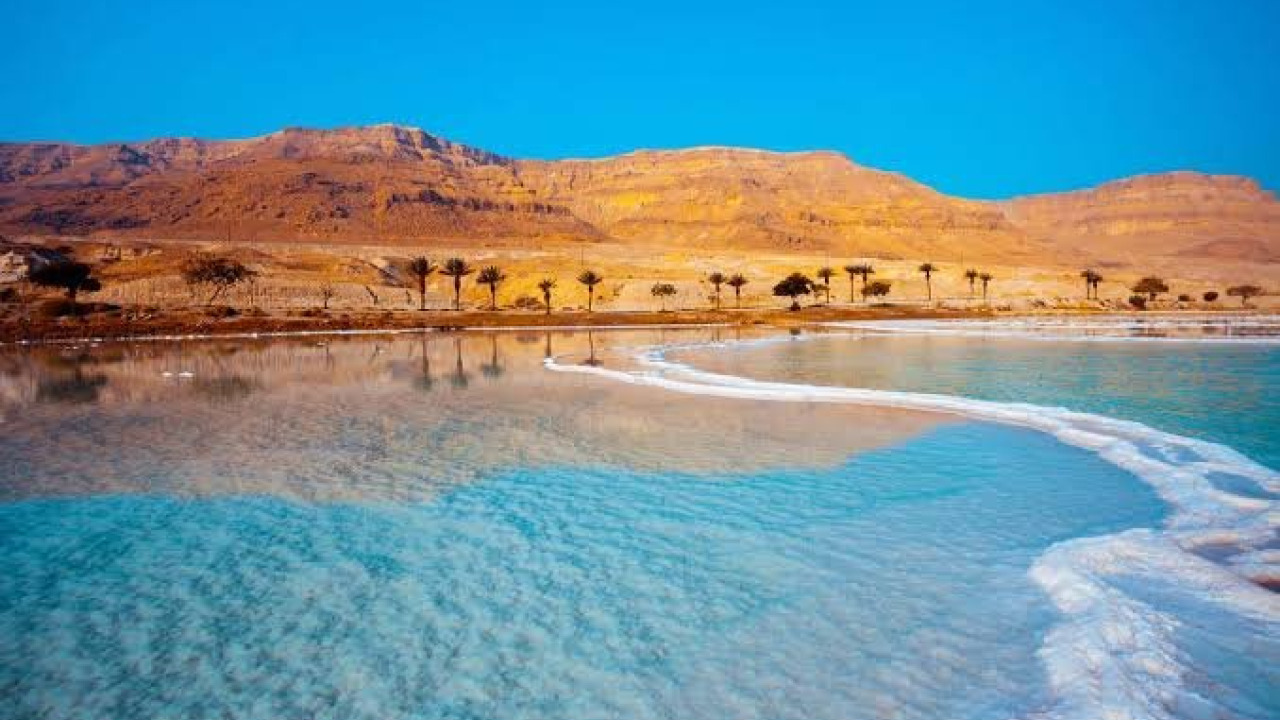

The Dead Sea, known as Lut Gölü in Turkish, is an endorheic lake that should not be confused with the Ölüdeniz Lagoon in Fethiye. One is a picturesque swimming cove on Turkey's Muğla coast, while the other is Earth's lowest point on land, nestled in western Jordan. The water's density is so incredibly high that swimming is impossible; you simply float effortlessly on its surface. This comprehensive guide focuses on the Jordanian side of the Dead Sea, addressing all your practical questions: how to fly in, airport transfers to the shore, the best months to visit, how to apply the famous Dead Sea mud, when the canyon treks are open, and how many days you'll need. As tariffs are updated periodically, we'll provide guidance on where to find current pricing and verification rather than specific figures.
Quick Facts
| Topic | Information |
|---|---|
| Location | Western Jordan; coastal resorts around Sweimeh |
| Elevation | 427 meters below sea level, according to the Jordan Tourism Board |
| Salinity | Approximately ten times saltier than seawater; rich in magnesium, sodium, potassium, bromine |
| Gateway Airport | Queen Alia International Airport (AMM) |
| From Airport | Approx. 63 km to Sweimeh coast, about 1 hour |
| From Amman | Approx. 1-hour drive |
| Best Time to Visit | March-May and September-November |
| Time in Water | In 15-20 minute intervals |
| Nearby Attractions | Wadi Mujib Biosphere Reserve, Mount Nebo |
| Recommended Duration | 1 full day for the lake; 2-3 days with surrounding attractions |
Where is the Dead Sea and Why Can't You Sink?
The Dead Sea is a hypersaline basin located at the southern end of the Jordan Valley, with its eastern shore entirely within Jordan. It has no outlet; high evaporation rates and minimal water inflow have led to a significant accumulation of dissolved minerals in the basin. The resulting high density allows the body to float effortlessly on the water's surface. The Jordan Tourism Board notes that the water's buoyancy was even recorded in ancient Greek and Roman texts.
How the Water's Chemistry Boosts Buoyancy
The Jordan Tourism Board states that the Dead Sea's water is approximately ten times saltier than seawater, rich in magnesium, sodium, potassium, and bromide chlorides. As the concentration of dissolved salts increases, the water's density rises, allowing your body to balance higher in this dense liquid. This same high salinity prevents fish and aquatic plants from surviving in the lake, hence its 'dead' moniker. Practical tip: Don't try to swim; instead, lie on your back with your arms spread wide. Avoid entering face down, as it's challenging to turn over.
Why Elevation Figures Vary Across Sources
You'll find varying figures like 402, 410, 420, and 427 meters in different sources; this isn't due to measurement error but rather the receding water level. While UNESCO's Biosphere Reserve record for Mujib lists the lake's boundary at 402 meters and the coastal road at 420 meters, the Jordan Tourism Board defines the lake as 427 meters below sea level. The figure represents a range, which is why you often see 'approximately' in descriptions.
Getting to the Dead Sea & Getting Around the Region
The transportation chain consists of three links: flying to Amman, getting from the airport to the coast, and moving around the coast and surrounding attractions.
From the Airport to the Dead Sea Shore
The gateway to the region is Queen Alia International Airport (AMM), located approximately 35 kilometers from downtown Amman. According to the Jordan Tourism Board's facility records, coastal resorts around Sweimeh are about 63 kilometers from the airport, roughly a one-hour drive. The board notes that some visitors head directly from the airport to the Dead Sea. Practical tip: If arriving at night, arrange your transfer in advance. As the elevation drops rapidly along the way, you might need to equalize ear pressure.
By Road via Amman
Driving from Amman to the Dead Sea takes approximately one hour, depending on traffic and your starting point in the city. The route is a continuous downhill descent from the city plateau to below sea level; it's safer to use engine braking rather than prolonged use of your foot brake. Timing tip: Depart early in the morning to spend the midday heat in the shade, and enter the water in the late afternoon light.
If You Don't Have Your Own Vehicle
There isn't a regular public transportation line along the coast that makes it easy to hop between resorts. The Jordan Tourism Board lists common ways to reach the Dead Sea from Amman as private transfers, taxis, hotel shuttles, and guided tours; some tours combine the Dead Sea with visits to Madaba and Mount Nebo. Travelers without a car can stay on the coast and arrange day trips to nearby attractions.
Visa, Entry Requirements, and the Jordan Pass
Visa requirements vary by nationality and are updated periodically; always confirm before your trip via the Jordan Tourism Board (visitjordan.com) and the Jordan Pass website (jordanpass.jo). The country's tourist entry system is structured around a combined ticket called the Jordan Pass. This pass covers entry to over forty attractions, including Petra, as well as the fee for a tourist entry visa.
The official Jordan Pass information page states that the visa fee exemption is contingent on staying in the country for at least two full nights (three days), that the pass must be purchased before arrival, can be used within three months of purchase, and expires one month after its first scan. The cost is determined by the package type and the number of days you plan to spend in Petra.
When to Visit: A Month-by-Month Guide
Since the basin is below sea level, it's warmer than the surrounding highlands; you might be swimming on the coast in winter while Amman experiences rain on the same day.
| Period | Coastal Weather | Best For | Note |
|---|---|---|---|
| March-May | Mild, long days | Floating & sightseeing | Canyon opens in April; resorts get busy |
| June-August | Very hot | Early morning & late afternoon dips | Avoid prolonged sun exposure at midday |
| September-November | Mild, warm water | Floating & hiking | Canyon closes after October |
| December-February | Cool, cold evenings | Quiet coast, mud rituals | Canyon trails are off-season |
Entering the Water, Mud Rituals & Safety
The Dead Sea experience typically involves two stages: floating on the dense water and applying the mineral-rich black mud. Both sequence and timing are key.
How to Apply the Mud
The Jordan Tourism Board notes that the mineral-rich black mud extracted from the shore is one of the region's classic applications. They also mention studies indicating that the combination of lake water and mud can stimulate circulation, alleviate joint discomfort, and refresh the skin. This is not a promise of medical treatment: mud and saltwater are traditionally used for supportive purposes. If you have a medical condition, consult your physician before traveling.
The application process is simple: apply a thin layer of mud, let it dry for ten to fifteen minutes, then enter the water to rinse it off, followed by a freshwater shower to remove any remaining salt. Be sure to avoid your face and eye area.
What to Know Before Entering the Water
- Do not swallow the water or get it in your eyes; the intense salt will severely irritate your throat and eyes. Keep a bottle of fresh water handy on the shore.
- Do not shave before entering, and avoid the water if you have open wounds; even small scratches will sting intensely.
- Wear water shoes; the lakebed can be covered with sharp salt crystals.
- Stay in the water for 15-20 minute intervals, resting in the shade between dips.
- Ensure you have access to a freshwater shower when you exit; salt left on the skin can cause itching.
Coastal Stops: Hotel Zone, Public Beach & Corniche
Access to the Dead Sea shore operates in three main ways. First are the resort beaches: these offer private entry points, freshwater showers, and mud application stations all in one place, with day-use access typically requiring a fee at most resorts. Second is the public beach setup; the Jordan Tourism Board mentions a public beach with swimming pools, seating areas, and direct shore access. Third is the Dead Sea Corniche, which the board notes includes cycling paths and green spaces. Practical tip: Even if you're not staying overnight, choose a spot with freshwater showers and shade. Sunrise and sunset hours offer the most pleasant light and cooler temperatures for your experience.
Wadi Mujib Biosphere Reserve & The Siq Trail
Wadi Mujib, opening onto the Dead Sea's eastern shore, is managed by Jordan's Royal Society for the Conservation of Nature (RSCN). Covering approximately 212 square kilometers, this area descends 410 meters below sea level, making it the world's lowest nature reserve, and boasts an elevation difference of about 1,300 meters towards the surrounding mountains. UNESCO designated the area as Jordan's second Biosphere Reserve in 2011; its status falls under the Man and the Biosphere program, not World Heritage. Situated on major bird migration routes, it hosts over 300 plant species and numerous migratory birds.
Trail Season & Difficulty
| Trail | Season | Guide | Character |
|---|---|---|---|
| Siq Trail | Summer season, generally early April to late October | Not required, self-guided | Water trekking, short route ending at a waterfall |
| Malaqi Trail | Summer season, weather-dependent | Mandatory | Upstream climb, natural pools, rope descent |
Opening is dependent on weather and water conditions; closures may occur due to sudden water level rises after rainfall. Entry fees and participation requirements (including age limits) are determined by the RSCN, with current tariffs published on rscn.org.jo. Timing tip: Enter in the early morning hours, and account for the possibility of getting cold in the afternoon since you'll remain wet.
What to Bring to the Canyon
- Closed-toe water shoes with good grip
- A waterproof dry bag or phone case instead of a backpack
- Clothes that can get wet, and a spare dry outfit
- Water, high-factor sunscreen, and a hat
Mount Nebo & The Memorial Church of Moses
The road climbing from the Dead Sea shore to the plateau quickly reaches Mount Nebo. This peak is revered as the spot where Moses is said to have viewed the Promised Land. The Jordan Tourism Board positions the site approximately 10 kilometers west of Madaba, about a 15-minute drive from the city; on a clear day, you can see the Dead Sea and the highlands on the opposite bank from the summit.
The core of the structure dates back to the fourth century: a three-domed building was erected at the site of today's altar, with mosaic-decorated burial chambers and two smaller churches added for funeral rites. The site is under the care of the Franciscans; according to the records of the Custody of the Holy Land, the basilica's restoration was completed in 2016, and the altar consecration ceremony took place on October 16, 2016. The mosaics, found in places in four layers and totaling approximately 700 square meters, have been preserved and are displayed within the new basilica. Practical tip: Plan your visit for the morning or late afternoon, as midday light can increase haze in the panoramic views.
Accommodation Areas & What's on the Menu
Where to Stay: Choosing Your Accommodation
Your accommodation decision should be driven by location, not just brand. If you desire private beach access and freshwater showers, the coastal strip is the most practical option, offering the advantage of morning and evening dips. For a budget-friendly plan, smaller guesthouses and campsites around the public beach are alternatives, but always inquire about shower access beforehand. A third option is to stay on the plateau, around Madaba: it's cooler than the coast and closer to Mount Nebo. Those focusing on Wadi Mujib can book chalets within the reserve directly through the RSCN.
What's on the Menu
Jordan's classic national dish is Mansaf, featuring lamb cooked in a fermented dried yogurt sauce, served over rice, and typically presented on a communal platter. At coastal resorts, mezze-style buffets are common, with hummus, falafel, and grilled vegetables being standard fare. The Jordan Valley is also renowned for its date production. Practical tip: Don't let too much time pass between meals; carry water and salty snacks to counteract salt loss. For travelers seeking a similar culinary culture in Turkey, the Gastronomy and Event Tours in Turkey category offers a great starting point with Travel Tour Shop.
Sample Three-Day Itinerary
- On Day One, head directly from the airport to the coast and settle in. Keep your first dip in the water brief, saving the mud application for the cooler late afternoon.
- That same evening, take a stroll along the corniche. Set aside clothes that can get wet for the next day's canyon adventure.
- On Day Two, head to Wadi Mujib early in the morning and hike the Siq Trail. Take a freshwater shower immediately upon your return.
- Rest in the afternoon, apply your second mud treatment, and enjoy 15-20 minute intervals in the water.
- On Day Three, ascend to the plateau and explore the memorial church and mosaics at Mount Nebo in the morning light.
- In the afternoon, try Mansaf around Madaba. Pack any wet items in a separate bag, then return to the airport in the evening.
Practical Information & Packing List
The following data is based on the general information page of the Jordan Tourism Board.
| Heading | Information |
|---|---|
| Currency | Jordanian Dinar (JD); divided into 100 qirsh or 1000 fils |
| Language | Official language is Arabic; English is widely spoken in cities |
| Electricity | 220 volts, 50 hertz; round two-pin plug system |
| Time Zone | GMT+03:00 |
| Emergency Number | 911 |
| Work Week | Official institutions operate Saturday through Thursday |
Items to pack are determined by the coastal conditions:
- An old swimsuit, water shoes, a wide-brimmed hat, sunglasses
- High-factor sunscreen and after-sun moisturizer
- Waterproof phone case; salty vapor can corrode electronics
- Water bottle, electrolyte supplements, and a light outer layer for plateau evenings
Planning Your Itinerary: A Step-by-Step Approach
Build your plan in this sequence: first, clarify your entry ticket and length of stay, then arrange airport transfers, distribute your days according to the canyon season, and divide your accommodation between the coast and the plateau. For those who enjoy the idea of canyon trekking and are looking for a similar theme in Turkey, the Nature and Adventure Tours in Turkey category from Travel Tour Shop offers a comparable starting point. Travelers planning a desert and ancient history combination in a similar climate can benefit from the regional sequencing in our Egypt Travel Guide article, and for a day-by-day multi-country itinerary planning method, consult our Italy Travel Guide article.
Frequently Asked Questions 6
Is the Dead Sea (Lut Gölü) the same place as Ölüdeniz in Fethiye?
No. Ölüdeniz in Fethiye is a lagoon and swimming cove on the Muğla coast. The Dead Sea (Lut Gölü), however, is a salty, endorheic lake located in western Jordan, hundreds of meters below sea level. They share no commonalities beyond a similar name.
Do I need a visa to visit the Dead Sea?
Visa requirements vary by nationality and are updated periodically. Jordan's tourist entry system operates via a combined ticket called the Jordan Pass; this pass covers the tourist entry visa fee, provided you stay in the country for at least two full nights and purchase it before arrival. Confirm current conditions via jordanpass.jo and visitjordan.com.
How do I get to the Dead Sea from Amman, and how long does it take?
The drive takes approximately one hour, depending on traffic and your starting point in the city. From Queen Alia International Airport to the coastal resorts around Sweimeh, the distance is about 63 kilometers, also taking roughly an hour. Common options include private transfers, taxis, hotel shuttles, and guided tours.
How many days should I allocate for the Dead Sea?
One full day is sufficient for just floating in the lake and experiencing the mud application. If you add a canyon trek in Wadi Mujib and a visit to Mount Nebo, two to three days would make for a more relaxed itinerary. The Jordan Pass visa exemption also requires a stay of at least two full nights.
What is the best time to visit the Dead Sea?
The periods of March-May and September-November offer balanced weather for both floating and sightseeing. During the summer months, the basin becomes very hot, making prolonged outdoor exposure tiring. Canyon trails are generally open from early April to late October, so if you plan a wadi hike, choose your season accordingly.
Can the Dead Sea be visited with children?
Yes, it can, but the water's density requires extra caution for children. Getting water in the eyes or mouth causes severe stinging, so children should not be allowed to enter face down, and their time in the water should be kept short. For Wadi Mujib's wet trails, participation requirements (including age limits) are set by the RSCN; for families with children, coastal walks and the corniche are more suitable.