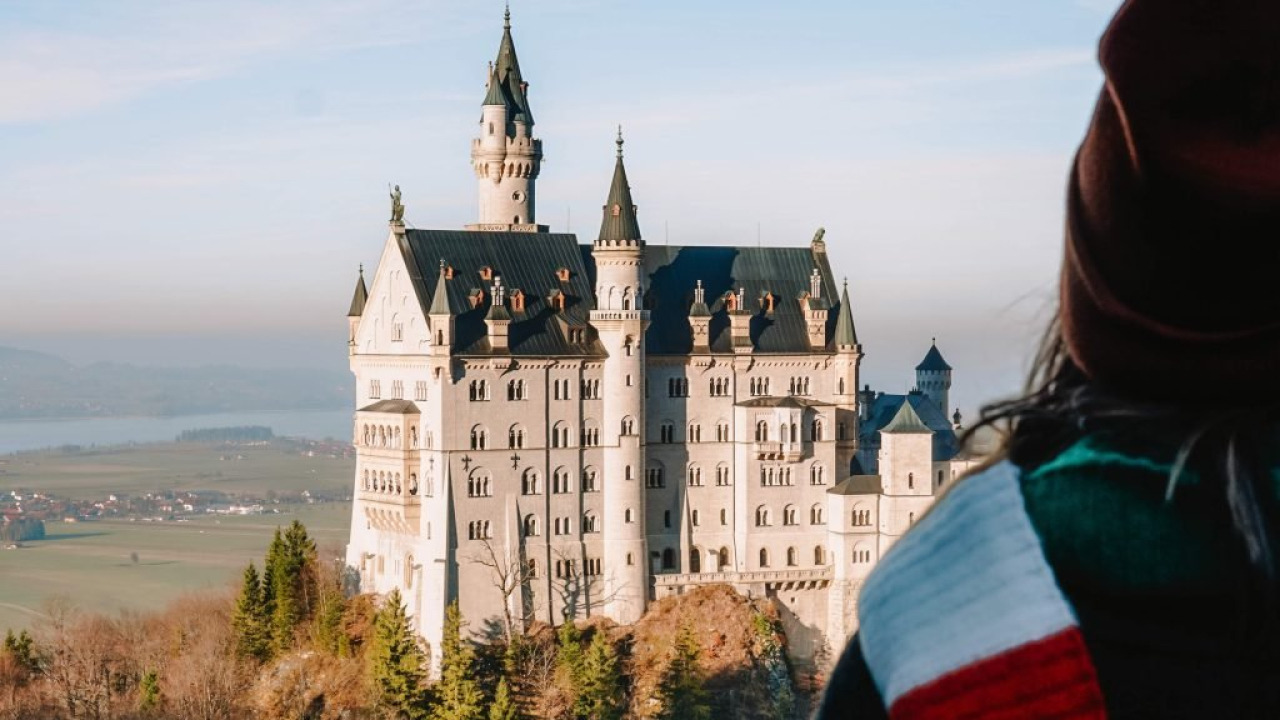

Perched majestically on a rocky ridge above the village of Hohenschwangau in Bavaria, southern Germany, Neuschwanstein Castle is a 19th-century marvel. However, visiting this iconic fairytale palace is often more rigid than many travelers expect. The castle's interior can only be explored via a guided tour, and your ticket will specify a precise entry time. Tours begin promptly, and latecomers will not be admitted. Crucially, tickets are not sold at the castle gate but at the Ticket Center Hohenschwangau in the village below, or through its official online sales channel. When planning your visit, the golden rule is this: first secure your timed ticket, then arrange your transport to arrive in the village early, and finally, build your surrounding sightseeing around this core schedule.
Quick Facts
| Topic | Information |
|---|---|
| Location | Bavaria, Schwangau municipality, Hohenschwangau village |
| Status | Part of the King Ludwig II palaces group, inscribed on UNESCO list on July 12, 2025 |
| Construction | Foundation stone laid September 5, 1869; exterior completed 1892 |
| Visit Type | Guided tour only, specific entry time on ticket |
| Tour Duration | Approximately 30 minutes; German and English guides, audio guides in 16 additional languages |
| Opening Hours | March 28-October 15: 9:00 AM-6:00 PM · October 16-March 27: 10:00 AM-4:00 PM |
| Closed Days | January 1, and December 24, 25, and 31 |
| Nearest Train Station | Füssen; regional bus from there |
| Visitor Numbers | Approximately 1.4 million people annually; about 6,000 visitors on a summer day |
| Recommended Time | 1 full day |
What to See Inside the Castle: A Room-by-Room Guided Tour
The castle was commissioned by King Ludwig II of Bavaria. Its foundation stone was laid on September 5, 1869, containing the building plans, portraits of the king, and coins of the era. The initial designs were sketched by stage designer Christian Jank, evolving from an envisioned "robber knight's castle" with late Gothic elements into a monumental Romanesque interpretation. As such, the structure isn't an authentic medieval fortress but an example of historicism, blending motifs from Wartburg Castle with medieval book illustrations of castles. The king never saw the completed castle, knowing it only as a construction site. It opened to visitors in 1886, just seven weeks after his death.
The Throne Hall
The Throne Hall is a magnificent space in the palace's west wing, spanning both the third and fourth floors, reminiscent of a church interior. Its design draws inspiration from Byzantine churches, particularly the Allerheiligen-Hofkirche (All Saints' Court Church) in Munich. A colossal chandelier, approximately four meters high, hangs in the center. Like the rest of the castle, this hall was never fully completed with all its planned details. Practical tip: as soon as you enter, look at the floor rather than the ceiling; the mosaic pattern reveals the space's intricate design.
The Singers' Hall
The Singers' Hall was one of the king's most cherished spaces, occupying the entire fourth floor of the palace's east wing. The hall's concept merges two historical rooms from Wartburg Castle: the Festival Hall and the Singers' Hall. Its wall paintings depict scenes from medieval legends. During the king's lifetime, the space was never used for concerts, only fulfilling its intended function much later.
The King's Bedroom and Artificial Grotto
The main theme of the bedroom is the legend of Tristan and Isolde, with the two heroes appearing in wall paintings, door carvings, and ceramic figures on the tiled stove. Embroidered lions, swans, crowns, and the Bavarian coat of arms adorn the blue silk upholstery of the Neo-Gothic ceremonial bed and seating groups. An intriguing detail in the room is the washbasin: its faucet is shaped like a silver-plated swan, designed by Eduard Wollenweber.
Between the salon and the study, there's a small artificial stalactite grotto. Created by stage designer August Dirigl, the space originally featured colored lighting and a waterfall. This stop most clearly demonstrates why the castle is considered a staged narrative rather than a true fortress.
19th-Century Technology: Central Heating, Running Water, Telephone
Behind its medieval facade lay advanced technology for its time. Rooms were heated by a warm-air central heating system, running water was available on every floor, and toilets featured automatic flushing. The king summoned servants with an electric bell system, telephone lines were installed on the third and fourth floors, and meals were transported upstairs by an elevator. Contrary to popular belief, this elevator was for service, not passengers; texts describing the castle as a "palace with an electric elevator" often overlook this distinction.
Points of Interest Around the Castle
Marienbrücke (Mary's Bridge)
The iconic postcard view of the castle is captured from this bridge. The bridge's history dates back to the era of King Ludwig II's father, Maximilian. In 1866, the original wooden structure was replaced with a more robust iron bridge and named after the king's mother, Queen Marie of Bavaria. The Pöllat waterfall cascades approximately 30 meters below it. No castle ticket is required to access the bridge. During winter, access is temporarily closed for safety reasons due to ice and snow.
Hohenschwangau Castle and Alpsee Lake
The yellow structure on the opposite hill is where the story of Neuschwanstein began. Crown Prince Maximilian commissioned the construction of a romantic castle between 1833-1837 on the ruins of a medieval fortress, with architect Domenico Quaglio overseeing the work. King Ludwig II spent his childhood weeks here, and his fascination with legends was shaped within these walls. Therefore, visiting this castle first provides a more coherent narrative.
The Alpsee lake lies in the valley between the two castles. A leisurely walk around the lake takes approximately 1.5 hours, and the shuttle bus valley stop is also located at the lake's parking lot. For those who enjoy exploring medieval castles and palace architecture, you can start your search for similar themes in Turkey by checking out the cultural tours in Turkey category.
Tegelberg Cable Car
For those seeking a bird's-eye view of the region, the Tegelberg cable car is a worthwhile additional stop. During the summer season, operating hours are from 9:00 AM to 5:00 PM, with the last ascent at 4:45 PM. At the summit, you'll find the "Königsrunde" panoramic trail, paragliding launch sites, a via ferrata route, and mountain huts.
Pöllatschlucht (Pöllat Gorge): Hiking Trail Closed
Many older guidebooks recommend the Pöllat Gorge hike, which runs alongside the waterfalls. This information is outdated: according to the official announcement from the Hohenschwangau visitor administration, the hiking trail is currently closed, and the Tegelberg cable car operator also confirms this closure.
How the Ticketing System Works
Tickets can be purchased through the official online sales channel, Ticket Center Hohenschwangau, or at the ticket office in the village. The ticket price depends on the visit type and combination chosen; please refer to the official ticket sales page for current amounts.
| Topic | Rule | Practical Implication |
|---|---|---|
| Entry Method | Guided tour, fixed entry time | No free wandering |
| Online Ticket | Purchased in advance from official channel | Reliable method during peak season |
| On-site Ticket | Ticket Center tickets only valid for same day | Quota can sell out in the morning |
| Arrival Time | Arrive in village 1.5-2 hours before entry time | Allowance for walk & security |
| Late Arrival | Tour starts promptly, latecomers not admitted | Allow buffer time for transport |
| Ticket Center | March 28-October 15: 8:00 AM-4:00 PM · October 16-March 27: 8:00 AM-3:30 PM | Closes earlier than the castle |
The steps to secure your ticket are straightforward:
- Check the official online sales channel for available entry times on your desired day; summer months, weekends, and public holidays are the first to fill up.
- Choose an entry time that allows at least a two-hour buffer for your arrival in Füssen.
- Download your reservation confirmation to your phone and also print it out.
- Upon arrival in the village, first visit the Ticket Center, then proceed to the ascent.
How to Get to the Castle: From Airport to Village, Village to Gate
The castle is located in a rural valley, not a city center, so transportation involves two layers. First, you'll need to reach the region from an airport like Munich or Memmingen, and then travel from the village to the castle gate. Visa requirements vary by nationality and are updated periodically; please confirm with Germany's official consular source before your trip.
By Train and Bus via Munich
The nearest train station to the castle is Füssen. From Munich Main Station (München Hauptbahnhof), the Bayerische Regiobahn's RB 68 line offers direct service to Füssen. The route passes through Kaufering, Buchloe, Kaufbeuren, and Marktoberdorf, with the journey taking approximately two hours. From Füssen station, you'll transfer to a regional bus to the "Hohenschwangau Neuschwanstein Castles, Schwangau" stop. If you've booked an early morning ticket, staying overnight in Füssen can make your schedule more relaxed.
By Car and Parking
The main route involves following the A7 autobahn to its end, then transitioning to the B17 highway from Füssen, and turning right towards Hohenschwangau after the Schwangau exit. Alternatively, you can also arrive via the A7's Kempten exit onto the B12. Only paid private parking lots are available in Hohenschwangau village.
Ascent from Village to Castle: Walking, Shuttle Bus, Horse-Drawn Carriage
There's a significant elevation difference between the ticket center and the castle gate, a section many visitors underestimate.
| Option | Departure Point | Duration & Distance | Note |
|---|---|---|---|
| Walking | Ticket Center | Approx. 1.5 km, 30-40 minutes | Steep incline, sturdy footwear needed |
| Shuttle Bus | Alpsee parking lot (P4) | To Jugend viewpoint | Does not operate on snowy/icy roads |
| Walk after bus | Jugend stop | Approx. 15 minutes | Steep descent to castle entrance |
| Horse-Drawn Carriage | Opposite Hotel Müller, Alpseestraße | No fixed schedule, departs on demand | 10-15 minutes uphill from drop-off point |
The shuttle bus drops you off at the Jugend viewpoint above the castle, near Marienbrücke. This route works well for those who want to see the bridge first and then descend to the castle.
When to Visit: Choosing Your Season
The castle is open year-round, but access options around it change with the seasons. In winter, the condition of Marienbrücke and the shuttle bus is the determining factor, more so than the castle itself.
| Period | Access Status | Crowd Level | Best For |
|---|---|---|---|
| April-May | Roads clear, valley greens | Moderate | Hikers, those avoiding queues |
| June-August | All options operational | High | Those wanting long daylight, early ticket bookers |
| September-October | Roads clear, foliage changes color | Moderate | Photographers & hikers |
| November-March | Bridge closes due to ice, bus doesn't run in snow | Low | Those prioritizing snowy landscapes |
During the summer season, entry times fill up quickly, and the Ticket Center closes earlier than the castle. For winter plans, anticipate that the walking path may be icy.
Accommodation & Dining: Hohenschwangau, Schwangau, Füssen
In Hohenschwangau village, another thing as limited as castle tickets is the number of beds. Considering accommodation by area will lead to a more realistic plan.
- Hohenschwangau: At the foot of the castles, within walking distance; capacity is limited, making it the most practical location for those wanting to avoid morning queues.
- Schwangau: A sprawling area around Alpsee and Forggensee, primarily guesthouses; easier maneuvering for those arriving by car.
- Füssen: The town with the train station, a medieval-textured center, and a concentration of dinner options; the hub for those arriving by public transport.
Culinarily, the region follows Bavarian tradition. Weisswurst (white sausage) is typically served as a breakfast dish before noon, accompanied by mustard and Brezel (pretzel); Apfelstrudel (apple strudel) is a common dessert. Cafeterias at the castle entrance offer snacks, while Füssen or Schwangau provide a wider selection for sit-down meals. For those considering extending their European route south, our Italy travel guide article offers a helpful itinerary.
A Day Plan Based on Your Entry Time
The following itinerary is structured for an entry time before noon. If your time is in the afternoon, you can shift the points to apply the same logic.
- Arrive in the village 1.5-2 hours before your entry time and get directions at the Ticket Center.
- Choose your ascent: a 30-40 minute walk, the shuttle bus to the Jugend stop followed by an approximately 15-minute descent, or a horse-drawn carriage to its drop-off point.
- If you chose the bus, first head to Marienbrücke for photos, then descend to the castle entrance. If you walked up, save the bridge for after your tour.
- Join your guided tour at your scheduled entry time; backpacks and large items are not permitted inside.
- After the tour, proceed to Hohenschwangau Castle; seeing both castles on the same day completes the story.
- In the afternoon, complete the approximately 1.5-hour walking path around Alpsee.
- If you still have energy, take the Tegelberg cable car to the summit; the last descent is at 5:00 PM.
- End your evening in Füssen town center.
Pre-Visit Checklist
- Backpacks, luggage, and baby strollers are not allowed inside the castle; security checks may be conducted, and weapons, knives, scissors, pepper spray, and glass bottles are prohibited.
- Photography and video recording are not permitted inside the interiors for personal use; taking photos of the exterior for personal use is allowed, but flying drones in the area is forbidden.
- Animals are not allowed inside the castle, and staff cannot provide care for them.
- The path is stony and steep; sturdy shoes, layered clothing, and a raincoat are useful against sudden changes in the Alpine weather.
- If you are visiting both castles on the same day, do not choose entry times that are too close together.
Understanding the Castle's True Story
Neuschwanstein was not built for defense but to bring a narrative to life, functioning like a stage design that transformed the romantic imagination of 19th-century Europe into stone. On July 12, 2025, the UNESCO World Heritage Committee, during its 47th session in Paris, inscribed the castle, along with Linderhof, Schachen, and Herrenchiemsee, under the title "Palaces of King Ludwig II of Bavaria." The castle is often associated with Walt Disney's fairytale castle image in popular culture; while this connection is a widespread narrative, it is not mentioned in the official texts of the Bavarian palace administration.
For those curious about the German traveler's perspective, our article on the German tourist profile compares travel habits. If you're looking for a similar historical ambiance in Turkey, you can start with our historical city tours in Turkey category.
Frequently Asked Questions 6
Where can I buy tickets to visit Neuschwanstein Castle?
Tickets can be purchased through the official online sales channel, Ticket Center Hohenschwangau, or at the ticket office in the village. Tickets bought at the counter are only valid for the same day, and the daily quota can sell out in the morning during peak seasons; therefore, it is recommended to purchase tickets online in advance.
How long does the castle visit take, and can I explore freely?
The interior of the castle cannot be explored freely; visits are only conducted via guided tours, which last approximately 30 minutes. Guided tours are provided by institutional staff in German and English, with audio guides available in 16 additional languages. Tours begin promptly, and latecomers will not be admitted.
How much time before my entry slot should I arrive at the castle?
The official recommendation is to arrive in Hohenschwangau village 1.5-2 hours before your scheduled entry time. This allowance is for the approximately 1.5-kilometer, distinctly uphill walk between the ticket center and the castle gate, which takes 30-40 minutes, plus additional time for security checks.
Is Marienbrücke open in winter?
During winter months, access to the bridge is temporarily closed for safety reasons due to ice and snow. During the same period, the shuttle bus to the castle also does not operate on snowy and icy roads. Visitors planning a winter trip should consider exploring the Alpsee lakeside as a more realistic alternative.
Is the Pöllat Gorge hiking trail accessible?
No. According to the official announcement from the Hohenschwangau visitor administration, the hiking trail through the Pöllat Gorge is currently closed; the Tegelberg cable car operator also confirms this closure. Since older guidebooks may still recommend this trail, it's important to verify its status with official sources.
Can I take photos inside the castle?
Photography and video recording are not permitted inside the castle interiors, even for personal use. Taking photos of the exterior structure for personal use does not require permission. Flying drones in the area is prohibited for safety and crowd management reasons.