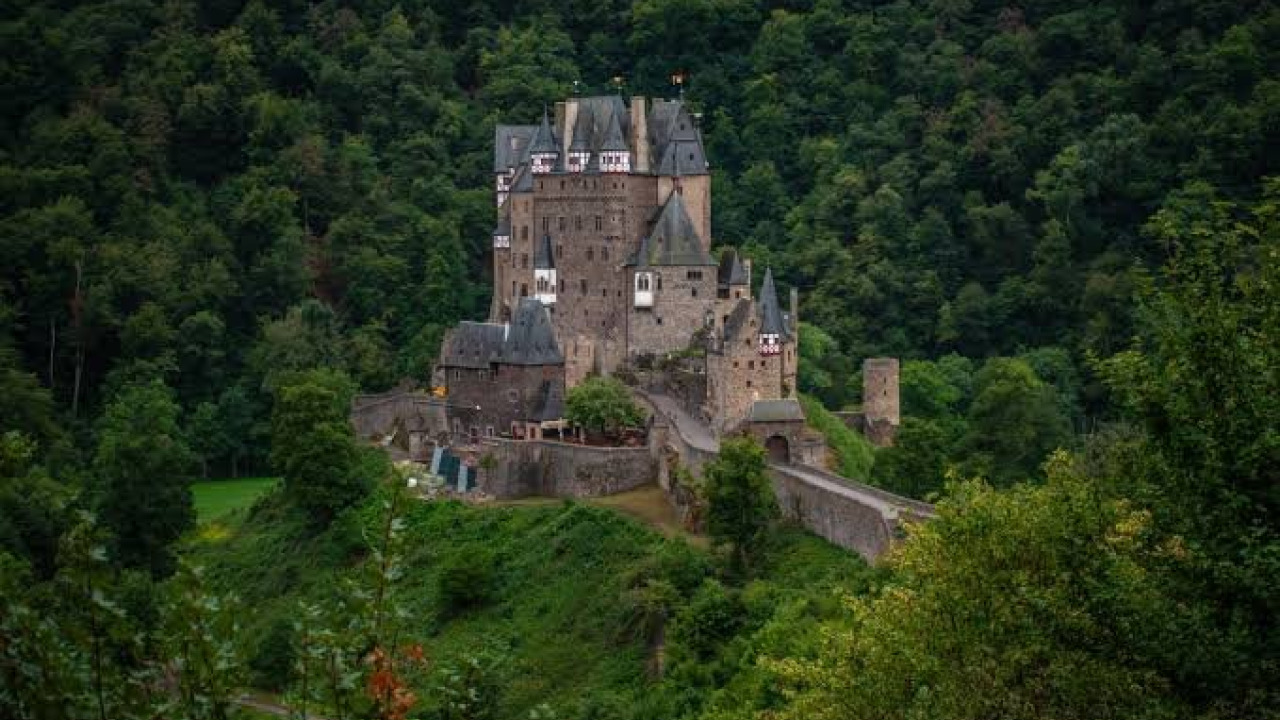

Perched on a rock formation, embraced on three sides by the Elzbach stream in Germany's Rhineland-Palatinate state, Burg Eltz tells a story unlike most other European castle visits. Its true identity lies not just in its architecture, but in its ownership: this magnificent castle has remained in the hands of the same family since 1157, when its name first appeared in historical records. Today, the 34th generation proudly carries this legacy. Burg Eltz was never destroyed in wars, never rebuilt from ruins, nor emptied to become a sterile museum. What visitors see is not a restored fiction, but a living space continuously inhabited for centuries. The castle is open for the 2026 season; however, the official website notes ongoing renovations at the Kempenich house in the inner courtyard and the carriage house in the outer bailey, with some sections currently scaffolded.
Quick Facts
| Topic | Information |
|---|---|
| Location | Burg Eltz 1, 56294 Wierschem, Rhineland-Palatinate |
| First documented record | 1157, Rudolf von Eltz mentioned in a deed of gift by Emperor Frederick I Barbarossa |
| Ownership | Same family; current ownership is the 34th generation |
| Structure type | Ganerbenburg (shared inheritance castle), eight towers, up to 35 meters high |
| Visiting season | March 29 - November 1, 2026 |
| Daily hours | 09:30 - 17:00; Treasury can be explored independently after the guided tour |
| Guided tour | Approximately 35 - 40 minutes, conducted in German and English |
| Recommended visit duration | Allow approximately 3 hours from your arrival at the parking lot |
| Interior photography | Prohibited in guided tour areas; Treasury and exterior facades allowed for personal use |
| Drone usage | Prohibited in the surrounding nature reserve |
| 2026 note | Kempenich house and outer bailey carriage house under renovation, scaffolding present |
| Official source | burg-eltz.de |
What Makes Burg Eltz Different from Other German Castles?
Germany boasts hundreds of castles open to visitors, but most were either romantically rebuilt in the 19th century or transferred to state ownership. Burg Eltz followed neither path.
In the Same Family Since 1157
The castle's name first appeared in 1157, documented with Rudolf von Eltz as a witness in a deed of gift issued by Emperor Frederick I Barbarossa. Since then, ownership has remained within the family. The current proprietor represents the 34th generation, and the castle's upkeep is still managed by the family. This remarkable continuity explains why the interior furnishings form such a cohesive whole: the collection wasn't amassed from external sources but accumulated organically over centuries.
Ganerbenburg: Separate Family Homes on the Same Rock
Burg Eltz is a Ganerbenburg, or a "shared inheritance castle." Before 1268, three brothers equally divided the property, and each branch of the family added its own residential section onto the same rock formation. This is why the resulting silhouette appears so complex and organic. The Platteltz section was built between 1150 and 1260, the Kempenich houses over a long period, and Groß Rodendorf's residential tower rose in 1520. Construction spanned a total of five hundred years, and at one point, over a hundred people lived together in the buildings surrounding the courtyard. Eight towers, reaching heights of up to 35 meters, encircle the narrow courtyard; this compactness was also part of the castle's defensive strategy.
The Undestroyed Castle and the 1920 Chimney Fire
The castle was never destroyed in any conflict. During the Eltz Feud, a siege waged by Archbishop Balduin of Trier between 1331 and 1336, attacks were launched from a siege castle called Trutzeltz using catapults and heavy stone projectiles. The knights surrendered in 1333, and a peace treaty was signed in 1336. The structure emerged from this ordeal intact. The most significant damage in the castle's history, however, didn't come from war, but from a chimney fire in 1920: the blaze destroyed parts of the Kempenich houses and the roofs of Rodendorf and Platteltz, with repairs lasting until 1933. Thus, the popular narrative that the castle "suffered no damage at all" is, in this respect, incomplete.
Visiting Season and Monthly Variations
Burg Eltz is not a year-round museum. The calendar is the primary factor when planning your visit; winter visitors will find the gates closed.
Understanding the Castle's Calendar
The 2026 season runs from March 29 to November 1, and during this period, the castle is open daily from 09:30 to 17:00. Guided tours depart at regular intervals from the upper courtyard, last 35-40 minutes, and are conducted in both German and English. The Treasury is separate from this tour: after your guided tour concludes, you are free to explore it at your own pace until closing time. Since the castle is closed outside of the season, during winter months, it's only possible to view it from the outside via the forest trails.
What Changes Month-to-Month
| Period | Castle | Transport & Trails | Highlights |
|---|---|---|---|
| December - March 28 | Closed | High risk of flooding and mud on valley trails | Exterior views only |
| April - May | Open, moderate crowds | Regional bus line 365 begins service on April 1 | Forest turns green, soft morning light |
| June - August | Open, peak season | Parking and shuttle service busy, weekdays are more relaxed | Long daylight hours, possibility of late tours |
| September - October | Open, crowds decrease | Trails are dry, ideal for hiking | Autumn colors, excellent for photography |
| November 1 | Last day of season | Bus services also conclude on this date | Season closure |
What to See Inside the Castle
While the interior tour may seem brief, the sections you visit represent different centuries of history. Knowing upfront that photography is not permitted in the guided tour areas will help ensure a smooth flow for everyone.
The Knight's Hall (Rittersaal)
Dating back to 1520, this hall served as the castle's communal living space. Its heavy oak ceiling, the heraldic frieze adorning the walls, and the original floor tiles all preserve the materials of the era. The jester masks on the walls and the "rose of silence" motif indicate that the hall was not merely for representation but also for negotiation: it was understood that discussions held under the sign of the rose were not to be divulged outside.
The Armory (Waffenkammer)
This is the most technically rich section of the castle's collection. It displays swords, halberds, shields, bows, arrows, and firearms dating from the 14th to the 17th century. The fact that these pieces belonged to the family gives the impression not of a museum display, but of cherished artifacts resting in their original home.
The Treasury (Schatzkammer)
The Treasury houses over five hundred artifacts spanning nine centuries. Here, you'll find exquisite gold and silver craftsmanship from Augsburg and Nuremberg workshops, precious glass and porcelain, jewels, ceremonial weapons, and intriguing objects from various eras. The labels are in German; however, asking for a free brochure with English explanations at the entrance will make it easier to follow the narrative. After your guided tour concludes, you are welcome to return to this section and browse at your leisure until closing time.
The Flag Hall and Courtyard
Dating to approximately 1480, the Flag Hall stands out with its late Gothic Rhenish net vaulting and likely served as a chapel before being incorporated into the Groß Rodendorf section around 1510. The courtyard, on the other hand, is where the castle's architectural logic truly comes to life at a glance: facades added by different family branches over various centuries stand side-by-side here.
The Surrounding Forest and Hiking Trails
The Eltz forest holds nature reserve status; drone usage is strictly prohibited throughout this entire area surrounding the castle. Hiking is truly the other half of the experience here.
The Eltzer Burgpanorama Loop Trail
Among the region's marked "Traumpfad" (Dream Path) trails, the Eltzer Burgpanorama is a 12.6-kilometer loop route that takes approximately 4 hours to complete. It features a total ascent of 397 meters and is rated as moderate difficulty. The starting point is the village center in Wierschem; the Burg Eltz parking lot and Ringelsteiner Mühle also connect to the route. Between December and March, the valley section may become impassable due to flood risk.
Approach Along the Elzbach Valley
The classic approach to the castle begins from Ringelsteiner Mühle on the Moselkern side: the trail extending 2.5 kilometers along the Elzbach stream from the mill to the castle winds alongside the river, between tree roots and rocks. Connections from the Müdenerberg and Österhof directions are 1.7 kilometers, while the route from Karden is 6 kilometers. The dramatic reveal of the towers around the final bend is unique to this particular path.
A Day at Burg Eltz: Morning in the Castle, Afternoon on the Trails
There's an effective way to fit both the castle and the surrounding forest into a single day. The following itinerary is designed for a typical day during the open season.
- Arrive at the parking lot early in the morning and choose either the first shuttle to the castle or the walking path; the first tours begin at 09:30 from the upper courtyard.
- Join a guided tour; the 35-40 minute narrative covers the Knight's Hall and residential sections.
- After the tour, proceed to the Armory and the Treasury, allowing at least half an hour for the Treasury.
- Return to the courtyard to examine the facades up close and take a break at one of the food and drink spots around the castle.
- In the afternoon, descend into the Elzbach valley; walk the 2.5-kilometer trail towards Ringelsteiner Mühle.
- Don't miss the view looking back at the castle from the valley floor; this is where you'll capture that iconic shot of the towers nestled within the forest.
- Plan your return based on bus or shuttle times, noting the last departure in advance.
How to Get to Burg Eltz Castle
As Burg Eltz is nestled away from major roads, transportation is often the most frequently asked question. You cannot drive directly to the castle gates; every option involves either a walk or a shuttle service for the final stretch.
Arriving in the Region from Turkey
For travelers coming from Turkey, the most practical entry points to the region are Frankfurt and Cologne-Bonn airports. Both locations offer railway connections to Koblenz, which serves as the starting point for local trains on the Mosel line. Check routes and transfer times via bahn.de; regional line frequencies can vary throughout the day. Germany is part of the Schengen Area; visa requirements vary by nationality, so confirm official information from the German Federal Foreign Office before your trip.
By Train and Regional Bus
For those arriving by public transport, the most direct connection is Hatzenport train station. From here, regional bus line 365 operates twice an hour daily between April 1 and November 1, reaching the castle parking lot stop via Münstermaifeld and Wierschem in approximately 30 minutes. This line does not operate outside of the season. Cyclists can use the Mosel cycle path up to Ringelsteiner Mühle and complete the remaining section on foot.
From the Parking Lot to the Castle Gates
From the parking lot, there are two ways to reach the castle: a paid shuttle service that departs every ten minutes, or a walk. The trail from the lower parking lot is 1.3 kilometers, while the paved road used by the shuttle is 800 meters; the paved road is suitable for strollers and wheelchairs. Calculate your visit duration from the moment you arrive at the parking lot; the castle management recommends allocating approximately 3 hours.
| Starting Point | Distance or Duration | How to Get There |
|---|---|---|
| Hatzenport train station | Approx. 30 minutes | Bus line 365, April 1 - Nov 1, twice hourly |
| Ringelsteiner Mühle (Moselkern) | 2.5 km, approx. 45 minutes | Elzbach valley trail |
| Müdenerberg / Österhof | 1.7 km | Forest connecting path |
| Karden | 6 km | Long hillside and forest route |
| Burg Eltz parking lot | 1.3 km trail or 800 m paved road | Shuttle service every ten minutes or walk |
| Wierschem village center | 12.6 km loop | Eltzer Burgpanorama trail, approx. 4 hours |
Dining and Accommodation Options
As the castle is situated deep within the forest, there isn't an extensive network of services nearby; it's essential to plan accordingly.
Dining Around the Castle
Access to dining options within the castle grounds requires an entrance ticket, and choices are limited. During peak season, queues can form around lunchtime; those finishing morning tours should aim to secure a table early. Visitors planning long hikes should bring water and snacks, as there are no replenishment points along the trails.
Which Town to Choose as Your Base
The castle itself does not offer accommodation; visitors stay in the surrounding towns. Moselkern and Müden are suitable for hiking-focused visitors due to their proximity to the valley trail. Treis-Karden and Cochem are preferred by first-time visitors for their train connections and wider range of evening options. Münstermaifeld and Wierschem are the closest points to the castle for those arriving by car and wishing to be at the castle early in the morning. Koblenz, on the other hand, makes for a larger, well-connected base for those planning day trips.
Essential Tips Before Your Visit
- Interior photography is prohibited during the guided tour; however, the Treasury and exterior facades are permitted for personal use.
- Drone usage is strictly forbidden throughout the entire nature reserve surrounding the castle.
- Dogs are allowed in the castle grounds but cannot join guided tours.
- Your shoe choice should be guided by the parking lot path and forest trails; city shoes will struggle on the stony, root-laden terrain.
- Treasury labels are in German; ask for a free brochure with English explanations at the entrance.
- Ticket prices vary by visitor type and group size; there are separate categories for students, groups, families, and school classes. Check burg-eltz.de for current rates.
- The shuttle service from the parking lot to the castle is paid, and payment is cash only.
For those planning to combine castle visits and historic town stops in Europe, we've outlined the logic of regional sequencing in our Balkans Tour Guide. To understand German visitor travel habits, you can consult our article on German Tourist Profile. For those seeking similar historical richness in Turkey, our Cultural Tours in Turkey category, focusing on ancient cities, offers a great starting point. If forest and valley hikes are more your style, explore our Nature and Adventure Tours in Turkey category.
Frequently Asked Questions 6
When is Burg Eltz open for visitors?
The 2026 season runs from March 29 to November 1. During this period, the castle is open daily from 09:30 to 17:00; the Treasury can be explored independently after the guided tour until closing time. After November 1, the castle remains closed throughout the winter, with the new season commencing on March 29.
How do I get to Burg Eltz by public transport?
The train connection is established from Hatzenport station. From there, regional bus line 365 operates twice an hour daily between April 1 and November 1, reaching the castle parking lot stop in approximately 30 minutes. Those wishing to walk can use the 2.5-kilometer Elzbach valley trail, which starts from Ringelsteiner Mühle on the Moselkern side.
How long does a visit to Burg Eltz take?
Castle management recommends allocating approximately 3 hours from the moment you arrive at the parking lot. This duration includes the transfer between the parking lot and the castle, the 35-40 minute guided tour, and exploring the Treasury and courtyard. Those planning a hike on the valley trails should add extra time to this estimate.
Can I take photos inside the castle?
Partially. Photography and video recording are not permitted in the interior areas covered by the guided tour. However, the Treasury, courtyard, and exterior facades are open for personal photography; drone usage is prohibited throughout the nature reserve surrounding the castle.
Is Burg Eltz a UNESCO World Heritage site?
No. Burg Eltz is not listed as a UNESCO World Heritage site. The registered area in the region is the Upper Middle Rhine Valley, located between Koblenz and Rüdesheim. The castle's distinguishing feature is not international recognition, but its continuous family ownership since 1157 and its remarkably preserved structure.
Is it possible to visit with a stroller or wheelchair?
There is an 800-meter paved road and a shuttle service departing every ten minutes between the parking lot and the castle. However, the castle's interiors adhere to a medieval layout, and due to stairs and narrow passages, the entire interior tour is not fully accessible. It is best to inquire with castle management about your specific needs before your visit.