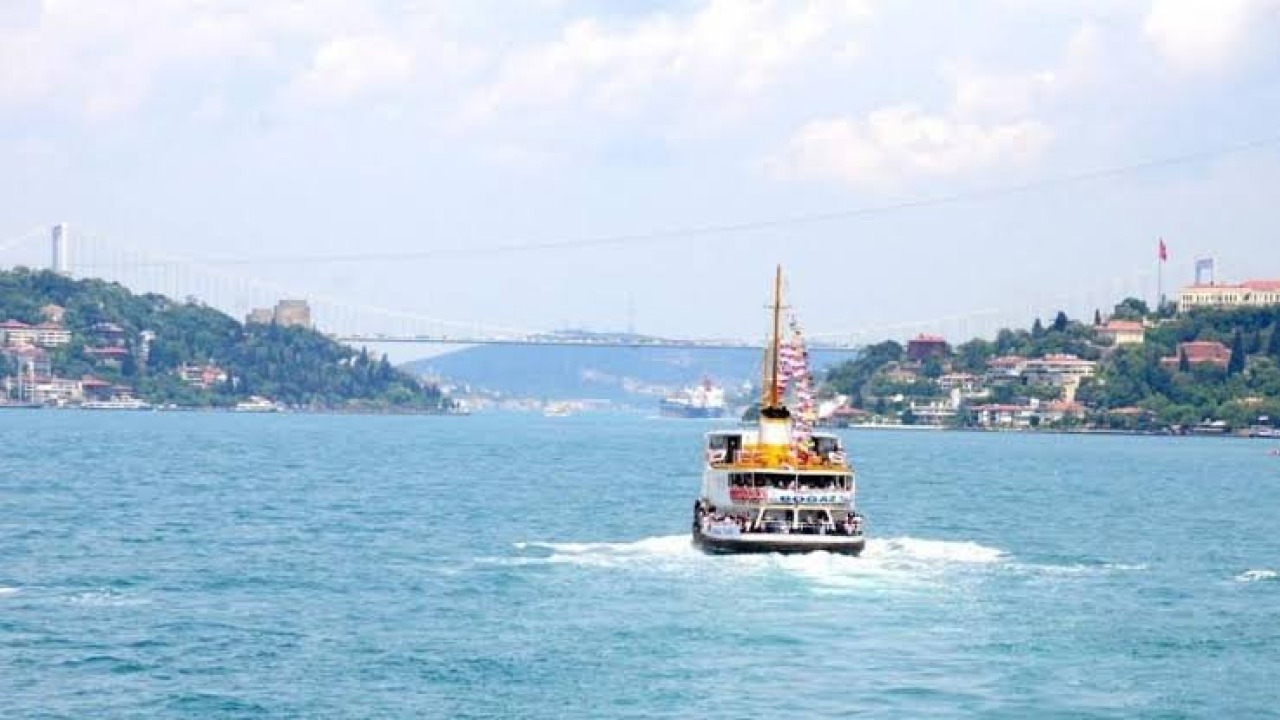
The secret to stunning Bosphorus cruise photography lies in its unique geography. Stretching roughly north to south, the Bosphorus sees the sun illuminate its two shores in turn throughout the day. In the morning, the light streams over the hills of the Anatolian side, bathing the European shore's facades in a beautiful front light. As the afternoon progresses, the direction reverses, with the palaces and mansions of the Anatolian side catching the warm glow, while the European silhouettes are backlit. This means your framing decision is more about location than just time of day. Below, we'll break down the key stops along the Bosphorus, detailing facade orientation, light direction, optimal deck positioning, and how the sun's angle shifts with the seasons.
Quick Facts for Your Bosphorus Photo Tour
| Topic | Detail |
|---|---|
| Bosphorus Length | The Bosphorus stretches for approximately 30 kilometers (18.6 miles) |
| Narrowest Point | Between Rumeli Hisarı and Anadolu Hisarı; the shores are just about 700 meters (0.43 miles) apart |
| Morning Light | European shore is front-lit, Anatolian shore is backlit |
| Afternoon Light | Anatolian shore receives warm side light, European shore becomes a silhouette |
| Departure Piers | Eminönü pier, Kabataş pier, Üsküdar pier |
| Example Itinerary | Şehir Hatları (City Lines) Long Bosphorus Tour: Eminönü 10:35 AM, Anadolu Kavağı 12:25 PM, return to Eminönü 4:40 PM |
| Useful Gear to Pack | Wide-angle and medium telephoto lenses, circular polarizer filter, microfiber cloth |
Understanding Light Direction on the Bosphorus
Since the sun rises in the east and sets in the west, the two shores of a waterway extending north-south like the Bosphorus don't receive the same light throughout the day. In the morning, the Anatolian side faces the light source, while in the afternoon, the European side takes on that role. Keeping this relationship in mind will help you decide which side of the deck to stand on and when to anticipate the best light for each structure.
Morning: European Shore Bathed in Front Light
In the early morning hours, the light comes from a low angle, illuminating the facades of the European shore head-on. Stone carvings, marble textures, and window arrangements are rendered clearly and shadow-free at this time. If you turn your lens towards the Anatolian shore at the same hour, you'll be looking directly into the sun; structures will appear dark, and the sky will be bright. This isn't necessarily a flaw: it's perfect if you're aiming for dramatic silhouettes, but if detailed facades are your goal, simply change your direction.
Midday: Harsh Light and Water Glare
As the sun approaches its zenith, shadows shorten, glare on light-colored facades intensifies, and the water's surface reflects light across a wide area. During these hours, it's more effective to focus on the coastline and maritime traffic rather than intricate architectural details. A polarizing filter can significantly reduce reflections and enhance sky tones.
Afternoon & Blue Hour: The Shifting Light
In the afternoon, the light becomes more horizontal, illuminating the facades of the Anatolian shore with warm tones and bringing out the depth of shadows on textured surfaces. The 'blue hour,' roughly half an hour after sunset, sees the sky turn a deep indigo, and the lights along the shore and bridges begin to twinkle. Since this window is brief, plan your exact location in advance. As your route and departure time directly impact your shots, choosing a Bosphorus boat and yacht tour that visits your target landmarks will simplify your photographic plan.
Spot by Spot: Your Bosphorus Photography Guide
The table below summarizes the key structures along the Bosphorus, indicating which shore they're on, their sea-facing orientation, and the optimal time for photography based on the light.
| Landmark | Shore | Sea-facing | Optimal Light Time | Framing Tip |
|---|---|---|---|---|
| Dolmabahçe Palace | European | Faces East | Morning | Medium telephoto for long facade |
| Ortaköy Mosque | European | Faces East | Morning & afternoon silhouette | Align with bridge span |
| Rumeli Hisarı | European | Faces East | Afternoon | Shadow depth between ramparts |
| Anadolu Hisarı | Anatolian | Faces West | Morning & late afternoon | Wide-angle with Göksu stream mouth |
| Küçüksu Kasrı | Anatolian | Faces West | Late afternoon & golden hour | Horizontal light for embossed facade |
| Beylerbeyi Palace | Anatolian | Faces West | Late afternoon | Frame with sea pavilions |
| Kız Kulesi (Maiden's Tower) | Mid-water | All directions | Sunset & blue hour | Silhouette when aligned with western horizon |
| Bosphorus Bridge | Both shores | Steel span | Blue hour | Linear perspective from low angle |
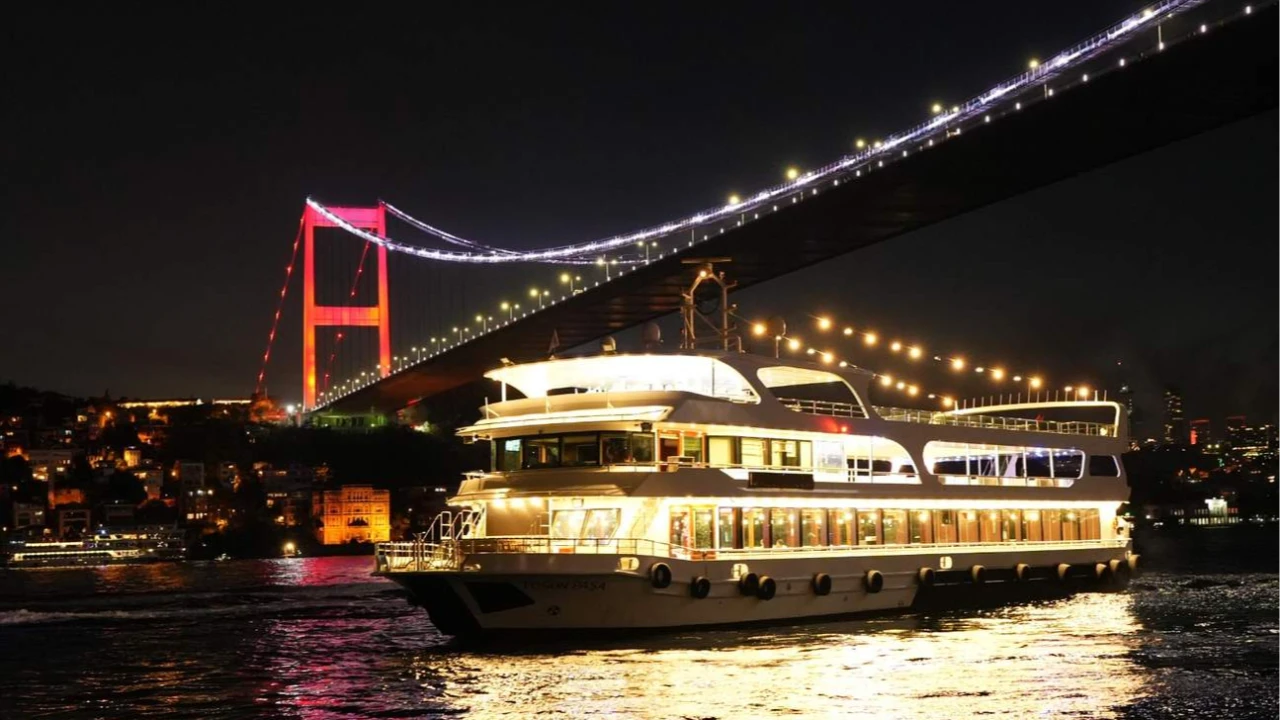
| Fatih Sultan Mehmet Bridge | Both shores | Steel span | Blue hour & night | Light trails with long exposure |
Dolmabahçe Palace: Grand Facade and Morning Light
Built during the reign of Sultan Abdülmecid and designed by architects like Karabet Balyan and Nikoğos Balyan, this palace is renowned as Turkey's largest, spanning an impressive 14,595 square meters. From the sea, its facade faces east, meaning it receives beautiful front light in the morning hours. Trying to fit the entire expansive facade along the pier into a wide-angle shot can make the structure appear small; using a medium telephoto lens to capture sections like the monumental gates, clock tower, and window rhythm will yield more impactful results. If you plan to visit the palace by land on the same day, remember it's closed on Mondays, and the ticket office operates from 9:00 AM to 5:00 PM.
Ortaköy Mosque and Bosphorus Bridge: Two Scales, One Frame
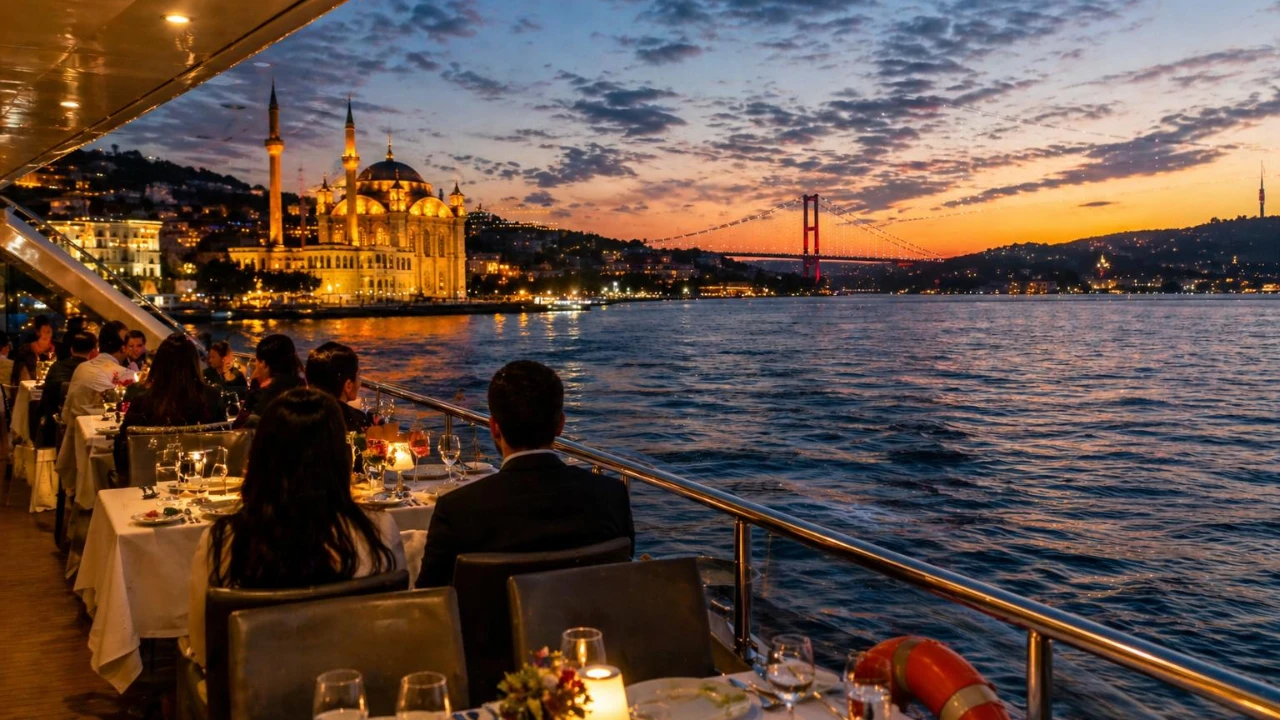
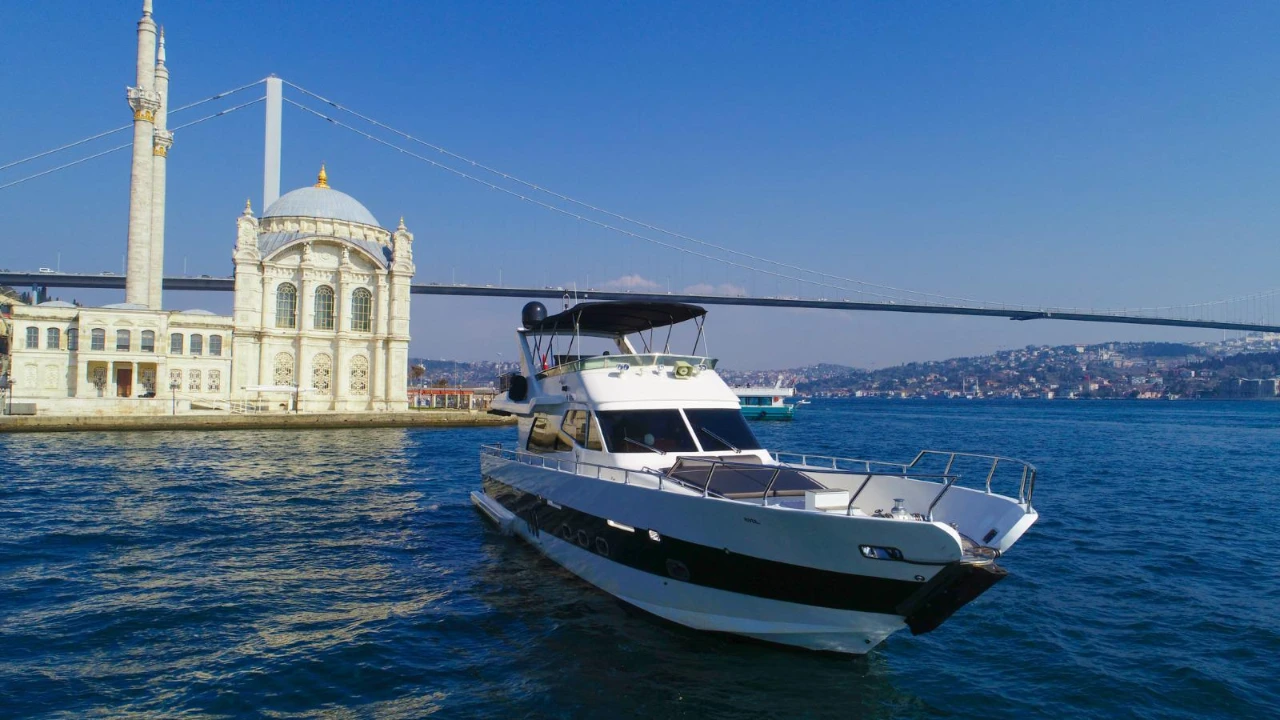
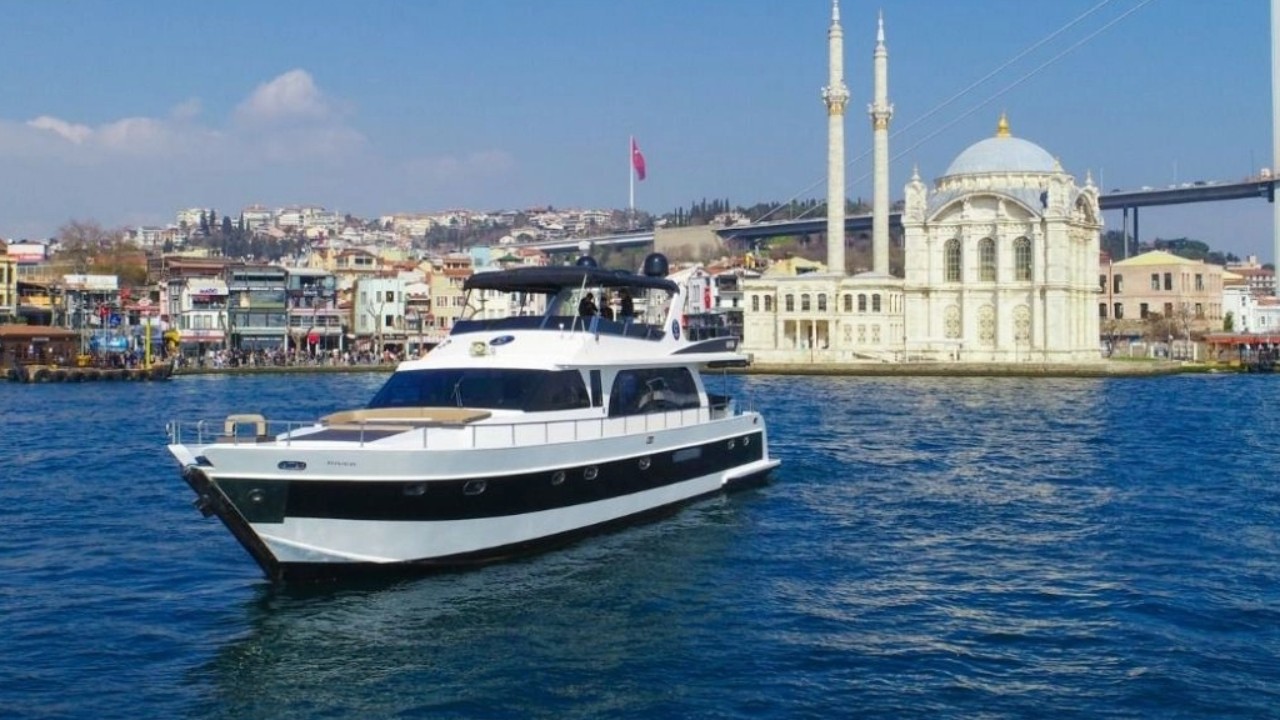
The Grand Mecidiye Mosque in Ortaköy, commissioned by Sultan Abdülmecid and designed by Nigoğos Balyan, dates back to the 1850s and reopened for worship after a 2014 restoration. Rising directly behind it is the Bosphorus Bridge, officially known as the 15 July Martyrs Bridge, which opened on October 29, 1973. It boasts a total length of 1,560 meters, with a central span of 1,074 meters. The striking difference in scale between these two structures is a photographic opportunity in itself: a telephoto lens will compress the perspective, making the bridge appear grander behind the mosque, while a wide-angle shot will shrink the mosque, allowing the bridge's pillars to act as a natural frame.
Rumeli Hisarı and Anadolu Hisarı: Shadows and Close-Ups in the Narrow Strait
Sprawling across a steep hillside, Rumeli Hisarı creates dramatic, graphic shadows between its ramparts in the afternoon, whereas in the morning, the same surfaces appear flat. Construction of this fortress, commissioned by Fatih Sultan Mehmet, began in March 1452 and was completed by August of the same year. It has served as a museum since 1968; for those wishing to photograph it from land, it's closed on Mondays, with visiting hours from 9:00 AM to 7:00 PM. On the opposite shore, Anadolu Hisarı was built by Yıldırım Bayezid in 1395 at the mouth of the Göksu Stream where it meets the Bosphorus, with additional fortifications added in 1452. The two shores converge to approximately 700 meters at this point, and the boat noticeably draws closer to the bank. A focal length range of 35 to 70mm is often sufficient here, rather than a longer telephoto.
Küçüksu Kasrı and Beylerbeyi Palace: West-Facing Facades
Küçüksu Kasrı was built for Sultan Abdülmecid between 1856-1857, with its facade decorations enriched during Sultan Abdülaziz's reign. This smaller-scale structure, with a footprint of 15 by 27 meters, features an ornate sea-facing facade adorned with reliefs, a fountain pool, and marble stairs, all facing west. The embossed surfaces create their own shadows in the horizontal light of the late afternoon, making the same facade appear flat in the morning but three-dimensional in the evening. A little further south, Beylerbeyi Palace was constructed by Sultan Abdülaziz between 1863-1865 after the previous wooden structure burned down. Its sea pavilions on the quay are closed to visitors, meaning you can only frame these charming structures from the sea – a key advantage of boat photography over land-based shots. Both structures are closed on Mondays.
Kız Kulesi (Maiden's Tower): A Free Angle in the Water
Rising in the middle of the water off Üsküdar, Kız Kulesi (Maiden's Tower) receives light from all four directions, making it a versatile subject throughout the day. Following a restoration project by the Ministry of Culture and Tourism, it reopened to visitors in May 2023; older photos from its scaffolding period do not reflect its current appearance. In the late afternoon, if you align the tower with the western horizon towards the historical peninsula, you'll capture a dramatic dark silhouette against the changing colors of the sky. During the blue hour, the tower's illumination beautifully balances with the deep indigo hues of the sky. Since the boat is constantly moving, this alignment lasts only a few seconds, so burst shooting comes in handy here.
Where to Stand on Deck: Choosing Your Side and Avoiding Window Woes
In maritime terms, the left side of the boat is called the port side, and the right side is the starboard side. When heading north towards the Black Sea, the port side faces the European shore, and the starboard side faces the Anatolian shore; this relationship reverses when heading south. To photograph the European shore with the light at your back on a northbound morning trip, or to capture the Anatolian shore in the afternoon light on the return journey, you'll want to position yourself on the port side. On crowded tours, the entire railing can fill up quickly, so choose your spot before departure.
Shooting from behind glass in an enclosed cabin presents two main challenges: dust and salt spray on the window reduce contrast, and interior lighting can reflect off the glass. Pressing your lens close to the glass can minimize reflections, as can wearing dark clothing. Avoid using a polarizing filter behind glass. On the open deck, the middle section of the boat tends to sway less than the bow or stern.
First Shots Based on Your Departure Pier
Your departure pier will shape the first half-hour of your tour. Departing from Eminönü pier, the silhouette of the historical peninsula recedes behind you in the initial minutes, so keep your camera ready. If you board from Kabataş pier, that silhouette shot won't occur, but the facade of Dolmabahçe Palace will come into view much earlier. Those departing from Üsküdar pier will see Kız Kulesi (Maiden's Tower) at a closer distance. For those who wish to capture the historical peninsula's structures from land after seeing them as silhouettes from the sea, our Istanbul cultural tours guide provides a suggested itinerary.
On routes extending into the Marmara Sea beyond the Bosphorus, the light dynamics change as the route deviates from the north-south axis. Among the Istanbul boat and yacht tours, you'll also find programs that extend towards the Princes' Islands and the Marmara. You can find information on the stops and travel logic for the island routes in our Princes' Islands travel and transportation guide.
Season & Time: How the Sun's Angle Changes Throughout the Year
The direction of sunrise and sunset isn't constant throughout the year, and this shift alters when a particular structure receives front light. In Istanbul, daylight hours exceed 15 hours during the summer solstice, while shrinking to approximately 9 hours in December.
| Period | Sunrise & Sunset Direction | Light Character | Impact on Framing |
|---|---|---|---|
| December to February | Southeast & Southwest | Low angle all day | Facades remain in soft light for longer, shadows lengthen |
| March to April, September to October | East & West | Balanced angle | Morning and late afternoon light windows are widest |
| June to August | Northeast & Northwest | Steep at midday, late in the evening | Midday hours are harsh, golden hour shifts to after 8:00 PM |
This seasonal shift, combined with tour schedules, yields practical implications. For the Şehir Hatları (City Lines) Long Bosphorus Tour we're referencing, four times dictate your light decisions: 10:35 AM Eminönü departure, 12:25 PM Anadolu Kavağı arrival, 3:00 PM return departure, and 4:40 PM Eminönü arrival. In late December, with the sun setting before 5:00 PM, that same return time aligns perfectly with the blue hour. However, in June, 4:40 PM is still bright afternoon light. While choosing the right tour time for your schedule is a separate decision, the key here is understanding which shore will be illuminated at that specific hour.
Gear & Settings: Sharp Shots from a Moving Deck
The boat's engine vibrations and wave motion can render settings that work perfectly on land unusable on deck.
- Shutter Speed: Aim for 1/500 second or faster in daylight. As light diminishes, first open your aperture, then increase ISO if the shutter speed continues to drop.
- Focus Mode: Continuous autofocus (AF-C or AI Servo) yields more consistent results on a moving platform than single-shot autofocus.
- Polarizing Filter: Reduces glare on the water's surface and deepens sky tones. Be aware that a band of color can appear in the sky with wide-angle lenses; rotate the filter while checking your frame.
- RAW Capture: Color temperature shifts from morning to blue hour; adjusting white balance later in a RAW file ensures no loss of quality.
- Microfiber Cloth: Sea spray and salt particles will quickly leave spots on your front lens element.
- Holding Technique: Leaning against the railing directly transfers vibrations to your body. Standing with slightly bent knees and holding the camera close to your body with both hands will result in sharper images.
The usable limits of high ISO values vary by camera; it's wise to test these limits beforehand, not during your Bosphorus cruise.
Step-by-Step Shooting Plan
The following sequence outlines the order in which photo opportunities arise on a Bosphorus cruise departing from Eminönü.
- Before Departure: Set your camera on the pier: shutter priority with 1/500 second, continuous autofocus, and RAW capture.
- First Fifteen Minutes: As the historical peninsula's silhouette recedes, switch to a wide-angle lens, then transition to a medium telephoto for the Dolmabahçe Palace facade.
- Ortaköy Alignment: Frame the mosque and bridge together; a telephoto lens will compress the perspective, bringing the two structures closer.
- Narrow Strait: Between the fortresses, the boat draws closer to the shore; shorten your focal length and adjust the polarizing filter's angle for the water.
- Stopover: During the Anadolu Kavağı stop, keep track of the boat's departure time while shooting from the shore.
- Return Journey: As the Anatolian shore catches the afternoon light, photograph Küçüksu Kasrı and Beylerbeyi Palace facades, saving the grand finale for Kız Kulesi (Maiden's Tower) and the blue hour.
Common Mistakes and Quick Fixes
- Leaving exposure on auto in backlit situations: The sky will be correctly exposed, but the structure will appear dark. If you don't want a silhouette, meter your exposure for the subject.
- Repeatedly shooting the same structure with the same focal length: As the boat moves, the angle changes; vary your focal length for subsequent shots.
- Autofocus locking onto the railing: Narrowing your focus point or switching to manual focus will resolve this.
- Using a polarizing filter behind glass: This can cause color distortions on laminated glass.
- Forgetting to plan for land-based follow-up: The palaces and mansions along the shore, as well as Rumeli Hisarı, are closed on Mondays.
Frequently Asked Questions 5
Which shore should I photograph in the morning on a Bosphorus cruise?
In the morning, the sun rises from the east, over the hills of the Anatolian side. Therefore, positioning yourself with the light at your back and facing the European shore will reveal facade details without shadows. Shots directed towards the Anatolian shore at the same time will show darkened structures and a bright sky; this condition is ideal for capturing silhouettes.
Which side of the boat is best for photography?
When heading north, the left (port) side of the boat faces the European shore, and the right (starboard) side faces the Anatolian shore; this reverses on the return journey. Someone wishing to photograph the European facades in the morning and the Anatolian facades in the afternoon might prefer to stand on the port side for both directions. The middle section of the deck generally experiences less sway.
Which landmarks receive front light at what time?
Dolmabahçe Palace, Ortaköy Mosque, and Rumeli Hisarı, with their sea-facing facades oriented east, receive front light in the morning and up until midday. Küçüksu Kasrı, Beylerbeyi Palace, and Anadolu Hisarı, facing west, are best lit in the late afternoon and during golden hour. Kız Kulesi (Maiden's Tower), being in the middle of the water, is photographable throughout the day, but particularly stands out at sunset and during blue hour.
What camera settings are best for sharp photos from a moving boat?
The primary defense against vibration and sway is a high shutter speed; 1/500 second or faster is a safe starting point in daylight. Continuous autofocus mode works more consistently on a moving platform. As light decreases, first open your aperture, then increase ISO. Standing with slightly bent knees instead of leaning on the railing will help reduce camera shake.
Which palaces, mansions, and fortresses along the Bosphorus are closed on which days?
Dolmabahçe Palace, Beylerbeyi Palace, and Küçüksu Kasrı are closed to visitors on Mondays, with ticket offices operating from 9:00 AM to 5:00 PM. Rumeli Hisarı Museum is also closed on Mondays, with visiting hours from 9:00 AM to 7:00 PM. Always check the official announcements of the respective institutions for the most current opening days and hours.