When discussing the Seljuk heritage of Bitlis, the first destination that comes to mind is the district of Ahlat on the shores of Lake Van. The Seljuk Square Cemetery, monumental kümbet (tomb towers), the Ahlat Museum, and the Abdurrahman Gazi Tomb are the standout landmarks of this legacy. Once the capital of the Ahlatshahs Beylik in the 12th century and known throughout the Islamic world as "Kubbetü'l-İslam" (the Dome of Islam), Ahlat has preserved centuries of master stonemasonry for the modern world to admire. In this guide, we bring together the Seljuk and Islamic era monuments, funerary architecture, museums, and spiritual tourism sites of Bitlis.
At Travel Tour Shop, we work on the ground across the cultural routes of Eastern Anatolia, closely following the tomb towers and cemetery regions of Ahlat and its surroundings. For a general travel guide to Bitlis, including Nemrut Crater Lake and the city center castle, you can check out our Bitlis sightseeing and Nemrut Crater Lake guide; in this article, we focus specifically on the city's Seljuk and spiritual heritage.
Quick Facts
| Heading | Information |
|---|---|
| Location | Ahlat (Bitlis), northwest shore of Lake Van |
| Period | Ahlatshahs Beylik (12th c.) + Seljuk, Ilkhanid, Ottoman |
| Highlights | Seljuk Square Cemetery, Ulu Kümbet, Emir Bayındır Kümbeti, Çifte Kümbet, Ahlat Museum, Abdurrahman Gazi Tomb |
| Ideal Season | May–October (Spring and Summer, ideal for outdoor exploration) |
| Recommended Duration | 1 day for Ahlat, 2 days for the surrounding area |
| Transport | Road via Tatvan/Ahlat; nearest airports are Van and Muş |
Ahlat: The "Dome of Islam" in Seljuk Anatolia
To truly understand the Seljuk heritage of Ahlat, one must first look at its historical significance. With a settlement history dating back to the Neolithic Age, Ahlat became one of the most vital Turkish centers in Anatolia following the 1071 Battle of Manzikert. Rising as the capital of the Ahlatshahs (Sökmenliler) Beylik in the 12th century, the city was hailed as "Kubbetü'l-İslam"—the Dome of Islam—and was ranked alongside great centers of learning like Balkh and Bukhara.
This deep-rooted history transformed Ahlat from a mere settlement into a cultural powerhouse, synonymous with exquisite stonemasonry and funerary architecture. Today, the district is visited as a living open-air museum, boasting its tomb towers, cemeteries, historic baths, and museum. Those wishing to see the Seljuk and Islamic era works of the region can include Ahlat in their culture tours.
Ahlat Seljuk Square Cemetery
The most significant historical legacy of Ahlat is the Seljuk Square Cemetery, which spans approximately 210,000 square meters. Due to its massive scale, it is considered one of the largest Turkic-Islamic cemeteries in the world and is featured on Turkey's UNESCO World Heritage tentative list.
What makes this cemetery truly extraordinary is the intricate craftsmanship and inscriptions found on thousands of monumental tombstones. The vertical steles, locally known as "akıt," and the sarcophagus-style stones are adorned with geometric patterns, Rumi and palmette motifs, and sacred verses. Because of this aesthetic richness, many historians refer to the cemetery as the "Orkhon Inscriptions of Anatolia"; the stones serve as both works of art and historical documents that allow us to read the social and religious life of the era.
The stones in the cemetery primarily appear in two forms: the vertical steles known as "akıt" and horizontal sarcophagi. Finding the names or signatures of master craftsmen on some of the stones proves that stonemasonry was a highly respected profession during this period. Over the centuries, earthquakes have caused some stones to tilt slightly, lending the cemetery a unique and hauntingly beautiful appearance.
The level of skill achieved by Seljuk stonemasons explains why Ahlat is often called a "city of stone." While walking through the cemetery, you can trace the evolution of craftsmanship through the orientation, height, and complexity of the decorations. The site is also a favorite for photographers, as the light at sunrise and sunset beautifully accentuates the motifs on the stone surfaces.
Ahlat Kümbetleri: Monumental Turkish Funerary Architecture
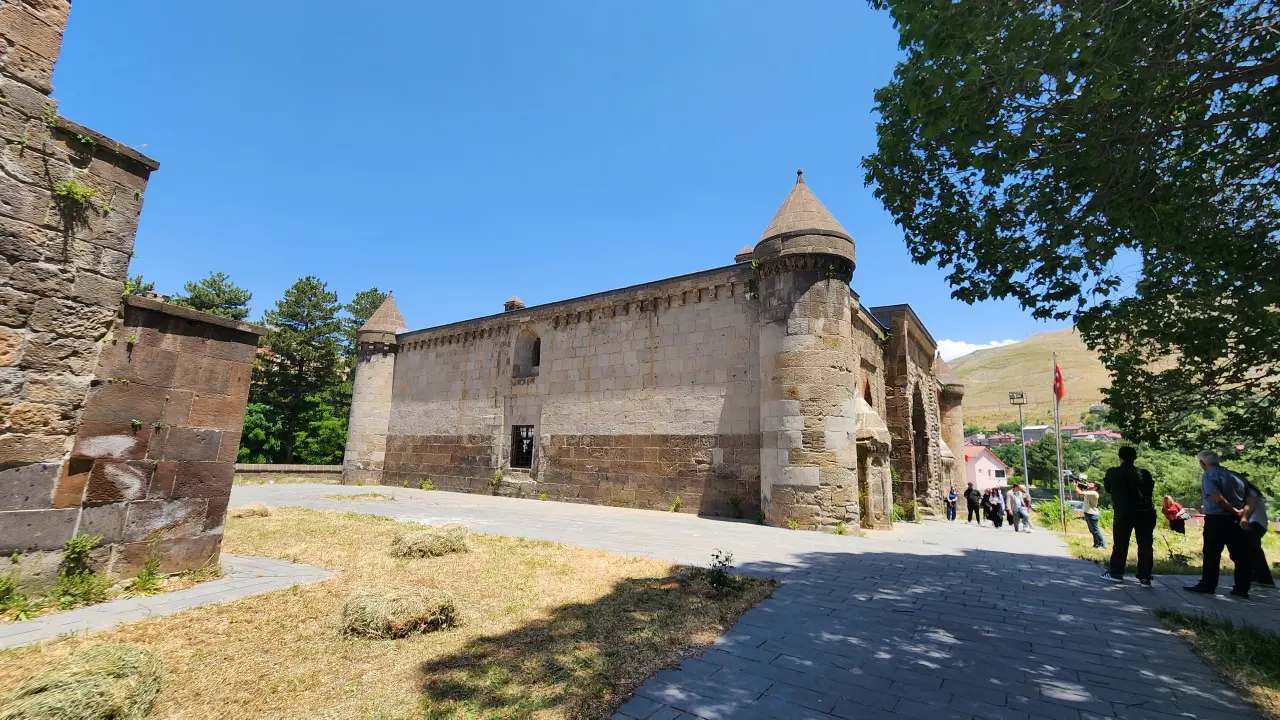
The kümbet (tomb towers) scattered around the Square Cemetery are the most magnificent pieces of Ahlat's Seljuk legacy. Featuring cylindrical or polygonal bodies topped with conical or pyramidal roofs, these structures are among the most mature examples of Turkish funerary architecture in Anatolia. The kümbet are typically designed in two levels: a lower burial chamber and an upper room dedicated to prayer and visitation. This layout demonstrates that these monuments functioned as both tombs and places of worship.
Ulu Kümbet
Considered the largest of the Ahlat tomb towers, the Ulu Kümbet stands out with its tall body and simple yet impressive proportions. Built with precision-cut stonework, the structure dominates the district's skyline and is one of the most iconic images of Ahlat.
Emir Bayındır Kümbeti and Mosque
Dating back to the 15th century, the Emir Bayındır Kümbeti differs from other towers with its open tomb design, where part of the body is designed with columns and openings. The adjacent Emir Bayındır Mosque and historic bridge turn this area into a cohesive architectural complex, showcasing how stonemasonry was applied to various functional roles.
Çifte Kümbet and Other Monuments
The Çifte Kümbet, known for the proximity of the Hasan Padişah and Erzen Hatun tombs, is notable for its delicate decorative program. Alongside these, structures named after figures such as Şeyh Necmeddin and Bayındır demonstrate how widespread the kümbet tradition was throughout the district.
Ahlat Museum and the Old City of Ahlat
For those who want a comprehensive view of Ahlat's millennia-long history, the Ahlat Museum is the perfect starting point. Opened in its new building with a modern visitor center in 2018, the museum utilizes contemporary exhibition techniques. Its halls chronologically display stone inscriptions, ceramics, coins, weapons, and tombstones ranging from the Chalcolithic Age through the Urartian, Hellenistic, Roman, Byzantine, Seljuk, and Ottoman periods. The museum is an excellent stop to provide historical context before exploring the outdoor artifacts.
Complementing the museum is the area known as "Harabeşehir," the ruins of Old Ahlat. In this area, which was once a walled, vibrant city, the foundations of mosques, baths, and other structures have been unearthed. Buildings like the Çifte Hamam from the Seljuk and later periods prove that Ahlat was not just a city of the dead, but a settlement with a rich daily life.
Abdurrahman Gazi Tomb and Spiritual Tourism
One of the most visited sites in Ahlat for spiritual tourism is the Abdurrahman Gazi Tomb. Built in honor of Abdurrahman Gazi, who is said to have played a role during the early Islamic conquests, the tomb stands out for its cut-stone architecture and simple aesthetic.
Welcoming visitors year-round due to its spiritual atmosphere, the tomb—along with other shrines in the region—makes Bitlis a significant destination for faith-based tourism in Eastern Anatolia. Those looking to combine cultural and spiritual routes can explore our historical city tours options.
Ahlat Stone and the Tradition of Seljuk Stonemasonry
The common thread running through all these works is the Ahlat stone, which gives the district its name. This volcanic tuff is soft and easy to carve when first quarried, but it hardens and becomes highly durable upon exposure to the air. This unique property allowed master masons to create the incredibly fine, deep-carved decorations seen on the kümbet and tombstones.
For centuries, Ahlat stone was used not only in the district but also in the architecture of surrounding cities; even some historical buildings in the center of Bitlis were constructed with this stone. Today, the tradition of stonemasonry continues in the district, and visitors can see traces of this craft in local workshops. Ahlat stone is the shared language that binds the region's Seljuk heritage together, from architecture to handicrafts.
When and How to Visit the Seljuk Heritage of Bitlis?
Since most of the monuments in and around Ahlat are located outdoors, the best time to visit is during the spring and summer months. The period between May and October is ideal for comfortably exploring the cemetery and tomb areas while enjoying the views of Lake Van. In winter, heavy snowfall can make travel less comfortable; during this time, a museum-focused itinerary may be preferable.
In terms of transport, Ahlat is easily accessible by road via the Tatvan district of Bitlis; the Lake Van coastal road connects the region to surrounding cities. The nearest airports are Van and Muş, from which you can reach Ahlat by road. Because the cemetery, the kümbet towers, and the museum are located close to one another, a single-day itinerary centered in Ahlat can cover most major stops. To combine different destinations into one trip, you can plan your route by checking our current tour options.
Frequently Asked Questions 6
Why is the Ahlat Seljuk Square Cemetery important?
Spanning approximately 210,000 square meters, it is one of the largest Turkic-Islamic cemeteries in the world and is on Turkey's UNESCO tentative list. It is often referred to as the 'Orkhon Inscriptions of Anatolia' due to the exquisite craftsmanship and inscriptions on its thousands of tombstones.
What are the Ahlat kümbetleri?
They are monumental funerary structures with cylindrical or polygonal bodies and conical roofs, including the Ulu Kümbet, Emir Bayındır Kümbeti, and Çifte Kümbet. They represent some of the most mature examples of Seljuk and later Turkic funerary architecture in Anatolia.
What is on display at the Ahlat Museum?
Opened in its new building in 2018, the museum chronologically displays stone inscriptions, ceramics, coins, weapons, and tombstones from the Chalcolithic Age to the Ottoman era. It is a great way to understand the region's history before visiting the outdoor sites.
Where is the Abdurrahman Gazi Tomb?
Located in Ahlat, this tomb was built in honor of Abdurrahman Gazi, who is believed to have served during the Islamic conquest period. It is a major stop for spiritual tourism due to its cut-stone architecture and sacred atmosphere.
How many days does it take to visit the Seljuk heritage of Bitlis?
Since the cemetery, tomb towers, and museum in the center of Ahlat are close to each other, they can be visited in one day. If you include Bitlis city center, Nemrut Crater Lake, and the Lake Van area, a two-day itinerary is more comfortable.
When is the best time to visit Ahlat?
Since most of the sites are outdoors, the period from May to October is most favorable. In winter, heavy snow may reduce travel comfort, so a museum-heavy plan might be better.