
To truly understand Trabzon, you have to look beyond a simple checklist of tourist spots. For those who know the region, Trabzon exists in three distinct layers: the bustling city center hugging the coast, the steep ridges rising immediately behind the city, and the sprawling network of valleys and highlands (yaylas) that lie beyond. Whether a traveler leaves satisfied depends not on what they saw, but on how they balanced their time across these three layers.
This guide isn't just about listing available itineraries; it's about helping you decide when to visit, how many days to allocate, and which "layer" should be your home base. Once you have the strategy, picking a specific tour is the easy part.
The value of a local perspective here is turning the contrast between the coast and the interior into a workable plan. While city center stops are within walking distance, trips to the valleys and highlands consume most of the day due to travel time. Therefore, the following evaluations are built around the question "how to divide your day" rather than just "what to see." Every local tip provided here is based on field experience or verified data; guesswork has no place on this page.
Local's Quick Summary: You should allocate at least 3-4 days for a Trabzon trip. Day one is best for the city center and Sümela Monastery. Day two should be dedicated to the Uzungöl route. The remaining days are reserved for the high-altitude plateaus.
Quick Facts
| Category | Local Insight |
|---|---|
| Scope | City center and the East Black Sea coastline |
| Best Period | According to long-term meteorological data, rainfall is lowest in May, June, July, and August; highest between October and January |
| Ideal Duration | At least 3 to 4 days to cover the main highlights |
| City Center Focus | Ayasofya, Atatürk Köşkü, Trabzon Kalesi, Bedesten Bazaar, Meydan |
| Ridge Line | Boztepe, Boztepe Observation Terrace, Kızlar Monastery |
| Valleys & Highlands | Altındere Valley National Park, Sümela Monastery, Uzungöl, Hıdırnebi Yaylası |
| Nature Diversity | Çal Cave, Sera Lake, Zigana route |
| Museum Layer | Trabzon Museum (Kostaki Mansion), Trabzon City Museum, Trabzon History Museum |
| Transport | Air and road; public transport and tour vehicles within the city |
| Weather Tracking | General Directorate of Meteorology (provincial/district pages) |
| Tour Options | Ready-made tour programs for the Trabzon region |
Two rows in this table form the backbone of your decision. The "duration" row is based on the standard 3-4 day plan recommended by travel experts; any shorter, and you'll have to sacrifice the valley routes. The "period" row works contrary to popular belief. Meteorological data shows that the driest period in Trabzon is between May and August, while the wettest months are October, November, December, and January.
In other words, late spring is safer in terms of rainfall than autumn. The remaining rows are simply the practical application of these two decisions.
Who is it For: Profile & Season Matching
Trabzon doesn't offer the same experience to everyone. In the same three-day window, a family-oriented traveler and a hiking enthusiast will see two completely different cities. The table below shows the recommended focus based on traveler profiles and the best seasons for those activities.
| Profile | Ideal Season | Local's Recommended Focus | Preferred Base |
|---|---|---|---|
| Families | Summer & Early Autumn | City museums, Trabzon Aquarium, Zağnos Valley Park, day trips to valleys | Center, short-distance excursions |
| Couples | Late Spring & September | Boztepe Observation Terrace, Altındere Valley, Uzungöl surroundings | Center or valley route |
| Budget Travelers | Late Spring & September | Meydan area, Bedesten Bazaar, Trabzon Kalesi, open-air viewpoints | Center |
| Nature & Hiking | Summer | Hıdırnebi Yaylası, Zigana route, Altındere Valley National Park | Highlands or valley entrance |
| Culture & History | Year-round (including rainy months) | Ayasofya, Kızlar Monastery, Vazelon Monastery, Trabzon Museum | Center |
| Foodies | Year-round | Bazaar area, stops along the highland roads | Center |
| Short Stopovers | Year-round | Half-day in the center, sunset at Boztepe | Center |
How to use this table: first, find your profile, then look at the "Ideal Season" column. If your travel dates fall outside that window, it is easier to change your focus than to change your dates. For example, during a rainy week in October or November, focusing on museums and bazaars in the center is far less risky than attempting a highland trek.
For those wanting a culture-heavy plan, you can find pre-set frameworks by choosing museum and monastery-focused options among the Trabzon tour options.
A local tip for families: spread long excursions into the interior over separate days. Cramming these back-to-back with children often means spending the entire vacation in the car.
When to Go: Month-by-Month Local Evaluation
While many guides suggest summer and autumn and label spring as "rainy," meteorological data tells a different story. The driest months in Trabzon are May, June, July, and August. The heaviest rainfall occurs from October to January. While the number of rainy days is relatively consistent throughout the year, the amount of precipitation varies significantly.
The following table converts this data into actionable planning advice. These are not weather forecasts, but "planning behaviors." For real-time updates, the General Directorate of Meteorology provides hourly and five-day data for Trabzon.
| Month | Local Evaluation | Recommended Planning Behavior |
|---|---|---|
| January | High precipitation winter month | Focus on museums, the castle, and bazaars; don't commit to highland plans |
| February | Rainfall drops slightly, but winter conditions persist | Two days in the center; check road conditions before heading uphill |
| March | Rainfall continues to decrease, temperatures remain low | Flexible program; keep a list of indoor backup locations |
| April | Rainfall is significantly lower than in autumn | Valley routes can be added; verify road conditions at high altitudes |
| May | Dry season begins, greenery becomes vibrant | Schedule valley and highland trips for the early morning |
| June | One of the driest three months of the year | You can comfortably include all three layers in your program |
| July | The month with the lowest rainfall | Move Uzungöl and Sümela trips to the earliest possible hour |
| August | Dry period continues, coincides with school holidays | Book in advance; spend the midday heat in the city center |
| September | Rainfall begins to rise, summer conditions partially persist | Still suitable for valleys and highlands; start your day early |
| October | The rainiest month of the year | Short valley trips instead of long hikes; prioritize indoor backups |
| November | Second rainiest month, transition to off-season | Center-focused; verify road conditions for the highlands |
| December | High precipitation winter month | City museums, bazaars, and short coastal walks |
The practical takeaway: there is no "bad month" in Trabzon, only "bad matching." Expecting a highland paradise during the peak rains of October or November will lead to disappointment; however, a museum-focused city trip during that same week will be seamless. The goal here is to replace the myth that "it rains in spring and clears in autumn" with actual statistics.
Regional Options: Which Route Should Be Your Base?
In Trabzon, the answer to "where to stay" isn't about the hotel, but about the "route" you choose. The table below outlines the main corridors of the province and who they suit best.
| Route | Highlights | Best For | Local Note |
|---|---|---|---|
| City Center & Meydan | Ayasofya, Atatürk Köşkü, Trabzon Kalesi, Bedesten Bazaar, Alaca Han, Zağnos Valley Park | Culture, families, short-term visitors | High walkability; the nightlife and evening buzz are here |
| Boztepe Ridge | Boztepe, Boztepe Observation Terrace, Kızlar Monastery | Views and photography | Close to center; best visited during sunset |
| Altındere Valley | Altındere Valley National Park, Sümela Monastery | History meets nature | Start early to ensure you have daylight for the return trip |
| Uzungöl Route | Uzungöl and surroundings | Couples, families, photographers | Can be done as a day trip, but travel time dominates the day |
| Highland Route | Hıdırnebi Yaylası and neighboring plateaus | Nature lovers, hikers, those seeking cool air | Verify access conditions close to your arrival date outside of summer |
| Cave & Lake Route | Çal Cave, Sera Lake | Travelers seeking something different | Falls outside the classic three-day itinerary |
| Zigana & Monastery | Zigana Pass area, Vazelon Monastery | Repeat visitors | Don't force these into a first-time visit list |
Route selection is directly tied to your timeframe. If you have two days: center + one valley route. Three days: center + Altındere + Uzungöl. Four days or more: add the highlands or the cave route. For those wanting to add a nature-heavy day, the highland and valley routes offer the least planning stress within a structured program.
Local Recommended Themes
Choosing a theme is the fastest way to structure your day. There are four main themes, which should be viewed as complementary rather than mutually exclusive.
Culture and History
The city's historical layer is spread from the coast to the interior. In the center, you'll find Ayasofya, Trabzon Kalesi, Gülbahar Hatun Mosque and Tomb, the Trabzon Museum, and the Trabzon City Museum. On the ridges lies the Kızlar Monastery, while the interior is home to the Sümela and Vazelon Monasteries.
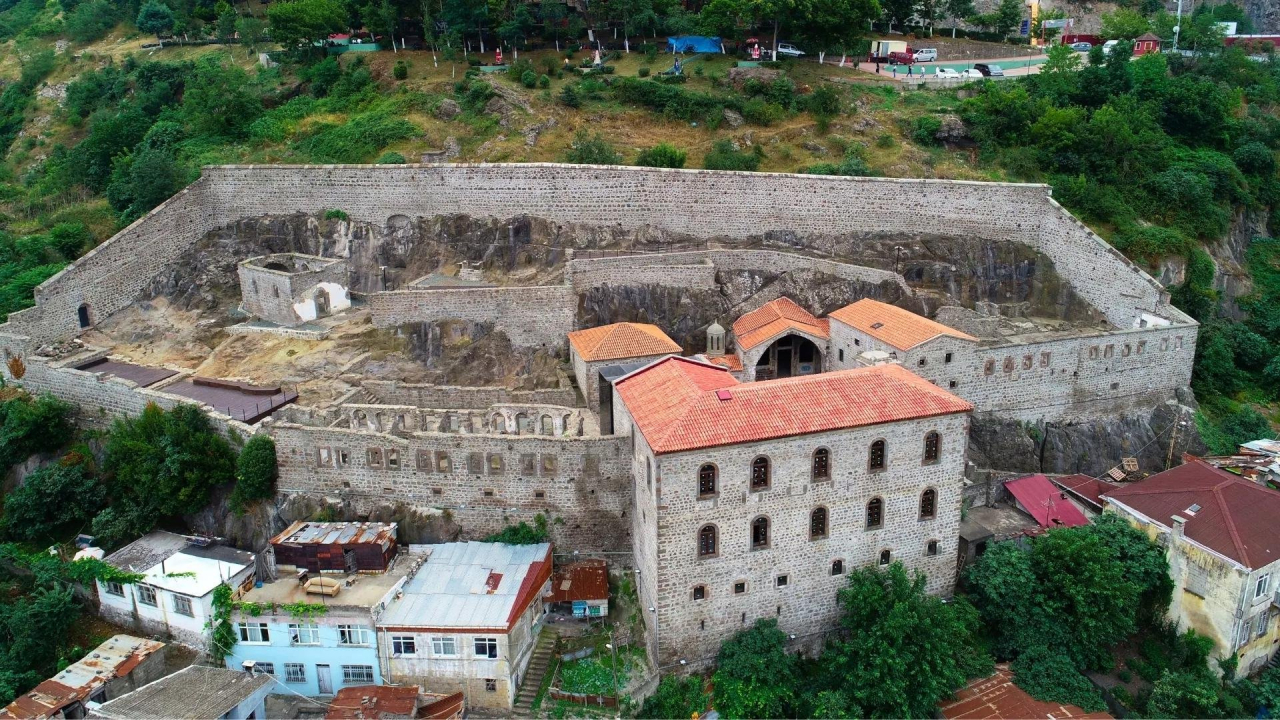
Sümela Monastery has a deep history dating back to the 4th century, with its foundation tracing back to 386 AD. This historic structure is carved into the steep cliffs of Karadağ. Visitor density peaks in summer; therefore, arriving in the early morning is the best way to beat the valley traffic and crowds.
An early start is essential because the valley route, including travel time, consumes most of the day.
Nature, Valleys, and Highlands
- Altındere Valley National Park: Combines a monastery visit with nature hiking in a single day.
- Uzungöl: Requires a dedicated day for walks around the lake and exploring the surrounding heights.
- Hıdırnebi Yaylası: Offers the authentic highland atmosphere relatively close to the center.
- Çal Cave: Adds a unique subterranean dimension to the itinerary.
- Sera Lake: A perfect spot for a short, peaceful break.
- Zigana Area: Frequently cited in travel guides as a prime hiking destination.
Sea and City Life
As a coastal city, the sea is always in sight, but Trabzon's character is more about "waterfront living" than "beach resorts." The Trabzon Aquarium, Zağnos Valley Park, and the Meydan area best showcase this relationship. For those curious about the city's obsession with football, the Trabzonspor M. Şamil Ekinci Museum is a must-visit.
Gastronomy and Handicrafts
The answer to "what is Trabzon famous for?" begins with its cuisine. Stops along the highland roads and the central bazaar feed this passion. The region is also renowned for traditional handicrafts, most notably the intricate making of hazel-woven (hasır) bracelets. For shopping, the Bedesten Bazaar and Alaca Han area are the primary hubs.
For a deeper dive into the local flavors, check out our comprehensive guide to Trabzon cuisine.






Transport and Logistics: Getting There
Getting to Trabzon is typically done via air or road. Once inside the city, movement depends more on topography than distance.
- Choose your transport. Flying significantly reduces travel time for those coming from afar; driving is ideal for those wanting to incorporate the Black Sea coastline into their journey.
- Plan your airport transfer in advance. If you arrive late, pre-booking a transfer is much more convenient than searching for a solution on the spot.
- Choose your accommodation based on your route. The center is best for first-timers due to walkability and ease of day trips.
- Decide between public transport and a tour vehicle. The center is walkable, but a vehicle is a massive time-saver for valley and highland excursions.
- Schedule valley and highland days for the morning. Traffic and road conditions become more challenging as the day progresses.
For those without a car, a guided day trip removes the planning burden, especially for interior excursions. Tours that start and end in the center handle all the time and road management for you.
How Many Days Should You Allocate?
The standard recommendation for the main highlights of Trabzon is 3 to 4 days. A local's breakdown: one day for the center and ridges, one day for Altındere Valley and Sümela, and one day for Uzungöl. A fourth day allows for the highlands or the cave route. For a two-day trip, you must drop one of the valley routes; for a one-day trip, the center and Boztepe ridge are the only realistic goals.
For more detailed site-specific info, we have separate guides. Those planning a valley/lake day should read our article on Uzungöl and Sümela Monastery, and those planning a highland day should check our evaluation of Hamsiköy and Karadağ Yaylası. For those wanting to combine the highlands and the cave, we've detailed the Hıdırnebi Yaylası and Çal Cave route.
To dive deeper into the city's history, explore our Ayasofya-focused culture route. This page doesn't repeat those itineraries; it helps you decide which day to slot them into.
Neighboring Regions and Extending Your Route
Trabzon is often the centerpiece of a larger Black Sea itinerary. Those heading east connect to the Rize route, while those heading west follow the coastline. For those venturing inland, the Zigana area is the natural gateway.
Local advice for extending your trip: allocate at least one full day per province. In the Black Sea region, travel times between the coast and the interior vary wildly; if you spend most of your day in the car, every stop feels superficial. It is often more efficient to base yourself in Trabzon and take day trips to neighboring provinces than to change hotels every night. Additionally, track the weather for each province separately rather than relying on a single station.
Frequently Asked Questions 5
How many days should first-time visitors spend in Trabzon?
Travel experts recommend at least 3 to 4 days to see the main highlights. In three days, you can comfortably fit the city center, Altındere Valley with Sümela, and Uzungöl. A fourth day allows for the highlands or caves. For a two-day trip, you'll need to omit one of the valley routes.
When is the best time to visit the valleys and highlands?
According to long-term statistics, the driest months are May, June, July, and August, making this the most favorable window for highland trips. Rainfall peaks in October and November, so common autumn recommendations can be risky at high altitudes. In winter, programs focused on city museums and the castle are more reliable.
What is the best itinerary for a one-day visit?
For a single day, the most realistic goal is the city center and the Boztepe ridge. A plan consisting of Ayasofya and Atatürk Köşkü in the morning, Trabzon Kalesi and Bedesten Bazaar in the afternoon, and the Boztepe Observation Terrace at sunset minimizes time lost in traffic. Trying to squeeze in a valley route on the same day is overly ambitious.
Which routes can be done as a day trip from Trabzon center?
The main day-trip routes from the center are Altındere Valley, Sümela Monastery, Uzungöl, Hıdırnebi Yaylası, Çal Cave, and Sera Lake. Among these, Uzungöl and Sümela take up most of the day due to travel time. It is much more relaxing to spread these across separate days rather than combining them.
What is Trabzon famous for?
Trabzon is most renowned for its unique cuisine, the iconic Sümela Monastery, and the scenic Uzungöl. Additionally, the region is famous for traditional handicrafts, such as hazel-woven bracelets. The city's deep-rooted passion for football is also a defining part of its identity.