
Nestled in the heart of Antalya, Kaleiçi is a living museum where thousands of years of history converge. With its winding cobblestone alleys, traditional bay-windowed mansions, and the sentinel-like Hıdırlık Tower perched atop the cliffs, it remains the most iconic historic center of the Turkish Riviera. For travelers eager to dive deep into this rich cultural tapestry with the help of local experts, exploring Antalya's diverse cultural tour options is the perfect starting point. From Roman foundations to Ottoman elegance, walking through these bougainvillea-draped streets offers an unforgettable glimpse into the soul of Antalya.
This comprehensive field guide provides an objective look at the architectural brilliance of the Kaleiçi mansions, the archaeological mysteries of Hıdırlık Tower, the connection to Karaalioğlu Park, and practical logistics for your visit.
Quick Facts: Antalya Kaleiçi and Hıdırlık Tower
Before you step into the historic peninsula and walk the line of the ancient walls, here is a snapshot of the site's key parameters to help you plan your journey.
| Parameter | Site & Visitor Information |
|---|---|
| Geographic Location | Muratpaşa district, Antalya; Kaleiçi Urban Site Area |
| Era of Construction | 2nd century BC (Attalos period), 2nd century AD (Hıdırlık Tower) |
| Tower Architecture | Cylindrical body on a square base, 14 meters in height |
| Terrain & Streets | Historic cobblestones, polished basalt, and sloping ramps |
| Access & Entry | Kaleiçi streets are open; Hıdırlık glass observation deck is open |
| Transportation | Nostalgic tram (İsmetpaşa stop) or pedestrian entry via Kaleiçi Gate |
| Key Architectural Features | Wooden bagdadi bay windows, stone courtyards, and massive portals |
The Evolution of Kaleiçi: Urban Fabric and History
Antalya's Kaleiçi was founded in the 2nd century BC by Attalos II of Pergamon as "Attaleia." The crescent-shaped cliffs surrounding a natural harbor provided a strategic defensive advantage, transforming the settlement into a fortified stronghold against maritime invasions.
Over the millennia, Kaleiçi has been a continuous hub of life under Roman, Byzantine, Seljuk, and Ottoman rule. Each civilization repaired the walls, added new towers, and left its architectural mark on the streets. Consequently, it is entirely normal to find a Roman marble column capital standing right next to a building featuring intricate Seljuk stonework.
The horseshoe-shaped walls once consisted of two main protective rings: the inner and outer castles. The most monumental entrance today is the Hadrian Gate (Üçkapılar), built to honor the visit of the Roman Emperor Hadrian. This three-arched white marble gateway serves as a stunning portal, bridging the gap between the modern city and the ancient world.
The urban layout follows the natural topography. Streets descending toward the Yacht Harbor are connected by steep stairs and narrow passages. This organic design creates cool, shaded corridors that channel the Mediterranean breeze from the harbor deep into the city, providing relief from the scorching summer sun.
Traditional Kaleiçi Houses: A Legacy of Civil Architecture
The true charm of Kaleiçi lies in its civil architecture, which flourished during the Ottoman era. These homes were masterfully designed to harmonize with the Mediterranean climate, wind patterns, and the cultural need for privacy.
The ground floors are typically constructed from rubble stone and thick limestone blocks held together with lime mortar. These levels are largely closed off from the street, featuring only small windows or vents, and were traditionally used as warehouses, cellars, or stables. The thickness of these walls acts as natural insulation, keeping the interior cool in summer and warm in winter.
The upper floors utilize a wooden frame and bagdadi (lath and plaster) technique. This lightweight construction allowed for the creation of cumbas, the iconic bay windows that overhang the street. These projections maximize natural light and capture breezes, ensuring the house remains airy. Wooden lattice windows allow residents to observe the street while maintaining complete privacy.
Inside, these mansions center around spacious courtyards or hayat (semi-open galleries). These secluded sanctuaries are often filled with citrus, orange, and lemon trees. Ancient wells and cisterns within the courtyards once provided essential water during summer droughts. Today, many of these historic homes have been meticulously restored and repurposed as boutique hotels, art galleries, or cozy cafes.
Hıdırlık Tower: Architectural Analysis and History
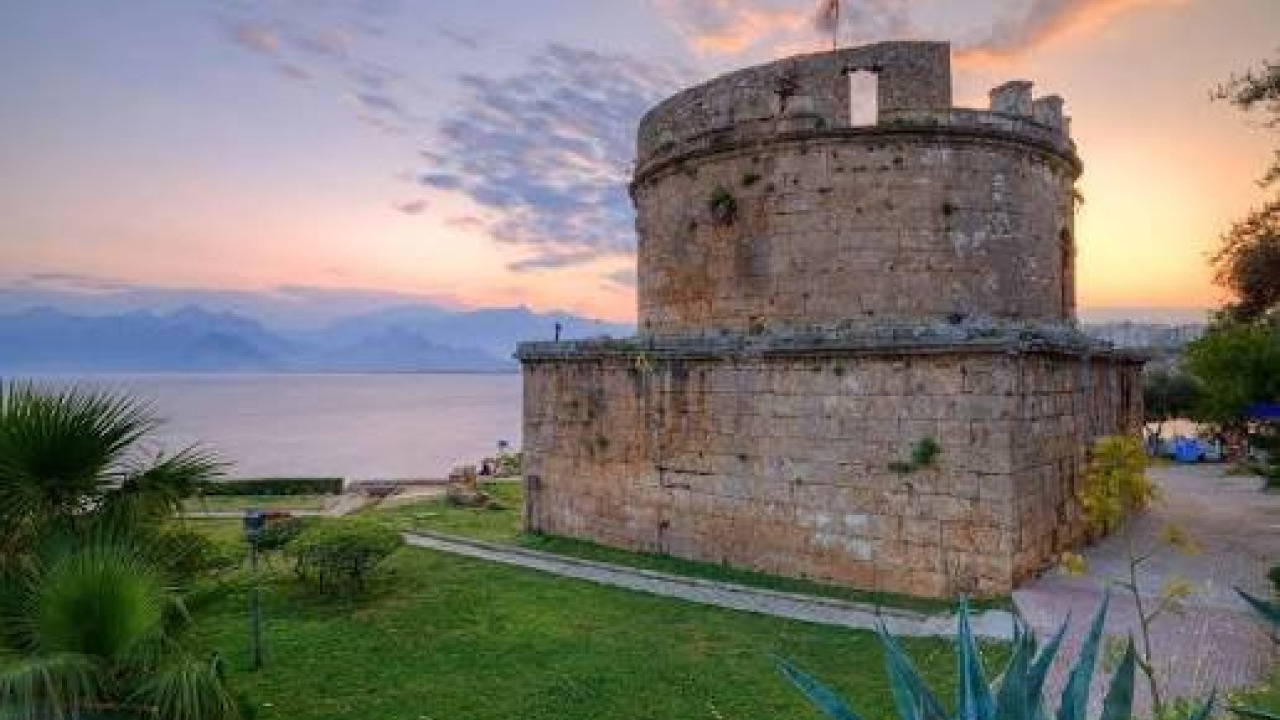
Standing on the rocky promontory where Karaalioğlu Park meets the old harbor, Hıdırlık Tower is one of Antalya's most significant monuments. Built during the Roman period in the 2nd century AD, the tower stands 14 meters tall.
The structure features a massive square base of cut stone, topped by a cylindrical tower body. Archaeologists hold two primary theories regarding its purpose. The first suggests that due to its commanding position over the sea, it served as a lighthouse and watchtower to guide ships entering the harbor.
The second, and more widely supported archaeological theory, is that it was built as a mausoleum for a high-ranking Roman consul or a prominent family patriarch. Traces of frescoes and the vaulted chamber architecture within the tower support this thesis. The structure was later integrated into the defense systems during the Byzantine and Seljuk eras. In the Ottoman period, a wooden roof was added, and it was utilized as a lookout and armory.
Recent excavations led by the Antalya Metropolitan Municipality and the Museum Directorate have uncovered ancient baths, water channels, and wall remnants around the tower. To allow visitors to explore these finds without disturbing the site, glass observation decks and walking paths have been installed. For those who prefer a curated experience, exploring historic city routes with a guide provides a rich, contextual journey.

Comparative Guide: Historic Landmarks of Kaleiçi
To better understand the city's chronology, it is helpful to compare the various monuments and civil structures found within the site.
| Landmark | Period | Architectural Function & Feature | Current Status |
|---|---|---|---|
| Hadrian Gate | Roman (130 AD) | Monumental marble arched entrance | Open to pedestrians; main entry point |
| Hıdırlık Tower | Roman (2nd c. AD) | Cylindrical watchtower/mausoleum | Viewable via glass observation deck |
| Yivli Minaret | Seljuk (13th c.) | Fluted brick minaret and madrasah | Mosque open for worship and visits |
| Cut Minaret | Roman/Byz/Ott | Temple $\rightarrow$ Church $\rightarrow$ Mosque | Open for worship after restoration |
| Traditional Mansions | Ottoman (18-19th c.) | Stone base, wooden bay-window homes | Boutique hotels, restaurants, museums |
Terrain, Safety, and Practical Logistics
Motorized traffic within the Kaleiçi urban site is strictly limited to specific hours and authorized vehicles. Therefore, the best way to explore is on foot. However, the nature of the streets requires some precautions.
The ground is paved with historic cobblestones and basalt that have been polished by centuries of footsteps. These stones can become extremely slippery, especially during morning dew or rain. High heels or smooth-soled shoes are not recommended as they can slip or get caught in the gaps. Sturdy sneakers or walking shoes with grip are essential.
Kaleiçi is not laid out on a grid; it is a labyrinthine, organic network. To navigate, simply follow the slope toward the harbor or use the sea cliffs as your primary reference point. Visitors using strollers or wheelchairs should be cautious of steep ramps and stepped passages.
Getting to Kaleiçi via public transport is seamless. Take the nostalgic tram and get off at the Kale Kapısı or İsmetpaşa stops for direct access. Those arriving by car are advised to use the multi-story parking garages outside the walls and enter the district on foot.
The 5-Step Kaleiçi & Hıdırlık Discovery Protocol
To ensure you experience the full atmospheric and panoramic beauty of the area, we recommend this step-by-step itinerary:
- Enter via Hadrian Gate: Begin your journey through the magnificent Roman gate, passing under marble columns and vaulted ceilings into the heart of the old city.
- Explore Kılıçarslan and Hesapçı Streets: Photograph the Ottoman mansions, traditional wooden door knockers, and courtyards overflowing with bougainvillea.
- Visit the Cut Minaret & Suna-İnan Kıraç Museum: Study the layered history of the mosque-church monument, then visit the ethnography museum to see traditional mansion life.
- Hıdırlık Tower & Glass Terrace: Head to the corner of the walls to reach Hıdırlık Tower and view the archaeological excavations from the glass walkway.
- Karaalioğlu Park Sunset: Wind down at Karaalioğlu Park, where you can watch the sun dip below the horizon against the silhouette of the Bey Mountains and the Mediterranean.
Local Flavors and Relaxation Spots
After your walk, treat yourself to local delicacies in the courtyards of the historic mansions. A traditional tahinli çörek (tahini bun) or serpme börek from the local bakeries is the perfect way to start your day.
For lunch or dinner, try Antalya's signature piyaz (bean salad with tahini sauce) paired with charcoal-grilled şiş köfte. To cool off, enjoy local orange jam, bergamot tea, or freshly squeezed citrus juices in a shaded courtyard.
As evening falls, the fish restaurants along the Yacht Harbor offer the perfect spot to enjoy fresh Mediterranean seafood while overlooking the water. Ending the day with a Turkish coffee in the peaceful silence of the stone streets is the ultimate way to unwind.
Frequently Asked Questions 5
Where is Hıdırlık Tower located and how do I get there?
Hıdırlık Tower is located on the southwestern edge of the historic Kaleiçi district in the Muratpaşa area of Antalya. You can reach it by taking the nostalgic tram to the 'Belediye' stop and walking through Karaalioğlu Park, or by following Hesapçı Street within Kaleiçi.
What are the must-see spots in Antalya Kaleiçi?
The highlights include the Hadrian Gate, Hıdırlık Tower, the Yivli Minaret Complex, the Cut Minaret (Şehzade Korkut Mosque), the Historic Yacht Harbor, the Suna and İnan Kıraç Museum, and the picturesque bougainvillea-lined streets.
What is the history and story behind Hıdırlık Tower?
Built in the 2nd century AD during the Roman era, the tower features a square base and a cylindrical top. It is believed to have served a dual purpose: as a lighthouse and watchtower for ships entering the bay, and as a monumental tomb for a prominent Roman citizen.
Are cars allowed in the streets of Kaleiçi?
Because Kaleiçi is a protected urban site, it is generally closed to general vehicle traffic. Only local residents and hotel operators with special permits can enter. Visitors are expected to explore the area on foot.
Is there an entrance fee for Kaleiçi and Hıdırlık Tower?
Walking through the streets of Kaleiçi and visiting the archaeological observation terrace around Hıdırlık Tower is completely free. However, some private museums or specific indoor exhibition areas within the tower may charge a small entry fee.