
When you think of things to do in Balat, a scattered list of places might come to mind. However, Fener and Balat actually form a cohesive itinerary with easily walkable stops. By planning a route that starts along the Golden Horn (Haliç) shore, climbs the slope, then dives into the inner streets before descending back to the coast, you avoid climbing the same incline twice. This guide presents attractions not by popularity, but by geographical order. For each stop, you'll find out what to see, which doors might be closed, and where to take a well-deserved break. What might seem like a jumble of names when searching for Fener Balat attractions will neatly fit into a half-day itinerary with this sequence.
Quick Facts for Your Balat & Fener Visit
| Topic | Information |
|---|---|
| Location | Fatih district, Golden Horn (Haliç) shore; adjacent to Fener |
| Route Logic | Starts from the coast, ascends the slope, descends back to the coast |
| Key Highlights | Sveti Stefan Church (Iron Church), Merdivenli Yokuşu (Staircase Slope), Ahrida Synagogue |
| Transport | T5 tram line, Golden Horn (Haliç) ferry line, coastal buses |
| Duration & Terrain | Half-day; steep slopes, comfortable flat shoes recommended |
Balat & Fener Walking Route: Getting There and Planning Your Path
Starting your route from the bottom up ensures you tackle the slopes with fresh legs. Mark Merdivenli Yokuşu (Staircase Slope) on your map; navigation might direct you to other stair-filled streets.
- Head to the Coast: The Fener or Balat stops of the T5 tram, and the Fener and Balat piers of the Golden Horn (Haliç) ferry line, are right on the waterfront.
- Start from the Shore: Walk along the coastal road to Sveti Stefan Church (Iron Church).
- Detour to the Courtyard: St. George's Cathedral is a short detour from the coast.
- Ascend the Slope: On the Fener side, the Red School (Kırmızı Mektep) and Yuvakimyon facade, and on the Balat side, Merdivenli Yokuşu (Staircase Slope) with its Colorful Stairs, are on the upper level.
- Descend into the Inner Streets: Explore the area around Ahrida Synagogue, Balat Market (Balat Çarşısı), and Surp Hireşdagabet Church, particularly along Kiremit and Vodina streets.
- Return to the Coast: From Ferruh Kethüda Mosque (Tahta Minare Mosque), take Vodina Street down to the waterfront. If you have time, extend your walk towards Gül Mosque.
From the Coast to the Patriarchate Courtyard: First Stops
Sveti Stefan Church (Iron Church)
Easily spotted from the coast, Sveti Stefan Church, commonly known as the Iron Church (Demir Kilise), is your first stop on this route. Its entire structure is made of cast-iron panels, produced in Vienna, shipped by sea, and assembled here between 1893 and 1898. As you get closer, you can clearly see the cast-iron joints. Its story is less about architecture and more about community politics: the Bulgarian Orthodox community's desire to establish its own church organization made this building a powerful symbol.
Inside, you'll find a beautiful iconostasis and a soaring nave. The garden, overlooking the Golden Horn (Haliç), is the last flat spot to rest before the climb and is wonderfully quiet in the early morning. From here, head into the heart of the neighborhood.
St. George's Cathedral and Greek Orthodox Church of Virgin Mary
A short detour will lead you to the Patriarchate courtyard. St. George's Cathedral, located in the courtyard, is the central church of the Ecumenical Patriarchate. It appears modest from the outside, but inside, dark wood, silver-plated icons, and the towering Patriarchal throne create a striking display. Entry may be restricted during services, and photography might not always be permitted.
The Greek Orthodox Church of Virgin Mary, however, is not on the coast but on the Fener slope, at the same elevation as the climbing section. It's a community church on a neighborhood scale, with irregular visiting hours. Therefore, don't plan a separate detour; simply take it in as you ascend. For those who wish to delve into the layered history with a guide, historical city tours offer a similar narrative.
The Ascent: Merdivenli Yokuşu (Staircase Slope) and the Red School
Private Fener Greek High School
The red-brick building that defines Fener's skyline is the Private Fener Greek High School, locally known as the Red School (Kırmızı Mektep). The current building was constructed between 1881 and 1883. With its domed tower and castle-like mass, it symbolizes the Greek community's investment in education. The building is not open to visitors; it can only be admired from the outside.
Colorful Stairs and Yuvakimyon Facade
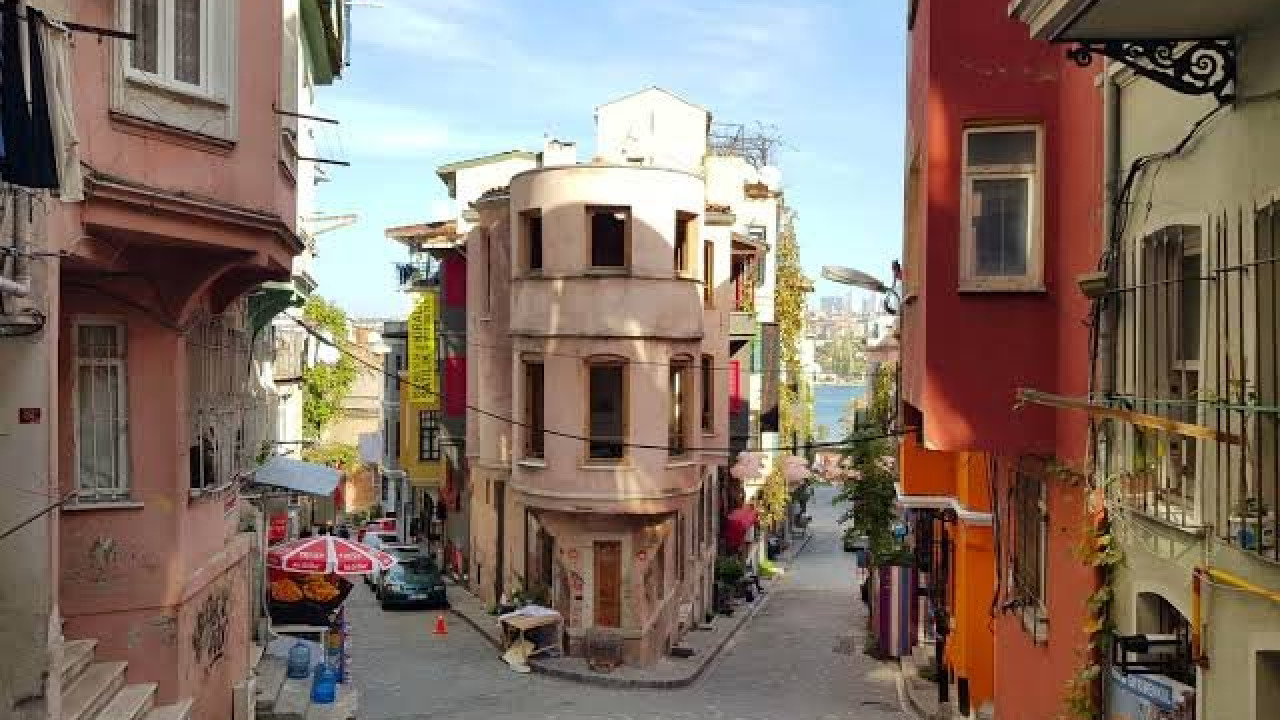
Merdivenli Yokuşu (Staircase Slope) is the stepped street connecting the coastal level to the ridge; it's the steepest and most photographed section of the route. It features the Colorful Stairs (Renkli Merdivenler) with their painted steps; this is often the target for those seeking directions to Balat's famous colorful houses. This frequently shared spot among Balat's photo opportunities gets crowded in the afternoon; morning light offers a clearer shot. The Private Yuvakimyon Greek Girls' High School on the Fener slope has been closed for education for a long time; the building can only be viewed from the exterior. From here, the path descends into the inner streets.
Balat's Inner Streets: Synagogue, Mosque, and Market Line
As you descend from the ridge, the atmosphere shifts: narrow streets, painted facades, antique shops, and cafes on the ground floors. The streets are interconnected, allowing you to zigzag and explore. Those looking to combine the neighborhood with a guided program can check out cultural tours. If you wish to extend your day to the Historic Peninsula, consult the Istanbul cultural tours and museums guide.
Ahrida Synagogue
One of the visible landmarks of Balat's Jewish past is the Ahrida Synagogue. Its name is said to derive from Ohrid, the city from which the community originated. The wooden teva (bimah) inside is famous for its shape, resembling the prow of a ship. This form is sometimes interpreted as Noah's Ark, and other times as the ships that carried Sephardic migrants. It is not open for casual visits; prior application and permission are required. If you don't secure permission, simply admire the facade and continue your journey.
Ferruh Kethüda Mosque (Tahta Minare Mosque)
Located in Balat's Tahtaminare area, this mosque was built by Mimar Sinan for Ferruh Kethüda in 1562-63. Due to its wooden minaret, which gave the neighborhood its name, it is also widely known as Tahta Minare Mosque (Wooden Minaret Mosque). You might see two separate listings on maps, but they refer to the same location. Its courtyard and hazire (graveyard) wall offer the most peaceful break after the uphill climb. It can be quietly visited outside of prayer times.
Balat Market (Balat Çarşısı) Area and Balat Surp Hireşdagabet Church
The neighborhood's antique and second-hand market line, also known as Çıfıt Çarşısı on some maps, is more interesting for browsing than serious shopping. Balat's cafes are also concentrated along this line, in the side streets parallel to the market. The Balat Surp Hireşdagabet Armenian Church in the same area is known for its high-walled courtyard and holy spring (ayazma). Check the information at the gate.
Descending to the Coast and Optional Extensions
Return to the Coast and Agora Meyhanesi 1890
The path descending from Vodina Street to the coast marks the end of the main route. Agora Meyhanesi 1890, one of the neighborhood's long-standing dining spots, can turn your walk into a leisurely lunch break or an evening plan. Since operating hours can change, confirm before you go. Those looking for food-focused programs can explore gastronomy tours.
Gül Mosque and Fatih Mosque Direction
If you still have energy, you can walk southeast along the coast to reach Gül Mosque, known to be a Byzantine-era structure converted into a mosque. Fatih Mosque and its complex, however, are further inland after a continuous uphill walk, so plan that separately.
What's Open, What to See from Outside
Arriving at a closed door is the biggest time-waster in the neighborhood. This table summarizes the layers; hours change seasonally, so confirm before you visit.
| Stop | Affiliation | Visit Note (Confirm) |
|---|---|---|
| Sveti Stefan Church | Bulgarian Orthodox | Generally open; may be restricted during services |
| St. George's Cathedral | Greek Orthodox | Generally open during the day; may be restricted during services |
| Greek Orthodox Church of Virgin Mary | Greek Orthodox | Irregular hours; confirm at the gate |
| Ahrida Synagogue | Jewish | Prior application required |
| Balat Surp Hireşdagabet Church | Armenian | Closed most days; opens on service days |
| Red School (Kırmızı Mektep), Yuvakimyon | Greek Education | Interior closed; facade visible from street |
| Ferruh Kethüda (Tahta Minare) Mosque, Gül Mosque | Ottoman | Suitable outside of prayer times |
Tips to make your visit smoother:
- In places of worship, opt for clothing that covers shoulders and knees; a headscarf is expected in mosques.
- Do not take photos during services or prayers. If staff warn you, turn off your flash.
- Respect privacy: do not force school gates, and be mindful of residential windows when taking photos.
- Arrange Ahrida Synagogue permission and confirm current visiting hours before you set out.
- If you'd like to link this route with a guided program, check out Istanbul tour options.
Best Times and Seasons to Visit
Between 8:00 AM and 10:00 AM, the streets are quieter with soft light, ideal for the staircase sections. Dedicate midday to indoor attractions and late afternoon to the coast to spread out the crowds.
| Period | Walking Advantage | Balat-Specific Note |
|---|---|---|
| April-June | Slopes are cool, days are long | Colorful Stairs get crowded on weekends |
| July-August | Coastal section is pleasant in late afternoon | Little shade on slopes, carry water |
| September-October | Light is soft for brick facades | Surp Hireşdagabet busy during services |
| November-March | Streets are quiet, queues are shorter | Wet steps can be slippery, daylight hours are shorter |
Wrapping Up Your Balat Journey
To sum it up, Balat's attractions can be comfortably explored in a half-day, following a route that takes you from the coast, up the slopes, and into the inner streets. By factoring in potential closures from the start, Fener and Balat transform from a collection of scattered names into a seamlessly connected itinerary.
Frequently Asked Questions 4
What are the must-see places in Balat?
On a half-day route starting from the coast, you can sequentially visit Sveti Stefan Church (Iron Church), St. George's Cathedral, Merdivenli Yokuşu (Staircase Slope), the Colorful Stairs, Ahrida Synagogue, the Balat Market area, and Ferruh Kethüda Mosque (Tahta Minare Mosque).
What is Balat famous for?
Balat is famous for its colorful-fronted streets, painted staircases, the unique coexistence of churches, mosques, and synagogues in the same neighborhood, and its antique shops and cafe scene. The red-brick school building in Fener is an iconic symbol of the district.
How do I get to Balat's colorful houses?
Get off at the Balat stop of the T5 tram or the Balat pier of the Golden Horn (Haliç) ferry line. Enter the neighborhood from the coastal road and walk uphill. The colorful houses and painted steps are a few streets inland, concentrated around Merdivenli Yokuşu (Staircase Slope); you won't see them if you stay on the coast.
Can I drive to Balat?
It's possible to reach Balat by car, but the streets are narrow, and parking is limited. Navigation might direct you to stair-filled streets. It's more comfortable to leave your car by the coast and explore on foot.