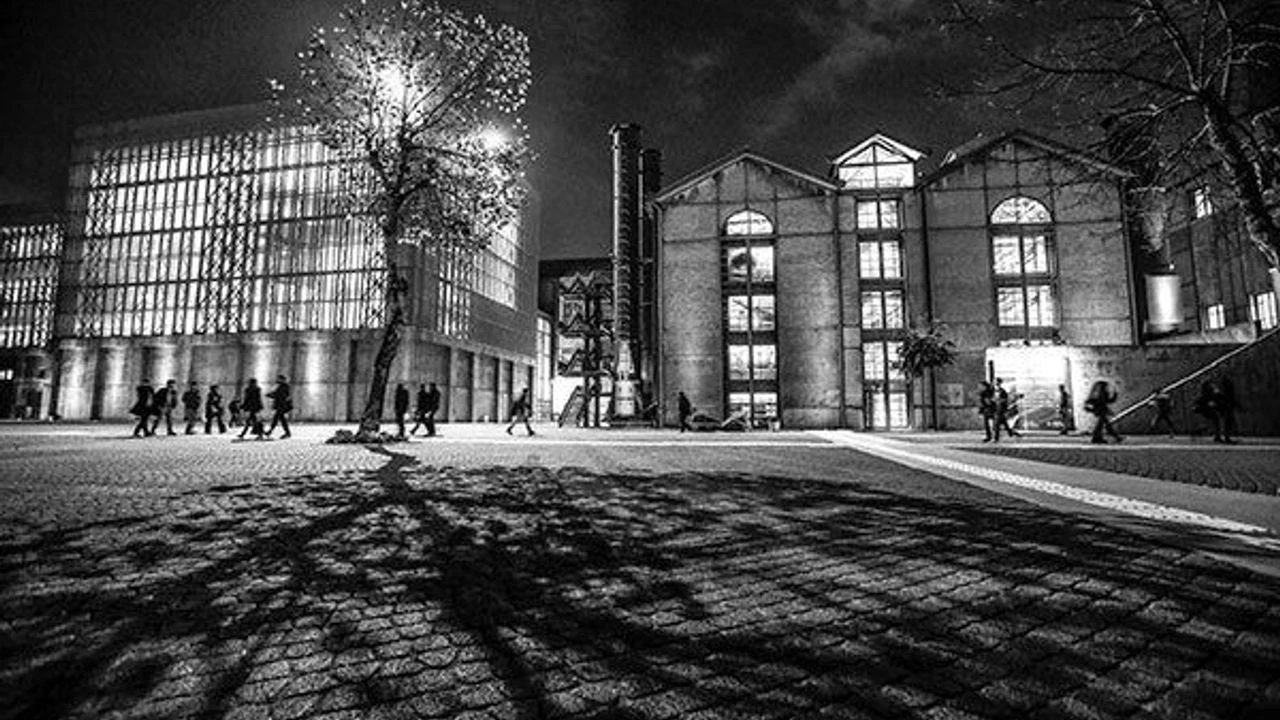

While many of Istanbul's cultural landmarks began their lives as palaces, mosques, or grand mansions, Santralistanbul tells a different story. This unique complex was once the engine room of a bustling power plant. Nestled at the innermost point of the Golden Horn, where the Alibeyköy and Kağıthane streams meet the sea, the Silahtarağa Power Plant first illuminated Istanbul's streets in 1914. It ceased operations in 1983, lying derelict for two decades.
Today, this same site hosts the campus of İstanbul Bilgi University, an energy museum, contemporary art galleries, and expansive public gardens. In this guide, we'll bring you verified information on Santralistanbul's location, ownership, museum visiting conditions, and how to get to the campus. For those looking to combine a campus visit with other historical stops along the Eyüpsultan and Golden Horn route, Istanbul cultural tour options from Travel Tour Shop offer itineraries to suit every plan.
Quick Facts
| Topic | Information |
|---|---|
| Former Name | Silahtarağa Elektrik Santrali |
| Location | Silahtarağa, Eyüpsultan / İstanbul |
| Address | Kazım Karabekir Caddesi No:2 |
| Established as Power Plant | 1914 |
| Electricity Production Ceased | 1983 |
| Restoration Period | 2004 - 2007 |
| Official Opening | September 8, 2007 |
| Current User Institution | İstanbul Bilgi University |
| Main Units | Energy Museum, Contemporary Art Museum, library, concert and performance halls |
| Visiting Hours (Energy Museum) | Weekdays & Weekends 08.30 - 17.00 |
| Admission (Museum & Exhibitions) | Free |
| Parking | Available |
| Official Website | santralistanbul.org |
Where is Santralistanbul Located?
Location at the Tip of the Golden Horn
Santralistanbul is situated on Istanbul's European side, in Silahtarağa, a district of Eyüpsultan. The campus address is Kazım Karabekir Caddesi No:2. The site isn't at the mouth of the Golden Horn where it meets the sea, but rather at its innermost point, extending along the delta of the Alibeyköy Stream. This approximately 118,000-square-meter area borders Eyüpsultan on one side and the region of Sadabad – a famous Ottoman-era picnic spot – which stretches along the Kağıthane Stream on the other.
For a long time, this location was perceived as a disadvantage. From the late Ottoman period until the 1990s, the surrounding lands were allocated to industrial facilities, and the streams served as waste channels. The area's distance from the city center and the polluted coastline had transformed the region into a derelict zone. It was precisely for this reason that the campus project was positioned as a catalyst for urban regeneration.
Where Does Its Name Come From?
The word "Santral" directly refers to the structure itself – the power plant. The project team chose to embed the site's past within its name rather than erase it. This choice is consistent with the decision to preserve the plant's chimneys, boiler rooms, and turbine halls. While both "Santralistanbul" and "Santral İstanbul" are used colloquially, the official corporate spelling is the single-word form.
From Silahtarağa Power Plant to Cultural Campus
The Plant's Operational Period
The Silahtarağa Power Plant was established during the Ottoman Empire to meet Istanbul's electricity demands, commencing operations in 1914. As the first facility to generate electricity on a city-wide scale, it marks a pivotal starting point in the country's energy history. French engineers were responsible for the plant's design, while Hungarian teams undertook the construction of its initial structures. Building began in 1910, and the facility was expanded over the years.
The plant independently generated Istanbul's electricity until 1952. At that point, a connection was established with the Çatalağzı Thermal Power Plant, and the city's electricity load was shared between the two centers. The facility was transferred to the Turkish Electricity Authority in 1970. In 1983, production was entirely halted, citing the wear and tear of the turbines and boilers, as well as the pollution the plant caused around the Golden Horn. Following this, the colossal complex remained unused for approximately two decades.
Restoration Process and Opening
The idea for restoration was put forward by Oğuz Özerden, one of the founders of İstanbul Bilgi University. On May 1, 2004, a protocol signed between the Ministry of Energy and Natural Resources and the university allocated the Silahtarağa complex to the university for a period of 20 years. Renovation work was carried out between 2004 and 2007.
The project's initial budget was estimated at 30 million US dollars, with the actual cost exceeding 45 million dollars. The work was completed through a partnership between İstanbul Bilgi University, Doğuş Group, Ciner Group, and Laureate Education, with Kale Group and Istanbul Metropolitan Municipality as main sponsors. The campus's soft opening took place on July 17, 2007, followed by its official inauguration on September 8, 2007.
| Period | Function | Key Structures |
|---|---|---|
| 1914 - 1983 | City-wide electricity production | Boiler rooms, turbine hall, control room, staff quarters |
| 1983 - 2004 | Disused and closed facility | Preserved but unused industrial buildings |
| 2004 - 2007 | Restoration and repurposing | Survey work, new educational blocks, museum arrangement |
| 2007 onwards | Education, museum, and cultural campus | Energy Museum, Contemporary Art Museum, library, halls |
Who Owns the Santralistanbul Land?
This question frequently appears in search results, and its answer is two-layered. The Silahtarağa Power Plant was established as a publicly owned energy facility. The protocol signed in 2004 was not a sale but an allocation: the complex was granted for use by İstanbul Bilgi University for a period of 20 years by the Ministry of Energy and Natural Resources. It's important to note that this period, as stipulated in the protocol, expired in 2024; however, the campus and museums continue to be operated by the university today, while the land ownership remains with the public.
The allocation decision was not without controversy. In 2001, the Istanbul Branch of the Chamber of Electrical Engineers, which had planned to establish an electro-technopark in the same area with Istanbul Technical University, took the matter to court. However, the ministry approved the university's project. From a visitor's perspective, the practical outcome is this: although the campus is part of a private university, the museums and gardens are open to the public.
The Energy Museum: A Journey Through the Engine Room
At the heart of the campus lies the Energy Museum, built within the power plant's original engine room. The exhibition philosophy here deviates from a classical museum: objects haven't been moved into display cases but rather left in their original positions. Turbines, generators, control panels, and cable infrastructure stand on their authentic ground.
The architectural intervention creates a circulation path that allows visitors to view this equipment from various heights. As you walk along this route, composed of walkways, stairs, and elevators, you can sequentially follow the electricity production chain. Visitors trace the process from the point where coal was transported to the panels where current flowed into the city, all within the authentic scale of the space.
What to See at the Museum
- Preserved turbine and generator sets from the plant's operational era
- Command and control panels left in their original positions
- An elevated circulation path that allows visitors to follow the electricity production chain step-by-step
- Interactive installations that explain the concept of energy through hands-on experience
- Documents, photographs, and archival materials from the plant's working years
Visiting Hours and Admission Fee
The visiting conditions are one of the aspects that make Santralistanbul particularly appealing for travelers interested in historical structures. The exhibitions and the Energy Museum on campus are open at the same hours on weekdays and weekends, and there is no admission fee.
| Visiting Aspect | Status |
|---|---|
| Open Days | Weekdays & Weekends |
| Hours | 08.30 - 17.00 |
| Admission Fee | Free |
| Closed On | Public holidays and January 1st |
| Guided Tour | Upon request, approx. 45 minutes, in Turkish or English |
| Guided Tour Condition | Advance reservation via email |
| Gardens and Public Areas | Open to visitors |
Since conditions for temporary exhibitions and special events may vary, it's advisable to check the current event calendar before your visit.
Contemporary Art Museum and Exhibition Spaces
The campus's second museum unit, the Contemporary Art Museum, is built on a 7,000-square-meter footprint; however, not all of this area is dedicated to exhibitions, as gallery volumes are distributed across the building's floors. The structure wasn't built from scratch on an empty plot: it was constructed upon the foundations of two of the power plant's buildings that had been demolished over time. Architects referenced historical photographs of the water-tube boiler section, which produced steam, to reconstruct the original dimensions of the old structures.
The five-story reinforced concrete blocks are clad with steel and glass facades, and the two buildings are connected by a glass walkway. Since the gallery volumes are separated by movable plasterboard partitions, the exhibition layout can be reconfigured for each new opening. The aluminum mesh enveloping the facades allows light into the interior during the day and gives the structure a lantern-like appearance at night; the facades are also occasionally used as projection screens. Today, these blocks serve not only as exhibition spaces but also as classrooms and study areas.
This route, where industrial structures meet contemporary art, offers an excellent alternative to the city's classical museum itineraries. Visitors with limited time in Istanbul who wish to combine transformed industrial buildings into a single day's itinerary can explore Istanbul day trip cultural tour routes from Travel Tour Shop to find one that fits their schedule.
Architectural Approach: Adaptive Reuse
Design Team and Division of Labor
Santralistanbul stands as a prime example of "adaptive reuse" in Turkey, a concept widely recognized in architectural literature. The architectural coordination of the project was led by İhsan Bilgin, Dean of the İstanbul Bilgi University Faculty of Architecture. The master plan was developed by Nevzat Sayın and Emre Arolat; Sayın took charge of the public library design, while Arolat oversaw the multi-purpose hall. Han Tümertekin joined the team for the design of the Energy Museum.
The team's methodology began with survey work. Structures to be preserved and the existing tree cover were identified, and new buildings were placed on areas where previous structural footprints existed. This approach allowed for new program space to be gained without disturbing the tree cover. Educational buildings were constructed on a 7.5 x 7.5-meter grid system; this measurement was derived from both the old structural footprints and the needs for classrooms and academic offices. No new educational buildings were erected on previously undeveloped spots within the area.
Awards and International Comparison
The project's concept is often compared to London's Tate Modern. Both examples illustrate the transformation of an abandoned power plant into a cultural institution. Santralistanbul, however, forms a more comprehensive campus in terms of its program, housing an energy museum, amphitheater, concert halls, a public library, and accommodation for visiting artists all within one complex.
The renovation work also garnered international recognition. The main gallery structure of the Contemporary Art Museum received an award within the scope of the International Architecture Awards 2010, while the Energy Museum won the DASA award. During Istanbul's tenure as the 2010 European Capital of Culture, the campus hosted international exhibitions and symposiums, significantly enhancing the visibility of the city's cultural infrastructure.
How to Get to Santralistanbul?
Public Transport
The most practical public transport route to the campus is the T5 Eminönü - Alibeyköy Cep Otogarı tram line, which runs along the Golden Horn's shore. This 10.1-kilometer line consists of 14 stations, passing through Eminönü, Cibali, Fener, Balat, Ayvansaray, and Feshane stops before reaching Silahtarağa via the Eyüpsultan area.
For visitors coming from Eminönü, the suggested route is as follows:
- Board the T5 tram line from Eminönü and head in the direction of Alibeyköy Cep Otogarı.
- Alight at either Silahtarağa Mahallesi or Üniversite stop; both stops are close to the campus entrance.
- Upon exiting the stop, follow the pedestrian path towards the campus to reach the main gate.
- Once inside the campus, follow the directional signs to the Energy Museum building.
In addition to the tram, IETT bus lines passing through Eyüpsultan and Alibeyköy also serve the area. The walking and cycling paths that stretch along the Golden Horn coastline also make it possible to walk to the campus from the Eyüpsultan side when the weather permits.
Private Vehicle and Parking
For those arriving by private vehicle, parking is available on campus. Access to the area is provided via the Golden Horn coastal road and connections from Alibeyköy and Kağıthane. As traffic in the region can be heavy during weekday business hours, planning your visit for midday might offer a more relaxed experience.
| Transport Option | Stop or Route Used | Notes |
|---|---|---|
| T5 Tram | Silahtarağa Mahallesi, Üniversite | Eminönü - Alibeyköy line, 14 stations |
| IETT Bus | Eyüpsultan and Alibeyköy lines | Stops available around campus |
| Private Car | Golden Horn coastal road, Alibeyköy connection | Parking available on campus |
| Walking and Cycling | Golden Horn coastal route | An enjoyable route from Eyüpsultan |
Visit Plan and Practical Tips
Suggested Itinerary
- Enter the campus and take a short stroll through the gardens to see the exteriors of the preserved industrial buildings.
- Proceed to the Energy Museum and follow the circulation path from start to finish, tracing the production chain.
- Explore the current exhibition at the Contemporary Art Museum.
- Conclude your visit with a coffee break by the Golden Horn.
Visitor Tips
- As the campus spans a large area, opt for comfortable shoes.
- Since the museum and exhibitions close at 5:00 PM, starting your visit before noon allows for a more relaxed exploration.
- If a guided tour interests you, make a reservation before your visit date.
- When planning your schedule, remember that the museum is closed on public holidays and January 1st.
- For photography enthusiasts, late afternoon hours, when the facades are beautifully lit, are ideal.
What Else is Nearby?
Santralistanbul can be easily integrated into sightseeing routes along the Eyüpsultan and Golden Horn line. On the same tram line, you'll find historic neighborhoods like Balat, Fener, and Ayvansaray, as well as Feshane and Eyüpsultan Square. This route offers a rewarding day plan for those wishing to experience industrial heritage alongside historic urban fabric.
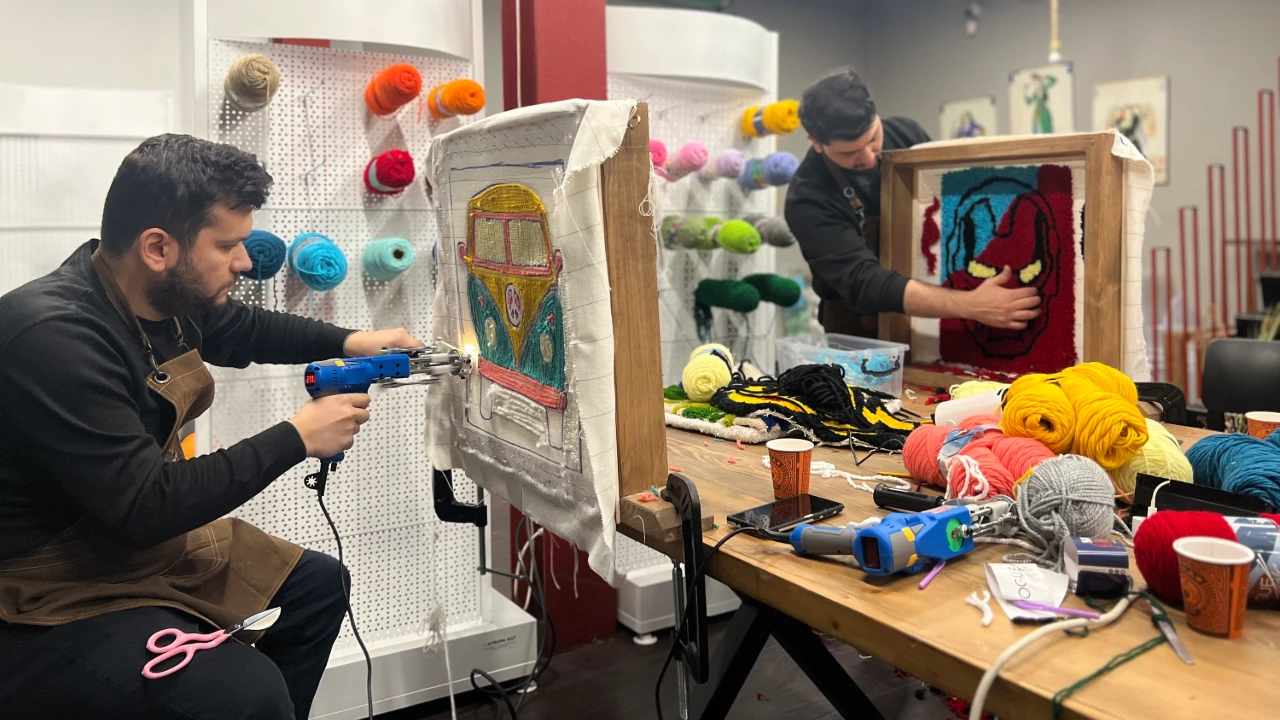
Some cultural tours in the region also include handicraft stops. For those interested in seeing weaving looms firsthand and observing the production process, Istanbul carpet weaving workshop tours from Travel Tour Shop offer a perfect complement. After exploring the Golden Horn area, visitors looking to extend their itinerary to the sea can plan a separate day from Istanbul island tours.
Frequently Asked Questions 6
Where is Santralistanbul located and in which district?
Santralistanbul is located on Istanbul's European side, in Silahtarağa, a district of Eyüpsultan. Its address is Kazım Karabekir Caddesi No:2, and the campus extends along the delta of the Alibeyköy Stream at the innermost tip of the Golden Horn.
What is the admission fee for the Santralistanbul Energy Museum?
The exhibitions and the Energy Museum on campus are open to visitors free of charge. The museum can be visited on weekdays and weekends between 08:30 and 17:00; it is closed on public holidays and January 1st.
Who owns the Santralistanbul land?
The area is the publicly owned Silahtarağa Power Plant complex. On May 1, 2004, a protocol signed between the Ministry of Energy and Natural Resources and İstanbul Bilgi University allocated the complex to the university for a period of 20 years. The university is the current user and operator of the structures.
How can I get to Santralistanbul by public transport?
The most practical option is the T5 Eminönü - Alibeyköy Cep Otogarı tram line. You can alight at either Silahtarağa Mahallesi or Üniversite stop and reach the campus with a short walk. IETT bus lines passing through Eyüpsultan and Alibeyköy also serve the area.
When was the Silahtarağa Power Plant established and when did it close?
The plant commenced operations in 1914 during the Ottoman Empire, generating electricity on a city-wide scale. It independently supplied Istanbul's electricity until 1952, was transferred to the Turkish Electricity Authority in 1970, and production ceased in 1983.
What units and activities are available at Santralistanbul?
The campus features the Energy Museum, Contemporary Art Museum, university classrooms, a public library, concert and performance halls, cafes and restaurants, and extensive green spaces. Throughout the year, contemporary art exhibitions, symposiums, workshops, and outdoor events are organized.