
The short answer to what mansions and coastal structures you'll see on a Bosphorus tour can be grouped into four architectural families: traditional wooden yalıs (waterfront mansions), grand marble palaces, smaller imperial pavilions (kasr), and formidable stone fortresses. On the European side, Dolmabahçe Palace, Ortaköy Mosque, and Rumeli Hisarı stand out. On the Asian side, Beylerbeyi Palace, Küçüksu Kasrı, and Anadolu Hisarı are prominent. The Maiden's Tower, however, stands apart, perched on a rocky islet in the middle of the water, independent of both shores. The continuous lines of wooden yalıs filling the spaces between these named monuments form the everyday fabric of the coastline. This guide, drawing on official sources, will tell you which structures appear on which shore, in what order, what details to look for on their facades, and how to visit them from land.
Quick Facts
| Topic | Information |
|---|---|
| Scope | Yalıs, palaces, pavilions, fortresses, and a coastal mosque along the Bosphorus |
| European Side Highlights | Dolmabahçe Palace, Ortaköy Mosque, Rumeli Hisarı |
| Asian Side Highlights | Beylerbeyi Palace, Küçüksu Kasrı, Anadolu Hisarı |
| In the Water | Kız Kulesi (Maiden's Tower) |
| Visible from the Sea | Facade, quay, sea gate, boathouse; gardens remain on the slope |
| Emergence of Yalı Architecture | From the 16th century; gained its distinct identity in the 18th century |
| Land Visits | National Palaces units and Rumeli Hisarı are closed on Mondays |
Which Landmarks Are on Which Shore During a Bosphorus Tour?
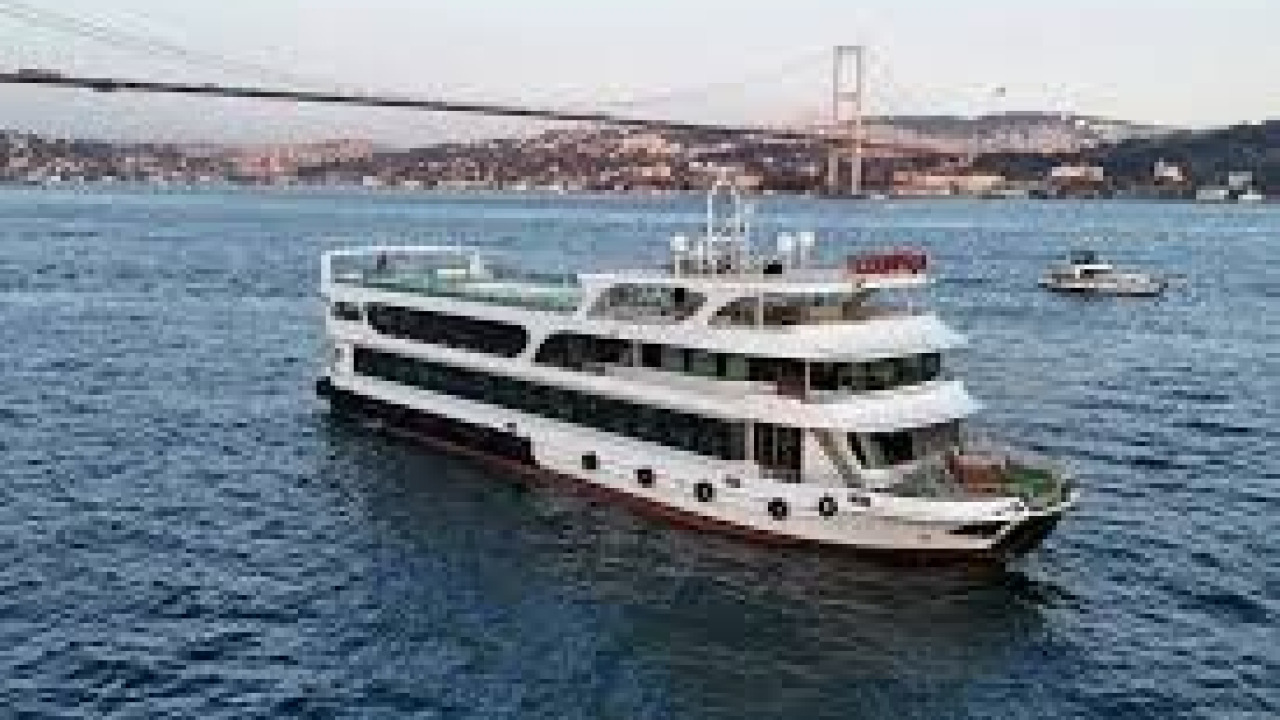
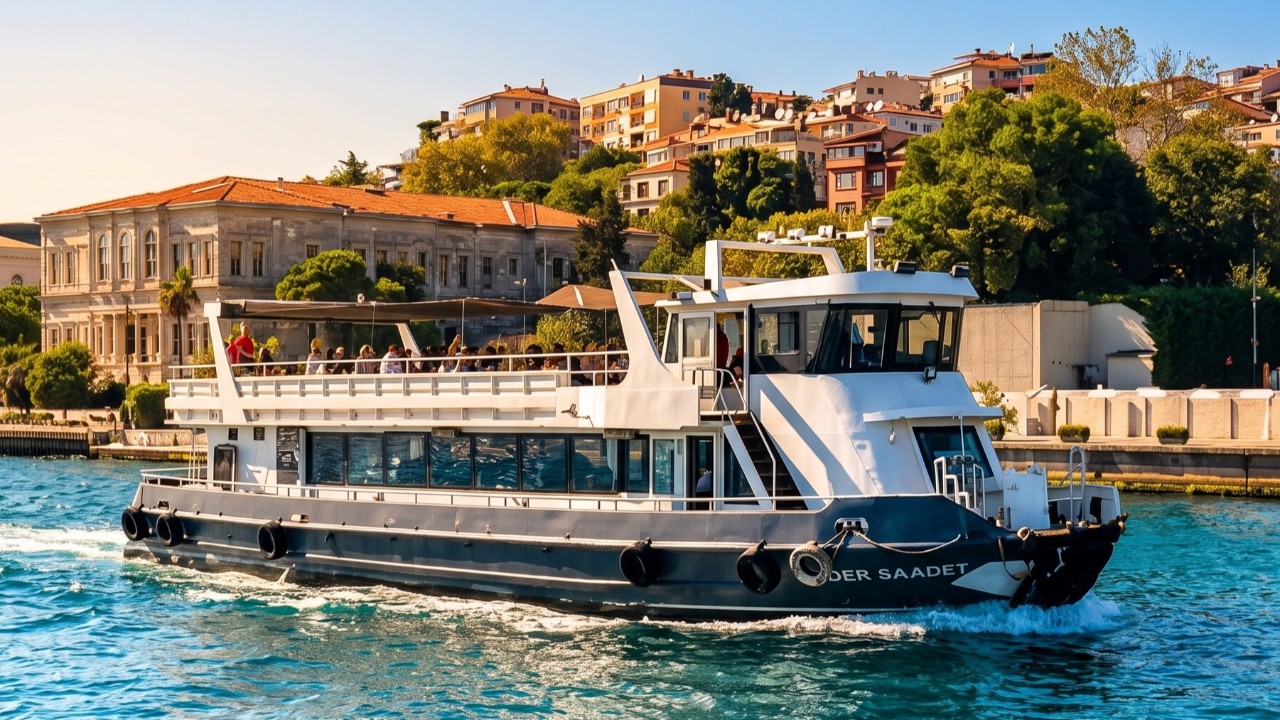
It's easy to get your bearings confused when looking from the sea, as the same shore appears on the other side of the boat once it turns. The practical solution is to remember the structures by their shore: Dolmabahçe and Ortaköy are on the European coast, while Beylerbeyi and Küçüksu are on the Asian coast, and the two fortresses face each other. Istanbul Bosphorus boat and ferry tours typically head north along the European shore and return along the Asian shore; this means you'll often see the same structure twice, from two different distances.
The City Lines' scheduled Long Bosphorus Tour also operates on this principle, taking in both shores sequentially between Eminönü and Anadolu Kavağı. While where to board and the tour duration are separate topics, our focus here is on what you'll see along that route. A visitor who notes down the names of structures by their shore will grasp twice as much detail on the same journey.
| Structure | Shore | Construction Period | Key Detail from the Sea |
|---|---|---|---|
| Dolmabahçe Palace | European | 1843-1856 | Long marble quay and monumental sea gates |
| Ortaköy Mosque | European | 1849-1854 | Base extending into the water, tall windows, two slender minarets |
| Rumeli Hisarı | European | 1452 | Walls covering the slope and three large towers |
| Anadolu Hisarı | Asian | 1395 | Square tower at the Göksu estuary, surrounded by wooden houses |
| Küçüksu Kasrı | Asian | 1856-1857 | Small, ornate facade and quay stairs |
| Beylerbeyi Palace | Asian | 1863-1865 | Symmetrical two-story facade, with sea pavilions on either side |
| Kız Kulesi (Maiden's Tower) | In the Water | Layered, multi-period | Independent tower completely surrounded by water |
What's the Difference Between a Yalı, Palace, Pavilion, and Fortress?
It's a common misconception to call every large structure on the coast a "yalı." A yalı is a civilian residence in direct contact with the water, traditionally built with Ottoman wooden construction techniques, sitting on a stone or marble foundation at the lower level, with wooden upper floors. A palace (saray) is a large-scale structure officially and permanently used by the imperial dynasty. A pavilion (kasr) is a smaller structure designed for day-use relaxation and entertaining guests. A fortress (hisar), on the other hand, is not a residence but a military fortification built for controlling passage.
What to Look for on the Facades
The yalı facade isn't random; it's designed according to the necessities of waterfront living. As you pass by sea, distinguishing these components will help you understand the building's function:
- Quay and Sea Gate: In an era when land access was difficult, this was the main entrance, hence its elaborate design.
- Boathouse (Kayıkhane): An arched section on the lower floor opening to the sea, where private boats were kept.
- Bay Window (Cumba): A wooden projection extending from the upper floor over the water, offering a dual-angle view of the Bosphorus from the room.
- Wide Eaves: A deep roof overhang that protects the wooden facade from rain and sun.
- High Rear Wall: The harem section is closed off from the street by a high wall; the side visible from the sea is the reception facade.
Why Many Old Mansions Are Gone Today
Wood was suitable for the coast due to its flexibility and quick construction, but it was vulnerable to fire. Records from the Istanbul Metropolitan Municipality's cultural heritage archives indicate that many wooden yalıs along the Bosphorus were lost to fires over time. The sequence you see today is a selection that remains after centuries of losses; therefore, the modern apartment blocks between two yalıs are also part of the contemporary fabric.
Who Owned the Coastal Structures, and Can You Tell from the Sea?
A common narrative suggests that the facade colors of yalıs indicated the owner's religion and state rank. However, official institutional sources do not confirm such a detailed color code; records primarily show that yalıs were painted predominantly in white or ochre tones. Social distinction was indeed visible from the sea, but not by color, rather by location.
According to IMM Cultural Heritage records, the Bosphorus coast was distinctly divided by communities. The Beşiktaş, Ortaköy, and Kuruçeşme line was for the Sultan and state officials; Bebek for administrative cadres; Rumelihisarı for the intellectual community; and Arnavutköy for the non-Muslim population. Yeniköy, Tarabya, and Büyükdere were summer retreats for foreign diplomats; between Kireçburnu and Büyükdere lived the Greek community and interpreters, while Sarıyer was home to middle-class Turkish families. On the Asian side, Beylerbeyi was a region where Christian clergy and scholars resided.
With this distribution in mind, a Bosphorus tour transforms from an architectural parade into a residential map: where a structure stands in front of which village offers a more reliable clue about who it was built for than its facade ornamentation.
Getting to Know the Coastal Landmarks Up Close
The following structures are fixed focal points along the route. For each, the construction period and current status are taken from official institutional pages; as visiting days and hours can change seasonally, it's essential to verify current announcements before you set out.
| Structure | Current Function | Visitor Note (Verify) |
|---|---|---|
| Dolmabahçe Palace | Museum-palace | Closed Mondays; open 09:00-17:30 |
| Beylerbeyi Palace | Museum-palace | Closed Mondays; ticket office 09:00-17:00, sea pavilions closed to visitors |
| Küçüksu Kasrı | Museum-palace (since 1983) | Closed Mondays; 09:00-17:00, picnic area 09:00-19:00 |
| Rumeli Hisarı | Museum (since 1968) | Closed Mondays; 09:00-19:00, ticket office closes at 18:00 |
| Ortaköy Mosque | Open for worship | Open after 2014 restoration; note prayer times |
| Kız Kulesi (Maiden's Tower) | Museum and visitor area | Reopened in 2023 after restoration |
| Anadolu Hisarı | Fortress grounds | Viewed from the sea and surrounding streets; check current announcements for interior visits |
Dolmabahçe Palace
According to National Palaces records, the palace was built between 1843 and 1856 during the reign of Sultan Abdülmecid; the construction team included Karabet Balyan, Nikoğos Balyan, Ohannes Serveryan, and James William Smith. The relocation of the administrative center from the palace in the Historical Peninsula to the Bosphorus coast also shifted the empire's administrative gravity. For those curious about the other end of this transition, you can consult our Topkapi Palace guide.
From the sea, you can distinguish the marble quay, the ceremonial sea gates, and the symmetrical row of windows. Because the facade is long, it won't fit entirely into your frame as the boat approaches; those wishing to see the entire structure should look once the boat has moved a little further from the shore.
Ortaköy Mosque (Büyük Mecidiye Mosque)
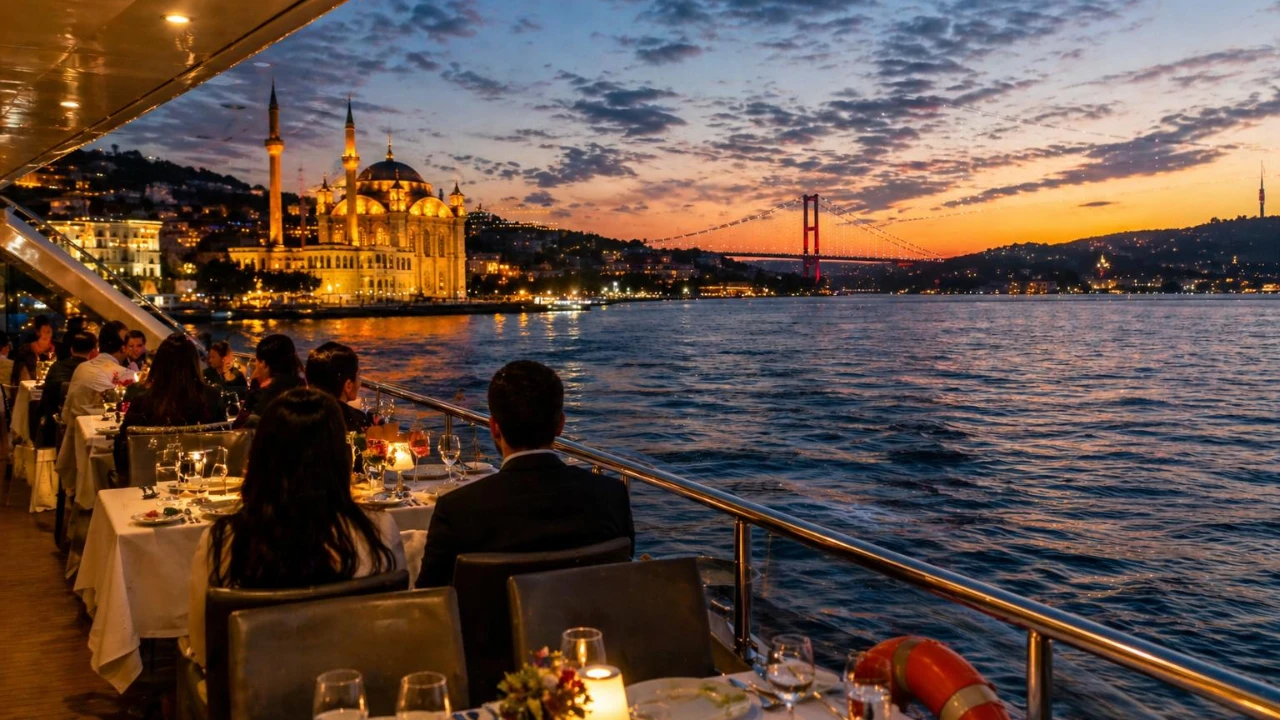
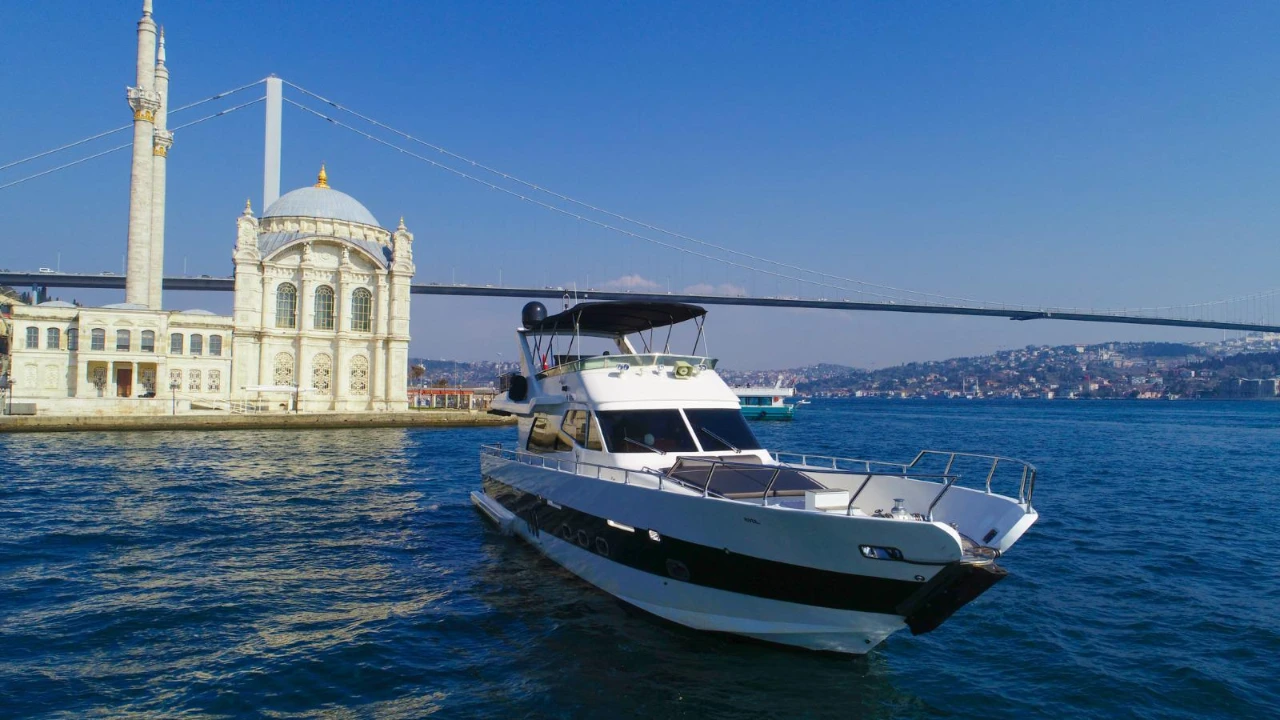
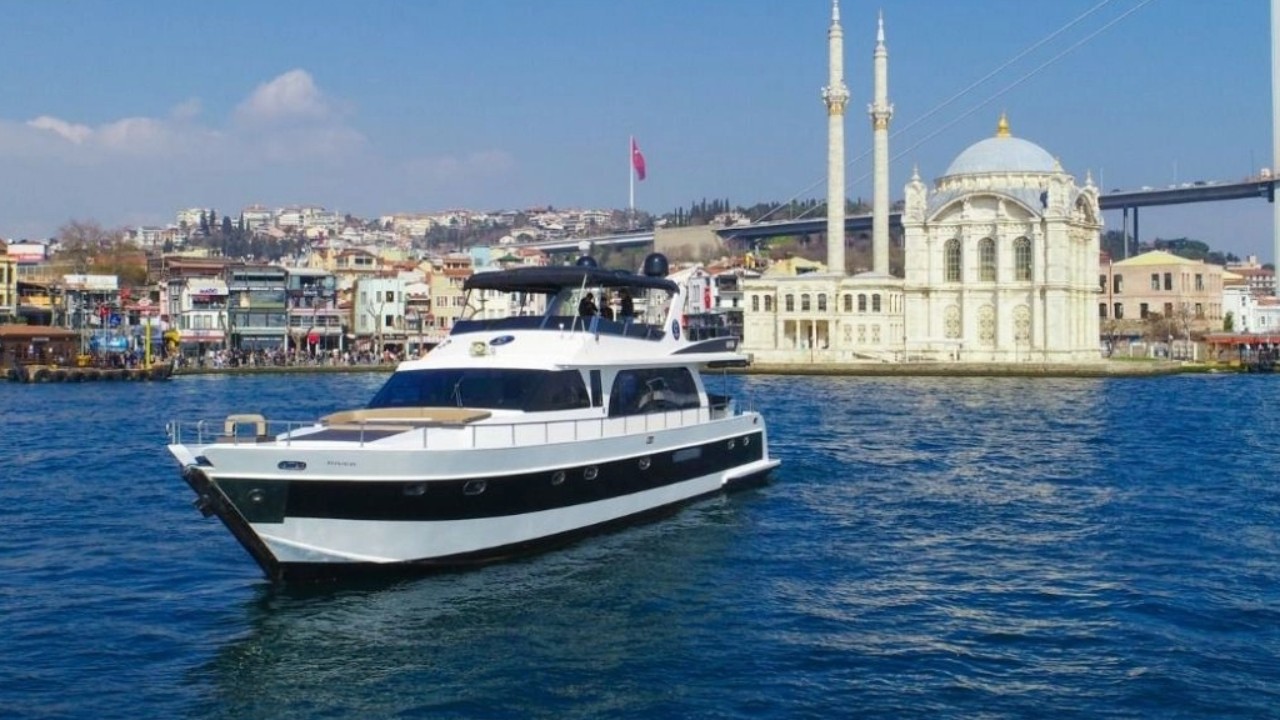
According to records from the General Directorate of Foundations, the mosque was commissioned by Sultan Abdülmecid and built by Nikogos Balyan between 1849 and 1854, bearing the influences of Neoclassical and Baroque styles. It reopened for worship after a restoration completed in 2014. Its tall and wide windows bring the reflection of the water into the interior.
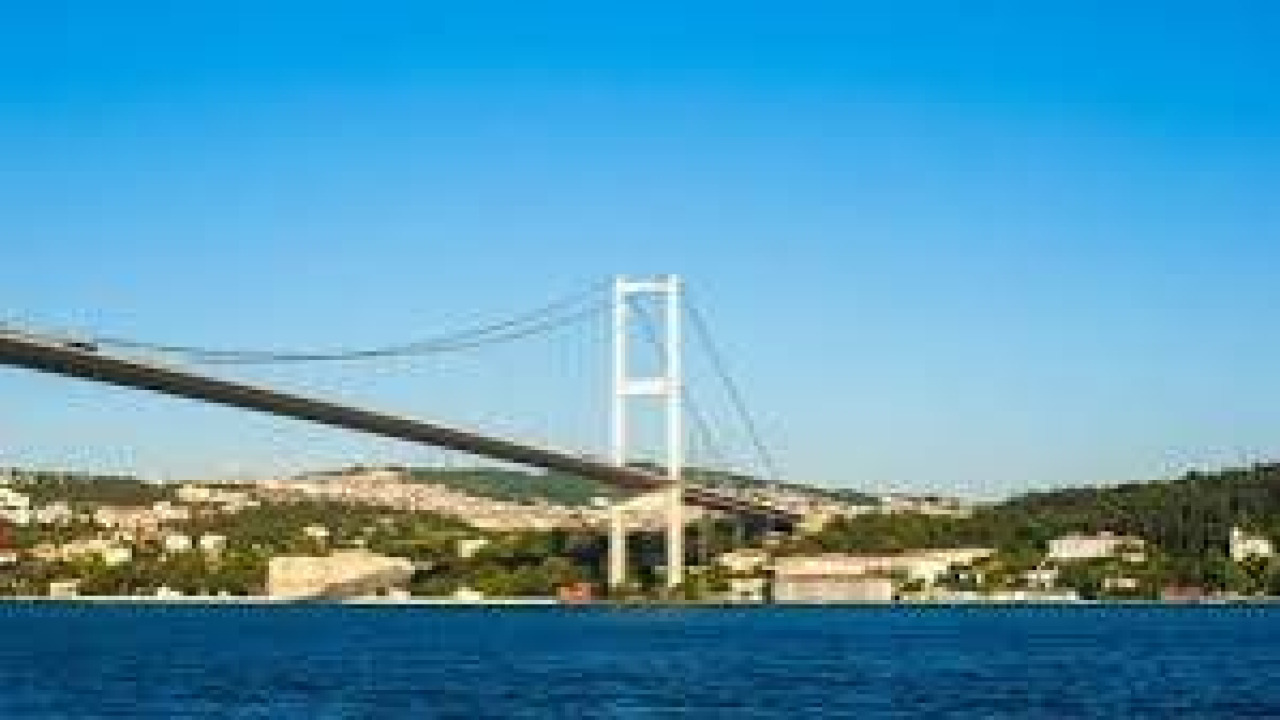
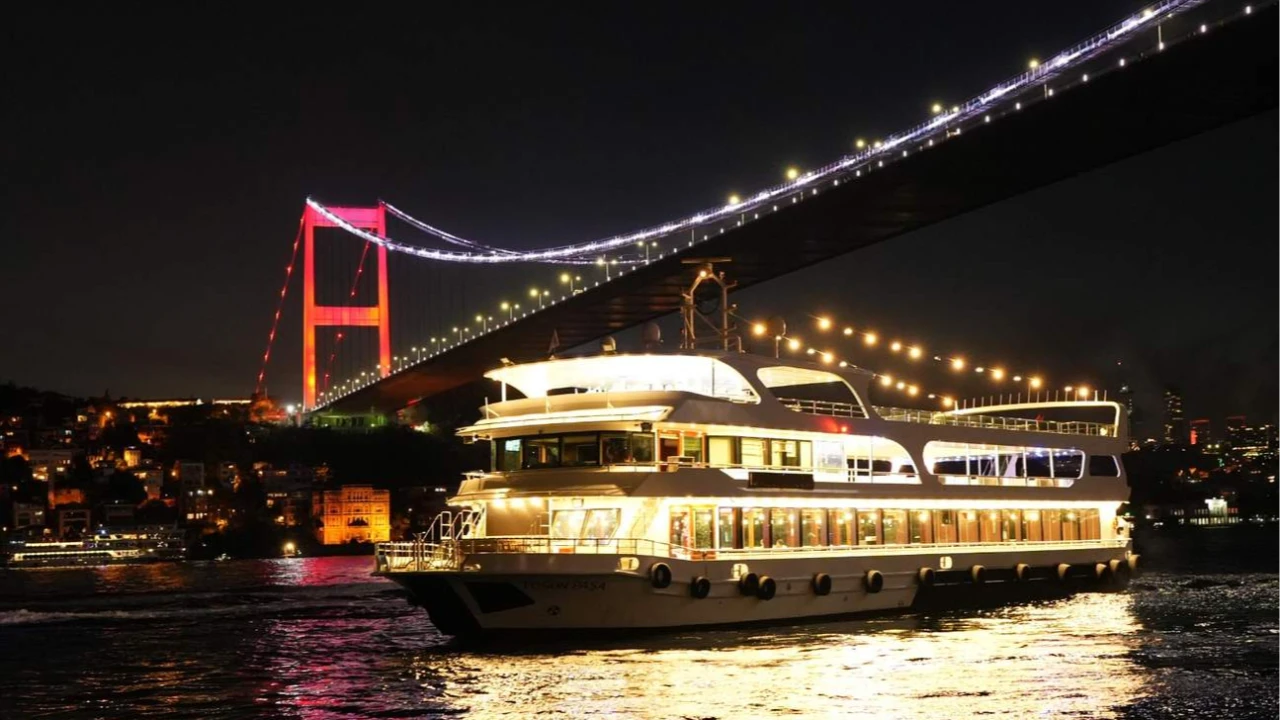
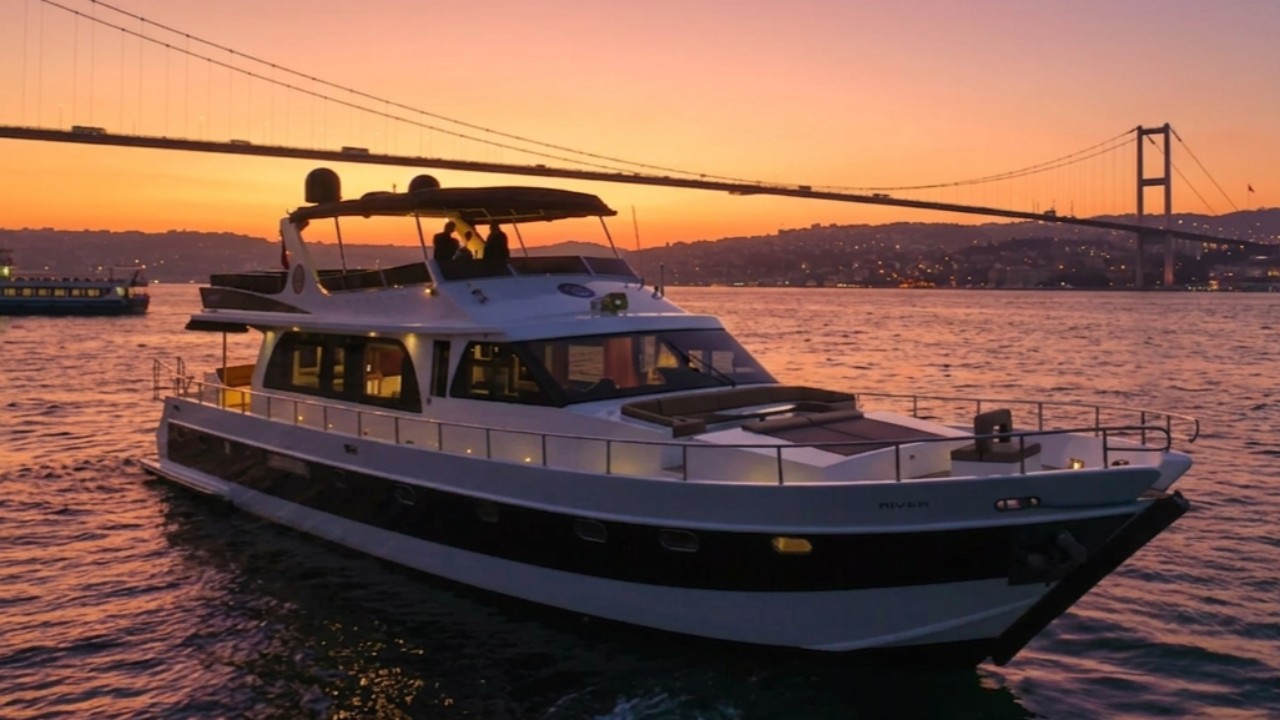
Immediately behind the mosque rises the 15 July Martyrs Bridge. According to data from the General Directorate of Highways, the bridge opened in 1973; its total length is 1,560 meters, with a central span of 1,074 meters. From the sea, 19th-century coastal architecture and 20th-century engineering overlap in the same frame.
Beylerbeyi Palace
National Palaces records indicate that the palace was built by Sultan Abdülaziz between 1863 and 1865, replacing a wooden structure from the reign of Mahmud II. It was used as a summer residence and for hosting foreign state guests; Empress Eugénie of France was among the guests hosted here in 1869.
The octagonal sea pavilions on either side of the facade are a distinctive component of the palace and are noted in official records for their animal-figured reliefs. These pavilions are currently closed to visitors, so the view from the sea is the primary way to observe them.
Küçüksu Kasrı
Standing on the flatland where the Göksu and Küçüksu streams flow into the Bosphorus, this pavilion was built between 1856 and 1857 during the reign of Sultan Abdülmecid, replacing a wooden mansion from 1751-1752 that previously stood on the same site. The masonry structure rises over an area of approximately 15 x 27 meters; despite its small scale, its sea facade is richly adorned with reliefs. The facade ornamentation was further enriched during the reign of Sultan Abdülaziz.
The pavilion opened as a museum-palace in 1983, and its surrounding picnic area is open for use all day. From the sea, the quay stairs and fountain detail make the structure's relationship with the water visible.
Rumeli Hisarı
According to museum records, construction of the fortress began in March 1452 and was completed in August of the same year; its purpose was to control ships passing through the Bosphorus. The three large towers, built by Fatih Sultan Mehmet's viziers, rise between 21 and 28 meters. The structure was used as a dungeon in the 16th century, underwent repairs in the 18th and 20th centuries, and opened as a museum in 1968.
From the sea, the way the walls sit on the terrain is striking: the walls follow the slope of the hill, while the towers are separated along the ridge line. The fortress is located in the narrowest part of the Bosphorus; official statements indicate that the two continents approach each other by approximately 700 meters between Aşiyan and Kandilli.
Anadolu Hisarı
The fortress on the opposite shore, according to IMM Cultural Heritage records, was built by Yıldırım Bayezid in 1395 and is also known in sources as Güzelce Hisar. Its purpose was to cut off aid coming from the Black Sea to Byzantium and to control the Bosphorus passage. When Fatih Sultan Mehmet built Rumeli Hisarı on the opposite shore in 1452, he also added defensive walls around this structure.
The main tower has a square plan and a vaulted interior. Today, the fortress is intertwined with wooden houses, small piers, and boat traffic at the Göksu estuary; this section, where military architecture blends with civilian fabric, offers one of the most serene views along the route.
Kız Kulesi (Maiden's Tower)
Standing on a rocky outcrop off Üsküdar, at the entrance where the Marmara Sea meets the Bosphorus, the tower has served various functions throughout history, including a customs point, lighthouse, quarantine unit, and defensive structure. Following a restoration carried out by the Ministry of Culture and Tourism, the tower reopened to visitors in 2023.
The tower's appearance from the sea is different from other structures along the route: there is no slope behind it, so its silhouette is directly framed by the sky. Boats typically pass around the tower at the beginning or end of the tour.
Observation Order: Seeing the Landmarks in Sequence
Following the structures in their geographical order along the route prevents confusion about historical periods and helps you know which side of the boat to look at from the start. The sequence below is for the classic itinerary that goes north along the European shore and returns along the Asian shore.
- Look to the middle of the water at the entrance: Off Üsküdar, the Kız Kulesi (Maiden's Tower) is the opening marker of the route; once the tower is behind you, turn your attention to the European shore.
- Catch the palace facade: After the area around Kabataş, the marble quay of Dolmabahçe Palace stretches past in a long band, immediately followed by Ortaköy Mosque and the bridge behind it.
- Read the yalı sequence: Along the Kuruçeşme, Bebek, and Arnavutköy coast, wooden facades, boathouses, and bay windows (cumbas) line up one after another; here, instead of trying to memorize names, focus on the facade components.
- Compare the two fortresses in the narrow section: While Rumeli Hisarı covers the slope, Anadolu Hisarı and Küçüksu Kasrı remain at sea level on the opposite side; the scale difference between the two is clear at this point.
- On the return, take the Asian shore: After the wooden yalıs along the Kandilli, Vaniköy, and Çengelköy line, Beylerbeyi Palace and its sea pavilions appear, and the route reconnects in front of Üsküdar.
How Facades Change Throughout the Year
The visibility of coastal structures is not constant. In summer, as the groves on the slopes leaf out, the back gardens and retaining walls of the yalıs are obscured; after the leaves fall, the same facades become readable along with their gardens. While comfort and indoor salons are a separate consideration in winter, the bare tree period enhances detail for facade observation.
The time of day you set out is another matter of preference; since lighting conditions change with the hour, the same facade reads differently at different times. The following notes will improve your observation quality, no matter the season you choose to visit:
- Account for the possibility of restoration scaffolding; historical structures on the Bosphorus frequently undergo repair periods, and facades may be temporarily covered with tarpaulins.
- If you're seated in a glass-enclosed salon, glass reflections can obscure the facade; stepping out onto the deck for a short while will improve your view.
- Note down the names of structures by their shore in advance to reduce disorientation when the boat turns.
- If you plan to visit from land, leave Monday open; museum-palaces and Rumeli Hisarı are closed on that day.
- During prayer times, interior visits to Ortaköy Mosque may be restricted, so plan these hours outside your schedule.
Wrapping Up
The yalıs and coastal structures seen on a Bosphorus tour are not a scattered list of names, but a sequence that can be read by shore and period: a line extending from 15th-century fortresses to 19th-century palaces, and from there to the civilian wooden yalı fabric. Memorizing the structures by shore and looking for facade components will allow you to see much more within the same tour. For those wishing to compare sea programs beyond the Bosphorus, check the Istanbul boat and ferry tours page, and for those planning to visit the same structures from land, refer to the Istanbul cultural tours and museums guide.
Frequently Asked Questions 5
Which palaces and pavilions are seen on a Bosphorus tour?
Dolmabahçe Palace on the European side, and Beylerbeyi Palace and Küçüksu Kasrı on the Asian side are the main palace-scale structures along the route. Dolmabahçe was built between 1843-1856, Beylerbeyi between 1863-1865, and Küçüksu Kasrı between 1856-1857.
How can Rumeli Hisarı and Anadolu Hisarı be distinguished from the sea?
Rumeli Hisarı is on the European side and is immediately recognizable by its walls covering a steep slope and three large towers rising between 21 and 28 meters. Anadolu Hisarı is on the opposite shore, located on the flatland at the Göksu estuary, is smaller, and is intertwined with surrounding wooden houses.
Can the structures seen on a Bosphorus tour also be visited from land?
Dolmabahçe Palace, Beylerbeyi Palace, and Küçüksu Kasrı are open to visitors as museum-palaces and are closed on Mondays. Rumeli Hisarı can be visited as a museum and is also closed on Mondays. Ortaköy Mosque is open for worship. As days and hours can change, it is necessary to check the current announcements of the relevant institution.
What do the facade colors of the yalıs indicate?
It is widely narrated that colors indicated the owner's status with a detailed chart, but official institutional records do not confirm such a classification. What stands out in the records is that yalıs were predominantly painted in white or ochre tones, and communities were separated by districts along the coast.
Is the Kız Kulesi (Maiden's Tower) open to visitors today?
The Kız Kulesi (Maiden's Tower) reopened to visitors in 2023 after the completion of a restoration carried out by the Ministry of Culture and Tourism. On Bosphorus tours, the tower is usually seen at the beginning or end of the program, off Üsküdar.