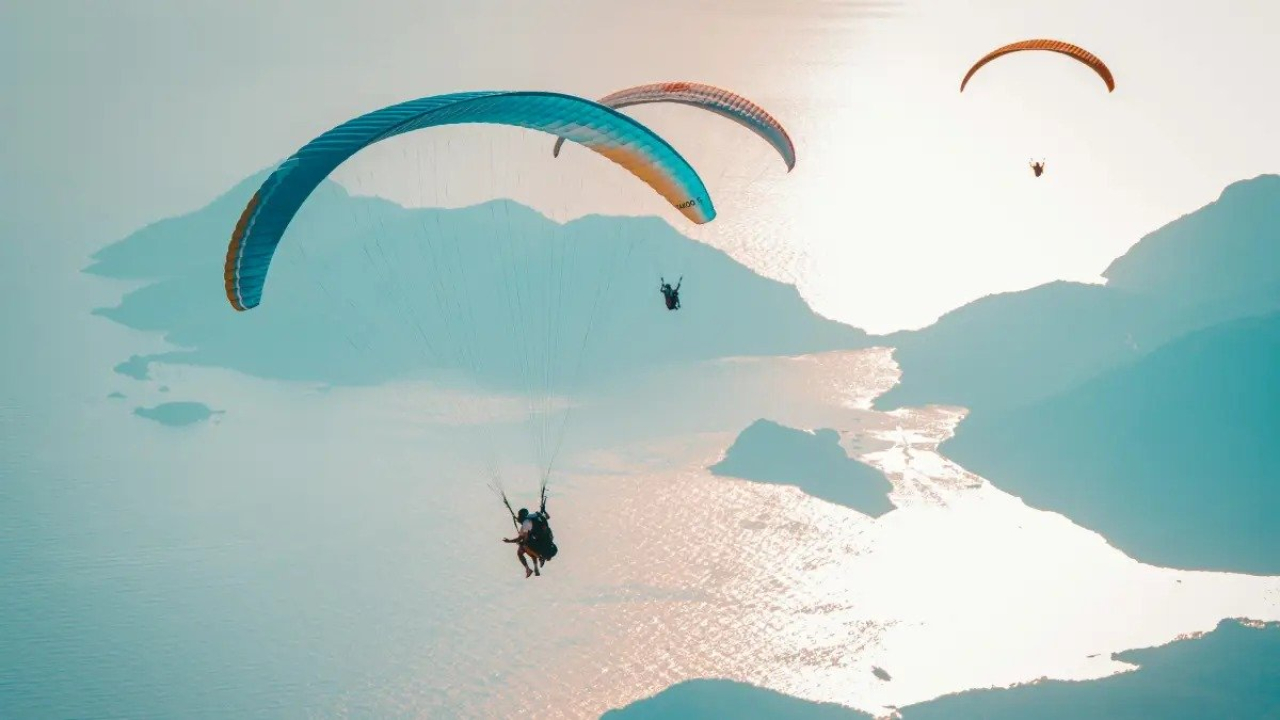
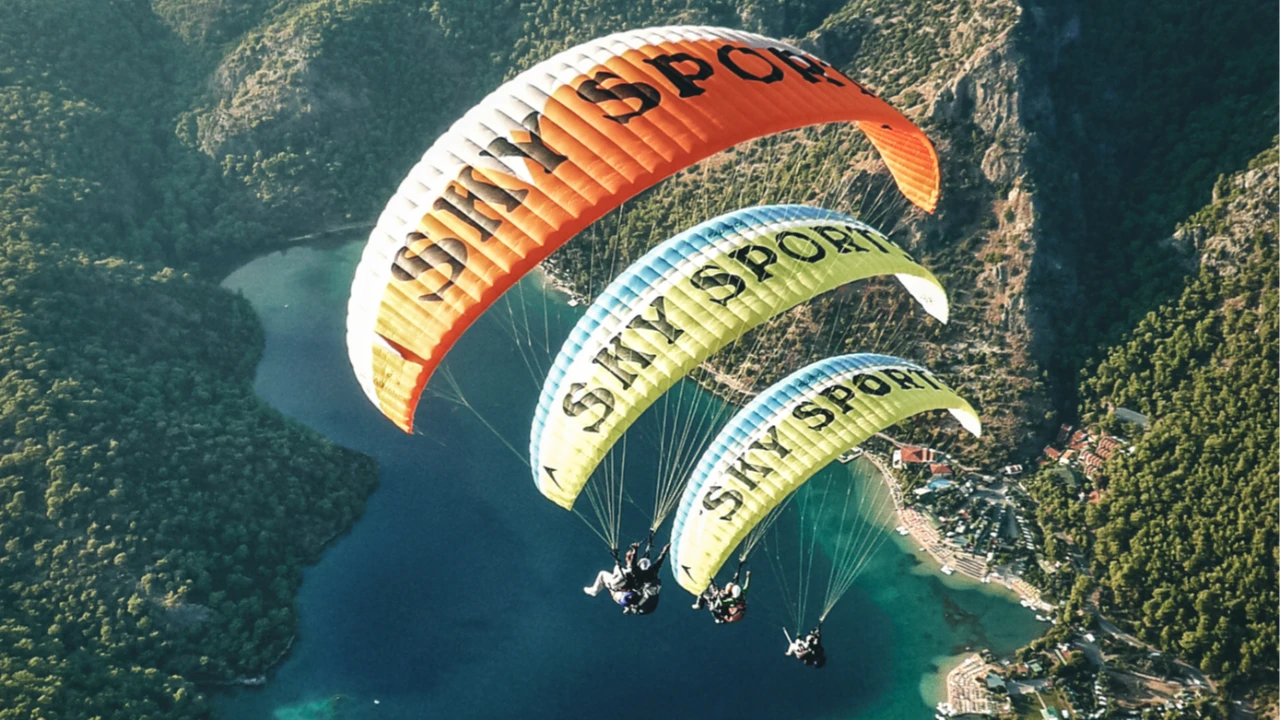
Imagine colorful parachutes soaring gracefully above a crystal-blue lagoon, framed by steep canyon walls and a winding golden sandbar. This iconic sight—the heart of adventure tourism in Turkey—is centered in the Fethiye district of Muğla, specifically over Ölüdeniz and the massive 1,969-meter peak of Babadağ that towers behind it. Babadağ paragliding is one of the most sought-after and internationally recognized adrenaline activities in the country. Its dramatic vertical drop to the sea, stable thermal winds throughout the flying season, and the breathtaking views of the Ölüdeniz lagoon have made it a premier takeoff point in the eyes of paragliding authorities worldwide.
At Travel Tour Shop, we work on the ground in the Fethiye and Ölüdeniz region, evaluating every activity and operator against our own strict safety and service standards. In this guide, we have compiled firsthand insights into the tandem flight experience, takeoff sites and the cable car, safety infrastructure and licensing, the best flying seasons, requirements for pilots and passengers, and how to reach the area. Our goal is to help you plan this aerial adventure with realistic expectations and accurate information.
Why is Babadağ Paragliding Considered World-Class?
While paragliding is practiced in many locations globally, Babadağ has become a legendary hub for the sport. This status is driven by a combination of striking coastal geomorphology and highly favorable flight conditions.
Dramatic Coastal Topography
The primary factor making Babadağ so ideal for paragliding is its unique coastal structure. The mountain rises abruptly from the shoreline, reaching an altitude of 1,969 meters. This sharp elevation change over a short horizontal distance creates a powerful vertical window between the Mediterranean coastline and the summit. The moment you take off, a deep void opens beneath you, while the turquoise Ölüdeniz lagoon unfolds directly ahead. This topography provides a unique geographical setting that enhances both the scenery and the flight dynamics.
Reliable Thermal Winds
As air warms over the sea and rises along the mountain slopes, it creates strong thermal currents that allow paragliders to stay aloft for extended periods. At Babadağ, these currents remain relatively stable throughout the flying season; this consistent wind structure is exactly what allows pilots to master altitude control and extend flight durations. The strength of these thermals provides the natural foundation that turns an extreme sport into a controlled and predictable experience.
Runways and Cable Car: Babadağ’s Aviation Infrastructure
Babadağ has reached international standards not by chance, but through a well-planned aviation infrastructure. Runways designed for various wind directions and a modern transport system ensure high daily flight capacity.
Four Takeoff Runways from 1,200 to 1,900 Meters
The mountain features four main takeoff sites situated at different altitudes—1,200, 1,700, 1,800, and 1,900 meters—to accommodate different wind directions and experience levels. The wind's direction and strength on any given day determine which runway will be used. All runways are paved with specialized stones and equipped with control towers to manage air traffic. The higher runways near the 1,969-meter summit offer longer glides and wider panoramas, while the lower sites serve as excellent alternatives depending on weather conditions. This multi-layered runway architecture allows for safe flying throughout most of the day.
Accessing the Runways via Babadağ Cable Car
The Babadağ Teleferik (cable car) system, which opened in recent years, has revolutionized access for both visitors and pilots. What used to be a long, arduous drive up the mountain is now a quick ride, significantly increasing the daily flight capacity. The cable car is also a major attraction for those not flying: the observation decks offer a stunning bird's-eye view of Ölüdeniz and Fethiye Bay, providing a powerful experience even without taking to the skies. Comfortable access ensures your adventure begins with enjoyment rather than exhaustion.

The Tandem Experience: A Step-by-Step Journey
The main reason paragliding is so popular with the general public is the tandem (two-person) flight model. In this setup, passengers do not need any aviation training or physical expertise; you simply fly alongside an experienced pilot.
Preparation and the Harness
The flight begins on the runway with a brief safety briefing and the harness fitting. You are securely attached to a certified, experienced pilot using a specialized harness. The pilot checks the equipment and wind conditions, asking you to take just a few running steps before leaving the rest to them. This preparation phase lasts only a few minutes but is when the excitement begins to build.
The Moment of Takeoff: The Pilot's "Run" Command
Following the pilot's command to "run," you take a few strides and, within seconds, rise from the steep slopes of Babadağ into the sky. That first moment your feet leave the ground is the most intense emotional threshold of the experience. Your heart rate will spike, and then, as the parachute settles into a stable flight path, the entire bay opens up beneath you. Takeoff is much smoother and more controlled than it looks from the ground.
Soaring Over Ölüdeniz and Landing at Belcekız
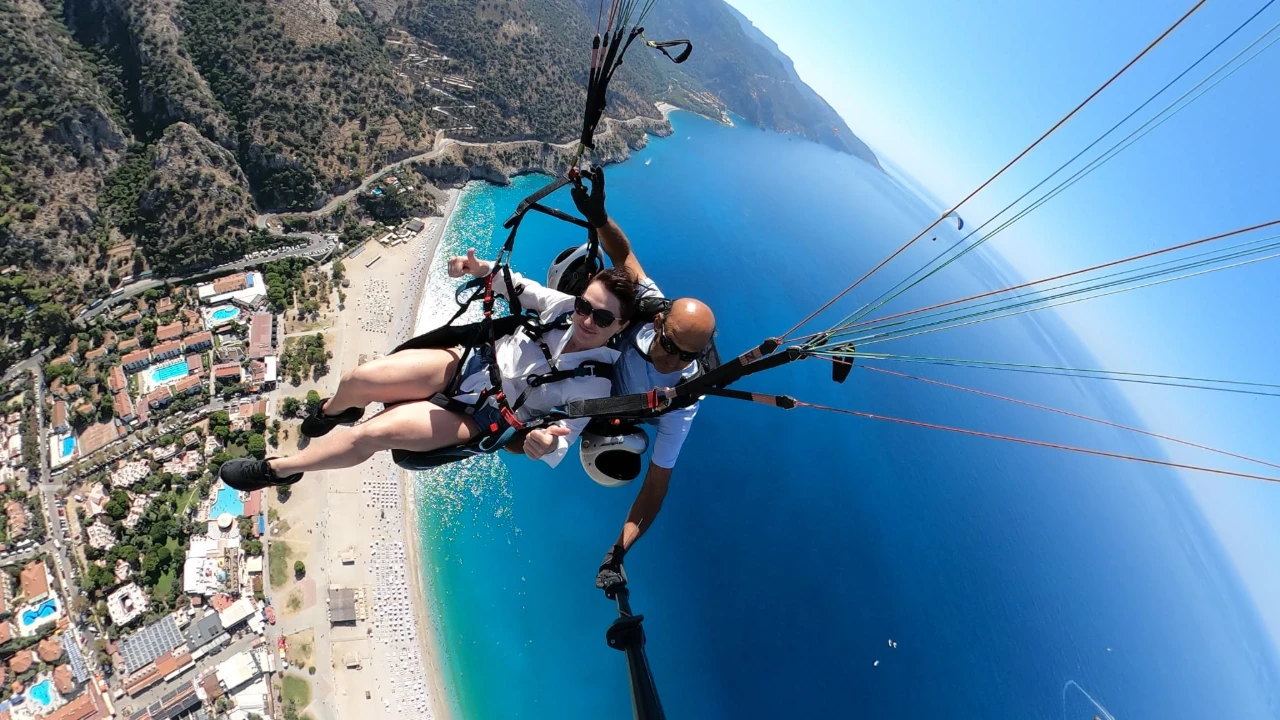
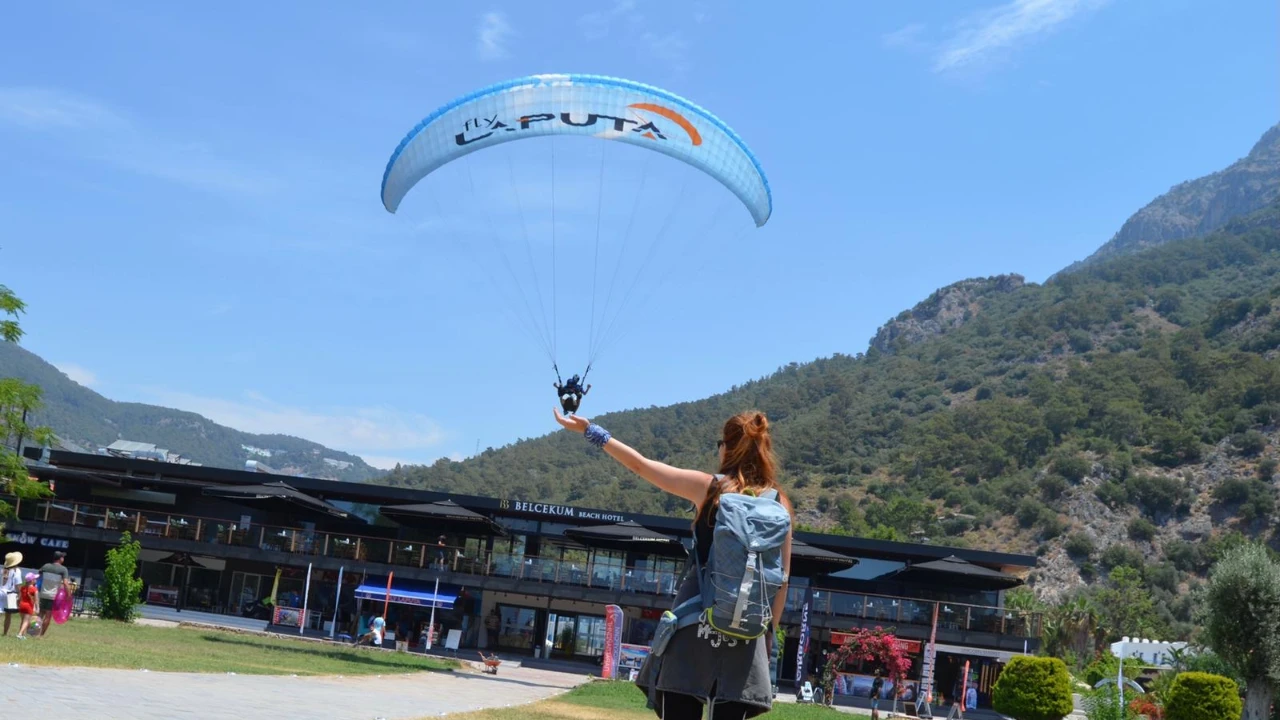
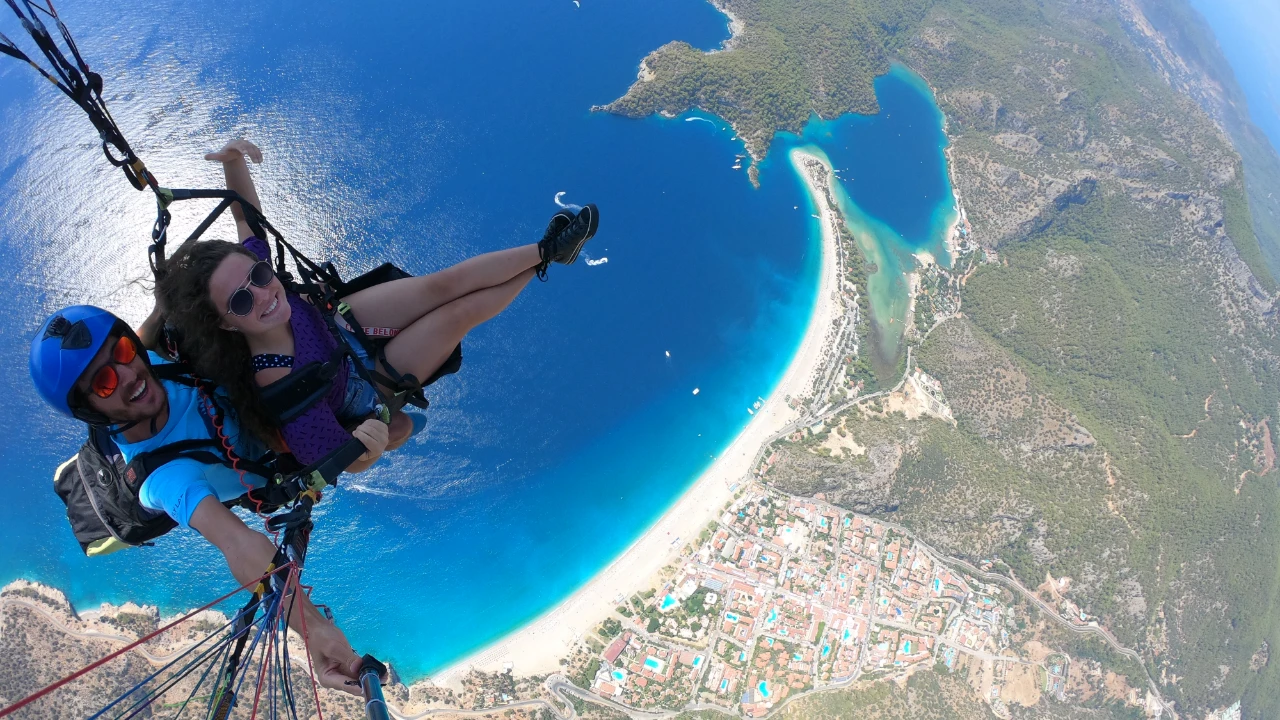
Once airborne, the flight continues with views of the turquoise Ölüdeniz lagoon, the steep canyon walls of Butterfly Valley (Kelebekler Vadisi), Kayaköy, and even the distant island of Rhodes on clear days. The flight itself typically lasts between 20 to 30 minutes; when you include hotel pickup, the ascent to the runways, and the landing, the total activity time is approximately two hours. The glide concludes with a comfortable landing on the soft sands of Belcekız Beach. For thrill-seekers, pilots can perform acrobatic maneuvers known as "wingovers" or "spirals" to take the excitement to new heights.
The Emotional Arc: From Adrenaline to Serenity
A tandem flight typically creates two distinct emotional phases for most participants. Understanding these can help you prepare mentally for the experience.
The first phase is pure adrenaline and excitement. While waiting on the takeoff runway and during the initial ascent, your body experiences intense stimulation and an increased heart rate. This is the controlled rush that adventure seekers specifically look for. The second phase, however, is one of peace and awe. A few minutes after the parachute settles into a steady glide, the excitement gives way to deep relaxation, a sense of freedom, and calm. The lagoon and coastline stretching beneath your feet create a meditative state where time seems to slow down. For many, the most unforgettable part isn't the adrenaline of takeoff, but the profound serenity of this second phase.
Safety and Licensing: SHGM, THK, and Tandem Piloting
What looks like a effortless glide from the outside is actually a commercial aviation activity backed by strict regulations, meteorological monitoring, and expert piloting. Safety is the invisible but most critical component of the experience.
Pilot Certification and SHGM Oversight
In Turkey, commercial tandem flights are strictly regulated by the Directorate General of Civil Aviation (SHGM), and flights must be conducted by licensed pilots with tandem authorization. Pilots are also experienced aviators who have passed certification processes through the Turkish Aeronautical Association (THK) and international aviation federations. When booking, asking about the operator's and pilot's license status and insurance coverage is one of the best steps you can take for a safe flight. Postponing flights due to unfavorable winds or low visibility is a standard part of this rigorous oversight.
Flight Equipment and Reserve Parachutes
Every tandem flight includes standard safety equipment: fully automatic reserve parachute systems, helmets, and emergency gear. Pilots maintain safe distances from other paragliders through radio coordination. These layered safety protocols create the secure environment that allows an extreme sport to function as a mass tourism activity. Watching the pilot perform their pre-flight equipment check can provide extra peace of mind.
When is the Best Season for Babadağ Paragliding?
The flying season at Babadağ is quite long, stretching from late spring through autumn, with the active season generally running from April to November. The summer months are the busiest due to long, clear, and stable days; therefore, booking in advance for summer is highly recommended. Late spring and early autumn offer milder temperatures and a relatively calmer atmosphere.
Flights are scheduled at specific times of the day, mostly during morning and afternoon sessions when thermal conditions are most favorable. For safety reasons, flights may be postponed if the wind becomes too strong or visibility drops. Because of this, we recommend leaving a flexible day in your Fethiye itinerary to account for weather-related delays. If you want to combine sea, boat, and nature activities with your flight, feel free to explore our nature and adventure tours category.
Who Can Fly? Age, Weight, and Health Requirements
The greatest advantage of tandem flying is that it requires no prior experience; you simply sit in front of the pilot and follow instructions. However, operators do have certain general requirements that should be confirmed before booking.
There is usually a minimum age limit, and flights for young children are subject to parental consent and specific operator rules. A reasonable weight range is maintained to ensure the harness and wind conditions function safely; extreme weights are evaluated on a case-by-case basis. If you have serious heart conditions, recent surgeries, are pregnant, or have similar health concerns, it is wise to consult your doctor and the operator before flying. We recommend wearing comfortable, closed-toe shoes and layering your clothing, as there can be a significant temperature difference between the summit and the coast. These small preparations ensure your minutes in the sky are comfortable from start to finish.
Getting to Fethiye and Ölüdeniz: Dalaman Airport
The most practical way to reach Babadağ and Ölüdeniz by air is through Dalaman Airport, the closest major gateway to the region. Regular road transfers are available from the airport to Fethiye and Ölüdeniz, traveling along a winding and scenic route. Once you are settled in Fethiye city center, Ölüdeniz and the Babadağ takeoff area are just a short distance away.
Planning your stay in Ölüdeniz, Hisarönü, or Fethiye center will make the morning pickup logistics much easier. Since flights usually begin with a hotel pickup, a central location simplifies your morning. Once you arrive in the region, we recommend planning paragliding not just as a standalone activity, but alongside boat tours, hiking, and sea activities to enrich your holiday. You can check out our tour programs to see all the options available around Fethiye.

Flight Videos and Photo Packages: Capturing the Memory
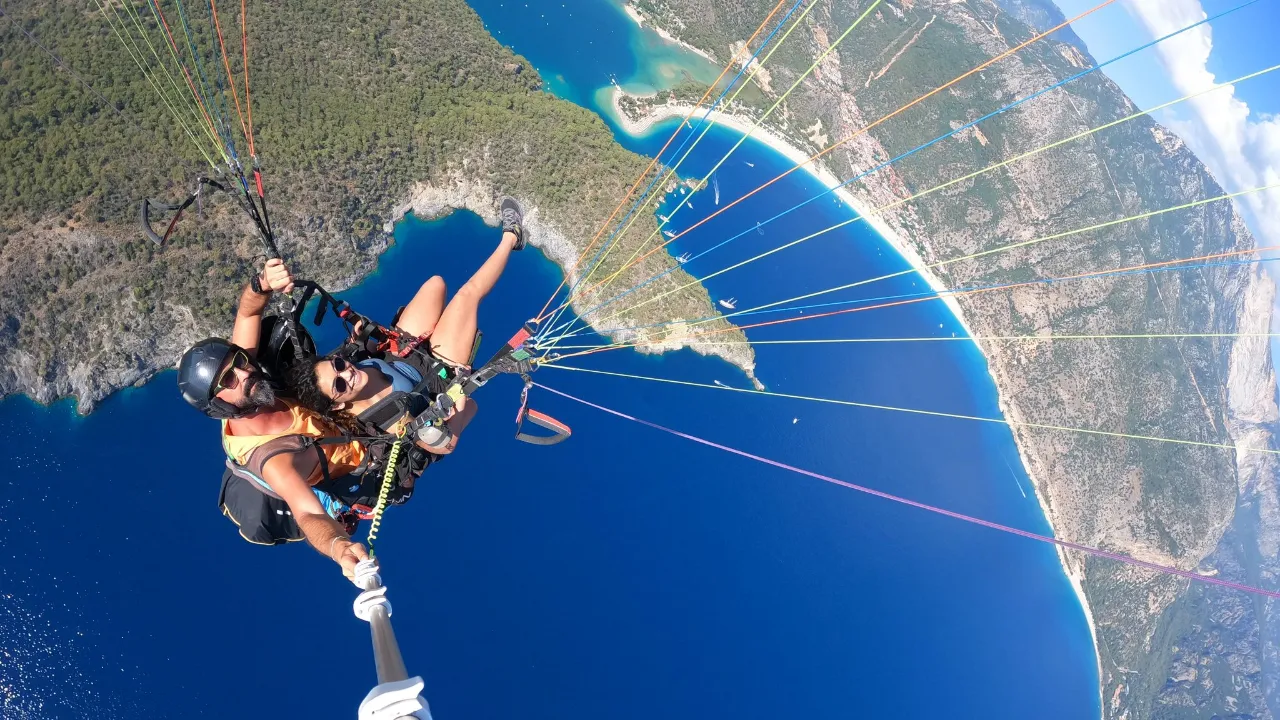
Babadağ paragliding has developed its own robust digital economy. During the flight, pilots use high-resolution action cameras mounted on telescopic poles to capture photos and videos, which are offered as a separate service from the tour fee. These bird's-eye views, which are difficult to capture on your own, become the most shared memories of the experience.
It is a good idea to mention whether you want a video and photo package during your booking so the pilot can prepare their equipment. If you plan to film with your own phone, it is vital for safety to secure the device to your wrist or neck with a strap; a dropped device is not only lost but can also pose a risk to people below. That said, the best way to enjoy the flight is to watch the landscape directly with your own eyes rather than through a screen. If you want to explore more sky and nature experiences, check out our paragliding guide covering flight spots across Turkey, or explore the region from the ground with our Fethiye Butterfly Valley guide.
Frequently Asked Questions 6
How high is Babadağ?
Babadağ is a mountain rising behind Fethiye Ölüdeniz, with a summit reaching 1,969 meters. Paragliding flights are conducted from four main takeoff sites at 1,200, 1,700, 1,800, and 1,900 meters.
How long does a paragliding flight last?
The flight itself usually lasts about 20 to 30 minutes. Including hotel pickup, ascent to the runways, preparation, and landing, the total activity time is approximately two hours.
Do I need experience for paragliding?
No. Flights are done in a tandem, or two-person, model. You are harnessed to a licensed and experienced pilot; you only need to take a few steps during takeoff and follow the pilot's instructions.
Is Babadağ paragliding safe?
Flights are carried out by licensed tandem pilots under the regulations of the Directorate General of Civil Aviation and with strict meteorological monitoring. Safety equipment like reserve parachutes and helmets is standard. Flights are postponed in unfavorable conditions.
When is the best season for Babadağ paragliding?
The flying season generally spans from April to November. Summer is the peak period; late spring and autumn offer a milder and calmer atmosphere. Weather conditions determine the flight for the day.
How do I get to Babadağ and Ölüdeniz?
The nearest airport is Dalaman Airport. Regular road transfers are provided from the airport to Fethiye and Ölüdeniz. Staying in Fethiye center, Ölüdeniz, or Hisarönü makes morning pickup logistics easier.