Imagine gliding through the sky, suspended by a vibrant wing, with nothing but the wind in your face and a breathtaking panorama unfolding beneath you. Paragliding is one of the world's most exhilarating aerial adventures, allowing you to soar without an engine by harnessing wind and thermal currents. For those seeking a sense of absolute freedom and unparalleled views, Turkey has become a global hotspot. From the turquoise coves of the Mediterranean and the surreal white terraces of Pamukkale to the otherworldly fairy chimneys of Cappadocia, Turkey offers some of the most diverse flight landscapes on Earth. In this guide, we cover everything you need to know: the top flight zones, how tandem flights work, safety protocols, essential gear, the best seasons to visit, and the factors that influence pricing.
At Travel Tour Shop, we believe in quality over quantity. We have rigorously vetted our tour and transfer partners, filtering out approximately 83% of providers to ensure that only those with proven local expertise and stellar guest reviews are listed. The recommendations in this guide are a result of that quality filter; our goal is to help you find the perfect flight spot, a certified crew, and the ideal season for your adventure.
Quick Facts
| Topic | Details |
|---|---|
| Activity Type | Aerial Adventure (Tandem Paragliding) |
| Most Iconic Spot | Ölüdeniz, Fethiye (Babadağ launch) |
| Babadağ Launch Altitude | Various levels between approx. 1,700–1,969 m |
| Other Popular Regions | Kaş, Pamukkale, Cappadocia, Alanya |
| Best Time to Fly | April to October |
| Ideal For | First-timers, families, adrenaline junkies, photography lovers |
| Tandem Requirements | No experience needed; you fly with a certified pilot |
What is Paragliding and How Does It Work?
Paragliding is a non-motorized flight sport using a wide, flexible fabric wing (the parachute) that inflates with the wind to lift you off the ground. The pilot or passenger takes a few running steps down a slope to launch the wing; once the wing catches the air, you lift off and begin your glide. Direction and altitude are managed by the pilot using control lines and by reading the air currents. By utilizing "thermals"—columns of rising warm air—pilots can gain altitude and extend the duration of the flight.
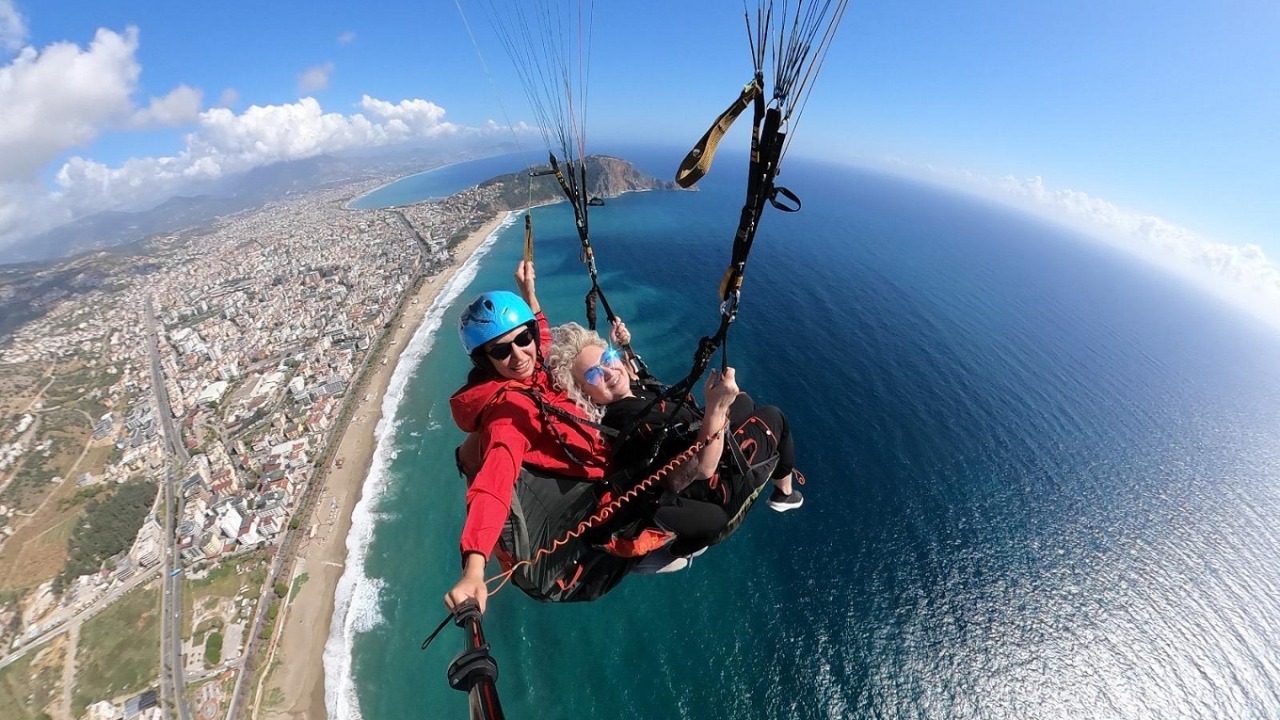
The vast majority of tourist flights are conducted as "tandem" flights. In a tandem setup, a certified professional pilot and a passenger are securely attached to a dual-person harness. The pilot handles all technical controls; your only job is to take a few steps during takeoff and then sit back and soak in the views. This makes paragliding an accessible bucket-list experience even for those with zero prior experience. Most aerial adventure tours across Turkey are organized around this tandem model.
A Brief History of Paragliding
Paragliding evolved from parachute technology developed in the mid-20th century. By the 1960s, it was discovered that parachutes could be launched from slopes rather than dropped from planes. Throughout the 70s and 80s, advancements in wing design transformed the activity into the modern sport we know today. While it began as a niche pursuit for extreme athletes, the introduction of tandem systems opened the skies to tourists worldwide.
In Turkey, Babadağ in Fethiye played a pivotal role in popularizing the sport. Thanks to its various launch altitudes, stable weather patterns, and the stunning Ölüdeniz lagoon directly below, Babadağ has become a world-renowned launch site. Over the years, the region has hosted international competitions and festivals, putting Turkey firmly on the global map of aerial adventures. Today, for many travelers, the name Babadağ is practically synonymous with paragliding.
Ölüdeniz Fethiye: The Babadağ Experience
When people think of paragliding in Turkey, the first image that comes to mind is undoubtedly Ölüdeniz and the towering Babadağ mountain. Launching from different altitude levels on Babadağ, you'll see the enclosed cove of the Ölüdeniz lagoon, Belcekız beach, Butterfly Valley, and the deep blue of the Mediterranean stretching out like a living painting. Flight duration varies based on the launch point and weather conditions; the higher the launch, the longer the flight and the more expansive the view.
The primary reason Ölüdeniz is so popular is its favorable flying weather for most of the year. The juxtaposition of the mountain and the sea creates a breathtaking transition from takeoff to landing. If you're planning a full itinerary, we recommend pairing your flight with other local gems; for instance, our Fethiye Butterfly Valley guide is a great starting point for exploring the region by land. You can compare and book your experience through Fethiye-based aerial adventure tours or explore wider Muğla aerial adventure options.
Other Popular Flight Spots in Turkey
While Ölüdeniz is the crown jewel, other regions of Turkey offer unique landscapes for paragliding enthusiasts. Depending on your travel route, here are the top alternatives:
- Kaş (Antalya): Famous for flights over some of the Mediterranean's clearest waters with views of Meis Island. Its laid-back atmosphere and crystal-clear sea make it a fantastic choice for beach lovers.
- Pamukkale (Denizli): Gliding over the UNESCO World Heritage white travertines and the ancient city of Hierapolis provides a visual contrast found nowhere else on earth. Floating above the "cotton castle" is a truly surreal experience.
- Cappadocia (Nevşehir): While world-famous for hot air balloons, Cappadocia also offers paragliding over its iconic fairy chimneys and eroded volcanic valleys for a different perspective of the landscape.
- Alanya (Antalya): A high-demand spot during the summer, offering aerial views of Alanya Castle, Cleopatra Beach, and a stunning coastline. It's a convenient option for those vacationing on the Antalya coast.
When choosing a spot, we recommend picking the launch site closest to your holiday destination to save on travel time. You can refine your schedule by browsing options like Cappadocia aerial adventure tours.
Tandem Flights: A Guide for First-Timers
The reason you can fly without any training is the tandem system. A certified pilot is harnessed to you and takes full responsibility for the flight's technical execution. Before takeoff, your pilot will give you a brief orientation: how to run, where to place your hands, and what to do during landing. Takeoff consists of a short run down the slope, and once the wing inflates, you'll feel your feet gently leave the ground.
Once in the air, there are no technical tasks for you. You simply relax in the harness and enjoy the scenery. Depending on your preference, the pilot can provide a serene, peaceful glide or a more dynamic experience with a few gentle maneuvers. Be sure to tell your pilot your preference before takeoff. Landing usually takes place on a flat area by the beach with a controlled, soft touch-down. The entire process is designed to be stress-free for beginners.
Paragliding Safety
Paragliding is a carefully managed activity when performed with international-standard equipment and experienced pilots. Safety relies on two pillars: the competence of the crew and the accurate reading of weather conditions. Professional teams evaluate wind direction and speed before every flight; if conditions are not optimal, the flight is postponed or canceled. These weather-related changes are a fundamental part of a professional safety culture.
Key safety elements include:
- Certified Pilots: Tandem flights are conducted only by pilots with the necessary licenses and flight hours.
- Regular Equipment Checks: Wings, harnesses, carabiners, and reserve parachutes are inspected periodically.
- Weather Monitoring: Wind and thermal conditions are monitored constantly before and during the flight.
- Standard Gear: The use of helmets, reserve parachutes, and wings that meet international norms is mandatory.
When booking, asking about the crew's experience and the cancellation policy regarding weather will give you peace of mind. The options listed on Travel Tour Shop are selected based on these exact quality and safety benchmarks.
Essential Gear and Equipment
For a tandem flight, all necessary equipment is provided by the tour operator; passengers do not need to bring their own gear. However, knowing what you're using adds to the experience. The basic kit includes:
- The Wing (Parachute): The flexible main structure that catches the air to allow gliding.
- Harness: The comfortable and secure seating system that connects the pilot and passenger.
- Helmet: Provides essential protection during takeoff and landing.
- Reserve Parachute: A secondary safety system that can be deployed if necessary.
- Carabiners and Connectors: High-strength metal components that lock the system together.
- Variometer and Radio: Tools the pilot uses to track altitude changes and communicate with the ground crew.
Your only responsibility is to wear appropriate clothing and footwear. The pilot will double-check all connections and ensure you are securely fastened before takeoff.
Best Season and Weather Conditions
In Turkey, paragliding typically takes place from spring through autumn, primarily between April and October. During these months, weather patterns are more stable, wind regimes are favorable, and visibility is at its peak. The Mediterranean and Aegean coasts see the highest volume of flights during the summer. In winter, conditions become more challenging in many regions, and flight schedules become sparse.
The best time of day for a flight is usually from late morning to mid-afternoon when thermals are most active, though this varies by region. Since flights are weather-dependent, we recommend scheduling your adventure for the first few days of your trip. This gives you a buffer to reschedule if the wind isn't cooperating. Always confirm the current weather with your team before your scheduled slot.
Practical Tips for Your First Flight
It's completely normal to feel a bit nervous before your first flight. A few simple preparations can make the experience much more enjoyable. First, wear comfortable, season-appropriate sportswear. Most importantly, wear sturdy sneakers with laces; you'll need them for the takeoff and landing runs. To avoid motion sickness, avoid heavy or overly filling meals right before your flight.
Listen carefully to your pilot's instructions, especially regarding the takeoff run. If you wear glasses, make sure they are secured so they don't slip. Avoid holding your phone or camera unless the pilot gives you the okay. During the flight, try to relax your body rather than tensing up; the more relaxed you are, the more you'll enjoy the view. Most operators offer photo and video packages, allowing you to relive the moment. For those who love high-adrenaline activities, consider pairing your flight with the nature sports described in our rafting guide.
Factors Affecting Paragliding Prices
Paragliding prices aren't fixed; they vary based on the location, season, and service package. Understanding these factors will help you budget your trip. Generally, the following influence the cost:
- Launch Altitude and Flight Duration: Flights from higher peaks that last longer are typically more expensive.
- Seasonal Demand: Prices may fluctuate during the peak summer months due to high demand.
- Photo and Video Services: Capturing your flight is usually an optional add-on service.
- Transfers: Whether hotel pickup and drop-off are included in the price.
To avoid unexpected costs, check exactly what is included in your package before booking. When comparing options on Travel Tour Shop, you can view the flight scope, transfer details, and extra services on a single screen to find the best fit for your budget.
Experience the Skies with Travel Tour Shop
Paragliding becomes an unforgettable life experience when the right location, a trusted crew, and the perfect season align. Through Travel Tour Shop, you can compare aerial adventure options in Ölüdeniz, Kaş, Pamukkale, Cappadocia, and Alanya, ensuring you have a clear understanding of the services and transfers included.
Because our listed providers have passed a rigorous vetting process based on local expertise and guest feedback, you can plan your adventure with confidence. Whether it's your very first time in the air or you're a seasoned adventure seeker, we help you find the perfect spot to crown your Turkish holiday with an adrenaline-fueled memory.
Frequently Asked Questions 5
Do I need prior experience to go paragliding?
No. Tourist flights are conducted as tandems, meaning a certified pilot handles all technical aspects. You only need to follow the pilot's instructions and take a few steps during takeoff. No prior training is required.
Where is the best place for paragliding in Turkey?
The most iconic spot is Babadağ in Ölüdeniz, Fethiye. However, Kaş, Pamukkale, Cappadocia, and Alanya are also popular, each offering completely different landscapes. The best choice depends on your travel itinerary and the views you prefer.
When is the best season for paragliding in Turkey?
Flights generally run from April to October. This period offers the most stable and favorable weather conditions. In winter, flights become less frequent as conditions in many regions become more challenging.
Is paragliding safe?
Yes, when performed with international-standard equipment and experienced pilots who accurately assess weather conditions. Professional teams will postpone or cancel flights in unsafe weather, which is a standard part of their safety protocol.
What factors influence the price of paragliding?
Prices vary based on the region, launch altitude, flight duration, season, and add-ons such as professional photo/video services and hotel transfers. Always check the inclusions before booking to avoid extra fees.