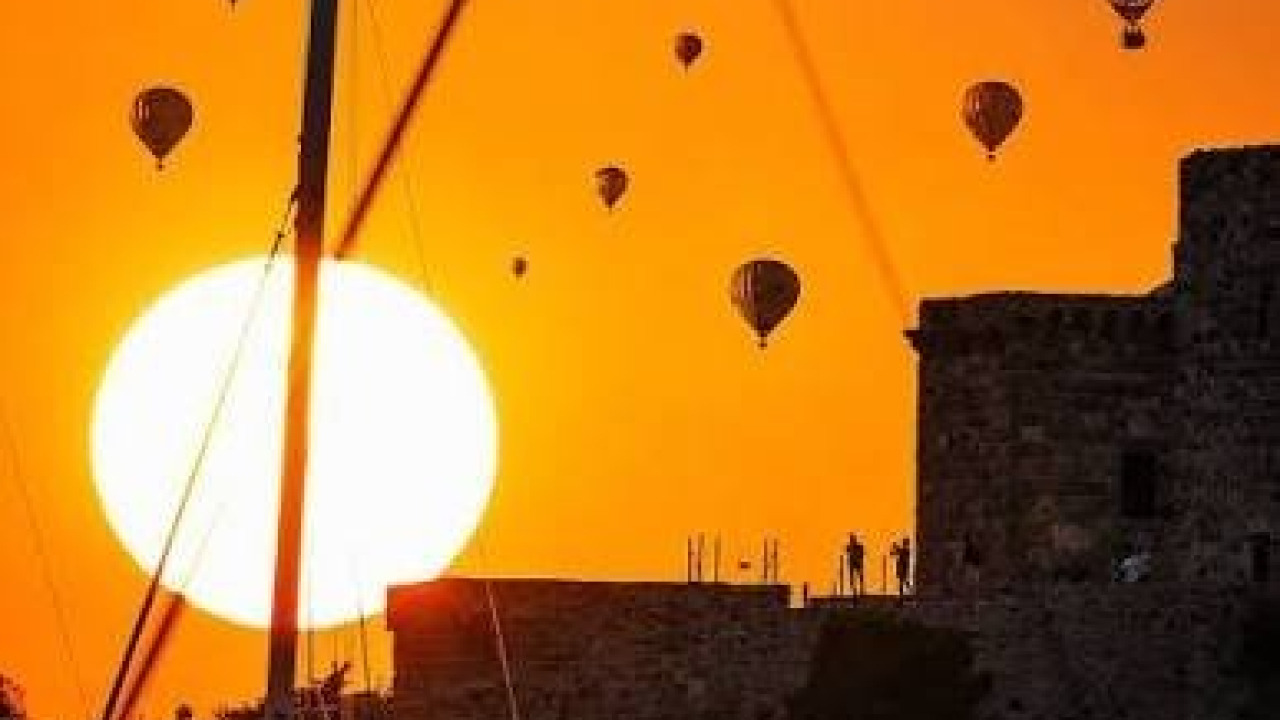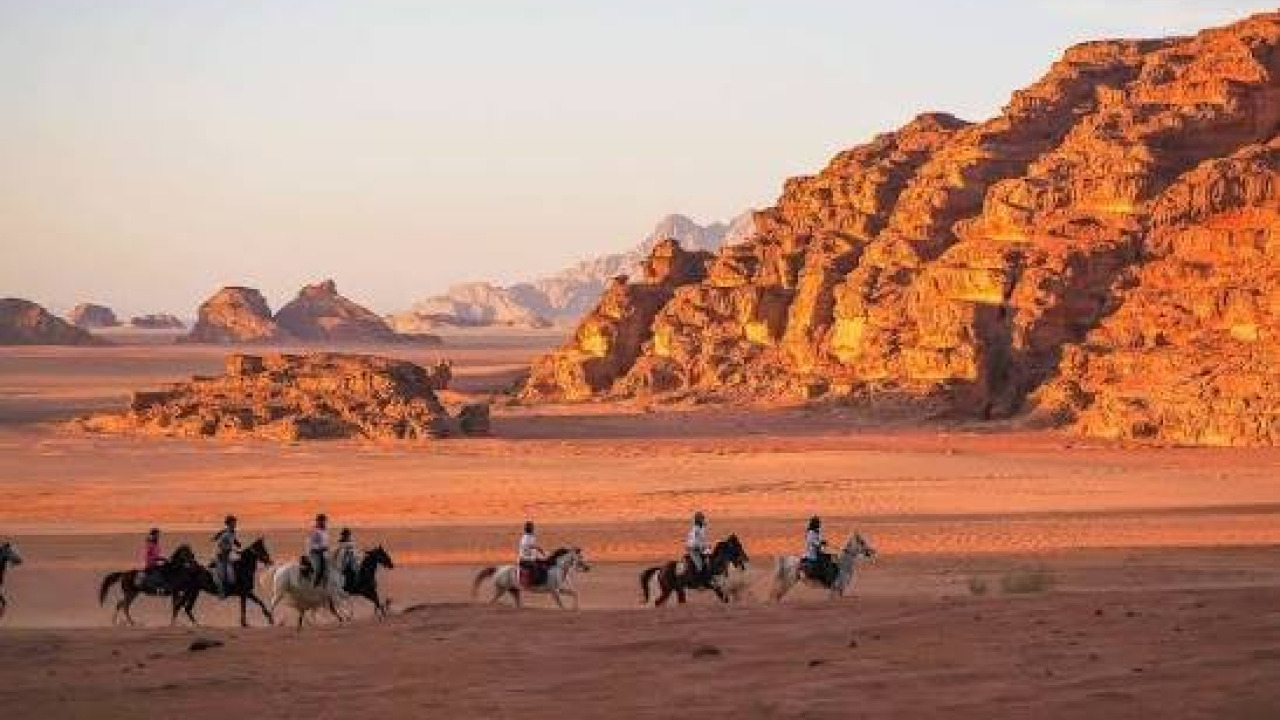

Amman, the vibrant capital of Jordan, serves as the primary gateway for most travelers to the country. Originally built on seven hills, the city has expanded across nineteen, resulting in the undulating skyline you see today. In a single day, you can marvel at Roman columns atop the Citadel, breathe in the fragrant spices of the souks below, and unwind on a cafe terrace in Jabal Amman. This comprehensive Amman travel guide delves into the city's two distinct layers: the historic Downtown, where centuries of history converge, and the modern western districts, bustling with contemporary life. We'll cover essential topics like transportation, the best time to visit, accommodation options, the local market and culinary scene, and exciting day trips you can take from Amman.
Quick Facts
| Topic | Information |
|---|---|
| Location | Capital of Jordan, in the northwest of the country |
| Historical Names | Rabbath Ammon, Philadelphia during Roman times, later Amman |
| City Layout | Originally seven hills; now spread across around nineteen hills |
| Main Airport | Queen Alia International Airport, approximately 35 km south of the city |
| Key Highlights | Amman Citadel, Roman Theatre, Rainbow Street, Downtown (Al-Balad) |
| Best Time to Visit | March-May and September-November |
| Recommended Duration | 2-3 days for the city; 4-5 days including day trips |
| Currency | Jordanian Dinar (JD) |
Getting to Amman & Around the City
Your Amman itinerary hinges on two key questions: your entry requirements for Jordan and how you'll get from the airport to the city. Both should be sorted before you depart.
Entry to Jordan & Visa Requirements
Visa requirements vary by nationality and are subject to change; always confirm the latest information with the Jordan Tourism Board (visitjordan.com) and the official Jordan Pass website (jordanpass.jo) before your trip. The Tourism Board states that valid passport holders can obtain visas from Jordanian diplomatic missions abroad or upon arrival at airports and border crossings.
The Jordan Pass is a unique convenience package for visitors. It includes entry to over forty archaeological sites and museums, and crucially, it waives the visa fee if you stay for a minimum of two full nights (three days). The pass is purchased online before arrival and grants one entry per site. For current options and prices, check jordanpass.jo.
From Queen Alia International Airport to the City
Direct scheduled flights are available from many international hubs; for instance, flights from Istanbul take around two and a half hours. Queen Alia International Airport (QAIA) is located approximately 35 kilometers south of Amman. Travel to the city center takes about 30-45 minutes by taxi and 45-60 minutes by airport bus.
A regular shuttle bus service operates between the airport and the city: departures are every half hour during the day and hourly at night. This route serves the 7th Circle in West Amman and the Tabarbour bus station in the north, so your accommodation area will influence the ease of your transfer. If you opt for a taxi, be aware that fares differ between day and night, and always confirm the price before getting in.
Getting Around Amman
Amman is not a city you can easily explore entirely on foot; the significant elevation changes between its hills make seemingly short distances much longer. Ride-hailing apps are widely used, displaying both the route and fare upfront. If you prefer a traditional taxi, always ensure the meter is running.
Practical tip: Plan your itinerary based on the city's hills. Dedicating one day to Downtown and the Citadel area, and another to Jabal Amman and the western districts, will save you considerable time compared to traversing the city from end to end within a single day.
Best Time to Visit Amman
Amman experiences a high-plateau climate; don't expect the same weather conditions as coastal Aqaba. Spring and autumn are the two prime seasons when daytime temperatures are ideal for exploring on foot.
| Period | Weather Characteristics | Implications for Your Trip |
|---|---|---|
| March - May | Daytime temperatures rise from 18°C to 26°C, rainfall decreases | Excellent for city walks and day trips |
| June - August | Dry and hot, with days often exceeding 30°C | Plan early morning and late afternoon activities; Souk Jara season is open |
| September - November | September retains summer heat, October-November sees 20-25°C | Clear skies, comfortable for exploring unsheltered areas |
| December - February | Average daytime 12-14°C, nights drop to 3-5°C, rainy days | Crowds thin out; pack layered clothing and waterproof shoes |
Top Places to Visit in Amman
The city's main attractions are clustered into two distinct areas: the Citadel hill and the Downtown basin form one cluster, while Jabal Amman and its surroundings make up the second.
Amman Citadel, Roman Theatre, and Odeon
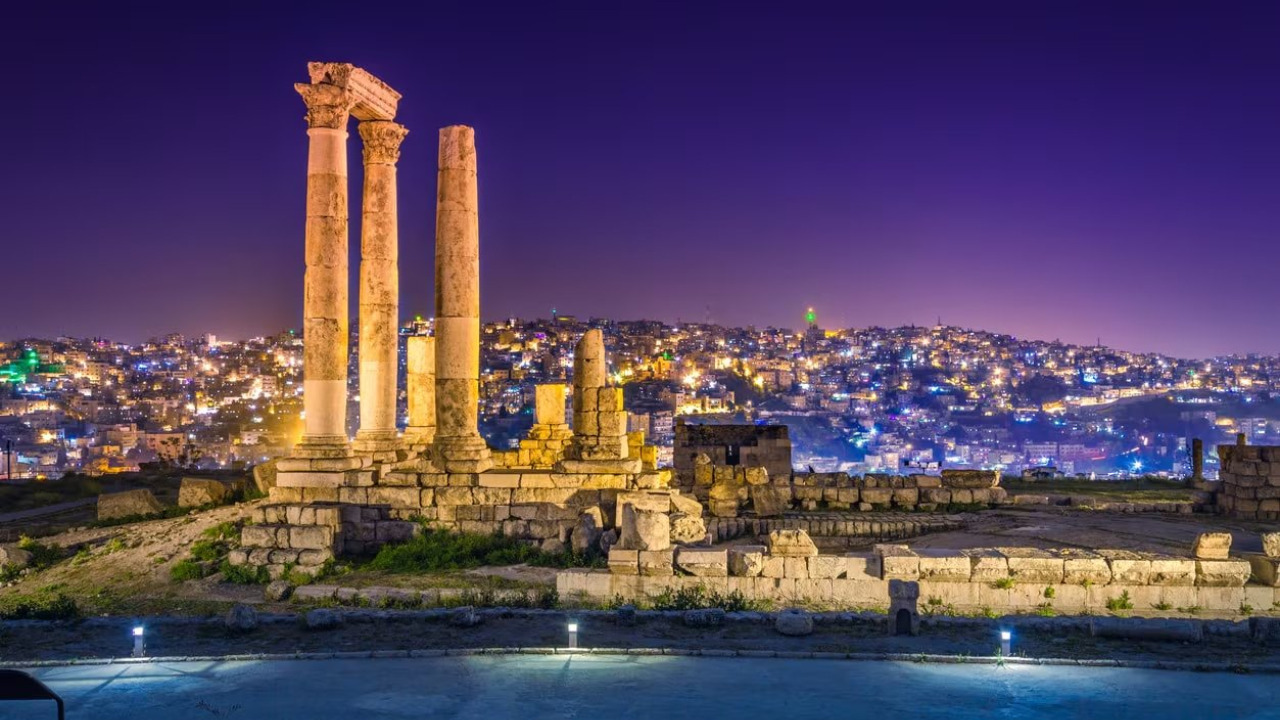
Perched atop Jabal al-Qala'a (Citadel Hill), the Amman Citadel showcases the city's layered history: here you'll find the towering columns of the Temple of Hercules, the structural remains of the 8th-century Umayyad Palace, remnants of a Byzantine church, and the Jordan Archaeological Museum, established in 1951, all within the same complex. At the foot of the Citadel lies the 2nd-century Roman Theatre, an impressive amphitheater seating approximately 6,000 spectators, which still hosts performances today. Adjacent to it, the Odeon is a smaller, restored hall with a capacity for 500.
Practical tip: The Citadel area offers little shade, so plan your visit for early morning or closer to sunset. The theatre's steps are steep, so comfortable, sturdy footwear will make your exploration much easier.
Rainbow Street and Jabal Amman
Rainbow Street, winding along the ridge of Jabal Amman, is described by the Jordan Tourism Board as one of the city's oldest thoroughfares. Lined with cafes, restaurants, and several art galleries, its terraces offer stunning city views, especially at sunset. Explore the side streets to discover design shops, small workshops, and contemporary street art.
Practical tip: The street becomes noticeably crowded on weekend evenings; for those who prefer a more relaxed browse through the galleries, weekday afternoons are quieter. Travelers who enjoy exploring historic city centers on foot and are looking for similar experiences in Turkey can check out our historical city tours in Turkey category.
Downtown (Al-Balad), Gold Souk, and Al-Husseini Mosque
Known as Al-Balad, the old city center is nestled in the valley basin beneath the Citadel hill. This vibrant district is a labyrinth of narrow streets, home to the Gold Souk, spice merchants, nut vendors, and handicraft shops. The Tourism Board also highlights Souq Al-Sukar, a bustling daily market selling fresh fruits and vegetables.
At the heart of the souk lies the Al-Husseini Mosque. Rebuilt in 1924 during the reign of King Abdullah I using pink and white stone, sources suggest it stands on the site of an even older mosque dating back to 640 AD, built during the era of Omar ibn al-Khattab. The first minaret was erected in 1924, with the second added in 1952. The square surrounding the mosque serves as a natural gathering point for the market area.
Practical tip: Plan your mosque visit outside of prayer times, and opt for clothing that covers your shoulders and knees. Bargaining is common in the souk; carrying cash will expedite your transactions.
Souk Jara and Souvenir Shopping
Souk Jara is a vibrant open-air market organized by a local association in Jabal Amman, set up on Fawzi Al-Maalouf Street, a side street off Rainbow Street. This seasonal market typically runs from mid-May to late September, opening on Fridays from morning until late at night. Stalls feature handmade jewelry, embroidered textiles, ceramics, paintings, and local food products; occasionally, concerts and film screenings are also part of the offerings.
Popular souvenirs and items to bring home from Amman generally fall under these categories:
- Spice blends and dried food products
- Handmade ceramics and silver jewelry
- Traditional Kufiya textiles
- Cosmetic products made from Dead Sea minerals
A Taste of Amman's Cuisine
At the heart of Jordanian cuisine is mansaf: a majestic dish featuring lamb, rice, and a rich sauce made from jameed (fermented, dried yogurt). This is the centerpiece of celebratory meals and is traditionally eaten by hand. Everyday dining often revolves around falafel and hummus; Hashem Restaurant and Al Quds Restaurant in Downtown are renowned for these staples. For dessert, kunafa is a standout, with Habibah Sweets being one of the most famous spots for this treat.
Practical tip: Mansaf is a dish that takes time to prepare and is often served during lunchtime in many establishments. Planning to enjoy it for lunch rather than searching for it late in the evening will make your experience smoother.
Where to Stay: Finding Your Perfect Neighborhood
Choosing your neighborhood in Amman significantly impacts how walkable your daily itinerary will be. Since navigating between the city's hills often requires transport, your accommodation choice is essentially a routing decision.
| Area | Character | Best For |
|---|---|---|
| Jabal Amman & Rainbow Street Area | Boutique accommodations, high concentration of cafes and galleries, walkable ridge | Those who want to stay central and explore on foot in the evenings |
| Downtown (Al-Balad) | Budget-friendly guesthouses, immediate access to the souks, lively during the day | Budget-conscious travelers and early morning market explorers |
| West Amman (Abdoun, Um Uthaina) | Modern hotels, clusters of restaurants, wide avenues | Travelers prioritizing comfort, those with their own transport |
| Airport Corridor | Outside the city, transport-focused accommodation | Travelers arriving late at night or with early morning flights |
Practical tip: Consider your accommodation in relation to the airport bus stops: transfers are straightforward around the 7th Circle, while those staying Downtown should factor in the bus station connection.
Day Trips from Amman
Amman's central location in the northern and central regions of Jordan makes it an ideal base for exploration. The following three routes can be easily done as day trips without changing your accommodation.
Jerash
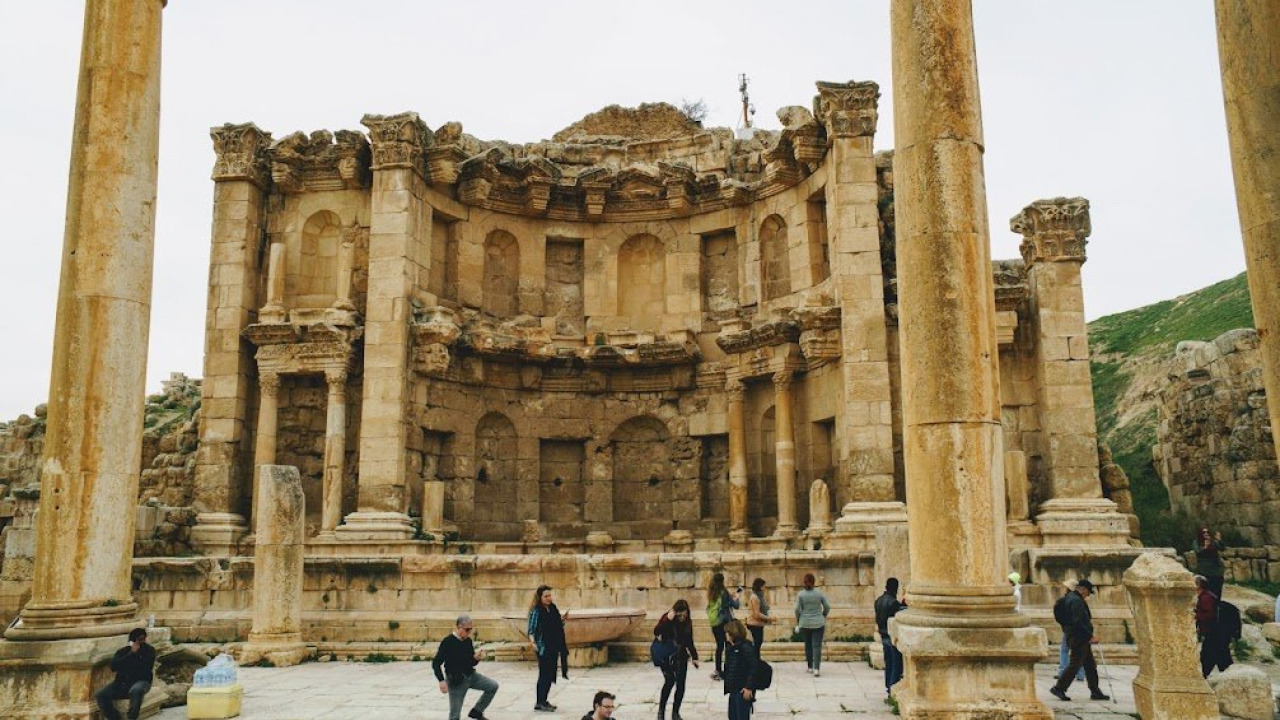
The Jordan Tourism Board places Jerash approximately 45 kilometers north of Amman. Ancient Gerasa, a city of the Roman Decapolis league, is considered one of the best-preserved Roman provincial cities in the world. The site features Hadrian's Arch, built in 129 AD to commemorate Emperor Hadrian's visit, the Oval Plaza surrounded by Ionic columns, the Cardo Maximus where chariot wheel ruts are still visible, two theaters, and a 245-meter-long hippodrome.
Timing: The site is extensive and offers little shade, so a full exploration can take up to three hours. During the Jerash Festival, held in late July and early August, the site hosts a program of events. For travelers who enjoy exploring Roman-era cities and are looking for similar themes in Europe, our Italy travel guide article offers regional itineraries.
Madaba and Mount Nebo
Madaba is renowned for its mosaic tradition. The mosaic map on the floor of the Greek Orthodox Church of Saint George dates back to the 6th century and was discovered in 1884. According to the Tourism Board, the section that survives today measures approximately 10.5 meters by 5 meters. The church structure itself dates to the 19th century.
Mount Nebo is located approximately 10 kilometers from Madaba. It is revered as the site where Prophet Moses is believed to have viewed the Promised Land. From its summit, on a clear day, a vast panorama unfolds over the Dead Sea and the Jordan Valley.
Timing: These two stops can be combined into a single half-day trip. For the best panoramic views, clear morning hours are ideal. For travelers who appreciate itineraries focused on mosaics and sacred sites, similar experiences in Turkey can be found in our cultural tours in Turkey category.
The Dead Sea Coast in Jordan
The Dead Sea resorts on the Jordanian side are clustered around Sweimeh, located approximately 55-60 kilometers from Amman. The drive typically takes about an hour, depending on traffic.
Timing: Keep your time in the water brief, and remember to rinse off with fresh water afterward. During summer, coastal temperatures are higher than in the city, so a morning or late afternoon visit will be more comfortable.
| Route | Location Relative to Amman | Time Allotment | Main Attraction |
|---|---|---|---|
| Jerash | Approximately 45 km north | Half to full day | Decapolis city, colonnaded street, hippodrome |
| Madaba and Mount Nebo | Southwest direction; Nebo is 10 km from Madaba | Half to full day | 6th-century mosaic map, valley panorama |
| Dead Sea Coast | Approximately 55-60 km | Half day | Coastal resorts, mineral-rich experience |
A 3-Day Amman Itinerary
The following itinerary combines the city center with two rewarding day trips.
- Start your first morning at the Amman Citadel; from the hilltop, take in the layout of Downtown, then descend to explore the Roman Theatre and Odeon.
- In the afternoon, head to the Al-Balad souks: the Gold Souk, spice vendors, and the area around Al-Husseini Mosque are all within the same walkable district.
- Dedicate your evening to Jabal Amman; dinner on Rainbow Street followed by a brief gallery stroll will complete your day.
- On your second day, visit Jerash; an early morning departure and afternoon return will leave you time to explore West Amman in the evening.
- On your third day, combine Madaba and Mount Nebo. If you prefer a more relaxed pace, you can extend your return trip with a stop at the Dead Sea coast.
- If your itinerary includes a Friday, plan to visit Souk Jara on that day, and shift your souk exploration to another day.
Practical Information & Cultural Etiquette
The table below summarizes essential practical details.
| Item | Information |
|---|---|
| Currency | Jordanian Dinar (JD); divided into 100 piastres or 1,000 fils |
| Language | Official language is Arabic; English is widely spoken in cities |
| Time Zone | Jordan observes GMT+3; no time difference with Turkey |
| Electricity | 230 volts, 50 Hz; British-style three-pin plugs are common, European-style also seen |
| Emergency Call | Unified number 911; some sources list ambulance 191, police 192, fire 193 |
| Payment | Cards accepted in hotels, large restaurants, and shops; cash is needed in souks |
| Entry Document | Varies by nationality; confirm via visitjordan.com and jordanpass.jo |
Regarding cultural etiquette, a few points will directly enhance your daily interactions:
- Opt for clothing that covers your shoulders and knees when visiting religious sites and local neighborhoods.
- It's customary to be offered tea or coffee in shops; accepting is considered polite.
- Always ask for permission before taking photos of people, especially vendors in the souks.
- During Ramadan, daytime dining habits change, and restaurant hours may be adjusted.
- Carrying small change for minor services will make transactions quicker.
If you're planning to include the region as part of a broader Middle East itinerary, our Egypt travel guide article is an excellent starting point to compare the density of ancient sites in neighboring geographies.
Frequently Asked Questions 6
How many days are enough to visit Amman?
2-3 days are sufficient to comfortably explore the city center. If you add day trips to places like Jerash, Madaba, and the Dead Sea coast, 4-5 days will provide a more balanced and comprehensive experience.
How do I get to Amman and from the airport to the city?
Direct scheduled flights are available from many international cities; for example, flights from Istanbul take around two and a half hours. Queen Alia International Airport is approximately 35 kilometers south of Amman. Travel to the city center takes about 30-45 minutes by taxi and 45-60 minutes by airport bus. A regular shuttle bus service operates between the airport and the 7th Circle and Tabarbour bus station.
What is the best time to visit Amman?
March-May and September-November are ideal periods when daytime temperatures are suitable for walking and exploring. During summer, daytime temperatures can exceed 30°C, so activities are best planned for early mornings and late afternoons. Winter sees daytime temperatures around 12-14°C with rainy days, but crowds are typically smaller.
Do I need a visa to enter Jordan?
Visa requirements vary by nationality and are updated periodically; always confirm before your trip with the Jordan Tourism Board and the official Jordan Pass website. The Jordan Pass package covers the visa fee if you meet the minimum stay requirement of two full nights and is purchased online before arriving in the country.
What are the main budget components for an Amman trip?
The total cost is primarily determined by your chosen accommodation area, in-city transportation, site entrance fees, day trip transfers, and dining preferences. Consolidating entrance fees through the Jordan Pass can simplify your planning. Check jordanpass.jo for current prices.
What day trips can be taken from Amman?
There are three main day trip routes that can be completed within the same day: Jerash, approximately 45 kilometers north; Madaba and Mount Nebo, located southwest with Nebo 10 kilometers from Madaba; and the Dead Sea coast, about 55-60 kilometers away. Jerash, being an extensive archaeological site, typically requires the most time to explore.