
When planning sea travel in Istanbul, the most common questions are: "Will my ferry depart?" and "How do I find out?" The short answer is that decisions come not from one authority, but three distinct bodies. For city line ferries, the operator announces cancellations. For safety measures within port areas, the Port Authority (Liman Başkanlığı) takes action. And for the closure of the Istanbul Strait to ship traffic, the General Directorate of Coastal Safety (Kıyı Emniyeti Genel Müdürlüğü) makes the call. What's more, not every schedule change is weather-related: summer and winter timetables are announced weeks in advance, altering your departure times even on a clear day. This guide breaks down these three types of changes, reveals which winds impact which routes first, explains the order in which to check announcements, and outlines steps to salvage your day if your planned journey is cancelled.
Quick Facts
| Topic | Information |
|---|---|
| City line operator | Şehir Hatları A.Ş.; announcements published at sehirhatlari.istanbul |
| Winter schedule | Between September 8, 2025, and June 28, 2026, 31 lines, 850 daily departures |
| Summer schedule | Between June 29 and September 6, 2026, 32 lines, average 839 daily departures |
| Weather-related cancellation decision | Made by the operator; Port Authority (Liman Başkanlığı) has authority for safety measures within port areas |
| Strait closure to ship traffic | General Directorate of Coastal Safety (Kıyı Emniyeti Genel Müdürlüğü), via Turkish Straits Vessel Traffic Services |
| Risky winds | Lodos (southwesterly) and poyraz (northeasterly) |
| Visibility-related closure | Dense fog; traffic may be temporarily suspended in one or both directions |
| Ticket fare note | Bosphorus tour fare tables have separate rows based on visitor status |
| Alert sources | Operator's announcements page, AKOM weather alerts, MGM marine forecasts |
Types of Schedule Changes and Who Makes the Call
Ferry schedule changes don't operate as a single system, but rather three independent mechanisms, each with a different decision-making authority and notification timeline. Knowing which type of change you're dealing with when planning your itinerary will save you a wasted trip to the pier or checking the wrong source.
| Type of Change | Decision Maker | How Far in Advance Announced | Where Announced |
|---|---|---|---|
| Planned timetable transition (summer & winter) | Şehir Hatları A.Ş. | Weeks in advance | Operator's announcements page |
| Weather-related service cancellation | Operator; Port Authority (Liman Başkanlığı) for port area safety | Same day, often within hours | Cancellation announcements and AKOM bulletins |
| Visibility-related Bosphorus closure | General Directorate of Coastal Safety (Kıyı Emniyeti Genel Müdürlüğü) | Instantly | Institution's Bosphorus traffic page |
| Suspension due to races, works, or events | General Directorate of Coastal Safety (Kıyı Emniyeti Genel Müdürlüğü) | Days in advance | Institution's suspension announcements |
Planned Timetable Transitions: Summer vs. Winter
This regulation has nothing to do with the weather but directly alters your departure times. Şehir Hatları switched to its winter timetable on September 8, 2025; this schedule ran until June 28, 2026, operating 850 daily services across 31 lines. The summer timetable, on the other hand, began on June 29, 2026, will continue until September 6, 2026, and includes an average of 839 daily services across 32 lines. The summer schedule also features night services: daily on the Bostancı-Adalar (Princes' Islands) circular route, and on Friday and Saturday nights for the Kadıköy-Karaköy-Beşiktaş line. However, the average daily number of services is slightly lower than the winter schedule, as the winter arrangement is designed for daily commuter density.
If you're traveling in early September or late June, you might encounter a different ferry schedule within a few days, and this won't be due to weather. For those planning a sea-based itinerary, when comparing Istanbul boat tours options, it's especially useful to inquire about the operator's weather policy before booking, particularly during timetable transition weeks.
What Happens with Tickets and Refunds?
When a cancellation is announced, ticket procedures vary by operator; there isn't a universal rule applicable to all lines. For Şehir Hatları services, cancellations are posted on the institution's announcements page, and the scope of that announcement is definitive. For scheduled services by private operators, cancellation, postponement, and refund conditions are outlined in the booking contract. A detail often overlooked by foreign visitors is this: Bosphorus tour fare tables consist of separate rows based on visitor status, so any refund calculation is made according to the ticket type you purchased. Figures are not provided here as they change seasonally; the official fare schedule page publishes these rows individually.
Under What Weather Conditions Are Ferry Services Cancelled?
Ferry services are halted based on three distinct thresholds: wind and associated wave height, visibility, and the safety of docking at the pier. These three factors are assessed collectively; a wind speed exceeding a certain figure isn't an automatic cancellation trigger on its own. The Ports Regulation states that the Port Authority (Liman Başkanlığı) is authorized to take and enforce all necessary measures for navigation, life, property, and environmental safety; this is the legal basis for such decisions.
Lodos and Poyraz: Two Winds, Two Different Outcomes
According to the General Directorate of Meteorology (MGM), lodos is a warm wind blowing from the southwest in the western parts of Turkey. Poyraz, on the other hand, is a cold wind blowing from the northeast, and its definition states it can blow with a force capable of causing damage along the Black Sea coast facing northeast and in the Istanbul Strait. In Istanbul, lodos is typically the biggest disruptor to ferry schedules because its southwesterly direction allows it to gather strength over a long stretch of open water across the Marmara Sea, causing waves to build significantly.
There's a concrete example of this. AKOM, affiliated with the Istanbul Metropolitan Municipality, announced on January 3, 2026, that lodos winds reaching speeds of 60-85 kilometers per hour were expected across the city; a speed of 80 kilometers per hour was measured at Sarıyer Rumeli Feneri. On the same day, all main Şehir Hatları ferry services were cancelled, nine parks and groves were closed to visitors, and cable car operations were suspended. In contrast, the İstinye-Çubuklu and Bebek-Küçüksu lines, located in the narrower section of the Bosphorus, continued, albeit with disruptions. So, on stormy days, the question isn't "Are there any ferries?" but rather "Which types of routes are still operating?"
Fog: Not a Cancellation, but a Visibility-Related Closure
Fog operates through a different mechanism. In dense fog, the General Directorate of Coastal Safety (Kıyı Emniyeti Genel Müdürlüğü), via the Turkish Straits Vessel Traffic Services centers, can temporarily close the Istanbul Strait to ship traffic in one or both directions. The Turkish Straits Maritime Traffic Regulations describe this assessment as being made based on meteorological data, reports from passing pilot captains, and information received from vessels navigating the area. The decision to close primarily concerns transit ship traffic; city lines do not automatically stop but are evaluated separately based on their own visibility thresholds. In practice, on foggy mornings, Bosphorus traffic is usually suspended first, and shortly thereafter, some ferry services are also dropped from the schedule. Therefore, on a foggy morning, relying solely on the operator's page is insufficient; the status of Bosphorus traffic is an early indicator.
Which Piers and Routes Are Affected First?
What determines the order of impact isn't the size of the pier, but the expanse of open water in front of it. Waves grow larger the longer the distance the wind blows uninterrupted; therefore, piers directly facing the open Marmara Sea are restricted earlier than those in the narrower sections of the Bosphorus. This isn't a list of exemptions: during the lodos storm on January 3, 2026, mentioned earlier, all main lines were halted. The difference lies in the duration of resilience.
Open to the Marmara Sea: Bostancı, Kadıköy, and Sarıyer
Bostancı pier, with its location facing the open waters of the Marmara Sea, is among the first points to be restricted during lodos winds, and since it serves the Princes' Islands connection, a cancellation here creates a ripple effect. Kadıköy pier serves both cross-shore lines and Princes' Islands services; delays first appear here when docking maneuvers become difficult due to southerly winds. Sarıyer pier, due to its proximity to the northern exit of the Bosphorus, is one of the first stops affected by northerly currents originating from the Black Sea; on poyraz days, services from this end are cancelled early. The common characteristic of all three is the presence of an open water surface in front of them, allowing wind to travel long distances.
Bosphorus Corridor and Golden Horn Entrance: Eminönü, Karaköy, Beşiktaş, Kabataş, Üsküdar
Eminönü pier and Karaköy pier are located at the mouth of the Golden Horn, in a narrow section of water; the main issue here is less about wave height and more about the constricted maneuvering space in an area of heavy traffic. Beşiktaş pier, Kabataş pier, and Üsküdar pier are situated in the corridor connecting the two sides of the Bosphorus, and here, the determining factor isn't just the wind, but also moments when the current works against the wind; in such cases, docking time extends, leading to schedule delays. When storms intensify, even routes in this corridor are suspended; as the January 3, 2026, record showed, the ones that remained operational were the short cross-shore lines in the upper Bosphorus. When planning your trip, considering the open water distance in front of a route, rather than just the pier name, will give you a more accurate prediction.
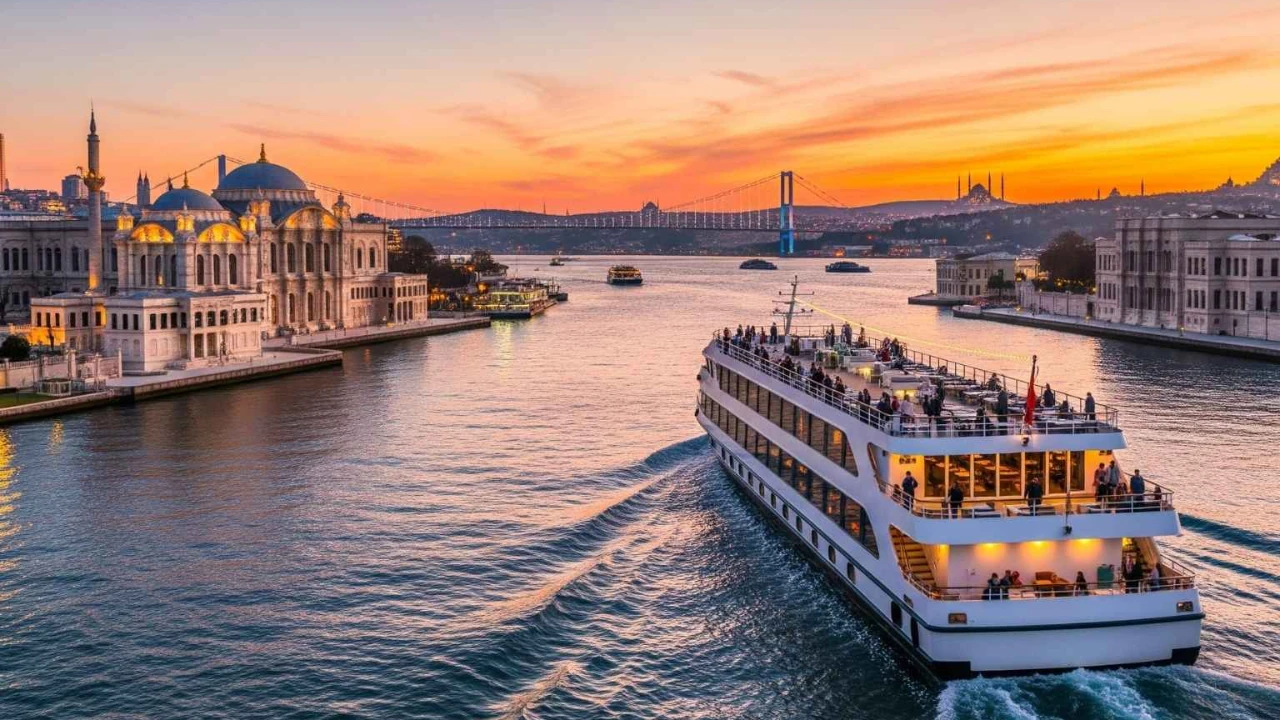
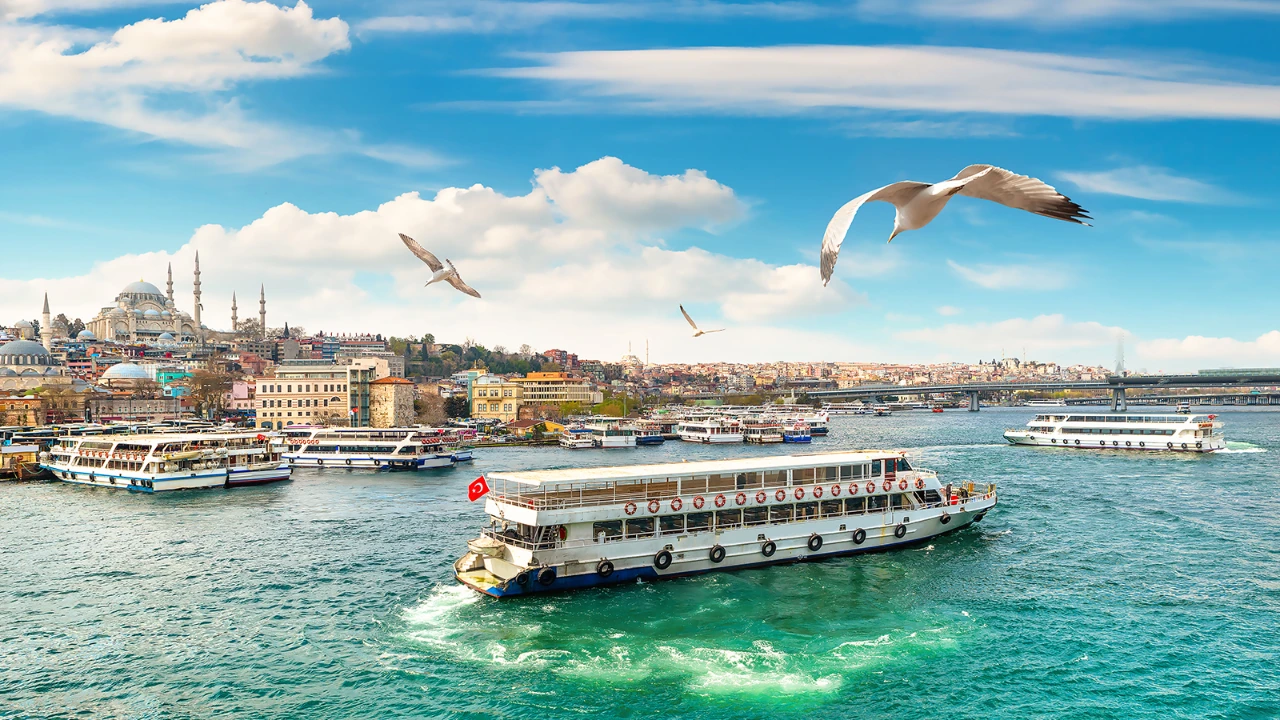
How Bosphorus Tours and Boat Trips Are Affected by Weather
Scheduled Bosphorus tours have a low frequency, so a weather-related cancellation here has more significant consequences. The Şehir Hatları winter schedule announcement states that short and long Bosphorus tours operate once a day; meaning a cancelled tour is not compensated with a second departure on the same day, but rather the program shifts to the next day. For short city lines, missing one service usually just means waiting for the next one.
For scheduled boat trips by private operators, the cancellation decision rests with the operator themselves, but safety measures taken within the port area are binding for everyone; an operator cannot simply say "we'll depart." Three clear questions to ask before booking are: Is a date change offered for weather-related cancellations? How many hours in advance is the decision communicated? And through what channel will you be notified if the meeting point changes? Those looking to compare programs departing from the city center can start with the Istanbul City Center boat and ferry tours list and ask these three questions for each option.
What to Do Step-by-Step if Your Ferry is Cancelled
When you see a cancellation announcement, what's lost is time, not your entire day's plan. The following sequence will help you make quick decisions instead of waiting aimlessly at the pier.
- Read the operator's cancellation announcement. For city line services, a cancellation list is published as a separate announcement, and if there are no cancellations, the page will state that too. Confirm which lines are affected here.
- Check AKOM bulletins and MGM marine forecasts. Don't make new sea plans for the afternoon without first seeing whether the wind is predicted to increase or decrease throughout the day.
- Monitor Bosphorus traffic status. The General Directorate of Coastal Safety's Bosphorus traffic page will show if there's a closure; this is an early indicator of how long services might be suspended.
- If you have a booked program, contact the operator in writing. During busy phone hours, a written record ensures your request for a date change is logged.
- Re-sequence your day. Push any sea-based activities to the end of your program and prioritize land-based activities; this way, if the weather improves in the afternoon, the sea option remains on the table.
- If crossing to the other side is essential, switch to a rail option. The tube tunnel line running under the Bosphorus is unaffected by wind and waves, making it the least disrupted option on stormy days.
Monthly Weather and Ferry Schedule Calendar
The table below summarizes when you're more likely to encounter specific types of changes. The schedule rows are based on periods announced by the operator, while the wind rows are based on the region's known seasonal characteristics.
| Period | Dominant Weather Risk | Applicable Schedule | Planning Note |
|---|---|---|---|
| December - February | Strong lodos and poyraz, low visibility | Winter schedule | Don't fix sea activities for the day, have alternatives ready |
| March - May | Variable winds, sudden downpours | Winter schedule | Schedule remains fixed; defer decision to morning announcement on travel day |
| June - August | Days with strengthening northerly winds | Transition to summer schedule on June 29 | Re-check departure times during the schedule transition week |
| September - November | Onset of lodos period, increasing fog | Winter schedule after September 6 | Night service arrangements change during the early September transition |
This table is a forecasting tool, not a decision-making one. Strong windy days can occur in summer, and there are also weeks of smooth sailing in winter. The final decision is made based on the announcement on the morning of your travel day.
Planning Indoor Activities for a Stormy Day
When your sea-based plans fall through, a pre-prepared list of indoor alternatives can save the day. Preparing this list before your trip is far more efficient than scrambling to find places on your phone at the pier. The following points will help you create your plan:
- Choose indoor alternatives within walking distance of your pier; city transportation also slows down on stormy days.
- Note closing days in advance; many museums have one closed day a week, and if a storm coincides with it, you'll lose two plans at once.
- Prioritize underground and indoor attractions; these operate completely independently of the wind.
- If you're switching to a guided program, ask about same-day participation conditions and the last reservation time.
An underground attraction is one of the easiest decisions for a stormy morning; the Basilica Cistern visitor guide explains the queue and visiting arrangements for this site. For those looking to spread their day across a wider range of indoor venues, the Historical Peninsula and museums guide shows which structures are within walking distance of each other. If you're seeking a guided cultural program to replace your sea itinerary, the options below might fit into the same day.

Frequently Asked Questions 6
Where are ferry cancellations due to weather announced?
For city line services, cancellations are published as a separate list on the operator's announcements page; on days without cancellations, the page will also state this. For city-wide wind and storm warnings, AKOM bulletins, and for sea conditions, the General Directorate of Meteorology's (MGM) marine forecasts are used as secondary sources.
If fog closes the Bosphorus, do city ferries also stop?
They do not stop automatically. In dense fog, the General Directorate of Coastal Safety (Kıyı Emniyeti Genel Müdürlüğü) can temporarily close the Bosphorus to ship traffic in one or both directions; this decision primarily concerns transit ship passages. City lines are evaluated separately based on their own visibility conditions, but on foggy mornings, the two often occur in quick succession.
When do the summer and winter timetables change?
Şehir Hatları transitioned to its winter timetable on September 8, 2025, which ran until June 28, 2026; the summer timetable began on June 29, 2026, and is in effect until September 6, 2026. Since departure times change during transition weeks, it's necessary to re-check the schedule if your travel falls on those days.
Do lodos or poyraz winds affect services more?
In Istanbul, lodos is generally the biggest disruptor to ferry schedules because its southwesterly direction allows it to gather strength over a long stretch of open water across the Marmara Sea, causing waves to build significantly. Poyraz, on the other hand, blows from the northeast and affects routes at the northern end of the Bosphorus earlier.
What happens to my ticket if a service is cancelled?
The procedure varies by operator. For city line services, the scope of the cancellation announcement published on that day is definitive. For scheduled services by private operators, cancellation, postponement, and refund conditions are outlined in the booking contract; reading these clauses at the time of purchase will save time later.
What can be done instead of a sea program on a stormy day?
Indoor and underground attractions are prioritized as they operate independently of the wind. If you need to cross to the other side, the tube tunnel line running under the Bosphorus is unaffected by waves. Moving the sea-based activity to the end of the day keeps the option open if the weather improves in the afternoon.