
Hidden beneath the bustling streets of Istanbul's historic peninsula, right beside Sultanahmet Square, lies a subterranean marvel that remains invisible from the surface: the Basilica Cistern. As you descend the stairs into this dimly lit, cavernous hall, you are instantly transported into a mysterious underworld where hundreds of marble columns rise from the depths and the rhythmic echo of dripping water fills the air. A masterpiece of Byzantine engineering, this ancient reservoir is one of the most atmospheric sites in Istanbul. It is no wonder that international travelers often refer to it as the "Underground Palace"—its sheer scale and haunting beauty truly evoke the feeling of a hidden royal sanctuary.
At Travel Tour Shop, we are committed to quality. We vet our tour and transfer partners rigorously, filtering out approximately 83% of providers to list only those with proven local expertise and exceptional guest reviews. The insights and recommendations in this guide reflect that same standard of excellence; our goal is to help you transform your visit to the Basilica Cistern into a seamless and deeply enriching experience.
Quick Facts
| Feature | Details |
|---|---|
| Location | Alemdar, Sultanahmet (Fatih, Istanbul) |
| Era | Byzantine, 6th Century AD |
| Commissioned by | Emperor Justinian I |
| Architecture | 336 marble columns, approx. 9,800 m² |
| Highlights | Medusa heads, Byzantine columns, subterranean atmosphere |
| Nearby Landmarks | Hagia Sophia, Blue Mosque, Topkapi Palace, Gulhane Park |
| Best For | History buffs, families, photographers, cultural explorers |
What is the Basilica Cistern?
The Basilica Cistern is a massive subterranean water reservoir built during the Byzantine Empire. Its primary purpose was to secure the water supply for the Great Palace and other critical structures in the vicinity. Designed to provide a continuous water source even during times of siege, the cistern features a closed vaulted ceiling to keep the water cool and clean. This distinction from open-air pools highlights the sophisticated infrastructure and urban planning of the era.
The reason it is often called an "underground palace" isn't just its size, but its sheer grandeur. The rows of towering columns, the arched ceilings, and the shallow layer of water on the floor create the illusion of walking through a majestic sunken hall. Today, it is one of the most iconic interiors associated with Istanbul and a "must-see" on every traveler's itinerary.

A Journey Through History
The cistern was constructed in the 6th century AD under the reign of Emperor Justinian I. This was a golden age for Istanbul, a period when the city was adorned with monumental structures to solidify its status as the capital of the empire. The current magnificence of Hagia Sophia was also shaped during Justinian's reign; thus, the Basilica Cistern represents the essential infrastructure that supported such architectural ambition. For a capital city, water was not just a daily necessity but a matter of survival and resilience.
Over the centuries, as the city's water systems evolved, the cistern fell into obscurity. For a long time, it remained hidden from view, becoming almost a local legend. Stories emerged of residents drawing water from their basements with buckets or even fishing in the subterranean waters, which eventually piqued the interest of researchers. Once rediscovered and excavated, the cistern was documented as a vital piece of historical heritage. After extensive restoration and cleaning, it was opened to the public and has since become one of Istanbul's most visited sites.
This long history reminds us that the Basilica Cistern is more than just a water tank. It is a living archive that carries the traces of the era it was built, the centuries it was forgotten, and the moment it was reclaimed. This layered past allows visitors to feel the thousands of years of continuity that define Istanbul.
Architectural Marvels and the Forest of Columns
The most striking feature of the Basilica Cistern is the "forest" of 336 marble columns filling the interior. Arranged in regular rows, these columns support the vaulted ceiling, creating a sense of immense scale and perfect balance. As you move along the walking platforms, the perspective shifts constantly, offering a new visual experience from every angle.
Interestingly, many of these columns are "spolia"—reused materials brought from older ruins and temples. This explains the variety in styles; some columns are simple, while others feature intricately carved capitals. This eclectic mix prevents the structure from feeling monotonous and adds a rich, textured quality to the space, reflecting the Byzantine practice of repurposing materials.
The brick vaults of the ceiling ensure the interior remains cool, while the thin layer of water on the floor acts as a mirror, reflecting the columns and making the space feel twice as vast. The dim, moody lighting enhances this effect, providing breathtaking opportunities for photography. The synergy of architecture and light transforms the cistern from a historical site into an immersive sensory experience.
The Medusa Heads: The Cistern's Greatest Mystery
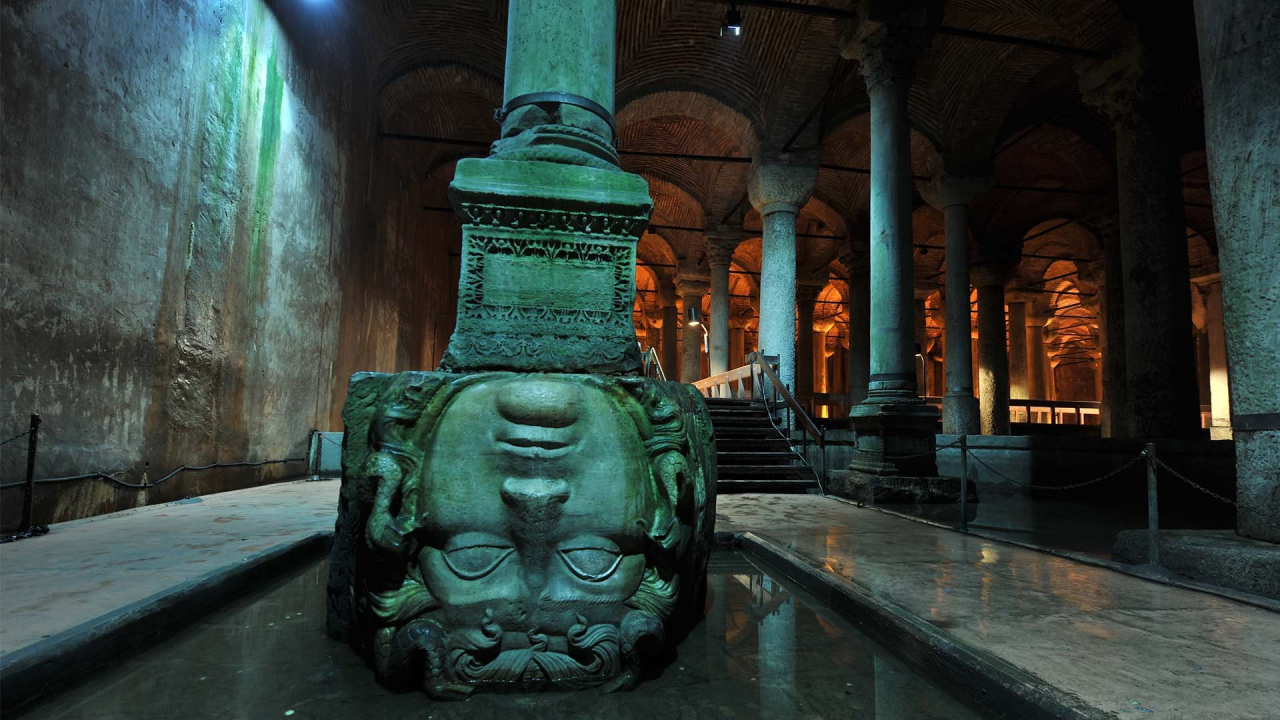
The most enigmatic symbols of the Basilica Cistern are the two Medusa heads located in a far corner. These ancient sculptures were used as the bases for two columns, but their positioning is what sparks curiosity: one head is placed sideways, and the other is completely upside down. This unusual arrangement has fascinated visitors and historians for centuries.
While there is no definitive explanation for this placement, several theories exist. Some suggest it was a purely practical decision—the heads were simply the right size to stabilize the columns. Others believe it was a symbolic act: in mythology, Medusa's gaze could turn people to stone, and placing her upside down or sideways was intended to neutralize her power. A third theory suggests they were simply repurposed as building materials without regard for their original meaning.
Regardless of the truth, the Medusa heads are the most photographed and discussed detail of the visit. The dim lighting and the reflections of the water lend a mystical aura to this corner of the cistern. No visit is complete without stopping here to capture one of the most memorable images of your trip.
Location and How to Get There
The Basilica Cistern is located in the heart of Sultanahmet, just a stone's throw from Hagia Sophia. It is virtually impossible to find a more central location; almost all the major historical landmarks surrounding the square are within easy walking distance. Consequently, the cistern is a natural stop for anyone exploring Istanbul's historic peninsula.
Getting to Sultanahmet is straightforward. The city's tram system (T1 line) has a stop nearby, from which it is only a few minutes' walk to the entrance. For those arriving from the European or Asian sides, ferries and public transport to the Eminönü area provide a quick connection to the historic center. During peak hours, when public transport can be crowded, private transfer solutions offer a more comfortable and direct alternative. For those who want to streamline their itinerary, you can explore Istanbul tour options to combine sightseeing and transport into one seamless program.
With Hagia Sophia, the Blue Mosque, Topkapi Palace, and Gulhane Park all in the immediate vicinity, you can easily visit multiple world-class sites in a single day, making Sultanahmet the ultimate cultural hub.
What to See and Experience
To make the most of your visit, keep an eye out for these key highlights:
- The Forest of Columns: The immediate impact of the 336 columns creates a powerful first impression. Take your time walking the platforms to appreciate the changing perspectives.
- The Medusa Heads: Located in the back corner, these are the most famous symbols of the cistern and an absolute must-see.
- Diverse Column Capitals: Look closely at the tops of the columns; the different styles reveal the cistern's history of using repurposed materials.
- Water Reflections: The mirror-like surface of the water creates stunning visual symmetry, perfect for photography.
- Atmosphere and Acoustics: The cool air, dim lights, and the echo of water drops create a unique mood. Slow down and soak in the silence.
By focusing on these elements, your visit becomes more than just a walk-through—it becomes a meaningful discovery.
The "Underground Palace" Vibe and Cultural Significance
What truly sets the Basilica Cistern apart from other historical sites is its atmosphere. Descending a few steps from the noisy, vibrant square into a cool, dim, and silent world creates a powerful contrast. This transition turns the visit into an experience rather than just a sightseeing stop. Many visitors find that the "feeling" of the cistern is what they remember most.
The cultural significance of the cistern extends beyond its architecture. Over the years, it has served as a backdrop for countless documentaries and cinematic scenes. This visual power has helped cement the cistern as a global symbol of Istanbul's identity.
For cultural travelers, the cistern completes a historical narrative when paired with Hagia Sophia and Topkapi Palace. Observing the traces of both the Byzantine and Ottoman eras in one area provides a tangible sense of Istanbul's continuity. It is the perfect starting point for anyone wanting to understand the city's layered history. To explore the historic peninsula more comprehensively, you can expand your trip with Istanbul cultural tours or Sultanahmet cultural tours.
Tips for Your Visit
A few practical tips will ensure your visit is comfortable and rewarding. First, the interior remains cool year-round. While this is a blessing during the summer heat, bringing a light sweater or shawl can increase your comfort. Since the floors can be damp in some areas, wear comfortable, non-slip shoes.
For photographers, the cistern is a dream, but the lighting is low. To get the best shots, keep your camera steady and try to frame the reflections in the water. The Medusa head corner is usually the most crowded spot, so a little patience is required. To avoid the biggest crowds, try to visit the most popular corners at the very beginning or the very end of your tour.
As visiting hours and regulations can change, we recommend confirming the current status on the day of your visit. If you are planning to visit other nearby sites, starting your day early is the best way to beat the crowds and complete your itinerary without rushing.
The Best Time to Visit
While Istanbul is a year-round destination, certain seasons offer a more relaxed experience at the Basilica Cistern. Spring and autumn are ideal, offering mild weather and relatively smaller crowds. During these months, exploring the surrounding outdoor sites is more comfortable, and the cistern's interior feels more serene.
In the summer, the cool interior of the cistern provides a perfect escape from the heat, though this is also the peak tourist season. To manage the crowds, early morning visits are highly recommended. In winter, the cistern is generally quieter, and since it is an indoor site, you can explore it regardless of the weather. Regardless of the season, weekdays and early mornings are the best times to truly feel the atmosphere.
Plan Your Istanbul Trip with Travel Tour Shop
You can compare and plan your visit to the Basilica Cistern and other Sultanahmet landmarks—including transport and transfers—all in one place via Travel Tour Shop. You can clearly see the tour scope, included services, and transportation options before booking, allowing you to optimize both your time and budget.
Because our listed options are vetted based on local experience and genuine guest feedback, you can plan your cultural journey with complete peace of mind. For those wanting a broader perspective of the historic peninsula, our Istanbul cultural tours guide is a great starting point. If you're curious about the neighboring landmarks, check out our Hagia Sophia guide and our Topkapi Palace guide. To explore other historical gems across the country with the same quality standard, explore our Turkey historical city tours.
Frequently Asked Questions 5
Where is the Basilica Cistern located?
The Basilica Cistern is located in the heart of Istanbul's historic center, Sultanahmet, right next to Hagia Sophia. It is within walking distance of other major landmarks such as the Blue Mosque, Topkapi Palace, and Gulhane Park.
How do I get to the Basilica Cistern?
Sultanahmet is easily accessible via the city's tram system; it is just a few minutes' walk from the nearest stop. Visitors from the European and Asian sides can take ferries or public transport to Eminönü and walk to the historic center. For maximum comfort, private transfer services can drop you off directly at the entrance.
Why is it called the "Underground Palace"?
Due to its massive scale, the rows of 336 marble columns, and its grand interior, the structure feels like a palace hidden beneath the earth. This is why it is frequently referred to as the "Underground Palace" in international travel guides.
Why are the Medusa heads positioned upside down or sideways?
There is no definitive answer. Some believe it was a practical choice to fit the size of the column bases, while others suggest it was a symbolic move to neutralize Medusa's mythological power to turn people to stone. Some also believe they were simply repurposed as building materials.
When is the best time to visit the Basilica Cistern?
Spring and autumn are the best seasons due to mild weather and smaller crowds. In summer, the cool interior is a great refuge from the heat, though it is much busier. Regardless of the season, visiting on weekdays and in the early morning provides the most peaceful experience.