
Most people planning a visit to Yeni Cami think of it as just a facade to be admired from the square. Yet, the story of this complex is not one of impatience, but quite the opposite: a tale of waiting. Its foundation was laid at the behest of a Valide Sultan (Queen Mother), but construction halted when power dynamics shifted in the palace, leaving the structure unfinished at the lower wall level for over half a century. The tiered mass you see today rose to completion only when a second Valide Sultan took up the project. This guide details the mosque itself, the visible units of the complex, and the short route from the square down to the piers, specifying which gates are open on which days.
Quick Facts
| Topic | Information |
|---|---|
| Location | Fatih district, Eminönü; on the sea side of the square |
| Commissioned by | Safiye Sultan (1597 foundation), Hatice Turhan Sultan (post-1660) |
| Architects | Davud Ağa, Dalgıç Mehmed Çavuş, Mustafa Ağa |
| Current Status | Open for worship after restoration began in 2016 |
| Complex Units | Mosque, Imperial Pavilion, tomb, Qur'an school (darülkurra), primary school (sıbyan mektebi), public fountain (sebil), bazaar (arasta) |
| Imperial Pavilion Visit | Tuesday to Sunday 10:00-19:00, closed Monday, free entry |
| Transportation | T1 and T5 tram Eminönü stop, Marmaray at Sirkeci, Eminönü ferry piers |
| Duration | Less than half a day for the mosque, complex, and shoreline |
What Sets Yeni Cami Apart from Other Imperial Mosques on the Peninsula
Most grand mosques on the peninsula are built on hilltops, completing the city's silhouette from above. Yeni Cami does the opposite: it sits close to sea level and derives its height not from the terrain, but from its own tiered platform. This choice determined both the structure's appearance and its construction history.
A complex built at sea level
The proximity of the ground to water meant that the foundation could not be resolved with ordinary excavation. According to Fatih District Governorship records, the structure rests on wooden piles with lead-banded tips; the same record likens this technique to the method used for the Büyükçekmece Bridge. The result for visitors is this: to reach the mosque's entrance, you first ascend the stone steps from the square, then pass into the courtyard, and finally into the Harim (prayer hall). So, the first five minutes of your visit involve a change in elevation, and the rest of the route concludes by descending the same elevation in reverse.
In terms of plan, the structure was not invented from scratch either: the same record describes this scheme, where the central dome rests on four elephant-foot piers and is supported by four semi-domes, as an elaborated version of the arrangement Mimar Sinan established in the Şehzadebaşı Camii. While Süleymaniye establishes its dominance from the hilltop, Yeni Cami asserts its presence from the shore, as the first mass to strike the eye of those arriving by sea.
Construction halted: From 1597 to the 1660s
According to the Culture Portal records, the foundation was laid in 1597 at the request of Safiye Sultan, wife of Murad III and mother of Mehmed III. Architect Davud Ağa died in the plague epidemic of 1598, and Dalgıç Mehmed Çavuş took his place. In 1603, with the death of Mehmed III and Safiye Sultan's loss of position in the palace, construction ceased, leaving the structure unfinished for fifty-seven years. After the fire of 1660, Hatice Turhan Sultan, touring the area, took up the unfinished structure again and had the work completed by the Chief Imperial Architect Mustafa Ağa. The Culture Portal records that construction finished in 1663 and the opening was held with Friday prayers; sources also mention 1665 for the ceremonial opening of the complex.
This chronology is useful during your visit: if you look knowing that the stone craftsmanship in the courtyard and the tile program in the Harim did not come from the same hand, but rather represent two separate century-ends joined together, the stylistic differences on the facade gain meaning. For those who wish to explore the complex not on its own, but in conjunction with other stops in the city center, Istanbul city center cultural tours combine the same route into a program.
Is Yeni Cami Currently Open to Visitors?
Yes, it is. The comprehensive restoration that began in 2016 has been completed, and the mosque was reopened for worship on Friday, January 6, 2023. The announcement by the Istanbul Governorship stated that the lead covering on the eaves and domes was renewed, the walls were strengthened, historical tiles were repaired, and dome calligraphy was reapplied. This means that the structure, which remained under scaffolding for many years, can now be seen with its facade fully revealed.
The other units of the complex did not follow the same timeline. The restoration of the Hatice Turhan Sultan Tomb was contracted in 2012, and according to Istanbul Mufti's Office records, after six years of work, the tomb was opened to visitors on June 28, 2019. The Imperial Pavilion, however, operates on an independent schedule from the mosque and is closed one day a week. These three separate timelines illustrate why planning a visit to the complex with a single common visiting hour can be misleading.
When to Visit: Season and Time of Day
What determines the best time for this route is not temperature, but the lack of shade. The square and the shoreline are entirely open areas, and the wind from the Golden Horn estuary blows unimpeded here; in winter, this wind makes walking significantly more challenging, while in summer, the square remains shadeless during midday. Early morning works well in both cases: the facade receives light from the east, and the square is not yet crowded with ferry passengers.
The main break in the day is Monday. Since the Imperial Pavilion is closed on Mondays, visitors who wish to see the complex in its entirety should shift their visit to other days of the week. Around Friday noon prayers, the Harim is reserved for the congregation, so dedicating that time slot to the outdoor units allows the route to proceed without disruption.
What to See in the Complex: From Courtyard to Tomb
The complex is not just a single building. The Culture Portal records list the units as the mosque, Imperial Pavilion, Qur'an school, tomb, bazaar, primary school, public fountain, and tap. The table below summarizes those that can be seen today and their visiting arrangements; as days and hours can change seasonally, please check the relevant institution's page before you set out.
| Unit | What to see | Visit notes (verify) |
|---|---|---|
| Mosque interior (Harim) | Four elephant-foot piers, semi-domes, tile and calligraphy program | Outside prayer times, free entry |
| Porticoed courtyard | 20 columns, 24 domes, octagonal ablution fountain | Open during the day |
| Imperial Pavilion | Tiled rooms, wood and mother-of-pearl inlay, ramped entrance | Tuesday-Sunday 10:00-19:00, closed Monday |
| Hatice Turhan Sultan Tomb | Three interconnected tombs, 82 sarcophagi of dynastic members | Opened in 2019, hours seasonal |
| Public fountain and tap | Charitable structures of the complex facing the square | Visible from outside |
The Porticoed Courtyard and Ablution Fountain
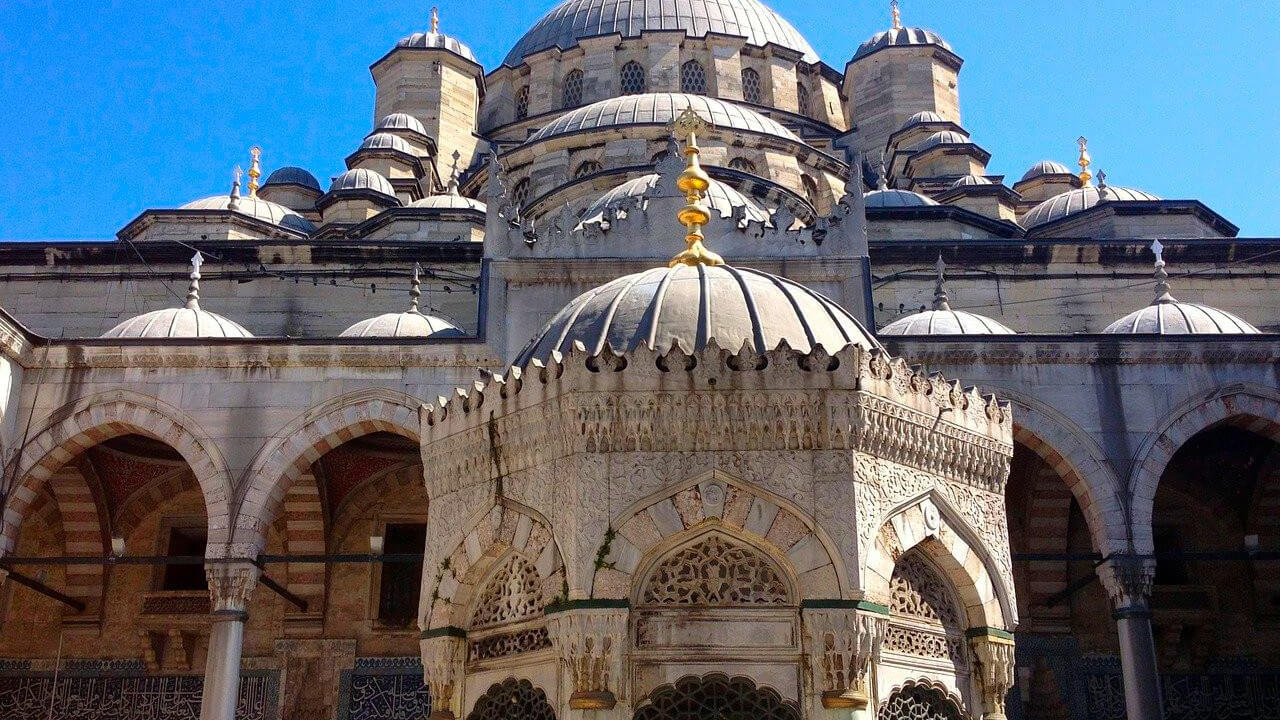
As you ascend the steps and pass through the monumental gate, the noise of the square suddenly fades. According to Fatih District Governorship records, the square-planned courtyard is surrounded by 20 columns, with six columns on each side, supporting 24 domes; an octagonal ablution fountain with muqarnas capitals stands in the center. The courtyard is an intermediate level where you can observe how the light changes before entering the Harim: outside, there's the sparkle of the sea; under the portico, a uniform shadow; and inside the Harim, diffused light filtering through the windows.
The Harim: Four Elephant Foot Piers and Tile Program
Inside, your gaze first goes upwards. The four thick elephant-foot piers supporting the central dome, along with the surrounding semi-domes, make the space feel like a unified volume. The walls and gallery surfaces feature 17th-century Iznik tiles; the dominant colors are shades of blue and white. The marble minbar and mother-of-pearl inlaid wooden details showcase the craftsmanship of the same period. Avoiding flash photography preserves both the glaze of the surfaces and the tranquility of the congregation.
The Imperial Pavilion: The Sultan's Private Entrance
This pavilion, adjacent to the mosque, was designed to allow the Sultan to enter the structure without passing through the congregation; its entrance is a stone ramp that could be ascended on horseback. According to the Ministry of National Education's records for non-formal learning environments, the pavilion is currently operated by the Istanbul Chamber of Commerce, is open from Tuesday to Sunday between 10:00 and 19:00, closed on Mondays, and entry to the exhibition areas is free. The same record states that due to the steep and stone-paved nature of the historic ramp, wheelchair users require companion assistance, and the venue may be temporarily closed during periods without exhibitions; checking current exhibition announcements before setting out prevents a wasted trip. Inside, tiled panels, tiled fireplaces, a wooden entrance door with intricate craftsmanship, and colorful stained-glass windows stand out.
Hatice Turhan Sultan Tomb
This is the dynastic burial ground of the complex. According to Istanbul Mufti's Office records, the structure actually consists of three tombs connected internally: the Hatice Turhan Valide Sultan Tomb, built by Architect Mustafa Ağa in 1663, the Havatin Tomb, and the Cedid Havatin Tomb, added in the 19th century. According to the same record, a total of 82 members of the dynasty are interred in the three structures; in the main tomb, alongside Hatice Turhan Valide Sultan, are the sarcophagi of Mehmed IV, Mustafa II, Ahmed III, Mahmud I, and Osman III, while the other two tombs house dynastic members from later centuries. The fact that the Valide Sultan who completed the mosque saw her own structure transform into a dynastic burial ground of this scale, in itself, explains why the complex was not built merely as a mosque.
From Square to Shore: Building Your Route Step-by-Step
Setting up the route from top to bottom prevents you from passing through the same crowded gate twice. The sequence proceeds by descending in elevation and ends at the sea.
- Read the facade from the square: Exit the tram stop and stand in front of the steps; from here, you can see the pyramidal dome tiers and the two minarets, each with three balconies, in their entirety.
- Ascend to the courtyard: Climb the steps and enter the porticoed courtyard, take a turn around the ablution fountain, and admire the stone craftsmanship of the monumental gate.
- Enter the Harim: Remove your shoes at the entrance, enter outside of prayer times, and first look at the dome structure, then at the tiled surfaces.
- Walk to the Pavilion's ramp: Upon exiting the mosque, find the ramped entrance of the Imperial Pavilion; if it's not Monday, enter the exhibition area.
- Visit the tomb: See the group of tombs on the square-facing side of the complex, and check the current visiting announcement at the door.
- Descend to the shore: Pass by the bazaar block and reach the pier area, ending your walk in front of the ferry docks.
Between the fifth and sixth steps, the Rüstem Paşa Camii, rising above the shops, can be seen with a short detour. The bazaar block, which was the revenue source for the complex, is also above this passage; those interested in the city's covered bazaar tradition as a whole can refer to the article detailing the historical and commercial structure of the Grand Bazaar.
Which Ferry Lines Depart from Eminönü?
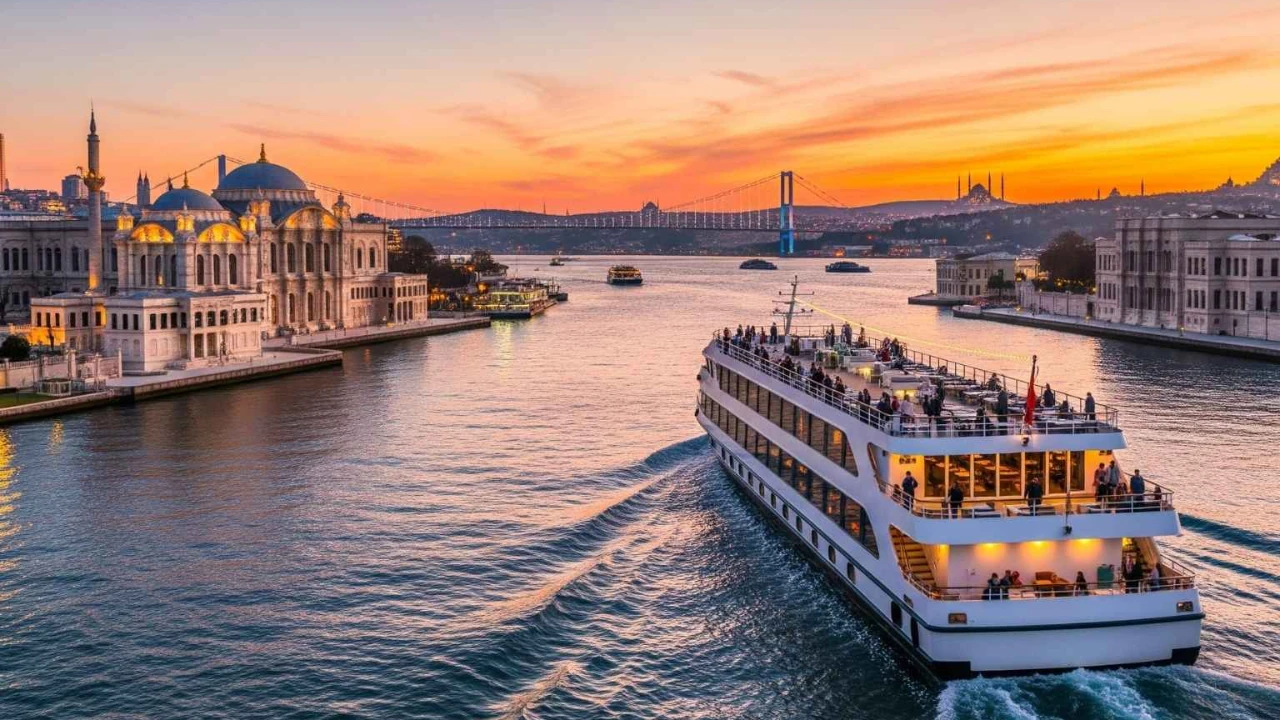
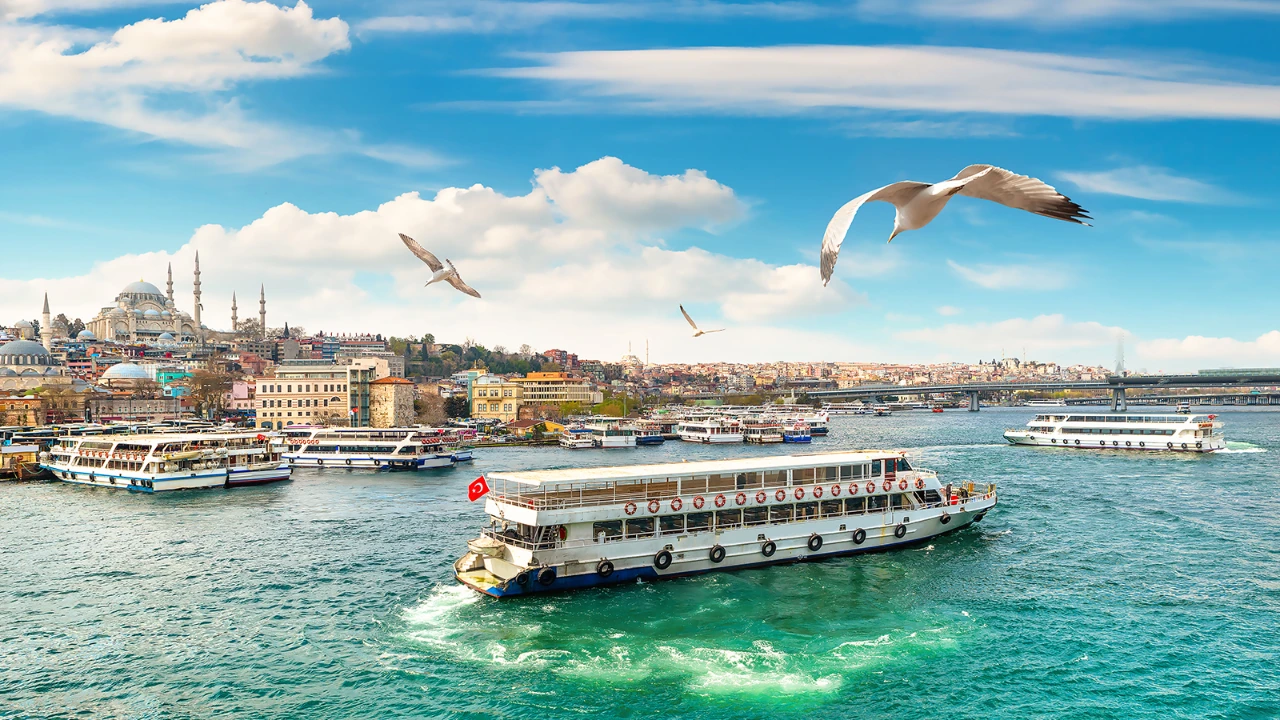
According to City Lines' own schedule page, domestic routes from Eminönü include Üsküdar-Karaköy-Eminönü and Kadıköy-Karaköy-Eminönü services, while Bosphorus routes include Ortaköy-Beşiktaş-Eminönü and Rumeli Kavağı-Eminönü services; under the institution's Bosphorus tours section, you'll find the Long Bosphorus Tour, Short Bosphorus Tour, and Moonlight Cruise. What's important from a route perspective is this: after descending the mosque steps, a few minutes' walk will take you to a ferry crossing to the other side or a program that ventures into the Bosphorus. The fare schedule has separate lines depending on visitor type; check the official tariff for current amounts.
What you see looking back from the shore
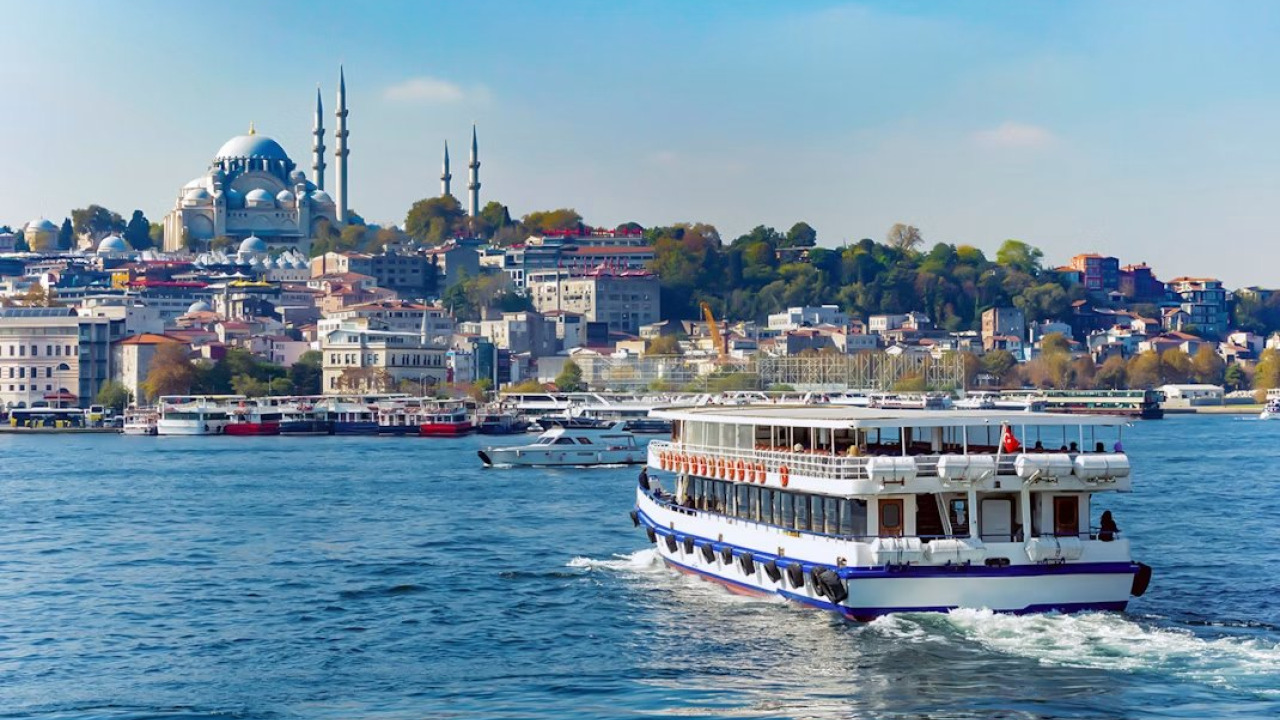
When you step onto the quay and turn your face towards the land, the mass of the complex stands in the foreground, while the silhouette of Süleymaniye rests on the slope behind it, at a higher elevation. Seeing both structures in the same frame illustrates the peninsula's hierarchy between the shore and the hilltop: one is the gateway for those arriving by sea, the other the crown of the city seen from above. The late afternoon light softens the facades in this frame.
Continuing east along the shore
Those who don't wish to end their walk can follow the shoreline eastward towards Sirkeci, and from there reach the Sarayburnu exit. For those considering connecting to the palace program in the same direction, the article describing Topkapı Palace sets up the second half of the day. For those who prefer to end their route at sea, the pier area is already a natural conclusion.
Which Starting Point for Your Route, Depending on Your Arrival Line
Your direction of arrival also determines the direction of your walk. The table below shows which starting point requires fewer detours for visitors arriving from each line.
| Arrival Line | Disembarkation Point | Where the Route Starts |
|---|---|---|
| T1 Kabataş-Bağcılar tram | Eminönü stop, shore side | Start from the square and descend to the shore |
| T5 Eminönü-Alibeyköy tram | Eminönü final stop, Golden Horn direction | Walk from the bazaar gates to the square |
| Marmaray | Sirkeci station | Follow the shore west and ascend to the square |
| City Lines ferry | Eminönü piers | Reverse the order: from the quay to the courtyard |
According to Metro Istanbul's line pages, the T1 line is 19.3 kilometers with 31 stations, and the T5 line is 10.1 kilometers with 14 stations; services on both lines run between 06:00 and 00:00. The Eminönü station of the T5 line was added later and began service on August 30, 2023, which is why it may not appear in older route descriptions. Those considering a guided program can compare Istanbul cultural tours options.
Quick Notes Before Your Visit
Most things that disrupt a route aren't solved at the gate, but at home. Clarify these points before you set out:
- Avoid Monday; the Imperial Pavilion is closed then, and the complex will be incomplete.
- If entering the Harim, opt for clothing that covers shoulders and knees; a headscarf is expected for female visitors.
- Since shoes are removed at the entrance, slip-on shoes and spare socks will make things easier.
- The square and shoreline are exposed; carry a hat and water in summer, and a wind-breaking outer layer in winter.
- Ferry and museum tariffs vary by visitor type; budget accordingly.
Frequently Asked Questions 5
Why is it called Yeni Cami (New Mosque)?
The official name of the structure is Valide Sultan Mosque. Because it is a late example of the grand Valide Sultan complexes in the Historical Peninsula, and the surrounding mosques were built much earlier, the name Yeni Cami (New Mosque) became common among the public, referring to it as the newly completed structure. This name eventually entered official use.
Is there an entrance fee for Yeni Cami?
The mosque is an active place of worship, and entry is free. Admission to the exhibition areas in the Imperial Pavilion is also free, according to the Ministry of National Education records. However, ferry services and state-affiliated museums have different tariffs based on visitor type; check the official website of the relevant institution for current prices.
How long does it take to visit the Yeni Cami complex?
Less than half a day is sufficient for the mosque, courtyard, Imperial Pavilion, and tomb group. If you descend to the shore and take a break along the pier, the program will extend slightly. The main factor determining the duration is prayer times; the Harim is reserved for worshippers during those intervals.
Is the Imperial Pavilion (Hünkar Kasrı) open to visitors?
Yes, it is open. According to the Ministry of National Education's records for non-formal learning environments, the pavilion is open to visitors from Tuesday to Sunday between 10:00 and 19:00, closed on Mondays, and operated by the Istanbul Chamber of Commerce. The same record also states that the venue may be temporarily closed during periods without exhibitions. The historic ramp at the entrance is steep and stone-paved, so wheelchair users will require assistance.
How do I get to Yeni Cami by tram?
The Eminönü stop of the T1 Kabataş-Bağcılar line opens onto the mosque's square. The final stop of the T5 Eminönü-Alibeyköy line is also in the same area and began service on August 30, 2023. Those arriving via Marmaray from Sirkeci can reach the square in a few minutes by following the shore westward.