
Güzeldere Waterfall is a magnificent tiered cascade tucked away within the beech forests at the foot of Elmacık Mountain, in Düzce's Gölyaka district. This guide explores the waterfall alongside its neighbor, Efteni Lake, as they represent two complementary facets of the same valley: one greets visitors with the roar of water plunging down a steep rock face, the other with the gentle chorus of birds from its reedy shores. Below, you'll discover what to see within the nature park, the best times for birdwatching at the lake, how to plan your route, how the seasons transform the landscape, and what you can fit into a memorable day trip.
A Morning in Gölyaka Valley
As you turn off from Düzce city center towards Gölyaka, the scenery rapidly transforms. Flatlands covered in hazelnut groves soon give way to forested slopes, carved by winding stream beds. In the early morning, a delicate mist often hovers over the valley, with the reeds of Efteni Lake slowly emerging from its embrace. Further along the same road, after a signposted turn into the forest, you'll begin to hear the distinct sound of rushing water through the trees. Hearing Güzeldere Waterfall before you see it is one of those small, yet unforgettable details of this route.
Quick Facts
| Topic | Information |
|---|---|
| Location | Düzce Province, Gölyaka District, foothills of Elmacık Mountain |
| Highlights | Güzeldere Waterfall Nature Park, Efteni Lake wetland |
| Waterfall Height | Approx. 120 meters, tiered cascade |
| Protection Status | Registered as a picnic area in 1993, designated a nature park on July 11, 2011 |
| Distance | Approx. 18 km from Düzce city center, 11 km from Gölyaka |
| Recommended Visit Time | Half-day for waterfall and lake, full day for extended route |
| Best Season | Spring and Autumn |
| Transportation | Private vehicle; via Gölyaka from Düzce city center |
What to See at Güzeldere Waterfall Nature Park?
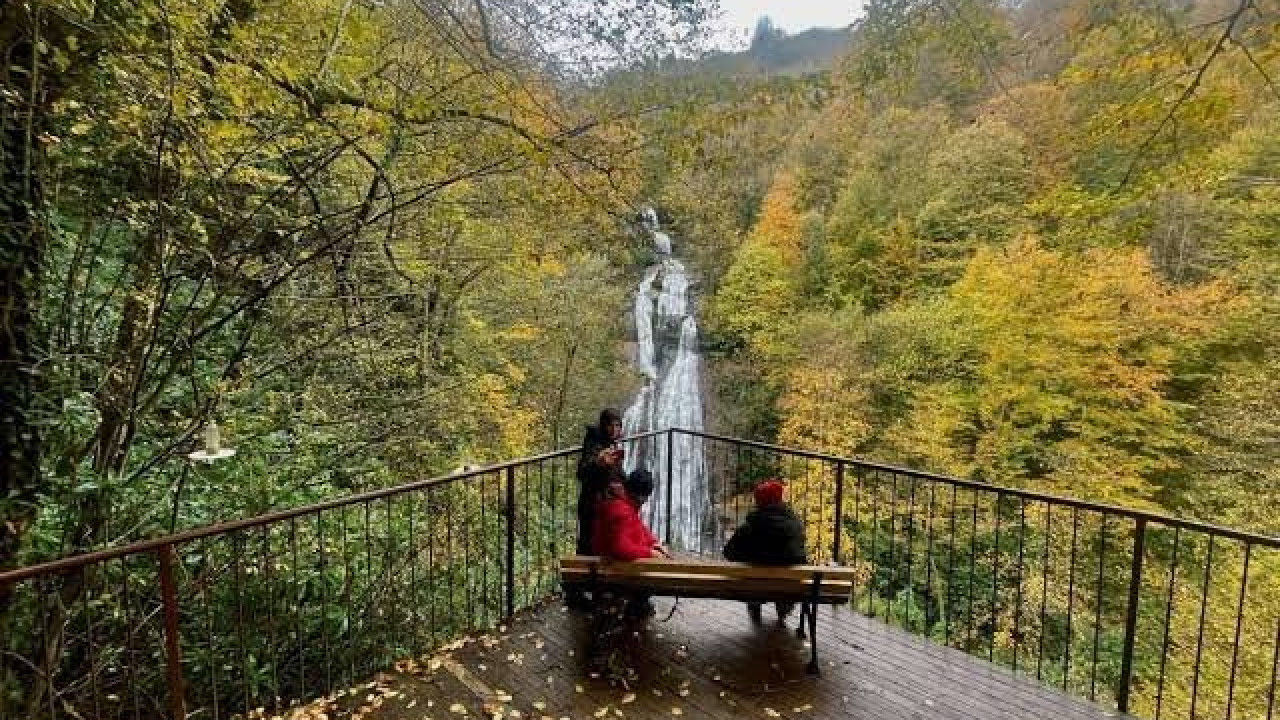
The park is a well-organized area featuring wooden walkways, observation decks, a parking lot, and picnic spots, all set up directly opposite the waterfall. This infrastructure makes the area easily accessible and enjoyable, even for families with children.
The Tiered Cascade and Observation Decks
The waterfall descends in a series of tiers down a steep, rocky wall, approximately 120 meters high. As the water disperses and regathers at each level, it creates a constant mist within the valley, ensuring the area around the observation decks remains noticeably cool, even on a hot summer's day. Stair-accessed platforms built on the opposite slope allow you to admire the view from three distinct elevations. Practical tip: photos taken from the lower platform emphasize the sheer volume of water, while those from the upper terrace highlight the waterfall's harmonious composition with the surrounding forest. For optimal lighting and tranquility, the early morning hours are ideal.
Forest Walks and Picnic Areas
The trails within the park wind through groves of beech and hornbeam trees; the gradient is largely gentle, making for a comfortable pace suitable even for less experienced hikers. Wooden platforms protect the forest floor and help you navigate muddy sections after rainfall. The area provides drinking water, restrooms, and picnic tables, with camping grounds and wooden bungalows also available within the park boundaries. For those looking to combine a nature walk with a broader itinerary, consider exploring routes within our nature and adventure tours.
Efteni Lake: A Bird Stop on the Migration Route
Stretching along the border between Düzce city center and Gölyaka, Efteni Lake is a shallow freshwater lake fed by the Aksu, Uğur, Asar, and Küçük Melen streams descending from Elmacık Mountain; its excess water flows into the Black Sea via the Melen River. Designated a wildlife development area in 2005 for the protection of waterfowl, official records list nearly 175 bird species, establishing it as a crucial stopover point on migratory routes.
Bird Observation Tower and Reedy Shores
The observation tower on the lake shore offers expansive views over the reeds. Species such as herons, wild ducks, and reed warblers can be observed feeding along the shoreline; species diversity significantly increases during the spring and autumn migration periods. For optimal viewing, the first hours after sunrise and late afternoon are preferred, as bird activity intensifies during these times. A simple habit that extends your observation time is to avoid speaking loudly near the reedy shores.
Hot Springs and Seasonal Lake Appearance
Around Efteni, you'll find hot spring facilities fed by underground thermal sources. These offer a natural conclusion to your itinerary for those seeking relaxation after a waterfall hike. The lake's water level fluctuates seasonally: a broad expanse of water forms in spring, while by late summer, the shores recede, revealing grassy areas. As the area is protected, it is not permitted to enter the reeds or approach nesting sites.
Extending Your Route: Düzce's Nearby Attractions
Since the distance between the waterfall and the lake is short, adding a half-day to your schedule allows you to explore other nearby points of interest. The table below helps travelers departing from the city center choose between various stops.
| Stop | Distance from Düzce city center | Recommended Time |
|---|---|---|
| Güzeldere Waterfall Nature Park | Approx. 18 km | 2-3 hours |
| Aydınpınar Waterfalls | Approx. 10 km | 1 hour |
| Samandere Waterfall Natural Monument | Approx. 24 km | 1.5-2 hours |
| Kardüz Plateau | Approx. 48 km | Half-day |
Kardüz Plateau and Its High Meadows
Kardüz Plateau is situated in the higher elevations of the same district, within the village boundaries of Gölyaka. At approximately 1,830 meters above sea level, it is considered the highest point in the province. It's about 28 kilometers from Gölyaka center and roughly 48 kilometers from Düzce city center. Known for its expansive meadows and the mist that settles on its slopes in the mornings, it offers a refreshing escape during the summer months. As much of the road winds through forests and ascends via winding turns, driving time should be estimated as longer than the mere distance suggests. During winter and early spring, road conditions can be variable, so it's advisable to inquire about the route's status before setting out.
Fakıllı Cave and Akçakoca Coast
Located in Fakıllı village, approximately 8 kilometers from Akçakoca, Düzce's Black Sea coastal district, Fakıllı Cave stands out with its impressive stalactite and stalagmite formations. Of the cave's total length exceeding a thousand meters, about 350 meters are open to visitors via an illuminated platform, showcasing rich dripstone formations. Along the same route, you'll find castle ruins dating back to the Genoese period, as well as the district center's beach. Those looking to combine coastal and historical stops can explore options within our cultural tours; for travelers considering extending their route eastward, our Black Sea tourism guide offers a regional overview.
Kurugöl, Aydınpınar, and Samandere
Kurugöl, a small lake surrounded by forest, is ideal for a peaceful walk and a traditional "serpme" breakfast, thanks to its well-arranged picnic area; the circular trail around the lake can be completed quickly. Aydınpınar Waterfalls, located within the Aydınpınar village limits near Düzce city center, are the closest stop, featuring a series of small cascades and easily found via signposted roads. Samandere Waterfall, in Samandere village, part of Beyköy, deserves a special mention as Turkey's first registered natural monument: along a 500-meter stretch of the stream, you'll find monumental trees, three consecutive waterfalls, and the deep, water-carved hollow known as Cadı Kazanı (Witch's Cauldron).
How to Get to Güzeldere Waterfall?
The main artery of this route is the highway between Düzce city center and Gölyaka; both destinations are clearly signposted.
- From Düzce city center, head towards Gölyaka. The waterfall is approximately 18 kilometers from the city center and about 11 kilometers from Gölyaka district center.
- At the Gölyaka exit, follow the Efteni Lake sign to visit the observation tower; the lake is along the same route as the waterfall turn-off.
- From the signposted turn-off into the forest, proceed to the nature park's parking lot, leave your vehicle there, and access the walking trails.
Public Transport and Getting Between the Waterfall and Lake
For visitors without a private vehicle, minibus services are available from Düzce city center to Gölyaka. The section from the district to the park entrance can be covered by local transport, which varies by season, or by a pre-arranged vehicle. As service times are subject to seasonal changes, confirming your return plan before you go will ensure a smooth and enjoyable day.
Planning Your Visit: Entry Conditions, Duration, and Seasons
Entry to areas designated as nature parks requires a contribution fee, charged per vehicle or per person. As tariffs are updated periodically, we do not share specific figures here; you can check the current rates on the information board at the entrance. A reasonable amount of time to allocate for the waterfall and lake is half a day; if you add Kardüz or Akçakoca, the itinerary extends to a full day.
Is the Museum Pass Valid Here?
Nature parks and natural monuments fall under a different administrative structure than museums. Therefore, the Museum Pass (Müze Kart), which is used at museums and archaeological sites under the Ministry of Culture and Tourism, is not valid in nature conservation areas like Güzeldere. As parking capacity fills up quickly during late summer and public holidays, a weekday visit offers greater ease for both entry and parking.
| Period | Scenery | Note |
|---|---|---|
| Spring (April-May) | Water flow intensifies with snowmelt | Productive period for waterfall, lake is expansive |
| Summer (June-August) | Forest coolness, lush greenery | Crowds increase on weekends |
| Autumn (September-November) | Yellow and orange hues in the beech forest | Favorable for photography, cool weather |
| Winter (December-March) | Tranquil park, bare forest | Roads may be icy |
What to Eat and Where to Stay Around Gölyaka?
Trout cooked in a clay pot (kiremitte alabalık) at riverside establishments along the waterfall road is a renowned local dish. Düzce cuisine bears the influences of Caucasian and Black Sea cultures; geographically indicated Düzce Köftesi, Circassian chicken (Çerkes tavuğu), and cornbread are frequently found on menus. Establishments offering "serpme kahvaltı" (a traditional spread breakfast) are perfect for a morning stop. For accommodation, bungalows and camping areas within the park, as well as guesthouses around Gölyaka, are popular choices; it's advisable to book ahead for weekend stays. Those seeking itineraries centered around local culinary experiences can explore options within our gastronomy and event tours.
Tips Before You Go
- Opt for non-slip footwear; wooden platforms can become damp from waterfall mist.
- Bring binoculars and a long-focus lens for birdwatching, and do not enter the reeds.
- Mobile network coverage may be limited in the forest; save your route on an offline map.
- Carry water and snacks, and take your trash with you when leaving the area.
- Stream levels can rise after rainfall; avoid approaching rocks near the water's edge.
- Even in summer, bring a light top layer as the weather can be cool.
What Can You Fit into a Day? Route Summary
Starting early from Düzce city center, spending half an hour at Efteni Lake's observation tower, then proceeding to the nature park for a few hours on its walking trails and observation decks creates a well-balanced flow. You can enjoy lunch at one of the riverside trout restaurants along the way, then head towards Samandere in the afternoon or descend to the Akçakoca coast. For those wishing to extend their trip to two days, consider spending the night in the park's bungalows and dedicating the following morning to Kardüz Plateau. This route is particularly rewarding for weekend getaways, as it combines three distinct landscapes—water, forest, and wetland—within a short distance. Travelers looking to complement this natural itinerary with a historical urban experience can consult our Safranbolu attractions guide.
Frequently Asked Questions 6
Is there an entrance fee for Güzeldere Waterfall?
As the area is protected under nature park status, a contribution fee is charged per vehicle or per person upon entry. Since tariffs are updated periodically, the most practical way is to confirm the current rates on the information board at the entrance.
How much is the entrance fee for Samandere Waterfall?
Samandere is also a protected natural area, so there is an entrance fee. As figures change periodically, we do not share specific amounts here; you can check official announcements for current information before your visit.
What is special about Samandere Waterfall?
Samandere Waterfall holds the distinction of being Turkey's first registered natural monument. Key features of the area include a series of waterfalls along the stream, monumental trees, and the natural hollows carved by the water into the rocks, known as Cadı Kazanı (Witch's Cauldron).
Where is Samandere Waterfall located in Düzce?
Samandere Waterfall is located in the southeast of Düzce, within the boundaries of Samandere village, which is part of the Beyköy municipality. It is approximately 24 kilometers from the provincial center and accessible by private vehicle via signposted roads.
Can Güzeldere Waterfall and Efteni Lake be visited on the same day?
Yes. Both locations are along the Gölyaka route and can easily be combined into a half-day trip. A plan that allocates the morning to birdwatching by the lake and the afternoon to the walking trails of the nature park will flow smoothly.
What is the best time for birdwatching at Efteni Lake?
Species diversity increases during the spring and autumn migration periods. Within the day, the first hours after sunrise and late afternoon are the best times, as bird activity intensifies during these intervals.