Nestled in Turkey's Western Black Sea region, Gökgöl Cave is a stunning karstic dripstone cave located just 3 kilometers from Zonguldak city center, right off the main highway connecting Zonguldak to Ankara. With a total length of 3,350 meters, the first 875 meters have been opened to tourism, making it Turkey's tenth longest and Zonguldak's second longest cave. Its captivating galleries, rich with stalactite and stalagmite formations, and an underground river flowing through, make it a prominent natural attraction in the region. Its convenient location, easily fitting into a half-day itinerary, makes Gökgöl Cave a perfect starting point for an extended adventure along the scenic Filyos coastline.
Where is Gökgöl Cave and Why Visit?
In short: Gökgöl Cave is located just 3 kilometers from Zonguldak city center, right by the highway heading towards Ankara. Its main draw for visitors is that the initial 875 meters of its 3,350-meter system have been made accessible with well-lit pathways. This means even travelers new to caving can quickly experience the wonders of the underground world.
The Cave's Formation and Underground River
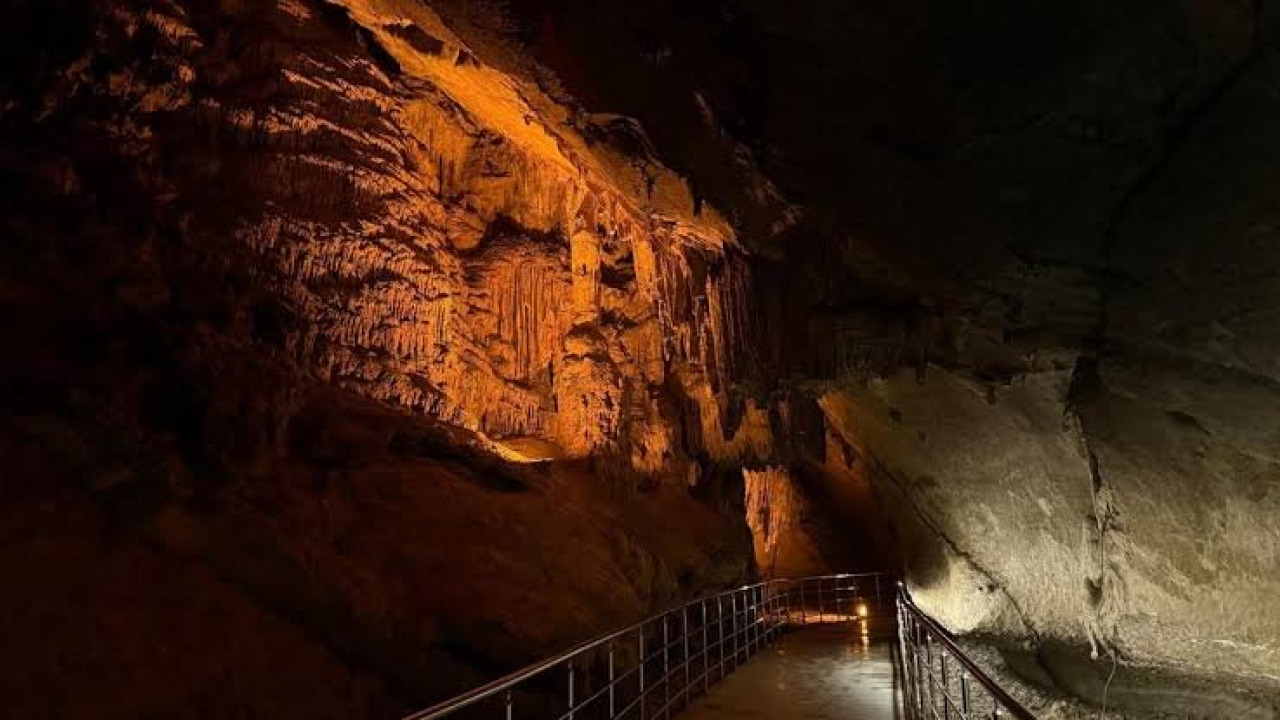
The region's limestone layers were carved out from within as rainwater, acidified by carbon dioxide, dissolved the rock. Expanding cracks evolved into grand galleries, while drops seeping from the ceiling formed stalactites, those falling to the floor created stalagmites, and where they met, majestic columns arose. An underground river flows through the cave, emptying into the Erçek stream outside through a natural siphon. This continuous flow is a key indicator that the formations are still actively developing. Official descriptions characterize the cave as an active, horizontally developed system composed of interconnected levels.
What to See on the Visitor Route
Along the accessible section, you'll marvel at illuminated clusters of stalactites and stalagmites, curtain-like flowstones, small travertine pools, and traces of water seeping from the ceiling. The 875-meter route is thoughtfully designed with glass bridges spanning the underground river and observation decks. Following a renovation completed in 2016 after a 2014 flood, heat-emitting fixtures that could damage the formations were replaced with non-heating LED lighting, and the walking path was upgraded with accessibility in mind. Despite these improvements, the ground remains damp. For photography, leaning on a stable surface and utilizing the warm glow of the cave's lighting, rather than flash, will yield more striking images.
Quick Facts
| Topic | Information |
|---|---|
| Location | 3 km from Zonguldak city center, by the Zonguldak-Ankara highway |
| Type | Karstic, horizontally developed, active dripstone cave |
| Length | Total 3,350 m; accessible walking path 875 m |
| Highlights | Stalactite, stalagmite, column formations, and underground river |
| Opened to tourism | 2001; 2016 renovation added LED lighting, glass bridge, observation deck |
| Visiting hours | Generally 09:00-18:00 (may vary seasonally) |
| Visit duration | 30-40 minutes for the 875 m route, closer to an hour with photos |
| Best time to visit | Year-round; spring and autumn are more comfortable |
| What to bring | Non-slip shoes, a light jacket |
Getting to the Cave: Step-by-Step Guide
The cave is situated directly on the main highway, so the primary consideration is how to reach Zonguldak city center.
- Start from Zonguldak city center and take the highway signposted for Ankara. The cave entrance is 3 kilometers from the center, right by this route, and clearly marked with signs.
- Park your vehicle in the designated parking area, then proceed from the ticket office and visitor area to the walking path.
- If you're traveling from further afield, first reach Zonguldak. The airport is in Çaycuma district, but scheduled flights are limited and primarily serve routes to Germany.
- Travelers arriving by intercity bus can take local transport from the bus terminal to the city center, then opt for a taxi or local bus lines heading to surrounding districts for the cave.
Comparison of Transport Options
| Option | How it works | Note |
|---|---|---|
| Own vehicle | 3 km from center, roadside parking | Flexible; be cautious on winding sections and in wet weather |
| Bus + taxi | From bus terminal to city center, then taxi to cave | Morning arrival allows for a pre-noon visit |
| Flight | Transfer from Çaycuma airport to city center | Limited flights; have a road connection backup plan |
Notes for Those Traveling by Car
Roads in this part of the Black Sea region are winding and hilly, and the asphalt can become slippery on rainy days. Navigation signals may weaken in mountainous areas, so it's advisable to download your route offline.
Ideal Time to Visit
| Period | Advantage | Note |
|---|---|---|
| Spring | Mild weather, vibrant vegetation | Roads might be wet after rain |
| Summer | Cave remains cool while outside is warm | Weekend visitor numbers increase |
| Autumn | Tranquil atmosphere, clear views | Days shorten, plan for earlier visits |
| Winter | Fewer crowds | Snow and ice can make travel challenging |
Cave Conditions and What to Wear
The cave has its own microclimate: temperature and humidity remain within a narrow range throughout the year, feeling cool in summer and relatively warm in winter compared to outside. As you venture deeper, temperatures are measured to drop and humidity to rise. Therefore, even in mid-summer, a light jacket or windbreaker will be useful. Since the ground is wet, non-slip shoes are essential; high heels and flat-soled sandals are not suitable.
Planning Your Trip: What to Consider
A trip to Gökgöl Cave involves several components: travel to Zonguldak, local transfers within the city, cave entrance tickets, food and drink, and accommodation if you plan to stay overnight. The cave is not an archaeological site under the Ministry of Culture and Tourism; its operation is managed by the Zonguldak Provincial Special Administration. Therefore, the Müzekart is not accepted for entry, and tickets must be purchased at the gate. Prices are updated seasonally; students receive a discount, while relatives of martyrs and veterans, as well as disabled visitors, are granted free entry. It's practical to carry some cash, as card payments may not be available everywhere.
Tips Before You Go
- Plan your visit for the morning; afternoon queues can get long on weekends.
- Bring a light jacket, non-slip shoes, and a small water bottle.
- Do not touch the formations inside the cave; oils from hands can disrupt their development.
- Visiting hours are generally between 09:00 and 18:00; go early to avoid missing the last entry time.
- If you're planning a nature-focused itinerary, explore similar routes among our nature adventure tours.
Extending Your Route Along the Filyos Coastline
Since a cave visit typically takes half a day, the rest of your program can be directed towards the coast. Along Zonguldak's coastline, where steep cliffs meet the sea, Filyos stands out as a well-known destination.
Filyos Ancient City and Surroundings
Filyos is a port settlement established in the Çaycuma district, at the point where the Filyos River meets the Black Sea. Known as Tios or Tieion in ancient sources, the city was founded in the 7th century BC by Milesian colonists as a trade and fishing port. Among the ruins, spread over approximately 60 hectares, are the acropolis, traces of city walls, a bathhouse, aqueducts, a Byzantine-era church, and a sunken harbor along the coast. Its theater is noted as the only ancient theater on the Black Sea coast to survive to the present day, and archaeological excavations are ongoing. The area is open terrain with limited shade; bring a hat and water. Those wishing to center their itinerary around ancient cities can draw inspiration from similar routes within our cultural tours.
Dining and Accommodation Areas on the Coast
Zonguldak cuisine highlights Black Sea fish, corn bread, and herbal dishes. We've detailed the general culinary tastes of the region in our article on Black Sea cuisine flavors. Small restaurants and fish eateries are common in the city center and coastal settlements. Those planning their route around culinary stops can take inspiration from the program logic within our gastronomy organization tours. For accommodation, hotels in the city center offer advantages for transportation, while guesthouses in coastal villages provide a peaceful night and sea views. Early booking is recommended, as finding availability can be challenging on late summer weekends.
How Many Days Are Enough?
For a traveler solely interested in seeing the cave, half a day is sufficient. Those combining the route with Filyos and the coastline can easily fill a full day, and visitors wishing to add surrounding districts can comfortably spend two days. Dedicating the first day to the cave and city center, and the second to the coastline and ancient city, balances travel time effectively. Visitors who enjoy city-centric excursions can expand this plan with the approach of our historic city tours.
Frequently Asked Questions 6
How much is the Gökgöl Cave entrance fee?
The cave requires a ticket for entry, and the Zonguldak Provincial Special Administration, which operates it, sets the tariff. As fees are updated seasonally, please confirm the current amount at the ticket office. Students receive a discount, while relatives of martyrs and veterans, as well as disabled visitors, are granted free entry.
Where is Zonguldak Gökgöl Cave located?
It is located approximately 3 kilometers from Zonguldak city center, right by the highway heading towards Ankara. The entrance is immediately off the road and clearly marked with signs.
What are the health benefits of Gökgöl Cave?
The cave possesses a microclimate; its air is cool, humid, and free of dust. Official promotions mention that the cave is utilized for respiratory ailments like asthma. This information is not a medical recommendation; those considering a visit for health purposes should consult their physician.
Is the Müzekart valid at Zonguldak Gökgöl Cave?
No. Gökgöl Cave is not an archaeological site under the Ministry of Culture and Tourism, but a natural visitor area operated by the Zonguldak Provincial Special Administration. Therefore, the Müzekart is not accepted for entry, and tickets must be purchased at the gate.
How long does it take to explore Gökgöl Cave?
Walking the accessible 875-meter route typically takes 30-40 minutes. Including photo stops and information panels, the total duration approaches one hour.
Can Gökgöl Cave be visited in all seasons?
Since the internal conditions of the cave remain similar throughout the year, it can be visited in all four seasons. In winter months, the main factor is not the cave itself, but rather how snow and ice might make road conditions challenging.