
For travelers seeking free campervan and wild camping spots in Turkey, the biggest question is often whether that picturesque location marked on the map is truly suitable for an overnight stay. A coastal beach, a nature park entrance, or an ancient city car park might be a delightful daytime stop, but could be closed to vehicle accommodation after dark. This guide from Travel Tour Shop will walk you through the conditions under which free camping is possible, what frequently mentioned spots mean for campervan travelers, where regulations come into play, and how to manage water, energy, and waste during nights spent without facility support.
Free Camping and Wild Camping Are Not the Same
Free camping refers to areas where you can stay overnight without paying an accommodation fee. Some of these spots are actually regulated: picnic areas opened by municipalities or forest administrations, equipped with bins and fountains but without charge, fall into this category. Wild camping, on the other hand, describes staying overnight in a natural spot with no infrastructure or expected services. The two are often confused, but the implications for travelers are quite different.
The practical difference boils down to this: in a regulated free area, you might find toilets, water, and waste bins. With wild camping, you rely entirely on what your vehicle carries. Therefore, wild camping is less a route choice and more a gear decision. The second difference is permission: just because an area doesn't charge doesn't mean overnight stays are permitted.
Quick Facts
| Topic | Information |
|---|---|
| Scope | Free overnight spots and off-grid nature camping |
| Suitable vehicles | Motorhome, caravan, camper van |
| Essential equipment | Fresh water tank, leisure battery, solar panel, grey and black water tanks |
| Legal framework | Highway Traffic Law No. 2918, local government decisions, forest and protected area regulations |
| Best season | Spring and autumn on the coast, summer in highlands and elevated areas |
| Service expectation | Free areas may not have electricity, water, or waste services |
Popular Spots and What They Mean for Campervans
The following locations frequently appear in searches for free camping. However, not all of them are suitable for overnight stays, and many aren't actually free. Some are day-use only, others are protected areas closed to vehicles, and a significant portion are paid, regulated campsites. In the sections below, we'll answer three key questions for each spot: Can you stay overnight? Can a vehicle enter? Is there a fee? Knowing these distinctions beforehand will help you avoid administrative penalties and the frantic search for a spot in the middle of the night.
Kabak Koyu and Kelebekler Vadisi (Butterfly Valley)
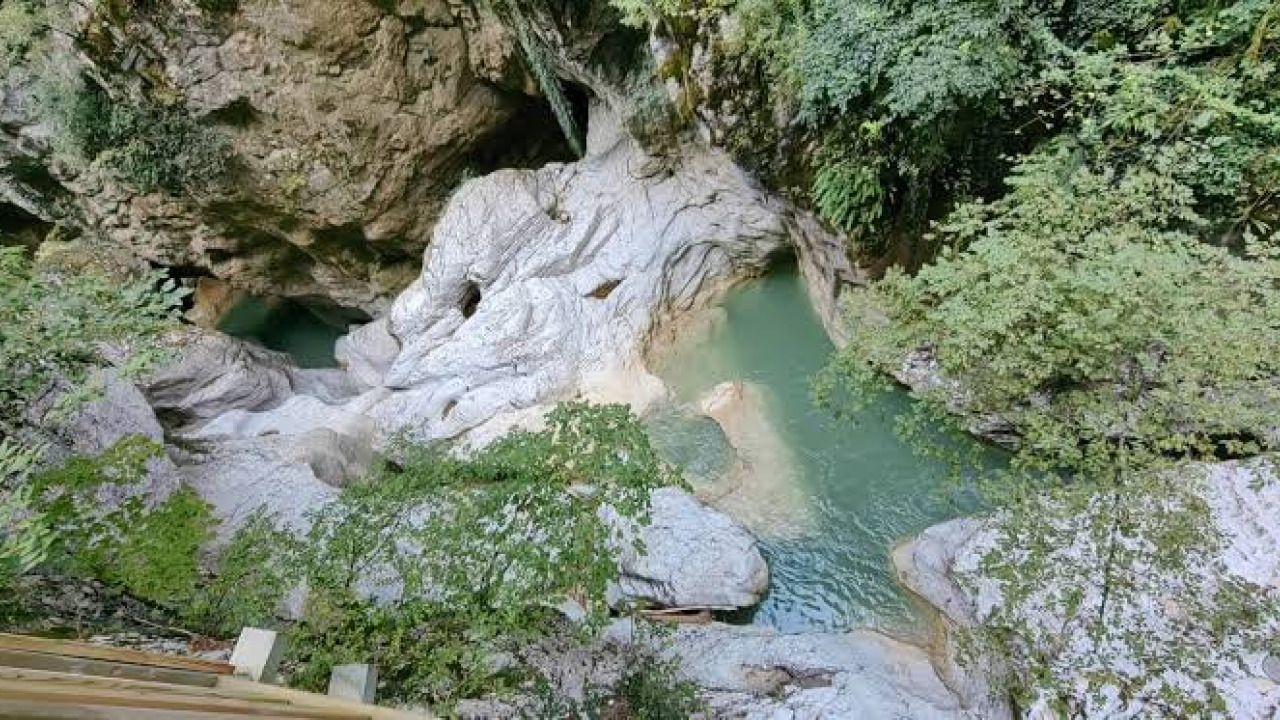
Kabak Koyu is located within the borders of Uzunyurt (Faralya) village, near Fethiye; it's approximately 33 kilometers from Fethiye center and 17 kilometers from Ölüdeniz. The road to Faralya is asphalt, but the final section descending to the cove is unpaved and steep. This descent is challenging for long motorhomes and caravans. The common practice in the area is to leave your vehicle in the village flatland above and walk down to the cove, or use the regular tractor service. The walk down takes about thirty minutes on a marked trail, and the return journey is noticeably strenuous.
Kelebekler Vadisi (Butterfly Valley) was declared a protected area in 1995, is closed to construction, and cannot be entered by vehicle. Access is typically by boat from Ölüdeniz Belcekız beach (a 30-minute ride) or via a steep trail from the Faralya side. While there are tent and bungalow accommodations at the valley floor, there's no area accessible for campervans. For those planning a detailed trip to the valley, you can check our Fethiye Kelebekler Vadisi (Butterfly Valley) guide. Practical tip: If you plan to spend the night in your vehicle in this region, look for flat areas along the road or guesthouse gardens that accept vehicles, rather than the valley floor. Late spring to early autumn offers a more comfortable experience in terms of crowds and heat.
Kayaköy and Letoon Ancient City
Kayaköy, near Fethiye, is known for its stone houses and was abandoned after the population exchange. You can find detailed information about the village's current state and visiting arrangements in our Kayaköy travel guide. Letoon, on the other hand, stands out as the federal sanctuary of the Lycian League, housing temples dedicated to Leto, Apollo, and Artemis. It has been a UNESCO World Heritage site since 1988, along with Xanthos. Both are visitor sites; due to their protected status, camping is not allowed within them, and vehicles must remain in the car park during the day.
For those traveling by campervan, these two stops should be considered independently of your overnight plans. A practical approach is to visit the ancient sites in the morning and then drive towards your chosen overnight spot in the afternoon. Travelers wishing to combine ancient cities into a structured itinerary can also choose from our cultural tours.
İztuzu Beach
İztuzu Beach in Dalyan is a sandy stretch where a freshwater delta meets the sea, and it's a vital nesting ground for loggerhead sea turtles (caretta caretta). During nesting season, roughly from early May to late September, access to the beach is prohibited between 8:00 PM and 8:00 AM. This ban also includes pitching tents, lighting fires or barbecues, and driving vehicles onto the sand. Violations of this prohibition carry administrative fines in the hundreds of thousands of Turkish Liras, and the beaches are monitored by cameras. Therefore, overnight vehicle stays on the beach should not be planned under any circumstances.
For campervan travelers, a workable solution is to use the beach car park during the day and spend the night at facilities around Dalyan or in gardens that permit it. Practical tip: Since the beach can be reached both by road and by boats departing from Dalyan center, leaving your vehicle parked and opting for a boat trip during the day eliminates the hassle of maneuvering on narrow roads.
Konyaaltı and Lara Beaches
Konyaaltı and Lara, Antalya's two major city beaches, are valuable stops on campervan routes not for overnight stays, but for resupply and a refreshing dip in the sea. Konyaaltı is known for its pebbles, while Lara boasts sandy shores; both are regulated beaches, and camping is not permitted directly on the coast.
In such city beaches, vehicle parking areas are for daytime use, and overnight stays depend on municipal regulations. The advantage of being in a city center is that water replenishment, laundry, and service access can all be handled on the same day. On longer routes, dedicating city stops for logistics can make your nights in nature much more comfortable.
Alanya Castle and Kleopatra Beach
Alanya Castle, with its Seljuk-era walls rising atop the peninsula, is an iconic symbol of the region. The structure was built in the first half of the 13th century during the reign of Anatolian Seljuk Sultan Alaeddin Keykubad I; its walls stretch approximately six and a half kilometers, featuring over eighty towers. The octagonal Kızıl Kule (Red Tower), which protects the harbor, dates back to 1226. Kleopatra Beach, on the western side of the peninsula, is known for its two-kilometer sandy stretch within walking distance of the castle. The road leading up to the castle is narrow and steep, making it difficult for large vehicles. It's more comfortable to use the car parks below and ascend by public transport or on foot.
The area around the peninsula is densely populated, so this is a spot for daytime excursions, not wild camping. Those wishing to explore the castle and its historical surroundings within a structured itinerary can explore our historical city tours options. For timing, early morning hours offer a more comfortable visit, both in terms of heat and crowds.
Yedigöller National Park
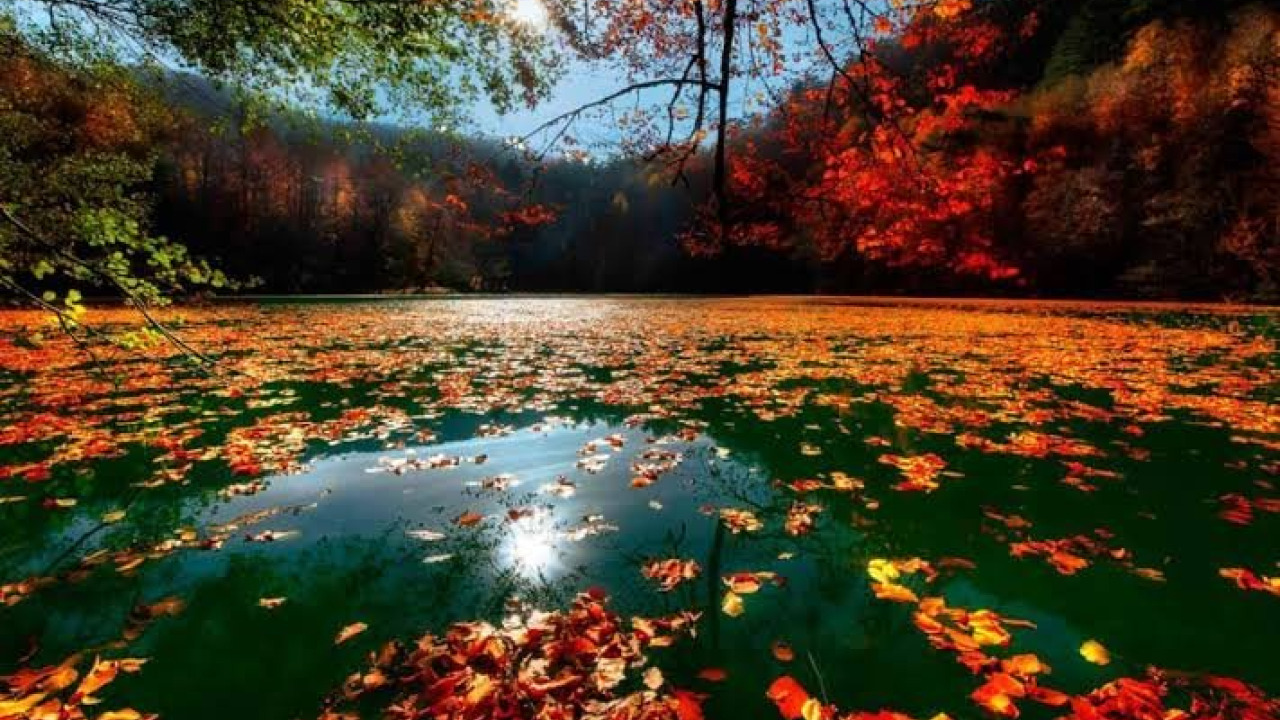
Yedigöller (Seven Lakes), approximately forty kilometers north of Bolu, is renowned for its chain of lakes formed by landslides blocking the valley, and its stunning autumn colors. Covering an area of over 1,600 hectares, it features seven lakes: Büyükgöl, Seringöl, Deringöl, Nazlıgöl, Küçükgöl, İncegöl, and Sazlıgöl. It holds national park status, which requires accommodation to be within designated camping areas set by the park administration. It is not permitted to set up camp anywhere you wish within the park; there is an entrance fee, and vehicle entries are recorded via an automatic pass system. In short, Yedigöller is not a free but a regulated and paid accommodation spot.
A crucial point for those arriving by campervan is the road: some routes have unpaved surfaces, making it difficult to navigate with a caravan on rainy days. Practical tip: The area gets very busy during the autumn foliage season, so weekdays are generally less crowded. Those interested in nature-focused programs can find ideas on our nature and adventure tours page.
Karagöl Nature Park
There are multiple areas in Turkey sharing the name Karagöl. One such Karagöl is located within the borders of İzmir's Karşıyaka district, surrounding a crater lake on Yamanlar Mountain, approximately thirty-five kilometers from the city center. This is not a free wild camping spot: within the park, there is a paid campsite open for tent and caravan accommodation, equipped with water, electricity, toilets, and a market. The fee covers both vehicle entry and overnight stay.
This distinction is crucial for the main topic of this guide: many nature parks frequently appearing in searches for free camping are, in reality, regulated and paid areas. Practical tip: Night temperatures at this altitude drop significantly compared to the coast, so it's advisable to have a heater and warm sleeping gear even in mid-summer. Late spring and summer months are the best times to visit, as the roads and lake surroundings are easily accessible.
Polonezköy
Polonezköy, located in Beykoz, Istanbul, was founded in 1842 for Polish exiles and was known as Adampol in Polish. Today, the village, along with its surrounding forest, is protected as a nature park, and the church and cemetery of the Polish-origin community still stand. Despite being within city limits, its forest-enclosed nature has made it a preferred area for campervan owners to make their first trial runs.
Day-use is prioritized in the area, and overnight stays are subject to rules set by the park administration. Practical tip: Short trips here provide a suitable test run for experimenting with your water, energy, and waste systems before embarking on a longer route.
Güneyli Cove
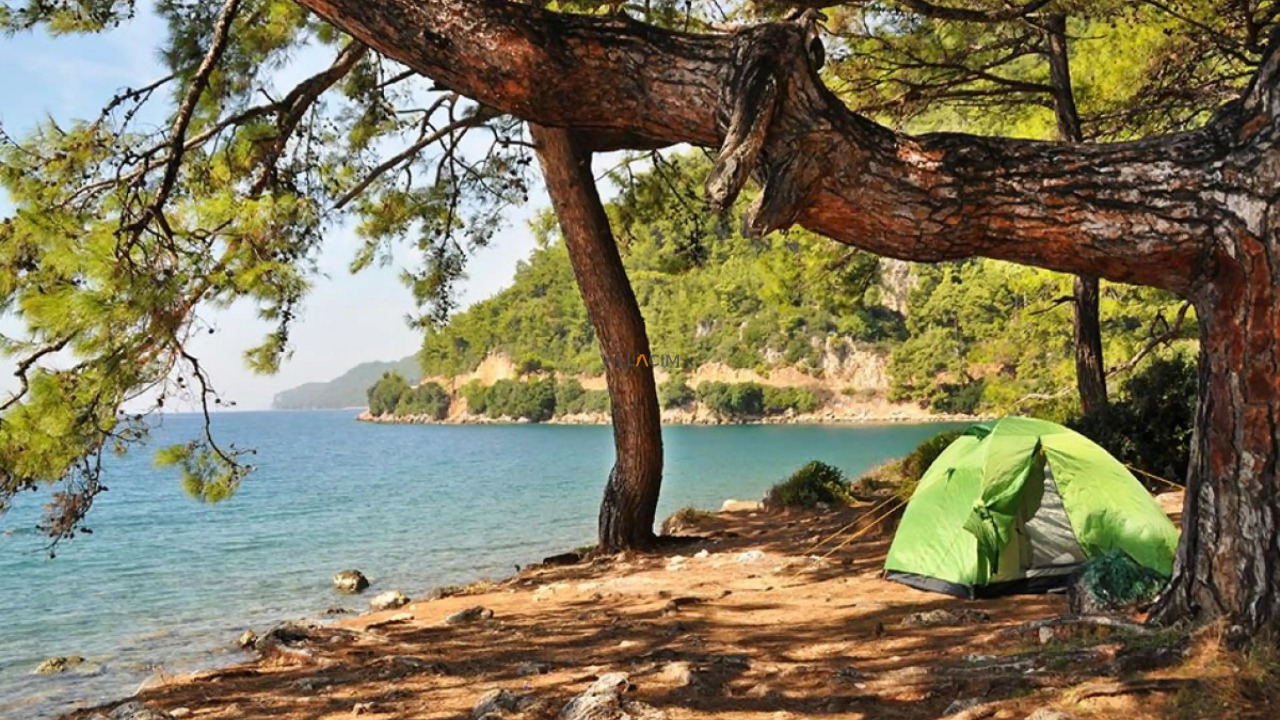
Güneyli Cove, on the coast of Güneyli village in Çanakkale's Gelibolu district, is one of the few genuine examples that frequently appear in searches for free camping. Since there are no facilities in the shaded, pine-covered section right by the sea, its use is free of charge. On the village's beach side, however, there's a regulated area with toilets, showers, and ample parking. The availability of nearby markets and restaurants distinguishes this cove from a completely off-grid wild camping spot.
There are two important points for those arriving by campervan. First is the ground: since there is sand and loose soil in the sections leading down to the shore, approaching too close to the water with heavy vehicles carries a risk of getting stuck. Second is local practice; decisions regarding the use of coves can change according to the season and municipal regulations, so it's advisable to confirm with the village headman (muhtar) during busy summer weeks.
| Spot | Role for Campervans | Fee Status | Overnight Considerations |
|---|---|---|---|
| Kabak Koyu | Hiking and cove stop | Facilities in cove are paid | Steep descent, vehicle left in village |
| Kelebekler Vadisi | Visit by boat or trail | Accommodation is paid | Protected area, no vehicle access |
| Kayaköy and Letoon | Cultural stop | Ancient site entry is paid | No accommodation within ancient sites |
| İztuzu Beach | Daytime beach stop | Beach use has separate fees | Entry forbidden 8 PM - 8 AM during season |
| Konyaaltı and Lara | City resupply and sea dip | Parking may be paid | No camping on regulated beaches |
| Alanya Castle and Kleopatra Beach | History and beach trip | Castle entry is paid | Castle road narrow, not suitable for large vehicles |
| Yedigöller National Park | Nature accommodation | Entry and camping are paid | Only designated park campsites allowed |
| Karagöl Nature Park | Lakeside campsite | Tent and caravan stays are paid | Not free, nights are cool |
| Polonezköy | Near-city trial stop | Nature park entry is paid | Subject to park rules |
| Güneyli Cove | Free beachfront camping | Unserviced section is free | Loose ground, local rules may change |
Steps to Evaluate a Spot for Overnight Stays
The real skill in free overnight stays isn't just finding a spot on the map, but being able to 'read' the location once you're there. The following sequence is a quick checklist that can be completed in five to ten minutes after stopping your vehicle.
- Determine the area's status: Is it a national park, nature park, protected archaeological site, forest area, municipal beach, or private property? The status dictates the rules and potential penalties.
- Read signs and markers: Entry hours, camping bans, fire restrictions, and vehicle limitations are usually posted at the entrance.
- Test the ground and exit route: Earthy ground that turns to mud in the rain can make your morning departure impossible. Check if there's enough space to turn your vehicle around.
- Measure the incline: Refrigerators and water systems operate more efficiently on level ground. Don't settle in an incline that cannot be corrected with leveling blocks.
- Assess risks: Riverbeds, dry flood paths, rockfall zones, and dry vegetation posing a fire risk are places to avoid.
- Observe your surroundings: Parking too close to settlements, fields, sheepfolds, or beehives can disturb both you and the local community. A friendly greeting and asking for permission can often prevent issues from the start.
- Limit your stay: Spending many consecutive nights in the same spot draws attention. Moving to a new location after one or two nights is common practice.
What to Do If You Can't Find a Spot
Searching for a spot in the dark is the most exhausting part of free camping. Experienced travelers designate a primary and a backup spot for each day; the backup is usually a paid campsite or a secure rest area. Settling in before sunset makes it easier to properly assess the area.
How Your Budget Shifts with Free Overnight Stays
Staying overnight for free doesn't eliminate expenses; it merely shifts them. While accommodation fees are removed from the equation, you'll factor in equipment investments for energy and water independence, extra mileage for resupply runs, and detours for waste disposal. The comparison below outlines the cost structure of both accommodation types.
| Expense Item | Serviced Campsite | Free Spot |
|---|---|---|
| Accommodation | Daily fee paid | No payment made |
| Electricity | Drawn from campsite hookup | Depends on solar panel and battery capacity |
| Fresh Water | Filled from campsite hookup | Search for public fountains or resupply points |
| Wastewater | Disposed of at campsite | Requires detour to a dump station |
| Fuel | Shorter route | Searching for spots adds mileage |
| Security | Camera and reception support | Determined by spot selection and neighbors |
To put this comparison into perspective, let's look at how campervan camping fees are structured. In nature parks and forest campsites, the overnight fee usually covers vehicle entry, accommodation, and shared amenities. Separate rates apply for tents and campervans, with campervan rates generally being higher. In recent seasons, these fees have ranged widely, from a few hundred to a thousand Turkish Liras, depending on the facility's amenities and location. Beachfront spots with electricity tend to be at the higher end of the spectrum, while simpler inland forest camps are at the lower end. Therefore, when planning your route, it's realistic to consider serviced nights as a variable expense, not a fixed one.
The second fixed expense is waste disposal. The network of campervan parks and dump stations in Turkey is still sparse; stations are typically found around marinas, serviced campsites, and some petrol stations. Marking disposal points in advance when planning your route will prevent unplanned long detours when your grey and black water tanks are full.
The practical takeaway from the table is this: mixing paid and free nights helps balance both your budget and your equipment. Stopping at a serviced area every few days to complete your water and waste cycle is a common and effective strategy.
Water, Energy, and Waste Management
In off-grid accommodation, your vehicle's autonomous capacity directly determines how many nights you can stay. The way to increase this capacity isn't just by installing larger tanks, but by reducing consumption.
- Plan fresh water separately for drinking and cooking, and for cleaning. Shortening shower times significantly extends your tank's life.
- Empty grey and black water tanks before they're full. Dispose of waste only at designated dump stations; never discharge it onto the ground or into streams.
- For energy, consider a solar panel in conjunction with a leisure battery. A system that allows charging from the vehicle's alternator becomes crucial in winter and on cloudy days.
- Avoid running high-consumption appliances simultaneously. The refrigerator and water pump are primary, while heaters and electric stoves are secondary.
- Carry backup systems: a manual water pump, gas detector, carbon monoxide alarm, flashlight, and a backup power source.
- Sort your waste and carry it in your vehicle. Most free areas don't have bins, so depositing your trash in the first settlement's container is the responsible thing to do.
The Difference Between Summer and Winter
In summer, the key concerns are cooling and water consumption; ventilation fans and the search for shade become paramount. In winter, heating and insulation are crucial, and precautions against water line freezing are necessary. The same vehicle that can easily remain autonomous for several days on a summer route will require more frequent resupply on a winter route.
Where Can a Campervan Park? Regulations and Risk of Penalties
The framework for campervan use in Turkey is defined by Highway Traffic Law No. 2918 and related regulations. For towable caravans, a significant threshold was removed with a regulation change at the end of 2024: as of January 1, 2025, all trailers used on public roads, including O1 class trailers under 750 kilograms, must be registered, carry their own license plate, and undergo periodic inspection. A transition period has been granted for vehicles manufactured before this date, and registration procedures are carried out through the vehicle registration system with a certificate of conformity. Therefore, the information that "caravans under 750 kilograms can be used without registration" is no longer valid.
Motorhomes, on the other hand, are registered not as private cars, but as M1 class special-purpose vehicles, specifically "motorized caravans" on the registration document. Motorhomes with a loaded weight not exceeding 3,500 kilograms can be driven with a Class B driver's license; vehicles above this limit require a higher-class license. If in doubt, the safest approach is to confirm with the traffic registration unit using the class and maximum loaded weight information on your vehicle's registration.
The Line Between Parking and Camping
Leaving your vehicle in a public car park or on a roadside where parking is permitted, and sitting inside, falls under the scope of parking. However, extending an awning, setting up tables and chairs, lighting a barbecue, or hanging laundry is considered camping and can lead to administrative penalties in areas where camping is prohibited. The practical application of this distinction is to adhere to parking rules during city stops and reserve camping activities for designated open areas.
In protected areas, the rules are even clearer: accommodation in national parks, nature parks, and archaeological sites is limited to locations designated by the administration. During summer months, access to forested areas may be temporarily closed due to fire risk; checking announcements from the relevant forest management directorate before setting off can prevent an unnecessary journey.
Nature Ethics and Safety
The sustainability of free overnight stays depends entirely on user behavior. Most areas that have been closed were shut down due to rule violations and left-behind waste.
- Light fires only in permitted areas and using a raised barbecue that doesn't touch the ground. On days with high fire risk, do not light any fires at all.
- Avoid using chemical cleaning products in open areas; opt for biodegradable alternatives.
- Keep lights and noise low at night. Do not run generators near settlements or other campers.
- Do not feed wildlife or allow them to become accustomed to humans; keep food securely stored.
- Choose reusable items over single-use plastics. When you leave, ensure the area is cleaner than you found it.
- Share your location with a delay, and if traveling alone, inform a close contact of your planned overnight spot.
Balancing Your Trip with Paid and Free Nights
Free campervan accommodation works best when considered as part of a larger plan, rather than the sole method for your entire route. A strategy that uses city stops for resupply and waste disposal, and natural spots for quiet nights, eases both equipment management and permission issues. The Fethiye and Dalyan area offers a character rich in hiking and coves, the Antalya region is focused on cities and history, the highlands of Bolu and İzmir are dominated by forests and lakes, while the Çanakkale and Gelibolu coast features unserviced coves. Planning your route according to these characteristics and dedicating a few nights to each region will reduce driving fatigue. It's important to note: only a small fraction of the spots discussed in this guide are truly free; the rest are paid or closed to vehicle accommodation. Building your plan around this reality will prevent disappointment from the outset. For those wishing to explore these same regions within a guided program, you can browse our Turkey tour programs and combine your campervan route with organized tours.
Frequently Asked Questions 7
Where are the free places to camp with a campervan in the Aegean region?
Free accommodation on the Aegean coast is generally possible in flat areas along village roads, picnic areas opened by the forest administration, and gardens that accept vehicles. Steep descent spots like Kabak Koyu and protected valleys are outside this scope. It's essential to confirm the area's status and local regulations on-site.
Where can a campervan park?
A campervan can park on any road where parking is not prohibited and in any public car park. Since parking and camping are considered different, waiting inside the vehicle is within the scope of parking, while extending an awning, setting up a table, or lighting a barbecue is considered camping and can lead to penalties in prohibited areas.
What are the prominent camping areas in Turkey?
Prominent areas vary by region: Bolu Yedigöller and nature parks around İzmir are preferred for their forest and lake characteristics, the Fethiye area for its coves and hiking routes, and the Antalya region for its long season. In national and nature parks, accommodation is permitted only in areas designated by the administration.
Are there free camping areas in Güneyli?
Yes. The coast of Güneyli village, located in Çanakkale's Gelibolu district, is one of the coves used free of charge due to the absence of facilities. On the village's beach side, there's a regulated area with toilets, showers, and ample parking, with nearby access to markets and restaurants. Since the ground is loose in sections leading to the shore, it's advisable not to approach too close to the beach with heavy vehicles. As decisions regarding the use of coves can change according to the season and municipal regulations, it's wise to confirm with the village headman (muhtar) during busy summer weeks.
Is the 750-kilogram limit for towable caravans still valid?
No. As of January 1, 2025, O1 class trailers under 750 kilograms are also subject to registration, license plates, and periodic inspection. A transition period has been granted for vehicles manufactured before this date, and registration is carried out through the vehicle registration system with a certificate of conformity.
How are water and electricity managed in wild camping?
For water, tank capacity and consumption discipline work together; shortening shower times and reducing dishwashing water extends your stay. For electricity, a combination of solar panels, a leisure battery, and charging from the vehicle's alternator is used. Wastewater must only be discharged at official dump stations.
Is camping with a campervan prohibited?
There is no general prohibition, but there are area-specific restrictions. Accommodation in protected areas is limited to designated spots, some municipalities restrict vehicle accommodation on beaches and in urban areas, and access to forested areas may be temporarily closed during periods of high fire risk.