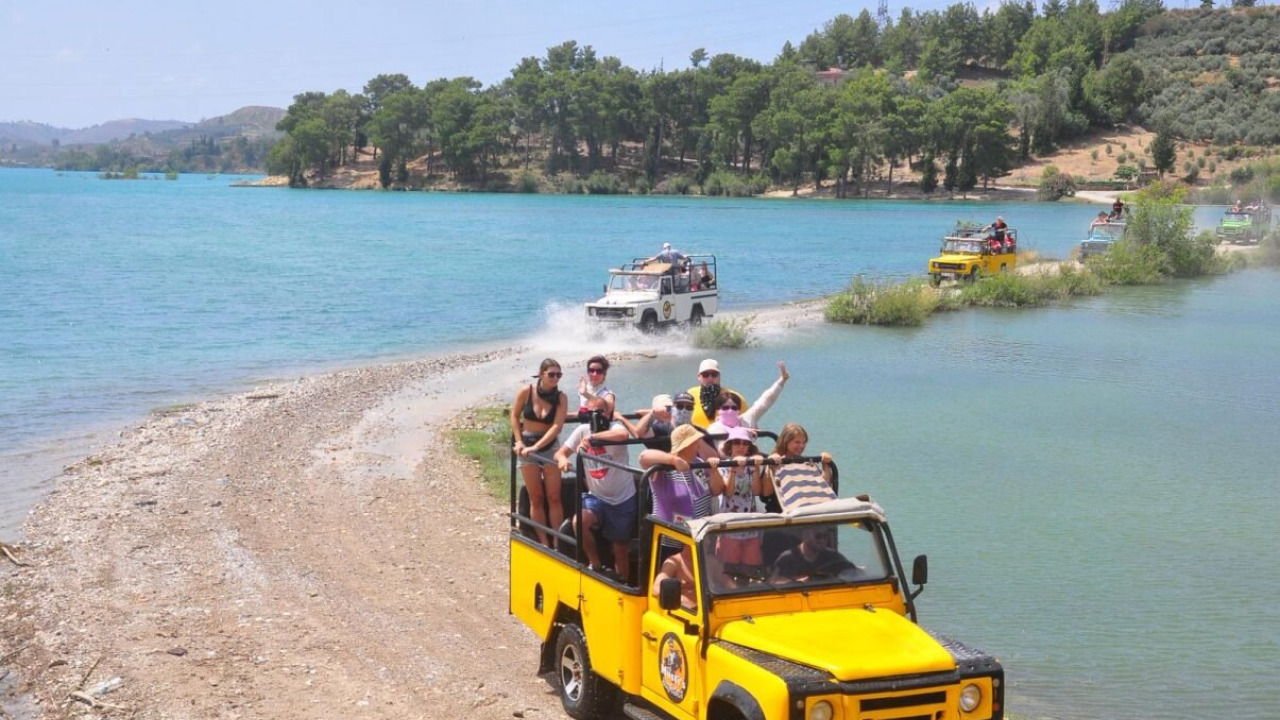
Most travelers looking into Fethiye jeep safari programs find themselves at a crossroads when booking: do you choose the cool, wet inland route winding through Saklıkent Canyon and the Eşen River valley, or the dusty, scenic coastal route descending from Kayaköy to Faralya and Kabak Bay? This dilemma isn't by chance. Within the same district, two distinctly different geographies exist: one offers canyon waters, mud baths, and trout lunch breaks, while the other features an abandoned stone village, winding mountain roads, and breathtaking sea views. A day spent in the back of an open-top 4x4 transforms into an entirely different memory depending on which path you choose.
Here's the practical answer: for first-timers and families with children, the canyon route offers a more balanced day, with built-in cooling-off stops. For photography and scenery enthusiasts, or those revisiting Fethiye, the coastal route is often more fulfilling. Programs combining both routes in one day are also available, but the increased travel time means shorter stops at each location. Further in this guide, we'll break down the stops, daily flow, seasonal differences, and how costs are typically structured.
We won't be listing specific prices in this guide. Protected area fees, archaeological site tickets, and tour prices are updated at the start of each season; last year's figures circulating online can lead to inaccurate budget planning. Instead, we'll explain which items are charged separately, where different rates apply for local and international visitors, where the Müzekart is valid (and where it isn't), and what factors influence the overall price.
Quick Facts
| Topic | Information |
|---|---|
| Location | Fethiye and neighboring Seydikemer districts, Muğla province; stops within an 8-50 km radius of the center |
| Key Stops | Saklıkent Canyon, mud bath, Eşen River, Yaka Village, Tlos, Kayaköy, Ölüdeniz to Kıdrak line, Butterfly Valley viewpoint, Faralya, Kabak Bay |
| Vehicle Type | Open-top 4x4 vehicles with bench seating in the back; tours proceed in a convoy |
| Program Duration | Full-day: pick-up from accommodation in the morning, drop-off in the late afternoon |
| Season | Peak season from late April to October; fewer programs available in winter months |
| Pricing Structure | Group tours are per person; private tours are charged per vehicle. Canyon entrance, archaeological site tickets, and extras like ringo are often separate |
| Müzekart (Museum Pass) | Valid at Tlos and Kayaköy archaeological sites; not valid at Saklıkent as it's not a Ministry site |
| Local vs. Foreigner Rates | Saklıkent entrance fees are set by different authorities for local and international visitors; archaeological sites also have dual pricing |
| Getting Wet | Getting wet is part of the canyon route experience; the coastal route is primarily dusty |
| Suitability | Families, young people, photographers; those with back or neck issues should consider the bumpy ride |
| Nearest Airport | Dalaman Airport is approx. 50 km, 50-60 min drive; Antalya Airport is approx. 200-250 km depending on route, 3.5-4 hour drive |
| Guide Language | Most programs in the region are conducted in Turkish and English |
Fethiye Jeep Safari Canyon Route: Stops, Getting Wet & Convoy Dynamics
The inland route heads southeast from the Fethiye plain, following the Eşen River valley. Asphalt roads quickly give way to dirt tracks through fields and pomegranate orchards – this is where the safari adventure truly begins. Since the day's focus is on the canyon and river, expect to get wet on this route.
A unique aspect of this route is that the duration of stops depends on the convoy's pace, not individual preference. Vehicles move and wait together; the guide sets the time for the next stop according to the convoy's schedule. If you're planning a long hike in the canyon, an extended river trek, or a lengthy exploration of an ancient site, it's more realistic to dedicate a separate day to that specific stop.
Saklıkent Canyon: The Wet Trail, Entry & Museum Pass
Saklıkent is approximately 45 kilometers from Fethiye center, within the borders of Seydikemer; the drive from the center takes 45 to 60 minutes. The wooden boardwalk at the entrance is fixed to the rocks and extends along the canyon mouth; families with small children can stay on this section. For those who venture into the water beyond the boardwalk, the main trail begins. The water is icy cold even in mid-summer, delivering a shock with the first step, and holding onto ropes helps maintain balance. The time allocated for exploring the canyon on a safari program is limited; reaching the further rock formations and waterfalls requires a separate plan.
The entrance system here involves two different authorities, and it's one of the most frequently asked questions for guides. The area is not an archaeological site under the Ministry of Culture and Tourism but is managed as a protected natural area; therefore, the Müzekart is not valid at the entrance. Fees are determined by two parties: the fee for international visitors is set by the General Directorate of Nature Conservation and National Parks, while the fee for local visitors is determined by the Seydikemer Municipality. An additional vehicle fee is charged per person for those entering the canyon by car, meaning the budget for visitors arriving in their own vehicle differs from those on a group tour.
A common misconception regarding scale: the entire canyon extends for approximately 18 kilometers, but the section open to visitors and suitable for amateur hiking is near the entrance. The safari program's time in the canyon is also limited to this section. For those wishing to visit independently, minibuses to Saklıkent depart from Fethiye Bus Terminal; the journey takes about 40 minutes, with increased frequency in summer.
Eşen River & Mud Bath: A Sun-Dependent Stop
Where the waters emerging from the canyon merge with the Eşen River, a fine layer of clay accumulates. Most safari programs stop here immediately after exiting the canyon: mud is applied to the body, dried in the sun, and then washed off in the cold river water. Programs usually schedule the canyon and mud stops for late morning, as the sun needs to be high for the clay to dry. This practice is traditionally known for giving a refreshing sensation to the skin; it is not a medical treatment, and those with sensitive skin should exercise caution.
In the same valley, in the calmer sections of the Eşen River, short courses with inflatable ring boats, known as "ringo," are offered. This activity is usually separate from the main tour price and charged per activity; the cost depends on the length of the course and the number of people per boat. For those seeking longer and more technical routes, Fethiye rafting tours are planned as separate programs.
The Water Fight: The Convoy's Wet & Wild Segment
One of the well-known elements of Fethiye safaris is the mutual water fight from the back of the open-top vehicles. Guides often distribute buckets and water guns before setting off; the drenching intensifies during village passages, at riverside stops, and on straight stretches where two convoy vehicles pull alongside each other. Sometimes, children and local business owners along the roadside also join in with hoses; getting wet happens not just at stops but also while on the move.
The main risk here is to electronic devices: phones, cameras, and wireless headphones can be damaged if exposed during the water fight. A waterproof case or a dry bag with a secure closure should be carried in your bag, and the bag itself should be kept on your lap or in a closed compartment, not under the bench. For participants who prefer not to get wet, the solution is to inform the guide beforehand and sit in the front of the vehicle. If a water fight isn't mentioned in the program description, it's advisable to ask when booking, as there are also culture-focused programs in the same destination that proceed without water fights.
Yaka Village & Yakapark Lunch Stop
Yaka Village, located below Tlos, is known for its trout restaurants fed by spring water flowing through wooden channels. Yakapark, with its water channels running between tables and fountains spouting from tree trunks, has been a popular lunch stop for day-trippers for years. The water temperature here is also low; children playing in the channels might not realize they're getting cold.
Whether lunch is included in the tour price varies by program. Packages that include lunch typically offer trout, seasonal salad, and tandoor bread; if not included, the restaurant's own menu applies. Since the stop duration is tied to the convoy's pace, those wanting both food and photos should get in line early.

Cultural Gems Along the Route: Tlos, Kayaköy & Fethiye Center
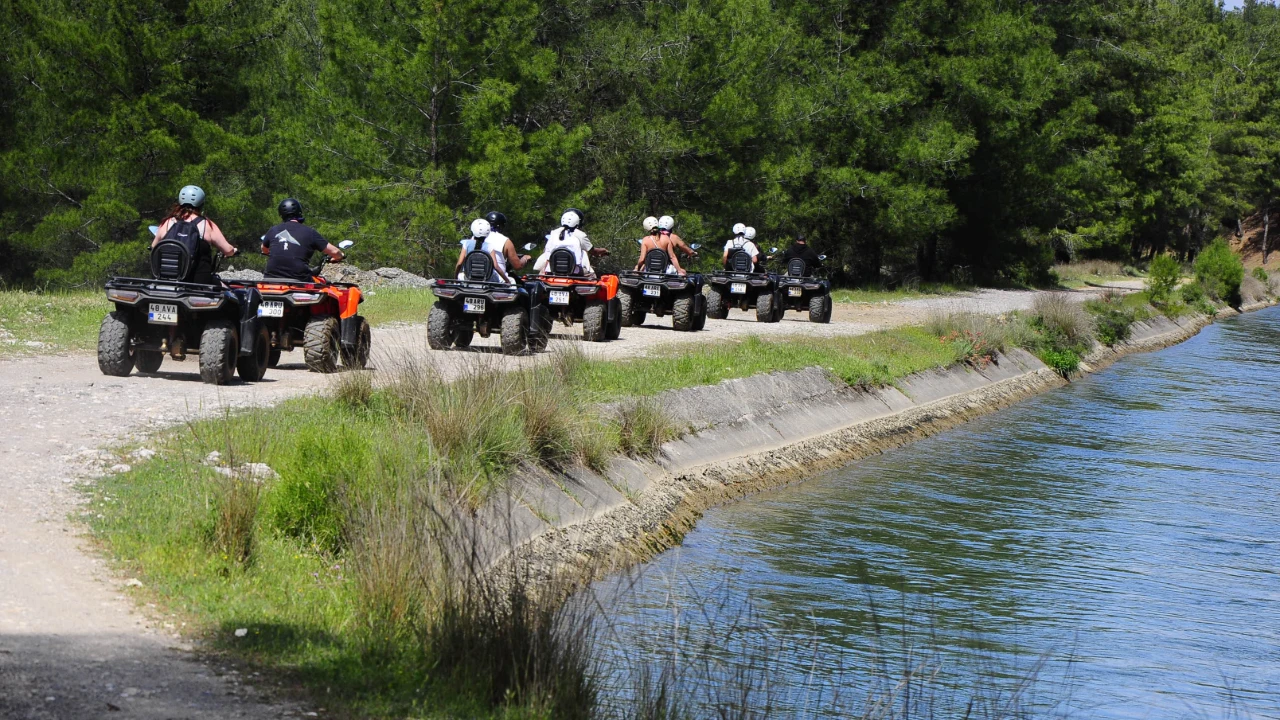
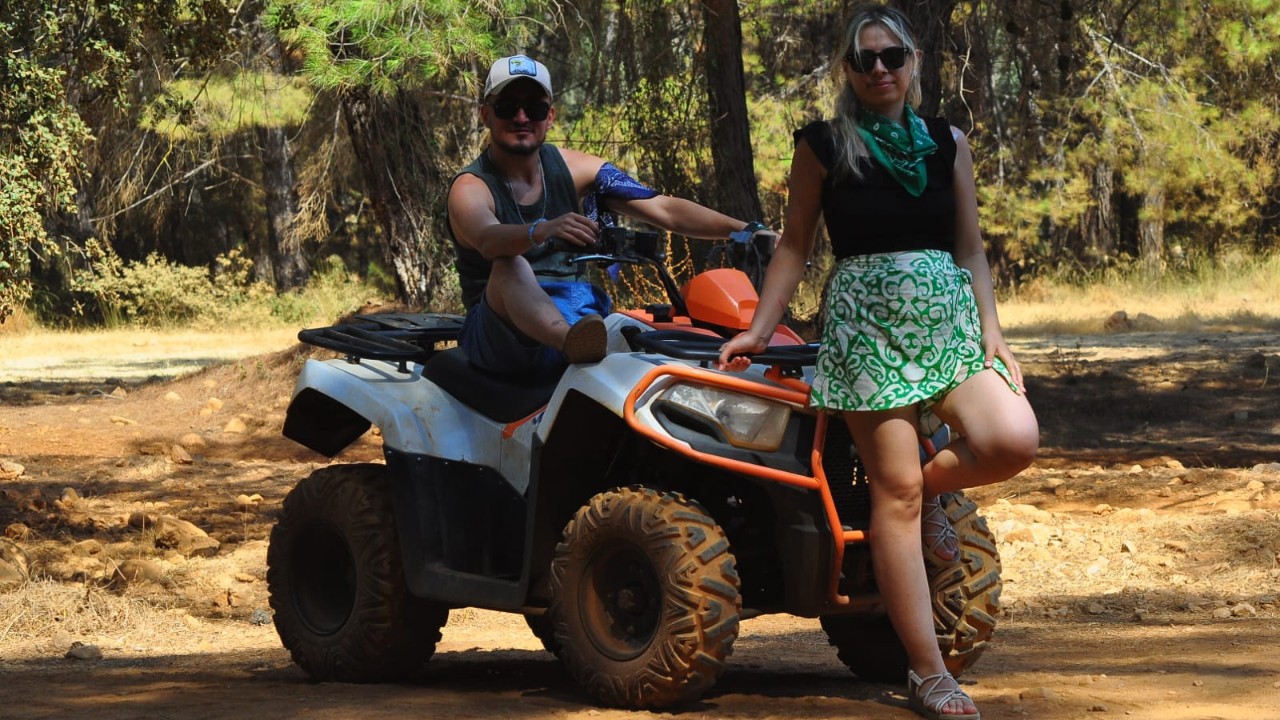
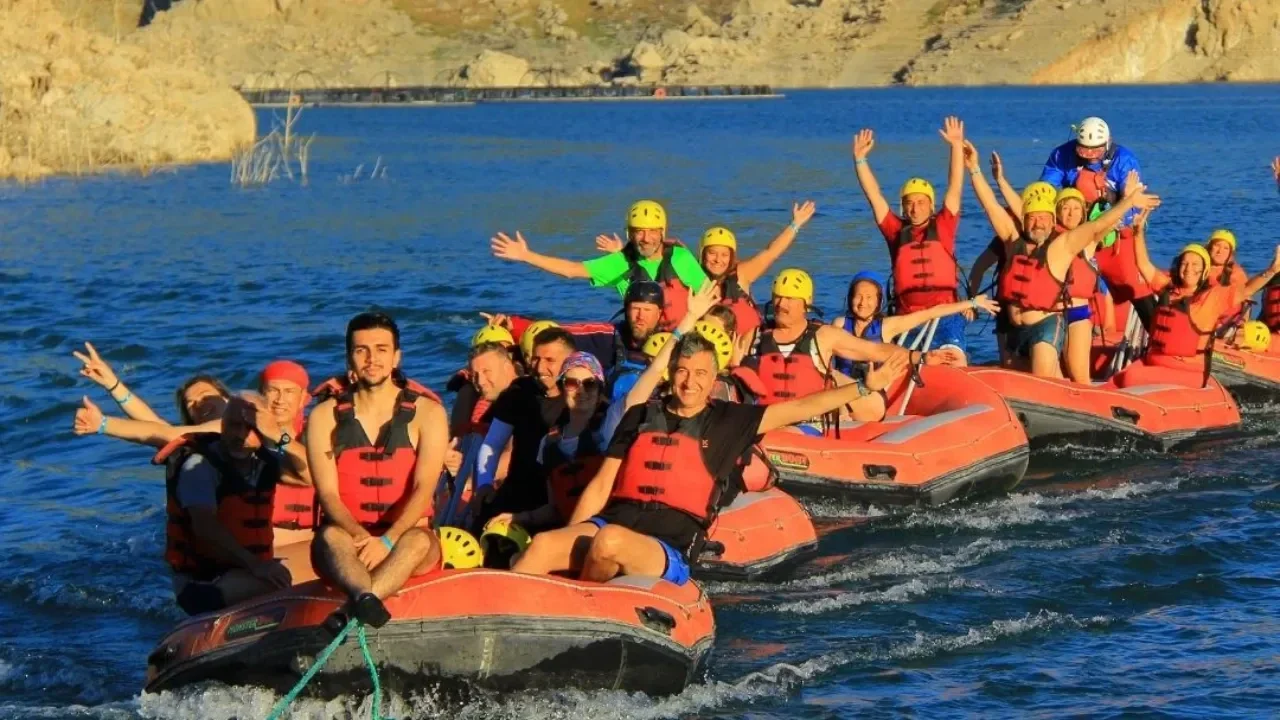
A distinguishing feature of Fethiye jeep safari programs is their ability to fit both nature and cultural stops into the same day. It's important to know from the outset that these stops are on geographically separate routes: Tlos is on the canyon route, while Kayaköy is on the coastal route. The Lycian stops in Fethiye center are not part of any safari route but can be explored in the hours remaining after your safari. At all three stops, the terrain is stony and requires walking; shoe choice makes a difference here.
Tlos Ancient City: Lycian Fortress Overlooking the Valley
Tlos, one of Lycia's oldest known settlements, is built on a rocky outcrop overlooking the Eşen River valley; it is associated with the name Dalawa found in Hittite records, which also refer to the region as Lukka. Among the rock tombs on the acropolis slope, the tomb of Bellerophon, famed for its winged horse Pegasus relief, stands out. Some of the ruins at the top date back to the Ottoman period, so you'll see Lycian, Roman, and Ottoman layers stacked on the same slope. The lower terrace features stadium, bath, and theater ruins.
It is approximately 40 kilometers from the center, and since it's in the same valley as Saklıkent, safari programs often link these two stops consecutively; it's about a half-hour drive from the canyon. The slope is steep, and shade is scarce; it's more comfortable to visit in the morning or late afternoon rather than the midday heat. Entrance to the archaeological site is ticketed, and the Müzekart is valid here; visitors without a card purchase tickets at the gate. The terrace in front of the rock tombs also offers a sweeping view of the valley's expanse.
Kayaköy: The Silent Stone Village in the Valley
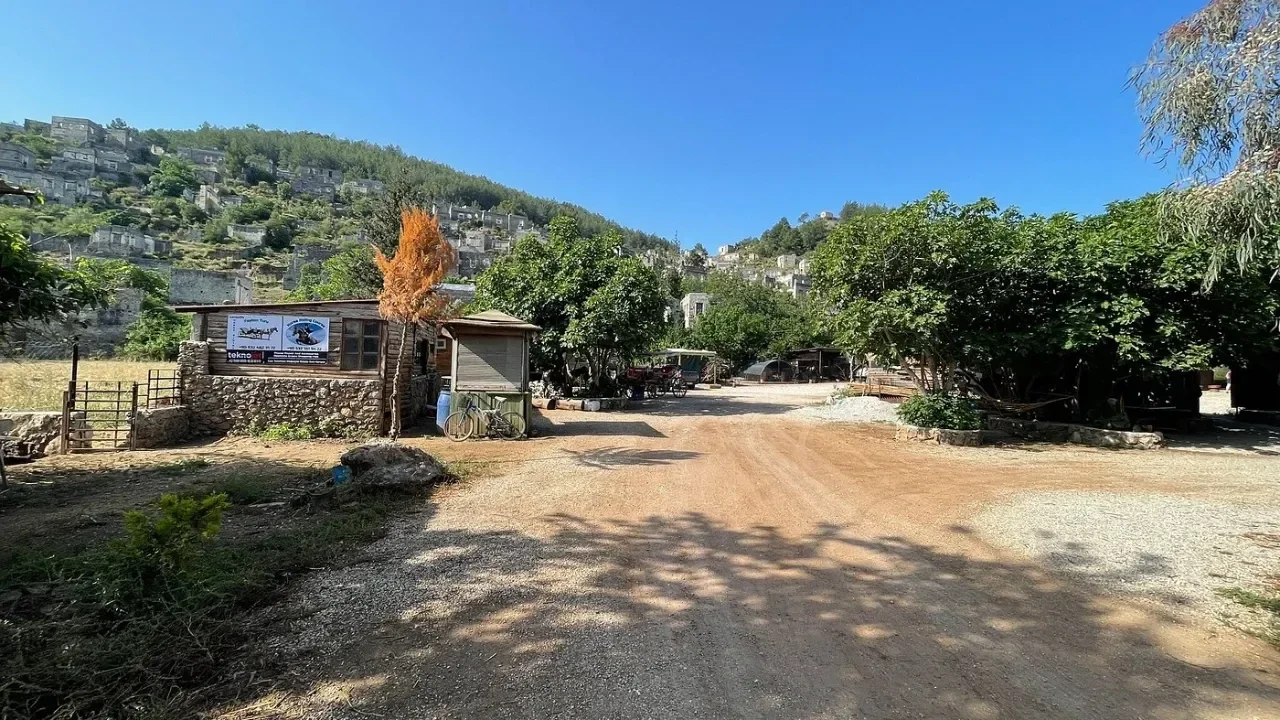
Kayaköy, known by its Greek name Levissi, is an abandoned Greek settlement approximately 8 kilometers from Fethiye center. It was depopulated after the 1923 population exchange and never re-inhabited. Hundreds of stone houses spread across the hillside lack roofs, but their walls largely stand; the ruins of an upper and lower church mark the two ends of the settlement. The village is also known as the village of friendship and peace. Due to its silence and play of light, it's a well-known spot for photographers; cinema and literature have also utilized its unique texture repeatedly.
Safari programs typically visit Kayaköy on the coastal route, before descending towards Ölüdeniz; reaching it by minibus from the center takes 20 to 25 minutes. The ground is stony and sloped, requiring closed-toe shoes rather than sandals. Stone surfaces heat up significantly at midday, so the early and late hours of the day are more comfortable for both walking and photography. Entrance to the archaeological site is ticketed, and the Müzekart is valid here. A path extending from the upper end of the settlement down to Ölüdeniz connects to the descent with a 1.5 to 2-hour walk. Since the safari proceeds at a convoy pace, it doesn't allow time for this hike; those wishing to walk should arrange their own transport to Kayaköy and plan their return minibus from Ölüdeniz in advance.
Paspatur Bazaar & Fish Market: A Downtown Stop After Your Safari
Paspatur is the section of Fethiye's old bazaar, characterized by narrow stone streets. There are no grand monuments to visit here, but rather a vibrant tapestry of daily life: vine-covered courtyards, artisan stalls, cafes, and restaurants that fill up in the evening. The bazaar is within walking distance of the pier and promenade, offering a car-free way to unwind after your safari in the late afternoon.
The operation of the Fish Market within the bazaar is unique to the region, with costs determined by two components. You select and purchase your fish from the stalls in the center, then take it to one of the surrounding restaurants; the restaurant prepares the fish for a separate per-person cooking fee and adds appetizers and salads from its own menu. Thus, the total amount you pay is a combination of the fish's price per kilo and the cooking service; both vary by stall, season, and fish type, so it's best to inquire before sitting down. The breakfast side of the bazaar gets busy between 8:00 AM and 11:00 AM, leaving a narrow window for a quick breakfast before your safari pick-up.
Amyntas Rock Tombs & Fethiye Museum: Lycian Layers in the Center
The Amyntas Rock Tombs are prominent examples among the temple-fronted Lycian rock tombs carved into the steep hillside east of the city. Sources date them to the 4th century BC, approximately 350 BC, and a Greek inscription mentions the name Amyntas, son of Hermapias. Standing before the facade, carved like a two-columned temple face, the entire harbor stretches out below you. A steep staircase of dozens of steps leads up, so don't start without water. Entrance is ticketed; it's advisable to confirm Müzekart validity at the gate. For lighting, there are two preferences: early morning is suitable for detailed photos as the facade is in shadow, while in the late afternoon, the stone turns a golden hue.
The Fethiye Museum in the city center collects artifacts from Lycian settlements in the district and its surroundings. A highlight of the collection is the trilingual stele from the Letoon excavations, inscribed in Lycian, Greek, and Aramaic; this stone is considered one of the key documents in deciphering the Lycian language. Visiting the museum before the rock tombs can make the facades you'll see throughout the day more meaningful. Both stops are outside the safari routes: jeep programs depart from the center into the countryside, so they don't include these two.
The Coastal & Mountain Route: From Ölüdeniz to Kabak
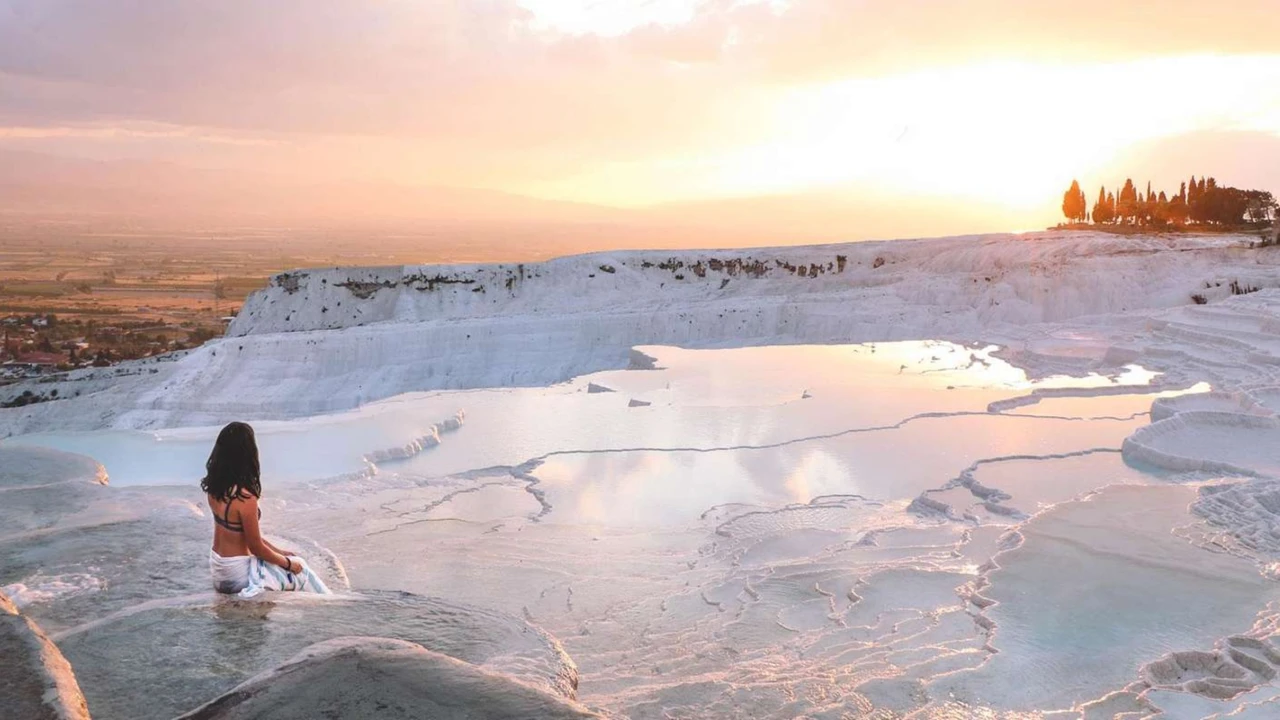
The coastal route begins south of Ölüdeniz and ascends via steep, winding mountain roads. On this route, dust and bumps are more prominent than getting wet; in return, you're rewarded with sweeping views of the bay and open sea. The first half of the route follows the coastline, while the second half gains altitude; you'll notice yourself transitioning from the scent of sand to the scent of pine in the same day.
Ölüdeniz & Kıdrak: The Gateway to the Coastal Route
Ölüdeniz is a stretch consisting of a lagoon, enclosed behind a sand spit, and its continuation, Belcekız beach. The lagoon is within the Ölüdeniz Nature Park boundaries, and entrance is ticketed; pedestrian and vehicle fees are calculated separately, and sunbeds and umbrellas are also priced extra. Since motorized boats are not allowed in the lagoon, the water remains as calm as a lake. Belcekız, on the other hand, is a public, pebbly, and more lively beach. The distance to the center is approximately 14 kilometers.
Kıdrak, 3 kilometers further from Ölüdeniz, is a protected cove where a pine forest meets the sea; entrance is ticketed, and the area holds nature park status. The ground is predominantly fine pebbles rather than sand, the water deepens quickly, and the pine trees lining the back provide shade. In terms of timing, both areas behave similarly: 11:00 AM to 4:00 PM is both crowded and hot; around 9:00 AM, the water is calmer, and in Kıdrak, wind and waves pick up in the afternoon.
Their relation to the safari is as follows: jeep programs do not enter the lagoon but show the area from above as they pass, and the road begins to ascend after Ölüdeniz. Visitors wishing to swim should plan these two spots outside of their safari day.
Butterfly Valley: A Gorge from Above, a Beach Below
The valley gets its name from the dense population of tiger moths that appear in summer; butterfly spotting is best between June and September. The beach nestled between towering rock walls on either side, and a waterfall reachable by a half-hour walk within the valley, are the two main attractions. There are two ways to reach the valley floor: a 15 to 20-minute boat ride from Ölüdeniz pier, or a steep, roped path descending from the Faralya side. The roped sections of the path require experience and appropriate footwear.
Jeep safaris do not descend into the valley. The coastal route offers views of the valley from viewpoints above Faralya; visitors wishing to go down should plan their boat times independently. The critical detail here is the return: find out the departure time of the last boat upon arrival, as you'll be stranded if you miss it and are not staying in the valley's accommodation area. Morning boats are both cooler and less crowded.
The valley is a natural protected area, and visitor rules are clearly posted:
- Catching butterflies is prohibited.
- Collecting plants is prohibited.
- Straying off marked paths is prohibited.
Faralya (Uzunyurt) Viewpoint & Village Break
Faralya, officially named Uzunyurt, is approximately 9 kilometers south of Ölüdeniz; allow 20 to 25 minutes for the winding drive. The purpose of safari programs here is not just a village visit, but also the viewpoints overlooking the valley from above: you'll see the valley's mouth opening to the sea, the beach, and the opposite slope all in one frame.
The stop at the viewpoint is brief, and there are sections without railings, so caution is needed when approaching the edge, and families with children should maintain a safe distance. Since the midday sun makes the sea sparkle, photos come out clearer in the afternoon light. Small cafes and guesthouses line the village; it's a suitable spot for a cold drink break.
The Lycian Way: Stages to Hike After Your Safari
Faralya and Kabak are not just the endpoints for the jeep safari's vehicle routes; the initial stages of the Lycian Way also pass right through here. The route begins from the Ovacık and Hisarönü line, adjacent to Fethiye, and ends in Geyikbayırı, west of Antalya. It was opened for hiking in 1999, spearheaded by Kate Clow; its length is cited in sources as approximately 540 kilometers, ranging between 500 and 560 kilometers, with higher numbers also mentioned due to later added branches. Marking is done with red and white paint: frequently on paths, more sparsely on dirt roads. It's common practice to download offline stage maps and carry them with you, as direction signs at trail junctions can sometimes fade.
The Fethiye section is the introductory part of the route. The first stage extends from Ovacık through Kozağaç and Kirme to Faralya; different sources give this section as approximately 13-16 kilometers. The next stage descends from Faralya to Kabak, then generally continues towards Alınca. The entire section between Fethiye and Kaş is divided into consecutive stages; how many days it takes depends on your chosen stage length, the spacing of accommodation points, and whether you opt for luggage transfer services. In short, your safari day only shows you the gateway to this route. Which stage stands out is a matter of personal preference: the Fethiye section is known for sea views and steep ascents/descents, while the eastern sections are noted for their high concentration of ancient ruins. The hiking season is concentrated in spring and autumn; temperatures rise in mid-summer, and cooling spots become scarce on exposed sections of the trail. For those who prefer guided hiking tours, group programs are organized in the region; these programs typically arrange accommodation through village guesthouses, and luggage transfer is usually offered as a separate service.
Kabak Bay: Where the Road Ends
South of Faralya, where the asphalt road ends, Kabak valley begins. The distance from Fethiye center is cited in sources as between 25 and 33 kilometers, with a drive time of 45 to 60 minutes; from Ölüdeniz, it's approximately 17 kilometers and 40 to 45 minutes. The road descending to the bay is steep and winding; the descent is made by 4x4 vehicles or the shuttle services of local businesses. Bungalow and eco-camp businesses established on the valley slope have given the region its alternative accommodation identity. The bay doesn't feature large resorts or crowded beach operations; the main experience here is the valley view and tranquility. Since the Lycian Way passes through the valley, hiker traffic continues outside of summer.
Most safari programs stop at the viewpoint above Kabak and do not descend into the bay; if you're looking for a program that goes down to the bay, clarify this before booking. Road dust intensifies in mid-summer, which light-colored clothing wearers should consider. There are pine trees providing shade in the valley, but water consumption increases at midday; ensure you have enough water in your vehicle. Minibus services on this route are less frequent than on the Ölüdeniz line, so those arriving independently should ask for the last departure time when boarding.
For those arriving with their own vehicle, the process is as follows: cars drive up to the mouth of the valley, i.e., the upper road, do not descend into the bay itself, and are left in paid parking lots on the upper road. These parking lots can fill up early on peak weekends. Although the road is asphalt, it constantly features curves and inclines, making it challenging for caravans and long vehicles; filling up fuel in Fethiye also makes things easier, as finding a station becomes difficult after the Ovacık turn-off.
Babadağ Mountain Road & Panoramic Stop
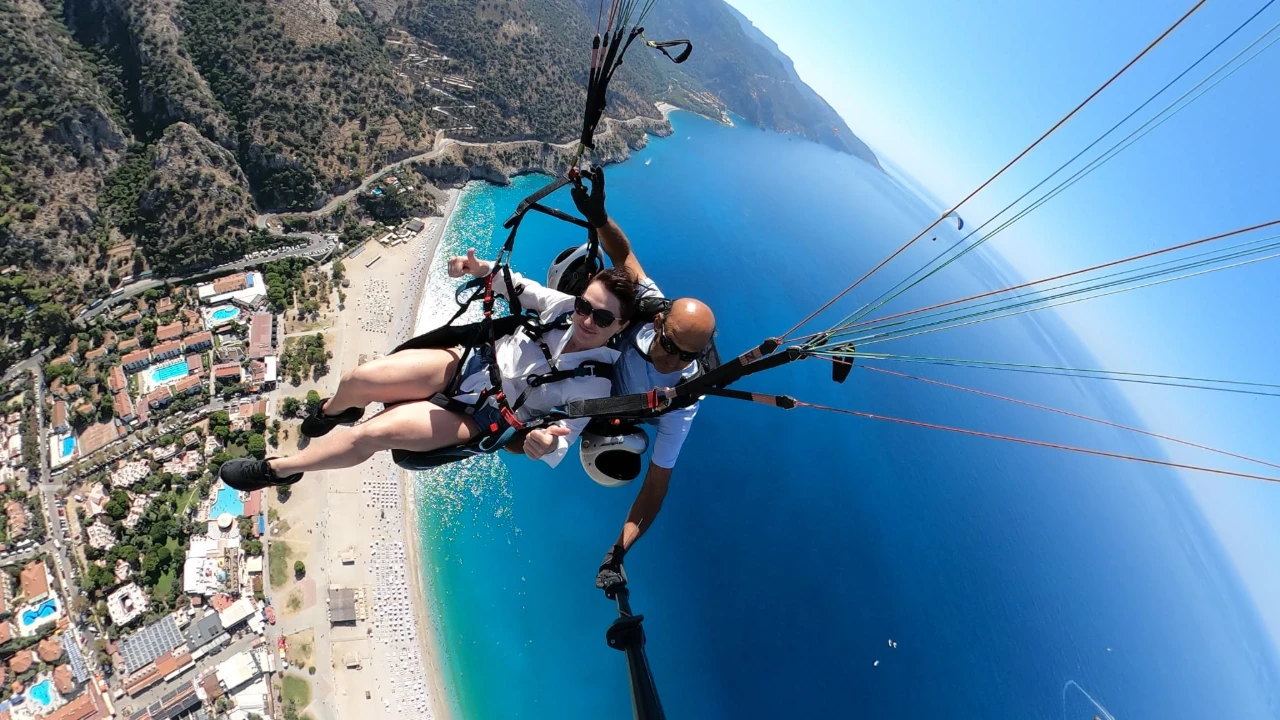
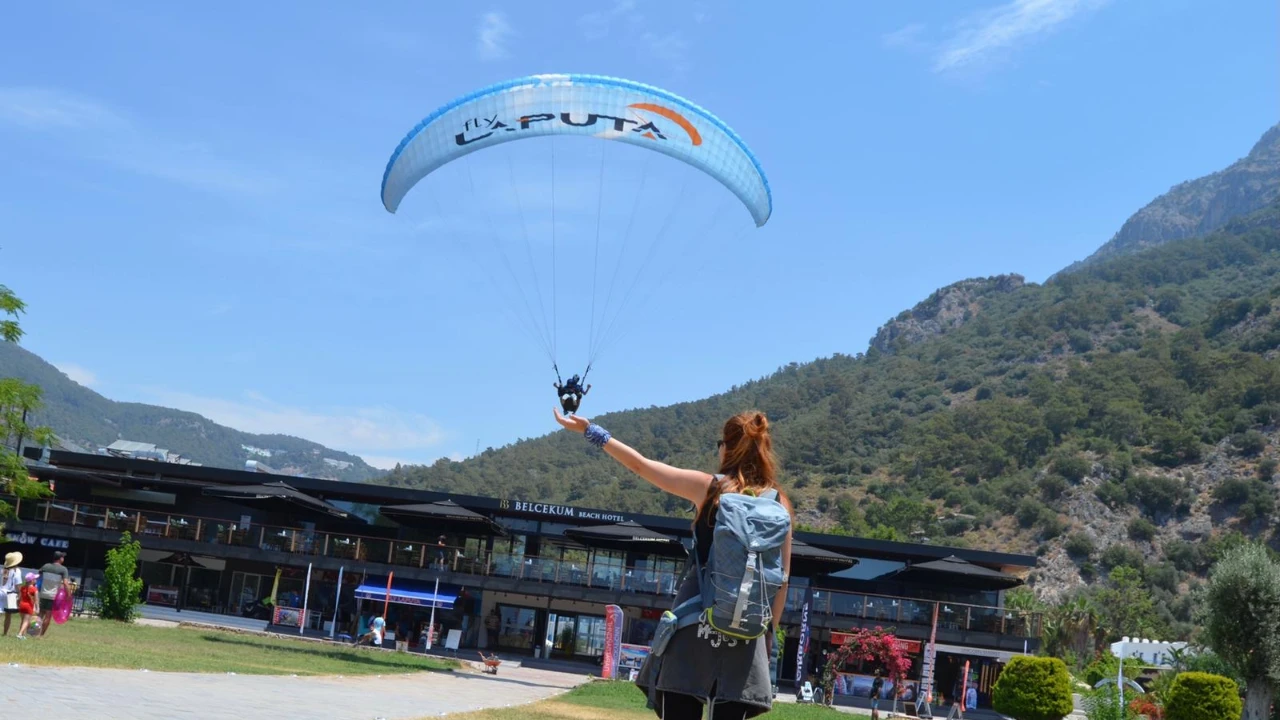
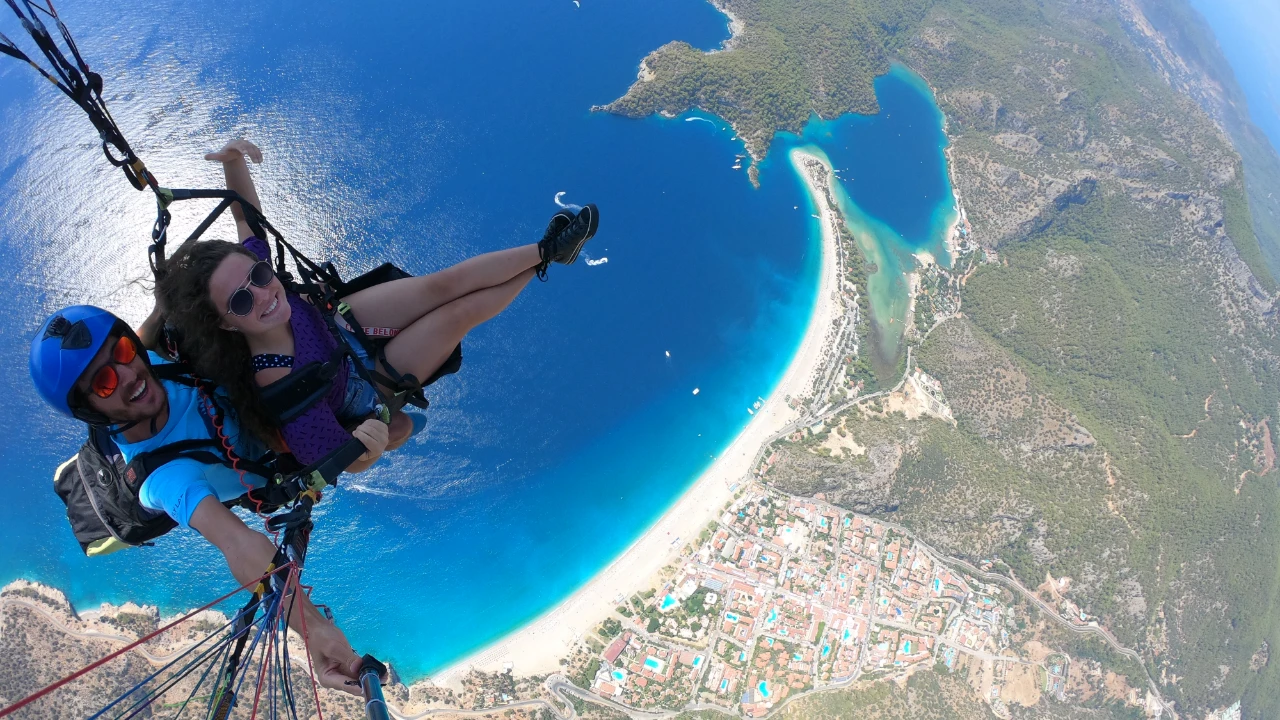
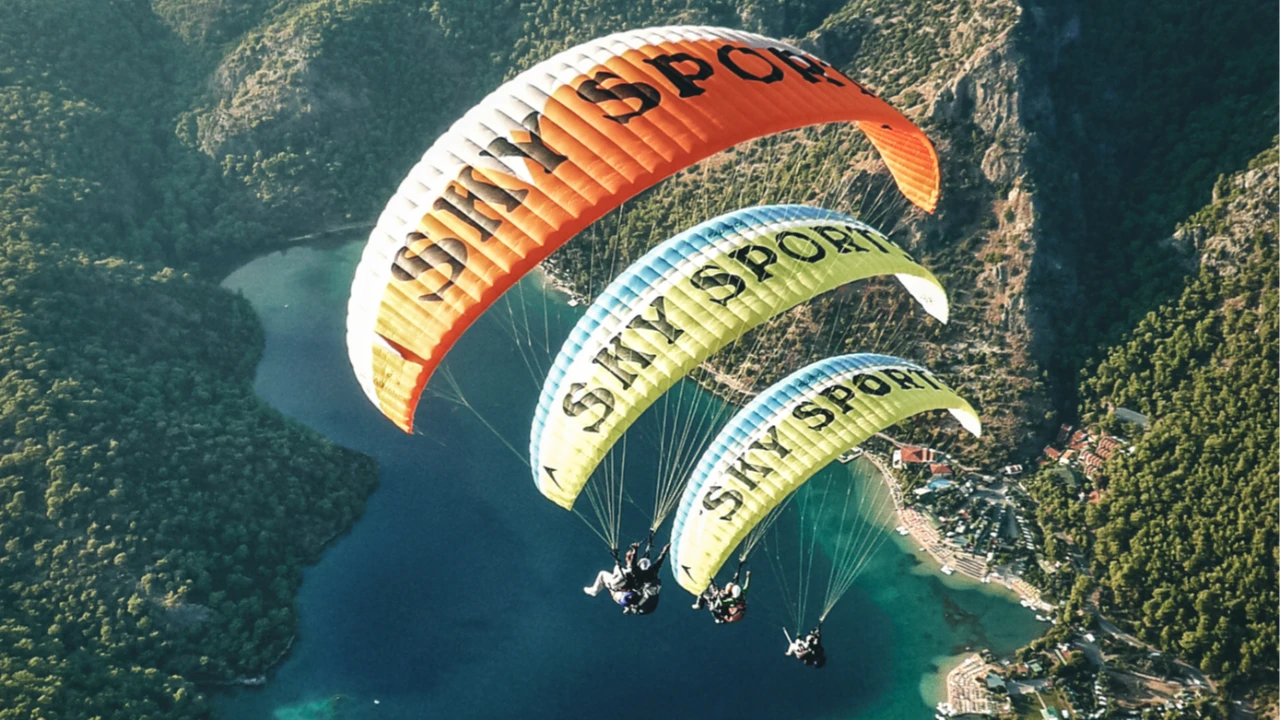
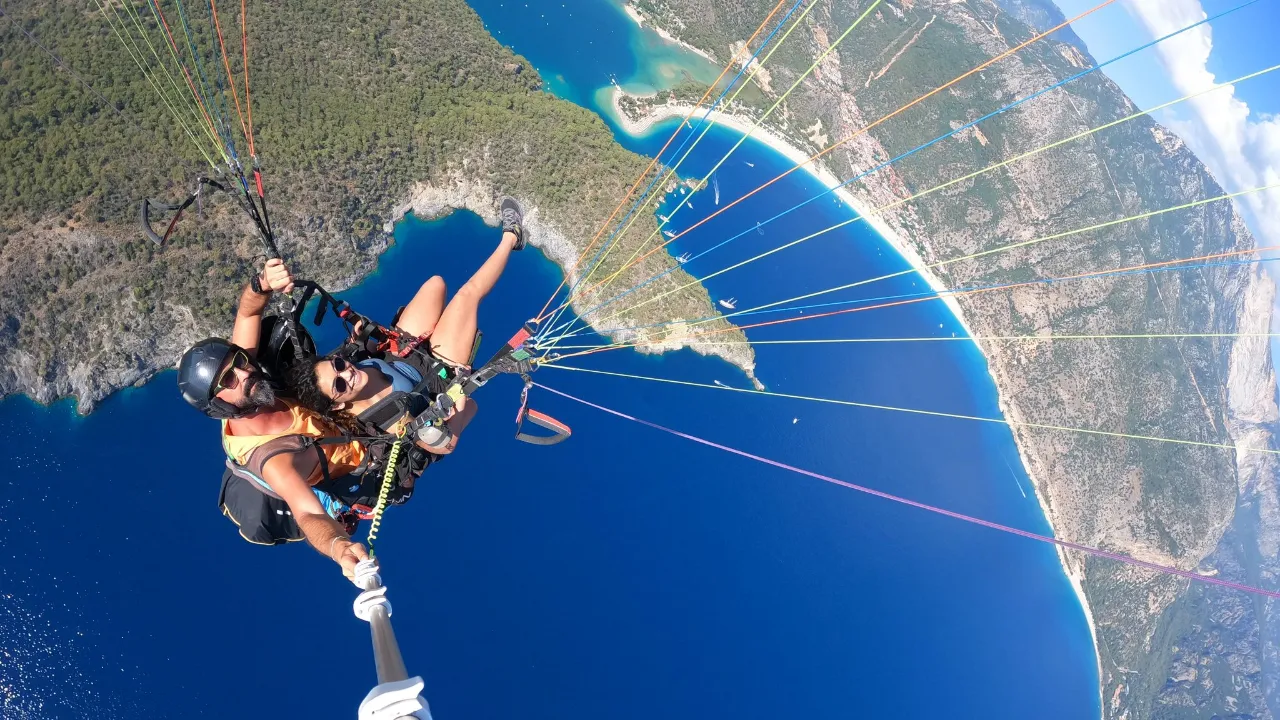
The summit of Babadağ, rising behind Ölüdeniz, is over 1,900 meters high, with paragliding take-off runways distributed at different altitudes. The cable car line ascends not to the very summit, but to the main station at 1700 meters; from there, connecting chairlift lines reach the take-off areas at 1800 and 1900 meters. The mountain's dirt service road is also used; some safari programs climb this road for a panoramic stop. As altitude is gained, temperatures drop, requiring a light outer layer even in summer.
The mountain road is dusty and winding; those prone to car sickness might want to request sitting in the front. Winds at the summit strengthen in the afternoon, so a hat with a chin strap might be preferable to prevent it from flying off. For those planning a flight, two practical tips are useful: tandem flights typically last 20 to 40 minutes, and the wind window between 7:00 AM and 11:00 AM is considered more stable. Therefore, it's often more comfortable to plan a separate program for flying rather than trying to squeeze it into the same day as a safari; Fethiye paragliding tours in the region are planned with separate bookings.
Getting to Fethiye & Your Safari Meeting Point
Safari programs typically pick up from your accommodation, so the main transportation question is how to get to Fethiye and whether you'll need a car on your safari day.
- Choose your airport. Dalaman Airport is approximately 50 kilometers from Fethiye center, a 50 to 60-minute drive. Antalya Airport is about 200 to 250 kilometers away depending on the route; the inland route is shorter, the coastal road is longer, and the drive falls within the 3.5 to 4-hour range.
- Transfer from the airport to the center. From Dalaman, you can reach Fethiye bus terminal via airport shuttles, private transfer, or rental car. Shuttle times are tied to flights, so for late-night arrivals, it's advisable to book a transfer in advance.
- If arriving by road, aim for the bus terminal. A bus journey from İzmir takes approximately 5-6 hours; the mountainous section of the route extends the duration. From Antalya, there's about a 4.5-5 hour journey. The bus terminal is close to the center, and minibus routes radiate from here.
- Choose your accommodation based on your safari route. For the canyon route, Fethiye center and Çalış offer shorter pick-up times; for the coastal route, Ölüdeniz, Ovacık, and Hisarönü are more convenient.
- Confirm your pick-up point and time the day before. Programs usually involve early morning pick-ups. If your accommodation is far from the main road, the meeting point might be set at the nearest junction; if you're at the far end of the route, your pick-up time will be earlier.
- If joining with your own vehicle, plan your parking. Most meeting points have paid parking available; they can fill up before noon on weekends.
How to Find Affordable Flights to Fethiye
Behaviors that lower ticket costs are well-known: comparing both airports on the same screen, searching for weekday departures, and looking at off-season weeks. Scheduled flight frequency to Dalaman increases in summer and narrows in winter; therefore, Dalaman might offer more options in summer weeks, while Antalya could provide a more flexible schedule during shoulder seasons. Landing in Antalya and transferring might offer a ticket advantage but will consume your arrival day with travel time. Arranging your arrival at one airport and departure from another is also a method to avoid traversing the coastal road twice; this choice requires renting a car with different drop-off points.
Do You Need to Rent a Car in Fethiye?
Not on your safari day: since the program picks you up and drops you off at your hotel, your car would sit idle that day. The need for a car arises on days other than your safari. If you want to explore the canyon, Kayaköy, central museums, or beaches outside the center at your own pace, a car provides flexibility; for coves like Katrancı, where minibuses don't go all the way to the entrance, a car is almost essential. Conversely, the road to Faralya and Kabak is steep and winding; descending with small-engine vehicles can be challenging, so stopping at the viewpoints above is safer on this route. For those staying in the center and only using the Ölüdeniz and Çalış line, minibuses and the summer season water taxi will suffice.
Your Safari Day: From Morning to Late Afternoon
- Morning: Pick-up from accommodation, convoy assembly, and a brief safety briefing.
- Late Morning: First stops. Saklıkent on the canyon route, Kayaköy and Faralya terrace on the coastal route.
- Noon: Lunch break. Around Yaka Village on the canyon route, village eateries on the coastal route. The mud bath is also typically scheduled during this time as the sun is high.
- Afternoon: Second stops and extra activities; ringo, water fight, or panoramic stop.
- Late Afternoon: Return. Drop-off order at accommodations varies according to the convoy's route.
Fethiye Jeep Safari: Which Route Suits Whom?
Comparing programs sold in the region using the same criteria helps prevent unmet expectations after booking. The route distinction in the table is geographical, and your choice is determined by three factors: desire to get wet, tolerance for bumps, and the number of days you have.
| Program & Route | Key Stops | Wetness & Dust | Best For | Notes |
|---|---|---|---|---|
| Canyon Route | Saklıkent, mud bath, Eşen River, Yaka Village, Tlos | High wetness, moderate dust | Families, first-timers, those seeking to cool off from the heat | Spare clothes and non-slip water shoes are essential |
| Coastal & Mountain Route | Kayaköy, Butterfly Valley viewpoint, Faralya, Kabak, Babadağ road | Low wetness, high dust | Scenery and photography enthusiasts, repeat visitors | Bumpy and winding roads, be mindful of car sickness |
| Combined Program | Selected stops from both routes | Variable | Those with limited time in the region | Travel time increases, so stop durations are shorter |
| Private Program (with own vehicle) | Negotiable stops on the route | Variable | History-focused visitors, large families | Combining two cultural stops on separate routes is easier with a private program |
| Culture Program (no water fight) | Archaeological sites and village stops | Low wetness | Those who prefer not to get wet | Confirm no water fight included when booking |
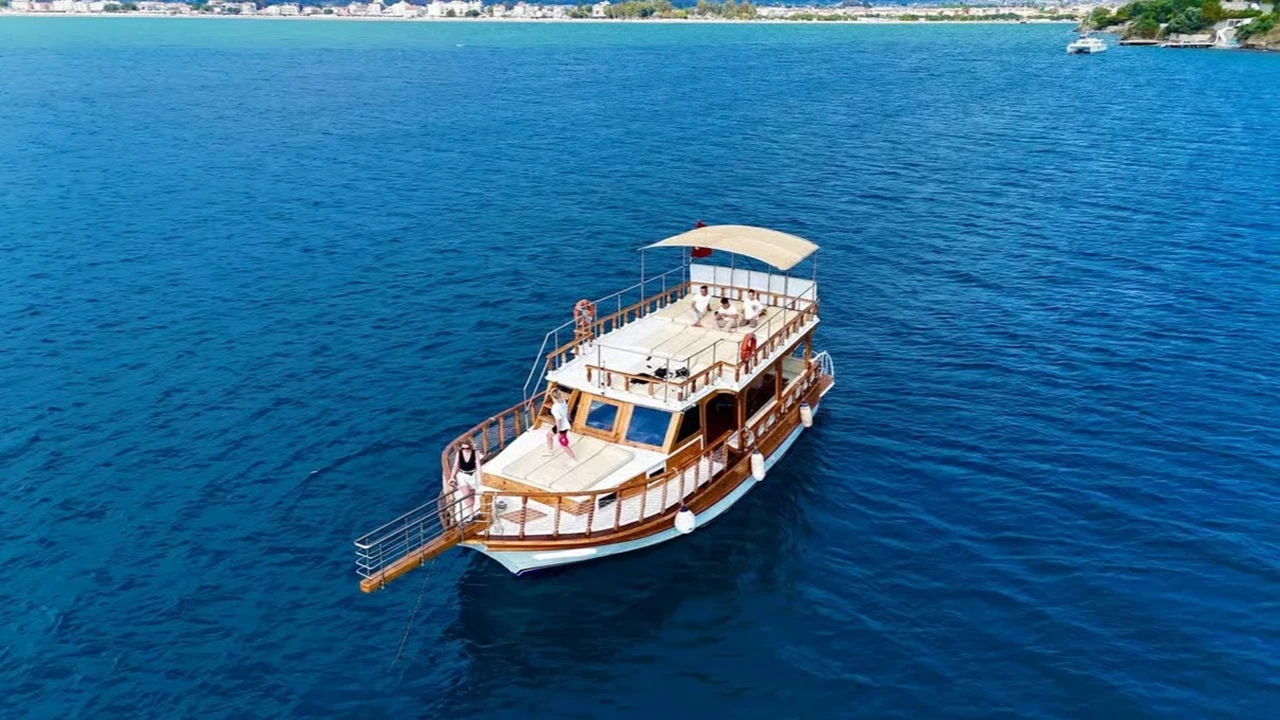
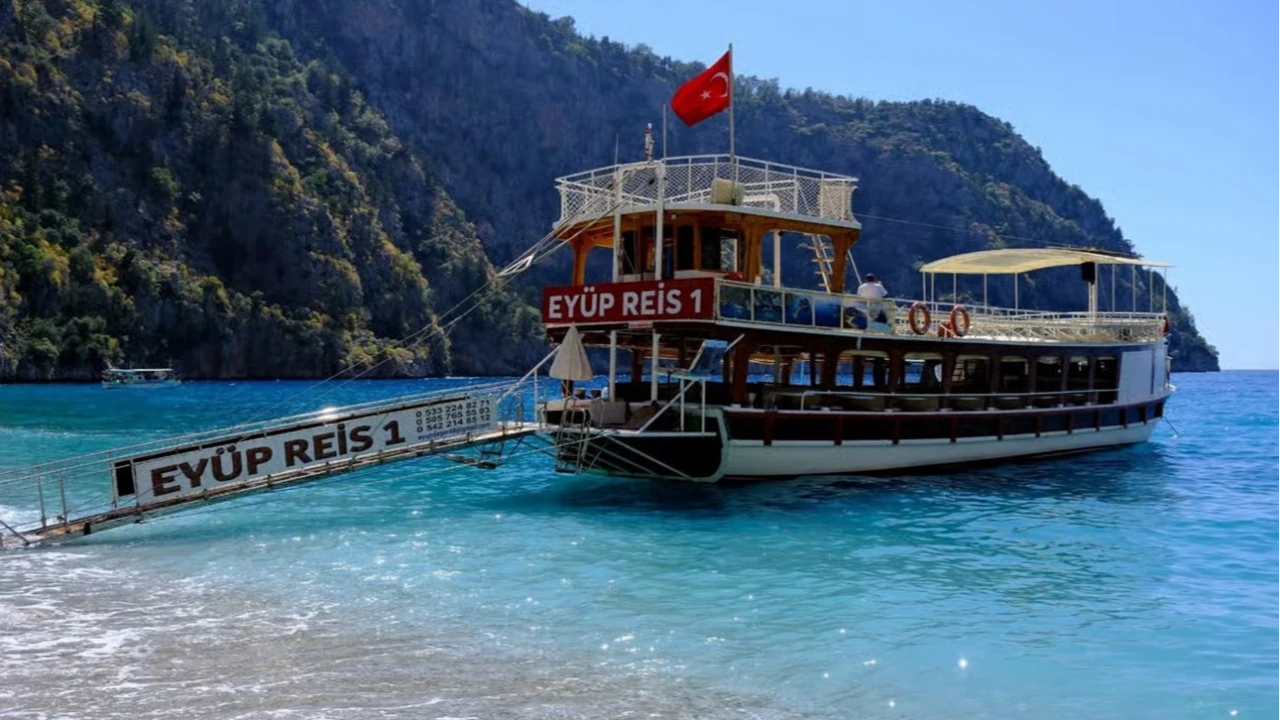
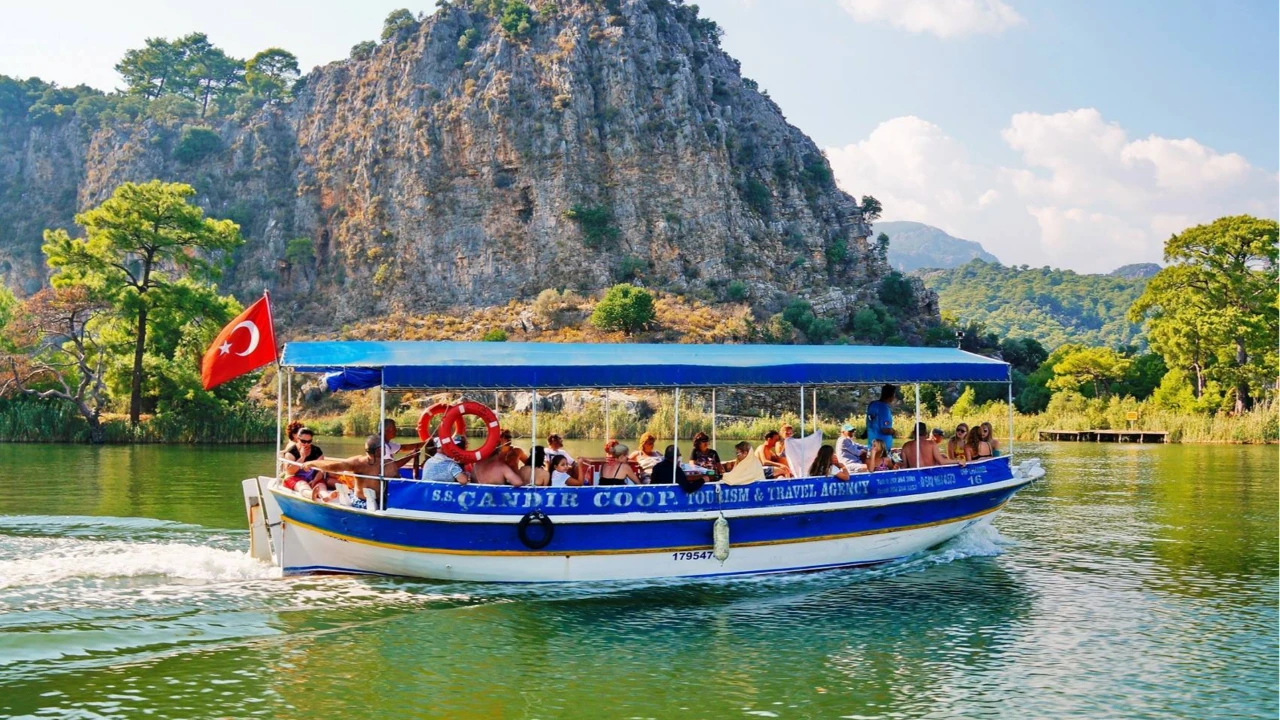
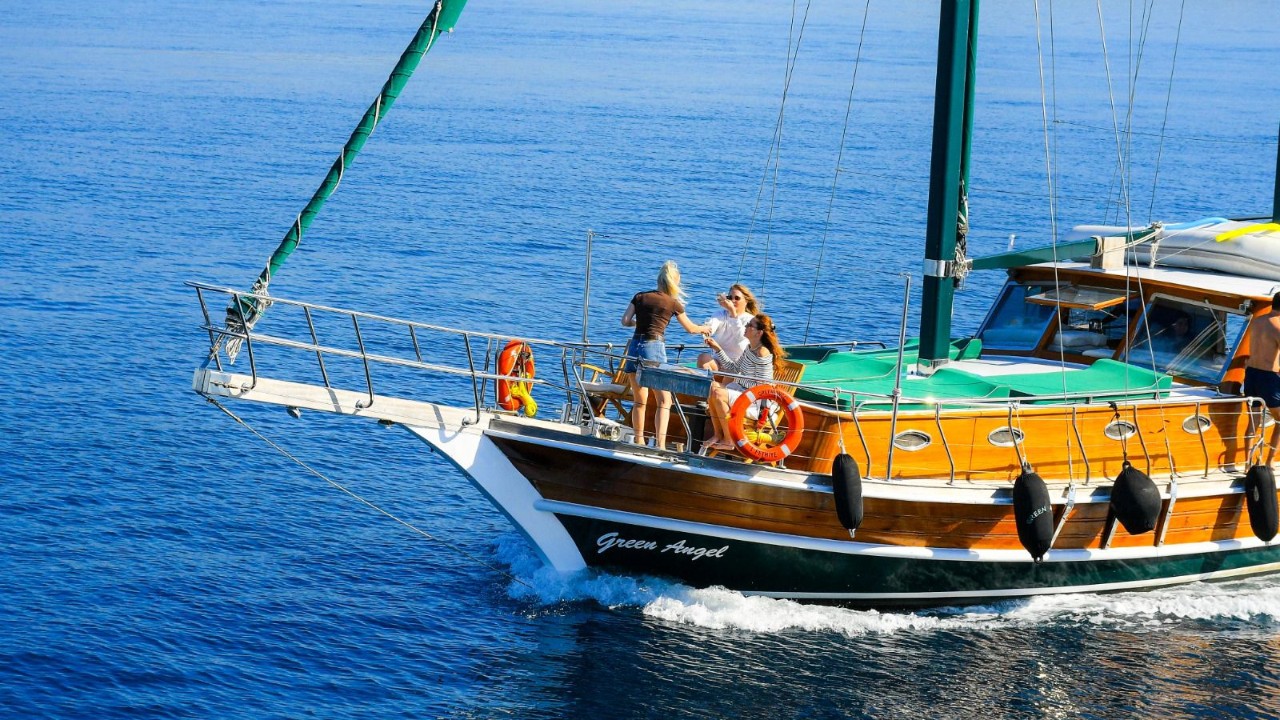
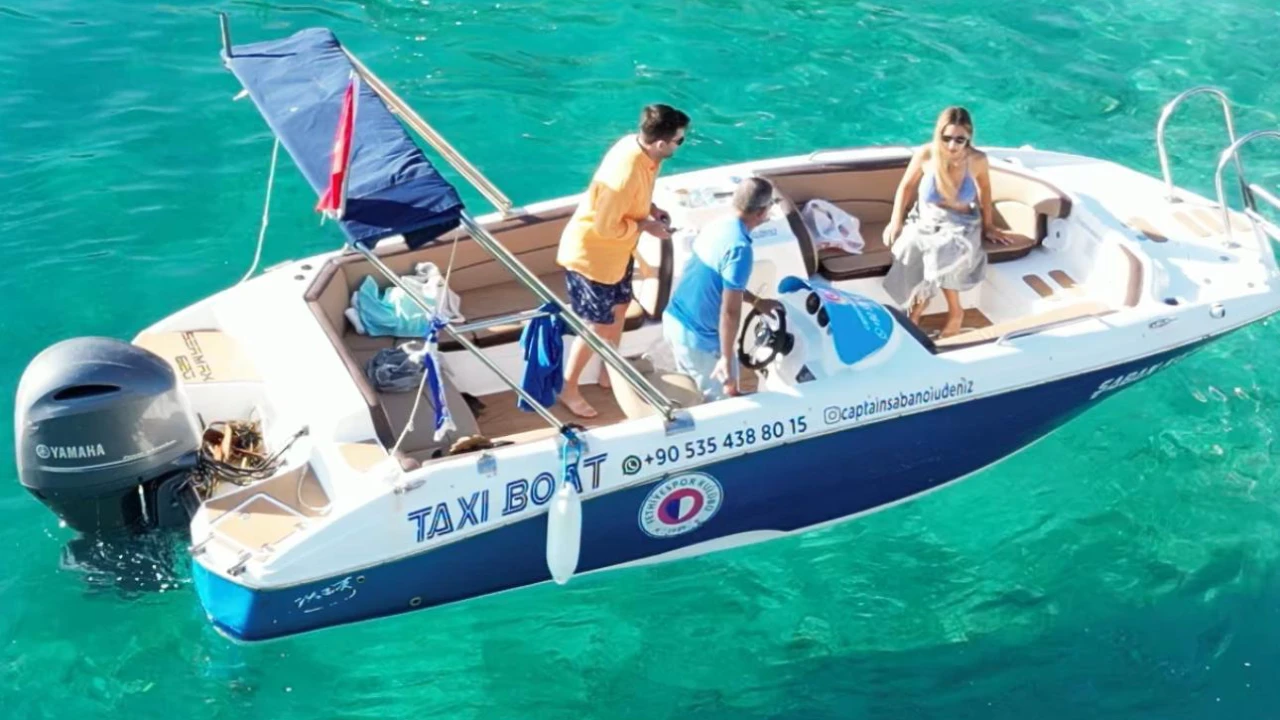
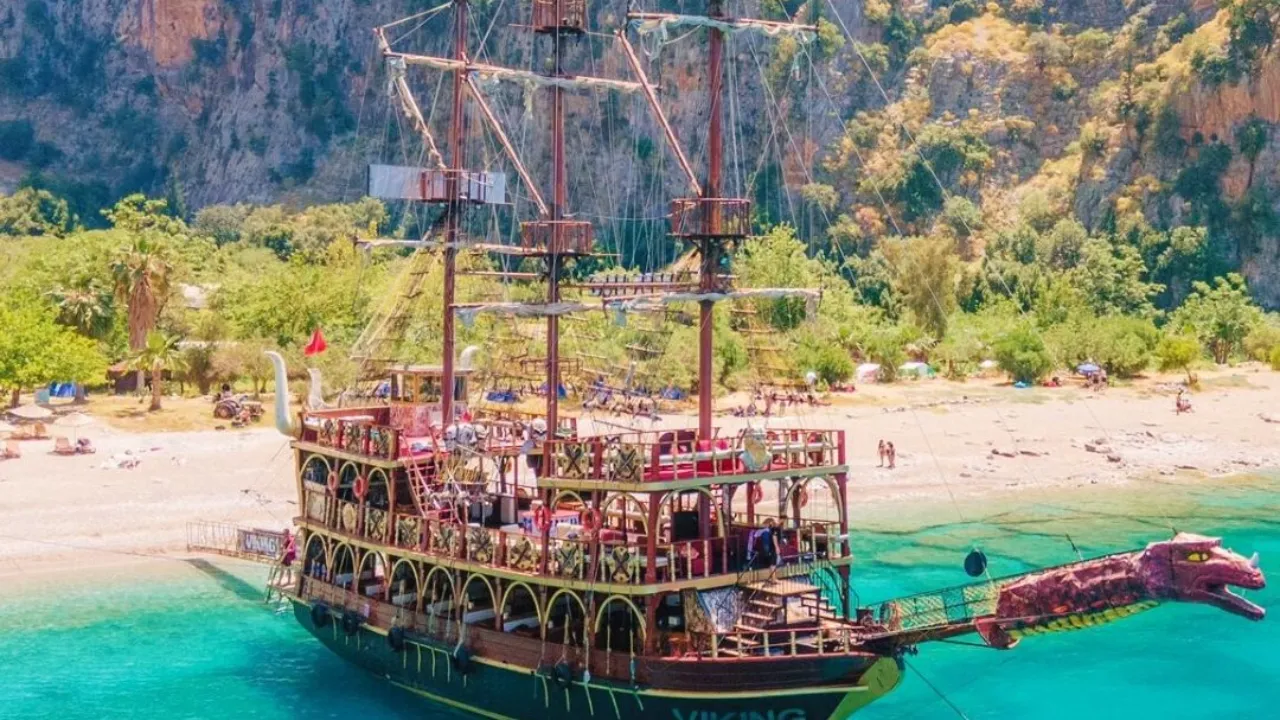
For those seeking a beach day instead of a safari, or wishing to split their time, boat tours can be planned for a separate day. The departure point here determines the route: programs departing from Ölüdeniz pier head towards Butterfly Valley and Gemiler Island coves, while the 12 Islands program departing from the central pier spends the day among the islands in the bay, allowing for more swimming breaks. On a boat tour, getting wet depends on swimming, there's no dust, and the day is spent on the sea; adding a rest day between a dirt road program and a boat tour provides a more relaxed pace. For route and duration comparisons, you can check the Fethiye boat and yacht tours selection.
Fethiye Jeep Safari: When to Go? Monthly Season Calendar
The Fethiye jeep safari season opens in late spring and closes in autumn. River flow, canyon water temperature, dust levels, and crowds vary significantly by month.
| Period | Advantage | Consideration | Suitability |
|---|---|---|---|
| April - May | Green scenery, fewer crowds, clear weather | River flow high, canyon crossing might be challenging | Photography and nature-focused trips |
| June | Long daylight hours, sea warm, canyon cool | Program capacity starts to increase | Balanced period for general purposes |
| July - August | Water activities are excellent, all stops open | Peak heat and dust, crowded canyon interior | Canyon route for cooling off |
| September | Crowds decrease, sea warm, dust settles | Daylight hours start to shorten | Coastal route and combined programs |
| October | Crowds and price pressure decrease, comfortable hiking | Some extras may close for the season | Cultural stops and panoramic views |
| November - March | Calm and green landscapes | Fewer programs, rain and muddy roads | For private vehicles or local residents |
When choosing your season, it's helpful to keep this distinction in mind: for a day focused on the canyon and river, warmer months are advantageous, as entering cold water is only enjoyable in hot weather. A day focused on culture and scenery is more comfortable in spring and autumn. Canyon crossings might close in spring due to high water levels, so entry to the canyon should not be considered a fixed stop in April and May plans.
Tour Options: Group, Private & Combined Programs
Programs sold in the region generally fall into three main types. The difference isn't just price; the number of stops, break durations, and flexibility also vary.
| Program Type | Scope | Flexibility | Budget Impact |
|---|---|---|---|
| Group Jeep Safari | Hotel pick-up, guide, specific stops, often includes lunch | Fixed route, break durations tied to the program | Option that lowers per-person cost |
| Private Jeep | Vehicle-based rental, negotiable route | Stops and times can be changed | Per-person cost is significantly higher than a group tour |
| Combined Program | Safari combined with ringo, boat, or paragliding | Scope varies by provider | Extras may be charged separately |
When choosing a group program, items to check are often briefly mentioned in the advertisement: is lunch included, are canyon and archaeological site entrances part of the price, is ringo extra, how many vehicles are in the convoy, and how many people per vehicle? Vehicle capacity varies by provider and is generally not stated in ads; if not asked, crowded vehicles mean tighter bench seating and longer waits to stand up for photos.
At Travel Tour Shop, we vet our featured suppliers based on local experience and past guest reviews. To compare route and scope details, reading the program descriptions on the Fethiye jeep safari tours page allows you to compare scope lines that might not appear in the main listing title. The program cards on the same page also display current prices live, enabling budget control from there.
Jeep Safari Budget: What's Charged Separately?
The budget for a day trip safari often isn't limited to just the tour fee. Knowing how costs are divided also explains why two programs with the same name might be priced differently.
| Item | How it's charged | What you need to know |
|---|---|---|
| Group Jeep Safari | Per person; deposit or full payment upon reservation | Whether lunch and entrance fees are included is a common source of price difference between two listings |
| Private Jeep | Per vehicle; divided by the number of people | Per-person cost remains higher than a group tour, but the difference narrows with a larger group |
| Saklıkent Canyon Entrance | Per person entry, separate vehicle entry fee | Müzekart is not valid here; different authorities set rates for local and international visitors |
| Tlos & Kayaköy Archaeological Sites | Per-person ticket | Müzekart is valid here; visitors without a card purchase tickets at the gate |
| Ringo or Inflatable Boat | Extra per activity | Not included in the tour price for most programs |
| Lunch | Per-person set menu or à la carte | If not included, the restaurant's posted menu applies |
| Small Preparation Items | One-time purchase | Waterproof phone case, non-slip water shoes, water |
The variables that determine the price are as important as the list of items: which week of the season you're in, the vehicle occupancy in the convoy, the distance of your pick-up point from the route, whether lunch and entrance fees are included in the scope, and whether you choose a group or private option. Comparing based on scope details rather than just price will yield more accurate results. For current prices, the tour provider's own booking page, the canyon and archaeological site ticket offices, and restaurant menus are the valid sources.
Dining, Accommodation & Pre-Trip Tips
A safari day is busy enough, so it's wise to finalize your dining and accommodation preferences in advance.
Where to Eat Along the Route
- Yaka Village and Yakapark area: Trout restaurants fed by spring water; one of the well-known lunch stops for safari programs.
- Saklıkent canyon entrance: Gözleme (Turkish flatbread), trout, and cold drinks are served on wooden platforms built over the river. You can sit on the platforms and dangle your feet in the water; queues can form at midday.
- Garden restaurants within Kayaköy: The village has addresses specializing in tandoor and barbecue; Cin Bal, known for its cook-your-own-meat style, is frequently mentioned among them. More suitable for dinner, safari days allow only a short break.
- Fethiye center and Çalış promenade: The fish market within Paspatur in the center, and the cafes along the Çalış beachfront, are practical options for dinner after your safari return.
- Tuesday market: The large market held on Tuesdays in the district is a distinct stop for local products like goat cheese, fresh figs, almonds, and olive oil.
Where to Stay in Fethiye
- Fethiye center and Karagözler: Marina area, walking distance to the bazaar, and bus terminal connections; short pick-up time for the canyon route.
- Çalış: Long beach and family-friendly resorts; frequent minibus connection to the center.
- Ölüdeniz, Ovacık, and Hisarönü: Pick-up line for coastal route and Babadağ programs; high evening activity. The first stage of the Lycian Way also starts from this line.
- Kayaköy: Guesthouses in stone houses with gardens, quiet nights; transportation is infrequent for those without a car.
- Faralya and Kabak: Bungalow and eco-camp focused accommodation; night movement is difficult due to the steep road.
- Seydikemer and Yaka area: Rural guesthouses; a practical line for those wanting an early start on the canyon side.
Çalış Beach: Sunset Views & Water Taxi Access
Çalış is a locality within Foça neighborhood, north of the center; distance to the center is 5 to 7 kilometers, a 10 to 15-minute drive. The coastline is about 4 kilometers long, flat, and extended. The ground is not fine sand: a mix of coarse sand and pebbles is common, and the depth increases gradually. Beach access is free as a public beach, while sunbeds and umbrellas are chargeable.
The highlight of this stretch is its western orientation. As the sun dips behind the islands at the mouth of the bay, the horizon remains unobstructed, forming the silhouette of Şövalye Island and casting a long path of light on the water. The period of soft light begins approximately 45 minutes before sunset and continues for 20 to 30 minutes after the sun disappears. The sea is generally calm in the morning; in the afternoon, short waves and a slight current form due to the breeze from the bay.
Transportation is important for safari planning: Çalış minibuses operate year-round, and water taxis connect to the center in the summer season, so visitors without a car can also use this line. Since safari routes go south and inland, Çalış is not a stop on any jeep route; this area is best for evening activities after your safari return.
Katrancı Bay: A Forested Cove on the Göcek Road
Katrancı is located northwest of the center, on the highway between Fethiye and Göcek, and is operated as a forested day-use area. Pine trees extend all the way to the shore, providing more shade here than at Çalış, and it's generally less crowded. Whether an entrance fee is charged and vehicle entry rules change periodically, so it's advisable to inquire about current regulations at the entrance.
The critical detail for transportation is this: minibuses do not go all the way to the entrance; you need to get off at the junction and walk or use a car. Günlüklü Bay, on the same road, is named after its liquidambar (frankincense) trees and is heavily shaded; both coves can be combined in the same day. Both are northwest of Fethiye, in the opposite direction of the southern and inland routes taken by safaris; therefore, they are not included as stops in jeep programs.
Packing List & Important Warnings
- Spare clothes, a thin towel, and a bag for dirty clothes. Getting wet is part of the canyon route program.
- Non-slip water shoes or sturdy sandals. The canyon floor is gravel and slippery rock.
- Waterproof phone case, preferably with a neck strap. High risk of getting wet during river crossings and water fights.
- Sunscreen, hat, and sunglasses. Sun and dust are both prevalent in open vehicles; a hat with a chin strap is safer.
- Bandana or a thin buff. Necessary for mouth and nose in dusty sections.
- Sufficient water and small snacks. Sales points may not be available between stops.
- Cash and card together. Payment options may vary at ticket offices and small businesses.
- Do not stand up while the vehicle is in motion and use handholds for support; bench seating can be bumpier than expected.
- The bumpy dirt roads can be challenging for those with back or neck issues and pregnant individuals; inform the provider of your condition before booking.
Brief Summary & Recommendations
When choosing your Fethiye safari day, two questions determine your path: do you want to get wet, and how many days do you have? For those visiting in warm months, with children, and seeking to cool off, the canyon route offers a more fulfilling day. In spring and autumn, for photography and scenery enthusiasts, the coastal and mountain route stands out. If you have two days in the region, dedicating one to dirt roads and the other to the sea balances out the fatigue; for a sea day, the Ölüdeniz and Kıdrak line works, and for those wanting to escape the crowds, the Katrancı direction is a good option. Those planning a history-focused day should consider that the two main cultural stops are on separate routes: combining them in one day is possible with a combined or private program. To see canyon, river, and trekking programs together, the Fethiye nature adventure tours selection makes comparison easy.
Frequently Asked Questions 11
How long does a Fethiye jeep safari tour last, and what's the daily itinerary?
Full-day programs cover an entire day: pick-ups are in the early morning, and drop-offs are completed in the late afternoon. The duration is determined more by the journey itself than by the number of stops. The distance between Fethiye center and Saklıkent is approximately 45 kilometers, taking 45 to 60 minutes by vehicle; when dirt road sections are added, a round trip on the canyon route alone can exceed 2 hours of driving. On the coastal route, the distance is shorter, but winding roads and altitude extend the drive: reaching Kabak from Ölüdeniz can take 40 to 45 minutes. The main factor determining the actual sightseeing time during the day is the convoy system: since vehicles move together, a delay at one stop shifts the entire schedule and shortens the duration of subsequent stops. If your accommodation is at the far end of the route, you'll be picked up earlier and dropped off later on the same program.
How much does a Fethiye jeep safari cost, and what factors influence the price?
We do not provide specific prices in this guide, as tour prices and official fees are updated at the start of each season. Grouping the variables that determine the price into three categories makes comparison easier: scope (whether lunch and canyon/archaeological site entrances are included), format (group tour, vehicle-based private program, or combined), and timing (which week of the season you're in, vehicle occupancy in the convoy, distance of your pick-up point from the route). If entrances are not included, your budget will incur two additional ticket office expenses, meaning a low figure in the listing title might not reflect the total at the end of the day. Looking at the ranking rather than the numbers provides a more lasting insight: a group safari falls into the lower band of day trip programs in the region, a private vehicle program is higher per person than a group tour, and a tandem paragliding flight from Babadağ is generally a significantly higher expense than a day trip jeep safari. This ranking remains consistent over the years, while the actual figures change. For current prices, you can check the program cards on the Fethiye jeep safari tours page linked above; confirm canyon and archaeological site entrances at the ticket offices.
Can children participate in a jeep safari?
Families commonly participate, but open-top vehicles do not have baby seats, and dirt roads can be bumpy; for very young children, it's advisable to ask the provider about age suitability. Child pricing is typically separated by age band, and where the band starts and ends is often not written in the ad, so you should state your child's age when booking. For children wishing to proceed inside the canyon, the wooden boardwalk section is a safe option, but adult supervision is essential when entering the water. During the water fight section, children's glasses and hats can easily get lost, so having spares makes things easier. Families choosing the coastal route should also consider the sections without railings on the Faralya terrace.
Is the Müzekart (Museum Pass) valid at Saklıkent?
No, it is not valid. The Müzekart is only valid at museums and archaeological sites affiliated with the Ministry of Culture and Tourism; the canyon is managed as a protected natural area, so it falls outside this scope. The practical result is that even if you have your card, you will pay separately at the gate here, whereas on the same route, the Müzekart is valid at the Tlos and Kayaköy archaeological sites. As the scope list is updated periodically, it's advisable to ask at the ticket office whether the card is valid on that particular day. Group tour participants have an additional question to ask: if entrance fees are included in the tour price, you might not be able to use your card, so clarify this during booking. The point to remember for budgeting is that the canyon entrance and archaeological site tickets are two separate gate payments; when a safari links them on the same day, you will pay twice within the day.
What can you do in Fethiye for a day trip?
Day trip options generally fall into three categories: dirt road routes (safari and canyon), sea routes (cove and island boat tours), and air activities (paragliding flights from Babadağ). If you only have one day, a morning canyon or cove route, followed by an evening walk through the central bazaar, creates a balanced program. For those without a car, a fourth option is the center itself: the museum, rock tombs, ancient theater, and Paspatur are all within walking distance, so half a day is sufficient. The large market held on Tuesdays in the district also fits into a day trip plan; goat cheese, fresh figs, almonds, and olive oil are frequently purchased items from these stalls.
What are the top 10 places to visit in Fethiye, and where should you go?
Frequently visited stops include: Ölüdeniz lagoon and Belcekız, Butterfly Valley, Kıdrak, Saklıkent Canyon, Tlos Ancient City, Kayaköy, Babadağ, Amyntas Rock Tombs, Fethiye Museum with Paspatur Bazaar, and Kabak Bay. A jeep safari links several of these stops on the same day: Saklıkent and Tlos on the canyon route, and Kayaköy, Faralya, and Kabak on the coastal route. The sea-focused parts of the list are not covered by safari: Ölüdeniz lagoon, Kıdrak, and Butterfly Valley beach require a boat tour or a separate day. The three central stops – the museum, rock tombs, and bazaar – can be fitted into the late afternoon after your safari return.
What can you do in Fethiye in the evening?
Evening programs after a safari typically center around Fethiye town: a stroll through Paspatur Bazaar, the "pick-your-fish-and-have-it-cooked" system at the fish market, a walk along the promenade and Şehit Fethi Bey Park, and relaxing around the marina. The bazaar noticeably gets busier after 7:00 PM; showering after your safari and heading out early makes finding a table easier. The convoy's drop-off order also plays a role here, as those at the far end of the route return to the center later. Çalış beach is favored for sunset viewing. Groups seeking nightlife often head to the Hisarönü area; Ölüdeniz and Ovacık offer a more subdued evening.
Where is the center of Fethiye?
The center of Fethiye is the area on the eastern side of the bay, formed by the pier, Paspatur Bazaar, fish market, ancient theater, and promenade; the bus terminal is also close to this area. The old name of the city is referred to as Meğri, and its ancient name was Telmessos. The Karagözler neighborhood forms the marina line. Ölüdeniz is approximately 14 km, Hisarönü about 10 km, and Kayaköy about 8 km from the center, and all three are separate settlements southwest of the center. Safari pick-ups are mostly made from the center and this line.
Which movie was filmed in Fethiye Kayaköy?
Kayaköy was among the filming locations for the 2014 film The Water Diviner (known as Son Umut in Turkey), directed by and starring Russell Crowe; the cast also included Yılmaz Erdoğan and Cem Yılmaz. Scenes for the film's finale were set up at the Kayaköy Archaeological Site. The village also has a literary counterpart: Louis de Bernières' novel Birds Without Wings is inspired by the story of this settlement. Known by its Greek name Levissi, the village with its roofless stone houses continues to be a recognized location for film and photography crews.
How do Fethiye boat tour prices vary?
Daily boat tour prices are updated during the season, so we are not providing specific figures here. The variables that determine the price are: departure pier, boat capacity and type, number of stops, whether lunch is included, and whether you choose a group or private boat. Private boat rental is significantly higher than a daily shared tour. The departure point also determines the route: programs departing from Ölüdeniz pier reach Butterfly Valley and Gemiler Island direction in 15 to 20 minutes, while the 12 Islands program departing from the central pier spends the day within the bay. For current prices, check the booking page or the notice board at the pier.
What is Fethiye famous for?
Fethiye is known for its Ölüdeniz lagoon, paragliding flights from Babadağ, Butterfly Valley, Lycian Way hiking stages, cove and island boat tours, and Saklıkent Canyon. The region's postcard-perfect image arises from the combination of these assets: the color band transitioning from turquoise to deep blue, with the steep Babadağ slope rising in the background, all captured in the same frame. Jeep safaris have become a popular day trip program in the region because they connect several of these stops in one day. Distinguishing between the routes is useful here: the canyon route focuses on water, while the coastal route focuses on scenery.