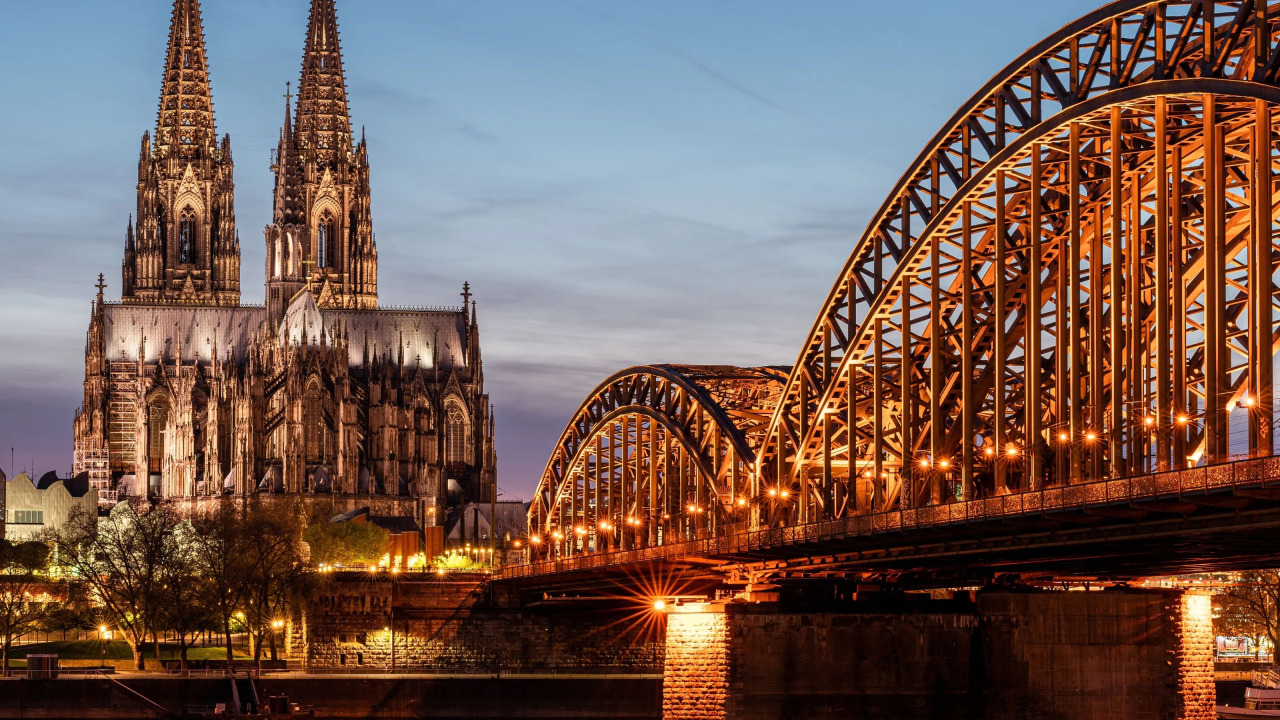
The moment you step out of Köln Hauptbahnhof, the city introduces itself: two towering spires of dark sandstone dominate the sky, right next to the train station. Cologne's character is largely defined by this very proximity. A two-thousand-year-old Roman settlement, medieval pilgrimage routes, the trade carried by the Rhine, and a city fabric rebuilt after war all layer upon each other within a radius of just a few hundred meters. This Cologne travel guide organizes the city into a walkable itinerary, moving from the Cathedral axis to the Rhine riverfront, from museums to the etiquette of a traditional Brauhaus. It also notes upfront the changing Cathedral ticketing system for 2026 and the temporary closure of the Roman museum on Roncalliplatz.
Quick Facts
| Topic | Information |
|---|---|
| Location | Germany, North Rhine-Westphalia state; straddles both banks of the Rhine River |
| Scale | Germany's fourth-largest city, with a population exceeding one million |
| Recommended Duration | 2 days for the central axis, 3 days when adding museums and the opposite bank |
| Iconic Landmark | Cologne Cathedral (UNESCO World Heritage Site, 1996) |
| Cathedral Visit | Ticketed for tourist visits starting July 1, 2026 |
| South Tower | 533 steps to the viewing platform, approximately 100 meters high |
| Best Time to Visit | May-September for mild weather; November-December for Christmas markets; February for street carnival |
| Airport Connection | S19 from Köln/Bonn station to Hauptbahnhof in 14 minutes |
| Local Transport | KVB Stadtbahn and bus network; KölnCard available for 24/48-hour visitor passes |
What Sets Cologne Apart from Other German Cities?
Cologne's distinctiveness is felt less in its architecture and more in the vibrant tone of its city life, nurtured by two key institutions. First is the carnival calendar: the season kicks off every year on November 11, transforming the city into an entirely different place during street carnival week. Second is the Kölsch culture; drinking beer in small glasses at crowded tables forms the social fabric. Overlaying this is its Roman heritage: the city was a provincial capital during the imperial era, and remnants beneath the ground still emerge from construction excavations. For those curious about the reverse flow of travel, our German tourist profile article offers a different perspective.
Cologne Through the Year: What Each Season Offers
Cologne's weather tends to be mild, with rainfall spread throughout the year. Therefore, choosing your travel period often depends more on the calendar of events than on temperature.
| Period | Highlights | Things to Note |
|---|---|---|
| March-May | Mild weather, Rhine riverfront walks, lower visitor density | High number of rainy days; dress in layers |
| June-August | Long daylight hours, river cruises, outdoor activities in parks | Hotel occupancy and prices peak |
| September-October | Clear weather, museum season opens, crowds begin to thin | Daylight hours shorten quickly |
| November 16 - December 23, 2026 | Cathedral Christmas market on Roncalliplatz; other city markets have separate dates | Cathedral market closed on November 22 (Totensonntag) |
| February 4-10, 2027 | Street carnival; Weiberfastnacht on Feb 4, Rosenmontag on Feb 8 | Accommodation books up months in advance, tower climb closed on carnival days |
A critical detail for December plans: the market in front of the Cathedral closes on the evening of December 23 and is not set up on Christmas Day.
Cathedral Axis: Dom, South Tower, and Roncalliplatz
The central axis begins at the station square and descends to the Rhine via Roncalliplatz; this route, about a twenty-minute walk, forms the backbone of your visit.
Cologne Cathedral (Kölner Dom) and Changing Ticket Rules
Construction of the Cathedral began in 1248, proceeded intermittently, and was only completed in 1880; UNESCO inscribed the structure on its World Heritage List in 1996. Due to high-rise construction on the opposite bank of the Rhine, it was placed on the List of World Heritage in Danger in 2004, but removed in 2006 after the city restricted building heights. Two key points of interest inside are the soaring stained-glass windows and the Shrine of the Three Kings (Dreikönigenschrein) in the choir section. The reliquary was crafted between the late 12th and early 13th centuries, likely by the workshop of Nikolaus von Verdun.
The "free entry" information found in older guides is no longer valid: as of July 1, 2026, tourist visits to the Cathedral will be ticketed. Participants in mass, those wishing to pray, children up to 13 years old, and severely disabled visitors with their companions are exempt from tickets; outside of mass hours, the north transept remains open for prayer. Tickets can be purchased from the online portal or the ticket office on Roncalliplatz; check koelner-dom.de for current prices. Tourist visits are generally Monday-Saturday from 10:00-17:45, and on Sundays and religious holidays from 13:30-16:30.
South Tower: The 533-Step Climb
Access to the tower is through a separate entrance from the Cathedral's interior and requires a separate ticket. There are 533 steps to the viewing platform; the first section is a winding stone staircase rising about 75 meters, followed by a metal staircase, with the platform at approximately 100 meters. The tower is open March-October from 09:00-18:00, and November-February from 09:00-16:00, with the last entry half an hour before closing. It is closed on New Year's Day, Carnival days, November 11, Christmas Eve, and Christmas Day. As the staircase is used in both directions, climbs tend to slow down in the afternoon.
Roncalliplatz and Römisch-Germanisches Museum
Roncalliplatz, south of the Cathedral, is also home to the museum that compiles the city's Roman past. The main building of the Römisch-Germanisches Museum on Roncalliplatz is closed for extensive renovation; the city administration's timeline anticipates completion in 2029, but the date has been postponed several times before. A selection from the collection is exhibited at Belgisches Haus (Cäcilienstraße 46) near Neumarkt. The museum's iconic Dionysus mosaic was deemed too delicate to move and has been left in situ, covered for protection and thus not visible; the mosaic dates to approximately 230 AD and was discovered in 1941 during an air-raid shelter excavation.
Rhine Riverfront: Bridge, Park, and Chocolate Museum
In Cologne, the Rhine transforms its two banks into facing scenes. To fully appreciate the Cathedral's facade, you need to cross to the opposite bank.
Hohenzollern Bridge
This railway bridge connects Altstadt with Deutz on the opposite bank; a pedestrian walkway runs alongside the train tracks. The love locks, which have adorned the railings since around 2008, have become the bridge's visual signature. Late afternoon is ideal for photography; the Cathedral silhouette, passing trains, and reflections on the water all come together in one frame from the opposite bank. End your walk on the Deutz side and return to the center via Stadtbahn.
Rheinpark and Deutz Side
Rheinpark, on the right bank of the Rhine, is a popular weekend picnic spot for locals. The grassy slopes facing the Cathedral's facade offer a change of pace after the stone textures of the city center. In summer, river cruise boats operate along this stretch.
Imhoff Chocolate Museum (Schokoladenmuseum)
The museum is housed in a glass and brick building, situated on a promontory extending into the Rhine at Rheinauhafen. Its exhibition space, spanning over four thousand square meters, traces the five-thousand-year cultural history of cocoa; a ten-meter-high tropical greenhouse cultivates cocoa trees, and the production line can be observed behind glass. A well-known highlight of the visit is the three-meter-high chocolate fountain, where chocolate continuously flows. The museum is open from 10:00-18:00; it closes on Mondays in January-March and November, so confirm dates via schokoladenmuseum.de. Online ticket purchase is recommended due to long queues on weekends and during school holidays.
Museums and Altstadt: From Ludwig to the Historic City Hall
Cologne's concentration of museums makes choices necessary for a two-day trip; decide upfront between modern art and medieval painting.
Museum Ludwig
Located behind the Cathedral, this museum boasts, according to its own description, Europe's most comprehensive Pop Art collection and the world's third-largest Picasso collection; Russian avant-garde and a photography section complete its offerings. It is open Tuesday-Thursday from 10:00-18:00, and Friday-Sunday from 10:00-20:00; the permanent collection closes daily at 18:00, and the museum is closed on Mondays. On the first Thursday of every month, opening hours are extended until 22:00 with discounted evening admission; this is an excellent time to see the Warhol halls in a calmer setting.
Wallraf-Richartz Museum
The city's oldest museum, this is the definitive address for a comprehensive display of the medieval Cologne School of painters; European painting from the 16th to 19th centuries and an Impressionist collection from the Fondation Corboud are also housed here. It is open Tuesday-Sunday from 10:00-18:00, and until 22:00 on the first and third Thursdays of the month. It's just a few minutes' walk from the Historic City Hall. For readers looking for similar period artworks in Turkey, the cultural tours in Turkey category offers a comparable itinerary.
Historisches Rathaus and Shopping District
The Historic City Hall is considered Germany's oldest city hall based on structural documentation; its first record as "the house of citizens" dates back to 1135-1152. The five-story, 61-meter-high late Gothic tower was built by guild management between 1407-1414, featuring 130 stone figures on its facade; the adjacent Renaissance loggia was added between 1569-1573. Visitor entry has been from the Alter Markt side since 2018. From here, it takes about five minutes to reach the Schildergasse and Hohe Straße line; these two streets combine large department stores with local boutiques in a single flow. The 4711 building at Glockengasse 4 tells the story of Cologne water: the recipe was given as a wedding gift in 1792, and the number comes from the building numbering during the French occupation.
A Day Starting at the Cathedral, Ending at a Brauhaus
The following itinerary keeps a one-day Cologne visit within walking distance and avoids peak queuing times.
- Purchase your Cathedral ticket online a day in advance and start with the interior at the 10:00 AM opening.
- Climb the South Tower the same morning; the 533 steps are less crowded before noon.
- Head from Roncalliplatz to Museum Ludwig and allocate a two-hour museum block.
- For lunch, descend to Altstadt and take a break in the squares around the Historic City Hall.
- Walk across the Hohenzollern Bridge to the Deutz side and photograph the Cathedral facade from across the river.
- After a short walk in Rheinpark, take the Stadtbahn to Rheinauhafen and visit the Chocolate Museum.
- In the late afternoon, set aside an hour for shopping along the Schildergasse line and stop by Glockengasse.
- End the day at a Brauhaus in Altstadt with a Kölsch and a local dish.
Getting to Cologne and Getting Around the City
Cologne is one of the railway network's major hubs in Germany; access to the city is not limited to air travel.
| Connection | Approximate Duration | Note |
|---|---|---|
| Istanbul, Köln/Bonn Airport (flight) | 3-3.5 hours | Scheduled direct flights available |
| Köln/Bonn Airport, Köln Hauptbahnhof (S19) | 14 minutes | Every 20 minutes; station is beneath the terminal building |
| Frankfurt Airport, Köln Hauptbahnhof (ICE) | Approx. 1 hour | Via high-speed line, frequent daily services |
From the Airport to the City Center
The train station is located beneath the terminal building; you can descend to the platform without going outside with your luggage. The S19 line reaches Hauptbahnhof in approximately 14 minutes and departs every 20 minutes. If your long-distance ticket was issued directly to the airport, the same ticket covers the S-Bahn connection; no additional city ticket is required.
City Network and KölnCard
Inner-city transport is provided by the KVB-operated Stadtbahn network; the line goes underground in the center and runs on the surface outside, essentially a system between a U-Bahn and a tram. This is supplemented by S-Bahn lines and buses. For visitors, the KölnCard offers 24 or 48-hour usage: it includes public transport within the city and provides discounts on museums and city tours. Remember that the card does not provide free museum entry, but rather a discount. Fares are updated periodically, so check kvb.koeln for current rates.
Cologne on the Table: Kölsch Etiquette and Himmel un Ääd
Kölsch is a top-fermented beer protected by a geographical indication; its use was defined by the Kölsch Convention signed in 1986 and protected at the European Union level. The serving ritual is part of the tradition: the beer comes in a thin 0.2-liter glass called a Stange; the waiter will bring a fresh one when they see an empty glass, and to stop, simply place your coaster on top of your glass.
On the food side, the city's iconic dish is Himmel un Ääd. Its name means "heaven and earth": fried blood sausage is placed on a bed of apple sauce and mashed potatoes, accompanied by an onion gravy. For readers wishing to compare regional culinary differences in the Mediterranean, our Italy travel guide article provides a similar framework.
Where to Stay and What to Check Before You Go
Choosing your accommodation area sets the rhythm of your trip; the preference of someone wanting to explore the central axis on foot will differ from someone seeking nightlife.
| Area | Best for | Notes |
|---|---|---|
| Dom and Altstadt surroundings | First-time visitors, short stays | Everything within walking distance; potential weekend night noise |
| Belgisches Viertel (Belgian Quarter) | Those seeking design shops, cafes, and bars | A few Stadtbahn stops from the center |
| University area | Longer stays, quiet and budget-friendly options | Evening dining options are student-focused |
| Deutz (opposite bank) | Those attending fairs or concerts, seeking views | Cathedral facade directly opposite after crossing the bridge |
During Christmas market and street carnival weeks, central hotels book up months in advance; Deutz or peripheral neighborhoods offer a more sensible base.
Pre-Trip Checklist
- Visa requirements vary by nationality and are updated periodically; confirm with official German diplomatic sources before traveling.
- Purchase Cathedral tickets and museum admissions online; ticket office queues lengthen around midday.
- Carry a raincoat and comfortable shoes; the central axis is explored on foot, and the ground is cobblestone.
- If your visit coincides with Carnival or the Christmas market period, book accommodation early.
- If you wish to see the Roman layers, plan your route to Belgisches Haus; the main building on Roncalliplatz is closed.
- If traveling with children, avoid combining the Chocolate Museum and the zoo on the same day.
- A short thank-you phrase in German can facilitate conversation at the table.
In summary, Cologne is a city where layers are compressed into a small area: the Cathedral axis, the Rhine riverfront, the museum quarter, and Altstadt are all within walking distance. Confirming ticket regulations and museum statuses before you depart will make your preparation smoother. For those wishing to continue exploring city centers on foot in Turkey, the historical city tours in Turkey category offers a similar pace.
Frequently Asked Questions 6
How many days does it take to visit Cologne?
The Cathedral axis, Altstadt, and Rhine riverfront can be explored in two full days. If you add Museum Ludwig, Wallraf-Richartz, and the Chocolate Museum, a third day is needed. Allow an extra day if your visit coincides with Carnival or the Christmas market.
Is there an entrance fee for Cologne Cathedral?
As of July 1, 2026, tourist visits to the Cathedral will be ticketed. Those attending mass, wishing to pray or light a candle, children under 13, and severely disabled visitors with their companions are exempt from tickets. Tower climbs and the treasury require separate tickets; check koelner-dom.de for current prices.
Is climbing Cologne Cathedral's tower difficult?
There are 533 steps to the viewing platform, and no elevator. The first section is a winding stone staircase up to about 75 meters, followed by a metal staircase; the platform is at approximately 100 meters. The tower is open March-October from 09:00-18:00, and November-February from 09:00-16:00, but is closed on Carnival days.
How to get to Cologne from Turkey?
There are scheduled direct flights from Istanbul to Köln/Bonn Airport, taking three to three and a half hours. From the airport station, the S19 line reaches Köln Hauptbahnhof in 14 minutes. Those arriving via Frankfurt Airport can reach Cologne by ICE train in about an hour.
What is the best time to visit Cologne?
For mild weather and long daylight hours, May to September is ideal. Those wishing to see the Cathedral Christmas market in 2026 should aim for November 16 to December 23; the market is closed on November 22, Totensonntag. The street carnival in 2027 starts on February 4 (Weiberfastnacht) and ends on February 10 (Aschermittwoch).
Is Cologne suitable for families with children?
Yes, it is. The Chocolate Museum captures children's interest, and the green spaces of Rheinpark are perfect for a break. Cologne Zoo is open year-round; summer 09:00-18:00, winter 09:00-17:00. The underwater viewing area for hippos is closed until early 2027 for filter renovation.