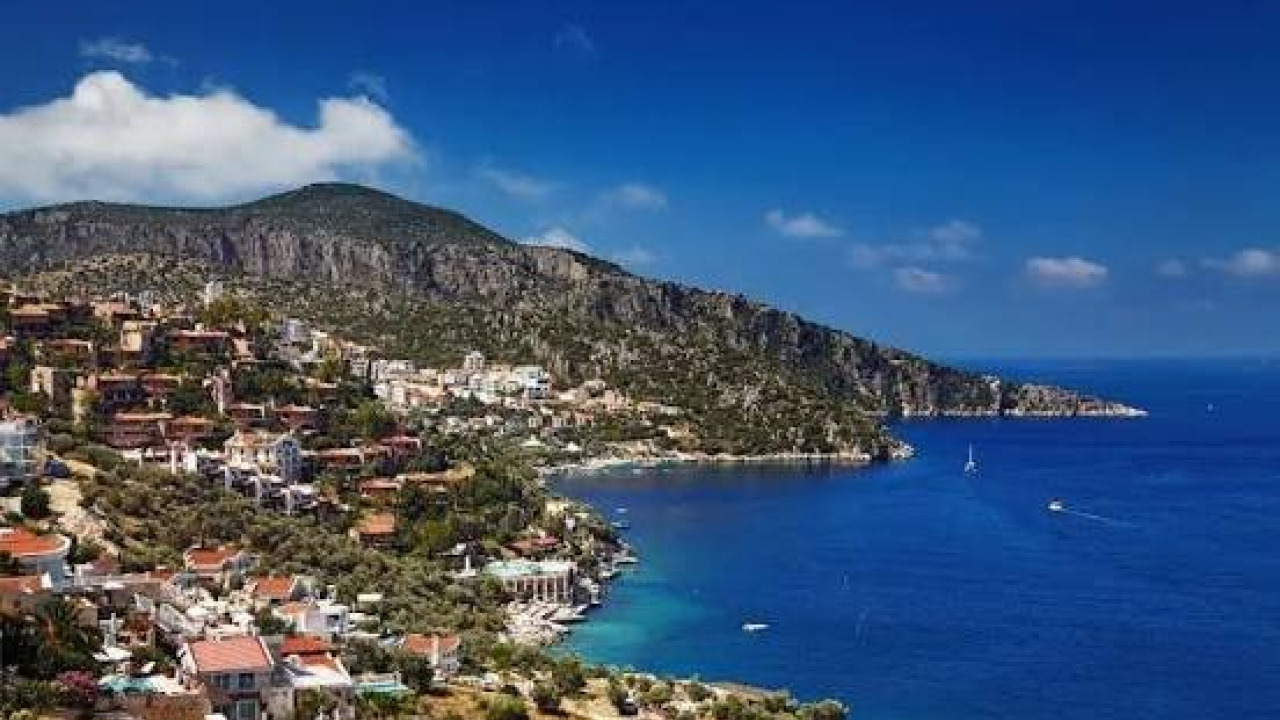

"When is the best time to visit Fethiye and Kaş?" is often the first question for travelers looking to combine these two stunning destinations in one trip. The answer isn't tied to a single month on the calendar but rather to the type of adventure you're seeking. A beach-focused holiday, a trek along the Lycian Way, and exploring ancient cities simply won't fit comfortably into the same week. The approximately 110-kilometer coastline between Fethiye and Kaş boasts an extended swimming season from May to November, prime hiking windows in spring and autumn, and a peak demand curve in mid-summer. This comprehensive guide breaks down each of the twelve months, allowing you to compare the advantages, limitations, transportation details, and cost factors in one easy-to-read table.
Quick Answer: When to Visit Fethiye & Kaş?
There are two balanced windows for visiting the region. The first is from mid-May to the first half of June: the sea is warm enough for swimming, the countryside is still lush and green, and you won't be scrambling for shade in the ancient cities. The second is from the last week of September to the end of October: the sea retains its summer warmth, days are still long, and the crowds are noticeably thinner than in mid-summer.
July and August mark the peak of sea temperatures for the year. During this period, midday temperatures can soar to 33-37 degrees Celsius, pushing ancient city tours to early mornings or late afternoons, and accommodation demand reaches its annual zenith. The period from November to March isn't ideal for a beach holiday; however, it offers a tranquil and cool backdrop for Lycian Way stages, the Saklıkent area, and cultural stops.
- If your priority is sea and boat tours: June, September, and the first half of October.
- If your priority is hiking, canyons, and ancient cities: Late March, April, May, October, and November.
- If your priority is diving and underwater photography: September and October, when visibility is at its best.
- If budget is your main concern: April, May, and late October; avoid school holidays and public holiday weeks.
If you want to see all the attractions on the Fethiye side in one list, our Fethiye travel guide provides location and venue details alongside this seasonal guide.
Quick Facts
| Topic | Information |
|---|---|
| Region | Fethiye district of Muğla and Kaş district of Antalya; historical Lycian geography |
| Prominent Stops | Ölüdeniz, Butterfly Valley, Saklıkent Canyon, Kaputaş, Patara, Kekova, Kayaköy |
| Sea Season | Broad window from early June to mid-October; May and November are transition months |
| Hiking & Canyon Period | Late March to May, September to November |
| Balanced Period | May, early June, late September, and October |
| Peak Season | Mid-July to late August |
| Nearby Airports | Dalaman (approx. 50 km to Fethiye), Antalya (approx. 190 km to Kaş) |
| Fethiye to Kaş | Approx. 110 km via D400 coastal road, 2 to 2.5 hours |
| Ancient Site Visiting Hours | Patara daytime session 08:00-18:45, ticket office closes at 18:45; summer season also offers separate ticketed night museum from 19:00-22:00. Ksanthos and Letoon approx. 08:30-19:00 in summer; winter schedule for all three is 08:30-17:30 |
| Night Rule on Beaches | Patara and İztuzu are caretta caretta nesting beaches: beaches are closed to visitors from 20:00 to 08:00 (Patara from May 1 - Sept 30), artificial light and loud noise are prohibited |
| Paid Area Statuses | Four different systems apply: Ministry of Culture archaeological sites (Museum Pass valid), national park (Saklıkent), nature park (Ölüdeniz lagoon, Kıdrak), and municipal beach (Kaputaş). Museum Pass is not valid for the latter three; archaeological sites have different tariffs for foreign visitors |
| Recommended Duration | 4 to 6 days for both centers combined |
Getting There & A Four-Day Itinerary: Step by Step
The most practical way to combine Fethiye and Kaş in one trip is to fly into one airport and depart from the other, or to cover the entire route with a rental car. The D400 between the two centers is a winding road that runs parallel to the coast; although the distance may seem short, photo stops can easily extend the journey.
By Air: Dalaman or Antalya?
If you're heading to the Fethiye side, Dalaman Airport is approximately 50 kilometers away, about an hour's drive under normal conditions. If you're focusing on the Kaş side, Antalya Airport is about 190 kilometers, meaning around a 3-hour drive; there are also bus connections from the same airport to Kaş, which extends the journey to 3.5-4 hours. If you're going directly from Dalaman to Kaş, the coastal road is approximately 145-150 kilometers and the winding route takes 2-2.5 hours; this route bypasses Fethiye town center, making it shorter than the sum of two separate legs. Airport shuttle bus services become less frequent outside of peak season; if you're traveling between November and March, aiming for an arrival before noon will reduce the risk of missing connections.
By Road & Local Connections
Regular minibus and bus services operate daily between Fethiye and Kaş; Kalkan, Kaputaş, and the Patara turn-off are along this route. Within the Fethiye area, dolmuş (shared taxis) run from Fethiye center to Ölüdeniz, Çalış, and Kayaköy. Kaş town center is walkable; for Kekova boat tours, you'll need a shuttle or car to Üçağız. A rental car is the most practical way to reach secluded bays and ancient cities on your own schedule. In July and August, finding parking around Ölüdeniz and Kaputaş becomes challenging; arriving before 10:00 AM will make things much easier.
Sample Four-Day Itinerary
- Day One: Settle into Fethiye town center, explore the old bazaar known as Paspatur and the fish market by the harbor in the late afternoon, then climb to the Amyntas rock tombs for sunset views.
- Day Two: Head early morning towards Ölüdeniz and Kıdrak, take an afternoon boat tour to Butterfly Valley and Aquarium Bay, and on your return, wander through the stone structures of Kayaköy.
- Day Three: Combine Saklıkent Canyon with the ancient city of Tlos, then drive to Kaş via the D400; stop at Patara beach and Kaputaş along the way.
- Day Four: Board a Kekova and Sunken City boat tour from Kaş, climb to Kaleköy in the afternoon to see the Simena castle, and spend the evening around Uzun Çarşı in Kaş town center.
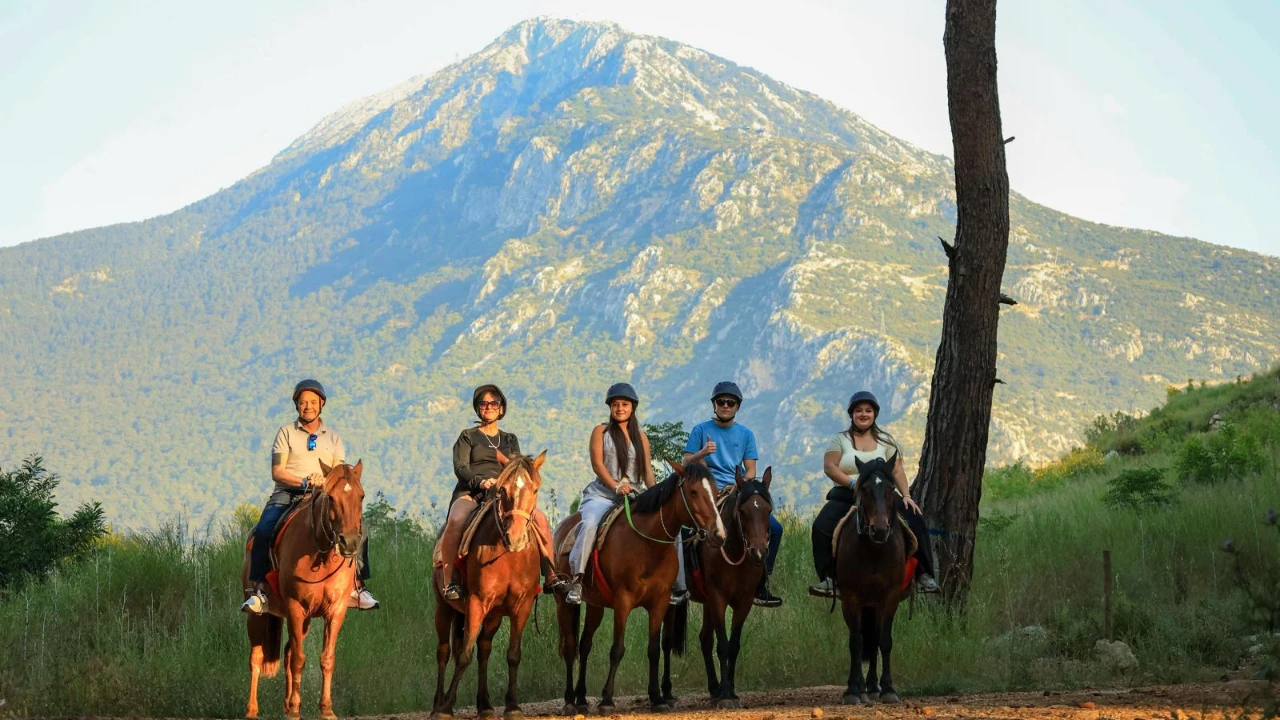
- If you have five or six days: Dedicate one day to Ksanthos and Letoon, and a separate morning to a short stage of the Lycian Way between Kaş and Kalkan.
Fethiye vs. Kaş: A Seasonal Showdown
While both centers are in the same region, they have distinct characters. Fethiye offers a wide bay, a larger town center, and a diverse range of activities. Kaş is smaller, a walkable town, and stands out with its deep, clear waters. This difference also shifts the calendar: Fethiye's lively period often aligns with school holidays, while Kaş's sea season extends longer into autumn.
| Criterion | Fethiye | Kaş |
|---|---|---|
| Center Scale | Large district center, marina, extensive bazaar | Small and walkable town center |
| Sea Character | Calm waters within the bay, Ölüdeniz lagoon | Deep, clear waters, pebble coves |
| Activity Focus | Boat tours, paragliding, canyoning | Diving, snorkeling, sea kayaking, Kekova |
| Summer Crowds | Noticeable in July and August | Moderate to high in July and August |
| Accommodation Variety | Wide range, Ölüdeniz area sees peak demand | Boutique-focused, town center and peninsula see peak demand |
| Favorable Period | May, June, September, October | May, June, September, October, early November |
| Best Suited For | Families, large groups, multi-stop itineraries | Couples, divers, travelers seeking a tranquil center |
Fethiye: Broad Appeal, Lively Summers
Fethiye's calendar is shaped by the short distances between the town center and the coast. From the center to Ölüdeniz is about 14 kilometers, a 30-40 minute dolmuş ride, while the inland Saklıkent is about 45 kilometers away. These two axes don't share the same ideal month: the canyon's water runs high in spring when the sea is still cool, while in August, when the sea is at its peak, the canyon's coolness becomes the main draw. The Amyntas rock tombs and Fethiye Museum in the center offer a half-day program mostly indoors; this is your backup plan during months with higher rainfall. In summer, dolmuşes run frequently from the center to Ölüdeniz, but return journeys in the evening can be crowded; departing before 6:00 PM will help you avoid standing. The air games festival held in Ölüdeniz in October is a significant surge in demand for the district at the end of the season.
Kaş: Charming Town, Extended Dive Season
Kaş town center is walkable, with the Antiphellos theater overlooking the sea and a bazaar nestled in its narrow streets. Küçük Çakıl and Büyük Çakıl beaches are within walking distance from the center, which is a big plus for travelers without a car. The Çukurbağ Peninsula is where boutique accommodations are concentrated. Kaş's sea season can extend until early November, longer than Fethiye's; underwater visibility improves in autumn, making September and October ideal for diving plans. Seasonal ferry services run from Kaş to Meis Island, requiring a passport; schedules change periodically, so it's essential to check departure times in advance.
Month-by-Month Season Calendar
Each of the twelve months highlights a different type of trip in the region. Temperature ranges are based on long-term averages; they can shift by one to two weeks depending on the year, so don't interpret the month boundaries as strict lines.
| Month | Daytime Temp Range | Sea Temperature | Crowds | Highlighted Activity This Month |
|---|---|---|---|---|
| January | 14-17 °C | 16-18 °C | Very Low | Rainy season, short walks, museum and bazaar |
| February | 14-18 °C | 16-17 °C | Very Low | Visitor-free ancient sites, greening countryside |
| March | 17-22 °C | 17-18 °C | Low | Lycian Way stages, canyon area walks |
| April | 20-25 °C | 18-19 °C | Low | Ancient cities, start of boat season |
| May | 24-28 °C | 20-23 °C | Moderate-Low | Transition month combining hiking and swimming |
| June | 29-33 °C | 23-25 °C | Moderate | Boat tours, coves, long days |
| July | 33-37 °C | 26-27 °C | High | Sea, water sports, evening activities |
| August | 33-37 °C | 27-28 °C | High | Sea, early morning excursions, lively nights |
| September | 29-33 °C | 26-27 °C | Moderate-High | Sea is warm, crowds begin to thin |
| October | 24-28 °C | 22-24 °C | Moderate-Low | Diving visibility, festival season, hiking |
| November | 18-22 °C | 20-21 °C | Low | Cultural stops, canyon area, tranquil town |
| December | 15-18 °C | 18-19 °C | Very Low | Short sea-level stages, indoor programs |
The Teke Peninsula: The Geography Shaping Your Trip
The geography connecting Fethiye and Kaş along the same strip is called the Teke Peninsula: a protrusion extending from Fethiye district in Muğla to the western coast of Antalya, upon which ancient Lycia was also built. The answer to why the table above fluctuates so much between months lies in this geography. On the peninsula, the mountain mass rises immediately behind the coast; Babadağ behind Ölüdeniz and Akdağ, which Tlos leans against, climb over a thousand meters a short distance inland from the coast. The result is experiencing two different climates on the same day.
In practice, this translates as follows: while the sea remains swimmable on the coast until mid-October, the water in Saklıkent, 45 kilometers inland, flows icy cold even in mid-summer. The same mechanism works in reverse; when the coast is tiring in the midday heat of July and August, the coolness of the inland areas becomes the savior of your itinerary. Sections where the mountain drops steeply into the sea along the coastline are also the reason for short coves like Kaputaş at canyon mouths.
The critical point regarding timing is this: the two faces of the peninsula diverge most in April and May, and in October and November, because while the coast is still warm, the high-altitude trails settle into ideal temperatures for hiking. Dividing the day by altitude, meaning dedicating the morning to higher elevations and the afternoon to the coast, is a practical way to enjoy both the sea and hiking in the same month.
Spring: March, April, and May
March is the first month when the countryside remains green and trails are at walkable temperatures. The second half of the month is preferred for the Fethiye to Kaş stages of the Lycian Way; midday heat is not yet exhausting, but as there's still a chance of rain, a waterproof outer layer is worth packing. The sea is too cold for swimming this month.
April is one of the most comfortable months of the year for ancient city tours: the sun is not yet oppressive in shadeless areas like Patara, Ksanthos, and Kayaköy. Boat tours begin towards the end of the month, with fewer departures and limited program variety. On the Kaş side, dive centers start their season this month, and water temperatures are comfortable with a wetsuit.
May is the month when the region takes on a dual character. Hiking is prominent in the first half of the month, while swimming takes precedence in the second half; the sea temperature surpasses 21 degrees Celsius in the latter half, making swimming comfortable in the last ten days. As accommodation demand has not yet reached summer levels, it's also a budget-friendly month.
Summer: June, July, and August
June is the month when the sea warms up, but crowds haven't yet peaked. Days are the longest of the year, allowing you to fit both a boat tour and an evening bazaar stroll into one day. Sunbed and parking congestion in the coves begins in the last week of the month.
July is when daytime temperatures exceed 33 degrees Celsius, making shadeless ancient city tours challenging. A practical way to plan your day this month is to divide it into two: culture and hiking from 7:00 AM to 11:00 AM, followed by the sea in the afternoon, and the bazaar in the evening. The strengthening afternoon breeze can alter boat tour routes; listening to the captain's cove preferences will enhance your comfort.
August is the month when sea temperatures approach their annual peak, and crowds are also at their highest. Parking and sunbed issues in popular spots like Ölüdeniz, Kaputaş, and Patara begin after 11:00 AM. Early bookings are crucial this month to prevent limited options; the last week of school holidays also marks a period of increased return traffic.
Autumn: September, October, and November
September is the preferred month for many travelers in the region: the sea retains its summer warmth, crowds decrease with the end of school holidays, and accommodation demand recedes. The first week of the month is still lively; tranquility becomes more noticeable after the second week.
October is a balanced month for those who want to combine sea and culture. Water temperatures range from 22 to 24 degrees Celsius, and diving visibility reaches its annual highs, making this month ideal for underwater photography plans. The air games festival in Ölüdeniz usually falls in the second or third week of October; accommodation demand rises during that week, so checking dates early is advisable.
November is the month when the sea season draws to a close, but the weather remains favorable for culture and hiking. Rainfall increases after mid-month. On the Kaş side, swimming is still possible in the first week of the month; on the Fethiye side, some cove businesses begin to close.
Winter: December, January, and February
December is the month when coastal businesses close and boat tours largely cease. However, ancient cities can be explored almost without visitors, accommodation demand drops, and short sea-level stages of the Lycian Way are walkable. As dolmuş frequency decreases, it's necessary to arrange transportation by car.
January is the rainiest month of the year; daytime temperatures hover between 14 and 17 degrees Celsius. Daylight hours are short, making it difficult to fit two ancient cities into one day. Fethiye Museum, Paspatur bazaar, and indoor venues in Kaş town center form the backbone of your itinerary this month.
February is the month when the countryside turns green and clear weather for photography increases. Archaeological sites are quiet; extensive areas like Kayaköy and Tlos can be explored without crowds. The number of open businesses is limited, so it's essential to confirm accommodation and dining plans before setting off.
Tour & Activity Options by Season
Each activity in the region has its own ideal calendar. While it's possible to combine diving with canyon hiking in the same week, the favorable month ranges for both are different: canyon water runs high in spring, while diving visibility improves in autumn.
Boat Season: Late April to Late October
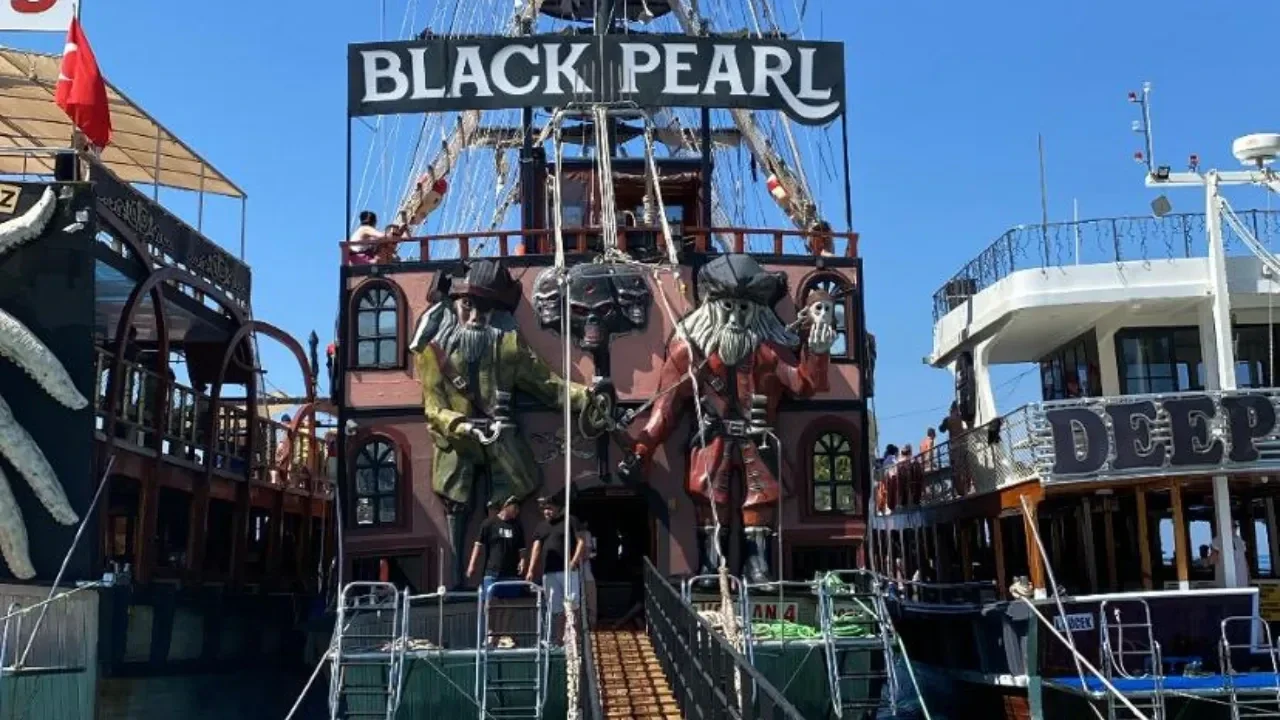
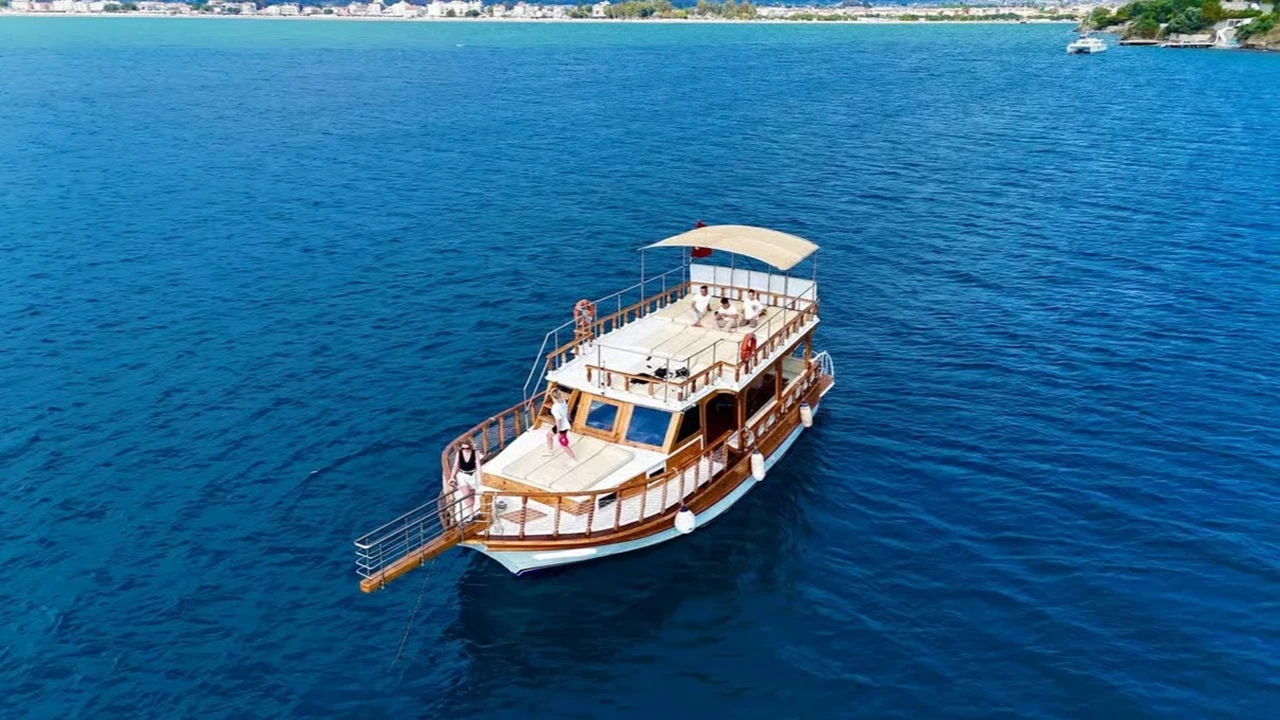
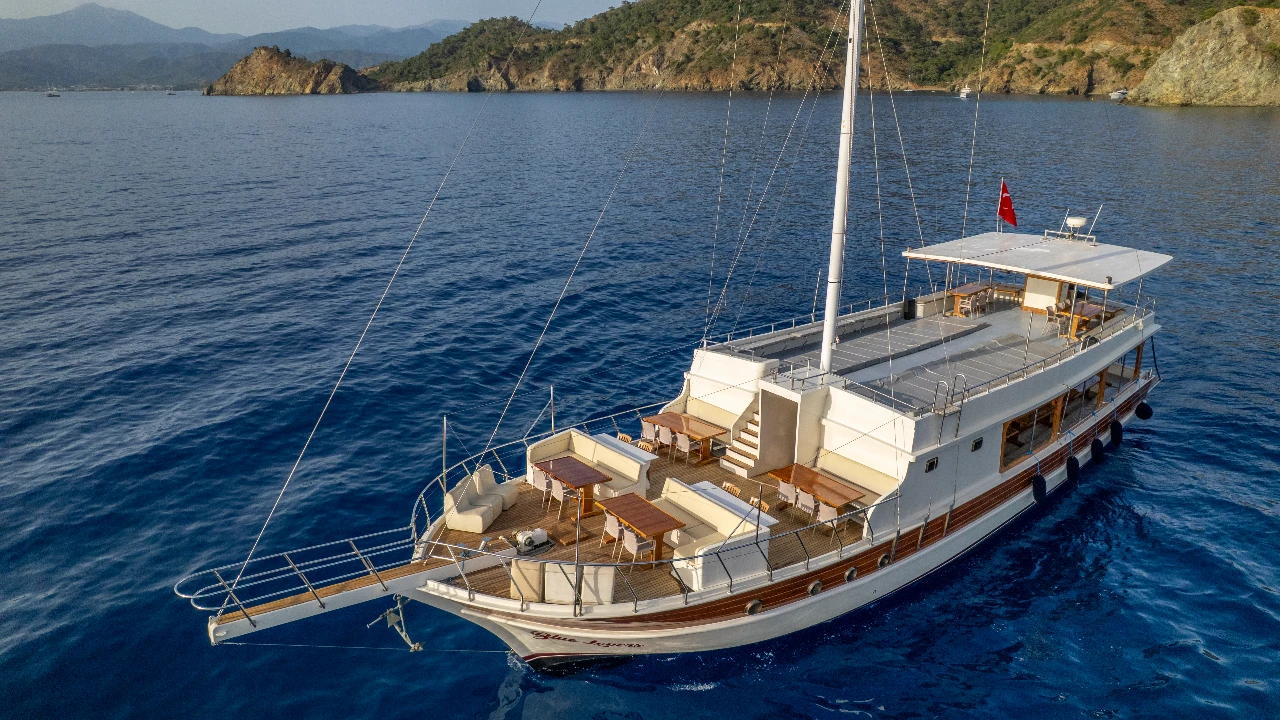
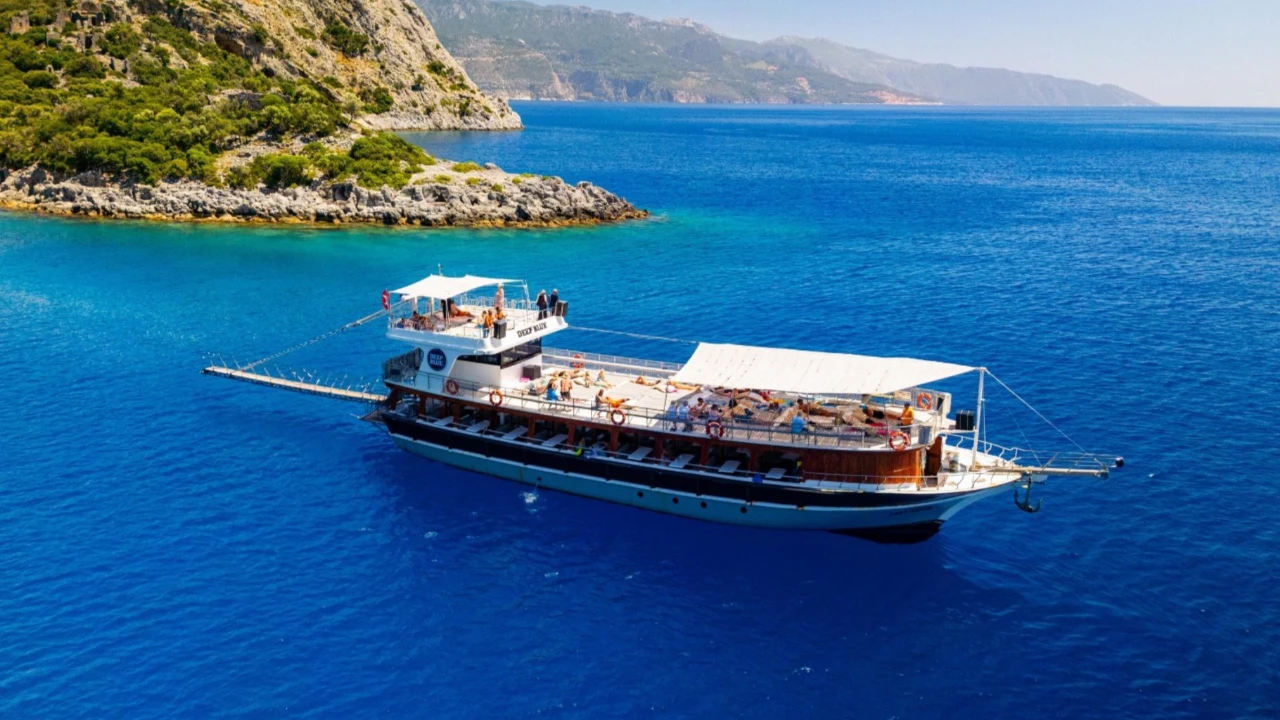
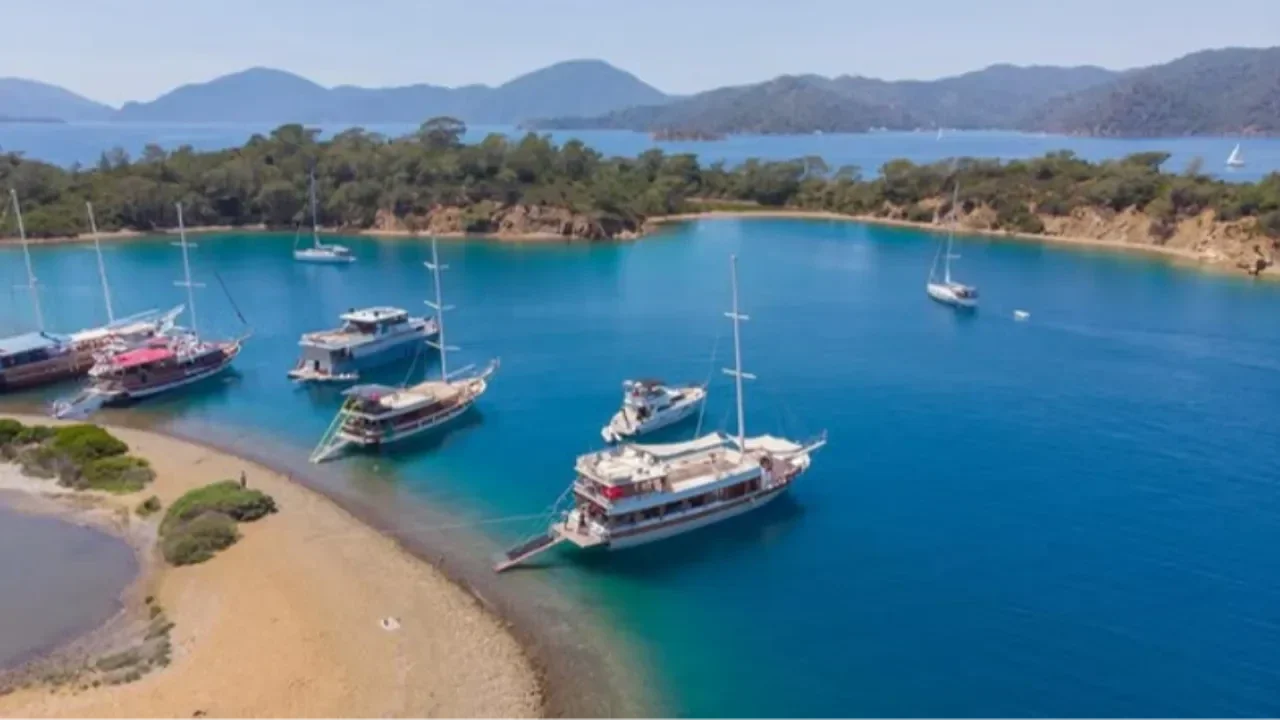
Daily boats departing from Fethiye typically follow the Ölüdeniz, Aquarium Bay, Butterfly Valley, and Gemiler Island route; on the Kaş side, routes split between Kekova and the Blue Cave-Kaputaş offshore areas. The boat season opens in late April, daily departures peak in July and August, and thin out by late October. Boats departing around 9:00 AM usually arrive at the coves before the crowds. As winds can pick up in the afternoon, passengers prone to seasickness should opt for earlier departures.
The main difference during the season isn't the number of departures, but the distance from the departure point to the coves: a short-distance departure allows more time in the water for the same duration, while a long-distance departure spends most of the day cruising. If you want to compare which coves are covered by day-trip programs, the Fethiye boat tours list shows route and duration differences side-by-side; the current price for each program is also live on its card in that list.
Butterfly Valley: A Bay Accessible Only by Sea
Butterfly Valley is located at the foot of Faralya (Uzunyurt) village, one of the stops on the Lycian Way, south of Ölüdeniz. The cliffs surrounding the valley reach up to 350 meters, making it impossible to descend by road; the only way to reach the beach at the valley floor is by sea. The area is a first-degree natural protected site and gets its name from the more than 80 butterfly species it hosts, so the restrictions here are for conservation, not scenery. Dolmuş boats departing from Ölüdeniz and day tours from Fethiye and Ölüdeniz stop here, with typically 1-2 hours allocated for a break in the valley on day-trip programs.
The distinction for those arriving by land is this: the upper viewpoint terrace in Faralya offers free views, but the rope-assisted path down to the beach is a risky climb requiring experience and equipment. For sea access to the valley, a separate entry system is in place for the area's protection; as the scope is updated periodically, it's necessary to confirm before booking.
From a calendar perspective, the valley is dependent on the boat season: dolmuş boats only operate during the season, and access is largely closed from November to April. The most favorable months are June and September, when the sea is warm but the number of departures has not yet peaked.
Kekova & The Sunken City: The Morning Tour Advantage
Kekova is a sheltered sea region on the coast of Demre district in Antalya, located between Demre and Kaş; it takes its name from the long and uninhabited Kekova Island offshore, whose ancient name is recorded as Dolichiste. The ruins referred to as the sunken city extend underwater and along the waterline on the island's northern coast; some structures submerged due to the collapse of the coastline during 2nd-century earthquakes.
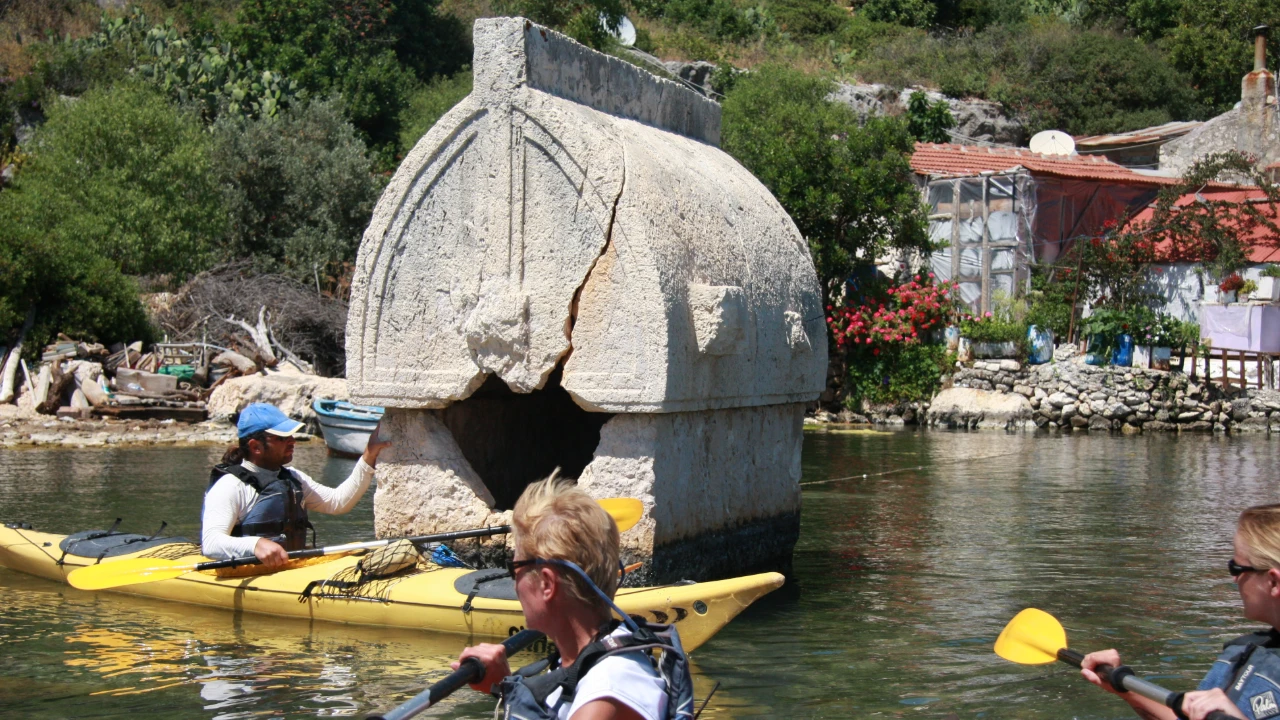
There are also land settlements along the same route: Kaleköy on the opposite shore is ancient Simena, housing a medieval castle and Lycian sarcophagi, while Üçağız village is built over ancient Teimiussa. Partially submerged Aperlai and the old shipyard and Byzantine church ruins in Tersane Bay are other stops on the route. Swimming and diving over the sunken ruins are prohibited; boats therefore follow specific lines, and swimming breaks are given in nearby permitted coves. Glass-bottom boats are used to view the ruins.
Timing directly determines image quality here: the ruins are clearer on morning tours as the water surface reflects less, while the strengthening afternoon wind brings both waves and turbidity. There are approximately 37 kilometers between Kaş center and Üçağız as a departure point; departing from Üçağız extends the time spent in the water as it's closer to the region.
Kaputaş Beach: A Gem at the Canyon's Mouth
Kaputaş is a short but deep beach located 7 kilometers from Kalkan and 20 kilometers from Kaş, right off the D400, where a canyon opens to the sea. It's accessed by a fenced staircase running parallel to the road; the staircase has been renovated in recent years, so older sources' step counts don't reflect today's descent. Even in its renovated state, the descent is steep: it's not suitable for wheelchairs or strollers, and the return climb is tiring for those with knee issues. The turquoise hue of the water is due to fresh water mixing with the sea from the canyon, which is why the shallow section is noticeably cooler than the rest of the sea.
Regarding tariffs, Kaputaş is not an archaeological site but a municipal beach. This has two practical consequences: the Museum Pass is not valid here, and the tariff is determined independently of the Ministry of Culture's archaeological site tariffs. Sunbed and umbrella services are calculated separately per item, apart from the entrance fee; as the entrance policy changes with seasonal decisions, it's necessary to confirm the current situation at the ticket office.
Daytime timing can be summarized in a short sentence: the turquoise hue becomes most visible towards noon, but there's no shade on the stairs or the beach, making early mornings and late afternoons much more favorable. The roadside parking strip fills up before noon in summer; using the Kaş-Kalkan dolmuş line eliminates parking problems, but you should ask the driver for the last departure time for your return. As currents and waves can form at the canyon mouth, it's advisable to check the warning flags on the shore before swimming. The Blue Cave, about 600 meters east of Kaputaş, is not visible from land; as access to the cove, which opens beneath steep cliffs, is only by sea, the cave is a stop for daily boat tours departing from Kalkan and Kaş. In other words, there's no walkable path between these two points: one is seen via stairs, the other by boat.
Paragliding & Babadağ Flight Windows
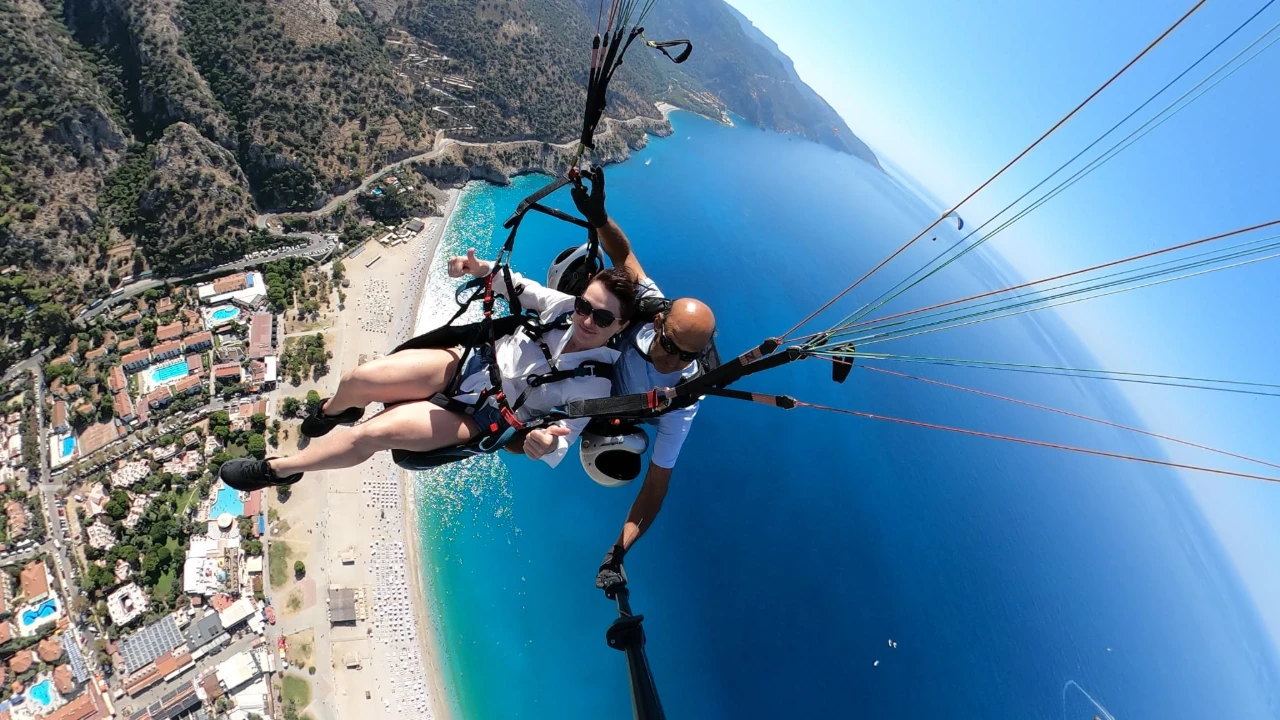
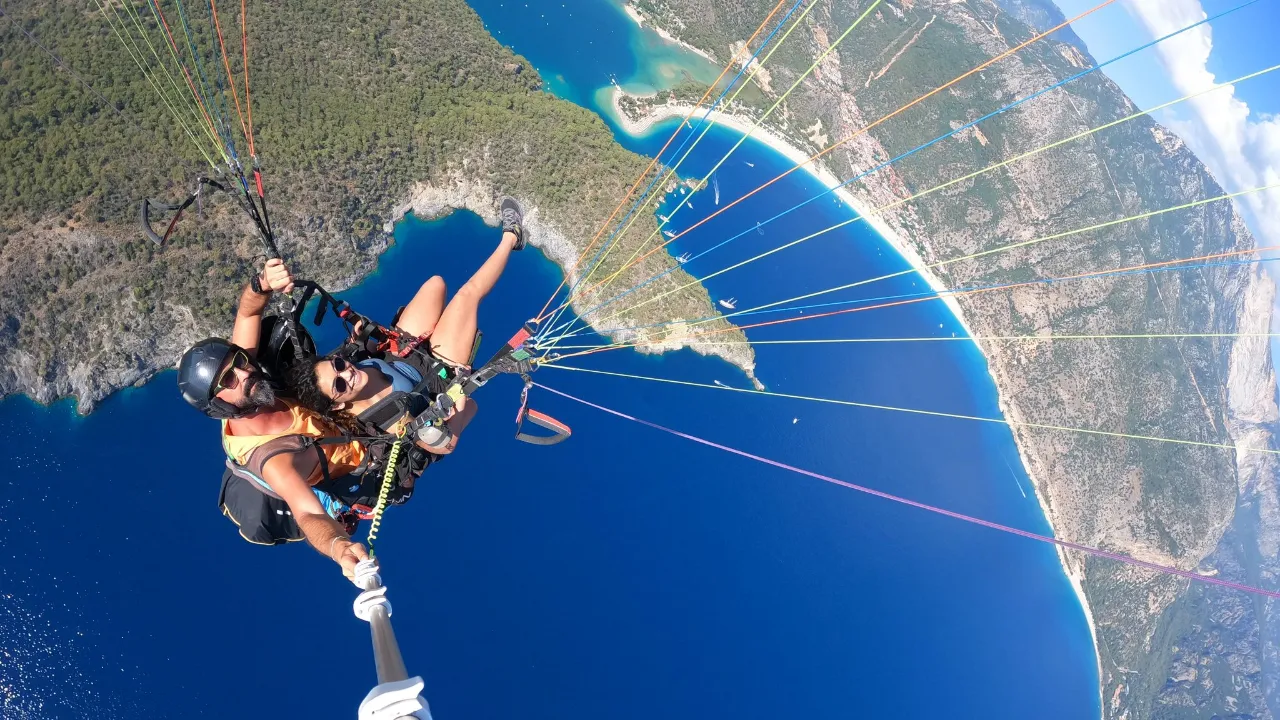
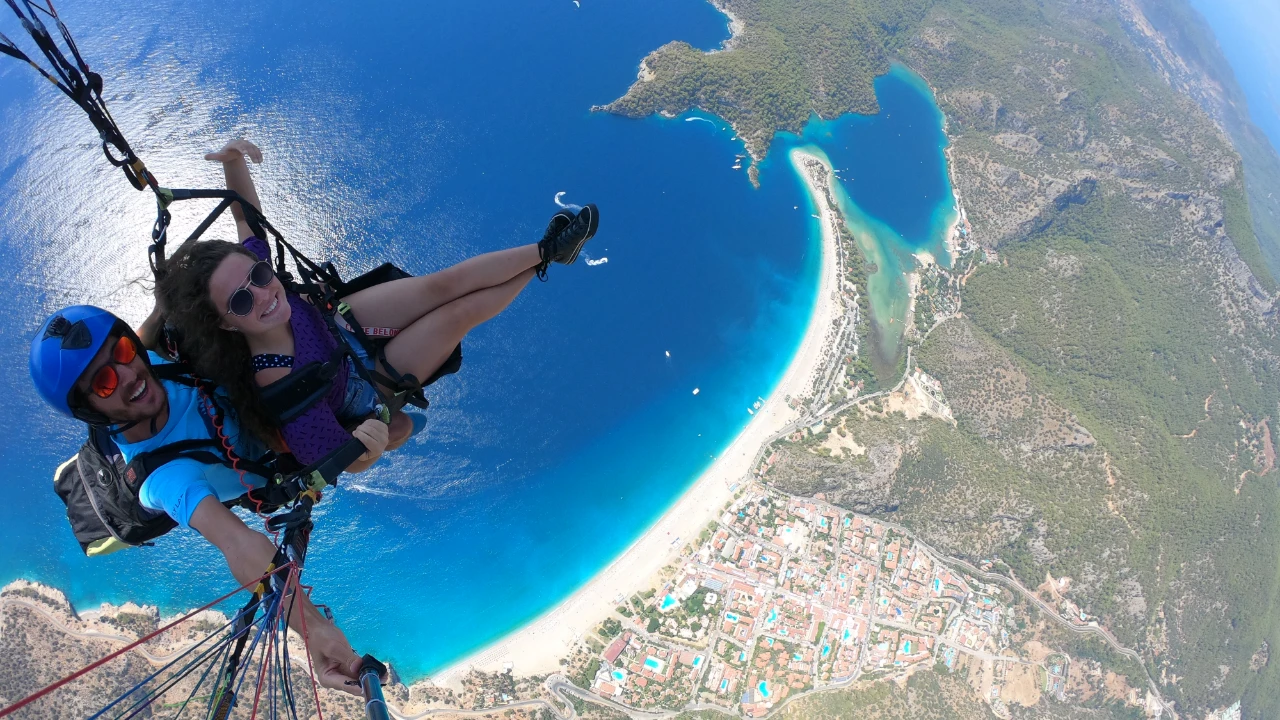
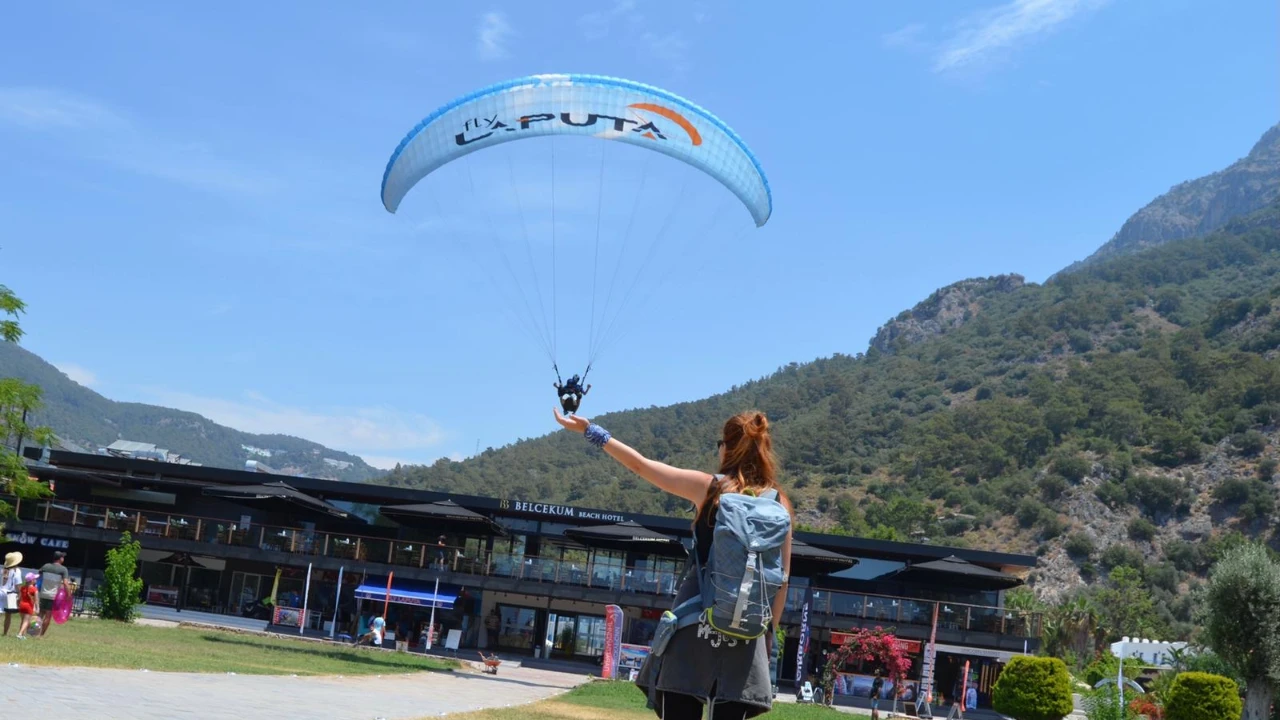
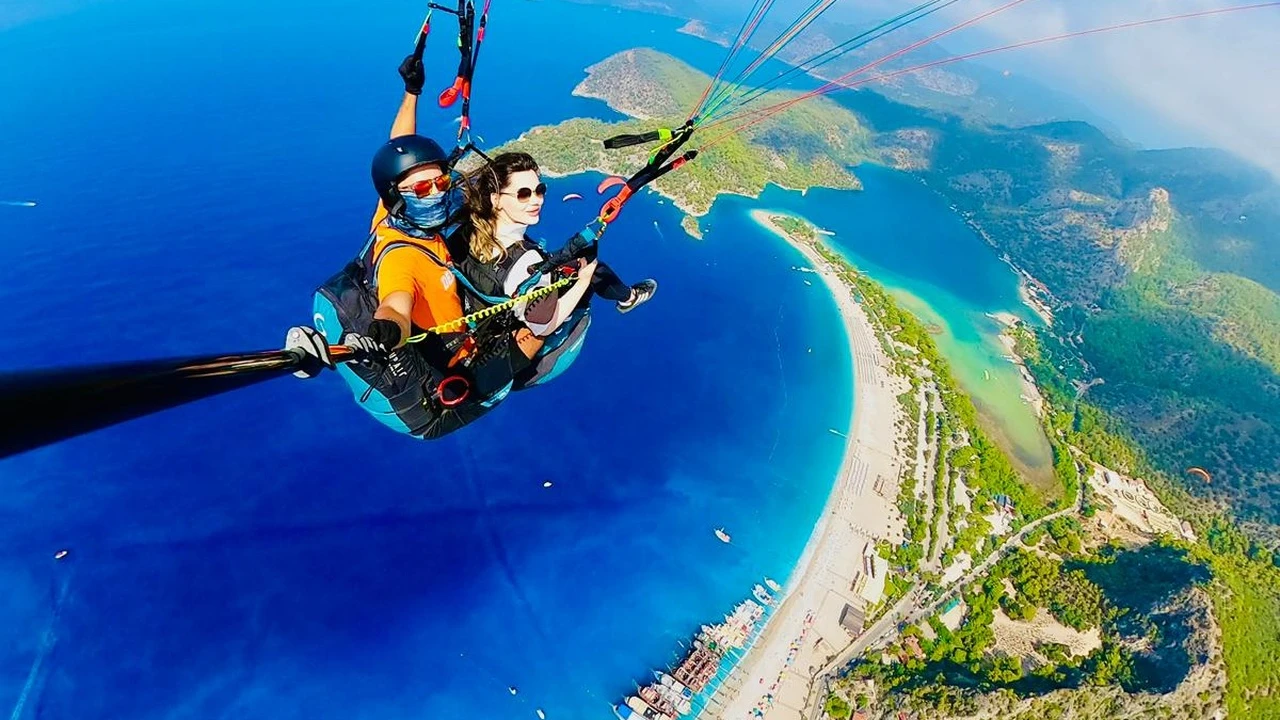
Paragliding flights over the Ölüdeniz landscape take off from various launch pads on the slopes of Babadağ, which are not concentrated in one spot but spread across different altitudes. The mountain's peak is approximately 1,970 meters, but the launch points are not at the very summit. How the ascent works often surprises many: the cable car departs from the lower station on the Ölüdeniz side and ascends not to the summit, but to the main station at 1,700 meters; from there, connecting chairlift lines reach the launch areas at 1,800 and 1,900 meters. Non-flying visitors can also use the same line for viewing terraces, so reaching high altitudes isn't dependent on a flight reservation. Flight duration typically ranges from 20 to 40 minutes, with landings on Belcekız beach.
The flight season generally opens in April and continues until November. As wind conditions change throughout the day, morning hours offer a calmer flight; thermal activity increases in the afternoon, and flights may be canceled. Avoiding scheduling your flight for the last day of your trip in the region provides a backup day in case of weather-related delays. Regarding pricing, the structure is as follows: flights are priced per person; launch altitude and video/photo package are the main variables that differentiate costs. In terms of ranking, tandem paragliding is at the top tier of day-trip activities in the region: cable car tickets are multiples of archaeological site entry fees but well below flight costs, while a day boat tour sits somewhere in between. To compare options in terms of flight windows and included items, the Fethiye air adventure tours list makes it easy; the current price is also live on each program card in that list.

Diving & Snorkeling: Kaş's Underwater Season
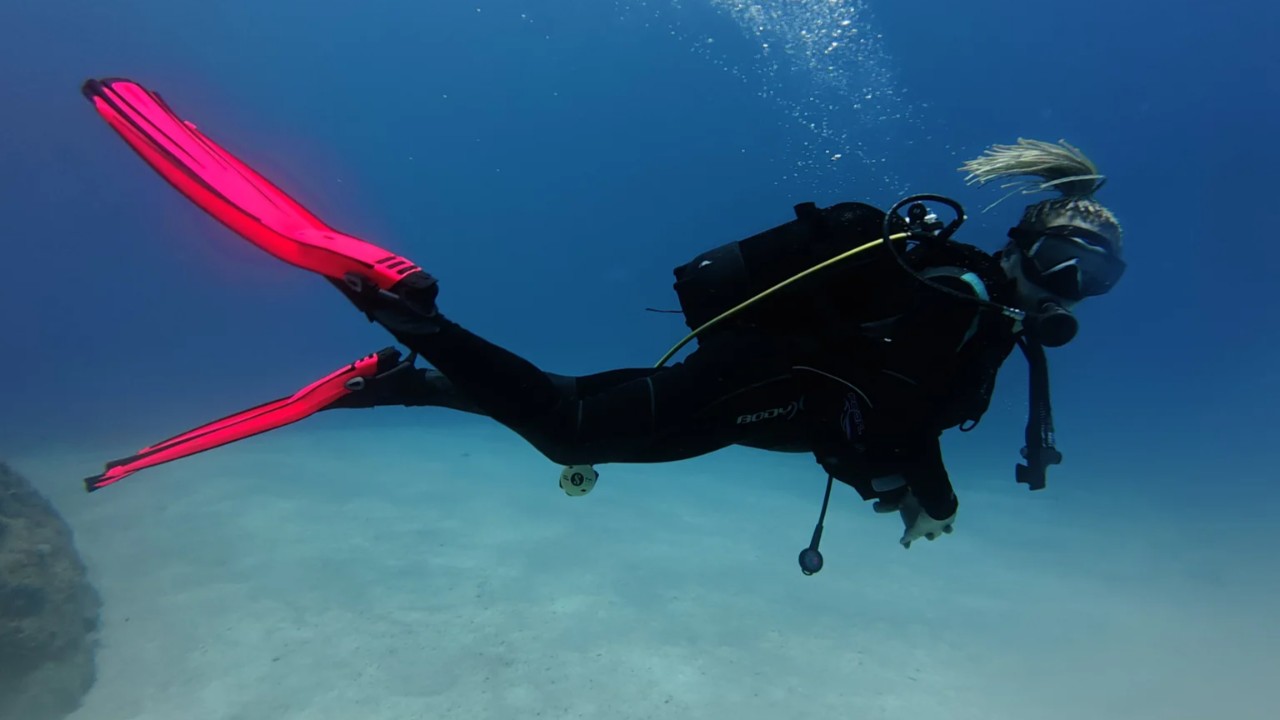
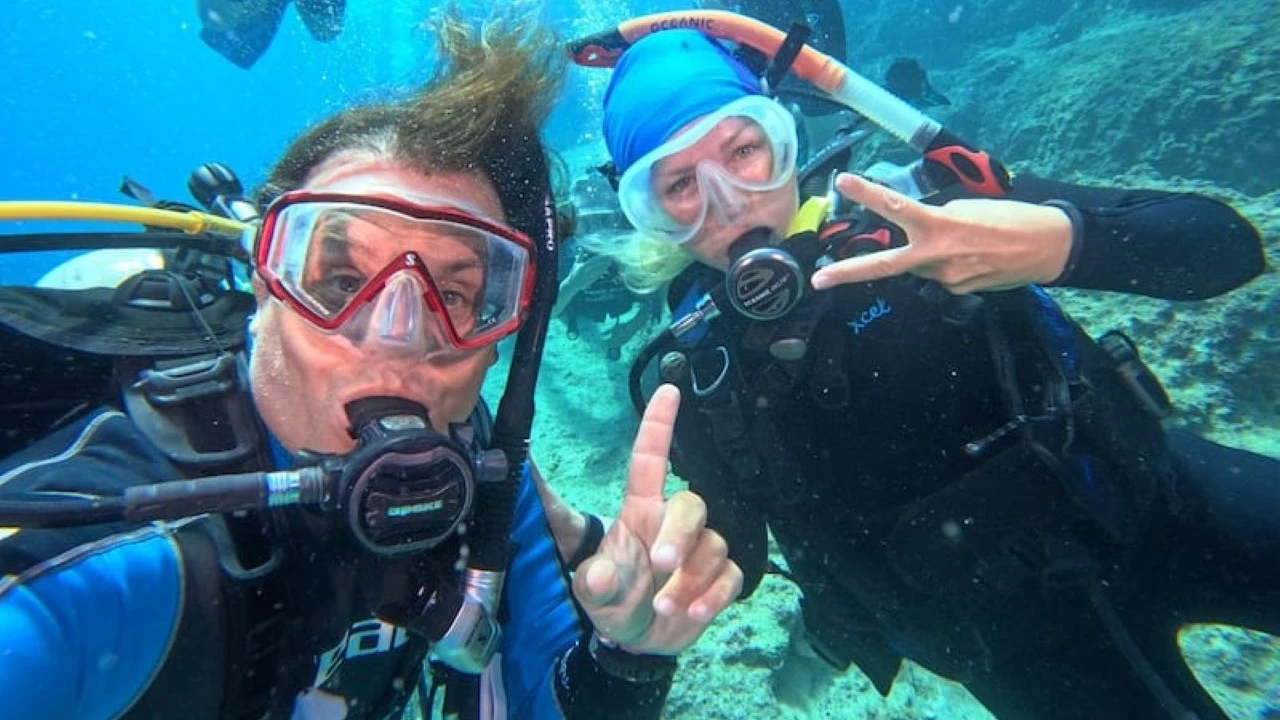
Kaş is a coastline with a high concentration of dive centers due to its deep and clear waters. The diving season starts in April and continues until early November; water temperatures reach a comfortable range for wetsuit diving between June and October. Visibility improves in September and October, so photography-focused dives are planned for autumn. Wreck dives, reefs, and cave sites are categorized by certification level; introductory dive options are offered for those without certification.
Snorkelers can use Küçük Çakıl and Büyük Çakıl beaches, which are within walking distance from the town center. Due to the pebbly entries, sea shoes here are not just an accessory but essential equipment for comfortable entry and exit from the water. Equipment rental, boat transportation to the site, and the number of divers per instructor are the factors that create differences between programs; the Kaş sea adventure tours list allows you to compare these items on a program-by-program basis.
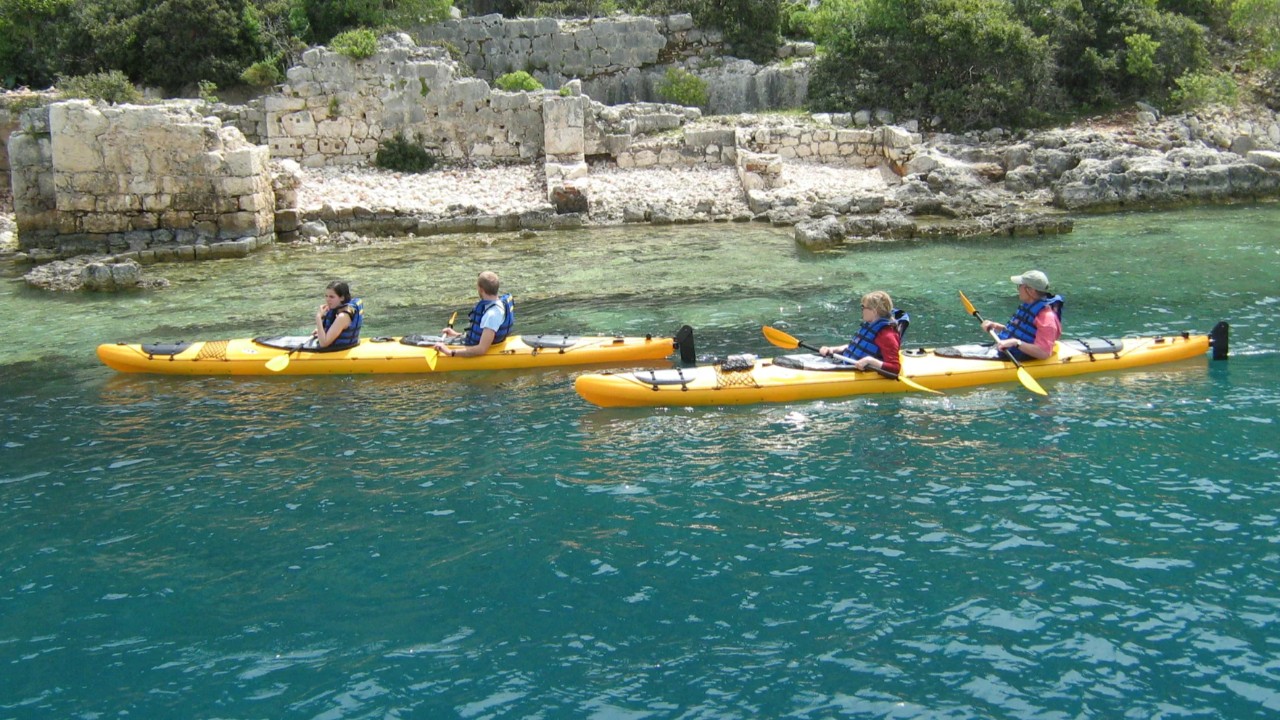
Canyoning & Hiking: Saklıkent and Lycian Way Stages
Saklıkent Canyon, located within the borders of Seydikemer district in Muğla, is a deep gorge carved by the Karaçay, a branch of the Eşen River, and holds the status of Saklıkent National Park; the park covers an area of approximately 16 square kilometers. It is about 45 kilometers from Fethiye center and about 60 kilometers from Kaş; it can be reached in about 40 minutes by dolmuş from Fethiye Bus Terminal. The length of the gorge is given as approximately 18 kilometers in sources, and the walls exceed 300 meters in some places. The accessible entrance section is walked on a wooden platform; after the platform ends, further progress requires walking in the water. The water inside the canyon is icy cold even in mid-summer; in spring, the flow rate increases, making progress difficult, so canyon hiking is more suitable after June. A national park tariff applies at the entrance, and the Museum Pass is not valid for this status; current tariffs should be learned at the ticket office.
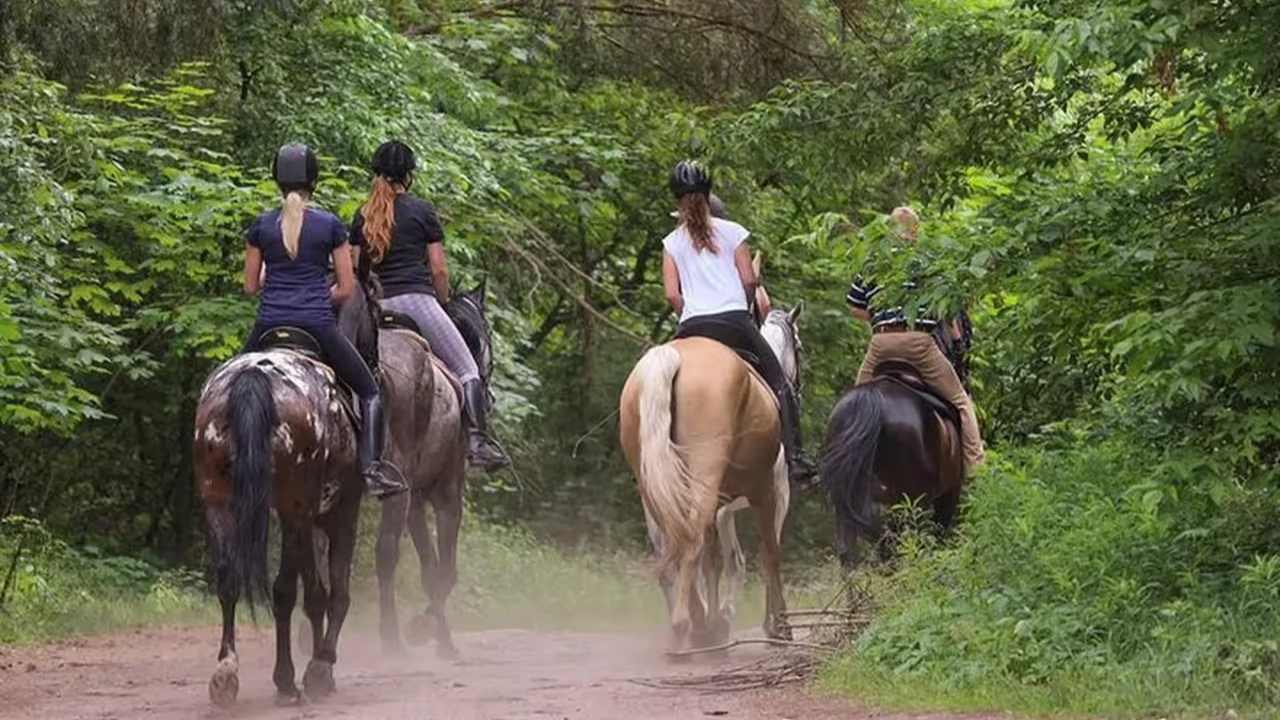
The Lycian Way, on the other hand, is a marked trail starting from Ovacık near Fethiye and extending to Geyikbayırı near Antalya; its length is cited as approximately 540 kilometers in our own sources, with values between 500 and 560 also given, as the route has been extended with new stages over the years. The trail is followed by red and white paint marks. The section between Fethiye and Kaş is a top choice for short hiking plans due to its sea-view stages; ankle-high shoes are required for the undulating sections around Faralya and Kabak.
Dalaman River: Water Levels Dictate Rafting Season
Rafting in the region is done on the Dalaman River and Eşen River, as there is no river passing through Fethiye center; the main course for day-trip programs is the Dalaman River. From Fethiye center to the course entrance is approximately 60 kilometers and about an hour's drive; from more distant pick-up points, this time approaches 1.5 hours. Difficulty is not a fixed number: upper stages are classified as III and above, lower sections as III to IV, and the Akköprü area as III. Therefore, the main question to ask when booking is not the program name, but which stage will be paddled.
The calendar directly determines the experience here, as the river's flow rate changes with the season. Water levels rise in spring with snowmelt, and the current speeds up; as the flow rate drops in mid-summer, the course becomes calmer. The practical result is twofold: those seeking action and speed aim for the spring months, while families with children and first-timers target the calm period of mid-summer. As the program spans a full day and transfers are long, adding a second intense activity on the same day is unrealistic; it's more comfortable to schedule the rafting day separately rather than combining it with Saklıkent or Tlos.


Tlos: The Rock City on the Saklıkent Route
Tlos is located approximately 40 kilometers from Fethiye center, on the Saklıkent route, and built on the western slope of Akdağ. It is considered one of the early Lycian settlements; it is associated with the name "Dalawa" found in Hittite records. The signature of the area is the Lycian rock tombs on the acropolis hill: among these, the prominent Bellerophon tomb features a relief of the winged horse Pegasus on its facade. Above the acropolis are the ruins of an Ottoman-era castle, and below are a stadium, baths, and a theater overlooking the plain. These superimposed layers are the detail that distinguishes the city from other archaeological sites in the region.
The area is large and sloped, and a visit takes 1-1.5 hours; the climb from the plain to the acropolis is short but steep, and there is no shade at midday. If you're combining it with Saklıkent on the same day, the order is important: visiting Tlos in the morning and the canyon in the afternoon solves two problems at once, as you enter the coolness of the canyon when the heat rises, and the canyon water also warms up a bit as the day progresses. As it is a Ministry of Culture archaeological site, there is an entrance fee, and the Museum Pass is valid.
Patara: The Lycian League's Council City
Patara is known as the council city of the Lycian League because it housed the league's common council structure, the bouleuterion. The city also features an ancient harbor area, a granary, a theater, and one of the world's earliest known lighthouses. The beach is immediately adjacent to the archaeological site and is described in our sources as an approximately 18-kilometer continuous strip of sand; values between 12 and 18 kilometers are also mentioned depending on where the measurement starts. Due to its protected status, there is no construction along the beach.
In Patara, timing cannot be left to guesswork, as two separate tariffs apply in the same area. The daytime session for the archaeological site is from 08:00-18:45, and the ticket office stops issuing tickets at 18:45; during the summer season, a separate ticketed night museum session is held from 19:00-22:00. In the winter schedule, hours are reduced to 08:30-17:30, and no night session is held; the same winter schedule applies to Ksanthos and Letoon, which are open approximately 08:30-19:00 in summer. The beach section, being a caretta caretta nesting area, is closed from 20:00 in the evening to 08:00 in the morning between May 1 and September 30, and violations are subject to administrative fines. This means waiting for sunset on the beach is not possible in summer; visitors wishing to see the sunset must be on the ancient city side at this time. Lack of shade is a second limitation: walking that combines the dunes and the archaeological site is challenging at midday in hot months, and more comfortable in the morning or late afternoon. Leaving your vehicle in the parking lot at the beginning of the dune road shortens the walking time within the area.
Ksanthos: Capital of the Lycian Region
Ksanthos is considered the capital and administrative center of the ancient Lycian region; it is the largest known city in the region and held one of the highest voting rights within the Lycian League. These two pieces of information are not contradictory but complementary: the league's decision-making power was concentrated in Ksanthos, while the league's common council structure was the bouleuterion in Patara. Among the city's ruins are inscribed pillar tombs, a Roman-era theater, an agora, and monuments bearing Lycian script; these inscriptions are among the main sources documenting the Lycian language. The site does not show traces of only one period: Persian influence, Hellenistic arrangements, a Roman theater and agora, and a Byzantine-era basilica were added on top of the Lycian core.
Ksanthos and Letoon were jointly included in the UNESCO World Heritage list in 1988, forming an integrated area consisting of two parts, and they are approximately 4 kilometers apart, making them easily combinable in the same day. Spring and autumn are suitable for visits; as the area around the agora is shadeless, midday hours are tiring during the hot season. The site is located just off the D400 line between Fethiye and Kaş, approximately 20 kilometers from Kalkan, so it can be added to a transfer day. For those who want to explore the ancient cities in the region with a guide and arranged transportation, Antalya cultural tours programs also include entry arrangements.
Letoon: The Sacred Site of Three Temples
Letoon served as the sacred area of Ksanthos, the religious center of the region: ceremonial and consecration aspects of decisions made in the city were completed in this area, approximately 4 kilometers away. At the core of the site are the ruins of three temples standing side-by-side; these are dedicated to Leto and her children, Apollo and Artemis. The main section visible is this temple alignment, the surrounding portico ruins, and a body of water covering part of the area.
Letoon's calendar limitation is unlike other archaeological sites, as its constraint is not weather but groundwater: due to high water levels, part of the area is covered with water in winter and spring, making late summer and autumn more suitable for seeing all the ruins. The site is smaller than Ksanthos, and a one-hour visit is sufficient; therefore, combining the two areas in the same morning is a realistic plan.
Kayaköy: The Abandoned Stone Village Post-1923
Kayaköy, located near Fethiye, is a settlement where hundreds of stone structures remain standing after being emptied following the 1923 population exchange. People don't come here to see a specific building; what is seen is the settlement fabric spread across the entire hillside. Houses lined up on the slope, two church ruins, and narrow stone streets form the backbone of the area, while the view overlooking the bay from the altitude of the upper church is the most photographed section of the area.
Kayaköy's place on the calendar works differently from other stops, as the character of the area changes with the season: in spring, green vegetation fills the spaces between the stone walls, in winter and February the settlement is explored almost without visitors, while in July and August, midday hours are tiring due to the lack of shade in the streets. The time that most highlights the area during the day is the last light of the afternoon; the stone surfaces take on a warm tone at this hour. There is a hiking trail between Kayaköy and Ölüdeniz, and the one-way journey takes about an hour and a half; planning the return by dolmuş makes the hike more comfortable. The area is subject to an entrance fee; as regulations change periodically, it's necessary to confirm the current situation at the ticket office.
Additional Nearby Stops: When to Fit Them In
There are three stops often added to Fethiye and Kaş programs in the region, and all three do not fit the same calendar. Furthermore, two of them are not historically part of Lycia: the Dalyan and Kaunos area and the Gökova coast where Akyaka is located are in ancient Caria. If these stops are sold together with the Lycian route, the reason is geographical proximity, not that they are the same ancient region. The practical result is this: they can only be fitted into a four-day Fethiye-Kaş program by adding a separate day.
| Stop | Location and Distance | What to See | Favorable Period and Reason |
|---|---|---|---|
| Göcek | Part of Fethiye; closest of the three stops | Marina promenade, shallow passages of Yassıca Islands, old shipyard ruins on Tersane Island | June to September: Twelve Islands boat tours operate regularly in this period. July and August afternoons can be wavy due to the breeze, morning departures are calmer |
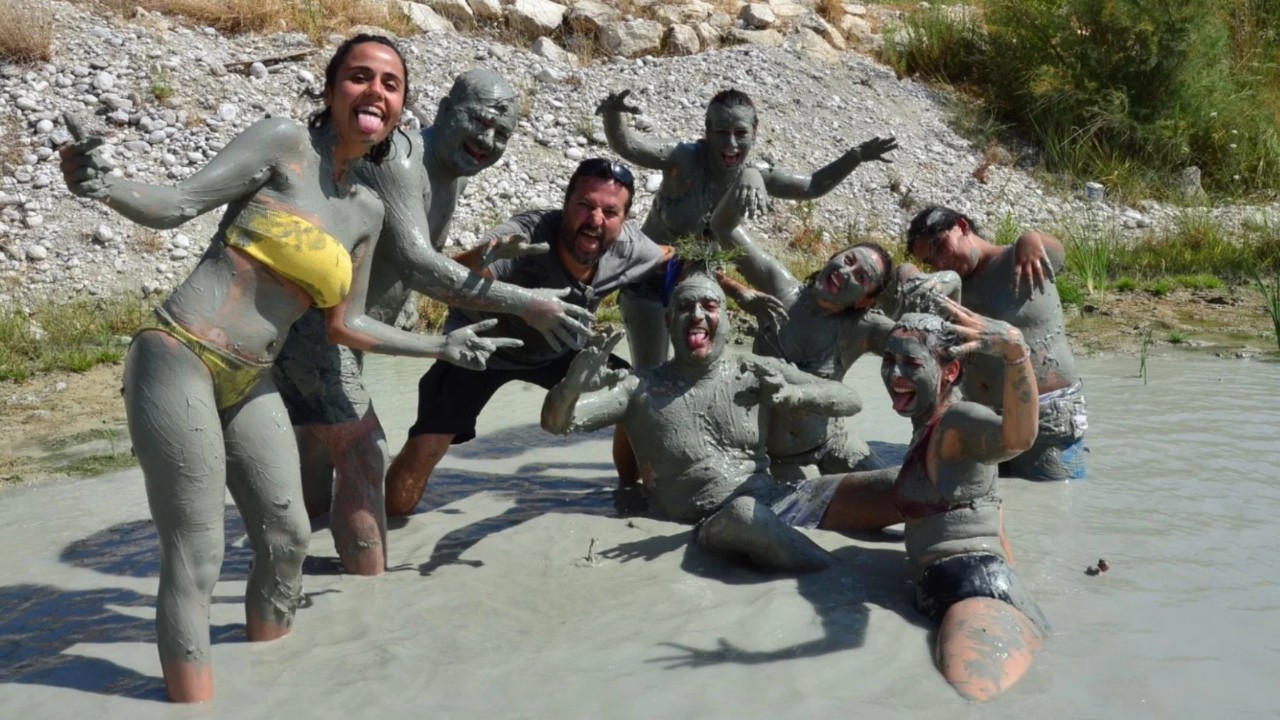
| Dalyan | Part of Ortaca; approx. 1.5 hours by car from Fethiye | Channel through reeds, rock tombs on the opposite bank, theater and bath ruins of Kaunos ancient city, Sultaniye mud baths | April to October, beach program during the day: İztuzu is a nesting beach, so it's closed from 20:00 to 08:00. Channel tour and ancient city can only fit into the same day with an early morning start |
| Akyaka | At the end of Gökova Bay; approx. 2 hours by car from Fethiye | Ula architecture with wooden bay windows, Azmak River flowing with cold water, boat trip along the river, coastal strip overlooking the bay | Spring and autumn offer a tranquil break; in July and August, the strengthening afternoon breeze turns the settlement into a windsurfing hub. The Azmak area is one of the few stops with shade at midday |
What to Look for When Choosing a Regional Tour
In the region, the difference between two programs bearing the same name emerges not in the title, but in the calendar and scope details. The following sequence is useful for aligning the program with the month you plan to visit.
- Seasonal compatibility: Aligning diving programs with September and October, canyon hiking with after June, and shadeless archaeological site programs with spring and autumn will provide a better day for the same budget.
- Duration and number of stops: In a day-trip program promising four stops, the time allocated to each stop will be shorter; ask in writing how long is spent at each stop.
- Departure point: The distance to the coves directly determines the time you spend in the water. For Kekova, a Üçağız departure, and for the Twelve Islands, a Göcek departure allows for more breaks within the same duration.
- Time compatibility: Does the program's arrival time at the archaeological site coincide with the ticket office's closing time? In Patara, the night museum session requires a separate ticket, so evening plans depend on this detail.
- Access method: Some stops are only accessible by sea, some are only seen from a boat. Butterfly Valley beach, Kekova's sunken section, and the Blue Cave fall into this group; ask if the program genuinely approaches these stops.
- Guide language and group size: The language of narration and the number of people in the group directly determine the experience in ancient city programs.
Budget Planning: Cost Structure by Season
The main variable determining cost in the region is the month you visit: the same program will be more expensive in peak season compared to spring and autumn. Looking at individual items, accommodation is the most responsive to the season; archaeological site entry fees are the least responsive, as they change with annual tariff updates, not seasonally. Absolute figures are not provided in this guide; in Turkey, tariffs change throughout the year, making an outdated figure more misleading than its absence. For tours and activities, current prices are already in a fixed place: the prices for each program are live on their respective cards in the boat, air adventure, and sea adventure lists linked above, so you should check those lists for figures.
| Item | Tariff Structure | What Affects Price | Seasonal Impact (Relative) | Where to Confirm |
|---|---|---|---|---|
| Accommodation | Per room per night; breakfast inclusion varies | Region (Ölüdeniz and Kaş center peak demand), view, type of facility | Highest level of the year in peak season; significant drop in April, May, and November | Official channel of the facility |
| Day Boat Tour | Per person; child discounts in some programs | Lunch included, boat type, number of stops, shared or private | Higher in July and August; lower in April and October | Operator or agency |
| Paragliding | Per person tandem flight | Launch altitude, video and photo package, transfer | Relatively least fluctuating item within the season | Flight operator |
| Archaeological Site Entry (Patara, Ksanthos, Letoon, Tlos) | Per person ticket; Museum Pass valid, separate tariff for foreign visitors | Local or foreign tariff, Museum Pass ownership, number of sites, separate ticket for night session | Does not change seasonally, changes with annual tariff updates | muze.gov.tr and ticket office |
| National Park Entry (Saklıkent) | Per person ticket; Museum Pass not valid | Vehicle entry may be charged separately | Does not change seasonally | Ticket office |
| Nature Park Entry (Ölüdeniz lagoon, Kıdrak) | Per person entry; pedestrian and vehicle calculated separately | Whether entering by vehicle or on foot, sunbed and umbrella priced separately | Does not change seasonally, changes with annual tariff updates | Ticket office |
| Municipal Beach Entry (Kaputaş) | Per person arrangement; Museum Pass not valid, tariff determined by municipal decision | Sunbed and umbrella calculated separately per item | Updated with seasonal decisions | Ticket office |
| Car Rental | Daily; insurance package separate | Vehicle class, transmission, mileage limit, additional driver | Peak demand in August, early booking makes a difference | Rental company |
| Food & Drink | Per person per day | Fish market and local eateries lower tier, marina area higher tier | Higher in coastal establishments in July and August | Establishment menu |
Relative Cost Ranking of Activities
Providing a ranking rather than absolute figures is more useful, as the ranking doesn't become outdated over the years. The items in the region are ranked from bottom to top as follows:
- The lowest tier is Ministry of Culture archaeological site entry: Patara, Ksanthos, Letoon, and Tlos are in this group, and the Museum Pass eliminates this cost for visitors.
- A separate tier with different rules applies to national parks, nature parks, and municipal beaches: in Saklıkent, Ölüdeniz lagoon, and Kaputaş, tariffs are determined independently of ministry tariffs; sunbeds, umbrellas, and vehicle entry are calculated separately from the individual ticket.
- The next tier up is the Babadağ cable car ticket: it's multiples of archaeological site entry but remains well below the cost of a flight.
- Above that come day and sunset boat tours; these are positioned in the same range as or above the cable car. The type of boat is the biggest variable here: the per-person cost can differ several times between a shared gulet, private rental, and speed boat.
- The top tier is tandem paragliding; launch altitude and video/photo package differentiate this item internally.
- The main factor disrupting the ranking is group size: for groups of four or more, private boat and transfer costs per person approach those of shared programs.
- The calendar effect operates above all tiers: peak season weekends are the highest demand, dropping on weekdays and off-season; accommodation tends to rise last-minute during public holiday weeks and in August.
- Visitor status adds another layer: as foreign visitor tariffs are set in foreign currency, exchange rate movements change the ratio of amounts paid by local and foreign visitors.
Which Rules Apply Where
Paid areas in the region are not grouped under the same heading, and administrative status differences directly impact your wallet. Four separate systems will confront you on the same route:
At archaeological sites affiliated with the Ministry of Culture, namely Patara, Ksanthos, Letoon, and Tlos, entry is paid and the Museum Pass is valid. Saklıkent is a national park; a separate tariff applies here, and vehicle entry may be charged separately from the individual ticket. The third system is the nature park, and the most visited point on the route falls into this group: Ölüdeniz lagoon and Kıdrak cove, 3 kilometers further, are within nature park boundaries, their entries are paid, pedestrian and vehicle entry are calculated separately, and sunbeds and umbrellas are priced additionally. The fact that motorized sea vehicles are not allowed into the lagoon is also a result of the same protection status; this is why the water remains waveless throughout the day, meaning the fee here is not a scenic ticket but part of the conservation regime. Kaputaş, on the other hand, is a municipal beach: its tariff is determined by municipal decision, independent of ministry tariffs, and sunbeds and umbrellas are calculated separately per item. The Museum Pass is not valid in the latter three systems. If you plan a program that includes Ölüdeniz, Saklıkent, and Kaputaş on the same day, you will encounter all these systems, so relying solely on one card will be insufficient.
The second distinction is visitor status. At Ministry of Culture archaeological sites, separate tariffs apply for local and foreign visitors; foreign visitor entry is determined in foreign currency, and separate card and ticket options for foreign visitors are offered instead of the Museum Pass. Therefore, a budget calculation for a reader from abroad is not the same as for a local visitor. Confirming the current tariff along with card coverage via muze.gov.tr or at the ticket office will make a significant difference if you plan to visit three archaeological sites in one day.
Practical Tips Before You Go
Plans on this route often go awry in two places: inappropriate footwear for pebbly coves and an arrival that doesn't align with ticket office hours. Both have concrete consequences. Kaputaş, Küçük Çakıl, and Kaş coves have pebbly entries; Patara and Ksanthos have no shade; archaeological site ticket offices stop issuing tickets before closing time, and Patara beach closes at 8:00 PM in summer. The two lists below are the packing and calendar equivalents of these four details.
What to Pack to Make Your Trip Easier
- Sea shoes: Essential for the pebbly entries of Kaputaş, Küçük Çakıl, and Kaş coves.
- Hat and high-factor sunscreen: Most ancient cities are shadeless.
- Thin waterproof outer layer: There's a chance of rain in April, November, and winter months.
- Ankle-strap sandals or light trail shoes: For the Saklıkent platform and Lycian Way stages.
- Refillable water bottle: A daily target of two liters of water per person is realistic in summer.
- Cash: Card payments may not be accepted at small cove businesses and some ticket offices.
Checklist Before You Depart
The following six pieces of information are items that can change throughout the year; two relate to tariffs, two to hours, and two to seasonal opening/closing.
- Archaeological site, national park, and municipal beach tariffs, and Museum Pass coverage: muze.gov.tr or ticket office.
- The time the ticket office stops issuing tickets and whether the night museum session is held that week: ticket office.
- Ölüdeniz air games festival dates: accommodation demand rises that week.
- Seasonal status, departure times, and passport requirements for the ferry between Kaş and Meis.
- Open facilities and restaurants in winter and early spring: some coastal businesses are closed.
- Cancellation, postponement, and refund conditions for weather-dependent boat and flight programs.
Dining & Cuisine: What to Eat, Where, and When
In Fethiye, the fish market by the harbor offers a well-known experience: you buy your fish from the stall and take it to one of the surrounding restaurants for cooking service; the service is charged per person, and it's advisable to ask for the amount before ordering. Local eateries in the old bazaar, known as Paspatur, are a practical alternative for lunch. On the Kaş side, Uzun Çarşı and its surrounding streets are concentrated within walking distance for dinner.
Seasonal delicacies change periodically: in spring, stuffed zucchini flowers, wild fennel sauté, and olive oil dishes are prominent; in autumn, çıntar mushrooms from the Muğla forests appear on menus; throughout summer, daily catches like grouper, snapper, and red sea bream are preferred. Tahini piyaz and hibeş are common along the Kaş and Antalya line. Local markets are also a reason for a stop; Fethiye usually has a market on Tuesdays, and Kaş on Fridays, where you can find local cheese, almonds, and dried spices.
Accommodation Areas & Booking Timing
In Fethiye, the Çalış Beach area offers a long promenade and a family-friendly atmosphere, Karagözler provides marina views and a tranquil evening, the Ölüdeniz-Ovacık-Hisarönü line offers a lively nightlife that gets crowded in summer, while Kayaköy and Faralya directions offer boutique accommodation close to nature. In Kaş, the town center offers the advantage of being walkable, Çukurbağ Peninsula features boutique hotels right by the sea, and Kalkan, as a separate settlement, provides a calmer setting.
Booking timing changes with the period. For peak season and public holiday weeks, booking two months in advance offers advantages in terms of price and options; three to four weeks are usually sufficient for May, October, and November. If you're coming in winter, don't set off without confirming, as the number of open facilities decreases.
Best Photo Opportunities by Time of Day
Light conditions vary across this route, so sequencing your day by location changes the quality of your shots. The aerial view of Ölüdeniz lagoon from the viewpoints on the Babadağ road is clearest in the morning. In Kaputaş, the turquoise hue becomes most visible towards noon, but there's no shade, and the ascent/descent of the stairs is most tiring at this time; from the fenced viewpoint along the road, the canyon mouth and water can be captured in the same frame. Kayaköy's stone structures look best in the last light of the afternoon, and the Amyntas rock tombs at sunset. In Kekova, sunken ruins are seen with less reflection on morning tours. In Patara, the angle where the dunes meet the ancient city works well in the late afternoon; however, as the beach closes at 8:00 PM in summer, sunset shots must be planned from the ancient city side.
Summary: How to Choose Your Ideal Season
When planning your Fethiye and Kaş trip, two questions will guide your season choice: are you looking to swim, or will you be hiking and exploring? If the sea is your priority, consider June to September. For a balanced itinerary, May to October is ideal. If your trip is focused on culture and hiking, evaluate late March to May, and October to November. There's a separate window for diving and underwater photography: September and October, when visibility is at its best.
A realistic duration for a combined Fethiye and Kaş itinerary is 4 to 6 days. Within this timeframe, an Ölüdeniz and Butterfly Valley boat trip, Saklıkent and Tlos, Patara and Ksanthos, and a Kekova tour can be comfortably arranged. Scheduling weather-dependent activities like flights, diving, and boat tours for the first days of your trip provides backup days in case of cancellations. Running through the verification checklist above before you depart will ensure your plan unfolds smoothly on the ground.
Frequently Asked Questions 8
Which weeks should I choose to avoid crowds?
Demand fluctuates by week, not just by month. From the start of school holidays until the last week of August, the region experiences its busiest period of the year; religious holidays and long weekends (bridge days) have the same effect. For travelers seeking tranquility, favorable weeks are the first half of May, the first week of June, and from the second week of September onwards. If a busy week is unavoidable, arriving on a weekday and reaching coves early in the morning will help mitigate the crowds.
What happens if a boat or flight tour is canceled due to weather?
Paragliding, diving, and boat programs are weather-dependent; wind and wave conditions can lead to cancellations during the day. Policies vary by operator: some offer alternative dates, while others provide refunds. Therefore, it's essential to request cancellation, postponement, and refund conditions in writing before booking. A practical precaution is to schedule weather-dependent programs for the first days of your trip.
What can I do in Fethiye and Kaş if I encounter a rainy day?
The likelihood of rain increases from November to March, but the day doesn't have to be a washout. In Fethiye, the Fethiye Museum and Paspatur bazaar offer indoor activities; climbing to the Amyntas rock tombs is not advisable on a rainy day as the path can become slippery. In Kaş town center, the Uzun Çarşı area and Antiphellos theater offer a short tour. In the Dalyan area, Sultaniye mud baths operate even in rainy weather. Canyon hiking, however, is not recommended on these days, as water levels can rise rapidly.
Where does the Lycian Way start and end, and how many days does it take to hike?
The trail starts near Ovacık, Fethiye, and ends near Geyikbayırı, Antalya. The entire route takes approximately 25 to 30 days to complete at an average daily hiking pace. Most travelers choose 3 to 7-day stages; the section between Fethiye and Kaş is a popular choice for these stages. The path can be followed using red and white markers, making it possible to hike without a guide, but an offline map, sufficient water, and accommodation planning are essential. Peak summer temperatures are not suitable for this hike.
What was the capital of the Lycian League?
The question is answered within two different frameworks, so you'll find two different names in sources, and neither is incorrect. The league's common council met in the bouleuterion at Patara; therefore, Patara is referred to as the federal center of the league, and its restored council building is open to visitors today. Ksanthos, being the largest city in the region with the highest administrative weight, is often referred to as the capital of Lycia in sources. Ancient sources state the number of cities belonging to the league as twenty-three; voting rights were distributed according to the size of the cities, and Ksanthos, Patara, Pınara, Tlos, Olympos, and Myra are mentioned among the three-vote cities.
Were the Lycians Greek?
The Lycians were a people of Anatolian origin; they developed their own language and writing, and a culture distinct from the Greek world. In later centuries, Hellenic influence increased, and Greek inscriptions became widespread in the cities. This distinction can be seen in the inscribed pillars at Ksanthos and the region's unique rock tomb and sarcophagus forms.
Where do the Caria and Lycia regions separate?
Caria encompasses today's Muğla and Aydın provinces, including the Bodrum and Milas line. Lycia, on the other hand, covers the coastline stretching from Fethiye towards Antalya. The transition zone between the two regions falls around Dalyan and Kaunos; Kaunos is therefore described as a city located on the border of Caria, also bearing Lycian influence.
What determines the budget for a Fethiye and Kaş trip?
The daily cost is determined by four factors: accommodation area, type of boat or tour, included services, and the month of travel. Peak season drives up all costs; April, May, and October significantly reduce the price for the same program. The practical rule here is: secure the season-sensitive items, namely accommodation, boat, and car rental, in advance; plan the non-season-sensitive entry items, such as archaeological site, national park, and nature park tickets, on site. This guide does not provide absolute figures, as tariffs are updated throughout the year; check current archaeological site tariffs via muze.gov.tr, and tour and activity costs from the boat, air adventure, and sea adventure lists linked above; the price for each program is live on its card in those lists.