For most travelers visiting Wadi Rum, spending a night under the stars is the highlight of the trip. However, this single overnight stay is often the part of a Jordan itinerary that requires the most preparation. The reason is simple: once you reach your camp, there are no convenience stores to pick up forgotten essentials. Most camps are located about a 20-minute 4x4 drive from Wadi Rum Village, and the temperature swing between day and night is far more extreme than what you'd experience at most campsites in Turkey. This guide covers everything you need to decide before you zip up your suitcase in Aqaba or Petra.
Quick Facts
| Topic | Summary |
|---|---|
| Location | Southern Jordan; approx. 60-70 km from Aqaba, 100-105 km from Petra |
| Status | Protected area since 1997; UNESCO World Heritage site ("Wadi Rum Protected Area") since 2011 |
| Area | Approximately 74,000 hectares |
| Entry Point | Wadi Rum Visitor Center; 5 JOD per person |
| Camp Type | Permanent Bedouin camps; typically 8-10 tents and one communal tent |
| Not Provided in Tents | Running water and heating |
| Jeep Tour Start | Usually around 10:00 AM; meeting point at Wadi Rum Village |
| Payment | Jordanian Dinar (JOD), primarily cash |
| Best Times to Visit | March-May and September-November |
What Exactly is "Camping" in Wadi Rum?
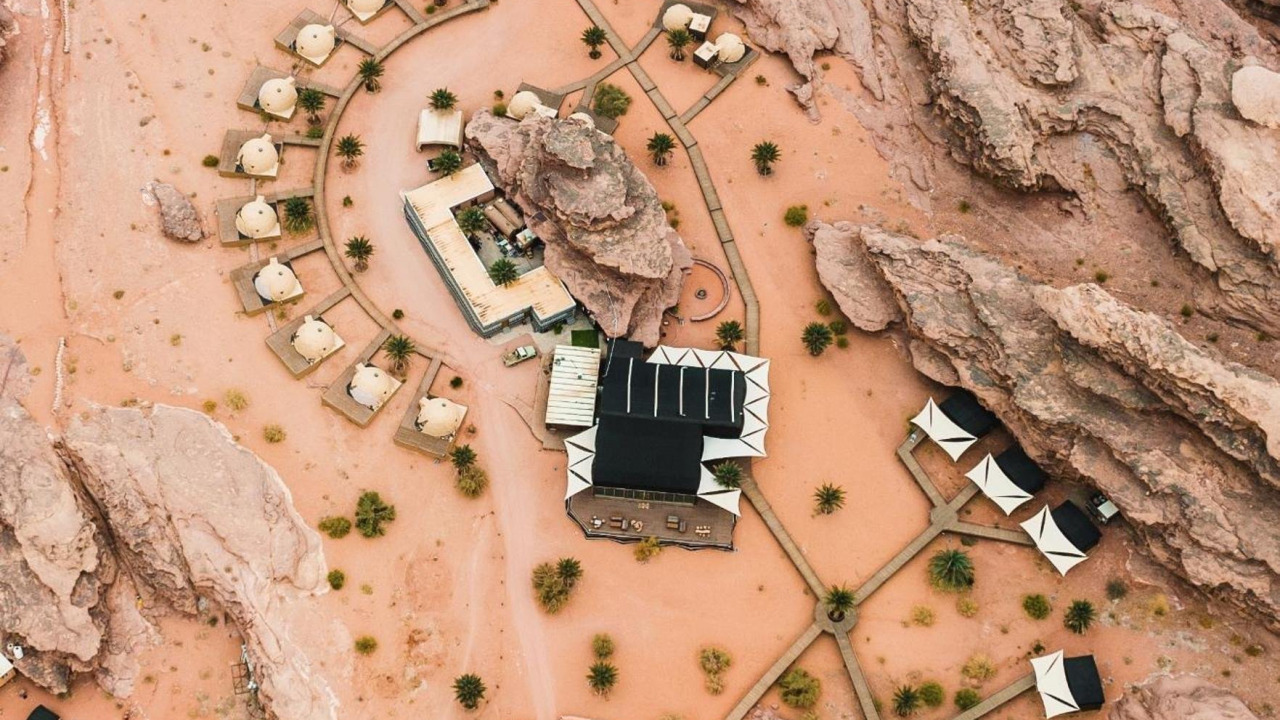
The first step in preparing is understanding where you'll actually be sleeping. If you've booked a stay in Wadi Rum, you aren't likely "wild camping." Instead, you'll be staying in a permanent Bedouin camp, where tents are set up on wooden platforms. This distinction is crucial for your packing list: you do not need to carry your own tent, poles, sleeping mats, or cooking gear.
Inside the Tent: What to Expect
Camps generally consist of 8-10 guest tents clustered around a large communal tent. While the black-and-white striped goat-hair tents look traditional from the outside, the interior is quite minimalist: a bed and thick blankets provided upon request. There is no running water or heating inside the tents; showers and toilets are located in shared facilities. In recent years, some camps have added Wi-Fi, and "Deluxe" or "Bubble" tents now offer air conditioning. In short, it's more sheltered than traditional camping, but far more rustic than a hotel.
The Journey from the Visitor Center to the Camp
Entry to the protected area is managed through the Wadi Rum Visitor Center, where the 5 JOD entry fee is collected (this is waived for Jordan Pass holders). About 8 km, a 10-minute drive, from the center is Wadi Rum Village. This is your last chance to buy snacks and drinks at very reasonable prices. Note that alcohol is not available here; if you want a drink, you must arrange it in Aqaba. From the village, you'll switch to your guide's 4x4 for a roughly 20-minute journey through the sand to reach your camp. Since exploring the deep desert requires a licensed 4x4, plan to leave your own vehicle at the village.
Seasonal Dressing Guide
Wadi Rum has a hot, arid desert climate. The critical factor isn't the average temperature, but the daily fluctuation. Once the sun sets, temperatures plummet, often creating a 10 to 15-degree difference between day and night. Your wardrobe should be built around this contrast.
| Season | Daytime | Nighttime | Clothing Key |
|---|---|---|---|
| March-May | 20-30 °C | 5-15 °C | Light layers by day, fleece or heavy cardigan by night |
| June-August | Avg 35-38 °C (can exceed 40 °C) | Around 19 °C | Sun protection and hydration; light top for the evening |
| September-November | 20-30 °C | 5-15 °C | Windbreaker, closed-toe shoes |
| December-February | 16-18 °C | 3-5 °C (can drop below zero) | Thermal underwear, heavy coat, beanie, and gloves |
Summer: Shade and Hydration Discipline
From June to August, daytime temperatures average between 35 and 38 degrees, occasionally spiking above 40. During this time, the goal isn't just to stay cool, but to shield your skin from the sun. Light-colored, breathable, long-sleeved fabrics are far more comfortable than dark or short pieces. A wide-brimmed hat or a traditional Bedouin headscarf is the most practical way to prevent neck burns. Because jeep tours are in open-top vehicles, the wind can make you feel cooler than you actually are; plan your water intake based on the clock, not the breeze.
Winter: The Risk of Freezing Nights
Between December and February, days can be pleasant (16-18 °C), but nights drop to 3-5 °C and can even dip below freezing on the coldest nights. Since tents lack heating, your warmth depends entirely on your clothing layers and the blankets provided by the camp. Winter visitors must pack thermal base layers, thick socks, a beanie, and gloves, especially for those cozy evening hours spent around the fire in the communal tent.
Choosing Your Gear Based on the Itinerary
While no two desert tours are identical, most jeep programs include similar stops. Knowing what you'll be doing helps take the guesswork out of your footwear.
Lawrence's Spring: A Lesson in Footwear
To reach the spring, there is a roughly 15-minute scramble up rocky terrain, which can be exhausting under the midday sun. The most common feedback from travelers is that those without trekking shoes slip frequently on the smooth rock faces. A closed-toe shoe with a lugged sole and ankle support is a non-negotiable item for your Wadi Rum bag. Sandals or flip-flops should only be used as a second pair for relaxing at the camp.
Al Ramal Red Sand Dune: Dealing with the Sand
The Al Ramal Red Sand Dune is a softer, more vibrant red peak than the surrounding rocks and is a staple of every tour. The fine sand here gets into everything: your shoes, zippers, and camera lenses. For photographers, sealed plastic bags or fabric wraps, filters, and microfiber cloths are essential. If you're using a phone, keep it in a zipped pocket before climbing. Pro tip: take your shoes off to walk on the dune and put them back on afterward to minimize the amount of sand you'll have to clean out in your tent.
Jabal Umm ad Dami: Preparing for the Summit
Those adding a trip to Jabal Umm ad Dami, Jordan's highest point at 1,854 meters, need extra preparation. Reaching the summit near the Saudi Arabian border involves a 1.5 to 2-hour hike. From the top, you can see the Saudi desert and, on clear days, the Red Sea on the horizon. For this hike, carry extra water, sunglasses, sunscreen, and a windbreaker in a small backpack, leaving your main camp bag in the vehicle. For those seeking longer treks, the Jordan Trail offers a 91.6 km five-day stretch from Petra to Wadi Rum; such an expedition requires professional trekking gear beyond a standard overnight camp kit.
Wadi Rum Packing Checklist
For a one-night Bedouin camp stay, organize your bag as follows:
- Clothing: Light long-sleeved tops, long pants, fleece or jacket for the night, thermal underwear (winter), hat/headscarf, spare socks.
- Footwear: Sturdy trekking shoes with grip and a second pair of light shoes/sandals for the camp.
- Protection: High-SPF sunscreen, sunglasses, lip balm, moisturizer, wet wipes.
- Electronics: Power bank, charging cables, headlamp or flashlight, and sand-proof covers for cameras.
- Health: Personal medications, painkillers, adhesive bandages, basic stomach medicine, and allergy medication.
- Miscellaneous: Refillable water bottle, small towel, earplugs, and cash in Dinars.
Since camps provide beds and blankets, a sleeping bag is usually unnecessary. However, "cold sleepers" visiting in winter might find a thin sleeping bag liner helpful. If you are combining this with other nature and adventure tours, applying this layering and footwear logic to the rest of your luggage will make your trip much smoother.
Pre-Camp Preparation: Step-by-Step
- Confirm your camp and tour in advance. Accommodation and jeep tours can be booked separately or as a package. Online bookings provide price certainty, while negotiating with Bedouin guides at the Visitor Center allows for bargaining. Regardless, get written confirmation of the tour duration and the expected return time to camp.
- Sync your arrival with the tour start. Jeep tours typically begin around 10:00 AM at Wadi Rum Village. To allow for entry procedures, the 10-minute drive to the village, and parking, aim to arrive at the Visitor Center between 09:00 and 09:30 AM. Expect a one-hour drive from Aqaba or 1.5 hours from Petra.
- Prepare your cash in Aqaba or Petra. The entry fee, camp costs, and tour payments are almost exclusively handled in cash (JOD). Searching for an ATM in the middle of the desert is not a viable plan.
- Split your luggage. Take only a small overnight bag to the camp and leave your main suitcase at the hotel or in your car. Since transport to the camps is via the open back of a 4x4, lighter luggage is better for both you and the driver.
- Fully charge your phone and download offline maps. Signal is weak in the desert; keep screenshots of your meeting point and camp name.
How Much Cash Do I Need in Wadi Rum?
The following are current estimates based on traveler experiences; prices vary by camp type, season, and group size.
| Item | Approx. Cost | Note |
|---|---|---|
| Protected Area Entry | 5 JOD per person | Paid at Visitor Center; usually not included in tours |
| Jordan Pass | 70, 75, or 80 JOD | Varies by Petra stay duration; covers visa fee for 2+ night stays |
| One night Bedouin camp | Around 20 JOD | Example for a standard tent (negotiable) |
| 4-hour Jeep Safari | Around 60 JOD | Priced per vehicle; cost per person drops as group grows |
| Dinner | Around 10 JOD per person | Often included in the accommodation price |
If you plan to get the Jordan Pass, buy it before arriving in Jordan. Since it covers Wadi Rum, Petra, Jerash, and over 40 other sites, it's a great deal for those exploring the country via historical city tours. For a quick Aqaba and Wadi Rum getaway, individual tickets might be more economical.
Sleeping in the Desert: Stars and Small Risks
The evening program usually begins in the communal tent. Traditional Bedouin dinner, music by the fire, and heavily sweetened tea are the staples of the experience (though you can ask for it unsweetened). For those who love integrating local flavors into their travels, this dinner feels like the kind of experience found in gastronomy and organization tours.
For Those Who Want to Sleep Outdoors
Because there is zero light pollution, the Milky Way is visible to the naked eye, tempting many to sleep outside their tents. Before doing so, check with your camp staff: some visitors have been warned about scorpions. If you decide to stargaze overnight, keep a thick blanket, headlamp, and closed shoes nearby. Use a platform or a thick mat rather than lying directly on the sand. For those wanting a deeper dive into local life, a night in the desert is often the most memorable part of cultural tours.
Frequently Asked Questions 5
Are there showers and hot water in Wadi Rum camps?
There is no running water inside the tents; showers and toilets are in shared units. Some camps offer hot water, but the number of showers may be limited compared to the number of guests. Asking about hot water capacity before booking can help you avoid long queues in the evening.
Do I need to bring a sleeping bag for a night in the desert?
Most visitors do not bring sleeping bags as camps provide beds and thick blankets. However, since winter nights can drop to 3-5 °C (and sometimes below zero), a thin sleeping bag liner or an extra fleece is a practical backup for those who feel the cold.
What time should I arrive at the Visitor Center for my jeep tour?
Tours generally start around 10:00 AM at Wadi Rum Village. Considering entry formalities, the 10-minute drive to the village, and parking, arriving at the Visitor Center between 09:00 and 09:30 AM provides a comfortable buffer.
Will the sand damage my camera or phone?
The fine sand at spots like the Al Ramal Red Sand Dune can get into zippers and lens mounts. Carrying devices in sealed bags or fabric cases, keeping bags closed while climbing dunes, and cleaning equipment with a microfiber cloth back at the camp significantly reduces this risk.
Is there electricity, internet, or AC in the camps?
Facilities vary wildly between camps. Some have added Wi-Fi recently, and Deluxe or Bubble tents often feature air conditioning. Standard goat-hair tents do not have heating. Regardless of where you stay, bringing a power bank is highly recommended.