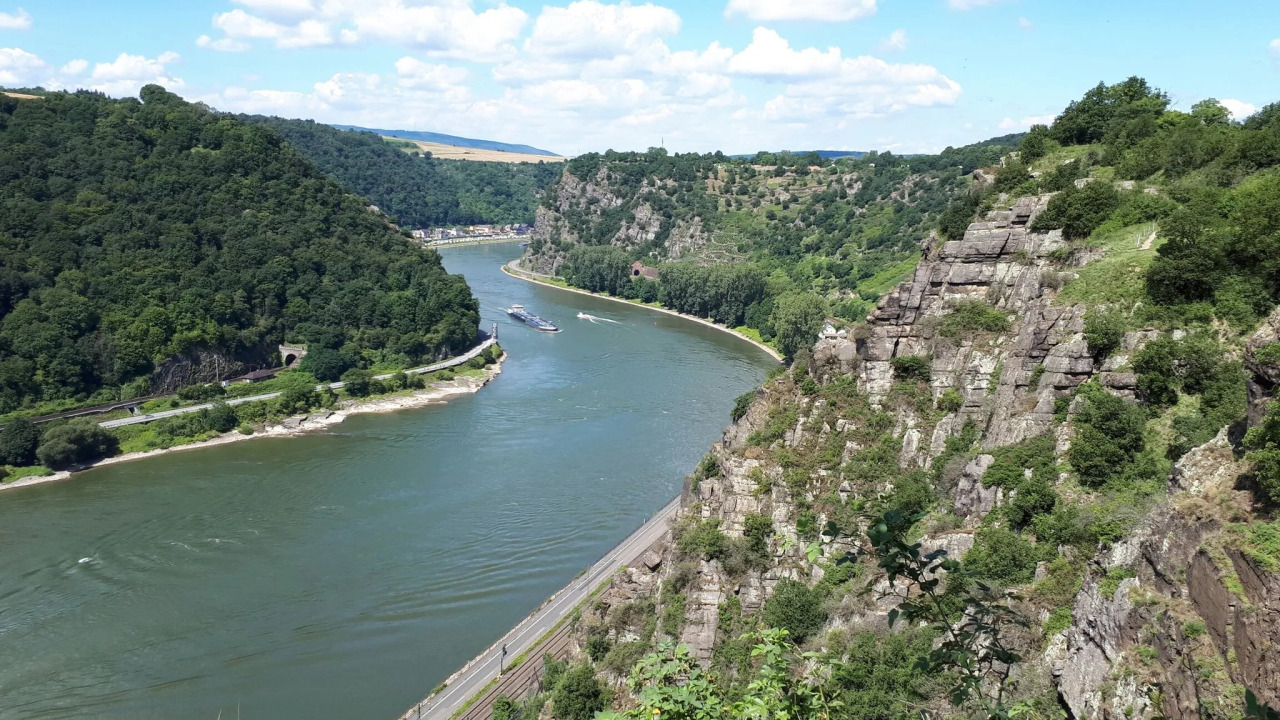

The Upper Middle Rhine Valley, a roughly 65-kilometer stretch of the Rhine River from Bingen and Rüdesheim to Koblenz, was inscribed on the UNESCO World Heritage List in 2002 under its German name, "Oberes Mittelrheintal." While often referred to as the "Rhine Canyon" in some sources, this is not its official designation and can be confused with Switzerland's Rheinschlucht (Ruinaulta). Before you embark on your journey, be aware of a current restriction: Pfalzgrafenstein Castle, located off Kaub, is officially closed until further notice due to low water levels. This comprehensive guide will walk you through how the two riverbanks differ, which castles are currently open, details on the railway works lasting until the end of 2026, and what you can expect to see during each month of the year.
Who Will Love This Valley, and Who Might Find it Challenging
The Middle Rhine route is perfect for travelers who enjoy frequent stops within short distances. The journey between towns often takes no more than fifteen minutes, making a plan of visiting a castle in the morning, taking a river cruise in the afternoon, and exploring another town in the evening entirely feasible. For those seeking a similar blend of history and scenic beauty, our cultural tours in Turkey offer a comparable experience.
Conversely, the valley can be challenging for visitors who prefer leisurely strolls on flat ground. Towns are often nestled into hillsides, and most castles require a steep climb or stairs to reach. The pace can also be tiring for groups accustomed to staying in one central location and relying solely on buses, as transportation constantly shifts between trains, ferries, and riverboats.
Quick Facts
| Topic | Information |
|---|---|
| Location | Germany; the section of the Rhine between Bingen and Rüdesheim, and Koblenz |
| UNESCO Status | Inscribed in 2002; official name Upper Middle Rhine Valley |
| Valley Length | Approximately 65 kilometers |
| Loreley Rock | Near St. Goarshausen, Rhine River kilometer 555, approximately 130 meters above the river |
| Main Entry Points | Frankfurt and Cologne airports; Mainz, Wiesbaden, Koblenz |
| River Crossing | No bridges between Koblenz and Mainz; connections via ferry |
| Recommended Duration | 2 days; 3 days if hiking is included |
| Best Time to Visit | April to October; September and October for vineyard colors |
| 2026 Alert | Right bank railway closed until December 12, 2026 |
Left Bank or Right Bank?
Your first decision in the valley isn't which town to see, but which bank to travel along. Each bank has its own railway line, towns, and castles. Crossing to the opposite bank is done by ferry, as there are no bridges between Koblenz and Mainz.
| Criterion | Left Bank | Right Bank |
|---|---|---|
| Towns | Bingen, Trechtingshausen, Bacharach, St. Goar, Koblenz | Rüdesheim, Kaub, St. Goarshausen, Braubach |
| Structures | Burg Rheinstein, Schloss Stolzenfels | Loreley plateau, Marksburg, Pfalzgrafenstein |
| Railway | Mittelrheinbahn at least hourly | Closed until December 12, 2026; replaced by bus service |
| Hiking | Hillside paths and vineyard trails | Rheinsteig and Loreley staircase path |
| Best for | Travelers using trains | Travelers planning with car or bus plus ferry |
The Rhythm of the Left Bank
The Left Bank is ideal for spontaneous exploration, thanks to its regular train schedule. Stations are conveniently close to town centers; simply disembark and start walking. Bacharach and St. Goar can easily be visited on the same day.
The Rhythm of the Right Bank
The Right Bank offers stunning elevations and panoramic views, home to Rüdesheim's vineyards, Kaub's ferry dock, and the Loreley plateau. With the railway line closed, your itinerary will need to be planned around bus and ferry schedules.
Must-See Sights in the Valley
Loreley Rock and Plateau
The Loreley is a dramatic schist rock formation near St. Goarshausen, plunging steeply into the riverbed at Rhine kilometer 555. At this narrow point, the river drops to approximately 160 meters, making it one of the Rhine's narrowest and deepest navigable sections. The legend it inspired tells of a siren whose enchanting song lured sailors to their doom in the treacherous currents. On the plateau, a cultural and landscape park, visitor center, exhibition space, and a large open-air stage opened in 2019.
There are three ways to reach the plateau: a shuttle bus from St. Goarshausen, a scenic staircase with 398 natural steps that takes about half an hour to climb, or by car to the plateau's parking lot. Morning light often provides clearer views, and on concert days, the parking lot fills up quickly.
Marksburg Castle: The Unconquered Fortress
Perched above the town of Braubach, Marksburg Castle is unique in the Middle Rhine Valley as the only high castle that has never been destroyed. It has been owned by the German Castles Association for over a century, a continuity that has preserved its original interior layout: the kitchen, knight's hall, workshop, and battlements can be explored in sequence.
Visiting the castle is only possible as part of a guided tour; individual free exploration is not permitted. During the summer season, doors are open from 10 AM to 5 PM, and in winter, from 11 AM to 4 PM. The walk up from Braubach involves a steep incline; visitors arriving by car can use the parking lot below the castle.
Pfalzgrafenstein Castle: The River's Island Fortress
Standing on a rocky islet in the middle of the Rhine, off Kaub, Pfalzgrafenstein Castle was built in 1327 and for centuries secured the customs post of Kaub. Its distinctive ship-shaped body is one of the valley's most recognized silhouettes. Access to the castle is exclusively via a passenger ferry departing from Kaub.
The structure can be closed due to both high and low water levels, which explains the current closure mentioned earlier. During normal periods, it's open on specific days from mid-March to the end of October, and closed in December and January. Always check the current status on the GDKE (Rhineland-Palatinate Cultural Heritage Directorate) website before your visit.
Burg Rheinstein: The Cradle of Rhine Romanticism
Near Trechtingshausen, Burg Rheinstein is a customs castle with origins dating back to the 14th century. After falling into ruin in the 17th century, it was purchased in 1823 by Prince Friedrich Wilhelm Ludwig of Prussia and rebuilt in the spirit of Rhine Romanticism. Its garden is considered the first romantic castle garden established in the Middle Rhine castles, and the structure remained in the possession of the Hohenzollern family until 1975.
Access is easy: a short uphill walk from the parking lot on the riverside road leads directly to the castle entrance. The gates are open all day throughout the season, with the last entry half an hour before closing.
Schloss Stolzenfels: A Palace Built on Schinkel's Vision
South of Koblenz, Schloss Stolzenfels was in ruins when it passed to the city in 1802. In 1823, the city gifted the structure to the Prussian Crown Prince, later King Friedrich Wilhelm IV. From 1836 onwards, it was transformed into a neo-Gothic summer palace according to the plans of Karl Friedrich Schinkel.
The palace is open from Thursday to Sunday and on public holidays, with the last entry one hour before closing. The path from the parking lot to the palace is uphill.
Rüdesheim and Drosselgasse
Rüdesheim sits at the southern end of the valley, acting as the gateway to the Rheingau wine region. The town's most famous street, Drosselgasse, is 144 meters long and lined with wine taverns and garden pubs. Live music often defines the street's character in the evenings. Rüdesheim is also one of the main departure points for river cruises.
Bacharach: The Walled Medieval Town
Bacharach is one of the most charming medieval towns on the Left Bank. Its half-timbered houses, narrow streets, and the town walls climbing the hillside can all be explored on a short walk. Accommodation tends to be guesthouse-style, and evenings are generally quiet.
| Structure | Period & Ownership | Access | Visit Notes |
|---|---|---|---|
| Loreley plateau | Natural formation; park opened in 2019 | Shuttle bus, stairs, ferry dock | Open area; exhibition on the plateau |
| Marksburg | Owned by German Castles Association | Uphill walk or car | Guided tour only |
| Pfalzgrafenstein | 1327, customs station | Passenger ferry from Kaub | Closed due to low water |
| Burg Rheinstein | 14th century; acquired by Prince Friedrich in 1823 | Riverside road and parking | Open all day |
| Schloss Stolzenfels | Schinkel plans from 1836 onwards | Local transport and uphill walk | Thursday to Sunday |
Getting Around: The Changing Equation Until End of 2026
Arriving in the Valley from Turkey
The closest airports to the valley are Frankfurt and Cologne; from both, you can reach Mainz, Wiesbaden, or Koblenz by train. Visa requirements vary by nationality and are updated periodically; always confirm the latest information via the official channels of the German Federal Foreign Office before your trip. For valid day tickets on regional trains, Deutsche Bahn's Rheinland-Pfalz and Saarland ticket page is the most up-to-date source.
Right Bank Railway Closure
For those planning trips in 2026, it's crucial to know that the right bank railway line, along a 160-kilometer stretch between Troisdorf and Wiesbaden, will be completely closed for renovation from July 10, 2026, to December 12, 2026. Since this section includes stations in Rüdesheim, Kaub, and St. Goarshausen, direct train travel towards Loreley will not be possible during this period. Bus services covering all stops have been put in place, and an express line operates between Wiesbaden and Koblenz via Rüdesheim. The operator advises against bringing bicycles on buses during peak hours. The Mittelrheinbahn on the Left Bank is not affected by this closure.
Crossing the River and Cruising the Waters
Ferries provide the essential connection between the two banks. The Kaub and St. Goar routes transport both passengers and vehicles, serving as a vital part of daily transportation rather than merely a tourist attraction.
Cologne-based scheduled boat operators run services between Koblenz and Bingen and Rüdesheim. Several round trips are organized daily between Rüdesheim, St. Goar, and St. Goarshausen, making it possible to disembark at the foot of the Loreley Rock. Ticket prices depend on the route, class, and day; the current timetable can be found on the operator's website. Be at the pier fifteen minutes before departure.
| Option | Where it Operates | Frequency | Note |
|---|---|---|---|
| Mittelrheinbahn | Left Bank, 45 stations between Cologne and Mainz | Hourly; approx. 3 hours end-to-end | The operational train line for sightseeing |
| Right Bank Line | Between Wiesbaden and Neuwied | No service July 10 - Dec 12, 2026 | Replaced by bus service |
| Ferry | Kaub, St. Goar, and opposing towns | Throughout the day, bidirectional | Essential connection due to lack of bridges |
| River Cruise | Between Koblenz and Bingen and Rüdesheim | Scheduled throughout the season | Opportunity to disembark at Loreley Rock |
| Rental Car | Both banks | Flexible | Parking is limited; ferry cost is separate |
Hiking the Hillsides: The Rheinsteig and Loreley Staircase
The Rheinsteig, which traverses the Right Bank from end to end, stretches approximately 320 kilometers between Bonn and Wiesbaden and is divided into 21 stages. These stages range from 8 to 22 kilometers; the path is narrow, and climbs are significant. Completing the entire trail isn't feasible for most holiday itineraries; a more realistic approach is to choose a single stage and return to your starting point by public transport.
For those seeking a shorter climb, the Loreley staircase path is an excellent option: from St. Goarshausen, you can ascend to the plateau via 398 natural steps in about half an hour. The steps can become slippery after rain, so wearing shoes with good grip will make the climb easier.
Wine and Dine: The Valley's Hillside Economy
The steep vineyards that define the valley's landscape are part of a small, specialized production region. According to data from the German Wine Institute, Mittelrhein is the country's smallest wine region, with approximately 460 hectares under cultivation. About 271 hectares are dedicated to Riesling, and 85% of the vineyards are on steep slopes exceeding a 30% gradient. This necessitates manual harvesting and keeps production on a small scale. Rüdesheim, however, belongs to the neighboring Rheingau region.
At the table, Riesling takes center stage. In autumn, when the harvest begins, a fresh, partially fermented wine called Federweißer is offered for a short period. For food, you might encounter Rheinischer Sauerbraten, a classic Rhine region dish of marinated beef in a vinegar sauce. For those who enjoy exploring city centers on foot, our historical city tours in Turkey offer a similar street-level experience.
What Each Season Offers
| Period | Valley Status | Notes |
|---|---|---|
| April and May | Vineyards green, boat schedules expand | Crowds are moderate, accommodation is easier to find |
| June to August | Outdoor events and river traffic intensify | Queues at piers lengthen, mornings are less crowded |
| September and October | Harvest season and autumn foliage colors | Federweißer is available during this period |
| November to March | Some castles operate with reduced hours | Boat schedules become sparse, fog is more frequent |
Accommodation Areas and a Two-Day Itinerary
When choosing accommodation, the region is more important than the hotel brand. Rüdesheim offers lively evenings and a wide array of dining options, while the Bacharach area suits those seeking quiet nights and historical charm. St. Goar and St. Goarshausen are the closest towns to Loreley, and Koblenz provides extensive train connections.
- Start your first morning in Bingen or Rüdesheim; see Drosselgasse before it gets too crowded.
- Before noon, head towards Trechtingshausen to visit Burg Rheinstein.
- In the afternoon, take a river cruise towards Loreley; disembark at the foot of the rock and ascend to the plateau.
- Spend the evening in St. Goar or St. Goarshausen; the ferry between the two banks operates into the evening.
- On the morning of your second day, travel to Braubach and join a guided tour of Marksburg Castle.
- Conclude your day in Koblenz with a visit to Schloss Stolzenfels and arrange your return journey from there.
For those wishing to add a hiking stage or a wine tasting, a third day offers a more relaxed pace. Travelers extending their European journey south can benefit from the region breakdown in our Italy travel guide article.
- Spread out your castle visits throughout the day; tackling two castles back-to-back can mean a lot of uphill walking.
- Note down ferry and boat schedules before your evening plans, as last departures can be earlier depending on the season.
- For structures affected by water levels, always check the latest announcements before you set off.
- Carry a raincoat and shoes with good grip; the weather in the valley can change quickly.
- Keep some cash handy, as payment options might be limited in smaller wineries.
For insights into German travel habits, our article Why Germany Prefers Antalya: A Profile of German Tourists offers additional context.
Frequently Asked Questions 6
Is the Upper Middle Rhine Valley the same as Switzerland's Rheinschlucht?
No, they are not. The official name of the UNESCO-listed area is the Upper Middle Rhine Valley, or Oberes Mittelrheintal in German, stretching from Bingen and Rüdesheim to Koblenz. Switzerland's Rheinschlucht, locally known as Ruinaulta, is a separate canyon in the Rhine's source region.
How many days does it take to visit the Middle Rhine Valley?
Two days are sufficient for a program covering some of the castles, the Loreley plateau, and a river cruise. Those adding a Rheinsteig hiking stage or a winery tasting might use a third day. As the valley is 65 kilometers long, the duration is determined more by transfers than by distance.
How do you get to Loreley Rock?
You can reach the plateau by shuttle bus from St. Goarshausen, by walking up the 398 natural steps of the staircase path in about half an hour, or by car to the plateau's parking lot. Those arriving by river cruise can disembark at the pier at the foot of the rock. Direct train access is not possible in the second half of 2026 due to the right bank railway closure.
Which route do Rhine River boat tours take?
Scheduled services operate within the UNESCO area between Koblenz and Bingen and Rüdesheim. Several round trips are organized daily between Rüdesheim, St. Goar, and St. Goarshausen, with Loreley located in the middle of this route. Ticket prices depend on the route, day, and class; refer to the operator's official website for current timetables.
Is Pfalzgrafenstein Castle open to visitors?
Access to the castle is via a passenger ferry from Kaub, and the structure can be closed depending on water levels. According to official announcements, the castle is currently closed until further notice due to low water. During normal periods, it is open on specific days from mid-March to the end of October, and closed in December and January.
What is the best time to visit the valley?
April to October is the most suitable period, when boat schedules are extensive and castles operate with longer opening hours. September and October are particularly recommended for the vibrant autumn foliage. In winter, some structures have reduced hours and services become sparse, though crowds are also smaller.