For those eager to understand the mechanics of firearms and experience target practice in a controlled environment, shooting range tours offer a safe, professional introduction guided by certified instructors. For many, the shooting range is more than just a thrill; it is a technical sport that enhances mental focus and serves as a powerful stress reliever. When approached with the right guidance, shooting becomes a high-discipline hobby rooted in an unconditional commitment to safety.
Stepping into a range for the first time often brings a wave of questions regarding safety protocols, legal age limits, and the actual mechanics of firing. The weight of the weapon, the concussive sound of the blast, and the force of the recoil can be intimidating for the uninitiated. However, once you grasp the basic principles of physics and proper grip techniques, achieving consistent center-mass hits becomes a matter of practice rather than luck.
In this comprehensive guide, we explore everything from official regulations at Turkish shooting ranges to the four universal safety rules, proper grip, and how to choose the right caliber for your skill level.
Quick Guide: The Shooting Range Experience & Training
| Feature | Visitor & Training Summary |
|---|---|
| Legal Age Limit | 18+ independently; 15-18 with parental consent and accompaniment |
| Required Documents | Physical ID card, driver's license, or passport (Mandatory for Polnet registration) |
| Mandatory Gear | Impact-resistant polycarbonate ballistic glasses and 25-30 dB noise-canceling earmuffs |
| Instructor Support | Every shooter is paired one-on-one with a certified range instructor |
| Recommended Starter Caliber | .22 LR for low recoil or 9x19mm Parabellum for standard training |
| Average Session Duration | Approx. 45 to 60 minutes (includes safety briefing, dry fire, and 20-50 rounds) |
| Who is it for? | Adults looking to improve focus, adrenaline seekers, and sports enthusiasts |
Modern shooting ranges are fully secured indoor facilities isolated by soundproof walls and ballistic shielding. A range officer monitors every single step, from loading the firearm to retrieving the target, ensuring that safety is never compromised.
In the world of shooting sports, safety is not a preference; it is the absolute first and most fundamental rule. Before entering the lanes, all registration details are logged directly into the General Directorate of Security systems.
The 4 Universal Rules of Firearm Safety
Established by Colonel Jeff Cooper, these four universal rules are the gold standard in professional ranges worldwide. They are designed to mathematically reduce the possibility of an accident to zero:
- Rule 1 (Treat Every Gun as if it is Loaded): Even if the magazine has been removed and the chamber cleared, every firearm you handle must be treated as if it is loaded and capable of firing at any moment.
- Rule 2 (Muzzle Discipline): Never point the muzzle at anything you are not willing to destroy. The barrel must always be pointed in a safe direction, typically toward the target line.
- Rule 3 (Finger Discipline): Keep your index finger outside the trigger guard and parallel to the frame until you have locked onto your target and made the final decision to fire.
- Rule 4 (Know Your Target and Beyond): Before pulling the trigger, be certain of your target and what lies behind it, as bullets can penetrate through the target.
Ammunition is not permitted on the firing line until these four principles become second nature. Trigger discipline, in particular, is the strongest mental shield against accidents caused by involuntary reflexes.
Instant obedience to the instructor's commands is vital. The moment an instructor calls "CEASE FIRE," your finger must leave the trigger immediately, and the firearm should be placed on the table without the muzzle leaving the target line.
Basic Shooting Mechanics: Stance, Grip, and Trigger Press
Accuracy is not about luck or innate talent; it is the result of applying biomechanical principles. The foundation of a great shot is a balanced stance. In modern handgun training, the Isosceles stance, where feet are shoulder-width apart and the chest faces the target squarely, is most common. By shifting the center of gravity slightly toward the balls of the feet and keeping the knees flexible, the body can effectively absorb the recoil energy.
The second critical step is a high, gapless two-handed grip. The dominant hand should be placed as high as possible on the grip, just below the slide or hammer, leaving no empty space. The support hand then wraps around the remaining surface, with both thumbs pointing toward the target. This "lock" minimizes muzzle flip, allowing the shooter to regain their sight picture quickly for a second shot.
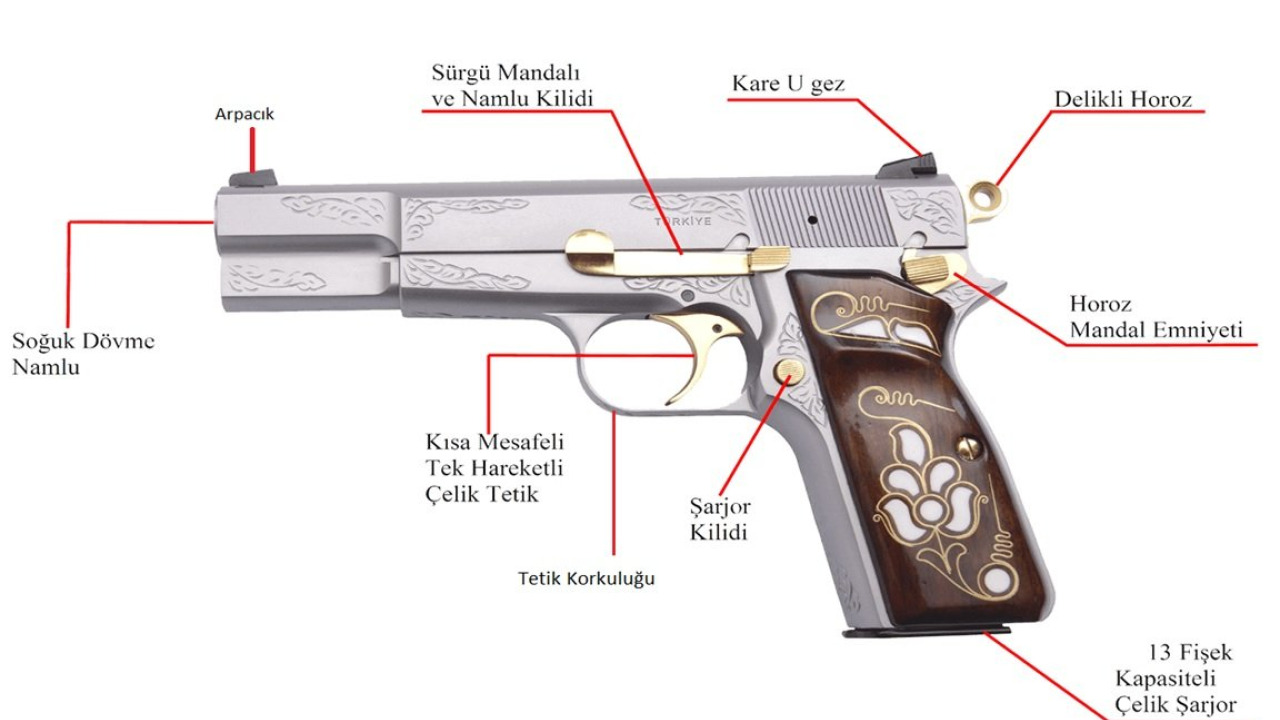
Establishing a sight picture means correctly aligning the rear sight and the front post. Since the human eye cannot focus on three different distances simultaneously, the primary focus must be on the top edge of the front sight post. While the rear sight and the target appear slightly blurred, the front post should be crisp, centered, and aligned with the target.
The most common mistake occurs during the trigger pull. The trigger should not be "pulled" but rather "pressed" with linear pressure. Using the fleshy part of the first joint of the finger, the force should be applied straight back, making the actual discharge a "pleasant surprise." Trying to predict exactly when the shot will break often causes the hand to flinch, dipping the muzzle and ruining accuracy.
Popular Calibers and Training Suitability
Shooting ranges offer various calibers and ammunition types depending on the user's experience level and goals.
The following table summarizes the ballistic and operational differences between the most popular calibers for beginner and intermediate training.
| Caliber / Ammo Type | Typical Diameter | Recoil Force | Avg. Noise Level | Ideal Training Profile |
|---|---|---|---|---|
| .22 Long Rifle (.22 LR) | 5.6 mm (Small) | Near zero recoil | Low (125-130 dB) | First-timers, trigger control training, precision sport |
| 9x19mm Parabellum | 9.0 mm (Standard) | Balanced & manageable | Mid-High (140-145 dB) | Global standard for defense, service, and general range use |
| .45 ACP (Automatic) | 11.43 mm (Heavy) | Heavy, pushing recoil | Deep, thumping blast | Advanced shooters, high ballistic power experience |
| .38 Special (Revolver) | 9.1 mm (Cased) | Controlled (Revolver) | Sharp, open blast | Traditional mechanism enthusiasts, nostalgic shooting |
For those experiencing firearms for the first time, the .22 LR is the ideal starting point. Its low recoil and noise prevent the shooter from flinching, allowing them to focus entirely on stance and sighting discipline.
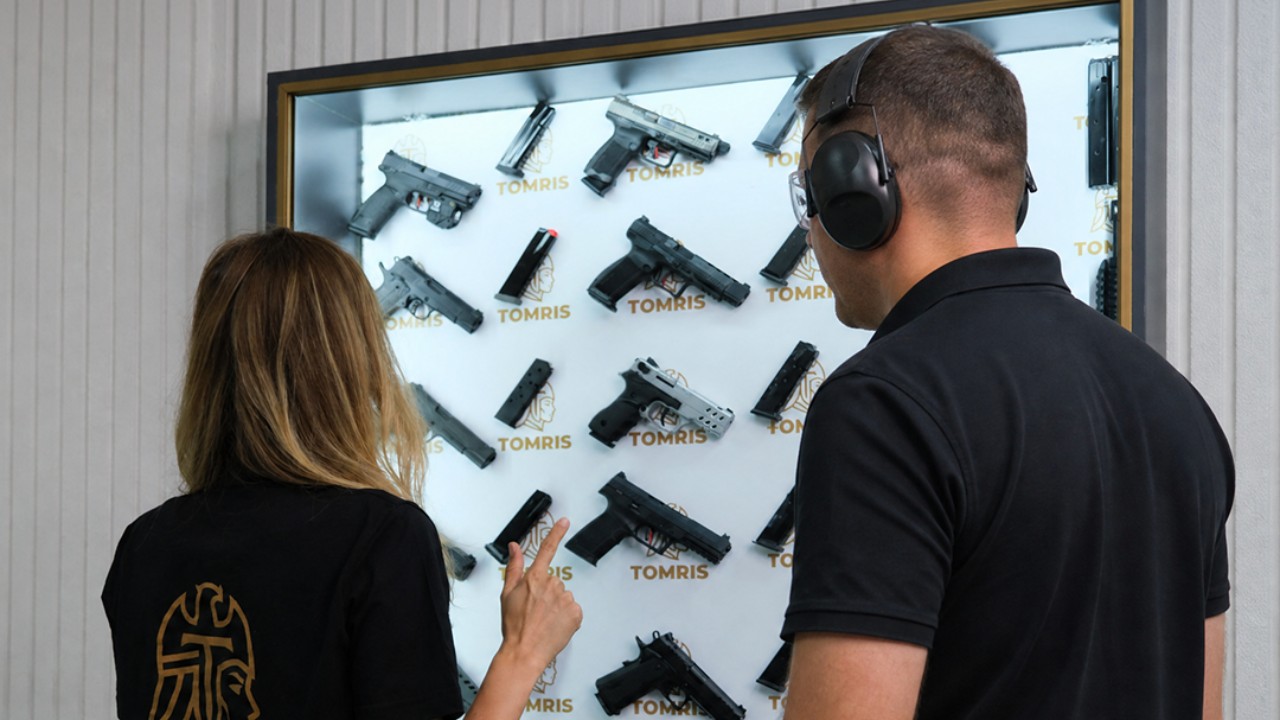
Once basic reflexes are established, shooters can move up to the 9x19mm Parabellum, the primary choice for security forces globally. Modern service pistols like Sarsılmaz, Canik, and Glock offer high precision with this ammunition.
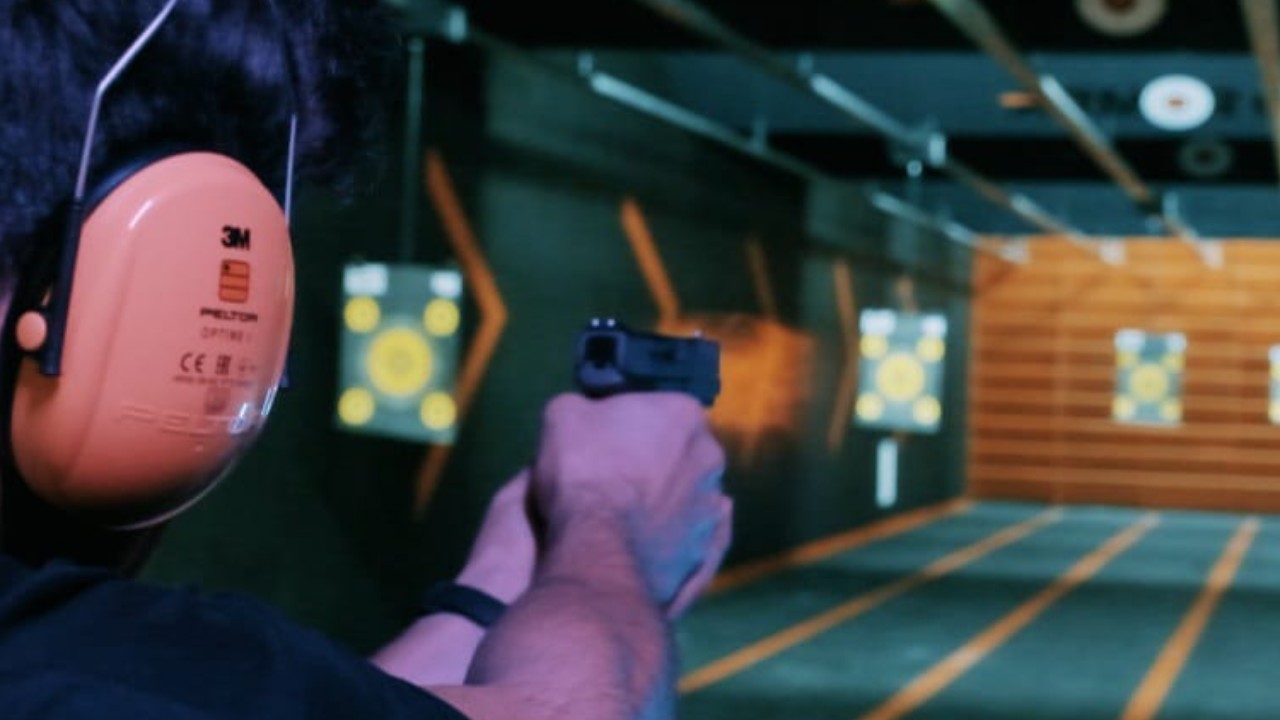
A Day at the Range: The 5-Step Safety and Shooting Protocol
To ensure a seamless, enjoyable, and completely safe session, ranges follow this 5-stage operational plan:
- Registration and ID Verification: Present a physical ID or passport at reception to create a system record and sign the facility's safety guidelines.
- Equipping Ballistic Gear: Put on professional noise-canceling earmuffs and shatterproof polycarbonate ballistic glasses before entering the lane.
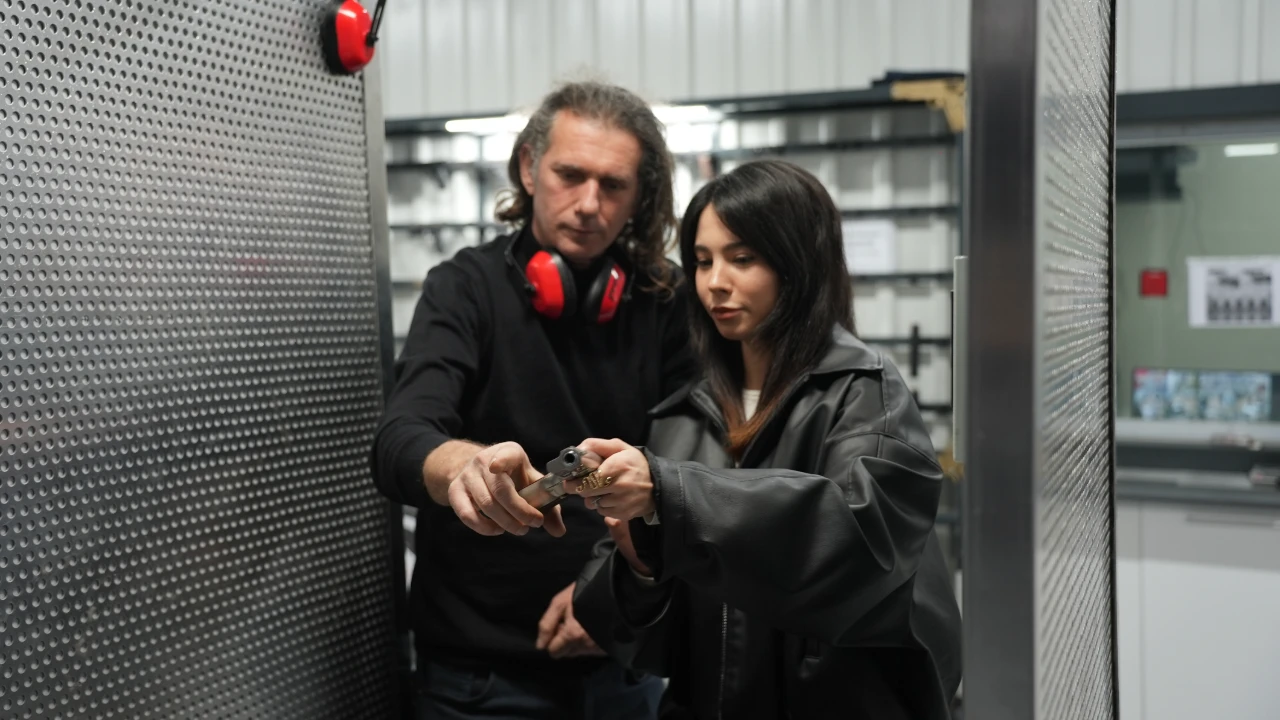
- Dry Fire and Grip Training: Under instructor supervision, practice proper grip, sight alignment, and trigger slack using an unloaded firearm.
- Live Fire Application: Following the instructor's "LOAD" and "FIRE" commands, perform controlled shooting series at the designated target distance.
- Safe Unloading, Inspection, and Hygiene: Clear any remaining rounds, lock the mechanism, place the firearm on the table, and wash hands with cold water to remove lead residue.
Following these steps in order builds the shooter's confidence and mastery. Dry fire practice, in particular, acts as a psychological bridge to overcome the fear of the blast.
Once the session is over, the electronic target system brings the paper target back to the shooter. The distribution of hits is analyzed with the instructor to correct errors for the next round.
Popular Shooting Centers and Regional Ranges in Turkey
Shooting ranges across Turkey, especially in tourism hubs, provide high-standard services for both locals and international visitors. Antalya and its coastal districts are leaders in this field, featuring modern ventilation systems and extensive firearm inventories.
For those vacationing on the Mediterranean coast, Antalya shooting range experiences offer a convenient activity with round-trip hotel transfers. City center facilities provide training and sporting opportunities year-round.
Guests staying on the eastern side of the city often prefer Lara and Kundu shooting activities, where luxury facilities employ experienced, multilingual instructors.
Around Belek, the hub of golf and luxury, Kadriye and Belek shooting tours offer organized packages for families and friend groups, often featuring mixed-caliber bundles.
Adrenaline junkies in Western Antalya can explore Kemer shooting range options in indoor facilities with mountain views. Additionally, Alanya city center shooting ranges welcome visitors with wide lanes and state-of-the-art target systems.


Post-Shooting Care: Heavy Metal Exposure and Lead Hygiene
One of the most important health considerations in indoor ranges is lead dust hygiene. When a primer ignites and the bullet leaves the barrel, microscopic lead and gunpowder particles are released into the air. Modern ranges mitigate this risk using industrial HEPA-filtered, negative-pressure ventilation systems.
The first thing you should do after leaving the firing line is wash your hands and face thoroughly with soap and cold water. Cold water is recommended because hot water opens the skin's pores, which could potentially allow heavy metal particles to be absorbed more easily.
Avoid eating, drinking, or touching your face until your hands are washed. This simple hygiene rule ensures that sport shooting remains a safe and sustainable activity.
Frequently Asked Questions 6
Do I need a firearm license to shoot at a range?
No, you do not need a carrying or possession license to shoot at commercial indoor ranges. Any individual over 18 can legally shoot using the range's licensed inventory under the supervision of an instructor, provided they present a physical ID.
Can minors under 18 shoot at the range?
Individuals under 18 cannot enter or shoot at ranges independently. Youths between 15 and 18 may shoot only if accompanied by a parent or legal guardian, with written consent and under the direct, one-on-one control of an instructor.
What is the best caliber for a first-timer?
The ideal starting point is the .22 Long Rifle. Its low recoil and noise level prevent the shooter from flinching, making it easier to develop proper grip and sighting habits. After this, transitioning to the standard 9x19mm is recommended.
Can I bring my own licensed firearm to the range?
Yes, you can bring a firearm registered in your name. If you have a carrying license, you can bring it directly. However, for those with a possession-only license, it is a legal requirement to obtain an official transit permit from your local police or gendarmerie unit to transport the weapon to the range.
Can I shoot individually without an instructor?
Due to safety regulations in commercial ranges, every shooter must be accompanied by a certified instructor or range officer. Regardless of your experience level, the entire process, from receiving the weapon to unloading it, is managed by the staff.
What should I wear to a shooting range?
We recommend wearing collared shirts that cover the neck and closed-toe shoes. To prevent hot brass casings from ejecting onto your skin and causing burns or distractions, avoid open-collar clothing and open-toed shoes or sandals.