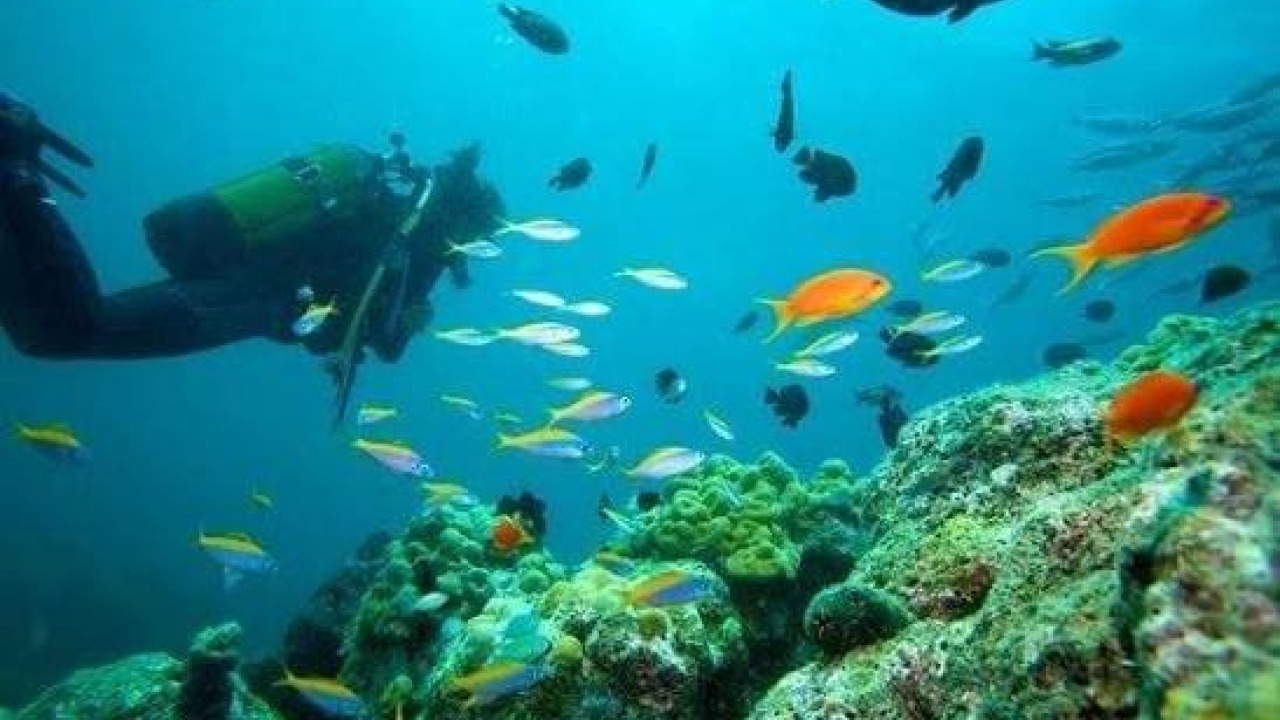
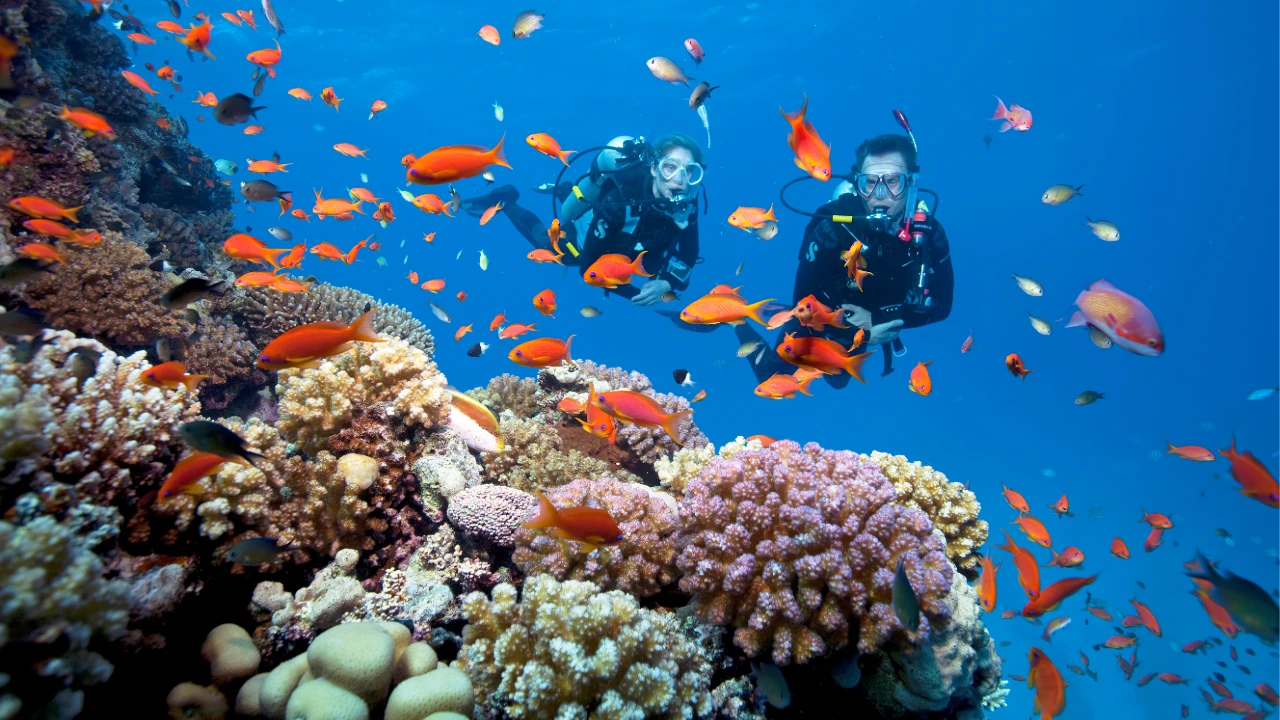
Beneath the surface of the deep blue lies a world of weightlessness and silence, a mesmerizing ecosystem that feels like another planet. From vibrant coral reefs to mysterious shipwrecks and the rhythmic dance of marine life, the underwater world draws thousands of adventure seekers every year. To explore the most breathtaking dive sites along Turkey's Mediterranean and Aegean coasts, check out our latest scuba diving tours and underwater programs.
As you descend, the increasing ambient pressure has a direct impact on human physiology. This is why scuba diving should never be approached haphazardly or based on hearsay; it must be practiced under the guidance of certified instructors. By using the correct equipment, providing honest health declarations, and following progressive certification training, every dive can become a safe and unforgettable adventure.
Scuba Diving & Underwater Safety: Quick Facts
| Feature | Essential Summary for Divers |
|---|---|
| International Standards | PADI, CMAS, and SSI training protocols |
| Discovery Dives | Maximum depth of 5 meters for non-certified guests |
| Entry-Level Limit | 18 meters for 1-Star Divers or Open Water |
| Minimum Age | 10 for Junior divers, 14-15 for adults |
| Pre-Flight Wait Time | Minimum 18-24 hours after your last dive |
| Golden Safety Rule | Absolute adherence to the "Buddy System" |
| Ideal Diving Season | May to November (for maximum visibility) |
Pre-Dive Health Assessment and Physical Fitness
Before heading underwater, every prospective diver must complete a comprehensive medical questionnaire. Changes in pressure exert direct hydrostatic effects on the eardrums, sinus cavities, and lungs. For those planning to visit deeper dive sites, such as the diving programs in Kaş or the diving options in Kemer, it is mandatory to obtain medical clearance if you have any chronic conditions or have undergone recent surgery.
Hydrostatic Pressure and Ear Equalization
Conditions such as asthma, epilepsy, uncontrolled blood pressure, and cardiovascular diseases are significant medical contraindications for deep diving. Additionally, individuals suffering from severe colds or sinusitis may find it impossible to equalize their ears due to blocked Eustachian tubes.
To prevent eardrum damage, diving plans should be postponed until even a mild cold has completely cleared. If you cannot equalize pressure during descent, you must immediately ascend a few meters with your instructor.
Chronic Conditions and the Medical Clearance Process
On the day of your dive, avoid excessive alcohol consumption, stay well-hydrated, and ensure you are well-rested. Opt for light, easily digestible meals rather than heavy food.
When participating in diving tours along the Antalya coast, entering the water in a relaxed physical and mental state is key to optimizing your breathing and air consumption. Divers on regular medication must inform their instructors about their prescriptions in advance.
International Certification Levels and Depth Limits
Safety in underwater sports is built upon a hierarchy of progressive training and certification. For travelers experiencing the ocean for the first time, we offer a special program called a "Discovery Dive." In this program, guests explore the underwater world in shallow waters under the direct, one-on-one supervision of a professional instructor.
The table below details the most common international certification levels, authorized depth limits, and required theoretical standards:
| Certification Level | Max Depth | Required Open Water Dives | Safety Competencies Covered | Ideal Diver Profile |
|---|---|---|---|---|
| Discovery Dive | Max 5 Meters | 1 Intro Dive | Basic regulator & mask clearing | First-time holidaymakers |
| Open Water / 1-Star | 18 Meters | Min. 4 Open Water Dives | BCD usage, emergency air sharing | Aspiring independent divers |
| Advanced / 2-Star | 30 Meters | 5 Adventure/Specialty Dives | Deep diving, navigation, currents | Experienced open water divers |
| Rescue Diver | 30 - 40 Meters | Extensive Scenario Dives | Diver rescue, first aid, stress mgmt | Leadership & safety roles |
5 Steps to a Safe Dive: Preparation and Buddy Checks
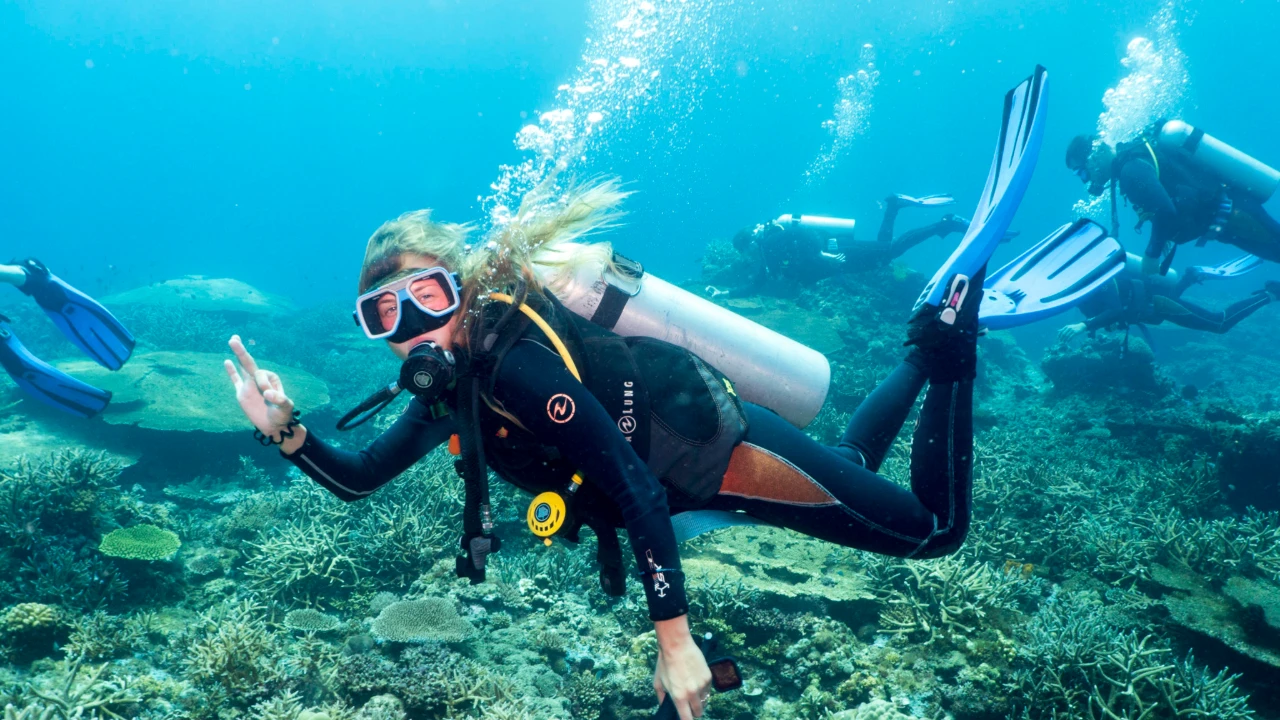
In the international diving community, no diver ever enters the water alone. The "Buddy System" is the golden rule that ensures immediate assistance in any emergency. The following 5-step check routine is vital before you make your descent:
- BCD and Inflation Mechanism: Check the low-pressure hose, ensure the vest inflates fully from the tank, and verify that the dump valves are working.
- Weight Belt and Quick Release: Confirm the diver is wearing the correct amount of lead and that the belt is positioned to be released instantly in an emergency.
- Buckles and Straps: Double-check that the tank strap, shoulder straps, and chest buckles are secure and properly fitted.
- Air Supply and Pressure Gauge: Test the primary regulator and the octopus (alternate air source), and ensure the gauge shows sufficient pressure (around 200 bar).
- Mask, Fins, and Final OK: Check the mask for anti-fogging, tighten fin straps, and perform a mutual "OK" signal with your buddy before entering.
This five-step discipline prevents equipment-related panic underwater. Once buddies reunite at the surface, they confirm their compass and depth plans one last time before beginning a controlled descent.
Underwater Communication, Decompression, and Surfacing
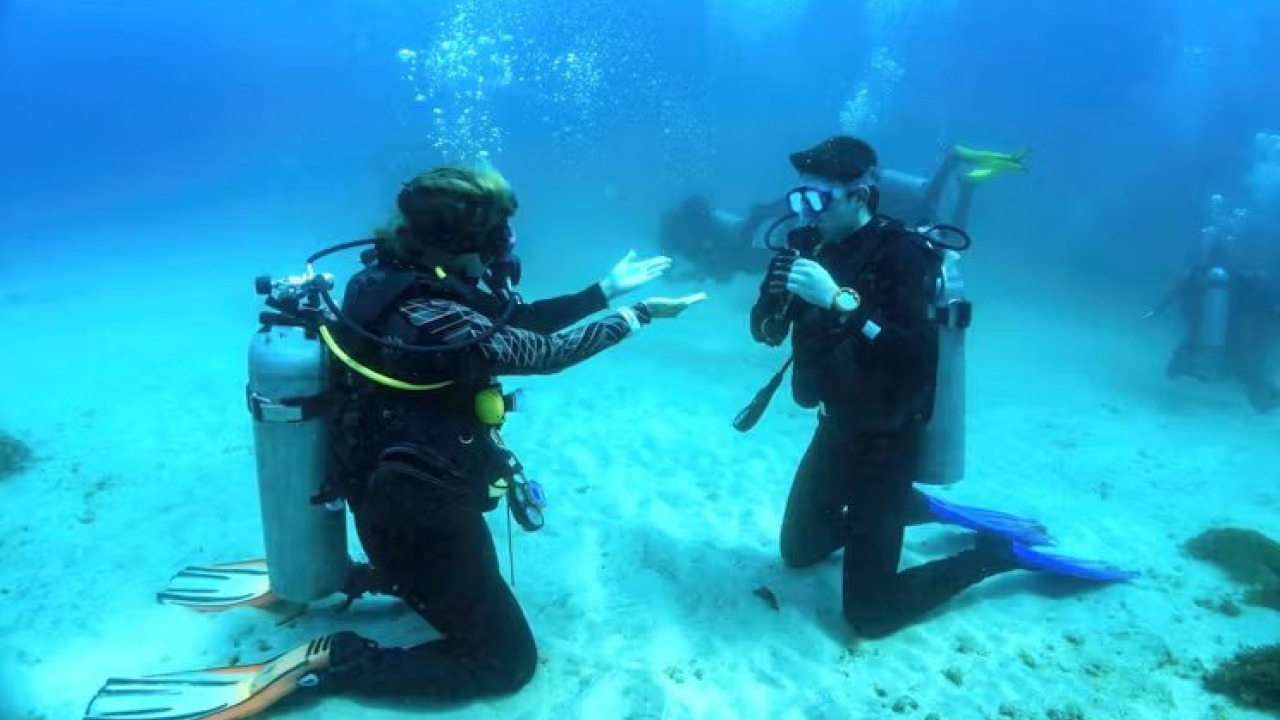
Since verbal communication is impossible underwater, internationally recognized hand signals are used. Every diver should instinctively know the signals for "OK," "Go Up," "Go Down," "Equalization Problem," "Low Air," and "Emergency Air Sharing." It is essential that buddies never lose sight of each other and maintain a distance of about 3-4 meters.
Standard Hand Signals and Buddy Communication
During a dive, buddies periodically check each other's air levels to compare consumption rates. If a gauge drops to the 50-bar level, the dive leader must be notified immediately to begin ascent procedures.
If a buddy runs out of air unexpectedly, the "octopus" (backup air source) is deployed instantly. These calm, practiced reflexes prevent potential crises.
Safety Stops and Controlled Ascent
Throughout the dive, depth and bottom time are constantly monitored via dive computers or gauges. To keep the amount of nitrogen absorbed in the body within safe limits, divers must strictly adhere to no-decompression limits. As limits approach, the dive leader will guide the group toward shallower waters to facilitate natural nitrogen off-gassing.
The ascent rate should be limited to a maximum of 9-10 meters per minute. A fundamental rule is to perform a 3-minute safety stop at a depth of 5 meters at the end of every dive. This brief pause allows micro-nitrogen bubbles in the tissues to be safely expelled through the lungs.
The Flying Rule and Surface Wait Times
There is a direct link between scuba diving and aviation regarding decompression. To allow residual nitrogen to be completely eliminated from your tissues, you must wait a specific amount of time at sea level. Boarding a plane with low cabin pressure immediately after a dive significantly increases the risk of decompression sickness.
If you have been diving, you must wait at least 18 hours before flying. If you have performed multiple dives in a single day or participated in a multi-day diving tour, this wait time should be carefully extended to 24 hours. Experts recommend scheduling a full rest day between your last dive and your return flight.
During this waiting period, avoid heavy exercise and extreme heat environments like saunas. Staying hydrated and resting helps facilitate the nitrogen off-gassing process.
Equipment Maintenance and Hygiene Standards
When saltwater dries, it leaves behind abrasive crystals on equipment. Therefore, at the end of every dive day, regulators, BCDs, and masks should be thoroughly rinsed with plenty of fresh water. Drying equipment in a shaded, airy area, rather than direct sunlight, extends the life of rubber and silicone components.
Freshwater Rinsing and Drying Discipline
For personal hygiene, mouthpieces and second-stage regulators should be periodically cleaned with antibacterial solutions. If water gets inside a BCD bladder, it should be drained through the dump valve and stored in a semi-inflated state. Well-maintained equipment is your most reliable life-support system underwater.
To prevent salt from clogging exhaust valves, it is recommended to fill the BCD with fresh water and shake it after every dive. This routine prevents corrosion.
Regulator Hygiene and Annual Servicing
It is critical to send regulators and BCD valves to authorized service centers for annual periodic maintenance. Technicians perform detailed checks on O-rings, high-pressure hoses, and first-stage pistons. Additionally, regular battery and sensor calibration for dive computers is indispensable for reliable depth and time measurements.
This maintenance discipline extends equipment life for years and reduces the risk of unexpected underwater failure to zero. Authorized dive centers are the key to leaving clean seas in protected marine areas.
Pre-Dive Checklist
Before boarding the dive boat, ensure you have the following personal items:
- Personal Medical Declaration Form: A signed form stating you have no chronic conditions.
- Spare Swimwear and Towel: Clothing to help you stay dry between sessions on the boat.
- Sunscreen and Hat: Protection against wind and sun while on the open sea.
Frequently Asked Questions 5
Can I go scuba diving if I don't know how to swim?
In Discovery Dive programs, guests who cannot swim can still dive in shallow waters under the direct physical control of an instructor. The instructor manages the diver's BCD and direction. However, to complete independent certification training, basic swimming and water buoyancy skills are required.
How do I equalize my ears and why is it important?
To balance the pressure against the eardrum as you descend, you perform a maneuver by pinching your nostrils and gently blowing air through your nose. This opens the Eustachian tubes and equalizes middle ear pressure. If you cannot equalize, you must stop your descent immediately.
How long does it take to get certified?
An entry-level course, such as Open Water or 1-Star, typically takes 3 to 4 days. This process includes classroom theoretical lessons, shallow water skill training, and 4 open water dives. Successful candidates earn an internationally recognized diver certification card.
How long should I wait after diving before flying?
If you have completed one dive, you should wait at least 18 hours before flying. If you have performed multiple repetitive dives, you must wait at least 24 hours. This time is vital for the safe elimination of residual nitrogen from your tissues.
What are the age and health limits for scuba diving?
The minimum age for discovery dives is 14. Any individual without chronic conditions such as asthma, heart disease, or epilepsy can dive safely with medical clearance.