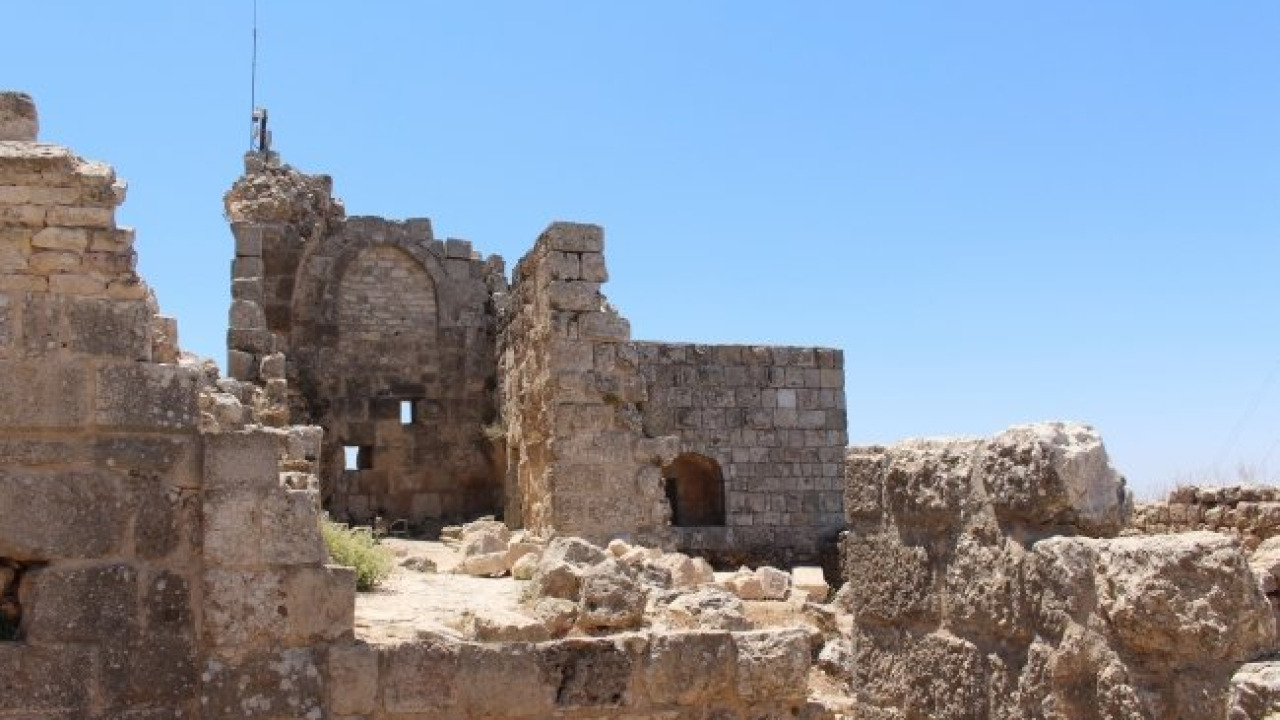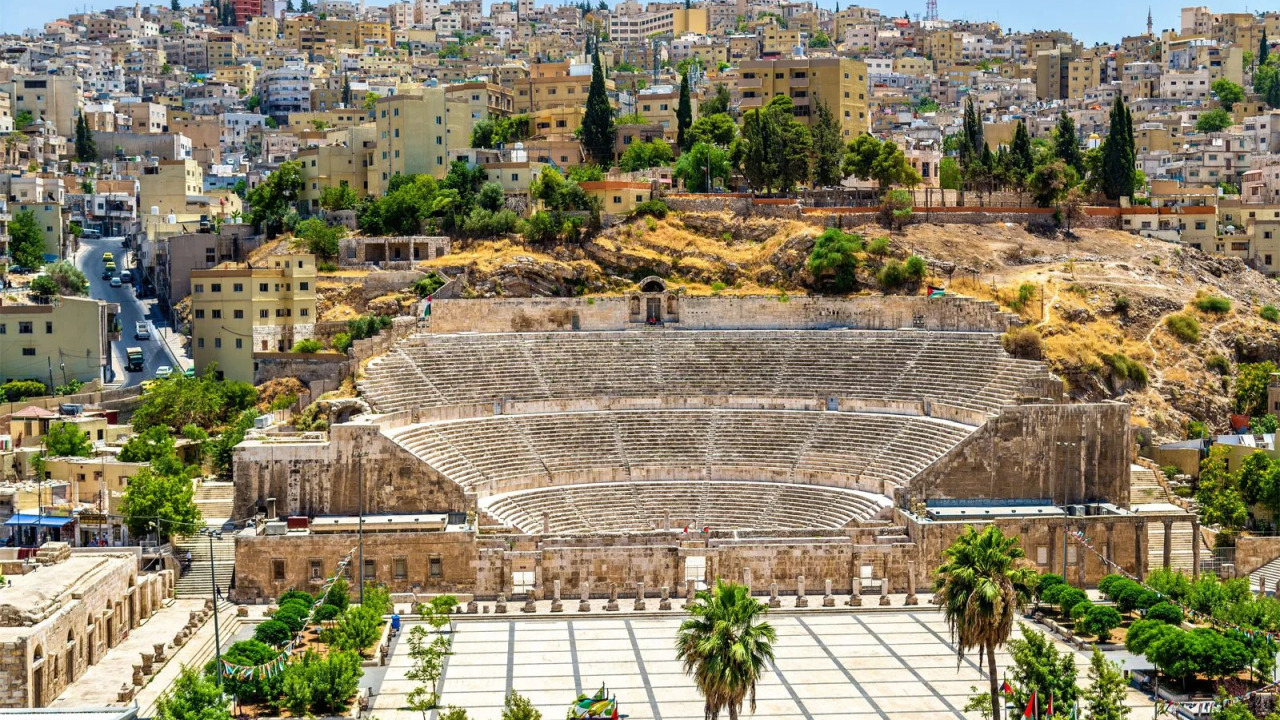

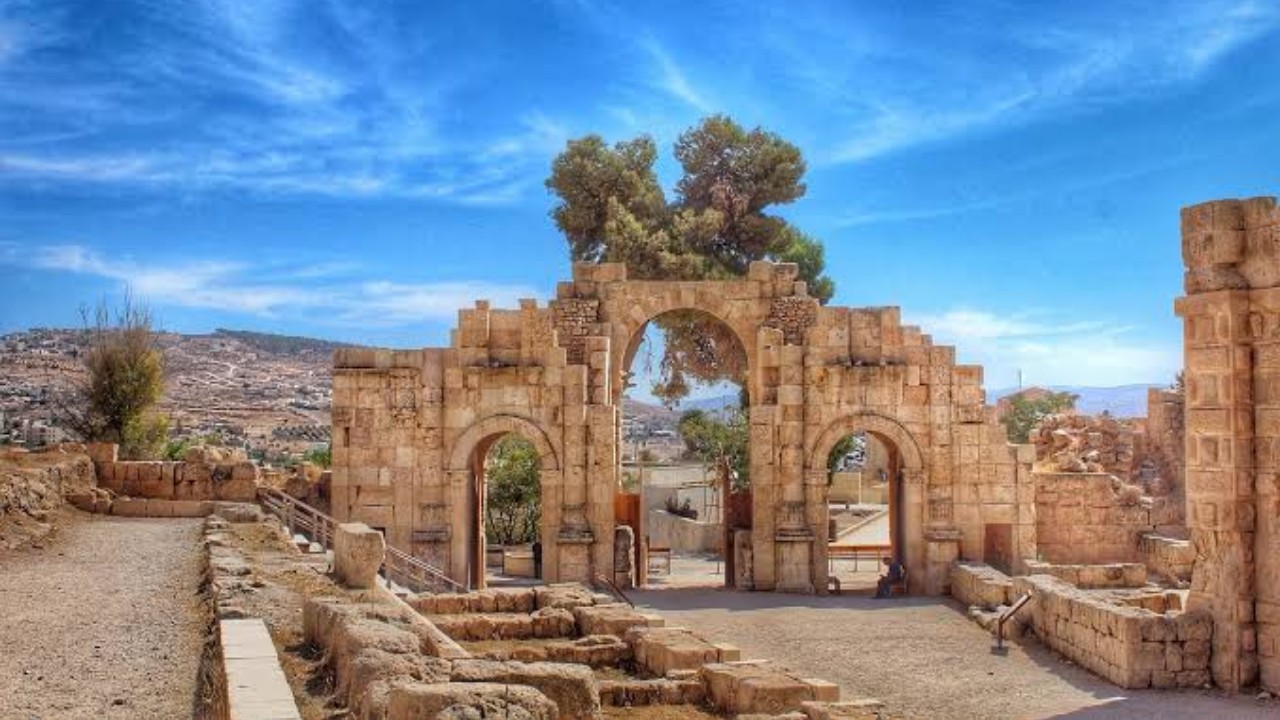
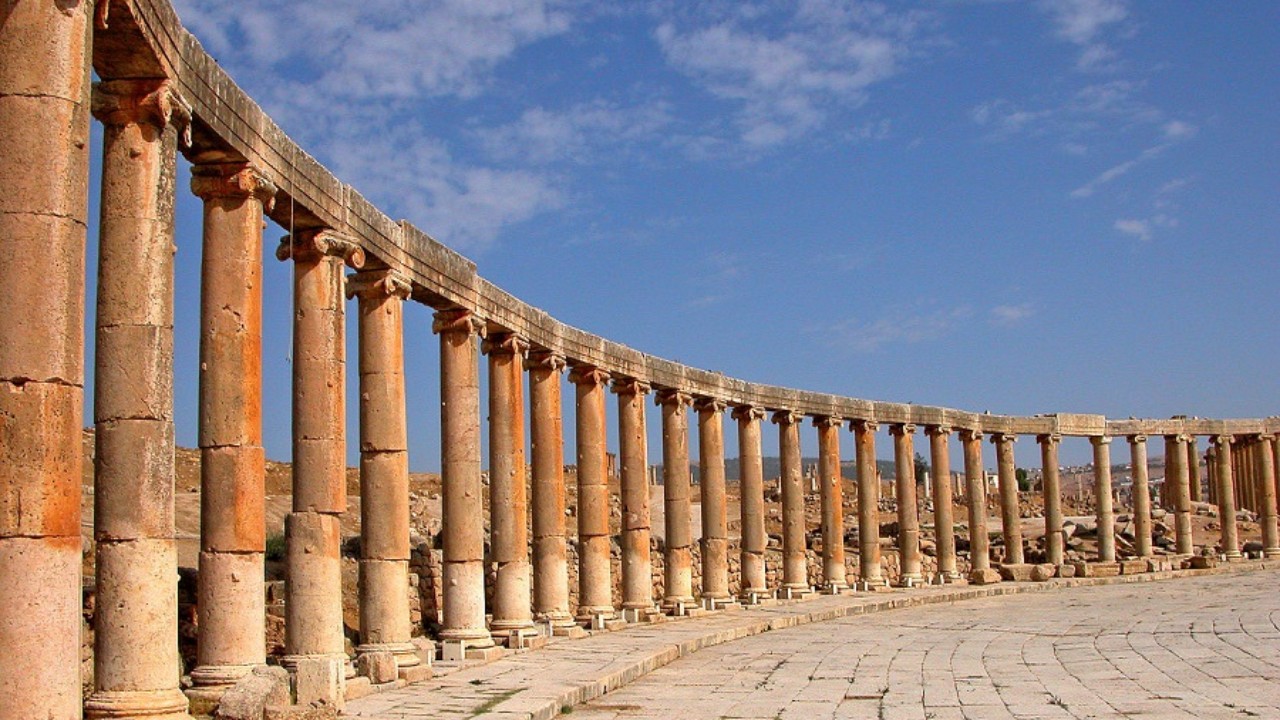
Located in northern Jordan, Jerash is one of the few places on Earth where you can experience the complete urban blueprint of a Roman provincial city. Situated roughly 45 kilometers north of Amman, this site, known in antiquity as Gerasa, was a prominent member of the Decapolis league. Today, it is celebrated as one of the largest and best-preserved Roman settlements outside of Italy. Because a massive earthquake in 749 AD buried much of the city under sand and debris for centuries, the original street layout remained remarkably intact. This guide explores the three architectural pillars of the site: Hadrian's Arch, the Oval Plaza, and the sprawling Cardo Maximus.
Quick Facts
| Topic | Details |
|---|---|
| Location | Northern Jordan, approx. 45 km north of Amman |
| Roman Influence | Began 63 BC, following Pompey's conquest |
| Key Highlights | Hadrian's Arch, Oval Plaza, Cardo Maximus, two theaters |
| Entry Fee | 12 JOD (as of Summer 2026) |
| Ticket Includes | Access to the Jerash Archaeological Museum |
| Recommended Visit Time | 2-3 hours |
What Defines Roman Architecture in Jerash?
While human habitation at the site dates back over 6,500 years, the stunning stone vistas seen today are primarily Roman. The city serves as a textbook for ancient urban planning, featuring colonnaded streets, hilltop temples, expansive plazas, theaters, public fountains, and a fortified wall system.
From Gerasa to Jerash: Layers of History
After coming under Roman rule in 63 BC under the command of Pompey, the city flourished as part of the Decapolis. By the 4th century, the population became predominantly Christian, and many Roman structures were repurposed for new religious functions. Consequently, visitors can trace a fascinating timeline of Greek, Roman, Byzantine, and early Islamic layers all in one location.
The 749 AD Earthquake and Rediscovery
A catastrophic earthquake in 749 AD leveled much of the city, effectively "freezing" it in time. It wasn't until 1806 that a German traveler brought the ruins back to global attention, with systematic excavations beginning in 1925. The meticulous restoration work carried out over the last seventy years is why the structures are so legible and imposing today.
Hadrian's Arch: The City's Southern Gateway
Standing proudly at the southern entrance, Hadrian's Arch is a triumphal gateway erected in 129 AD to honor the visit of Emperor Hadrian. Standing 21 meters high, it is typically the first stop for visitors arriving from the parking area. Just north of the arch lies the Hippodrome, a massive arena measuring 245 meters long and 52 meters wide. Capable of holding 15,000 spectators, construction began in the mid-2nd century and was completed by the start of the 3rd century.
The Oval Plaza: A Masterpiece of Urban Design
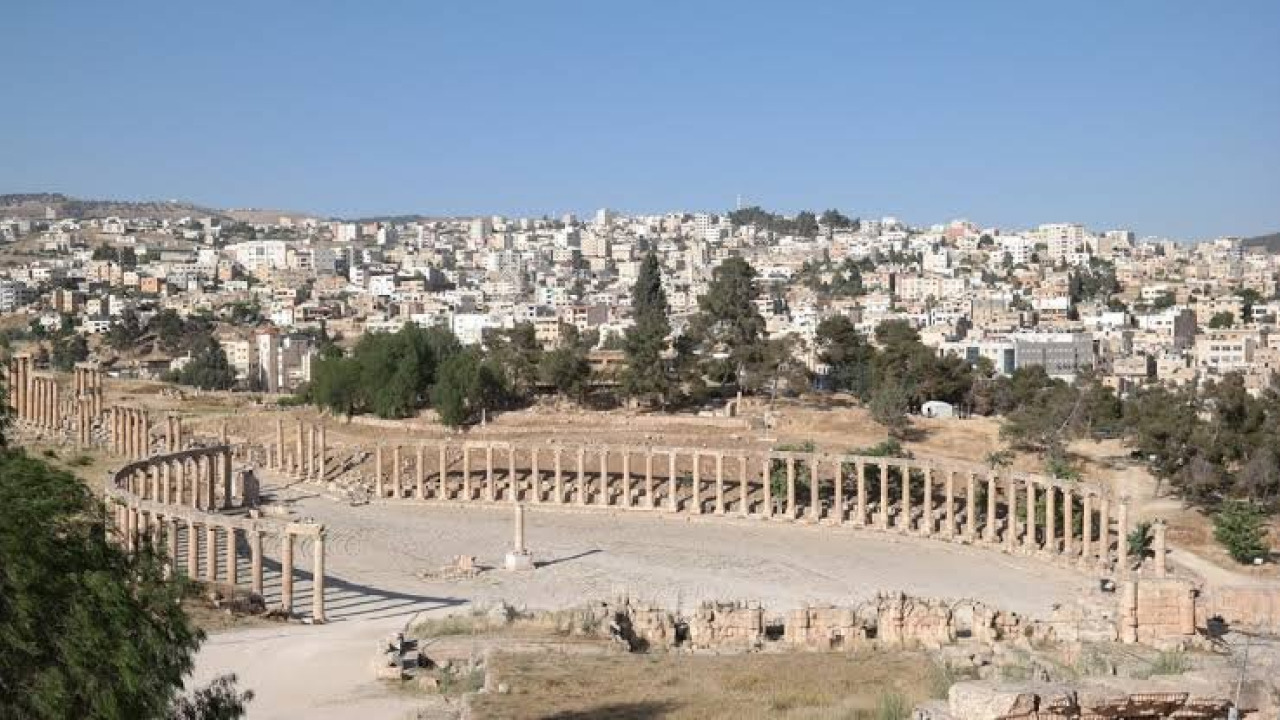
The Oval Plaza is the most photographed spot in Jerash and represents a unique architectural solution to Roman city planning. Measuring approximately 90 x 80 meters, the plaza is encircled by a wide pavement and a stunning colonnade of Ionic columns dating back to the 1st century AD. Serving as the city's central hub, the plaza acts as a seamless transition between the Temple of Zeus to the south and the main thoroughfare leading north.
Cardo Maximus: The 800-Meter Colonnaded Spine
The Cardo Maximus is the architectural backbone of the city, a grand, colonnaded main street stretching 800 meters from the North Gate to the Oval Plaza. The original paving stones are still in place, and if you look closely, you can see the ruts worn into the stone by ancient chariot wheels. The street is lined with remnants of shops, public fountains, and intersections leading to side streets. A slow stroll along this path is the centerpiece of most Jerash Ancient City Cultural Tours.
The North Tetrapylon and Intersections
The Cardo intersects with the North Decumanus (the east-west axis) at the North Tetrapylon. Dating from 165-170 AD, this monumental four-pillared junction was a classic Roman technique used to emphasize the meeting point of primary roads. From here, visitors can head north toward the North Theater.
Key Examples of Roman Architecture in Jerash
| Structure | Date of Construction | Notable Dimension |
|---|---|---|
| Hadrian's Arch | 129 AD | 21 meters high |
| Hippodrome | 2nd-3rd Century AD | 245 x 52 meters, 15,000 capacity |
| Oval Plaza | Columns from 1st Century AD | Approx. 90 x 80 meters |
| Cardo Maximus | Roman Period | 800 meters long |
| South Theater | 90-92 AD | 3,000+ spectators |
| North Theater | 165 AD (expanded 235 AD) | 1,600 spectators |
| Nymphaeum | 191 AD | Monumental public fountain |
The South Theater
Built between 90-92 AD during the reign of Emperor Domitian, the South Theater could accommodate over 3,000 people. The ornate two-story stage building has been partially restored, and the venue still hosts performances today. The acoustics are legendary; a person standing in the center of the orchestra can be heard clearly across all seating tiers without shouting. You can still see Greek letters carved into the stone, marking reserved seating for dignitaries.
The North Theater
Constructed in 165 AD, the North Theater originally featured 14 rows of seating and served as both a performance venue and a meeting place for the city council. It was expanded in 235 AD to hold 1,600 people. By the 5th century, it fell out of use, and some of its stones were repurposed for other buildings.
The Nymphaeum and Temple of Artemis
The Nymphaeum, built in 191 AD, is a monumental fountain dedicated to the nymphs. These types of fountains were common in Roman cities to provide cooling and fresh water to the streets. Nearby, the Temple of Artemis, dating to the 2nd century AD, is the city's largest temple. Visitors can climb the stairs to the altar terrace, where 11 of the original columns surrounding the sacred area still stand.
Post-Roman Layers: Churches and the Archaeological Museum
The Roman skeleton of the city was repurposed during the Byzantine era. A cathedral was built in the early 5th century over the ruins of the Temple of Dionysus. The Church of Marianos, located next to the Hippodrome, was constructed around 570 AD during the tenure of Bishop Marianos. The Jerash Archaeological Museum, originally housed in a vault in the Temple of Artemis courtyard in 1923, moved to its current building in 1985. Its collection spans from the Neolithic period to the Mamluk era.
Visitor Information: Hours, Fees, and Duration
| Season | Opening Hours |
|---|---|
| Summer | 08:00 - 18:30 |
| Winter (Nov-Mar) | 08:00 - 16:00 |
| April & May | 08:00 - 17:30 |
| Ramadan | 08:30 - 18:00 |
Closing times can vary by source; we recommend confirming before your visit, as the site may close early on Fridays or public holidays. Here are a few tips to make your visit easier:
- Entry for foreign visitors is 12 JOD (as of Summer 2026). Jordan Pass holders enter for free.
- Budget 2-3 hours for the site. In hot months, arrive early in the morning, as the Cardo offers very little shade.
- Fridays are the busiest days; visiting on a weekday is better for photography.
- Wear a hat, bring plenty of water, and wear non-slip shoes, the original paving stones are polished and uneven.
- Check for schedules at the theaters during the Jerash Festival of Culture and Arts (late July to early August).
How to Get There
For travelers from Turkey, the journey to Jerash is typically routed through Amman.
- Fly from Istanbul, Ankara, or Izmir to Queen Alia International Airport in Amman.
- Transfer to Amman city center; we recommend staying in an area with easy access to the northern exit.
- Head to the Tabarbour bus station in the north (about a 30-minute taxi ride from the center).
- Take a bus bound for Jerash. Tickets are approximately 1 JOD, and the trip takes about 45 minutes.
- Get off at Hadrian's Arch, which appears on the left as you approach from Amman; this allows you to start your tour at the south gate.
- If you are short on time, you can book One-Day Cultural Tour of Jerash (day trips) departing from Amman.
For those who prefer a guided experience, Historic City Tour of Jerash Ancient City provide a chronological narrative connecting the arch, the streets, and the monuments.
Frequently Asked Questions 6
Where is the ancient city of Jerash located?
Jerash is located in northern Jordan, approximately 45 kilometers north of the capital, Amman. The southern entrance to the archaeological site is located right next to Hadrian's Arch.
When and why was Hadrian's Arch built?
It was built in 129 AD as a triumphal arch to welcome Emperor Hadrian during his visit to Gerasa. It stands 21 meters high at the southern entrance of the site.
What are the dimensions and features of the Oval Plaza?
The plaza is approximately 90 x 80 meters. It is surrounded by a wide pavement and a colonnade of over fifty Ionic columns dating back to the 1st century AD.
How long is the Cardo Maximus and where does it lead?
The Cardo Maximus stretches 800 meters from the North Gate to the Oval Plaza. You can still see the original paving stones and ancient chariot wheel ruts in several places.
How long does it take to tour the Roman ruins in Jerash?
A visit to Hadrian's Arch, the Oval Plaza, the Cardo, and the two theaters typically takes 2-3 hours. If you include the Archaeological Museum, allow more time.
How long does it take to get to Jerash from Amman by bus?
Buses depart from the Tabarbour station in northern Amman. The ticket costs around 1 JOD, and the journey takes approximately 45 minutes.